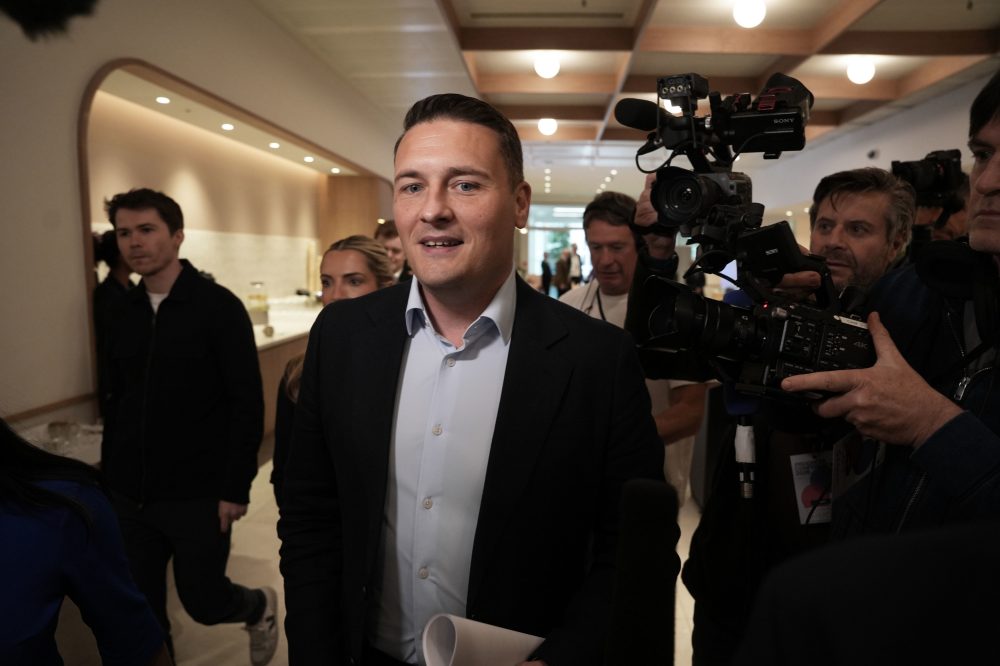

LONDON (AP) — For those following British politics, Wes Streeting’s desire to lead the nation’s government has been an open secret for quite some time.
However, any remaining doubt was eliminated Saturday when the former health secretary formally declared his campaign to replace Prime Minister Keir Starmer.
Streeting becomes the initial member of Parliament to challenge Starmer in what promises to be an intense internal battle for control of the Labour Party, whose political standing has declined significantly in the two years following its overwhelming electoral triumph that ended 14 years of Conservative rule.
Additional challengers are expected to emerge, potentially including Greater Manchester Mayor Andy Burnham, provided he can secure victory in a special parliamentary election.
Despite widespread unpopularity stemming from multiple setbacks, policy reversals, and criticism over his decision to name a Jeffrey Epstein associate as U.S. ambassador, Starmer has pledged to continue leading. The administration faces potential weeks of turmoil after he refused resignation demands following Labour’s poor showing in the May 7 local and regional elections, where Nigel Farage’s anti-immigration Reform UK party achieved significant victories.
“The voters did more than send Labour a message last week,” Streeting declared Saturday. “They issued a warning: that unless we change course, we risk being the handmaidens of Nigel Farage and the breakup of the United Kingdom.”
At 43, the youthful-appearing Streeting has earned recognition as among the party’s most effective speakers and has been vocal on various matters, including the conflict in Gaza.
His political ascent from humble beginnings in London’s working-class East End, where he was raised in public housing, is documented in his autobiography, “One Boy, Two Bills and a Fry Up: A Memoir of Growing Up and Getting On.”
The book’s title references his two grandfathers, both named Bill: his maternal grandfather had criminal connections and was imprisoned for armed robbery, while he attributes his educational path to Cambridge University to his paternal grandfather’s influence.
Streeting entered politics early, heading the Cambridge student union before becoming president of the National Union of Students. He subsequently worked for Stonewall, an LGBTQ+ organization, and has discussed his challenges with coming out as gay while maintaining his Anglican beliefs.
After serving as a local councilor and later deputy council leader in east London’s Redbridge borough, he won election to Parliament in 2015.
During Jeremy Corbyn’s leadership—a period marked by two electoral defeats and antisemitism controversies—Streeting served as a backbench MP and was often critical of the veteran socialist leader. His promotion came after Starmer assumed party leadership in 2020.
Streeting’s Cabinet role became deeply personal due to his own kidney cancer diagnosis, making NHS reform a central mission.
“The NHS saved my life,” he stated upon becoming health secretary. “Today, I can begin to repay that debt by saving our NHS.”
While rumors of higher ambitions persisted, Streeting consistently supported Starmer and rejected speculation about leadership aspirations.
However, with Starmer’s position weakening, maintaining this stance became increasingly challenging last week.
Wednesday saw leadership speculation dominate news coverage even as King Charles III presented the government’s legislative agenda during Parliament’s ceremonial opening.
“Streeting to ignite Labour day of anarchy,” declared the Daily Mail in bold headlines. The Daily Express questioned: “Finally, a move to bring down ‘Zombie’ Keir?”
The next day, Streeting became the first Cabinet member to resign, citing lost confidence in Starmer and criticizing his lack of vision and leadership direction. However, he delayed announcing his expected leadership challenge.
His resignation coincided with announcing that medical appointment waiting times—a key policy priority—had decreased for five consecutive months.
Considered part of the party’s moderate faction, Streeting had connections to Peter Mandelson, the formerly influential Labour figure now controversial due to his Epstein ties. Starmer’s appointment and subsequent dismissal of Mandelson as U.S. ambassador continues to create political problems.
When the appointment controversy resurfaced recently, Streeting proactively published email correspondence with Mandelson to demonstrate they weren’t close associates.
“Contrary to what has been widely reported, I was not a close friend of Peter Mandelson, but I am not going to wash my hands of my actual association with him either,” he explained in The Guardian.
One email showed his criticism of Starmer’s leadership, noting “there isn’t a clear answer to the question: why Labour?”
Streeting plans to present his response to that question in upcoming weeks.