
WASHINGTON — The Defense Department is reducing thousands of military personnel in Europe by stopping planned deployments to Poland and Germany rather than withdrawing forces currently stationed there, according to U.S. officials, as President Donald Trump has clashed with allies over the Iran war and demanded changes.
Multiple U.S. officials confirmed that 4,000 service members from the Army’s 2nd Armored Brigade Combat Team, 1st Cavalry Division will no longer deploy to Poland this week as scheduled. The Trump administration had initially announced it was only reducing U.S. forces in Germany, leading to questions and backlash in both Warsaw and Washington.
Two officials told The Associated Press the Poland deployment was stopped after Defense Secretary Pete Hegseth signed a directive instructing the Joint Chiefs of Staff to remove a brigade combat team from Europe. One official said military leaders were given the authority to choose which unit would be affected.
In addition to the Army combat team stationed at Fort Hood, Texas, the directive also resulted in canceling an upcoming German deployment of a battalion specialized in firing long-range rockets and missiles, the two officials said, speaking anonymously to discuss sensitive military matters.
Three U.S. officials indicated the canceled deployments were designed to fulfill a presidential directive issued in early May to decrease European troop levels by roughly 5,000. The rationale appears poorly communicated, as others stationed in Europe said they were unaware whether the stopped Poland deployment was connected to the previously announced troop reduction.
Trump and the Pentagon have stated in recent weeks they were reducing at least 5,000 troops in Germany after Chancellor Friedrich Merz said the U.S. was being “humiliated” by the Iranian leadership and criticized what he called a lack of strategy in the war.
The reduction demonstrates a widening divide between the administration and traditional European allies, with the U.S. leader repeatedly criticizing fellow NATO members for insufficient support for the Iran conflict.
Polish officials on Friday maintained that the canceled U.S. deployment to Poland, which was first reported by The Military Times and other publications, was not specifically targeting their nation but resulted from Trump’s decision to decrease troop numbers in Germany.
Polish Prime Minister Donald Tusk said he “received assurances” that the decision was logistical in nature and stated it does not directly affect deterrence capabilities and Poland’s security.
Joel Valdez, a Pentagon spokesman, said “the decision to withdraw troops follows a comprehensive, multilayered process” and argued it was “not an unexpected, last-minute decision.”
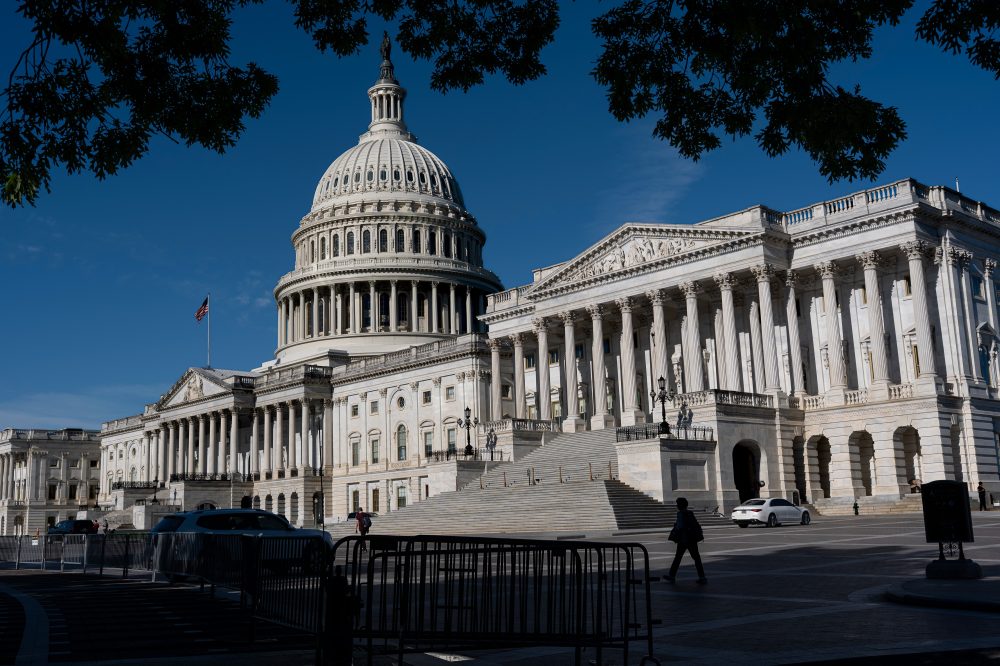
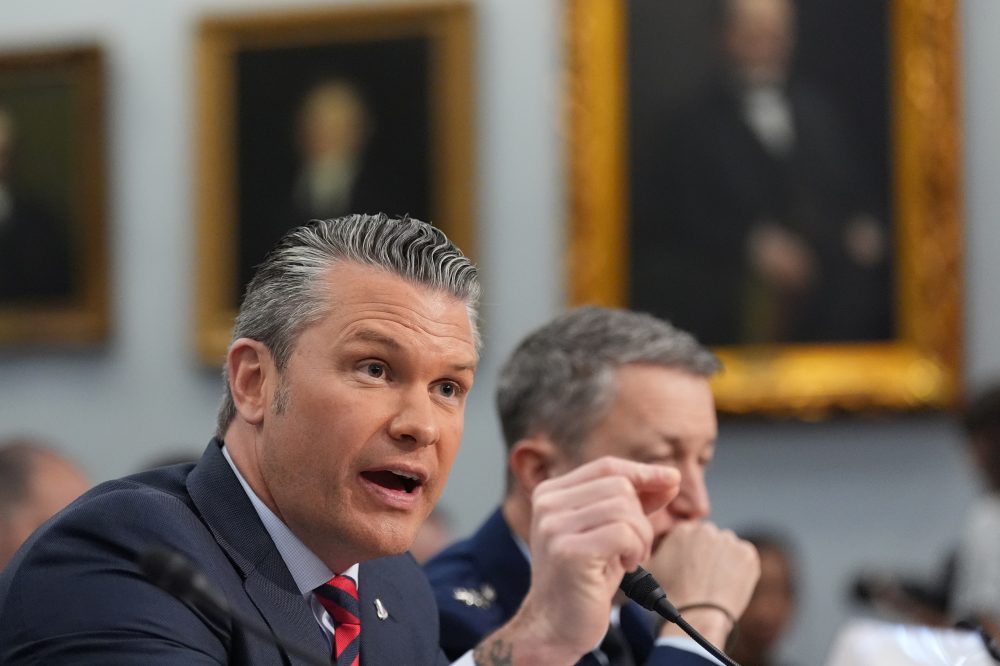
During a Congressional hearing Friday, Army Secretary Dan Driscoll and Gen. Christopher LaNeve, the Army’s chief of staff, said discussions about the stopped Poland deployment occurred over the past two weeks but the actual decision was made in recent days.
Republican Rep. Don Bacon of Nebraska said he spoke with Polish officials Thursday and they were “blindsided.”
The action also left some U.S. military personnel in Europe uninformed about how the Trump administration was reducing forces. A U.S. official based in Europe said a meeting was scheduled with 20 minutes’ notice on Monday to discuss the Poland deployment cancellation.
At that point, troops had already been deployed to Poland and some still in the U.S. were informed shortly before departure not to travel to the airport, that official said. Another official said most of the Army unit’s equipment had already reached Europe and was waiting in ports.
Democratic and Republican lawmakers criticized the reductions as conveying the wrong message to both allies and Russian President Vladimir Putin, whose forces this week launched one of the most devastating attacks on the Ukrainian capital in the 4-year-old war.
During the House Armed Services Committee hearing Friday, LaNeve said he collaborated with U.S. Gen. Alexus Grynkewich, commander in Europe of both American and NATO forces, after Grynkewich received instructions for the force reduction.
“I’ve worked with him in close consultation of what that force unit would be, and it made the most sense for that brigade to not do its deployment in theater,” LaNeve said.
Bacon called the decision “reprehensible” and said it was “an embarrassment to our country what we just did to Poland.”
Republican Rep. Mike Rogers of Alabama, who chairs the committee, said the military is required to consult with lawmakers and that did not happen.
“So we don’t know what’s going on here,” Rogers said. “But I can just tell you we’re not happy with what’s being talked about.”
A State Department official said Friday at a security conference in Tallinn, Estonia, that the U.S. reductions in Europe were “right there in black and white” but also noted that “the U.S. isn’t going anywhere.”
“We’ll continue to work with the Pentagon and work with our partners to make sure we get the right fit and right mix of what’s happening here on the ground,” said Thomas G. DiNanno, U.S. undersecretary of state for arms control and international security.
With the stopped deployments, the U.S. military presence in Europe will now return to pre-2022 levels, before Russia began its full-scale invasion of Ukraine, one U.S. official said.
Europe has been preparing for a reduction since Trump returned to the White House, with the administration warning that Europe would need to handle its own security, including Ukraine’s, going forward.
A NATO official said the U.S. decision to cancel its rotational deployment to Poland would not affect NATO’s deterrence and defense plans. Canada and Germany have increased their presence on the alliance’s eastern flank, which contributes to NATO’s overall strength, the official said, requesting anonymity in line with NATO regulations.
Ben Hodges, former commanding general of U.S. Army Europe, said the move “reinforces the perception that the United States just does things without consultation with allies,” which ultimately “damages cohesion inside the alliance.” The decision would eventually harm the U.S. defense industry as it reduces partner trust, he said.
Approximately 10,000 U.S. troops are typically stationed in Poland, the majority present in the country on a rotational basis. Only about 300 troops are permanently stationed in the country, according to the U.S. Congressional Research Service.
Polish officials had hoped they would be exempt from any cuts as Poland spends the most in NATO on defense as a proportion of its economy — around 4.7% in 2025. Hegseth has called it a “model ally” in NATO for spending so much on defense.
When Poland’s conservative president, Karol Nawrocki, visited the White House in September, Trump said he didn’t intend to pull U.S. troops out of Poland. “We’ll put more there if they want,” Trump said at the time.