
VIENNA (AP) — Saturday evening’s 2026 Eurovision Song Contest finale showcased performers from 25 nations competing at Vienna’s Wiener Stadthalle arena in an energetic competition for Europe’s most coveted pop music title. While talent was abundant throughout the evening, the quality of musical entries varied significantly.
For Eurovision enthusiasts and newcomers alike seeking to discover the competition’s standout musical moments, here are the evening’s top 10 performances, listed without ranking.
Romania’s Alexandra Căpitănescu delivered “Choke Me,” a track that channels what a Lady Gaga nu-metal fusion might sound like. Beyond her spoken segments and her delivery of “All I need is your love” that echoes Gaga’s “I Want Your Love,” the song’s intense sound and undeniable stage presence set it apart.
Italy’s “Per Sempre Sì” started with piano accompaniment before evolving into surprisingly rhythmic production, featuring classical vocalist Sal Da Vinci pouring emotion into lyrics about newfound romance. This entertaining throwback appeals to fans of Eurovision’s traditional style, with Da Vinci displaying natural Italian charisma during Saturday’s performance.
Cyprus representative Antigoni may seem recognizable to viewers familiar with “Love Island UK,” where she previously appeared as a contestant on the popular reality dating program. While her television appearance was brief, her uplifting “Jalla” promises lasting impact in 2026. The summery pop track incorporates traditional Cypriot instruments like çifteli and lute, creating ideal mental vacation soundtrack material.
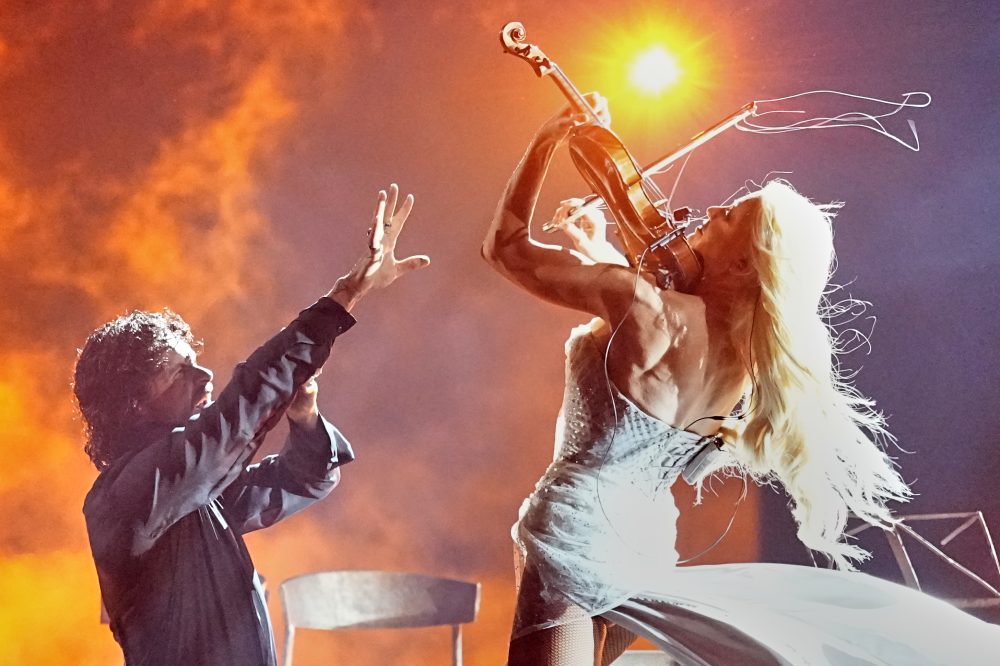
Finland met expectations with their electrifying performance, having been early competition favorites. Linda Lampenius and Pete Parkkonen’s “Liekinheitin” (“Flamethrower”) combines Parkkonen’s emotional vocals with Lampenius’ passionate violin work. The collaboration pairs an “Idol” finalist with an internationally acclaimed classical musician in a successful partnership.
Moldova’s Eurovision contribution featured rapper Satoshi delivering the playfully patriotic “Viva, Moldova!” with complete dedication, performing in multiple languages with an irresistibly catchy chorus reminiscent of Irish hip-hop group Kneecap’s anthemic style. Built on persistent flute melodies, breakbeats, and continuous electronic elements, the performance was impossible to ignore, guaranteed to leave “Welcome to Moldova!” echoing in listeners’ minds.
Bulgaria’s Dara, an experienced pop artist with appearances on “The Voice,” “The X Factor,” and “Dancing with the Stars,” deserves broader international recognition. Her energetic pop anthem “Bangaranga,” featuring Nicki Minaj-inspired elements, ranked among the year’s most spirited tracks and provided an uplifting stage experience.
Every Eurovision contest traditionally includes a pop metal entry, and Serbia fulfilled this expectation with Lavina’s atmospheric “Kraj Mene.” The performance balanced heavy guitar work with gospel harmonies, featuring restrained screaming and minimal breakdowns while delivering welcome intensity worth acknowledging.
Australia’s Delta Goodrem brought significant international recognition to the 2026 Eurovision lineup. Her credentials include judging Australia’s “The Voice,” starring in Australian soap “Neighbours,” and receiving mentorship from Olivia Newton-John, even writing “Eyes on Me” for Celine Dion. (Dion famously won Eurovision for Switzerland in 1988.) Goodrem’s powerful vocal approach peaks on her power ballad “Eclipse,” featuring layered harmonies, skilled piano work, and a strong synthesized conclusion with an extended note, embodying classic Eurovision style. This strategic selection from the Australian performer clearly connected with Saturday’s audience.
The performance opened with cinematic chanting and church-like choir vocals enhancing the dramatic presentation. Alis, performing “Nân,” delivered what resembled a blockbuster film’s emotional transitional music. The stage presentation maintained this impact: he appeared in sequined chainmail before a screen while a woman representing a mother moved around him.
Belgium’s Essyla presented “Dancing on the Ice,” featuring cool vocal delivery and Billie Eilish-influenced production that succeeds both within and beyond Eurovision context. (Consider her similar to Ava Max’s style.) Her runner-up finish on “The Voice Belgique” rather than winning seems unjust given this quality. Her final performance appeared designed to demand justice and recognition.