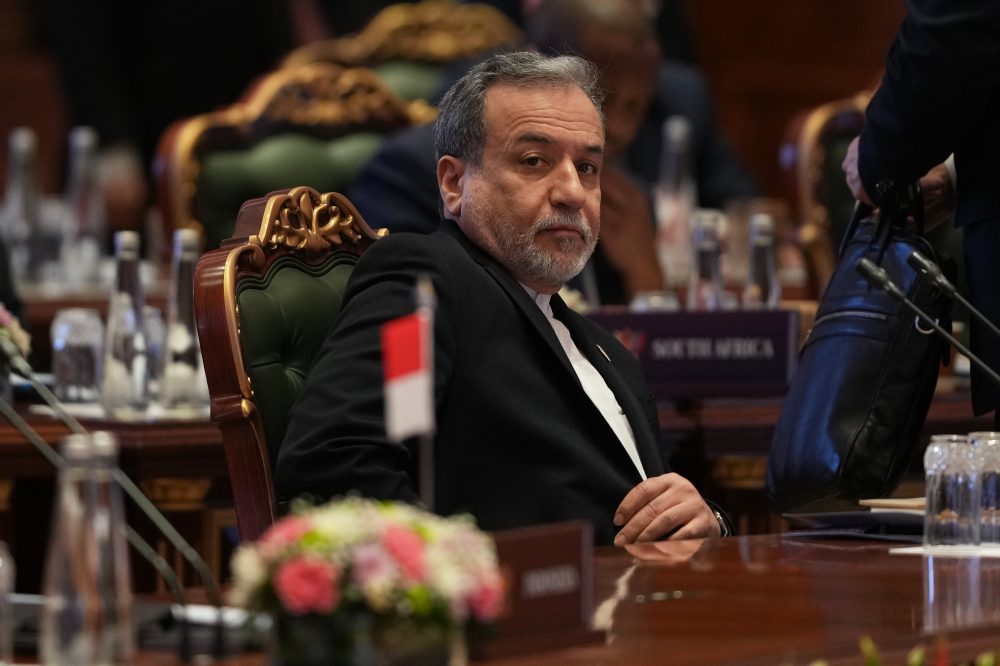

Iran’s foreign minister declared that mutual distrust represents the primary barrier blocking progress in discussions aimed at ending the conflict with the United States, while expressing Friday that Tehran remains receptive to diplomatic assistance, especially from China, to reduce regional tensions.
Speaking to reporters in New Delhi, Iranian Foreign Minister Abbas Araghchi stated that conflicting signals have “made us reluctant about the real intentions of Americans.”
“We are in doubt about their seriousness,” he explained to journalists, noting that discussions could advance if Washington demonstrated readiness for a “fair and balanced deal.”
Earlier this week, U.S. President Donald Trump rejected Iran’s most recent formal offer as “garbage.” Though Iran reportedly included certain nuclear compromises, Trump has stated his goal of removing highly enriched uranium from the nation and blocking its nuclear weapons development. Iran maintains its nuclear activities serve peaceful objectives.
As discussions between Iran and the U.S. remain frozen during the unstable ceasefire, regional tensions continue escalating and risk pushing the Middle East toward renewed open conflict while extending the global energy crisis triggered by the hostilities.
Iran continues controlling the Strait of Hormuz, a critical shipping route that handled one-fifth of global oil transport before the war began, while America maintains its blockade of Iranian ports.
Following their Friday discussions, Trump and Chinese President Xi Jinping reached agreement that the strait must be reopened.
Araghchi announced Friday that Iran would welcome diplomatic support from other nations, especially China, referencing Beijing’s earlier role in helping restore relations between Iran and Saudi Arabia.
“Chinese have a good intention. So anything that can be done by them to help diplomacy would be welcomed by the Islamic Republic of Iran,” he stated.
Beijing has demonstrated limited public enthusiasm for U.S. appeals to increase involvement, despite Trump’s comments to Fox News’ Sean Hannity that Xi had offered assistance during their discussions.
Pakistan announced Thursday it continues diplomatic efforts to reduce regional tensions through ongoing discussions regarding Iran-related ceasefire proposals. However, officials declined revealing specifics about the talks or confirming whether the United States had provided a formal response.
“The clock on diplomacy has not stopped. The peace process is working,” Foreign Ministry spokesperson Tahir Andrabi informed reporters in Islamabad.
Trump has insisted on significant reductions in Iran’s nuclear operations while Iran has maintained its uranium enrichment rights.
Israeli Prime Minister Benjamin Netanyahu, who initiated the war alongside Trump on Feb. 28, has similarly demanded complete removal of Iran’s highly enriched uranium from the country.
Iran’s foreign minister stated Friday that managing its enriched uranium stockpile represents one of the most challenging topics in negotiations with the U.S.
Russia has previously proposed accepting the stockpile if Iran agrees to surrender it. Araghchi indicated Russia’s proposal isn’t currently being actively considered, but could be reconsidered if negotiations advance.
“When we come to that stage, obviously we will have more consultations with Russia and see if the Russian offer can help or not. This is not something for the time being,” he explained.
The United Arab Emirates is accelerating completion of a new pipeline enabling the Gulf federation to export additional oil without using the Strait of Hormuz route.
Sheikh Khaled bin Mohammed bin Zayed Al Nahyan, the crown prince of Abu Dhabi, instructed state oil company ADNOC to expedite pipeline construction during an Abu Dhabi executive council meeting, the Abu Dhabi Media Office announced Friday.
The state oil company currently operates a pipeline designed to transport 1.5 million barrels daily from western oil fields to Fujairah port on the Gulf of Oman.
The additional pipeline is projected to double the company’s export capacity through that port. Operations will begin next year, the media office reported.