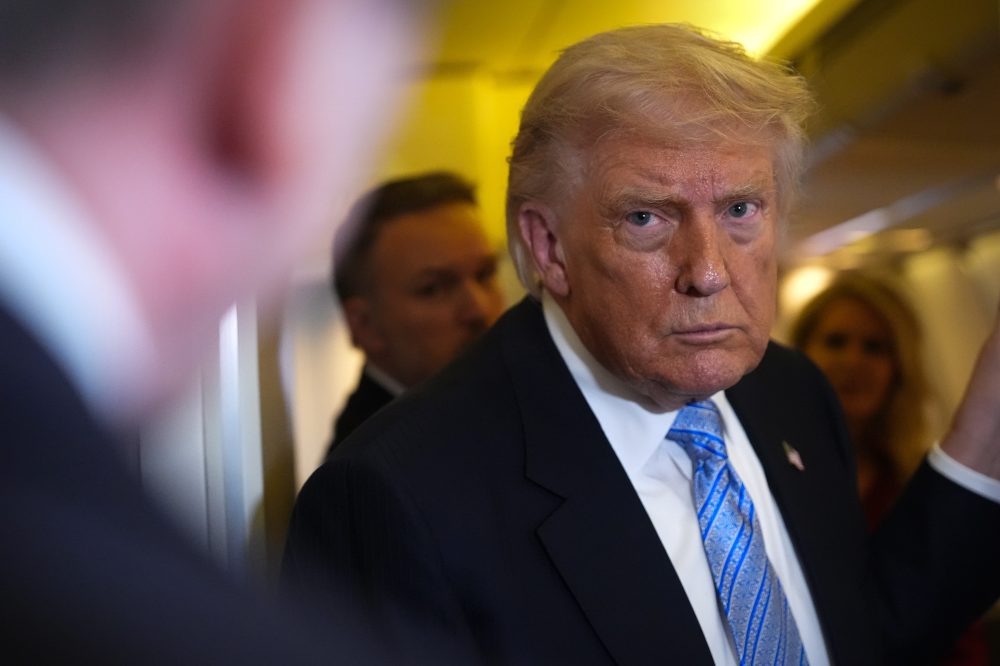

American and Nigerian military forces successfully eliminated a high-ranking Islamic State commander during a Friday operation in Nigeria, according to U.S. President Donald Trump.
The president revealed details of the collaborative mission in Africa’s largest nation through a late-evening social media announcement that provided limited specifics. Trump identified the target as Abu Bakr al-Mainuki, describing him as the Islamic State’s second-highest global commander who “thought he could hide in Africa, but little did he know we had sources who kept us informed on what he was doing.”
Intelligence officials described Al-Mainuki as a central figure in the terrorist organization’s operational structure and financial networks, who had been developing plans for attacks targeting America and American assets, according to a source who requested anonymity due to the classified nature of the information.
Nigeria’s President Bola Tinubu verified the military action and reported that Al-Mainuki died along with “several of his lieutenants, during a strike on his compound in the Lake Chad Basin.”
Records show Al-Mainuki was born in Nigeria’s Borno province in 1982 and assumed leadership of the Islamic State’s West African operations following the 2018 death of the previous regional commander, Mamman Nur, according to the Counter Extremism Project, an organization that monitors militant activities.
The Counter Extremism Project reported that Al-Mainuki operated from the Sahel region and likely participated in combat operations in Libya during the Islamic State’s presence in that North African country over ten years ago. U.S. authorities placed sanctions on him in 2023.
In his social media statement, Trump characterized Al-Mainuki as the “second in command globally” and claimed he was hiding in Africa, though security experts question the accuracy of this assessment.
Analysts indicate that Al-Mainuki served as deputy to Abu Musab al-Barnawi, who led the Islamic State West African Province until his reported death in 2021. He played a significant role in establishing ISWAP following its separation from Boko Haram in 2016.
“If confirmed, the killing of Al-Mainuki is huge because this is the first time a security agency has killed someone this high in the ranking of ISWAP,” said Malik Samuel, a senior researcher at Good Governance Africa who specializes in insurgent groups in Nigeria.
“The potential to cause chaos within the group is also there because the operation must have been carried out in the heart of ISWAP’s fortified base, which is very difficult to access.”
Trump previously authorized U.S. military strikes against Islamic State forces in Nigeria during December, though he provided minimal details about the results of those operations.
Nigerian military officials attributed the successful mission to their “recently formed U.S.-Nigeria partnership and intelligence sharing efforts.” Military spokesperson Samalia Uba stated that the operation has “disrupted a violent terrorist network that endangered Nigeria and the broader West African region.”
Nigeria continues to confront multiple armed organizations, including at least two groups with Islamic State connections, while managing a complex security emergency. Islamic State affiliates across Africa have become among the continent’s most aggressive militant organizations since the collapse of the IS caliphate in Syria and Iraq in 2017.
The United States deployed military advisors to the West African nation in February to assist its armed forces, and in March, the U.S. stationed surveillance drones there after Trump claimed that Christians were being specifically targeted in Nigeria’s ongoing security crisis.
Friday’s military action represents the most recent in a series of overseas covert operations that Trump has disclosed this year, beginning with the dramatic January overnight mission to capture and extract Venezuela’s then-leader Nicolás Maduro to the United States, followed nearly two months later by strikes that initiated the conflict with Iran.