
VIENNA (AP) — While English has traditionally dominated the pop music landscape, its supremacy at the Eurovision Song Contest is coming to an end.
This year’s sequin-filled international music competition features performances in 25 different languages, spanning from Albanian to Ukrainian, as it builds toward Saturday’s finale in Vienna. More Eurovision artists are choosing to showcase their native languages on the global stage.
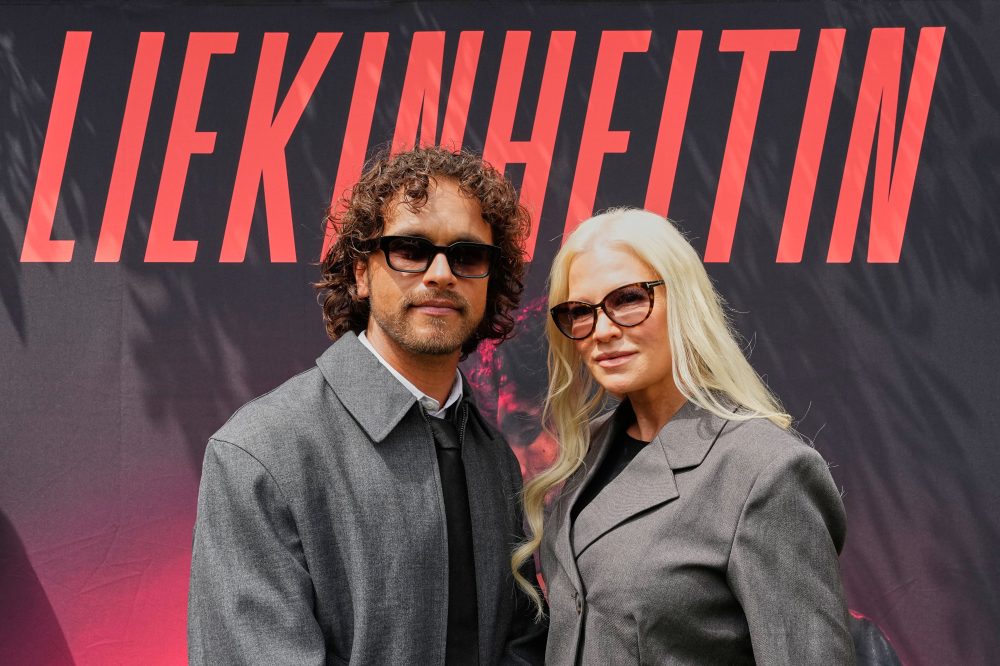
“It’s easier to talk about your feelings in your native language,” explained singer Pete Parkkonen, who represents half of the Finnish pair favored by bookmakers to claim victory with their powerful voice-violin collaboration “Liekinheitin,” which translates to “Flamethrower.”
“And the main language is love, obviously,” he added.
While Eurovision previously required contestants to sing in their nation’s official language, the rules changed in 1999 to allow performers to select any language. Many artists in subsequent years gravitated toward English to reach broader international audiences.
Research by cultural anthropologist Andrew J. Green from King’s College London revealed that between 1999 and 2024, 20 out of 26 Eurovision champions performed in English, though non-English entries have increased over the last ten years.
The trend shows dramatic growth: only three songs contained no English in 2016, with four in 2017. This year, the European Broadcasting Union reports 12 songs feature no English whatsoever, 16 are performed entirely in English, and seven blend multiple languages.
Among the 35 competing acts this year — with 25 advancing to the final round — audiences hear performances in Spanish, German, Croatian, Azerbaijani, Latvian, Lithuanian and Romanian.
Eurovision enthusiasts worldwide are discovering and singing terms like “Jalla” — a Cypriot expression meaning “more,” which titles Cyprus contestant Antigoni’s song — and “ferto,” meaning “bring it,” the name of Greek performer Akylas’ addictive party rap track.
Malta’s representative Aidan performs “Bella,” combining English and Maltese verses, thrilling supporters from the Mediterranean island.
Joseph Pace, who made the journey to Vienna to support Malta, described hearing international fans attempt Maltese lyrics as “amazing.”
“That we will listen to our language on an international stage, on a huge competition like this, it’s amazing,” he expressed.
Several entries blend various languages together.
Israel’s Noam Bettan performs the ballad “Michelle” with Hebrew, French and English lyrics. Rapper Satoshi incorporates calls in Romanian, English, Italian, French and additional languages in the energetic crowd favorite “Viva, Moldova.” Italian vocalist Sal da Vinci combines standard Italian with his native Neapolitan dialect in “Per Sempre,” his silky Eurovision contribution.
Even the United Kingdom, known for its monolingual approach, joins the multilingual movement, demonstrating British counting skills in German with “Eins, Zwei, Drei” by techno performer Look Mum No Computer.
“People want Eurovision to be different from other song contests,” noted Dean Vuletic, a scholarly authority on the competition’s background. “They look for meaning in Eurovision because it is a showcase of cultural diversity.
“It’s countries competing against each other. And we want to see meaning in their entries. We want to see them say something about the countries and the cultures that they are representing.”
Some artists acknowledge English remains valuable for broader reach. Ukrainian performer Leléka typically sings exclusively in her homeland’s language, but chose to include English in her song “Ridnym” to spread its message of hope and renewal to maximum listeners.
“It really has a very deep message that means the world to me, and I really want people to understand it,” she explained.