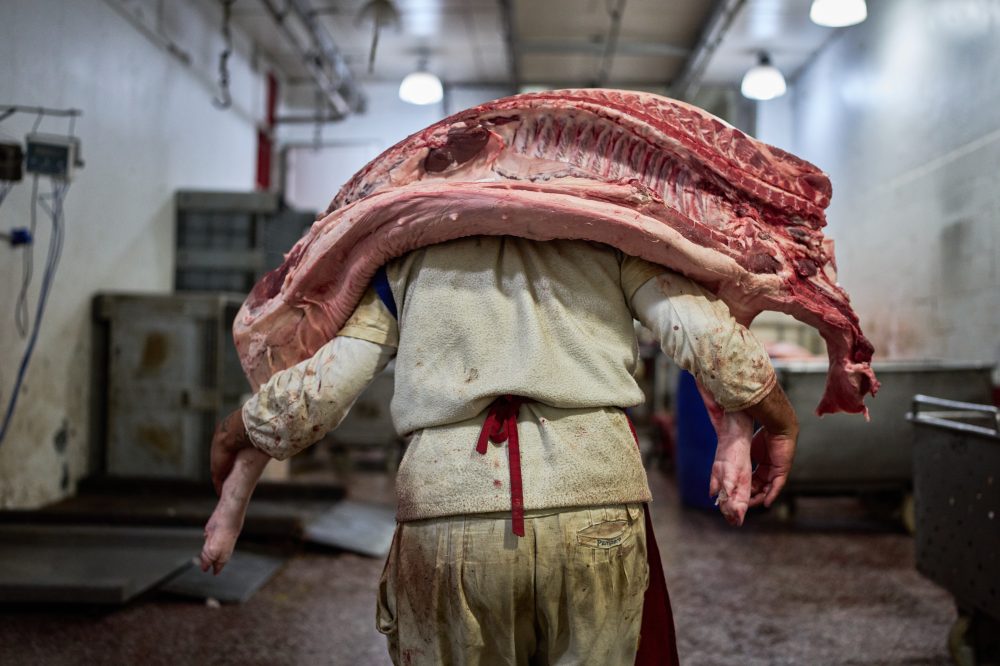

In the early morning hours at a Buenos Aires butcher shop in the Mataderos district, workers begin their day unloading beef from delivery trucks while wholesale customers wait in line. Inside the shop, 73-year-old owner Jorge García and his team start preparing meat orders before sunrise.
Alongside the traditional displays of red meat hanging from hooks and stacked in boxes, chicken and pork are becoming more common sights.
Beef consumption across Argentina — a nation traditionally known as one of the globe’s top beef-eating countries — has dropped to its lowest point in 20 years following economic belt-tightening policies implemented by libertarian President Javier Milei.
Data from the Agricultural Foundation for Argentina’s Development shows annual per-person beef consumption decreased to 44.5 kilograms (98 pounds) as of April 2026, compared to 49.5 kilograms (109 pounds) in the same period the previous year. This represents a significant decline from the 63.4 kilos (139 pounds) per person recorded in 2006.
“People are switching to cheaper proteins. They’re eating pork, they’re eating chicken,” García explained.
Experts point to rising beef costs, reduced cattle availability, and diminished household buying power as key factors behind this trend. Argentina’s decision to open its beef market to international commerce has also brought domestic prices more in line with worldwide rates.
“Beef moved into a completely different purchasing-power category. Workers’ wages fell far behind,” explained Juampi Quintero, a 25-year-old meat distributor who estimates his customers’ consumption has dropped by more than half.
After taking office in December 2023 facing 211% annual inflation, Milei vowed to eliminate what he termed “the cancer of inflation” through an adjustment program featuring spending cuts equal to nearly one-third of public expenditures, represented by his signature chainsaw imagery.
While the administration successfully turned around the fiscal deficit and achieved a budget surplus — an uncommon achievement in Argentina’s recent past — the social impact of these austerity policies has faced widespread criticism.
In a matter of months, Milei’s government dissolved 13 ministries, terminated approximately 30,000 government workers, suspended public construction projects, and reduced funding for essential sectors including education, healthcare, and scientific research. The administration also eliminated subsidies for basic utilities like electricity, gas, water, and public transportation.
“That affects household income because families now have to pay more for services that were previously subsidized by the state,” explained economist Camilo Tiscornia. “As a result, they have less disposable income and must give up certain more expensive goods, such as beef.”
Meanwhile, family incomes failed to keep pace with rising beef costs, further contributing to declining consumption patterns.
According to the most recent available information, registered workers saw wage increases averaging 1.8% in February, while monthly inflation reached 2.9%.
“Before, I had the freedom to buy what I wanted,” shared Alberto Brajin, a 61-year-old retiree who operates a street-side barbecue stand in Buenos Aires.
Brajin noted he must now “trade down” to less expensive protein options like chicken.
According to the Argentine Beef Promotion Institute, beef prices increased by more than 60% over the past year, reaching an average of 18,500 pesos ($13) per kilogram in Buenos Aires during May.
In July 2025, Milei’s administration lowered export taxes on beef and poultry while eliminating production quotas to boost international sales, reversing some restrictions put in place under former President Alberto Fernández aimed at controlling domestic price increases. These regulatory changes coincided with a more than 10% drop in Argentina’s beef production due to flooding and drought conditions, according to CICCRA, the nonprofit representing the country’s beef producers.
Government officials announced this week that beef exports jumped 54% in the first quarter compared to the previous year, totaling nearly 200,000 tons valued at over $1 billion. This growth followed a U.S. decision earlier this year to expand Argentina’s duty-free beef quota due to American cattle shortages.
With market liberalization, producers started selling beef — previously accessible across much of Argentina’s social hierarchy — at prices reflecting international market values.
“Previously, all meats had similar prices, which encouraged high beef consumption that did not reflect its real production costs,” agricultural consultant Iván Ordóñez noted.
As beef prices climb beyond many Argentine families’ reach, chicken and pork are emerging as more affordable protein options.
“We’ve chosen to buy pork and chicken because beef is too expensive,” stated shop owner Ruth Simon.
Chicken averages 4,900 pesos ($3.50) per kilogram, while pork ribs cost approximately 8,900 pesos ($6.30).
García, the butcher shop proprietor, mentioned he started offering chicken and pork less than a year ago after observing shifts in his customers’ purchasing patterns.
“You have to adapt,” he stated. “We can’t just sit around crying. No crying. We have to work. We have to keep our dignity. We have to fight.”