
Saturday’s Eurovision Song Contest finale kicked off in Vienna despite heightened security measures and wet weather that couldn’t dampen spectator excitement — though controversy continued to swirl around Israel’s participation in the competition.
Following days of anticipation, performers representing 25 nations appeared on stage at Vienna’s Wiener Stadthalle arena, vying for Europe’s most prestigious pop music title. Global audiences tuned in to witness the 70th anniversary celebration featuring diverse acts including a Finnish violinist with fiery performances, a folk rapper from Moldova, and a metal group from Serbia, among others.
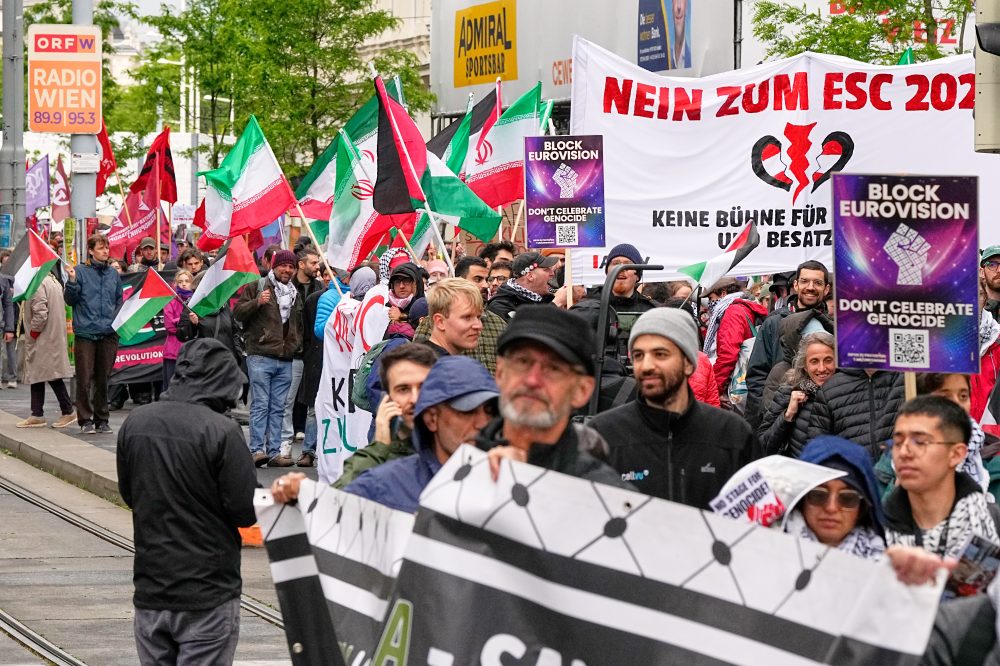
Political tensions overshadowed the milestone event for the third consecutive year, with activists demanding Israel’s removal due to ongoing Gaza conflicts and other military actions. Five nations with long Eurovision histories — Spain, the Netherlands, Ireland, Iceland and Slovenia — chose to skip this year’s competition as a form of protest.
The evening began with a cinematic opening sequence highlighting Austria’s stunning landscapes, featuring a paper boat journeying toward Vienna — a nod to 2025 Eurovision champion JJ’s tempestuous rendition of “Wasted Love.”
Last year’s victor, Austrian vocalist JJ who received operatic training, launched the live show, followed by an Olympic-style procession displaying flags of all 25 competing nations. The musical performances then commenced, with each artist having a brief 3-minute window to captivate millions of global viewers who join professional music industry juries in selecting the champion.
Saturday’s spectacular event featured hosts Michael Ostrowski, an Austrian performer recognized for his work in German-language comedic cinema, alongside Victoria Swarovski, who works as a model, vocalist, television personality, and represents the Swarovski crystal and luxury brand dynasty.
Eurovision’s leadership encouraged audiences to set aside political concerns and focus on enjoying what the director called the “brilliant, wonderful, heartfelt show” that defines the competition’s championship round.
While the contest marked its 70th year amid demands to remove Israel over its Gaza war conduct and the five-nation boycott, Eurovision director Martin Green described the event as an opportunity to “close the curtains to the outside world and dream that something else is possible” for several hours.
During a press briefing, he emphasized that Eurovision has spent seven decades providing “voice to the voiceless” and honoring marginalized groups.
“Here’s to the next 70 years,” he said.