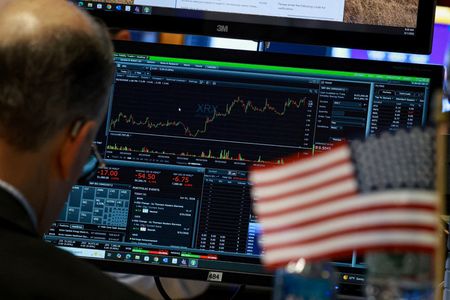

Asian financial markets surged Monday following an agreement between the United States and Iran to reopen the Strait of Hormuz and lift a U.S. blockade on Iran.
U.S. crude oil futures dropped more than 4%, while S&P 500 futures climbed roughly 0.8%. The dollar weakened across the board, pushing the yen to 159.7 per dollar and the euro up to $1.1616.
Market analysts from around the world weighed in on what the deal means for investors and global trade.
Jason Wong, Senior Markets Strategist at BNZ in Wellington, said the market’s response was measured because the deal had been widely anticipated. “This has been well anticipated, that’s why I think the market reaction can be pretty well contained. What you see on your screens today — we’re probably most of the way there now,” he said.
Wong added that he hopes the agreement allows markets to shift focus back to broader economic fundamentals. “It’s a good sign, hopefully we can put this behind us and focus on macro-economic forces…the market will assume things will gradually return to normal. It’s no longer a risk overhanging the market.”
Nick Twidale, Chief Market Strategist at ATFX Global in Sydney, predicted modest currency movements ahead. “I think we’ll see the dollar fall over the course of the next few sessions. We’ll probably see some of the risk currencies like Aussie and yen appreciate a little bit. But I don’t think we’re going to see any huge moves.”
Twidale also cautioned that restoring full oil flow through the Strait would be a slow process. “There’s going to be a lot of wait and see, on how quickly the Strait really reopens and how long it’s going to take for oil flow to really get back to normal. It’s certainly going to be months rather than weeks. I don’t think we’re going to see $70 oil too quickly.”
Kristina Clifton, Senior Currency Strategist at Commonwealth Bank of Australia in Sydney, called the development welcome news for the global economy but echoed concerns about the pace of recovery. “It’s obviously good news for the global economy that the Strait of Hormuz will reopen. It has been our view, though, that it’s going to take some time for oil and gas flows to restart in full. Markets will be focused on how traffic is returning…and seeing how quickly production can come back online.”
She added, “It is our view that energy prices are not going to go back down to the levels that they were pre-conflict for quite some time…and it’s going to take a while for traffic to go back to normal as well.”
Mahjabeen Zaman, Head of FX Research at ANZ in Sydney, noted that some of the positive sentiment had already been priced into markets. “This good news has been expected for some time now, and markets have been inching, waiting, with some of the positive vibe already embedded in pricing.”
Zaman warned that oil prices could see a brief spike before markets reassess the details of the agreement. “You may see (oil) break $80 on just, you know, happy days today…but then maybe the market will realise that, oh, wait a minute, maybe the terms of the deal may not be as lucrative. We also think that oil prices will remain a little bit on the higher side only because infrastructure has been damaged.”
Chris Weston, Head of Research at Pepperstone in Melbourne, said the deal appeared credible enough for markets to move forward. “It looks credible and it looks enough for the market to move on. We’re looking now at what Hormuz looks like in terms of the ramp-up of cargo and logistics through the channel, given there have been some structural changes (and) damage to refineries.”
Weston suggested investors would soon pivot to other market drivers. “I think there’s going to be a lot of other risk assets which are going to try to move on other factors such as the ramp-up of demand, people are looking at earnings again and central bank expectations this week. I think the trade is short volatility here. And that’s going to allow risk to come on…a further decline in long-end bond yields would be certainly quite welcome for equity risk.”