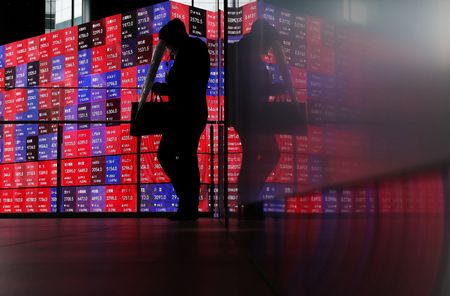

Stock markets across Asia surged Monday while the U.S. dollar weakened and oil prices dropped sharply after news broke that the United States had reached a peace agreement with Iran, lifting investor confidence and raising hopes for relief from energy-driven inflation worldwide.
Pakistani Prime Minister Shehbaz Sharif announced on social media early Monday that a deal had been reached. President Donald Trump confirmed the agreement, stating it included reopening the critical Strait of Hormuz, though he offered few specifics about the terms.
Iran, for its part, indicated that traffic through the strait would be managed jointly by Iran and Oman — a statement that raised eyebrows among trade observers, as it suggested some form of toll or regulation on shipping could be in the works.
Sean Callow, a senior FX analyst at ITC Markets, acknowledged the uncertainty but said it was unlikely to dampen the market mood immediately. “The lack of details especially on freedom of shipping is a concern but not one that should constrain markets today as the surge in risk appetite plays out,” he said.
Callow also noted the broader economic implications, adding, “The prospect of a sustained fall in energy prices changes the conversation for central banks just ahead of a flurry of policy decisions.”
The timing is significant, as numerous central banks are holding policy meetings this week. The news could take some pressure off those institutions to raise interest rates in response to energy-fueled inflation.
Although financial markets had already been anticipating some kind of agreement, the official confirmation was enough to push Brent crude oil down 4% to $83.80 per barrel — a far cry from its May peak of $126.41. U.S. crude fell 4.3% to $81.23 per barrel, though that remains above the $67 level seen before the conflict began.
On the equities side, S&P 500 futures climbed 0.8% and Nasdaq futures jumped 1.4% as investors moved into riskier assets. Nikkei futures rose 2% to 68,685, well above Friday’s closing figure of 66,020.
Central banks in the United States, United Kingdom, Japan, Australia, Switzerland, Sweden, Norway, and Russia are all scheduled to meet this week. Japan is widely seen as the most likely to raise interest rates at this round of meetings.
The U.S. Federal Reserve is broadly expected to hold its benchmark rate steady in the range of 3.50% to 3.75% on Wednesday. It will be the debut meeting for Fed Chair Kevin Warsh, and analysts will be closely watching the Fed’s statement, economic projections, and press conference for any hints that officials are shifting away from an easing stance as inflation concerns grow.
Traders moved quickly to adjust their expectations, with December futures edging up 4 ticks. The odds of a rate hike as early as October were priced at around 40%.
Treasury futures also gained ground on optimism that lower oil prices could sustainably reduce inflation risks, with 10-year note futures rising 10 ticks.
The combination of falling yields and improved risk sentiment pushed the dollar lower across the board. The euro gained 0.4% to reach $1.1608, while the dollar slipped 0.2% against the Japanese yen to 159.93. The British pound rose 0.3% to $1.3446.
The Bank of England is expected to keep its rate at 3.75% on Thursday and hold that level through 2026, with policymakers seen as in no hurry to tighten. Investors will be watching the bank’s vote breakdown and monetary policy report closely.
In the United Kingdom, key economic data releases this week include May inflation and retail sales figures, along with April employment numbers. A local election in Makerfield on Thursday is also drawing attention — a victory for Labour Mayor Andy Burnham there could trigger a leadership challenge against Prime Minister Keir Starmer.
In commodity markets, gold benefited from the drop in yields, climbing 1.4% to $4,280 per ounce.