
NEW YORK (AP) — Delaware residents might think they can avoid the buzz surrounding SpaceX, Elon Musk and initial public offerings, but their retirement accounts probably cannot.
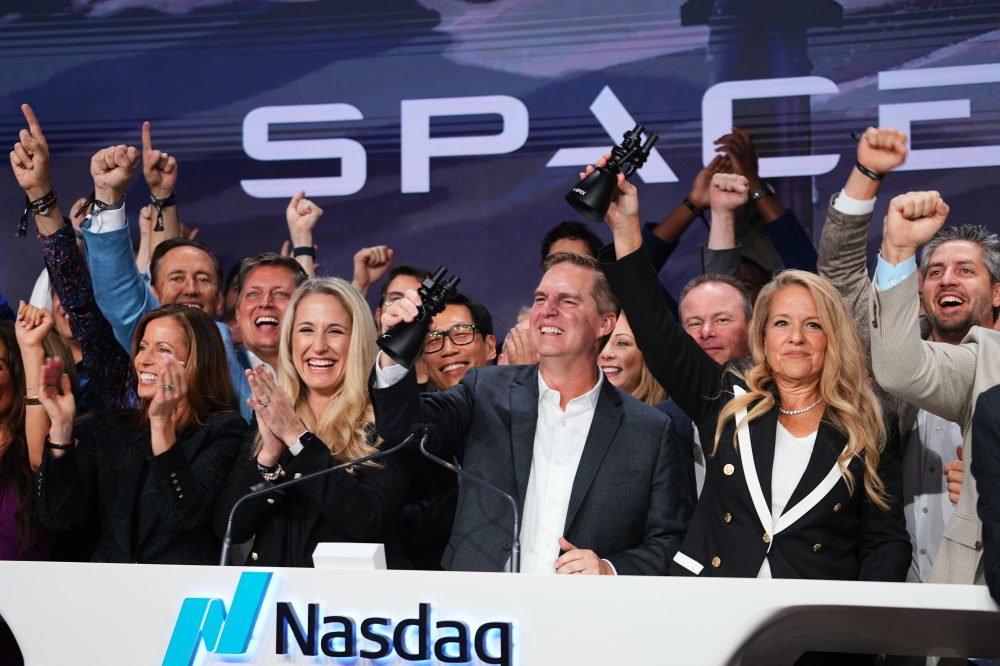
Following its Wall Street debut, SpaceX achieved a $2.1 trillion valuation after shares surged 19.2% on the first trading day. Regardless of personal opinions about whether the company merits a value exceeding the combined worth of Exxon Mobil, Bank of America and Coca-Cola, the market has spoken. Should SpaceX sustain such a substantial valuation, it will likely secure positions in prominent stock indexes.
These indexes operate without consideration for a company’s realistic growth projections or chief executive leadership. Their purpose centers on reflecting the performance of market segments or the entire market. When SpaceX meets the size requirements for index inclusion, whether in weeks or months, it will gain automatic entry.
This development carries significance for Delaware investors and their retirement savings because they increasingly rely on funds that mirror these indexes. This investment approach reduces costs, enabling savers to retain more of their returns. Due partly to this advantage, index funds have typically outperformed funds that actively select individual stocks.
According to Morningstar’s data through 2025, only 21% of actively managed U.S. stock funds both survived and outperformed their average index counterparts over the past decade. These performance differences resulted in U.S. index funds attracting more investor dollars than actively managed funds starting in 2024, with the disparity continuing to widen.
Here’s an examination of the current situation:
The investment industry created these tools to address a simple question: How is the market performing? This question becomes difficult to answer quickly when thousands of U.S. stocks move in various directions simultaneously.
The S&P 500 stands as the most recognized and influential index. It monitors 500 of America’s largest stocks, with trillions of investment dollars either directly copying it or using it as a performance benchmark.
While the Dow Jones Industrial Average enjoys recognition due to its 19th-century origins, it only follows 30 large stocks, receiving minimal Wall Street attention.
Given that index funds serve as the primary vehicle for many investors entering the stock market, companies actively seek index inclusion. Stock prices often experience significant increases following announcements from S&P Dow Jones Indices, Nasdaq, FTSE Russell or other index providers about upcoming additions.
The investment industry has developed funds, encompassing both traditional mutual funds and exchange-traded funds, to follow nearly every index type. By the end of last year, more than 1,000 index funds existed, with 185 of them tracking the S&P 500, according to the Investment Company Institute.
Nasdaq modified its regulations to permit certain large companies to enter its Nasdaq 100 index after only 15 trading sessions. This represents a departure from previous practice, which involved waiting until December for annual reconstitution to ensure inclusion of the 100 largest non-financial Nasdaq companies.
Several popular funds follow the Nasdaq 100 index, including Invesco’s QQQ exchange-traded fund, which manages approximately $477 billion in total investments. This means QQQ shareholders could automatically become SpaceX owners without taking any personal action.
Anthropic and OpenAI represent two additional major AI-focused companies preparing to offer their stocks publicly on U.S. exchanges for the first time. Their IPOs could potentially value each company near $1 trillion.
Historically, companies would go public well before reaching such massive sizes. However, SpaceX, Anthropic and OpenAI grew to enormous valuations through private investor funding, including pension funds, corporations and wealthy individuals, outside public markets.
This trend forces the investment industry to reconsider how quickly companies should be added to indexes that claim to track the largest corporations.
The organization managing the S&P 500 refuses to modify rules for faster SpaceX and other “mega” IPO inclusion. Their requirements mandate that stocks trade on eligible exchanges for at least 12 months before index consideration.
Additionally, S&P Dow Jones Indices demands companies demonstrate profitability in their most recent quarter and across their last four quarters combined.
SpaceX recorded losses of $4.9 billion last year and an additional $4.3 billion during the first three months of 2026. The company admits it “may not achieve profitability in the future.” Long-term stock prices generally correlate with company profit generation.
California and New York pension fund officials representing firefighters, teachers and other workers sent SpaceX a letter last month criticizing its corporate governance, particularly Musk’s control through special voting-power stock ownership.
They indicated potential SpaceX stock ownership through their index fund holdings.
Should Musk control substantial voting power over the board of directors, he would wield tremendous influence over SpaceX, “essentially making him unfireable without his own consent,” wrote the CEO of California Public Employees’ Retirement System, the New York state comptroller and the New York City comptroller in their correspondence.
Index funds mirror indexes. When a stock joins an index, the fund purchases it automatically, regardless of investor sentiment.
Tesla has maintained its S&P 500 position despite years of overvaluation criticism, with Musk’s electric-vehicle company becoming one of Wall Street’s 10 largest corporations.
Some indexes exclude companies with poor corporate governance or other specific criteria, but investors must actively seek these options.
The S&P 500 ESG index notably removed Tesla in 2022, for instance.