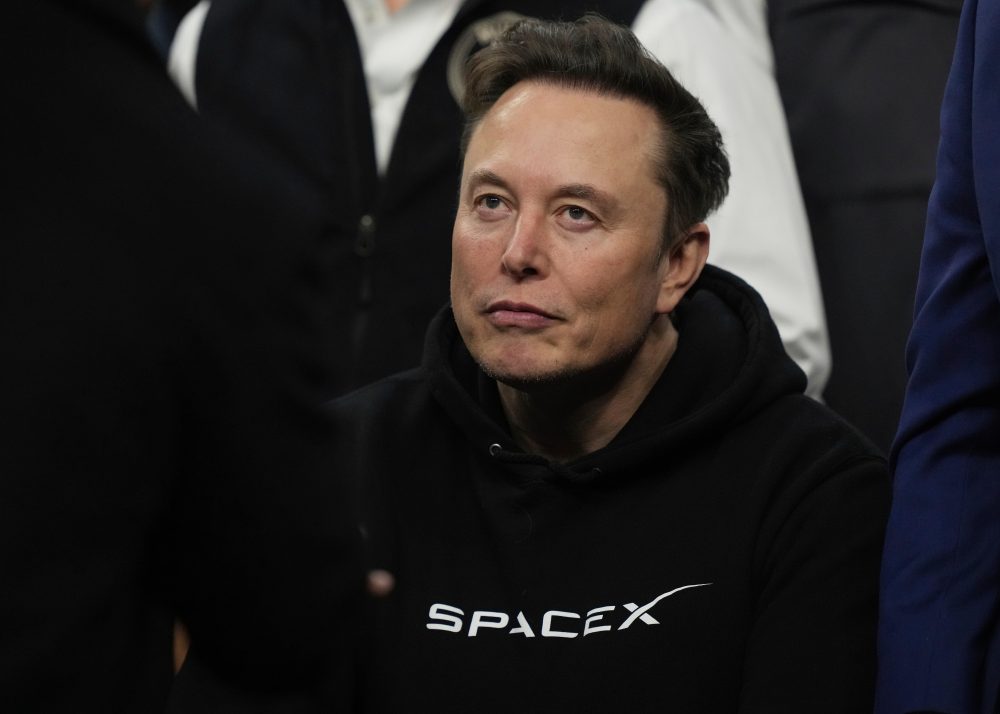

NEW YORK (AP) — The world’s wealthiest individual and first person to achieve trillionaire status, Elon Musk, oversees numerous diverse enterprises.
His portfolio includes electric cars, neural implants, subterranean transportation systems, the social platform formerly known as Twitter, and a space exploration company that launched its stock market debut this week.
As time has passed, many of these operations have been consolidated under unified management. Musk combined SpaceX — which began trading publicly on Friday — with his AI venture xAI earlier this year. He continues serving as chief executive at multiple corporations while maintaining various leadership positions and ownership interests in others.
This overview examines Musk’s extensive corporate holdings.
As the chief executive of SpaceX, which he established in 2002, Musk has expanded the enterprise well beyond rocket manufacturing. The company operates Starlink, a satellite internet service that serves as a major revenue generator, producing $4.4 billion in operational profits last year. SpaceX also encompasses social platform X, previously Twitter, which Musk acquired for $44 billion in 2022 and placed under xAI, the developer of the Grok AI assistant.
While both xAI and X operate at losses (the artificial intelligence division reported $6.4 billion in operational losses last year), SpaceX managed to generate substantial investor enthusiasm despite losing $2.6 billion in operations annually. The company achieved the largest stock market launch in history on Friday, ending trading near $161 per share with a total valuation of $2.1 trillion.
Critics suggest this valuation may be excessive. SpaceX has pledged to become an artificial intelligence frontrunner and eventually enable human settlement on other planets — ambitious objectives that include establishing orbital data facilities and Mars colonies. However, these plans depend largely on untested technologies and require enormous financial investment.
Musk also leads Tesla as CEO, a position he has maintained at the electric vehicle manufacturer since 2008.
Tesla faces increasing competition in the electric vehicle market. The company surrendered its position as the world’s top EV producer to China’s BYD last year. Revenue also suffered during consumer boycotts related to Musk’s political activities. While figures have partially recovered, Musk has consistently downplayed these challenges — stressing that Tesla’s future depends more on autonomous taxi services than traditional vehicle sales.
Outside automotive manufacturing, Tesla has increased production of robotic systems for residential and commercial use. The company has also operated in renewable energy for approximately ten years following its acquisition of SolarCity, which Musk founded with two relatives. Tesla became publicly traded in 2010 and later achieved trillion-dollar status on the S&P 500. Its current market value hovers around $1.5 trillion.
Musk additionally serves as CEO of Neuralink, a brain-computer interface enterprise he helped establish in 2016.
Neuralink joins numerous organizations developing connections between human neural systems and computer technology. The company has initiated clinical testing for individuals with spinal injuries, ALS, and related medical conditions. The organization (and occasionally Musk personally) has revealed several brain implant developments in recent years. As of January, Neuralink reported having 21 trial participants globally.
Musk also created The Boring Company, a ten-year-old enterprise focused on tunnel construction and underground transit systems.
The Boring Company operates projects including the “Vegas Loop” — an underground network utilizing Tesla vehicles that initially launched at the Las Vegas Convention Center in 2021. The company has promised high-speed transportation networks with planned expansion to Dubai and Nashville. However, the venture has encountered significant opposition. The organization faces accusations of violating numerous safety and environmental regulations in Las Vegas, where the complete route remains incomplete, plus criticism from Nashville municipal leaders.
Musk built his original wealth through two early companies, Zip2 and PayPal (originally X.com). These former startups were sold to different buyers years ago — generating approximately $200 million for Musk, which he subsequently used to launch SpaceX and make Tesla investments.