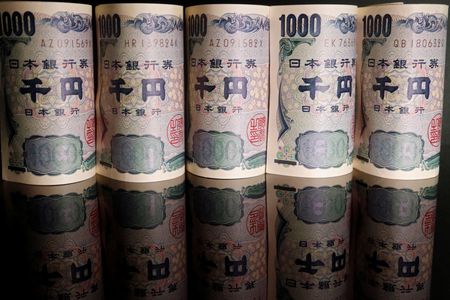

TOKYO — News of a planned halt to hostilities between Iran and the United States gave global markets a boost on Monday, but Japan’s yen was left largely unmoved, staying just above the 160-per-dollar threshold that triggered government currency intervention only last month.
Stocks and bonds rallied on the ceasefire announcement, which had raised hopes of easing global inflation pressures — especially in energy-importing nations like Japan. Despite that, the yen remained fragile, hovering near levels not seen in decades.
The Japanese currency now faces a pivotal stretch, with the country’s central bank set to meet and widely expected to raise interest rates to their highest point in 31 years. However, analysts caution the decision may fall short of what investors are hoping to see in terms of aggressive monetary tightening signals.
Attention will be focused on Bank of Japan Deputy Governor Shinichi Uchida, who will speak to the media in place of Governor Kazuo Ueda, who is currently hospitalized. Uchida is not expected to stray significantly from Ueda’s messaging, but any cautious tone could embolden those betting against the yen.
“The yen is still rather weak on the background of the BOJ still being behind the curve,” said Naka Matsuzawa, chief strategist at Nomura Securities. “I don’t really think the BOJ can satisfy the market expectations on hawkishness. The BOJ doesn’t want to go too much ahead of the government policy stance, only to become a scapegoat.”
Markets are nearly certain the Bank of Japan will lift its benchmark rate by 25 basis points on Tuesday to 1%. Even so, pessimism about the yen has grown, with speculative short positions climbing to their highest level since July 2024, according to futures data released Friday.
Ueda had recently emphasized the risk of energy prices feeding into broader inflation across the economy. With him now sidelined due to treatment for an infected liver cyst, Uchida steps into the spotlight — himself only recently discharged from the hospital last month, adding to the uncertainty surrounding what he might communicate after an extended period of public silence.
“Market players tried to read the difference in Ueda’s comments at each press conference to gauge his stance, but this time, they can’t do that,” said Kumiko Ishihara, a senior analyst at Sony Financial Group.
As a career central banker who rose to deputy governor, Uchida has previously offered strong hints about near-term policy direction, including the 2024 decision to wind down a massive decade-long stimulus program. While some observers consider him dovish, those who know him describe Uchida as a pragmatic and flexible communicator.
A formal peace agreement would fit within the central bank’s baseline outlook, under which it had sharply raised its inflation forecasts and flagged growing price pressures tied to the Middle East conflict. The central bank’s former top economist Seisaku Kameda said Monday that the latest developments in the region would not alter the BOJ’s anticipated course of two interest rate increases this year.
Had the war continued, inflation could have remained near 3% for two years — a scenario that might have justified a faster pace of rate hikes. A resolution to the conflict, however, changes that equation.
“Given the drop in oil prices, the risk for accelerating inflation may weaken,” said Masahito Sugawara, a senior strategist at Daiwa Securities. “Market players have been bracing for a hawkish stance from the BOJ, but the post-meeting comments from Deputy Governor Uchida may not be as hawkish as they had expected.”
Markets are currently pricing in one additional rate hike from the Bank of Japan later in the year. The BOJ had been the only major central bank still in a tightening cycle, but inflation stemming from the Gulf war has shifted that picture. Expectations are now building that the U.S. Federal Reserve’s next move could also be a rate increase.
“Overall, gradual yen appreciation is expected, but it will be important to watch for a rise in volatility around central bank events,” said Hirofumi Suzuki, chief FX strategist at SMBC. “If expectations for further rate hikes by the Fed continue against the backdrop of U.S. inflation, there is a meaningful possibility that the dollar will remain strong.”
When the BOJ chose to hold rates steady in April, the yen resumed its decline past the 160-per-dollar mark. That prompted Japan’s Ministry of Finance to spend 11.7 trillion yen — equivalent to roughly $73.12 billion — to support the currency, the largest monthly intervention on record.
With hopes for a more aggressive BOJ stance fading, analysts suggest that further government currency intervention may be the only remaining barrier to another yen slide.
“There is a risk that pressure will arise on the yen and dollar-yen rate could move toward 161,” said Masafumi Yamamoto, chief foreign exchange strategist at Mizuho Securities. “Concerns over intervention will likely increase.”