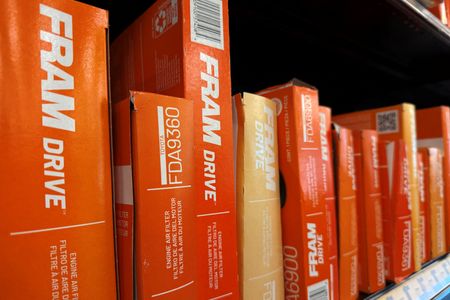

A bankruptcy court in Houston has given the go-ahead for collapsed auto parts manufacturer First Brands to proceed with its wind-down strategy, which includes pursuing legal action against the company’s indicted founder and other company insiders to recover funds for creditors.
U.S. Bankruptcy Judge Christopher Lopez on Friday authorized First Brands to gather creditor votes on its preferred approach to shutting down operations. The judge turned down requests from a federal watchdog agency and several creditors who wanted the case converted to a Chapter 7 liquidation overseen by a court-appointed trustee.
Lopez stated that First Brands should have the opportunity to determine whether creditors will back its lawsuit strategy, with a July court hearing scheduled to potentially approve the shutdown plan.
The auto parts company filed for bankruptcy protection in September following investigations by lenders into claims that the business fraudulently used the same assets as security for multiple loans.
Unable to successfully restructure during bankruptcy proceedings, First Brands remains saddled with over $11 billion in outstanding debts. Following the bankruptcy filing, company founder Patrick James and his brother Edward James faced federal fraud indictments.
The company’s downfall resulted in significant losses for major Wall Street investment firms and raised questions about fund managers’ risk exposure to struggling borrowers in private credit markets.
First Brands’ financial condition has continued to deteriorate since entering bankruptcy, with lenders facing potential losses on the additional $1.1 billion in emergency funding they supplied when bankruptcy proceedings began.
When those emergency funds were exhausted in January, First Brands had to depend on advance payments from major automotive customers including Ford and GM. Despite efforts to find a complete buyer for the company, First Brands managed to sell only select business segments for a small portion of what it had borrowed. The company divested its Horizon towing operation for $64 million, sold Toledo Molding & Die for $80 million, and disposed of its Walbro division for $50 million.
The company lacks sufficient funds to cover debts incurred after filing for bankruptcy, which typically receive priority as “administrative expenses” that must be satisfied before other obligations.
The Office of the U.S. Trustee, serving as the Justice Department’s bankruptcy oversight arm, reported in court documents that First Brands owes $223 million in administrative expenses, including payments to suppliers who delivered parts after the bankruptcy filing.
If the July court hearing results in approval, First Brands’ bankruptcy plan would establish a litigation trust designed to file lawsuits aimed at recovering additional funds for creditors.
The trust would begin operations with at least $75 million in startup funding, combining $25 million from First Brands’ available cash with $50 million in additional litigation financing from the same lenders who provided the $1.1 billion bankruptcy loan. The legal actions would target James and others accused of removing money from the company before it entered bankruptcy.