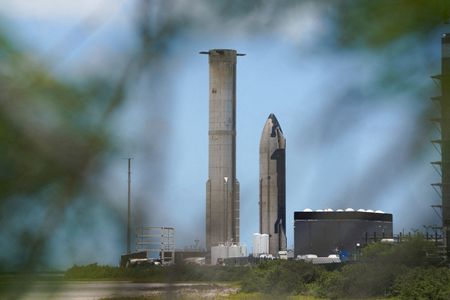

The massive $75 billion public stock offering from SpaceX is driving Chinese space companies into overdrive as they rush to capitalize on investor enthusiasm for rocket technology and satellite networks that have propelled Elon Musk toward becoming the world’s first trillionaire.
Chinese space firms are viewing the initial public offering as a roadmap for their own market debuts, though industry observers warn of a critical technology divide. These companies are preparing to go public without the substantial revenue streams or battle-tested innovations that form the foundation of SpaceX’s financial success, creating a mismatch that experts believe will limit their market valuations.
The investor enthusiasm remains strong despite these concerns. Huang Yan, who co-founded Shanghai-based Lantern Capital, revealed his 2016 investment in LandSpace is now delivering approximately 100-fold returns as the company prepares for its public debut.
Huang explained he dismissed early doubts about the sector, choosing instead to focus on the industry’s “technological moat and strategic value” for long-term growth potential.
Seven Chinese rocket and satellite enterprises, including LandSpace and CAS Space, are currently pursuing public offerings or pre-IPO funding rounds, though specific financial terms remain undisclosed. Market analysts at Soochow Securities project China’s commercial space sector could exceed $1 trillion in value by 2030.
The comparison to SpaceX reveals significant gaps in capability. While SpaceX approaches the public market with operational reusable rockets, its Starlink internet service, and ambitious plans for direct device connectivity and space-based artificial intelligence systems, Chinese competitors have not yet achieved successful reusable rocket launches.
“Everything SpaceX does is a bellwether for China’s space industry… I wouldn’t be at all surprised to see a strong uptick in Chinese commercial-space listings and funding,” said Ellis Scherer of the Information Technology and Innovation Foundation.
Scherer identified China’s absence of operational reusable rocket capability as “the biggest barrier” preventing the country from matching U.S. space achievements.
LandSpace, considered China’s leading private sector competitor to SpaceX, conducted its first Zhuque-3 rocket test in December, but the booster was unable to execute a controlled landing and could not be retrieved.
The capacity to recover, refurbish, and relaunch rocket boosters—essential for reducing satellite deployment costs—remains unachieved among Chinese companies.
Revenue figures underscore the substantial development gap facing China’s commercial space industry. LandSpace generated 36.4 million yuan ($5.2 million) in revenue during the first half of 2025, while SpaceX saw its income climb by one-third to nearly $19 billion in 2025, with roughly three-fifths coming from Starlink operations.
Gabriel Deville, a manager at consultancy Novaspace, suggested that a Chinese breakthrough in booster recovery technology could ease pressure on the country’s two primary Starlink-competing projects.
These initiatives—Guowang and Qianfan, internationally known as Spacesail—currently operate several hundred satellites combined, compared to Starlink’s approximately 10,400 operational satellites.
An unnamed Chinese space company executive, speaking confidentially due to media restrictions, estimated the most optimistic timeline would see China matching Starlink’s current satellite deployment around 2033, though acknowledged this target continues shifting.
However, successful deployment of Starship, SpaceX’s advanced heavy-lift rocket capable of launching three times more satellites per mission than Falcon 9, could expand the advantage gap between Starlink and Chinese competitors “exponentially,” the executive warned.
SpaceX’s integrated business model, where Starlink creates demand for the company’s own launch services, lacks a clear parallel in China. The Chinese sector remains divided across multiple companies, forcing startups to rely on contracts from government-backed satellite operators whose purchasing and deployment timelines remain beyond their influence.
“The big move of SpaceX was to move revenue generation away from launch and to broadband constellations,” Deville explained.
Despite these challenges, Deville noted Chinese startups possess stronger demand prospects than many Western competitors, since they can position themselves as crucial for deploying China’s independent satellite networks.
The domestic market opportunity would likely emphasize government and business customers rather than Starlink’s consumer-focused approach, with demand coming from transportation, shipping, remote industrial facilities, emergency services, and Belt and Road Initiative markets, he added.
However, state-owned enterprise dominance may prevent the emergence of a Chinese private sector equivalent to Starlink, according to industry experts.
“If you want to be a telco in China, there are no private telcos in China,” said Blaine Curcio, founder of Orbital Gateway Consulting.