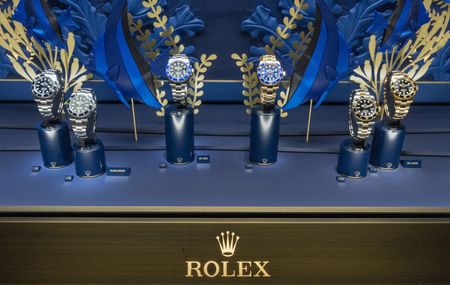

The renowned Swiss luxury watchmaker implemented a 5% price increase on its gold timepieces this month across major markets including Britain, Hong Kong and the United States, according to luxury research platforms and dealers.
This marks the second price adjustment of the year, following a slightly larger increase in January that was not worldwide and covered all watch types, not just gold models. The move demonstrates continued strong appetite for premium products even as the broader luxury goods sector experiences weakness.
The luxury watch industry has seen similar pricing moves from other major brands. Cartier, owned by Richemont, boosted prices on its gold watches by up to 10% last month, according to Mark Xu, head of marketing at research platform WatchCharts.
Richemont noted in its annual report that it had implemented selective price adjustments at its jewelry divisions, including Cartier, pointing to rising gold costs and currency fluctuations as factors.
Multiple price increases in a single year were also seen last year throughout the industry, though those changes reflected U.S. import duties that now stand at 10% for Switzerland, the world’s largest watchmaking hub.
The second price adjustment this year caught the market off guard, said Eric Boneta, a U.S. certified pre-owned watch dealer. “No one saw it coming,” he stated.
Industry experts note that the luxury watch sector continues successfully marketing timepieces as scarce investment assets to ultra-wealthy clientele, even as middle-class consumers have reduced luxury spending.
The Swiss company raised average prices by 6.2% in January across Germany, Hong Kong, Japan, the United Kingdom and the United States, WatchCharts data shows.
Neither the watchmaker nor Richemont provided comments for this report.
Gold values have nearly doubled since 2024, reaching approximately $4,200 per ounce. Gold timepieces from brands under major luxury groups including the Swiss watchmaker’s parent company, Richemont, LVMH, Swatch, Breitling and Chopard have increased 4% to 6% on average from a year ago, said Zouheir Guedri, founder of luxury research firm Data&Data.
Guedri explained that luxury watchmakers, targeting wealthy consumers who still have disposable income, were “encouraging clients toward precious-metal and higher-end references.”
Some specific models have seen much steeper increases. A white gold version of the company’s Cosmograph Daytona, a model worn by Hollywood actor Paul Newman in the 1970s, now sells for $59,100 in the U.S., representing a 14% increase this year and 33% rise since 2024.
Swiss exports of watches valued above 20,000 Swiss francs ($25,038) have more than doubled from pre-pandemic levels and represented over two-thirds of the industry’s 2025 total value of 24.4 billion francs, according to Vontobel analysts.
This compared to a 22% share of the total in 2019, the analysis showed.
Demand for the luxury brand’s watches will continue exceeding supply, predicts Simon Lazarus, head of PR and content at online luxury watch platform Chrono Hunter.
“It comes down to brand desirability,” he said. “The company has always been the high flyer.”