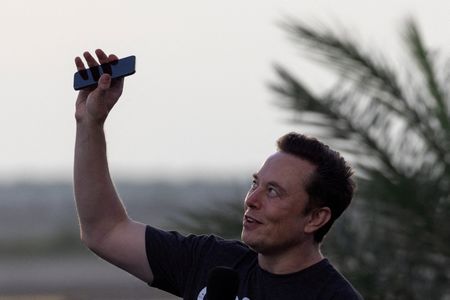

Elon Musk has maintained strict control over who gets to invest in SpaceX, his rocket company that’s making its highly anticipated public stock debut this week.
The billionaire’s selective approach meant early investors needed personal connections and had to pass interviews before being allowed to buy shares. One investor used ties to the entrepreneur’s cousin to purchase $10 million in stock back in 2018. Another portfolio manager at a major U.S. fund leveraged his relationship with a board member from the Musk-led Tesla to secure SpaceX shares in 2023.
Both early investors told Reuters they had to visit SpaceX facilities where Musk’s team, including CFO Bret Johnsen, conducted interviews before approving their investments. The world’s richest person personally signed off on each deal, though investors received minimal financial details about the company despite investing millions.
The strategy has paid off handsomely for early backers. SpaceX’s value has surged from approximately $30 billion in 2018 when Lyndon Rive — Musk’s cousin and former CEO of SolarCity — sold his stake. The company now expects to go public with a market value of $1.75 trillion.
“When we invested, it was straight up: Elon controls everything, and you’re not going to know anything unless you put in $250 (million),” said Ross Gerber, CEO of Gerber Kawasaki, an investment firm holding SpaceX and Tesla shares. Gerber said he proceeded because his Tesla investment had been extremely profitable.
Musk continues dictating terms as SpaceX enters public markets. Major banks including Goldman Sachs and Morgan Stanley have received specific instructions on marketing the stock and targeting particular investors. Some banks were told exact order sizes to fulfill — sometimes reaching billions of dollars — and given directions on investor types to pursue, according to five sources familiar with the process. Banks agreed to underwrite the offering without knowing their compensation.
The Nasdaq stock market’s CEO, Adena Friedman, spent months lobbying Musk and SpaceX President Gwynne Shotwell to secure the listing. In March, Nasdaq modified its index rules to accelerate large-cap companies like SpaceX joining the Nasdaq-100 after listing.
Unlike early investors with connections who are seeing massive gains, the company’s high valuation leaves little margin for error. Individual investors, including everyday buyers, will have access to 30% of the $75 billion offering.
SpaceX carries multiple risks for public investors: weak corporate governance with Musk holding absolute control, unprofitable operations, transactions between Musk’s various companies, and ambitious goals like Mars colonization and space-based data centers. However, few investors appear focused on these concerns amid the excitement.
“No fiduciary should accept this adverse combination of financial and governance risk,” wrote Tejal Patel, executive director of the union-affiliated SOC Investment Group, in a June 4 letter to other prospective SpaceX investors.
SpaceX and Musk did not respond to requests for comment. Rive and CFO Johnsen also did not respond. Major banks including Citi, Bank of America, Goldman Sachs, JPMorgan, Morgan Stanley and Nasdaq either declined comment or did not respond.
The upcoming public offering promises substantial returns for SpaceX’s early investors and employees. The fund manager who purchased Rive’s stock for $10 million now sits on more than $200 million in gains. After the public debut, SpaceX will represent 20% of his $1.5 billion fund’s holdings.
The anonymous fund manager described visiting SpaceX headquarters for an interview with CFO Johnsen. During the meeting, he faced questions about his fund’s finances, plans for future investments, and funding sources.
He received limited company information from Rive, who needed SpaceX approval before selling shares. To learn more, the investor sought details from outside sources, including a vendor manufacturing parts for the satellite company.
Such rigorous investor screening has become more common as private companies grow and gain market influence, though it was unusual at the time, the investor noted. “We felt like we were getting interviewed more than we were interviewing them.”
He eventually obtained basic financial data — revenue and growth figures — but no detailed information like balance sheet copies. This differed from most companies in his portfolio, which provide comprehensive information and regular updates.
Six investors said SpaceX maintains relatively concentrated ownership for a company its size. Reuters could not determine the exact number of shareholders, but private companies face additional regulations after reaching 2,000 shareholders.
SpaceX has disrupted the traditional public offering process. Banks typically drive investor outreach using their relationships and discretion — contacting investors, measuring interest, and advising issuers on allocations. During company roadshows, investors indicate interest within price ranges, and final pricing reflects that demand.
SpaceX reversed this approach, assigning banks to specific investor groups and regions in what participants call a “lane” structure. This directs firms to focus on defined offering segments rather than competing broadly. The company set a fixed price before launching the roadshow.
A source familiar with the deal defended this arrangement, saying it emerged from the company’s desire to make its 23 underwriting banks handle fair workloads and assign “accountability and ownership.” Some bankers spent over six months at SpaceX headquarters designing what the person called a “great collaboration.”
Another unusual aspect is the large retail investor allocation. During an April 6 virtual meeting with all IPO banks, Johnsen told attendees SpaceX was doing this “intentionally.”
“Those are folks that have been incredibly supportive of us and of Elon for a long time, and we want to make sure that we recognize that,” he said, according to a transcript seen by Reuters.
One banker said SpaceX planned marketing to retail investors internationally, including the European Union, Australia, Canada, Japan and Korea, without a listing.
Demand for the stock appears strong. Analysts handling the deal received up to 20 daily investor calls, above the typical 10 to 15 for popular offerings, one source said.
“I can see both sides of this. But betting against Elon Musk has been a mistake, in hindsight,” said Bradford Briner, North Carolina state treasurer. Briner expects his $149 billion state retirement system will own approximately $30 million in SpaceX shares as the company joins the Russell 1000 index tracked by part of the system.