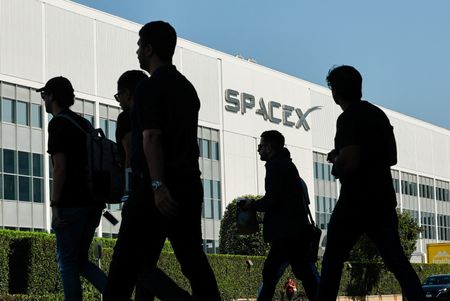

Space industry stocks experienced significant declines on Friday as investors moved to secure profits following SpaceX’s initial public offering, bringing an end to a sustained rally that had been building for months in anticipation of the major stock launch.
The company led by Elon Musk saw its shares rise 28% on its first trading day, reaching a market valuation above $2 trillion as both large institutional buyers and individual investors participated in what became the largest stock market debut in history.
The intense interest surrounding the IPO has brought increased attention to the previously specialized space industry, boosting investor enthusiasm for satellite communications, commercial space flight, and ventures beyond Earth.
“The space sector has seen a strong run up … and profit-taking is that lazy sort of excuse of why things have gone down. But I think, inevitably, people would be concerned that the hype can’t quite live up to expectations,” said Chris Beauchamp, chief market analyst at UK-based broker IG Group.
During Friday’s trading session, Rocket Lab and Planet Labs each dropped approximately 8%, while Intuitive Machines declined 11%. AST SpaceMobile, a smaller competitor to SpaceX’s Starlink satellite operations, decreased more than 12%.
Virgin Galactic, an aerospace and space tourism company, dropped around 28%. The company’s stock, which trades under a ticker resembling SpaceX’s ‘SPCX’ symbol, had gained over 20% on Thursday, with some attributing the rise to investor confusion between the two companies.
Exchange-traded funds focused on space investments, including Procure Space ETF, Ark Space & Defense Innovation ETF, and Roundhill Space and Technology ETF, all declined between 1% and 6%.
Year-to-date performance for space stocks has ranged from gains of 34% to 89% through the previous trading session.
The surge in space stock valuations had created concern among market observers, with analysts and investors questioning the high price multiples that have resembled SpaceX’s own elevated pricing without the well-known “Musk premium.”
Rocket Lab, as an example, carried a market capitalization of $66 billion as of the previous close, despite generating approximately $600 million in annual revenue last year.
The decline might also indicate that investors were selling these positions to accommodate SpaceX shares in their investment portfolios.
“This could be a classic case of ‘capital recycling’ where institutional investors may be trimming positions in smaller pure-play peers to free up the massive liquidity and portfolio allocation needed to anchor the SpaceX juggernaut today,” said Talley Léger, chief market strategist of The Wealth Consulting Group, a wealth advisory firm.