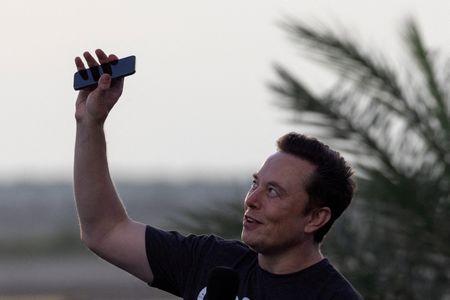

A tech mogul has reached an unprecedented financial milestone, becoming the planet’s first individual to achieve trillionaire status following his space exploration company’s massive public stock offering.
The entrepreneur, who has become deeply woven into modern popular culture, has built a devoted fan base despite reaching stratospheric wealth levels at a time when public sentiment toward the ultra-rich has grown increasingly negative. Unlike other billionaires who cultivate folksy public images, this business leader has maintained popularity through a more unfiltered approach.
Supporters appreciate his direct communication style, while detractors argue he wields excessive influence and have raised questions about how his companies are managed, particularly regarding his growing involvement in partisan political activities.
His space enterprise, which focuses on rockets, satellites and artificial intelligence alongside his electric vehicle company, completed a historic $75 billion initial public offering on Thursday, demonstrating strong investor confidence in his business ventures. Before the stock sale, financial publications estimated his wealth at approximately $780 billion, significantly ahead of his closest competitor.
“The second richest person has been hovering around $300 billion, so about less than one-third of what Musk can potentially be worth tomorrow,” said Matt Durot, deputy editor at Forbes Wealth. “And only one other person, (Oracle founder) Larry Ellison, has ever been worth $400 billion.”
The majority of his fortune now comes from his space company, where his ownership stake is valued at roughly $866 billion. Combined with his electric car company and other investments, his total wealth will surpass $1.1 trillion when trading begins Friday, according to financial analysts and company documents.
He first gained widespread recognition through his electric vehicle and space companies before expanding his reach by purchasing a major social media platform for $44 billion in 2022. This acquisition provided him direct access to hundreds of millions of users and established him as an influential voice on topics including politics, immigration, government spending and free speech.
His entry into politics, especially his position in the Department of Government Efficiency under the current administration, has generated significant controversy. This political involvement has coincided with declining electric vehicle sales in international markets during 2025, as protests and consumer boycotts have targeted his automotive business.
The 54-year-old entrepreneur was born in Pretoria, South Africa, to parents from Canada and South Africa. He completed his education at the University of Pennsylvania, graduating in 1997.
He assumed leadership of the electric vehicle company in 2008, believing that battery-powered cars could deliver both high performance and advanced software capabilities, ultimately transforming the global automotive sector. Industry experts credit his company’s success and trillion-dollar market value with pushing traditional automakers toward electric vehicle development.
Many investors believe he can achieve similar success in space exploration and artificial intelligence. However, his space company continues to require substantial funding, and much of its valuation depends on technologies that may need years or decades to become profitable.
In addition to his two primary companies, the entrepreneur has helped establish five other ventures, including a tunneling startup and a brain implant company.
As head of the electric vehicle manufacturer, he has generated both controversy and acclaim. He receives credit for building the world’s most valuable automotive company, despite initial skepticism from established automakers who doubted a startup could successfully mass-produce electric vehicles profitably.
“He renewed the world’s respect for American ingenuity in automotive engineering,” said Bob Lutz, a former General Motors vice chairman.
Simultaneously, the electric vehicle company has encountered legal challenges and investor concerns related to its high-profile leader, particularly regarding his 2018 compensation package, previously valued at $56 billion.
His influence has grown so extensive that market analysts have coined the term “Muskonomy” to describe his network of businesses.
This phenomenon has created what some investors call the “Elon premium,” where company valuations increase based on confidence in his vision rather than conventional financial analysis.
“Much like Tesla, SpaceX is a bet on Elon Musk,” said Matt Kennedy, senior strategist at Renaissance Capital, a provider of IPO-focused research and ETFs.
“A market cap of $1.5 trillion-$2 trillion would certainly throw all traditional valuation methodologies out the window, and is instead best characterized as the ‘Elon Musk premium.’”
The concentration of power around one entrepreneur has intensified concerns about corporate oversight, potential conflicts of interest and the dangers of linking company success too closely to a single person.
Throughout his career, he has engaged in public disputes with regulators, other wealthy individuals, short sellers, journalists and media companies, including Reuters, often conducting these conflicts through social media platforms.
His partnership with the current president followed a predictable pattern. After financially supporting the president’s campaign and serving in an advisory capacity through the administration’s DOGE program, he became one of the president’s closest corporate supporters.
The relationship later deteriorated due to disagreements over policy and spending, leading to a public dispute. While both parties have adopted a more diplomatic approach recently, their conflict highlighted the increasingly unclear boundaries between his business interests and political goals.
Despite concerns about his unconventional behavior, many investors believe his proven ability to transform ambitious concepts into highly valuable companies outweighs potential risks.
“Elon is the Edison of our time,” JPMorgan Chase CEO Jamie Dimon said during a recent conversation with the entrepreneur.
The banking executive, who previously opposed him in an extended legal dispute, has since become a supporter. Dimon told CNBC last year that they had “hugged it out,” and praised him as “our Einstein.”