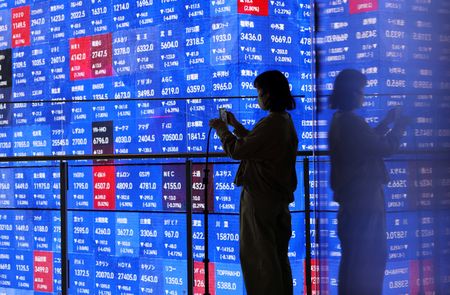

Global financial markets are experiencing a substantial upswing as investors react positively to potential de-escalation in the Iran conflict, though some experts wonder if this April 1st rally might prove to be wishful thinking.
Stock markets across Asia and Europe posted impressive gains after President Donald Trump indicated that American military operations against Iran could wrap up in two to three weeks, without requiring Tehran to agree to any preliminary conditions for ending hostilities.
The optimistic sentiment drove Asia-Pacific equity indexes to their strongest performance in weeks, with the MSCI benchmark excluding Japan climbing 4.3% and breaking a four-session decline. This surge represents the index’s most robust single-day performance since the April 10 post-Liberation Day recovery.
South Korean markets led the charge with the Kospi index jumping as much as 7.7%, bolstered by March export data that far exceeded analyst predictions. Manufacturing activity in the country also reached its fastest expansion rate in over four years during March, driven by strong semiconductor demand and new product introductions.
Technology-focused markets in Japan and Taiwan also posted strong gains, with Japanese corporate confidence showing improvement in March according to recent data releases.
The market enthusiasm persisted despite reports from the Wall Street Journal suggesting the UAE might join the conflict and is seeking UN Security Council approval for military involvement to reopen the Strait of Hormuz. Additionally, U.S. Foreign Secretary Marco Rubio indicated that America may need to reassess its NATO relationships following the war’s conclusion.
President Trump is scheduled to provide a national update on the Iran situation during a Wednesday evening address at 9 p.m. Early Wednesday trading showed S&P 500 futures gaining 0.2%.
Tuesday’s Wall Street session saw significant advances as investors anticipated a possible resolution to the conflict, while oil markets showed more restrained movement during Asian trading hours. Brent crude futures increased 1.2%, recovering some ground from the previous day’s losses.
European market futures opened higher Wednesday morning, with pan-regional contracts up 1.8%, German DAX futures climbing 1.8%, and FTSE futures advancing 0.9%.
In other market developments, Greece is set to rejoin MSCI’s developed market classification beginning May of next year, representing a significant recovery milestone 13 years after being removed from the benchmark.
Wednesday’s key economic indicators include manufacturing PMI data from France, Germany, and the eurozone, along with U.S. retail sales figures, ISM manufacturing data, and weekly energy inventory reports. Germany will also conduct a seven-year government debt auction.