
Pharmaceutical companies are holding back the release of new medications across Europe as they navigate uncertainty surrounding President Trump’s drug pricing initiatives, according to industry leaders and recent market data.
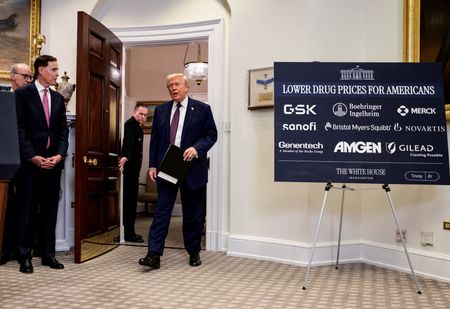
The Trump administration has been working to reduce prescription drug costs for American consumers, who typically face much higher prices than patients in other developed nations. The president has criticized the industry for treating U.S. consumers unfairly and has proposed linking American drug prices to what other countries pay, particularly in Europe – a strategy called most-favored-nation pricing.
This policy shift has prompted pharmaceutical companies to delay introducing certain medications in European markets, where healthcare spending remains lower, to prevent undermining prices in the massive $700 billion American market. The situation has created challenging decisions for company leaders and European healthcare officials.
“We’re seeing first signs of delayed introductions into Europe,” stated Stefan Oelrich, who serves as president of the European Federation of Pharmaceutical Industries and Associations and holds a senior position at Bayer.
Oelrich attributed the delays to “a consequence of uncertainty around what that ultimately does to U.S. pricing.”
Market research company GlobalData reports that new medication launches in Europe have dropped significantly since the United States implemented international reference pricing in May. This data supports statements from industry leaders and government officials.
According to GlobalData’s analysis, drug launches in European Union markets decreased by approximately 35% during the 10 months following Trump’s executive order, compared to the preceding 10-month period. By postponing launches at lower EU prices, companies may be able to maintain higher U.S. prices for extended periods.
European governments typically negotiate medication prices for their national health systems, which keeps costs controlled. The United States operates a more complex system where pharmaceutical companies negotiate prices with insurance companies, pharmacy benefit managers, and other entities, while also providing rebates and discounts from listed prices.
Lionel Collet, who leads France’s HAS health authority, reported that pharmaceutical companies are increasingly postponing decisions regarding France’s early-access program, which permits patients to receive certain medications before official approval. Applications for early access prior to marketing approval have declined substantially over the past year.
“The arrival of Trump has altered companies’ strategy of how they put products on the market,” Collet explained, noting that HAS early-access decisions dropped to 10 last year from 25 in 2024.
France ranks among Europe’s lowest-priced medication markets, with prices approximately one-third of United States levels, according to Collet. Pricing in France and Germany typically influences how other European nations establish their own prices.
“Manufacturers all talk to me about Trump, since the autumn. It’s all about the policy in the U.S. and what it means for Europe,” Collet said.
American pharmaceutical company Insmed announced in February that it was postponing the German launch of its anti-inflammatory medication Brunspri due to uncertainty regarding U.S. pricing strategies.
“We want clarity on the MFN policies,” CEO William Lewis explained during an earnings call. “It seems to us that the prudent thing to do is to sort of put things on hold until we know what that’s going to look like.”
The medication received European approval in November but has not yet launched in the region. The company immediately began selling it in the United States after receiving FDA approval in August. More than 90% of drugs approved in 2025 first launched in the U.S., with most remaining unavailable elsewhere.
Leadership at Swiss pharmaceutical companies Roche and Novartis, as well as Britain’s AstraZeneca, have recently criticized European drug pricing and innovation incentives, advocating for increased spending.
AstraZeneca executive Ruud Dobber warned that Europe risks falling behind the United States and China due to government approaches to valuing medications.
Europe allocates approximately 1% of GDP to pharmaceuticals, compared to 2% in the United States and 1.8% in China. The region has lost ground in research and development investment, clinical trials, and innovative therapy launches, according to lobby group EFPIA.
Some companies have withdrawn their medications from European markets entirely. California-based Amgen removed its cholesterol medication Repatha from Denmark, citing prices and a “changed environment,” without directly referencing MFN policies. Indivior withdrew anti-addiction drugs Subutex and Suboxone from Sweden and other markets, also without directly citing U.S. pricing concerns.
Boston-based healthcare attorney Ron Lanton explained that uncertainty surrounding U.S. pricing benchmarks and enforcement is creating complications for companies with their investors.
“You have to tell your shareholders exactly how much money you expect to earn from this new launch. And none of that’s clear,” Lanton said. He noted that launching drugs in Europe has stalled because it’s like “playing a game of chess” wearing a “blindfold.”
“I’m not surprised that things are going to be launched a lot slower,” he concluded.