
Financial markets surged Wednesday as investors grew increasingly hopeful that tensions in the Middle East could soon ease, with President Donald Trump indicating America would pull out of Iran “pretty quickly” ahead of his prime-time television speech.
The optimism sent stock markets climbing across the globe while driving down oil prices and weakening the dollar. Trump’s evening address is expected to “provide an important update” on the Iran situation, though market analysts warn the speech could create volatility in either direction.
In a market analysis column, financial expert Jamie McGeever examined whether central banks have been dumping U.S. Treasury bonds, noting that Federal Reserve custody holdings have dropped to their lowest point in 16 years. According to McGeever, while central banks likely are selling these securities, the pace isn’t as rapid as many believe.
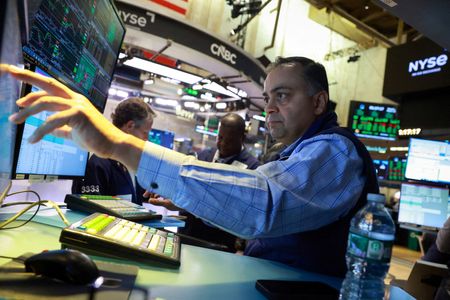
Stock markets painted a picture of widespread gains, with South Korea jumping 9% and Japan rising 5% in Asian trading. European markets also participated in the rally, with the STOXX 600 climbing 2.5% and London’s FTSE 100 advancing 1.8%. On Wall Street, the S&P 500 gained 0.7% while the Nasdaq posted a stronger 1.2% increase. The MSCI World index recorded its largest two-day advance since April of last year.
Eight of the S&P 500’s sectors posted gains, with industrial, materials, technology, and communications services companies all rising at least 1%. Energy stocks bucked the trend, falling 4% in their worst single-day performance in a year. Individual stock movers included Nike, which plummeted 15%, and Chevron, down 5%. On the positive side, Intel surged 8% while Eli Lilly climbed 5%.
Currency markets saw the dollar weaken by 0.4%, marking its steepest two-day decline since early February. The British pound led gains among major developed-nation currencies, while the Chilean peso topped emerging market performers.
Bond trading remained relatively calm, with Treasury yields edging up 1-2 basis points across different maturities. Interest rate futures began pricing in the possibility of a Federal Reserve rate cut this year rather than an increase.
Commodity markets reflected the geopolitical optimism, with Brent crude falling 3% and West Texas Intermediate dropping 2%. Gold bucked the trend by gaining 2%, while U.S. natural gas hit a six-month closing low.
The uncertainty surrounding Trump’s messaging has created confusion in markets. Recent statements from the president have been contradictory – sometimes declaring the war over, other times suggesting continued bombing campaigns. Similarly mixed signals have emerged regarding the strategic Strait of Hormuz, potential ground troops, and the likelihood of reaching a diplomatic agreement.
Despite March bringing armed conflict, oil prices reaching $100 per barrel, and major global supply disruptions, consumer confidence and business sentiment surveys suggest widespread optimism that any economic damage will prove temporary. Purchasing managers’ indices also reflect this generally positive outlook.
Investors appear eager to capitalize on market dips, though questions remain about whether this confidence will translate into solid economic activity data. While it’s hard to envision no impact on production, trade, spending, or investment, markets have defied expectations before.
In an unusual twist, U.S. natural gas futures fell Tuesday to their lowest level since the Middle East crisis began February 28, posting their weakest close in half a year. While global energy prices remain elevated and volatile, particularly in Asia and Europe, American gas prices face pressure from high storage levels and unseasonably mild weather. The front-month contract closed Tuesday at $2.819 per million British thermal units, down 20% from its post-February 27 peak of $3.494 reached March 9.
Looking ahead to Thursday’s trading session, market participants will be watching for Middle East developments, energy market movements, and economic data from Australia, South Korea, Canada, and the United States. Federal Reserve Dallas President Lorie Logan is also scheduled to speak.