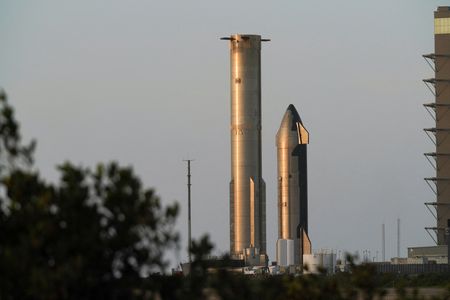

Elon Musk’s rocket company SpaceX has quietly submitted paperwork for what financial analysts are calling a potential game-changer for the struggling initial public offering market worldwide.
The aerospace startup is seeking to raise more than $50 billion through its stock market debut, which would establish a company valuation of approximately $1.75 trillion. This massive figure would surpass Saudi Aramco’s 2019 listing as the largest IPO in global history.
The worldwide market for new stock offerings has been searching for a major success story for several years, with the last company to go public at over a trillion-dollar valuation being the Saudi oil giant five years ago.
SpaceX possesses several characteristics that market observers believe could break the current dry spell in large-scale public offerings: an enormous valuation exceeding one trillion dollars, a chief executive with devoted retail investor followers, and involvement in a rapidly expanding industry sector.
However, financial experts remain divided on whether investors possess sufficient interest for such a massive stock offering. Additionally, some analysts suggest the company’s unique position might limit its ability to boost broader market confidence.
Brian Jacobsen, who serves as chief economic strategist at Annex Wealth Management, described the situation to Reuters in stark terms. “It’s either a bellwether or a harbinger,” Jacobsen stated.
Jacobsen explained that while sufficient excitement surrounds the company to draw investor attention, SpaceX might be so distinctive due to its famous CEO that it could potentially harm other space industry stocks by monopolizing all available interest, rather than benefiting the sector overall.
Samuel Kerr, who leads global equity capital markets at data provider Mergermarket, emphasized the historic nature of the potential offering. “SpaceX will be far and away the largest IPO in history at the sizes being discussed now,” Kerr explained.
“It will be a real test for public market capacity at a time of real market turmoil. But if any business can list in this market, its probably SpaceX given the tremendous hype,” he added.
The rocket manufacturer’s stock market launch could function as a crucial indicator for the IPO industry overall. Strong investor reception would signal that a long-anticipated recovery in major deals is finally beginning.
Multiple years of unpredictable markets, caused by increasing interest rates, inflation worries, and international political tensions, have forced companies to delay their public offerings, even as more businesses prepare for potential listings. Industry professionals hope 2026 will mark a widespread return of market debuts.
Kat Liu, a vice president at IPO research company IPOX, believes a successful SpaceX launch could trigger additional large offerings. “A successful SpaceX listing could well act as a catalyst for other large-scale IPOs,” Liu stated.
“It would demonstrate that public markets have both the depth and appetite to accommodate sizeable, high-valuation offerings, and could help validate current late-stage private market pricing,” she continued.
Multiple prominent privately-held companies, including SpaceX, artificial intelligence developer OpenAI, and TikTok’s parent company ByteDance, have achieved valuations comparable to major publicly-traded corporations, blurring traditional distinctions between private and public enterprises.
A successful SpaceX public offering would place the company alongside technology giants like Microsoft and Apple, which attract the majority of both individual and institutional investment dollars.
In February, Musk announced that SpaceX had purchased his artificial intelligence company xAI in a record-breaking transaction. According to a Reuters source, this deal established SpaceX’s worth at $1 trillion while valuing xAI at $250 billion.
Minmo Gahng, an assistant finance professor at Cornell University, analyzed the strategic benefits of this acquisition. “The recent xAI fold-in allows him (Musk) to bundle launch, Starlink, and AI into a single, scarce mega story that can support a richer valuation than the businesses might achieve separately,” Gahng observed.
According to January reporting by Reuters citing informed sources, SpaceX earned approximately $8 billion in profit from $15 billion to $16 billion in revenue during the previous year.
Current market indicators show that an index monitoring major stock debuts has performed worse than general equity benchmarks over the past twelve months.
Financial analysts suggest that a successful SpaceX public debut could encourage other large, postponed listings to move forward, particularly in industries requiring significant capital investment that have struggled to attract public market investors.
However, some experts have expressed more reserved opinions about broader market possibilities. Mergermarket’s Kerr noted a potential downside: “(SpaceX) could take up so much capacity that other mega issuers might choose to hold off not to test the same window.”