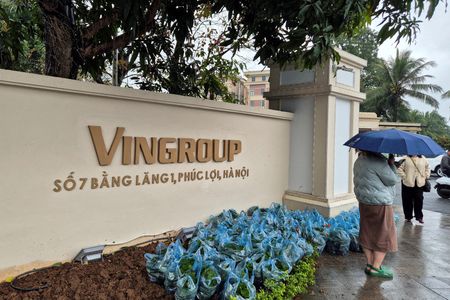

Vietnam’s biggest conglomerate has asked its government to abandon plans for constructing the nation’s most massive natural gas power facility, citing escalating fuel expenses due to the ongoing Iran conflict, according to newly obtained documents.
Vingroup submitted the March 25 request approximately two weeks following U.S. energy giant GE Vernova’s announcement that it had been chosen to provide turbines and generators for the massive 4.8 gigawatt liquefied natural gas facility.
The Vietnamese conglomerate, which leads the country in market value but remains new to energy ventures, refused to provide comments. Vietnam’s industry ministry and GE Vernova have not responded to inquiries.
This document represents among the earliest concrete evidence that natural gas projects may face cancellation or delays because of the ongoing military conflict.
New Zealand’s Prime Minister Christopher Luxon similarly stated this week that a proposed LNG terminal would proceed only with solid financial justification.
VinEnergo, Vingroup’s energy division, began construction on the proposed facility in Haiphong, a northern port city, last September. The initial 1.6 GW section was scheduled for completion by 2030.
Natural gas prices have skyrocketed 85% since late February when the United States and Israel conducted military operations against Iran, effectively shutting down the Strait of Hormuz to most maritime traffic. This critical shipping lane typically handles approximately one-fifth of worldwide LNG transportation.
The situation has worsened due to infrastructure damage at Qatar’s liquefaction facilities, removing 12.8 million tons annually of the fuel from global markets for three to five years.
In its proposal, Vingroup emphasized that recent events demonstrate “the significant risk of high fuel prices for LNG power projects.”
The company calculated that the completed plant would require approximately 5 million metric tons of LNG annually, with import costs ranging from $3.5 to $3.8 billion, potentially “create significant pressure on the economy’s foreign exchange needs.”
Vietnam, under communist leadership, continues rapid development with substantial industrial energy demands, primarily from international corporations and their suppliers producing export goods.
The country activated its first two LNG facilities last year. With Haiphong’s initial phase included, Vietnam aims to operate 16 plants by 2030 with total capacity reaching 24.1 GWs, positioning LNG as a primary power source.
Rather than proceeding with the gas-powered facility, Vingroup requested the industry ministry evaluate an investment proposal for a combined renewable energy project featuring battery energy storage systems. These storage systems capture electricity from renewable sources and release it during high-demand periods to maximize efficiency.
While the document didn’t identify specific renewable energy types, it estimated the battery storage project would cost approximately $25 billion, presenting a viable substitute for the gas plant with proper transmission infrastructure.
However, the company acknowledged this alternative would cost nearly five times more than the original LNG facility. Vingroup also recommended the ministry develop a “suitable electricity pricing mechanism.”
VinEnergo was founded in March 2023 but has rapidly initiated multiple energy developments.