
NEW YORK — World leaders continue their urgent efforts to address skyrocketing oil and gasoline costs following the outbreak of the Iran conflict, which has removed unprecedented amounts of oil from global markets as crude-laden vessels remain stuck in the Persian Gulf and military actions have damaged key infrastructure including refineries and export facilities.
In an attempt to provide relief to consumers facing higher fuel costs, President Donald Trump and international leaders have implemented various emergency measures, releasing additional oil supplies to help stabilize volatile markets.
The International Energy Agency’s 32 member countries have initiated their largest-ever emergency reserve release, putting 400 million barrels into circulation. Meanwhile, Trump has authorized withdrawals from the Strategic Petroleum Reserve, removed sanctions from Russian and Iranian oil supplies, and issued a temporary suspension of the Jones Act, which mandates that vessels transporting cargo between American ports must fly U.S. flags.
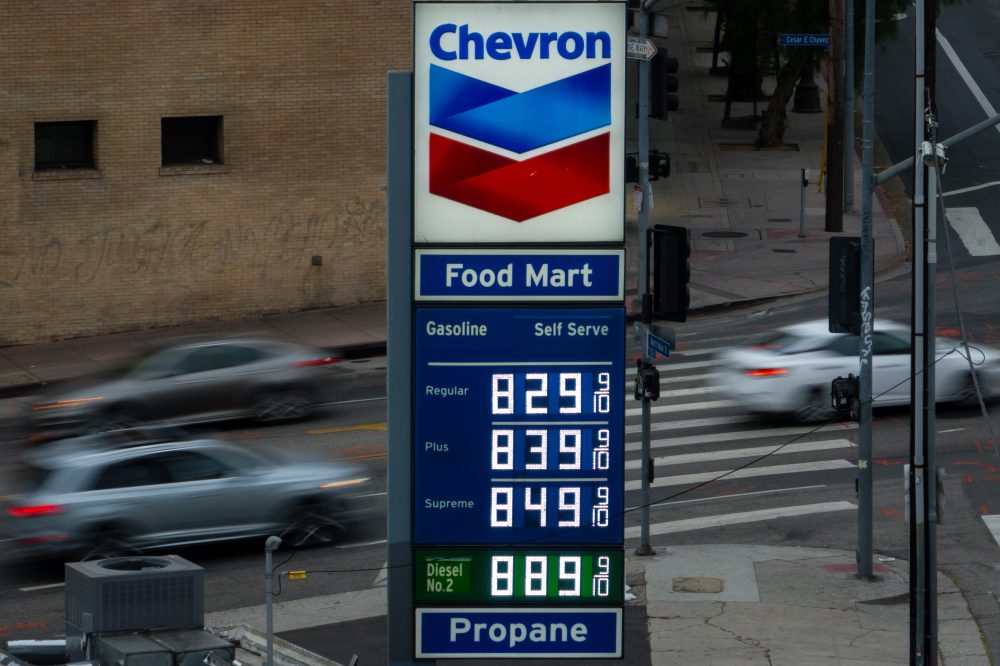
However, these emergency actions have proven insufficient, as crude oil prices have climbed above $100 per barrel and U.S. gasoline averages have reached $4.06 per gallon. Industry analysts indicate that while these interventions provide some relief, they fall far short of replacing the stranded oil supplies.
“They’re all incremental,” explained Mark Barteau, who teaches chemical engineering and chemistry at Texas A&M University. “You’re talking about these different patches being at the level of maybe 1 to 2 million barrels a day each, and you’ve got to get to 20, so it’s hard to see those actually adding up to the numbers that are needed. And then the question is, how long can you sustain those?”
Prior to the conflict’s start, approximately 15 million barrels of crude oil and 5 million barrels of refined products moved daily through the Strait of Hormuz, the critical Persian Gulf chokepoint, representing roughly 20% of worldwide oil usage, International Energy Agency data shows.
Beyond this transportation bottleneck, several Middle Eastern oil-producing countries have suspended operations because they cannot export their fuel from the Gulf region and their storage facilities have reached capacity. This situation has eliminated an additional 10 million barrels daily from global markets, according to IEA figures.
The crisis is further complicated by the eight Persian Gulf nations that collectively control approximately 50% of the world’s oil reserves. Under typical conditions, these countries work together to adjust production levels and maintain price stability, noted Jim Krane, who studies energy issues at Rice University’s Baker Institute. Normally, Saudi Arabia would deploy its spare capacity to increase market supply and restore calm.
“But all of that spare capacity is also bottled up inside the Persian Gulf right now and it can’t get to market either,” Krane explained. “So the main emergency response system that we have is also blocked.”
The IEA emphasized in its latest assessment that “the resumption of transit through the Strait of Hormuz is the single most important action to return to stable oil and gas flows and reduce the strains on markets and prices.”
Without that solution, international leaders are searching for alternative methods to increase available oil supplies.
Several countries have developed alternative routes to move oil from the Gulf region. Saudi Arabia has increased usage of its East-West pipeline system, which connects the Persian Gulf to the Red Sea, to transport approximately 5 million barrels daily around the blockade, according to Michael Lynch, a distinguished fellow at the Energy Policy Research Foundation, a nonpartisan organization specializing in energy and economic issues. However, since the kingdom was already utilizing this pipeline for oil transport, limited additional capacity exists to handle stranded tanker cargo.
Trump’s temporary removal of sanctions affecting roughly 140 million barrels of Iranian oil already in transit has not actually increased market supply, but rather expanded the potential buyer pool, explained Daniel Sternoff, a senior fellow at Columbia University’s Center on Global Energy Policy.
Previously, Iranian oil was primarily purchased by private Chinese refiners at significantly reduced prices, Sternoff noted. With sanctions removed, additional buyers can compete for these supplies, driving up prices to Iran’s advantage.
“As soon as you are moving to waive sanctions on your adversary with whom you’re fighting a military conflict, to do something in their benefit, it just shows you that you are running out of options to try to prevent a rise in the price of oil,” Sternoff observed.
The Russian oil sanctions removal could prove more impactful, since Russia had been accumulating unsold oil in storage vessels, Sternoff said. “By waiving sanctions, it will allow those barrels to clear.”
Trump’s Jones Act suspension, permitting foreign vessels to temporarily handle domestic cargo transport, might help reduce natural gas costs by allowing more efficient liquefied natural gas shipments from Gulf Coast facilities to New England markets.
However, energy experts don’t anticipate significant oil or gasoline price impacts from this measure. “It’s helpful, but not a game changer,” Lynch commented.
While the United States ranks as a major oil producer and exports more than it imports, the country cannot immediately increase production to fill global supply gaps.
“If the U.S. were to try to make up the global shortfall, we would need to nearly double our production,” Barteau stated. “We couldn’t drill wells that fast even if we wanted to.”
Even achieving a 1 million barrel daily production increase, which the U.S. managed during the shale energy boom, would be challenging to replicate, Lynch explained.
“If we run every drilling rig right now, what happens a week from now when the war is over and the price goes back down $20?” Lynch questioned. “People don’t want to develop long-term production based on a short-term price spike.”
Stopping oil exports to keep that supply within the United States would not reduce gasoline prices either, according to experts.
Oil operates as a global commodity, meaning events occurring anywhere in the world affect prices everywhere.
Additionally, the U.S. lacks sufficient production of the specific oil types its refineries require. American production reached about 13.7 million barrels daily by late 2025, Energy Information Administration data shows. Meanwhile, refineries processed approximately 16.3 million barrels daily that year, depending on imports to meet demand, according to the American Fuel and Petrochemical Manufacturers trade association.
This discrepancy exists because nearly 70% of American refineries are configured to handle heavy, sour crude oil, while much U.S. production consists of light, sweet crude unlocked through shale extraction techniques.
“They need different crudes than the ones that are being produced right next to them now,” Krane noted.
Consequently, only 60% of crude oil processed in U.S. refineries comes from domestic sources, AFPM reports. Retrofitting domestic refineries would require billions in investment and temporary shutdowns that typically increase gasoline prices.
“A lot of people like the IEA are making the point that this is the biggest oil crisis ever, which is partly true, partly an exaggeration, depending on how you count things,” Lynch said. “A lot of it has to do with how long does this last… if it goes on for another six weeks we get to be in some serious trouble.”