A massive Australian retirement fund worth $240 billion is stepping up its global investment activity, purchasing more stocks and bonds in volatile markets affected by ongoing Middle East conflicts.
The Australian Retirement Trust, the nation’s second-largest pension fund managing A$350 billion in assets, has shifted from its typical weekly trading pattern to daily transactions, according to senior portfolio manager Jimmy Louca.
The fund operates with a flexible investment approach that allows managers to buy and sell assets through an internal trading operation based on changing market values across different regions and countries.
“Whereas in something like this, we’re trading almost every day, and this drawdown is still early and still going … If (the decline) picks up we will pick up our activity to take advantage of cheaper assets,” Louca explained during a recent interview.
Australian pension funds, called superannuation funds domestically, have emerged as significant global investment players with approximately A$4.5 trillion under management. An increasing share of this capital is being invested in international markets.
The retirement trust has expanded its stock holdings over recent weeks, with Louca noting particular focus on regions hit hardest by the current crisis. “But we’ve increased them more in those markets that have been impacted more from this crisis – which is mostly energy importers, given we know that they’re the ones that’ll turn around the most once there’s a resolution and provide the most attractive entry points at the moment,” he stated.
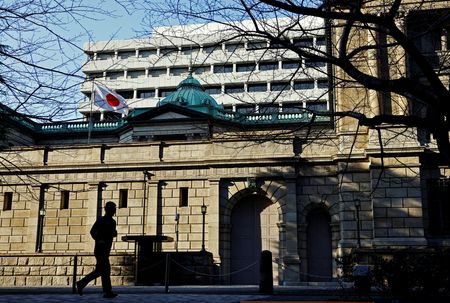
Japan and Europe represent key target markets where the fund has boosted its positions, specifically favoring Japanese financial companies and European defense industry stocks.
Market performance data shows Japan’s Nikkei index is tracking toward a 12% decline for March, marking its steepest drop since 2008. Meanwhile, Australia’s primary S&P/ASX 200 benchmark has fallen 8.2% due partly to mining stock selloffs, approaching its largest monthly decrease since 2022.
The fund has also expanded its British and Australian bond investments, where interest rates have climbed as global investors recalibrate expectations for future rate increases amid anticipated inflation spikes related to the Iran situation.
British government bond markets have experienced their worst monthly performance since 2022, with two-year yields jumping 96 basis points since the conflict began as investors prepare for potential rate hikes.
Performance data indicates the Australian Retirement Trust delivered a 9.6% annual return in its balanced portfolio, surpassing the sector average of 8.8% through December, based on the latest available SuperRatings figures.
Motorists nationwide are facing sticker shock at the pump as fuel costs have climbed beyond the $4 per gallon threshold for the first time since early 2021, according to monitoring data released Monday.
GasBuddy, a service that tracks fuel pricing across the country, reported that the national average for regular gasoline has breached this significant price point as military operations involving the United States, Israel, and Iran continue to disrupt international energy markets.
The escalation in fuel costs marks a dramatic shift from recent years, with the ongoing Middle Eastern conflict creating uncertainty in global oil supplies and driving prices upward at filling stations from coast to coast.
A South Korean battery manufacturer has announced plans to provide more than $1 billion in financing to its joint venture with a major automaker, according to regulatory documents filed Monday.
Samsung SDI disclosed it will extend a loan worth 1.6 trillion won, equivalent to approximately $1.05 billion, to StarPlus Energy, the battery production partnership it operates with automotive giant Stellantis.
According to the regulatory filing, the substantial loan will support capital investment activities for the joint venture.
The funding announcement follows recent industry reports suggesting Stellantis may be considering an exit from the American battery manufacturing partnership with Samsung SDI. These reports emerged as the automaker adjusts its electric vehicle strategy.
The speculation about a potential exit came after Stellantis reported massive writedowns exceeding $26.5 billion, which significantly impacted the company’s stock value. The losses reflect broader challenges facing traditional car manufacturers as they navigate the transition to electric vehicles.
On Monday morning, Samsung SDI stock prices rose 0.6 percent, bucking the trend of South Korea’s main stock index, which dropped 2.6 percent during the same trading period.
Currency markets are witnessing the U.S. dollar’s most substantial monthly climb since July, as ongoing Middle Eastern conflicts send oil prices soaring and heighten concerns about a potential worldwide economic downturn.
The greenback expanded its gains across most currency pairs overnight Tuesday, with the notable exception of the Japanese yen, where renewed intervention warnings from Tokyo officials have made traders cautious about pushing the yen beyond 160 per dollar.
Japan’s currency, which reached its lowest point since July 2024 just one day prior, was trading at 159.81 during Tuesday’s Asian session, marking a roughly 2.4% monthly decline due to Japan’s vulnerability to rapidly climbing energy costs. The yen showed minimal reaction to data revealing a slight deceleration in Tokyo’s inflation rate this month.
European currency struggled as the euro dropped 0.3% overnight and appears set for approximately a 3% monthly decline, while both Australian and New Zealand dollars tumbled to their lowest levels in several months.
The Australian currency, which had maintained relative stability for most of March, began showing significant weakness in recent trading sessions as market attention shifted from inflation concerns to global economic growth worries.
Australia’s dollar reached a two-month bottom of $0.6834 overnight before recovering slightly to $0.6844 during Asian morning hours. New Zealand’s currency has similarly deteriorated, hitting a four-month low of 57 cents on Monday and trading near $0.5716 subsequently.
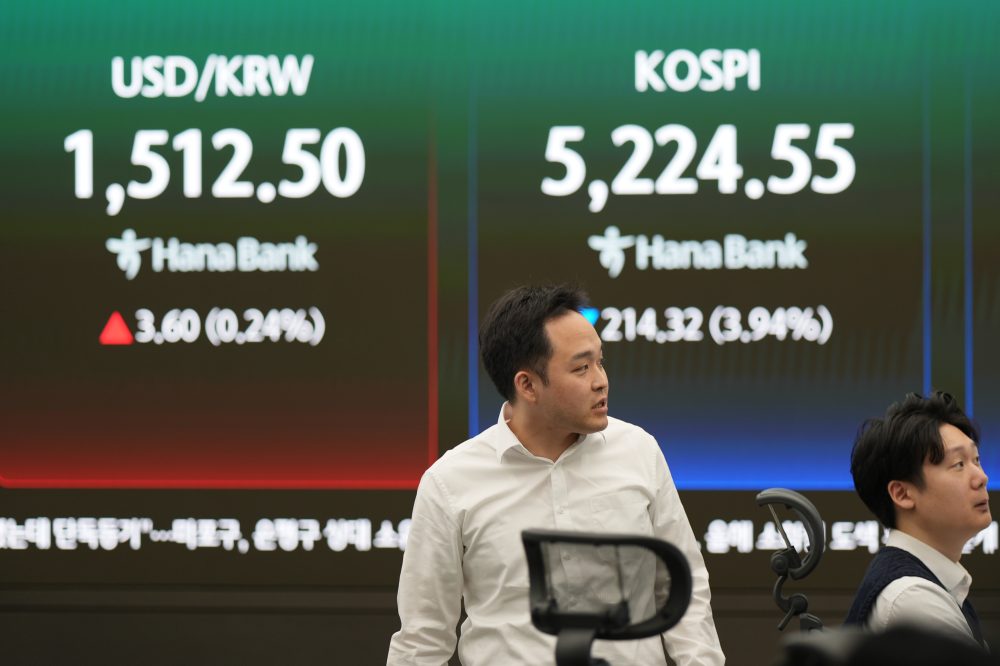
South Korea’s won dropped to its weakest position since 2009.
The U.S. dollar index reached its highest level since May of last year on Monday at 100.61, representing a 2.9% gain throughout March and marking the steepest monthly increase since the previous July.
President Donald Trump issued a warning Monday that the United States would destroy Iran’s energy facilities and oil infrastructure if Tehran fails to keep the Strait of Hormuz open, following Iran’s dismissal of U.S. peace proposals as “unrealistic” and its missile attacks on Israel.
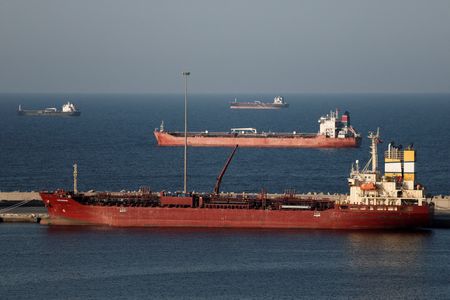
Kuwait reported Tuesday that an Iranian strike hit a fully-loaded Kuwaiti oil tanker while it was docked at Dubai, according to Kuwait’s state news agency KUNA, causing oil prices to climb higher.
“Barring any clear, conciliatory messages from the Iranian side, it is hard to see the dollar handing back this month’s gains anytime soon,” said Chris Turner, ING’s global head of markets.
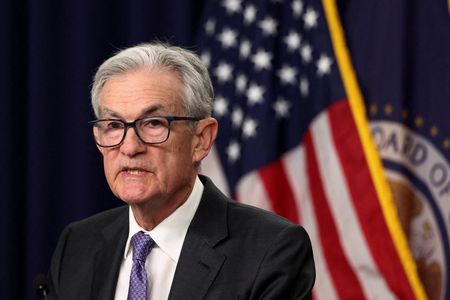
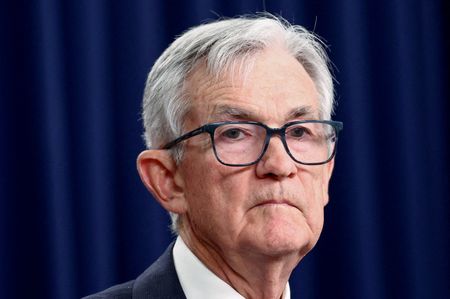
Federal Reserve Chairman Jerome Powell downplayed the possibility of immediate interest rate increases on Monday, reinforcing the U.S. central bank’s cautious stance and stating that inflation expectations appear stable beyond the near term.
While Powell’s comments drove short-term bond yields down and eliminated market expectations for any U.S. rate hikes this year, they failed to significantly weaken the dollar, which typically benefits from safe-haven demand when global growth prospects appear dim.
Traditional safe-haven assets including bonds and gold have both underperformed since the conflict began, and with the yen struggling to attract investors, warnings from the Swiss National Bank about combating currency strength have deterred investors from using the Swiss franc as a refuge.
The dollar has gained nearly 4% against the franc this month, reaching 0.80 francs. European inflation data and Chinese manufacturing surveys are scheduled for release later in the trading session.
A major railroad industry organization filed a federal lawsuit Monday aimed at stopping New Jersey from enforcing new safety regulations that the group claims exceed state authority and interfere with federal oversight of rail operations.
The Association of American Railroads submitted the legal challenge in Trenton’s federal courthouse, targeting Senate Bill 3389, which former Democratic Governor Phil Murphy signed before leaving office in January.
The industry group is contesting five key parts of the legislation, including a mandate for two-person crews on trains transporting dangerous materials and establishment of a state-run “wayside detector” system to track wheels, cars and railway infrastructure. The law also grants union representatives access to railroad facilities for safety inspections.
According to the trade organization, “New Jersey is impermissibly attempting to assert its own regulatory authority over an area Congress has placed under exclusive federal control,” which constitutes an unconstitutional “taking” of property.
The lawsuit names New Jersey Attorney General Jennifer Davenport and Transportation Commissioner Priya Jain as defendants. Both offices declined to provide immediate responses after business hours.
The legal action requests a court order preventing enforcement of the New Jersey legislation.
Industry opponents frequently claim railroads prioritize reduced regulation to maximize profits.
The association speaks for major Class I U.S. railroad companies, including BNSF (owned by Berkshire Hathaway), Canadian National Railway, Canadian Pacific Kansas City, CSX, Norfolk Southern and Union Pacific.
According to the lawsuit, both CSX and Norfolk Southern have operations within New Jersey.
Consumer products giant Unilever is reportedly close to finalizing negotiations to merge its food operations with American spice manufacturer McCormick, according to a Wall Street Journal report published Monday.
Sources with knowledge of the discussions told the publication that the potential transaction would involve approximately $16 billion in cash payments. The talks are described as being in their final stages.
The proposed deal would bring together Unilever’s food division with McCormick, the well-known U.S.-based spice and seasoning company. Both companies have yet to publicly confirm the negotiations.
The maker of Dove soap and other popular household products has stopped recruiting new employees worldwide for a minimum of three months, blaming economic pressures from the expanding Middle East conflict, according to an internal company document obtained by Reuters.
Unilever announced the immediate hiring halt across all positions in a memo distributed to workers last week, pointing to substantial obstacles created by the month-long Iran conflict.
Companies across various industries including aviation and retail are working to protect themselves from the Iran war’s impact, which has disrupted international commerce and created unprecedented interruptions to oil and gas distribution worldwide. Rising energy prices are already affecting other sectors, causing slower manufacturing in chemical and plastic industries.
“Macro economic and geopolitical realities, especially in the Middle East conflict… bring some significant challenges for the coming few months,” wrote Fabian Garcia, who leads Unilever’s personal care division, in the staff memo.
“With this in mind, the Unilever Leadership Executive team has agreed a global recruitment freeze at all levels. This will be effective immediately and last for a minimum of three months.”
The British consumer products company controls many internationally recognized brands. Although most manufacturing occurs in the same regions where products are sold, the company purchases chemicals, food ingredients, packaging materials and other supplies that require significant energy to produce.
In an official response, Unilever confirmed that because of the “uncertain external environment, we have decided to put in place a temporary pause on our recruitment,” stating the company will “always adjust our plans as necessary.”
The recruitment suspension adds to existing expense reduction efforts Unilever began in 2024, designed to eliminate approximately 800 million euros ($916.72 million) in spending over three years. Those earlier changes were projected to impact roughly 7,500 positions worldwide, primarily office workers.
The company’s workforce has shrunk to 96,000 employees from about 149,000 in 2020.
Unilever has faced difficulties increasing sales volume throughout its operations following the COVID-19 pandemic. The company announced March 20 that it’s discussing selling its food division to competitor McCormick & Company.
The potential deal, which would represent a significant restructuring under CEO Fernando Fernandez, would likely allow British shareholders to maintain controlling interest in the combined organization, according to recent Reuters reporting.
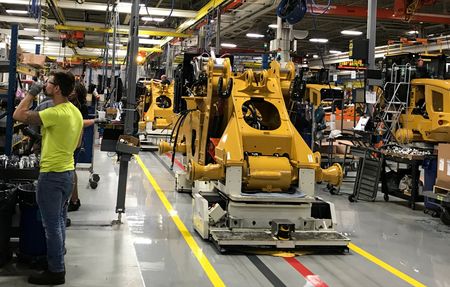
General Motors announced Monday it will keep its Detroit electric vehicle manufacturing facility closed until April 13, extending a shutdown that started March 16.
The company stated that “Factory ZERO will temporarily adjust production to align EV production with market demand,” resulting in temporary layoffs for 1,300 employees.
The facility manufactures the Chevrolet Silverado EV and Hummer EV models and has experienced inconsistent production schedules throughout the past year as General Motors grapples with declining consumer interest in electric vehicles. The company already reduced the plant’s output by approximately 50% in January.
General Motors has accumulated $7.6 billion in losses from its electric vehicle initiatives and joins other major automakers scaling back their electric vehicle strategies amid significant policy changes under President Donald Trump’s administration.
The automotive industry is now focusing more heavily on manufacturing gasoline-powered trucks and SUVs, which remain Detroit’s primary revenue generators. General Motors announced Monday its intention to boost heavy-duty truck production at a Michigan facility beginning in June.
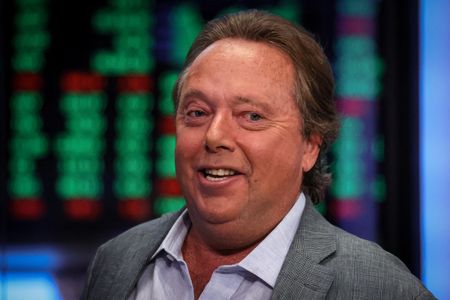
The large-format cinema company IMAX Corporation announced Monday that Chief Executive Richard Gelfond will temporarily step away from his leadership role while undergoing treatment for pneumonia.
During Gelfond’s absence, the company’s day-to-day operations will be handled by senior leadership working alongside Chairman Darren Throop, according to the announcement.
“We have a strong, deeply experienced senior executive team who are fully engaged, providing regular updates to the board, and remain focused as always on the continued growth and success of IMAX,” Throop said in a statement.
The company indicated that Gelfond will skip upcoming corporate events, including industry conferences scheduled for the following week, while he focuses on his recovery.
In February, IMAX announced fourth-quarter earnings that exceeded Wall Street expectations, reporting revenue of $125.2 million compared to analyst projections of $120.7 million, based on data from LSEG.
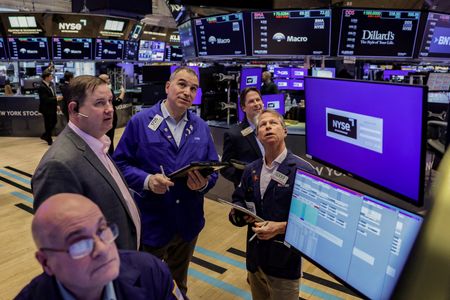
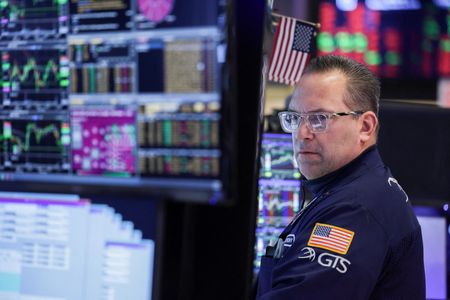
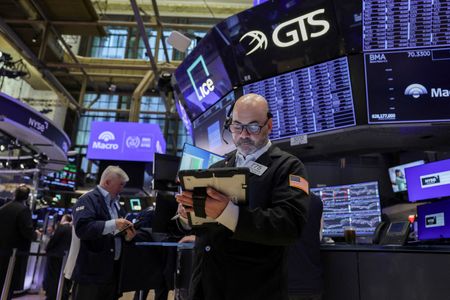
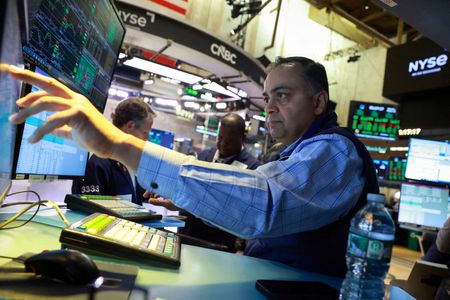
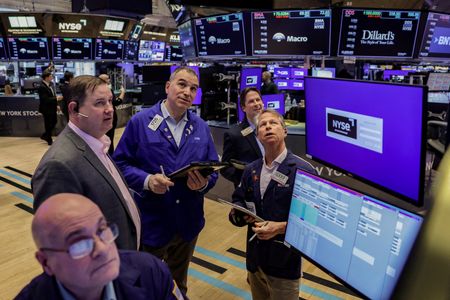
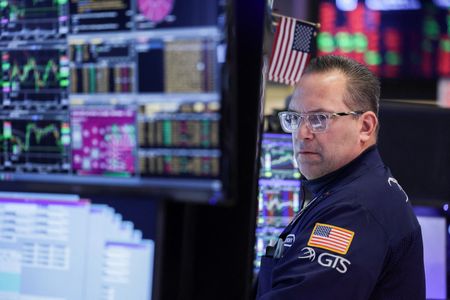
Major U.S. stock markets tumbled to seven-month lows on Monday as concerns about economic growth overshadowed inflation worries, with the Iran conflict now stretching into its fifth week and oil prices climbing further past the $100 mark.
The S&P 500 and Nasdaq both reached their lowest points since August, while government bond yields declined as investors grew increasingly worried about the economic impact of the ongoing Middle East crisis.
Market analyst Jamie McGeever noted that the surge in borrowing costs triggered by the Iran war has created particularly challenging conditions for major technology companies, which are heavily investing in artificial intelligence projects and increasingly relying on debt financing.
Asian markets took a beating, with Japan’s market falling 3%, though European markets showed resilience with the STOXX 600 gaining 1% and Britain’s FTSE 100 climbing 1.6%. Wall Street saw mixed results, but the technology-heavy Nasdaq and broader S&P 500 hit their lowest levels since late summer.
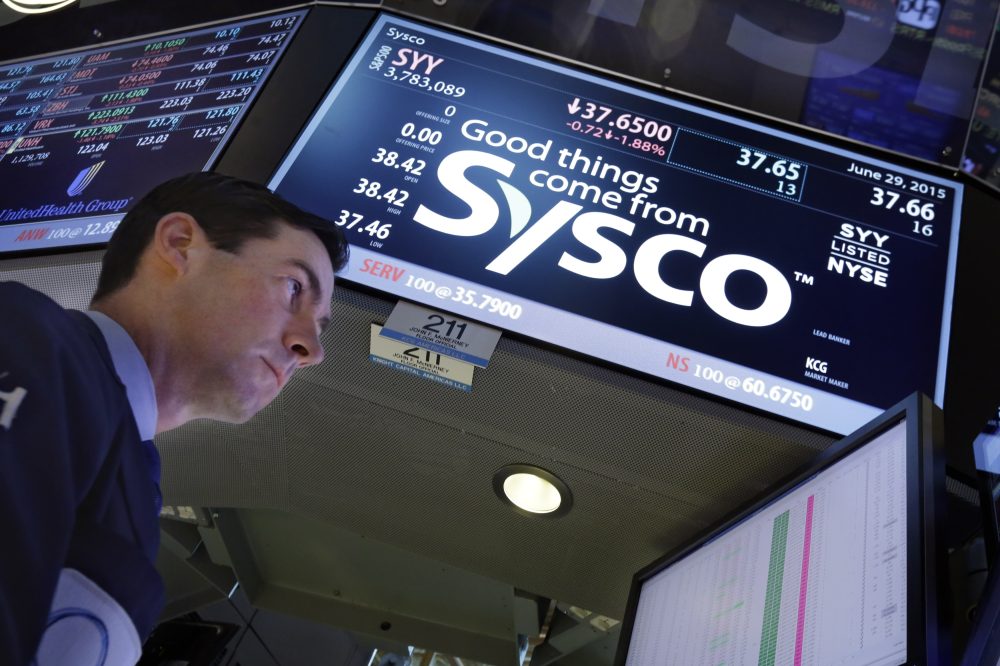
Within the S&P 500, only three of eleven sectors declined, but their significant market weight dragged down overall performance. Technology stocks fell 1.5%, industrial companies dropped 1.6%, and energy sector shares declined 0.9%. Notable individual losers included Sysco, which plummeted 15%, and Micron Technology, down 10%.
The dollar strengthened to its highest level since May of last year, while the euro weakened on growth concerns and the yen recovered following intervention warnings from Japanese officials.
In bond markets, U.S. Treasury yields fell 7-9 basis points, with the yield curve between 2-year and 10-year bonds steepening for the second consecutive day to 53 basis points, marking the steepest curve in two weeks.
Commodity markets showed energy strength, with Brent crude rising 1% and West Texas Intermediate jumping 4%. Gold gained 0.5%, and aluminum prices surged 4% on the London Metal Exchange.
As the first quarter nears its end, markets have experienced extreme volatility. Brent crude oil has soared 85%, marking its largest quarterly gain since 1990. Meanwhile, the so-called “Magnificent 7” mega-cap technology stocks have fallen 17%, bringing them close to bear market territory with nearly 20% losses from their October peaks.
The global energy infrastructure has sustained significant damage, with 17% of Qatar’s gas capacity offline and 20% of worldwide oil and gas flows disrupted by the Strait of Hormuz closure. Several Middle Eastern nations, including Saudi Arabia, have been forced to shut down energy production facilities and refineries.
Federal Reserve Chair Jerome Powell stated Monday that U.S. monetary policy is in a “good place,” allowing officials to “wait and see” how energy and supply disruptions affect both employment and inflation objectives. Powell was among the first central bank officials to use this phrase in January of last year.
Despite rising borrowing costs and increased market uncertainty from the Iran conflict, major corporate deals continue. Sysco announced plans to acquire catering supplier Jetro Restaurant Depot in a $29 billion transaction. Unilever is reportedly negotiating to sell its foods division to McCormick & Company for over $30 billion. Earlier this month, a consortium including BlackRock’s Global Infrastructure Partners and Sweden’s EQT AB purchased U.S. power company AES Corp for $33.4 billion.
Looking ahead, investors will monitor Middle East developments and energy market movements. Key economic data releases include Reserve Bank of Australia meeting minutes, Japanese retail sales and unemployment figures, Chinese manufacturing data, German retail sales, eurozone inflation estimates, UK GDP figures, and U.S. consumer confidence and job openings reports. Several Federal Reserve officials are scheduled to speak, including Chicago Fed President Austan Goolsbee and other regional bank presidents.
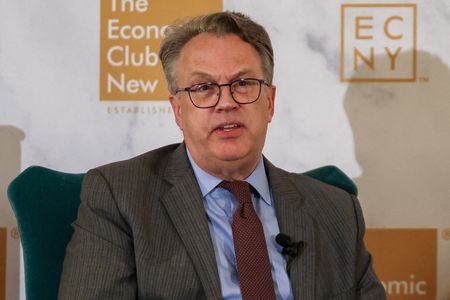
NEW YORK – The head of the New York Federal Reserve expressed confidence Monday that current interest rate policies can effectively navigate the economic turbulence stemming from Middle East conflicts, even as he warned of likely inflation increases ahead.
John Williams, who leads the New York Fed and serves as vice chair of the Federal Open Market Committee, addressed these concerns during remarks prepared for the Staten Island Economic Development Corporation.
“This is an unusual set of circumstances,” Williams stated. “But the current stance of monetary policy is well positioned to balance the risks to our maximum employment and price stability goals.”
The Fed official highlighted how Middle East warfare “could result in a large supply shock with pronounced effects that simultaneously raises inflation — through a surge in intermediate costs and commodity prices — and dampens economic activity,” noting “this has begun to play out already.” He also pointed to emerging disruptions in supply chains.
Despite acknowledging “high” uncertainty around inflation projections, Williams predicted that “the significant increase in energy prices resulting from developments in the Middle East will likely boost overall inflation in coming months.” However, he suggested some relief could come later this year if oil prices decline when hostilities end.
Williams stopped short of indicating any immediate need for monetary policy adjustments.
The ongoing conflict, which began with coordinated U.S.-Israeli military action against Iran, has presented significant hurdles for Federal Reserve officials. The most immediate economic consequences have appeared through substantial energy price increases, particularly after Iran blocked maritime traffic through the Strait of Hormuz.
Rising energy costs pose a threat to overall inflation rates, which the Fed might typically overlook provided the increases don’t spread to core price pressures and long-term inflation expectations. However, higher energy expenses also risk constraining economic growth as household budgets face increased energy costs.
This dynamic has created a difficult position for the Fed, making it harder for officials to provide clear guidance about future monetary policy direction. Earlier Monday, Federal Reserve Chair Jerome Powell emphasized the need for careful approaches given current economic conditions.
“We’re facing events in the Middle East which will certainly affect gas prices, and we’re, we feel like our policy is in a good place for us to wait and see how that turns out,” Powell commented during a Cambridge, Massachusetts event. “There’s sort of downside risk to the labor market, which suggests keep rates low, but there’s upside risk to inflation, which suggests maybe don’t keep rates low.”
Financial markets are currently considering the possibility of additional Fed rate reductions this year, though investors had recently been contemplating potential rate increases, given that war-related inflation pressures are building on top of inflation already exceeding the Fed’s 2% target.
During its most recent policy meeting earlier this month, the Fed maintained its current federal funds rate target between 3.5% and 3.75% while projecting a single rate reduction sometime in 2026.
In his prepared remarks, Williams projected economic growth around 2.5% for this year and inflation reaching 2.75% before declining back to the 2% target in the following year. He also anticipated unemployment rates would ease over the current and next year.
Williams’ projections appear more positive than most of his Fed colleagues, who anticipate unemployment will stay at its current 4.4% level through year’s end and expect inflation won’t reach the Fed’s 2% objective until 2028.
A Manhattan federal court issued a temporary order on Monday stopping T-Mobile from continuing an advertising campaign that claimed customers could save more than $1,000 per year by switching from other wireless carriers.
The decision by U.S. District Judge Lewis Kaplan came after Verizon Wireless filed a lawsuit challenging the rival company’s marketing claims. Judge Kaplan determined that Verizon had a strong case showing T-Mobile’s “Save Over $1,000” advertisements were misleading and caused damage that couldn’t be easily repaired.
The preliminary injunction prevents T-Mobile from continuing to run the contested ads while the legal dispute moves forward through the courts.
A federal court has sided with the government in a legal battle over a massive lithium mining operation in Nevada, delivering a victory for efforts to boost domestic production of materials critical for electric vehicle batteries.
U.S. District Judge Cristina Silva dismissed environmental groups’ legal challenge on Monday, ruling that federal regulators properly evaluated the potential impact of ioneer’s Rhyolite Ridge mining project on a rare plant species called Tiehm’s buckwheat.
The Australian company’s stock price surged approximately 24% following the court decision. Ioneer is currently searching for a new financial partner after Sibanye Stillwater withdrew from the project last year due to its own monetary difficulties.
The proposed operation is expected to become a major North American source of lithium, the essential battery component, and will supply automaker Ford among other companies.
Environmental advocates from the Center for Biological Diversity had sued to stop the project, contending it could eliminate the rare wildflower entirely while damaging water supplies, air quality, and wildlife habitats in the area.
The organization’s lawsuit claimed the Interior Department’s Bureau of Land Management violated multiple federal environmental laws when approving the mine, including the National Environmental Policy Act, Federal Lands Policy and Management Act, and Endangered Species Act.
In her 14-page decision, Silva determined that government officials established protective measures for the flower that were “sufficiently detailed and reasonable” and properly examined the project’s environmental impacts on water resources and ecological systems.
Company spokesperson Chad Yeftich praised the ruling as an important step forward for America’s critical minerals strategy. “Rhyolite Ridge will create hundreds of new American jobs, reduce reliance on foreign materials and processing and provide a domestic source of two critical minerals,” Yeftich stated.
However, the environmental group expressed strong dissatisfaction with the court’s decision. Patrick Donnelly, a regional director for the Center for Biological Diversity, characterized the government’s wildflower protection plan as “a house of cards.”
“We’re exploring our next steps but we’re more determined than ever to continue fighting to save Tiehm’s buckwheat,” Donnelly said.
The Interior Department chose not to provide comment on the ruling. When initially approving the mine, the department emphasized it had implemented multiple safeguards to protect the ecosystem surrounding the site, located approximately 225 miles north of Las Vegas.
Former President Joe Biden provided final approval for the project in 2024 and secured a $996 million Department of Energy loan just before leaving office as part of his clean energy initiatives.
The mining venture carries an estimated construction cost of $1.67 billion. Company executives report they are currently in “active discussions with a number of parties” regarding potential financial partnerships for the project.
American businesses significantly increased their equipment financing activities in February, with borrowing jumping 14.2% compared to the same period last year, according to data released Monday by the Equipment Leasing and Finance Association.
The surge was primarily driven by heightened activity from independent financing providers, the Washington-based trade organization reported. The association monitors economic trends across the equipment finance industry, which exceeds $1 trillion in value, by surveying 25 member companies including Bank of America and financing divisions of major corporations like Caterpillar, Dell Technologies, Siemens AG, Canon and Volvo AB.
February saw businesses sign $11 billion worth of new financing agreements, credit lines and leases on a seasonally adjusted basis, though this represented a 4.7% drop from January levels. Small-ticket financing volume, considered a crucial indicator of equipment demand and overall economic health, totaled $4.4 billion – down 14.7% from the previous month but still exceeding the 12-month average of $3.5 billion.
ELFA President and CEO Leigh Lytle noted that the survey data was collected prior to recent geopolitical tensions involving Iran and the Federal Reserve’s March meeting, suggesting these events “could cause more bumps in the first half” of the year. The organization’s monthly confidence index dropped to 61 in March from February’s reading of 67.6, reflecting growing uncertainty in the sector.
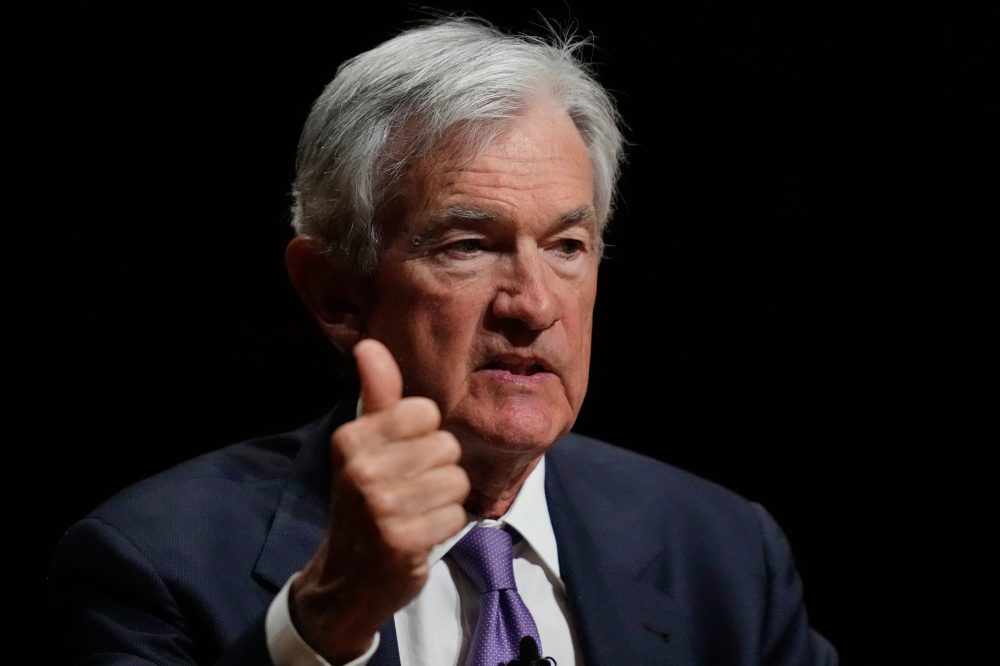
CAMBRIDGE, Mass. — Speaking to nearly 400 Harvard University students on Monday, Federal Reserve Chairman Jerome Powell acknowledged that central bank officials are keeping a close eye on inflation as energy costs surge due to the Iran conflict.
With gasoline prices approaching $4 per gallon nationwide, Powell explained that Fed policymakers have limited tools to address energy market disruptions since these “tend to come and go pretty quickly” while monetary policy operates over longer timeframes. However, he cautioned that multiple energy disruptions could become problematic.
“You have to carefully monitor inflation expectations because you could have a series of big supply shocks and that can lead, you know, the public generally, businesses, price setters, households … to start expecting higher inflation over time. Why wouldn’t it?” Powell stated.
During his comprehensive remarks, Powell also recognized that recent graduates face a difficult employment landscape. He pointed to several challenges including artificial intelligence’s expanding role, persistently low unemployment rates, and minimal job growth.
The nation’s employment situation has remained sluggish throughout the past year. Companies have added fewer than 10,000 positions monthly in 2025, marking the weakest hiring pace outside of a recession since 2002. While January showed promise with 126,000 new positions, February saw the country lose 92,000 jobs.
Despite weak hiring activity, unemployment has remained at 4.4%. Economic experts describe the current environment as a “low-hire, low-fire” market where businesses avoid adding staff but retain existing employees. This dynamic has particularly impacted young job seekers. Concerns exist that artificial intelligence may be replacing entry-level positions traditionally filled by new graduates, or that employers are delaying hiring decisions while determining how to implement AI technologies.
Looking ahead, Powell expressed confidence about medium and long-term prospects, referencing historical patterns showing technological advances consistently improving living standards and boosting productivity. He noted that large-language models enhance productivity for users, including himself.
“You’re in a situation where you need to really invest the time to master the use of these new technologies,” Powell advised. “There’s no denying it’s a challenging time to enter the labor market, It may take some patience and all that, but in the longer term, this economy is going to give you great opportunities. Just be a little optimistic.”
While neither Powell nor student questioners referenced President Donald Trump, who has frequently criticized the Fed chair, Powell emphasized the significance of central bank independence.
“It’s very hard to build great democratic institutions and much easier to bring them down,” Powell remarked.
Trump has consistently pressured Powell and the Fed to reduce interest rates, which would decrease borrowing expenses for consumers, businesses, and government. Powell’s cautious approach has frustrated Trump, who wants lower borrowing costs to stimulate economic growth.
Several Trump administration policies have created complications for the Federal Reserve’s dual objectives of maintaining price stability and maximizing employment.
New tariffs imposed on all trading partners could increase consumer prices, while the Iran conflict has driven energy costs higher.
According to AAA, average gasoline prices reached $3.99 per gallon overnight.
Trump intensified his Fed criticism in January when the Justice Department issued subpoenas to the central bank and threatened criminal charges related to Powell’s summer testimony about headquarters renovation costs.
The Fed has been updating its Washington, D.C. headquarters and an adjacent building. Underground construction work and rising material costs following 2021-2022 inflation have inflated expenses. Current Fed estimates place total costs at $2.5 billion, representing a $600 million increase from the 2022 projection of $1.9 billion.
Trump claims the renovation project’s alleged mismanagement could justify removing Powell from his position. However, dismissing the Fed chair would undermine the central bank’s respected independence, which has traditionally received support from economists and Wall Street professionals.
For Leslie Sherman-Shafer, who drives for Uber in California’s Bay Area, every work shift begins with filling her gas tank to the brim.
What once cost approximately $25 to fuel her Toyota Corolla now runs close to $40 since the conflict in Iran started, driving up regular gasoline costs across America by $1 per gallon. The retired dental assistant, who transports Uber customers five days weekly, now works additional hours to offset the increased expenses.
“We don’t get reimbursed for gas. We rely on the generosity of the tip,” Sherman-Shafer explained. While some riders have increased their tips to help with higher fuel costs, most passengers don’t tip anything at all, she noted.
Operating cars, vans, or trucks represents a significant component of countless American jobs. Data from the U.S. Bureau of Labor Statistics shows nearly 27% of civilian employees identified driving as a physical requirement of their work last year. Countless workers depend on personal vehicles for employment, including delivery drivers, rideshare operators like Sherman-Shafer, independent electricians, childcare providers, healthcare workers, and property sales professionals.
With the conflict now in its fifth week and continuing to impact worldwide oil distribution, many of these employees are struggling financially. AAA reports the national gas price average hit $3.99 per gallon Monday, representing a 34% increase from the previous month.
“With everything going up, it’s impossible to save a dime,” Sherman-Shafer stated.
Certain employers provide compensation for workers using personal vehicles, covering fuel expenses. The Internal Revenue Service establishes an annual standard mileage rate for businesses and independent contractors to calculate tax deductions. Alpine Maids, a Denver-based cleaning service, compensates their staff using the 2026 federal rate of 72.5 cents per mile for travel to customer locations.
However, with fuel prices surging, that compensation doesn’t stretch as far, explained Chris Willatt, a former geologist who operates Alpine Maids.
“Our maids drive their own cars, so it’s kind of like their paycheck got smaller,” Willatt noted. “They’re all upset.”
Willatt has reduced mandatory office visits from daily to weekly and reorganized cleaning schedules to minimize travel distances between appointments. Should gas prices continue climbing, he’s considering raising customer rates to increase worker compensation.
Molly Kenefick, who owns Doggy Lama Pet Care Inc. in Oakland, California, recently increased her gas reimbursement to 80 cents per mile for 15 staff members who transport dogs for Bay Area hiking services. This rate increase will remain until local gas prices stay below $5 for at least 30 days, she said.
Kenefick plans to increase service prices in May but wants to avoid excessive increases that might drive away customers. She’s also using personal savings to cover gas expenses.
“The economy is hard for people. Everybody’s under strain,” she observed. “I can take some of the load and the company can take some of the load, provided this doesn’t go on too long.”
Rideshare and food delivery companies that depend on gig workers don’t provide gas reimbursements, though some offer temporary incentives responding to rising fuel costs. DoorDash, Uber, Lyft, and Instacart are providing enhanced cash back on gas purchases for drivers using company debit cards. DoorDash and Instacart offer weekly fuel payments for drivers traveling 125 miles or more during deliveries.
Sarah Noell, who dedicates roughly 20 hours weekly to DoorDash deliveries in Lynchburg, Virginia, said these programs provide some relief. However, she’s observed more customers removing tips from orders as gas prices increase.
Noell now rejects any delivery that won’t average $1 per mile, including the $2.50 per order from DoorDash. This eliminates many non-tipping customers or those providing minimal tips.
“It takes nearly double the cost to fill my tank,” Noell said. “Ten dollars used to get me a decent amount. Now it only gets me 3 gallons.”
Diesel vehicle owners have experienced even sharper fuel price increases since the war began February 28, affecting drivers globally.
Philippine drivers of diesel-powered “jeepneys” staged a two-day strike last week protesting increased operating costs. In France, dozens of buses and trucks moved slowly on Paris ring roads Monday demonstrating concerns about diesel price increases. Drivers and businesses are seeking government assistance to address the impact.
“The major difficulty right now is finding our balance on our business since we sold services with the vehicles at a certain price for diesel that was much cheaper. And we’re not going to ask customers to pay that difference,” Sarah Bahezre, manager of bus company Ulysse Cars, told The Associated Press.
AAA data shows average U.S. diesel prices increased 44% over the past month.
Several weeks ago, Rachel Hunter paid $3.62 per gallon to fuel the single diesel truck for Cactus Crew Junk Removal & Thrift Store, a Phoenix business she co-founded with her husband. AAA reports that same fuel now costs $6.09 per gallon in Phoenix.
The truck hauls various heavy materials, from solid maple bowling lane slabs to concrete paver tile loads. Fuel expenses accumulate rapidly, Hunter explained, especially with a vehicle achieving only 12 or 13 miles per gallon.
Hunter now provides price quotes reflecting the fuel cost increases. She fears being caught in a “vicious circle” that could damage the business if oil prices stay elevated.
“We don’t want to get a bad name for being overpriced,” she says. “I’ll be able to explain it where people can understand, but it doesn’t mean they can afford it.”
Federal Reserve Chairman Jerome Powell announced Monday that the nation’s central banking system is closely monitoring the private credit industry for potential warning signs, though he emphasized that officials don’t currently see threats capable of destabilizing the broader financial system.
Speaking at a Harvard University event, Powell expressed caution about downplaying potential risks. “I’m reluctant to say anything that suggests that we’re dismissive of the risk,” Powell stated. “We’re looking for connections to the banking system and things that might, you know, result in contagion. We don’t see those right now,” he explained.
Regarding challenges currently facing this less transparent banking sector, Powell acknowledged that “there’ll be people losing money and things like that, but it doesn’t, it doesn’t seem to have the makings of a broader systemic event.”
The Fed chairman characterized private credit as “a relatively small part of a very large asset pool, we’re watching it super carefully,” while noting that regulatory agencies are actively addressing the situation.
Powell revealed that officials are gathering comprehensive information from industry leaders. “We’re also getting the back story from the people who run these organizations and from all the banks,” he said, adding that regulators “are well aware of what the banks’ exposure is.”
MILAN – Italian privacy regulators announced Monday they have levied a substantial financial penalty against Intesa Sanpaolo, the nation’s largest banking institution, following a significant customer data security violation.
The data protection authority imposed a 31.8 million euro fine, equivalent to approximately $36.41 million, on the major financial institution. The security breach compromised personal information belonging to roughly 3,500 bank customers and extended across a two-year timeframe.
The substantial penalty reflects Italian authorities’ commitment to enforcing strict data privacy standards for financial institutions handling sensitive customer information.
Food service giant Sysco announced Monday it will acquire wholesale supplier Jetro Restaurant Depot in a massive $29 billion transaction that includes debt, broadening the nation’s largest food distributor’s access to budget-focused independent restaurants.
Sysco’s stock dropped approximately 12% following news that the company plans to fund the purchase through $21 billion in new and hybrid debt, combined with $1 billion in cash and equity. The food distributor currently holds a market value of $39.2 billion.
This major acquisition joins a wave of significant deals across consumer industries, as companies including Unilever, Estee Lauder and Pernod Ricard pursue mergers to achieve greater scale amid weakening demand and elevated operational costs.
The family-owned Jetro Restaurant Depot runs wholesale cash-and-carry operations where buyers pay immediately for products including food items, drinks and takeout packaging. This business model will complement Sysco’s existing delivery services to restaurants, medical facilities and hotels.
Through this acquisition, Sysco gains entry into the profitable cash-and-carry sector, where Restaurant Depot maintains approximately 166 warehouse facilities spanning 35 states nationwide.
“Sysco and Jetro Restaurant Depot will enhance value for small independent restaurants and the consumers they serve by expanding access to more affordable, fresh food products and delivering more choice and convenience,” stated Sysco CEO Kevin Hourican, emphasizing how the merger would reduce costs for additional customers.
Restaurant Depot stockholders will obtain $21.6 billion in cash plus 91.5 million Sysco shares valued at roughly $7.5 billion based on Friday’s closing price, granting them about 16% ownership in the merged entity.
Previously, US Foods abandoned merger discussions with Performance Food, which would have united the country’s second and third-largest foodservice distributors to compete against market leader Sysco while cutting expenses.
In 2015, a federal judge approved the Federal Trade Commission’s petition to halt Sysco’s $3.5 billion US Foods purchase after regulators claimed the deal would establish a dominant company capable of increasing prices for national clients.
During an analyst conference call, Hourican noted “There is minimal overlap between Sysco and Restaurant Depot’s customers.” The company plans to establish over 125 additional Restaurant Depot sites within the next two decades using its extensive supply network.
Sysco anticipates the deal will increase earnings per share by a mid-to-high single-digit percentage during the first year following completion, expected by the third quarter of fiscal 2027.
Credit agency Fitch assigned Sysco a “rating watch negative” status, while Moody’s initiated a review for potential downgrade after the announcement.
The corporation suspended its share buyback initiative while maintaining its annual projections. Sysco, recognized for providing steaks, fish fillets and frozen products to fast-food chains like KFC and Subway, increased its full-year earnings outlook earlier this year as customer demand remained steady despite economic uncertainties.
China Southern Airlines announced Monday it has achieved profitability for the first time in five years, posting earnings of 857 million yuan ($124.01 million) for 2025.
The airline, headquartered in Guangzhou, saw its annual earnings fall within its projected range of 800 million to 1 billion yuan that company officials forecast in January. This marks a dramatic turnaround from the previous year’s deficit of 1.7 billion yuan in 2024.
Among China’s three major government-owned airlines, China Southern stands alone as the only carrier to achieve positive earnings for the full year 2025.
According to the company’s financial report, the aviation sector continues to navigate difficult market conditions, including supply chain constraints and increasing costs for aircraft purchases, aviation supplies, and engine components. However, China Southern managed to enhance its financial performance through strategic adjustments to passenger and freight capacity distribution while implementing stricter expense management practices.
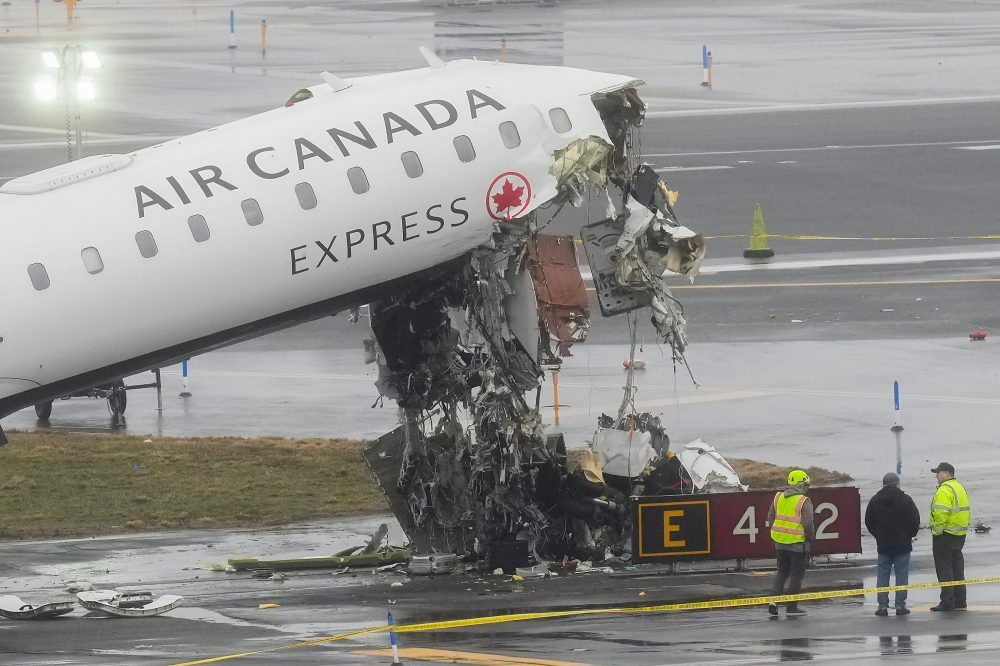
TORONTO — The chief executive of Air Canada revealed Monday he plans to step down before year’s end, following widespread criticism over his decision to deliver crash condolences exclusively in English.
Michael Rousseau informed the airline’s board of directors that he intends to retire no later than the conclusion of the third quarter, the Montreal-based carrier announced.
The controversy stems from Rousseau’s response to a fatal aviation accident at LaGuardia Airport in New York earlier this month. Two crew members perished when an Air Canada Jazz aircraft traveling from Montreal struck a fire truck during landing operations.
Among the victims was Antoine Forest, a French-speaking pilot from Quebec, along with Mackenzie Gunther. Rousseau’s video statement expressing sympathy was delivered entirely in English, with French translations appearing only as subtitles.
The language choice sparked immediate outrage in Canada, where both English and French hold official status. Prime Minister Mark Carney condemned the unilingual message as demonstrating poor judgment and insensitivity. Quebec’s provincial leader François Legault and other officials demanded Rousseau’s resignation.
The federal Office of the Commissioner of Official Languages reported receiving hundreds of formal complaints regarding the incident. This latest controversy adds to previous criticism Rousseau has faced for his limited French language abilities.
When Rousseau assumed the airline’s top position in February 2021, he had committed to learning French. However, his promise remained unfulfilled, creating ongoing tension given that Air Canada operates from Quebec, where approximately 80 percent of residents speak French as their primary language.
The linguistic divide reflects Quebec’s complex cultural identity, which has remained a sensitive issue since British forces conquered New France in the 1760s.
A South Korean company specializing in artificial intelligence chip technology announced Monday it has successfully secured $400 million in new investment funding, pushing the firm’s overall value to roughly $2.34 billion as it pursues aggressive growth in American markets.
Rebellions disclosed that Mirae Asset Financial Group and the Korea National Growth Fund spearheaded the investment round, which follows a $250 million Series C funding completed in September 2025. The company’s total accumulated funding now reaches $850 million.
With $650 million collected over the previous six months representing more than three-quarters of all funding received to date, company officials said they are beginning an ambitious growth phase. Their strategy centers on American market penetration, increased manufacturing of the Rebel100 platform, and preparations for a potential public stock offering.
Established in 2020, the company specializes in creating neural processing units designed for artificial intelligence inference operations. Company representatives noted that demand for streamlined AI infrastructure continues climbing among cloud service providers, telecommunications companies, and government-sponsored programs, especially throughout the United States.
The government-backed Korea National Growth Fund contributed 250 billion won, equivalent to $165.45 million, marking the first direct government investment through the “K-Nvidia” program.
This “K-Nvidia” initiative, managed jointly by the Financial Services Commission and the Ministry of Science and ICT, seeks to develop a globally competitive semiconductor company as competition intensifies in an industry currently controlled by American corporations like Nvidia.
The substantial investment highlights increasing investor enthusiasm for companies creating alternatives to established AI chip manufacturers, driven by worldwide demand for cost-effective and practical artificial intelligence systems.
Notable investors backing Rebellions include Aramco’s Wa’ed Ventures, Arm, KT, Samsung, SK Hynix, and SK Telecom. The company maintains its primary headquarters in South Korea while operating additional facilities in the United States.
Mirae Asset’s investment portfolio also features SpaceX among its holdings.
High-net-worth investors are discovering lucrative opportunities in women’s professional sports, where franchise values are climbing rapidly while still offering more affordable entry points than established men’s leagues like the NFL or Premier League.
What was once viewed as an underdeveloped sector is now attracting serious financial backing as media contracts, corporate partnerships, and fan engagement create a perfect storm of affordable valuations paired with explosive growth prospects.
According to McKinsey consulting firm projections, the women’s sports industry in America will expand at a 16% yearly rate through 2030 – nearly triple the growth pace of men’s athletics – potentially reaching $2.5 billion in annual revenue for rights holders.
This remarkable expansion, bolstered by breakout stars like Indiana Fever’s Caitlin Clark, is capturing attention from sophisticated investors looking for superior long-term gains.
“Valuations are growing very rapidly and there is still plenty of room to grow,” explained Jason Wright, an Ariel Investments partner and former NFL executive.
Wright’s firm has invested in the National Women’s Soccer League’s Denver Summit, which launched its inaugural season this year.
The surge in investor interest becomes clear when examining franchise costs. NWSL expansion fees have skyrocketed from $2 million for Los Angeles’ Angel City FC in 2020 to a staggering $165 million paid by Atlanta’s ownership group for a team launching in 2028, according to Navigate consulting.
Existing teams are experiencing similar value appreciation. Sports analytics platform Sportico now values Angel City at $335 million, representing a 34% increase from just over a year ago when former Disney CEO Bob Iger and journalist Willow Bay acquired controlling interest at a then-record $250 million valuation for women’s sports.
Tommy Nordam Jensen, who leads New York-based women’s sports investment platform Pitch15, believes “well-executed investments in the sector could potentially deliver roughly 2–5x over five to 10 years as the market matures” – returns that are increasingly rare in established men’s leagues.
Broadcasting agreements are strengthening the investment thesis, with the WNBA securing an 11-year media deal worth approximately $200 million per year – more than triple their previous contract, Navigate reports.
The NWSL has experienced similar momentum, with their 2023 broadcasting rights generating around $60 million annually.
Despite this growth, significant valuation disparities remain between men’s and women’s sports. Sportico estimates average WNBA franchise values at roughly $269 million, while NBA teams command about $5.5 billion, even though WNBA playoff viewership rivals NBA regular season numbers.
The Golden State Valkyries leads women’s sports valuations at approximately $500 million, yet this figure pales next to the Dallas Cowboys’ $12.8 billion worth.
“A lot of people talk about women’s sports being ahead of valuations that are justifiable, yet at the same time, if viewership and fan attention are the biggest drivers of value, there is a mismatch in valuation that the market has not yet caught up with,” Wright observed.
Corporate sponsorship dollars are fueling additional growth, with combined WNBA and NWSL partnerships jumping 32.7% year-over-year to reach a record $195 million in 2025, according to SponsorUnited. Major financial institutions including JPMorgan Chase, CashApp, and Ally have become prominent supporters.
This sponsorship expansion is outpacing men’s leagues by more than three times, driven by marketable athletes like Clark, Angel Reese, and Paige Bueckers, who have attracted dozens of brand partnerships.
Nevertheless, McKinsey projects women’s sports will represent only about 2% of America’s total sports market by 2030, creating vast untapped potential at a time when Citi Wealth’s sports finance head Ivo Voynov describes men’s team valuations as essentially “fully priced.”
“The number of people globally who can write multi-billion dollar checks to acquire these (men’s sports) assets is not expanding at the same rate as team valuations,” Voynov noted, highlighting the scale of opportunity remaining in women’s athletics.
Houston-based Sysco, America’s biggest food distribution company, has announced plans to purchase Restaurant Depot in a massive transaction valued at more than $29 billion.
The purchase would strengthen connections between Sysco and clients who depend on Restaurant Depot for immediate supply needs through what’s called the “cash-and-carry wholesale” business model.
Sysco currently provides food service to over 700,000 establishments including restaurants, medical facilities, educational institutions, and hotels, delivering everything from dairy products and produce to paper goods. These customers typically place regular orders for items they know they’ll consistently require.
Restaurant Depot operates on a membership basis, allowing independent restaurants and small businesses to access warehouse facilities stocked with products for emergency situations when their regular supply orders fall short.
This rapidly expanding, profitable market sector could result in thousands of dining establishments becoming more dependent on Sysco for their daily operational requirements.
Under the agreement terms, Restaurant Depot stockholders would receive $21.6 billion in cash plus 91.5 million Sysco stock shares. Using Sysco’s March 27, 2026 closing price of $81.80 per share, the total transaction value reaches approximately $29.1 billion.
Restaurant Depot began operations in Brooklyn during 1976. Originally called Jetro Restaurant Depot, this family-owned enterprise has grown into America’s top cash-and-carry wholesale operation.
While leadership teams from both corporations have given their approval to the merger, federal regulators must still sign off on the transaction.
Rising oil prices may breathe new life into a helicopter model that faced serious safety concerns nearly a decade ago, according to the departing chief executive of the world’s largest civilian helicopter manufacturer.
Bruno Even, who is stepping down this week as CEO of Airbus Helicopters after eight years in the role, believes the H225 Super Puma could experience renewed demand as energy companies expand offshore drilling operations in response to higher oil prices.
The H225 faced a major crisis in 2016 when aviation authorities grounded the aircraft for half a year following a fatal accident off the Norwegian coast. In that incident, the helicopter’s main rotor blades broke apart, resulting in the deaths of 13 individuals who were returning from an offshore oil platform.
While operators in countries including Brazil, Nigeria, and various Asian nations have returned to using the redesigned H225, North Sea operators remain hesitant to employ the helicopter, which traces its design origins to the oil crisis of the 1970s.
“It is for clients to decide but I am convinced that in coming years it will continue to increase market share in the offshore market,” Even stated during an interview.
The executive pointed to recent developments in oil markets, noting that prices have climbed dramatically following U.S.-Israeli military actions against Iran that began in late February. This surge has put oil on pace for a record monthly increase, potentially making previously expensive offshore drilling sites more economically viable.
Even suggested that industry trends toward smaller helicopter models might reverse as companies seek aircraft capable of longer-distance missions, particularly as the competing Sikorsky S-92 approaches replacement age.
The H225 production line has remained operational largely due to strong orders for military versions of the aircraft, Even noted.
During Even’s tenure, the company has seen significant improvements in its supply chain reliability, with parts shortages reaching their lowest point in several years by 2025. However, challenges remain with certain suppliers, he acknowledged.
“We still have some suppliers with difficulties and we need to be able to address these,” Even said.
Under Even’s leadership, Airbus Helicopters doubled its order backlog. His successor, Matthieu Louvot, currently serves as Airbus’s strategy chief.
Even’s final years included the public unveiling of the company’s first entirely new aircraft design in ten years: the H140, which is intended to eventually succeed the H135 model commonly used by emergency response services. Both helicopter types will continue to be available, Even confirmed.
The company has also been working on classified development projects, including one previously known as X9 that may become a future replacement for the H145 model. In 2024, Airbus Helicopters purchased property adjacent to its German manufacturing facility where both the H135 and H145 are produced, citing “significant potential” for expansion in company documents.
When asked about secretive research initiatives, Even remained tight-lipped.
“If there are names beginning with X, it’s possibly because they are not meant to be commented on externally,” he remarked.
He emphasized that current demand for the H145 remains robust while acknowledging ongoing innovation efforts.
“That doesn’t mean that, like any self-respecting company, we aren’t working on innovation to be able to launch a programme when the market requires. That’s true for all our portfolio,” Even explained.
Research and development investment has increased since 2023 following an extended period of reduced spending, though the company remains cautious about not undermining sales of established models like the popular H125.
“There isn’t a single day in these eight years that I haven’t thought about the successor to each of our products,” Even reflected.
Regarding potential replacements for the H125, Even identified several key technological areas under consideration.
“It’s a mixture of engines, architecture and hybrid (power). That’s the segment most likely to introduce some electric solutions. I don’t think the conditions are there yet,” he concluded.
Federal Reserve Chairman Jerome Powell will address Harvard University students Monday in what economists are watching closely as the central bank grapples with a challenging economic puzzle.
Powell’s appearance before a basic economics class comes as the ongoing Iran conflict enters its fifth week, pushing U.S. gas prices to approximately $4 per gallon and creating a complex scenario for monetary policy makers.
The Federal Reserve maintained interest rates in their current 3.50%-3.75% range just ten days ago. During that decision, Powell indicated he wanted to see tariff-related price increases calm down before addressing whether the central bank should respond to inflation pressures from the Iran situation with tighter monetary controls.
Market reactions since then have shown growing inflation worries, with Treasury bond yields climbing and University of Michigan data revealing increased consumer price expectations for both short-term and long-term periods. However, other economic indicators, including key market-based measurements, have shown less concern.
The central bank now faces a classic economic challenge: raising interest rates to combat inflation could damage economic growth and employment, while keeping rates steady or lowering them to support jobs could allow prices to spiral upward.
“In a very typical Fed model, the Fed’s not really happy with that choice,” explained Pomona University economics professor Michael Steinberger. “The Fed is truly darned if they do, and darned if they don’t.”
Federal Reserve Vice Chair Philip Jefferson commented Thursday at a Dallas Fed gathering that he believes current policy positions are essentially neutral, neither boosting nor restraining economic activity.
This positioning allows the central bank flexibility to monitor incoming data and determine appropriate next steps, Jefferson noted.
Philadelphia Fed President Anna Paulson expressed concerns Friday to San Francisco Fed researchers about potential lasting inflation impacts from higher oil and fertilizer costs resulting from Hormuz Strait closures.
BMO Economics’ top U.S. economist Scott Anderson shared similar concerns from that conference.
“We are more concerned about the inflation side of the shock at the moment…prices keep going up and up and up, and that definitely starts to affect behavior and decisions, not just at the consumer level but for businesses as well,” Anderson stated.
With inflation exceeding the Fed’s 2% target for five consecutive years, Anderson argued that policymakers “have to be more concerned about the inflationary impact” of current oil market disruptions.
Financial markets have shifted dramatically since the Iran conflict began, moving from expectations of multiple rate cuts this year to now pricing roughly one-third odds of a rate increase by December.
“It’s going to come down to the classic trade-off of what are you more worried about – rising inflation or weaker employment,” said III Capital Management chief economist Karim Basta, suggesting Powell’s Monday remarks may reveal his priorities lean toward addressing inflation.
Basta noted this focus makes sense given current oil prices near $100 per barrel – not high enough to trigger severe recession fears like $150 or $200 levels would, but sufficient to noticeably impact consumer costs.
Regarding potential rate increases, Basta concluded: “They have to be ready to do whatever is needed, and one of the things that possibly could be needed is to raise rates. I think it’s fair that nothing can be ruled out.”
A dramatic surge in fuel costs is setting the stage for what could be the most significant financial challenge facing America’s airline industry since the COVID-19 pandemic began.
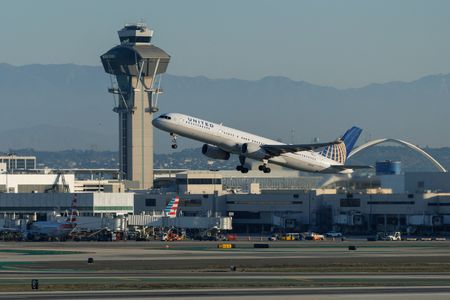
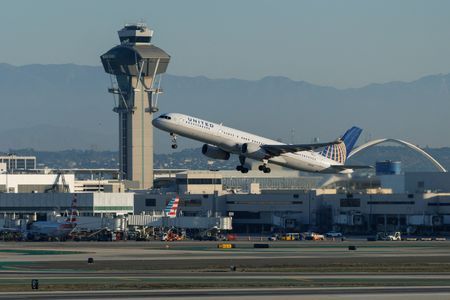
United Airlines Chief Executive Scott Kirby recently sent a message to staff members regarding climbing oil prices, but his most striking comment wasn’t about rising expenses or route reductions. Instead, Kirby focused on potential opportunities.
Should fuel costs remain at current elevated levels, Kirby told employees it might present chances “to buy assets, absorb network changes, etc.” — words that suggest United anticipates some competitors may struggle.
This current price surge represents the first genuine financial challenge for domestic airlines since the pandemic’s impact, with financially weaker companies more likely to reduce operations, seek additional financing, or accept greater losses while their stronger competitors continue expanding and capturing larger market shares.
Across Europe and certain Asian markets, the conflict involving Iran has already resulted in altered flight paths, canceled routes, and revised financial forecasts.
United is planning for worst-case scenarios. Kirby revealed the company is running projections with Brent crude reaching $175 per barrel and staying above $100 through 2027. Friday’s Brent trading price was approximately $112.
In such circumstances, United’s yearly fuel expenses would jump by roughly $11 billion — a figure exceeding double the airline’s highest annual profit ever recorded.
According to Airlines for America, jet fuel cost $4.24 per gallon last Thursday, compared to $2.50 just before initial U.S.-Israeli military actions against Iran.
Budget Carriers Face Greatest Risk
Fuel represents approximately 25% of airline operational expenses, and since airlines typically sell tickets weeks or months ahead of travel dates, they remain vulnerable when fuel prices climb faster than ticket prices can adjust.
Moody’s credit rating agency indicated that low-cost and ultra-low-cost airlines would suffer most severely if fuel prices stay high, pointing out that JetBlue, Spirit, and Frontier were already losing money last year before the recent price jump.
If Brent crude had averaged $80 per barrel last year rather than $69, Moody’s calculated that operating profits for rated U.S. airlines would have dropped by approximately half, reaching about $6 billion.
Airlines Best Positioned to Continue Plans
Delta Air Lines and United demonstrate the strongest capacity to withstand extended fuel price shocks without changing their strategic direction.
Moody’s noted both airlines achieved the highest operating margins among rated U.S. carriers last year, while S&P Global Ratings indicated their low debt levels, strong cash positions, and higher percentage of premium passenger revenue position them better than competitors to manage sustained fuel cost increases.
Beyond these two carriers, the situation becomes less predictable. American Airlines anticipates finishing the March quarter with over $10 billion in total available cash and credit, but carries approximately $25 billion in long-term debt and states that each 1-cent jet fuel price increase adds roughly $50 million to yearly expenses.
American declined additional comment beyond statements from CEO Robert Isom at a J.P. Morgan conference this month, where he said the fuel price surge had added about $400 million to first-quarter expenses and that the airline would seek to balance this through increased revenue while maintaining operational flexibility.
Southwest Airlines maintains one of the industry’s healthiest financial positions, but Fitch warned that extended fuel price pressure could impact earnings and cash flow, potentially requiring difficult financial decisions. Southwest declined comment during its quiet period before releasing first-quarter results.
Alaska Air Group, currently merging with Hawaiian Airlines, informed Reuters it maintains approximately $3 billion in available funds and $18 billion in unencumbered assets. The company said it has increased ticket prices to counter higher fuel costs, has not reduced capacity, and is examining its expense structure.
Where Financial Strain Appears First
Should elevated fuel prices persist, financial pressure will likely emerge initially at airlines already operating with slim profit margins and incomplete recovery efforts.
JetBlue finished last year with about $2.5 billion in available funds and no fuel price protection contracts. S&P stated JetBlue faces greater vulnerability because it’s expected to lose money this year before moving toward break-even by 2027.
Frontier Group reported approximately $874 million in available funds while recording a net loss last year, providing limited capacity to absorb prolonged fuel price increases in its discount fare business model.
JetBlue and Frontier did not respond to comment requests.
Spirit Airlines, currently in bankruptcy proceedings, cautioned in its most recent annual filing that the fuel price spike creates an “immediate and substantial negative impact” on financial results and warned that sustained increases could disrupt creditor negotiations and potentially force company liquidation.
Industry Consolidation Questions
The 2008 fuel spike and financial crisis sparked a series of mergers that transformed a scattered industry into four major carriers controlling most U.S. air travel.
This current situation will likely expand competitive differences before creating any official consolidation. J.P. Morgan analysts suggested that continued high fuel prices could accelerate problems among weaker budget carriers, ultimately benefiting larger airlines with loyal customer bases after 2027.
Fitch indicated initial stress signals would likely appear as deeper capacity reductions, grounded aircraft, delayed investments, and new borrowing to increase available cash.
“When you nearly double your top cost item on your financial statement almost immediately, that creates significant impact,” said Delta CEO Ed Bastian. “Some airlines lack any cushion to handle that.”
WASHINGTON, March 30 – Federal Reserve policymakers are facing mounting pressure to maintain control over inflation psychology as American families see their expectations for future price increases rise along with gasoline costs, while bond markets signal growing unease through climbing yields on Treasury securities.
Before the U.S.-Israeli conflict with Iran drove oil prices up more than 50% in just four weeks, central bank officials felt confident that public expectations about inflation, especially long-term price outlooks, remained “anchored” and aligned with the Fed’s 2% inflation target – a sign of trust in their dedication and capability to achieve their price stability goals.
However, with gas prices affecting consumers on a near-daily basis, airline tickets and other costs expected to follow suit, and global oil prices stuck around $110 per barrel, the Federal Reserve is carefully watching for any signs of movement in the various surveys and market indicators that reflect public sentiment about future inflation trends.
“Long-term inflation expectations are consistent with 2%, but they may also be a little more fragile,” Philadelphia Fed President Anna Paulson stated on Friday during a San Francisco Fed conference, noting several years of above-target inflation and the emergence of another potential price shock.
Poor performance at U.S. Treasury auctions last week, where elevated yields were partially blamed on investor concerns about inflation, preceded Friday’s University of Michigan survey results that revealed a spike in household price expectations over the next year.
“That is on everyone’s mind,” Fed Chair Jerome Powell commented during a March 18 press conference that focused heavily on questions about how the central bank evaluated the economic dangers posed by the Iranian war, particularly whether another price shock following five years of missing inflation targets could cause the public to lose confidence.
With oil prices continuing their upward trajectory, investors have eliminated any expectations for Fed interest rate reductions in the near term and are increasingly betting on the possibility of rate increases this year. Even subtle hints from central bank officials can alter market expectations and strengthen the Fed’s position that it takes inflation seriously.
This represents a difficult lesson that policymakers have committed to remembering. The inflationary mindset of the 1970s is believed to have prompted businesses and consumers to aggressively drive up wages and prices without a strong central bank commitment, a pattern that was only broken through severe rate increases that triggered a harsh recession in the early 1980s.
“I don’t think we are going to let it color our decision-making more than is appropriate,” Powell said regarding the lessons from five decades past. However, “it has been five years. We had the tariff shock. We had the pandemic. Now we have an energy shock of some size and duration. … It’s a repeated set of things, and you worry that’s the kind of thing that can cause trouble for inflation expectations. We worry a lot about that. We are very strongly committed to doing what it takes to keep inflation expectations anchored at 2%.”
EXPECTATIONS AT ‘THE CORE’ OF CENTRAL BANKING
The present circumstances point toward a more aggressive monetary policy stance, despite the absence of an established method for measuring what Powell describes as the Fed’s objective. Within an institution that debates interpretations of even fundamental data like unemployment figures, abstract concepts such as “expectations” become somewhat subjective – with various policymakers emphasizing different financial market or survey indicators of how public inflation perceptions might be shifting.
“Expectations are at the core of central bank policymaking,” said Ed Al-Hussainy, a fixed income and macro portfolio manager at Columbia Threadneedle, explaining that believable commitments to control inflation are viewed as essential to a central bank’s success.
Nevertheless, expectations cannot be directly measured and remain subject to interpretation.
Officials aim “to make sure that people believe they’ll do whatever it takes to keep inflation down,” Al-Hussainy explained. “But if you articulate what those expectations are, I think you lose a little bit of kind of the strategic ambiguity … You lose a little bit of that flexibility to make policy on a discretionary basis.”
Discussion about which measurements are most important may grow more intense in the upcoming weeks.
Several of the Fed’s preferred expectation indicators, including one calculated from securities prices that indicate projected average inflation for a five-year span starting five years from now, have remained relatively close to 2% even during the COVID-19 pandemic inflation surge.
However, some less stable indicators exist, and Fed officials have noticed. Beyond the anticipated increase in consumer inflation expectations last week – something central bank leaders have typically dismissed as unpredictable and overly affected by gasoline prices – the disappointing Treasury auction results were interpreted by investors as reflecting growing concerns about U.S. inflation.
Additional ongoing surveys, such as the New York Fed’s monthly consumer poll, are also viewed as demonstrating “anchored” expectations – and actually decreased in the short term according to the latest report.
But that information covered February, before what has now become a month of elevated and rising oil prices, stock and bond market instability, and no apparent resolution to a conflict that consumers are experiencing at gas stations and will eventually feel in other spending areas.
“We have had five years now of inflation at elevated levels, and near-term inflation expectations have risen again, so I am particularly concerned that yet another price shock could increase longer-term inflation expectations,” Fed Governor Michael Barr stated on Thursday at a Brookings Institution event in Washington. “We need to be especially vigilant.”
Wall Street futures began the shortened trading week with modest gains Monday morning, recovering from steep losses in the previous session as investors continue evaluating the growing Middle East crisis.
Over the weekend, Yemen’s Iran-backed Houthi forces joined the conflict while additional U.S. military personnel deployed to the region. President Donald Trump stated in a Financial Times interview that he wanted to “take the oil in Iran.”
However, markets found some reassurance in Trump’s remarks that the U.S. and Iran have been conducting meetings “directly and indirectly,” with Pakistan serving as a go-between and indicating that “meaningful talks” could occur in the coming days.
“The market is grappling with two major unknowns that feed directly into each other: when oil flows will resume in meaningful volumes, and at what price level oil switches from an inflation story to a recession story,” explained Stefan Koopman, senior macro strategist at Rabobank.
Koopman added that capturing Iran’s Kharg Island would restrict export capabilities and drive global oil costs even higher.
Energy markets continued their upward trend Monday, with oil company stocks posting gains. Exxon Mobil and Chevron each rose approximately 1.4% in early trading.
Major market indices concluded their fifth straight week of losses Friday, with the Dow Jones officially entering correction territory after dropping more than 10% from its peak. Both the Nasdaq and Russell 2000 small-cap index have also confirmed corrections since hostilities began, while the S&P 500 sits just over 1% away from that threshold.
Investment firm Morgan Stanley reduced its global equity rating to “equal weight” from “overweight,” though analysts noted that money flowing into U.S. stocks and bonds has surpassed other regions since the conflict started, suggesting America may again serve as an investor safe haven.
As of 5:25 a.m. Eastern Time, Dow futures climbed 156 points or 0.34%, S&P 500 futures gained 26 points or 0.41%, and Nasdaq 100 futures advanced 87.75 points or 0.38%.
Trading floors will remain closed Friday for the Good Friday holiday.
Rising oil costs from the Iran situation have renewed concerns about inflation, creating challenges for central banks regarding interest rate decisions.
Market watchers no longer expect Federal Reserve rate cuts this year, a shift from predictions of two reductions before the war started, according to CME Group’s FedWatch Tool.
Several employment reports including March nonfarm payroll numbers are due this week, potentially offering fresh economic health indicators.
Investors will also closely examine remarks from Fed Chair Jerome Powell and New York Fed President John Williams scheduled for later Monday.
Aluminum producer shares climbed in pre-market activity as metal prices reached four-year highs. Alcoa jumped 8.4% while Century Aluminum gained 7.2%.
The world’s most valuable company, Nvidia, is experiencing a dramatic shift in investor sentiment as its stock trades at the lowest price-to-earnings ratio in seven years.
The artificial intelligence chip giant’s valuation has dropped to levels not seen since early 2019, well before the pandemic and four years prior to ChatGPT sparking the AI investment frenzy that sent tech stocks soaring.
Market turbulence stemming from escalating Middle East conflicts and growing skepticism about AI investments has pushed Nvidia shares down nearly 20% from their October peak. The company’s stock declined another 2.2% on Friday and appears headed for approximately a 10% loss in the first quarter.
Currently trading at roughly 19.6 times projected 12-month earnings, Nvidia’s valuation has fallen below the broader S&P 500’s ratio of about 20 – an unusual situation given that rapidly growing companies typically command higher premiums than slower-growth competitors.
The selloff has erased more than $800 billion from Nvidia’s market capitalization, which now stands at approximately $4 trillion, despite the company posting consecutive quarters of rising gross margins that have reached 75%.
Investor anxiety has centered on two main concerns: potential economic disruption from Middle East warfare that could drive up oil prices and inflation, and questions about whether massive AI infrastructure investments by tech giants like Microsoft, Alphabet, and Amazon are generating expected returns quickly enough.
“All technology, no matter what, including Nvidia, could potentially be disrupted, and that’s the risk factor right now,” explained Dennis Dick, a proprietary trader at Triple D Trading. “Everything’s running on Nvidia chips, but that doesn’t mean it’s going to be that way in two or three years. Everything is changing so rapidly, and I think that’s the overall market concern.”
The company has undergone a remarkable transformation from its origins as a graphics chip designer for video games to becoming the dominant supplier of processors powering AI applications. Since ChatGPT’s debut triggered the AI race, Nvidia shares have climbed over 1,000%.
Other AI-focused companies have similarly seen their valuations compress during the recent market downturn. Microsoft’s price-to-earnings ratio has dropped to about 20 from 35 last August, while Alphabet’s has declined to 24 from nearly 30 in January.
Despite the market pessimism, some analysts remain optimistic about Nvidia’s prospects. Wall Street forecasts show analysts expecting the company’s earnings to grow more than 70% in its current fiscal year, far outpacing the 19% growth projected for S&P 500 companies in 2026.
Art Hogan, chief market strategist at B. Riley Wealth, continues recommending the stock to clients. “Trading at a multiple that is lower than the S&P 500, I think it’s an easy decision to make,” Hogan stated.
The dramatic valuation shift reflects broader market uncertainty about whether the AI boom can sustain its momentum amid geopolitical tensions and questions about the timeline for returns on massive technology investments.
Restaurant and bar owners nationwide are being forced to overhaul their wine selections as tariffs on European imports drive up costs beyond what customers will pay.
Kristen Goceljak, who oversees wine purchasing for Kent Hospitality Group’s upscale New York establishments, says certain champagne and cremant varieties that were previously menu fixtures are being eliminated because tariffs have pushed prices too high.
Five restaurant operators, retailers, and wine distributors told Reuters they’re revamping their offerings with more affordable options following tariffs on alcohol imports from European regions implemented over the past year.
European goods faced a 15% tariff rate starting last August under a US-EU trade agreement. After the Supreme Court struck down several of President Trump’s tariff policies in February, new levies were quickly implemented, imposing at least a 10% additional cost on many European imports.
Goceljak experienced the impact firsthand in February when she discovered a champagne she regularly purchased for private events had jumped approximately $5 per bottle from its previous $48 price at her distributor.
A cremant variety from the same supplier increased by roughly $3 per bottle, she noted, while numerous other vendors have informed her of price hikes reaching 20% this year.
Goceljak plans to replace champagne and cremant brands – which must originate from France – along with other established labels, opting for less expensive substitutes.
“It’s just too expensive,” she stated.
President Trump’s comprehensive tariff program announced in April 2025 immediately affected massive alcohol shipments entering the United States. European alcohol exports including wines, spirits and aperitifs to America totaled approximately 9 billion euros ($10.4 billion) in 2024, based on Eurostat figures.
However, many producers initially avoided raising prices while US alcohol sales already faced challenges from affordability concerns, competition from cannabis beverages, and changing consumption patterns.
Companies shipped large quantities in advance to avoid the tariffs or absorbed the additional costs themselves to maintain stable pricing, particularly during the crucial October-December holiday period when alcohol sales typically surge. These approaches are now becoming unsustainable.
“The pressure to pass through costs is mounting,” explained Lance Emerson, Senior Vice President of Commercial Finance at Republic National Distributing Company, a major US wholesaler. He noted the impact is more severe for wine, while spirits producers have better capacity to absorb tariff costs within their profit margins.
Retail prices for some imported wine brands have already increased 5-12% in 2025, with more significant rises from additional suppliers anticipated in 2026, Emerson said.
Both Emerson and Zach Poelma, Senior Vice President of Commercial Intelligence at Southern Glazer’s Wine and Spirits wholesaler, report that retailers and restaurants are either currently modifying their menus and inventory or are expected to make such adjustments increasingly throughout this year.
Emerson said dining establishments are shifting cocktail and wine offerings toward lower-priced alternatives, while retailers are reducing their product variety and balancing imported selections with domestic options. Poelma indicated restaurants, bars and other venues may also progressively replace imported wines with American varieties.
The pricing pressures have benefited some domestic brands. Imported wine sales volumes dropped approximately 8% from October through January, while domestic wine sales declined only 3% during the same timeframe, according to SGWS’s Poelma, with similar patterns continuing through February.
Francis Creighton, CEO of the Wine & Spirits Wholesalers of America trade organization, said member companies are assisting customers in updating their wine selections and cocktail offerings, including by providing domestic alternatives.
California’s Josh Cellars brand experienced 8.3% sales growth in the 13 weeks ending mid-March, while the overall wine category fell 3.6% – results that Dan Kleinman, chief marketing officer at parent company Deutsch Family Wine & Spirits, attributes partly to tariffs affecting imported competitors.
Deutsch Family Wines has maintained steady pricing on both Josh Cellars and imported brands in its collection.
“The sweet spot in America is a $10-$12 glass of wine,” Kleinman said, explaining that exceeding that range gets products removed from menus because many consumers refuse to pay higher amounts. “They want you at those certain prices.”
Josh Cellars Cabernet retails for approximately $10 per glass.
Wife and the Somm, a Los Angeles restaurant, has replaced several Old World European wines on its by-the-glass menu with domestic brands, according to owners Chris and Christy Lucchese.
This year, costs for European artisanal cheeses and meats they carried also increased dramatically.
“We have had to segue our entire cheese and charcuterie program to all domestic,” they explained. In some instances, they now pay more for American versions than they previously spent on European imports.
Japan’s central bank issued a warning Monday that the country’s core inflation rate could experience heightened upward momentum from climbing oil costs and the weakening yen, as companies demonstrate increased willingness to implement price increases.
The Bank of Japan released this assessment as part of a research document examining elements that influence core inflation—price increases stemming from domestic consumer demand rather than external cost pressures—a fundamental metric the bank uses to guide decisions about interest rate adjustments.
According to the central bank, while recent crude oil price surges might negatively impact economic growth, they could simultaneously elevate public expectations about inflation and drive up core price levels.
“Attention is warranted to the possibility that upward pressure on prices through this channel may have strengthened compared with the past,” the bank stated, noting that businesses have adopted more aggressive approaches to increasing both prices and wages.
The research also indicated that evolving corporate pricing strategies could make inflation more vulnerable to yen depreciation, as the central bank cautioned about inflationary forces created when a weakened currency drives up costs for imported goods.
“Even temporary supply-side factors may affect inflation expectations,” the document warned, suggesting that ongoing increases in food costs could create sustained upward momentum in overall consumer price inflation if they continue.
Japan’s central bank concluded its decade-long massive economic stimulus program in 2024 and implemented short-term rate increases, believing the nation was approaching sustainable achievement of its 2% inflation goal.
Bank officials have indicated they will pursue additional rate increases if they gain greater confidence that core inflation will remain steady at the 2% level.
Addressing criticism from financial analysts who argued that the bank’s underlying inflation concept lacked clarity, the research paper detailed the institution’s measurement methodology.
Beyond examining the output gap, the central bank analyzes multiple price indicators, including a newly revealed index that excludes temporary elements such as government subsidies, while employing economic models to assess pricing trends, according to the document.
The bank also reviews various surveys to understand public sentiment regarding future price movements and develops proprietary composite indices, which currently show inflation expectations ranging between 1.5% and 2.0%, the paper revealed.
“Looking at factors underlying price developments, the output gap has been on an improving trend, albeit with some fluctuations. Labor market conditions remain extremely tight, and wages are rising moderately,” the document stated.
“Taking these points into account, it could be judged that the underlying inflation rate is rising moderately toward 2%,” it continued. “Going forward, from the perspective of sustainable and stable achievement of the price stability target, it will also be necessary to monitor whether underlying inflation becomes firmly anchored at around the 2% level.”
Investment giant Morgan Stanley has shifted its investment strategy recommendations, pulling back on global stock markets while favoring safer assets as Middle East tensions continue to shake financial markets.
The major Wall Street firm announced Friday it was reducing its global stock rating from “overweight” to “equal weight” while simultaneously boosting its recommendations for U.S. Treasury bonds and cash holdings from “equal weight” to “overweight.”
Morgan Stanley analysts explained their reasoning in a research note, stating that “uncertainty around magnitude and duration of oil supply disruption means outcomes for risk assets have become increasingly asymmetrical.”
Oil prices have experienced dramatic increases this month, with Brent crude jumping 59% – marking the sharpest monthly increase on record and surpassing gains witnessed during the 1990 Gulf War. Trading pushed above $116 per barrel on Monday.
The investment firm issued a stark warning about potential market impacts, suggesting that if crude oil reaches $150-$180 per barrel and remains at those levels, global stock market values could decline by nearly 25%.
As part of its strategy adjustment, Morgan Stanley reduced its recommendations for both U.S. and Japanese equities from “overweight” to “equal weight.”
Regarding Japanese markets specifically, the strategists noted: “We turn equal weight on Japanese stocks given negative tail risks as we expect it to come under pressure from supply chains and global recessionary impacts in a scenario where the Strait (of Hormuz) remains closed for longer.”
Despite the overall pullback, Morgan Stanley continues to favor American stocks over other international markets, citing stronger earnings-per-share growth expectations.
This strategic pivot represents a dramatic reversal from investment patterns seen throughout most of the previous year, when investors avoided U.S. markets due to trade policy uncertainties and instead moved money into European, Japanese, and emerging market investments.
Since Middle East conflicts intensified last month, investment flows into American stocks and bonds have surpassed other global markets, with investors “looking to U.S. assets as a more defensive market again,” according to Morgan Stanley’s analysis.
The firm’s strategists explained that U.S. Treasury bonds provide superior portfolio protection during oil supply disruptions because America relies less heavily on energy imports compared to European nations.
FRANKFURT – A new analysis from the European Central Bank reveals that American consumers and importing businesses bear most of the financial burden from trade tariffs, while overseas exporters absorb only minimal costs.
The research, published Monday in the ECB’s Economic Bulletin, examined the impact of widespread tariffs implemented by the United States on numerous trading partners during the previous year. The findings contradict earlier predictions from the Trump administration that foreign exporters would shoulder the expense.
“Exporters to the United States are absorbing only a small fraction of higher tariff-related costs,” the ECB’s study said. “Their costs are falling mostly on domestic importers and consumers.”
According to the bank’s findings, American consumers currently bear approximately one-third of tariff-related expenses. However, this proportion could climb beyond 50% over time as U.S. companies reach their limit for absorbing additional costs internally.
The research indicates that American businesses would ultimately handle roughly 40% of increased tariff expenses in the long run.
European exporters face challenges as well, since the study projects substantial decreases in import volumes due to tariff implementation. The analysis determined that for products still being traded despite tariffs, each 10% tariff increase leads to a 4.3% drop in import quantities.
The chief executive of a major British veterinary services company announced Monday he will retire from his leadership position after nearly seven years at the top.
Richard Fairman revealed his plans to step down from CVS Group, citing personal circumstances for his departure. The executive will continue in his current capacity until the company finds his replacement.
Fairman began his tenure with CVS Group in 2018 serving as chief financial officer before ascending to the CEO position in 2019. During his leadership, he guided the organization through substantial strategic advancement and oversaw its expansion into Australian markets last year.
Financial analysts from Peel Hunt believe CVS Group is well-positioned to secure a qualified successor, pointing to the company’s solid market presence in both the United Kingdom and Australia, as well as recent clarity regarding regulatory oversight of the veterinary industry.
The announcement follows last week’s completion of a major investigation by Britain’s competition authority into the country’s pet services sector, valued at 6.7 billion pounds ($8.89 billion). The probe resulted in new requirements for companies like CVS Group, including mandates for transparent pricing practices and limits on prescription charges, among other comprehensive industry changes.
Airlines across the globe are implementing significant ticket price increases and route reductions as they struggle to manage skyrocketing jet fuel expenses, raising concerns about whether travelers will continue flying as transportation costs surge.
The aviation industry had projected unprecedented earnings of $41 billion by 2026 before the U.S.-Israeli tensions with Iran escalated last month. However, jet fuel prices have now doubled, forcing airlines to completely reassess their route networks and business approaches.
Major carriers including United Airlines, Air New Zealand, and Scandinavian airline SAS have all announced service cuts and price hikes, with several implementing additional fuel surcharges for passengers.
Rigas Doganis, former head of Greece’s Olympic Airways and ex-director of Britain’s easyJet, described the situation as dire. “Airlines face an existential challenge,” Doganis explained. “They will need to cut fares to stimulate weakening demand while higher fuel costs will be pushing them to increase fares. A perfect storm,” added Doganis, who currently leads the London-based Airline Management Group consultancy.
The aviation sector experienced unprecedented passenger volumes last year, with global travel rebounding to approximately 9% beyond pre-pandemic numbers despite ongoing supply chain disruptions affecting aircraft deliveries.
Strong post-pandemic travel appetite combined with supply chain constraints had limited capacity expansion, allowing airlines substantial control over pricing as they achieved higher seat occupancy rates.
However, the magnitude of fare increases required to offset current fuel price spikes presents enormous challenges, particularly as consumers face mounting pressure from elevated gasoline costs that may reduce discretionary spending.
Andrew Lobbenberg, Barclays’ European transport equity research director, emphasized capacity reduction as the key strategy. “The only way to get prices up is to reduce capacity,” Lobbenberg stated. “That is what I would expect to see happen this time, and it’s what we saw in the previous occasions when we had other crises; people just have to start trimming capacity.”
United Airlines CEO Scott Kirby informed ABC News recently that ticket prices would require a 20% increase for the carrier to manage elevated fuel expenses.
Hong Kong’s Cathay Pacific Airways has implemented fuel surcharge increases twice within the past month. Starting Wednesday, passengers traveling round-trip from Sydney to London will pay an additional $800 fuel surcharge. Prior to the Iranian conflict, standard economy round-trip tickets for this route typically cost around A$2,000 ($1,369.60).
Budget airlines may face the greatest challenges since their customer base tends to be more cost-conscious compared to business travelers and affluent passengers increasingly targeted by premium carriers like Delta Air Lines and United Airlines, according to industry analysts.
Nathan Gee, Bank of America’s Asia-Pacific transport research head, noted potential travel pattern shifts. “I think for the more price-sensitive travellers, even the short-haul flying trip gets downgraded, potentially to rail or to bus or other alternatives,” Gee observed.
This Middle Eastern conflict represents the fourth oil crisis impacting airlines since 2000, though it marks the first instance where carriers such as Vietnam Airlines have voiced concerns about physically obtaining fuel supplies due to Strait of Hormuz restrictions.
Previous oil shocks occurred during 2007-2008 before the global financial downturn reduced demand, following the Arab Spring around 2011, and after Russia’s invasion of Ukraine in 2022.
Airline consolidation between 2008 and 2014, including mergers like Delta-Northwest and American Airlines-US Airways, reduced eight major U.S. carriers to four and introduced stricter capacity management practices. Meanwhile, budget airlines such as Ryanair and India’s IndiGo maintained low operational costs through single-aircraft fleets and rapid turnaround times.
While upgrading to newer, more fuel-efficient aircraft represents an obvious cost-reduction strategy, severe post-pandemic supply chain shortages and new-generation engine problems have caused delivery delays.
Although U.S. ultra-low-cost carriers operate some of the industry’s newest and most efficient aircraft, declining travel demand could make financing these planes a profitability obstacle.
Dan Taylor, consulting director at aviation advisory firm IBA, predicted the current oil crisis would increase disparities between financially stable and struggling airlines.
Taylor noted on his firm’s website that “Carriers with robust balance sheets, strong pricing power, and reliable access to capital are better positioned to absorb ongoing pressures.” He added, “In contrast, airlines with low profitability and limited funding options may face increasing financial stress.”
Mining giant Rio Tinto announced Monday that three of its four iron ore shipping facilities in Australia’s Pilbara region have returned to normal operations following disruptions caused by Tropical Cyclone Narelle in Western Australia.
The powerful storm brought torrential rains and widespread power failures to Australia’s northeastern coastline earlier this month, forcing the mining company to temporarily close two bauxite operations. The cyclone also led South32 to halt activities at its Gemco manganese facility, which is jointly operated with Anglo American.
When Narelle struck Australia’s northwestern shores last week, it forced the closure of shipping ports throughout the mineral-rich Pilbara area.
The world’s top iron ore producer confirmed that cargo loading operations restarted at three facilities on March 28, after ports were forced to close on March 24.
The company expects its fourth terminal, Cape Lambert A, which is currently being repaired, to return to shipping operations “in the coming days,” according to Rio Tinto officials.
Rio Tinto estimates that two tropical storms in February and March have impacted approximately eight million metric tons of iron ore shipments. However, the company stated it has “identified a pathway to recover around half of these losses.”
Despite the weather-related setbacks, Rio Tinto maintained its 2026 shipping projections for Pilbara iron ore at between 323 million and 338 million tons.
The ongoing conflict between Iran and Israel is threatening one of the most profitable markets for luxury automakers, putting a damper on sales of high-end vehicles that can cost millions of dollars.
Just weeks before the war erupted on February 28, Rolls-Royce had unveiled its custom Phantom Arabesque model in Dubai, featuring intricate laser engravings inspired by Arabian design and matching wooden interior details. The luxury vehicle was created specifically for a Dubai client and showcased at the brand’s newly opened second showroom in the city.
The Middle East represents less than one-tenth of total sales volume for most premium car manufacturers, but the region delivers profits that far exceed its size due to wealthy customers who pay premium prices for customized features.
While a basic Rolls-Royce Phantom carries a price tag of approximately $572,416, Gulf buyers often request personalized modifications that can double or even triple that amount.
“It’s the best market in the world,” Bentley’s CEO Frank-Steffen Walliser commented about the Middle East earlier this month.
However, the outbreak of hostilities forced many luxury car dealerships across the Gulf to temporarily shut down. Both Ferrari and Maserati suspended vehicle deliveries during the initial weeks of conflict, though both companies report their showrooms have since resumed operations.
Rolls-Royce, which is owned by BMW, stated in an email that the company is “closely monitoring” developments in the Middle East region.
“Given the fluidity of the situation, it would be premature to speculate on longer-term impacts,” the automaker responded.
F1rst Motors in Dubai, which carries all major luxury automotive brands, closed temporarily when the conflict began but has since reopened its doors. The dealership specializes in Ferraris and Bugattis, with inventory ranging from $250,000 vehicles up to $14 million supercars.
Director Chris Bull reports that business has declined roughly 30% since reopening, though sales of vehicles exceeding $1.4 million have stabilized and international sales outside the UAE remain strong.
“Obviously, there are fewer people walking in the front door … But we’re still managing to maintain a good level of business,” Bull explained, noting that some customers will spend up to $34,512 just to have a $7 million vehicle transported out of the country.
Multiple luxury brands including Lamborghini, Ferrari, Jaguar Land Rover, and Porsche are monitoring the situation closely, hoping for a quick resolution to the conflict.
“It’s very high margin,” Volkswagen CEO Oliver Blume said regarding Middle Eastern sales during a recent media briefing, adding about the Iran conflict: “We will see an impact there for sure.”
While most luxury manufacturers don’t publish regional profit breakdowns, Ferrari disclosed that Middle East sales comprised 4.6% of its total volume last year, surpassing its China sales and up from 3.5% in 2024. A Ferrari representative said regional sales remain stable currently.
The Middle East market is characterized by exclusive limited editions that command substantial premiums for special features like exotic wood trim, mother-of-pearl accents, or gold leaf finishing.
Last year, Jaguar Land Rover sold 20 special “Sadaf” edition Range Rover Sport SV models for about $440,000 each – roughly triple the standard UK price.
Andy Palmer, former CEO of Aston Martin, recalled that during his leadership, the company would immediately contact Middle Eastern collectors when offering high-profit special editions.
“You almost didn’t need to ask,” Palmer told reporters.
Industry executives say this lucrative custom vehicle business in the region has essentially stopped.
“People in the Middle East have other thoughts than looking for a new Bentley at the moment,” CEO Walliser observed.
The Middle East disruption comes as luxury automakers face challenges across multiple markets. US sales have been affected by tariff uncertainties, while demand has dropped significantly in China and Europe, leaving few growth opportunities and forcing some manufacturers to consider production cuts.
Bentley’s sales dropped 5% last year even before the Iran conflict began, though CFO Axel Dewitz told media this month that production cuts aren’t currently necessary.
“However, if the current crisis endures for a couple of weeks, I think we would need to revisit the situation,” he stated.
Lamborghini CEO Stephan Winkelmann said this month his company has encountered numerous obstacles since the COVID-19 pandemic, noting that “there is no new American market out there that we can tap into to boost our sales volumes.”
Russian sales ended after Moscow’s 2022 invasion of Ukraine, the Chinese luxury market has “collapsed,” tariffs have affected the crucial US market, and now Middle Eastern business has stalled, he explained.
For former Aston Martin chief Palmer, the current situation is unprecedented.
“For a manufacturer of premium and luxury cars in particular, it’s an utter disaster.”
A major European artificial intelligence company has secured $830 million in financing to build critical infrastructure as the continent works to compete with American and Chinese technology leaders.
Mistral, a Paris-based AI firm, announced the debt financing deal that will fund the purchase of 13,800 specialized computer chips from Nvidia for a large-scale data center facility located near the French capital, according to company statements to Reuters.
The financing arrangement represents Mistral’s inaugural debt funding round and demonstrates increasing investor faith in European AI companies as they work to challenge established American technology corporations including Microsoft, Google, and Amazon in cloud computing and artificial intelligence services.
A group of seven financial institutions provided the funding, including major banks BNP Paribas, Crédit Agricole CIB, HSBC, and MUFG. The data processing facility in Bruyeres-le-Chatel is scheduled to begin operations during the second quarter of 2026.
The company chose this location for its inaugural data center in February 2025. Additionally, Mistral recently announced intentions for a second facility in Sweden and outlined goals to obtain 200 megawatts of processing capacity throughout Europe by late 2027.
“Scaling our infrastructure in Europe is critical to empower our customers and to ensure AI innovation and autonomy remain at the heart of Europe,” stated Chief Executive Arthur Mensch in comments provided to Reuters.
The French startup, which supplies AI technology to the nation’s military forces, has established itself as a European competitor to American AI industry leaders by providing both technological models and infrastructure services to government agencies and businesses seeking increased technological independence.
A Finnish quantum computing company has landed a major investment from BlackRock as it prepares for its debut on American stock exchanges.
IQM Quantum Computers announced it has received 50 million euros, equivalent to $57.64 million, in venture capital funding from accounts managed by the investment management giant. The Helsinki-based firm told Reuters the capital will fuel its worldwide expansion efforts.
The quantum computing company previously announced in February its intention to go public through a merger with Real Asset Acquisition Corp, a special purpose acquisition company. The deal would create a dual listing on both U.S. and Helsinki exchanges, with an estimated initial value of approximately $1.8 billion.
BlackRock highlighted the significance of the investment sector in a Thursday social media statement, describing quantum computing as representing the “next era of computing.”
Company CEO Jan Goetz explained that the fresh capital, officially announced Monday, will support scaling operations, speeding up chip development and technology advancement, and reinforcing the company’s competitive position.
“It’s basically a question of ramping up the commercial traction to bring us to profitability,” Goetz told Reuters.
The quantum computer manufacturer and cloud computing service provider nearly doubled its revenue to approximately $35 million in the previous year. The company reported having secured bookings valued at over $100 million by year-end.
Goetz noted untapped potential in hardware sales, stating: “What we also yet haven’t fully tapped into is the whole field of private data centres.”
He emphasized the strategic importance of the technology, adding: “Quantum is at the core of the tech strategies of nations around the world.”
Tony Kim, who leads BlackRock’s global technology team within the Fundamental Equities division of the Portfolio Management Group, explained the distinction between quantum computing and artificial intelligence in a video statement.
“AI reasons from data. Quantum reasons from physics. Together though, they could reshape what is computationally possible,” Kim said.
The athletic footwear and apparel giant Nike is facing significant challenges in the Chinese market, where operational mistakes and intensifying competition from domestic brands are exposing fundamental weaknesses in the company’s business strategy.
China represents approximately 15% of Nike’s worldwide sales and serves as the company’s second-most important market after North America. However, an economic downturn and ongoing real estate difficulties are constraining Chinese consumers’ purchasing ability, making a recovery increasingly challenging.
Meanwhile, Nike is being outpaced by rapidly expanding Chinese competitors Anta and Li Ning, which have leveraged flexible supply chains and extensive retail networks to distribute affordable products throughout China’s interior regions.
The financial impact is becoming evident: Nike has recorded declining sales in China for six consecutive quarters. Following a 17% decrease in the most recent quarter announced in December, CEO Elliott Hill characterized China as the “longest road” in the company’s worldwide recovery efforts, acknowledging the necessity to “reset” their strategy.
Earlier this year, the athletic brand named 25-year company veteran Cathy Sparks as Vice President and General Manager of Greater China, replacing longtime executive Angela Dong. Sparks has been tasked with strengthening retail partnerships, eliminating outdated inventory, and accelerating digital initiatives.
Industry experts suggest the challenges extend beyond simple resistance to international brands. They identify declining premium status, slow inventory control, and operational shortcomings that have allowed Nike to fall behind more agile domestic competitors.
“The global brands that are struggling in China – Nike, Starbucks, Häagen-Dazs – are not losing ground just because Chinese consumers don’t want to buy foreign brands,” explained Yaling Jiang, founder of research and strategy consultancy ApertureChina. “They are struggling because they are selling at a premium without giving people a good reason why they should pay a premium for their products.”
Nike chose not to provide comments as it prepares for Tuesday’s third-quarter financial results. Market analysts anticipate the company’s profit margins will shrink for the sixth straight quarter, while overall sales are projected to drop 0.3%, based on LSEG data.
Additional uncertainty stems from Middle Eastern conflicts, as companies prepare for increased material expenses due to rising oil prices.
Nike’s struggles contrast sharply with several international competitors that have maintained growth in China. Brands like On and Hoka have achieved strong double-digit increases by taking advantage of growing sports participation, especially running.
Even longtime competitor Adidas has mounted a successful recovery. After experiencing five consecutive quarters of decline in China during 2023, Adidas returned to positive growth and by 2025 had achieved ten straight quarters of expansion.
This turnaround resulted from increased local emphasis, featuring accelerated product development cycles and designs created specifically for Chinese consumers’ preference for innovation. Products designed locally now comprise approximately 60% of Adidas’ China offerings, compared to only 10% before this strategic change.
“Adidas is really trying to change the fit of the apparel, change the model of the sneaker, trying to respect our culture. But Nike is just changing the pattern, colour palette, or graphic – it’s not deep enough,” commented one concept store owner and Nike wholesale partner, who requested anonymity to speak candidly about the brand.
“As a big Nike fan, I don’t want to say Adidas is doing a better job than Nike, but I think sometimes you have to learn from your competitor.”
Structural problems have worsened Nike’s brand difficulties, according to two former and one current Nike China employees who spoke anonymously. A hierarchical decision-making approach reduced responsiveness to local market needs, while repeated attempts to promote unsuccessful products to retail partners increased inventory problems during a period of declining consumer spending.
Regular price reductions to eliminate surplus inventory damaged Nike’s brand reputation and wholesale relationships, they noted.
Morningstar analyst David Swartz believes Adidas’ recovery demonstrates that Nike can also rebound in China. “It doesn’t have to be a death spiral,” he stated.
Wei Kan, founder of consultancy Conduit Asia and former brand director at Nike Greater China, indicated that recent marketing efforts suggest the company is starting to adapt. He referenced a Chinese New Year advertising campaign that resonated with consumers by incorporating local humor.
“When everything is booming, the ‘Just Do It’ message fits with the mood, but the past few years, it hasn’t been a good fit for how people in China are feeling.”
Economic forecasters predict South Korea will experience its most robust export growth in nearly half a decade during March, with shipments overseas expected to climb 44.9% compared to the same period last year, according to a new Reuters survey of economists.
The projected increase would surpass February’s already strong 28.7% growth rate and represent the most significant export expansion since May 2021. If realized, this would extend South Korea’s streak of year-over-year export gains to ten consecutive months.
The driving force behind this economic surge appears to be unprecedented demand for semiconductor technology, particularly memory chips used in artificial intelligence applications. Hana Securities economist Chun Kyu-yeon noted the trend, stating: “Semiconductor prices are continuing to rise sharply on robust demand for memory chips.” Chun anticipates this year’s trade surpluses could reach unprecedented levels.
Data from the first three weeks of March supports these optimistic projections, showing exports jumped 50.4% during that period. Semiconductor sales alone skyrocketed 163.9%, while shipments to major trading partners showed remarkable growth: the United States saw increases of 57.8%, China experienced 69.0% growth, and European Union exports rose 6.6%.
However, geopolitical tensions in the Middle East are creating economic headwinds through elevated energy costs. iM Securities economist Park Sang-hyun warned of these challenges, explaining: “However, due to the impact of high oil prices, import growth will also be higher than previously projected. It is expected that there will be some disruption to shipments to the Middle East.”
The survey indicates imports are forecast to increase 18.0% in March compared to the previous year, a significant acceleration from February’s 7.5% growth. This would represent the largest import surge since September 2022.
Economists project South Korea’s monthly trade surplus will reach $21.2 billion, expanding from the previous month’s $15.4 billion figure and potentially setting a new record high.
The economic momentum is also affecting domestic prices, with consumer inflation expected to accelerate to 2.4% in March, up from February’s 2.0% rate and marking the fastest pace in four months.
South Korea’s government plans to release official March trade statistics on Wednesday, April 1, at 9 a.m. local time.
Pharmaceutical company Eli Lilly is demanding that Britain’s National Health Service pay higher prices for medications and eliminate a billion-pound rebate program before the company will restart its investment in the country, according to a Financial Times report published March 30.
Patrik Jonsson, who leads Eli Lilly’s international operations, revealed in the Monday interview that he’s currently negotiating with British government officials and feels “optimistic” about securing a deal before summer that would increase what the nation pays for pharmaceutical products.
The negotiations include exploring “innovative” payment structures that would tie the cost of weight-loss medications to patients’ ability to recover sufficiently to rejoin the workforce, according to Jonsson.
Jonsson criticized the current pricing system, stating that drug costs in Britain have been “far too low for far too long, and even with the current threshold, we are not back to where we started more than 20 years ago.”
The British Department of Health and Social Care responded by saying “Everyone deserves access to the best and most innovative treatments, and our changes to medicine pricing will make sure thousands of NHS patients gain faster access to new treatments.”
The department added: “We remain fully committed to delivering the UK-US Pharmaceutical Agreement, including the changes to the NICE cost-effectiveness threshold.”
Last August, Lilly dramatically increased the British list price for its weight-loss drug Mounjaro by as much as 170%, explaining that it had originally priced the medication “significantly below” rates in three other major European markets to avoid NHS access delays.
Global oil markets experienced dramatic upheaval as Brent crude oil prices climbed above $115 per barrel, driven by escalating tensions across the Middle East that threaten vital shipping lanes.
Asian stock markets tumbled as crude oil posted what analysts say could become the largest monthly gain in history – approximately 59% for March alone. This surge exceeds even the dramatic price spikes witnessed when Iraq invaded Kuwait in 1990.
Recent developments have intensified market concerns, with Pakistan attempting to facilitate peace negotiations between reluctant American and Iranian representatives. Violence has spread throughout the Persian Gulf region and extended southward as Yemen’s Houthi forces launched attacks against Israel.
The expansion of hostilities raises serious concerns about potential shipping disruptions through the Bab el-Mandeb strait in the Red Sea, which serves as another crucial bottleneck for Middle Eastern oil exports alongside the Strait of Hormuz.
Regarding the Strait of Hormuz, President Trump revealed to the Financial Times that Iran had consented to allow passage for an additional 20 “big boats,” likely referring to oil tankers, as part of a diplomatic concession. This arrangement appears to acknowledge Iran’s effective control over the strategic waterway.
However, Trump also indicated more aggressive intentions, stating he wants to “take the oil in Iran” and suggesting possible deployment of U.S. military forces to capture Kharg Island, Iran’s primary oil export facility in the Persian Gulf.
The president described ongoing diplomatic communications with Iran as proceeding “extremely well” through both direct and indirect channels, though he acknowledged that while a deal could materialize quickly, success remains uncertain.
Military buildup continues in the region, with multiple reports indicating over 50,000 American troops are now stationed there, including additional special operations forces.
These factors suggest the conflict may persist for an extended period, with risks tilting toward further escalation that could inflict additional damage throughout the supply chain and delay any return to normal operations even after the Strait potentially reopens. This uncertainty has pushed Brent crude futures above $100 through July, with December contracts trading at $85 per barrel.
The oil price surge spells trouble for inflation rates and will likely appear prominently in Germany’s preliminary March consumer price index data released Monday, followed by European Union inflation figures on Tuesday. European Central Bank officials advocating for tighter monetary policy are already pushing for interest rate increases, with financial markets pricing in a 58% probability of an April rate hike.
Financial markets have abandoned expectations for Federal Reserve interest rate cuts this year, a topic Fed Chair Powell may address during a Harvard University event scheduled for today. This issue will also be significant for Kevin Warsh, the proposed successor to Powell, as the Senate Banking Committee plans to conduct confirmation hearings for Warsh’s nomination beginning the week of April 13.
Monday’s key economic events include Germany’s preliminary March consumer price index, European Union economic confidence data for March, the Dallas Federal Reserve’s monthly survey, remarks from Federal Reserve Chair Jerome Powell and New York Fed President John Williams, and a virtual meeting of G7 finance ministers, energy officials, and central bank leaders.
A new academic study has revealed that major German corporations find themselves in an economic bind, unable to break ties with either the United States or China without facing catastrophic financial consequences.
Researchers from the University of Sussex and King’s College London examined the business relationships of companies listed on Germany’s major stock indices, discovering extensive dependencies spanning multiple industries and individual corporations.
The analysis shows automotive and machinery companies rely most heavily on Chinese markets for sales, while chemical and pharmaceutical businesses depend primarily on American operations for research and development activities. Technology, telecommunications, and semiconductor firms face particular challenges with critical suppliers located in both nations.
“Leading industrial players like Siemens and BMW were built in a fundamentally globalised system and can’t decouple from either China or the US without devastating losses,” explained Steven Rolf, a political economist at the University of Sussex who helped conduct the research.
The study highlights specific examples of these complex relationships. BMW earns more money from Chinese operations than from American business while simultaneously relying on Chinese battery manufacturer CATL for components worth more than 1.4 billion euros ($1.5 billion).
Meanwhile, Siemens derives 24% of its total revenue from United States operations and 12% from China, with supply chain networks deeply connected to both countries.
According to Rolf, these findings demonstrate the challenge facing German policymakers as they attempt to navigate increasingly strained relationships between Washington and Beijing.
Stock markets throughout Asia experienced significant losses during Monday morning trading sessions, driven by mounting concerns over escalating oil costs and the ongoing military conflict between the United States and Iran.
These market declines mirror the substantial losses experienced on Wall Street last Friday, which capped off a fifth consecutive week of declining values – the longest losing streak witnessed in nearly four years.
Japan’s primary stock index, the Nikkei 225, dropped 4.5% during morning hours to reach 50,979.54. Meanwhile, Australia’s S&P/ASX 200 decreased 1.2% to 8,417.00. South Korea’s Kospi experienced a steep 3.2% decline to 5,264.32. Hong Kong’s Hang Seng fell 1.7% to 24,519.63, and the Shanghai Composite decreased 0.7% to 3,884.57.
Particularly concerning for Japan and other Asian nations is the restricted access to the Strait of Hormuz due to the Iranian conflict, as these countries depend heavily on this shipping route for petroleum imports.
Energy markets saw dramatic price increases, with benchmark U.S. crude oil rising $2.28 to reach $101.92 per barrel. International Brent crude surged $2.88 to $115.45 per barrel. Prior to the conflict’s onset, Brent crude had been trading around $70 per barrel.
Market participants are preparing for an extended conflict duration, which analysts believe could trigger widespread inflation across global markets and potentially hamper Asia’s economic expansion.
“Although we do not expect the conflict to be protracted, we anticipate heightened volatility in the near term,” said Xavier Lee, senior equity analyst at Morningstar Research.
Petroleum prices resumed their upward trajectory after briefly stabilizing when President Donald Trump postponed his self-imposed deadline to “obliterate” Iran’s power facilities until April 6.
Wall Street experienced significant losses, with the S&P 500 declining 1.7% during its worst week since the Iranian conflict commenced. The Dow Jones Industrial Average plummeted 793 points, or 1.7%, falling more than 10% below its recent record high, while the Nasdaq composite dropped 2.1%.
The S&P 500 currently sits 8.7% beneath its January all-time peak. Major technology companies, including Amazon and Nvidia, contributed heavily to market losses.
Final Friday trading numbers showed the S&P 500 falling 108.31 points to 6,368.85. The Dow Jones Industrial Average decreased 793.47 points to 45,166.64, and the Nasdaq composite lost 459.72 points to close at 20,948.36.
Bond market activity saw the 10-year Treasury yield climb as high as 4.48% before settling at 4.43% by week’s end. This represents an increase from Thursday’s 4.42% and a significant jump from the pre-war level of 3.97%.
Currency markets showed the U.S. dollar slightly weakening to 159.97 Japanese yen from 160.32 yen. The euro traded at $1.1505, down from $1.1510.
The US dollar maintained its strength Monday as escalating Middle East tensions continued to drive investors toward safe-haven currencies, putting the greenback on track for its best monthly performance since July.
Global markets have experienced significant volatility this month following the effective closure of the Strait of Hormuz, a critical passage that handles approximately 20% of worldwide oil and natural gas shipments. This disruption has pushed Brent crude prices toward their largest monthly increase while creating uncertainty around global interest rate policies.
The current conflict began after US and Israeli military actions against Iran on February 28 and has since expanded throughout the region. Weekend developments, including potential ground operations and Yemen’s Iran-backed Houthis joining the conflict Saturday, have further dampened market confidence.
Despite Pakistan announcing preparations for “meaningful talks” to resolve the crisis in the coming days, Tehran has indicated readiness to retaliate should the United States initiate ground operations.
These developments have strengthened the dollar’s position as investors seek stability. The euro traded at $1.1512, tracking toward a 2.5% monthly decline – its worst performance since July. The British pound held at $1.32585, showing little daily movement but facing a 1.7% drop for March. The dollar index, measuring the US currency against six major counterparts, reached 100.14 during early trading.
“What stands out is how quickly probabilities have shifted. Only two weeks ago, U.S. boots on the ground in Iran was seen as a low-probability outcome,” explained Chris Weston, Pepperstone’s head of research.
“That has clearly changed, reinforcing the need for markets to remain open-minded. In this environment, traders remain defensive. The playbook is to sell rallies in risk and maintain volatility hedges,” Weston added.
The Japanese yen showed particular weakness, recovering slightly to 159.97 per dollar after touching 160.47 earlier in the session – its lowest point since July 2024 when Tokyo last stepped into currency markets.
Senior Japanese currency official Atsushi Mimura warned Monday that authorities are prepared to take “decisive” action if speculative currency movements persist.
Bank of Japan Governor Kazuo Ueda also provided some support for the yen, stating that the central bank is closely monitoring exchange rate fluctuations due to their significant effects on economic growth and inflation.
“We judge the recent weakening of the JPY as driven by fundamentals rather than speculation,” noted Commonwealth Bank of Australia strategists. “A direct market intervention will rapidly pull USD/JPY down by a few yen.”
Other currencies also faced pressure, with the Australian dollar declining 0.3% to $0.6851, heading for a 3.8% monthly drop – its steepest fall since December 2024. The New Zealand dollar weakened 0.4% to $0.57275, down 4.4% for March.
An international agreement that prevented countries from imposing taxes on digital downloads and streaming services has come to an end, according to a high-ranking World Trade Organization official who spoke Monday.
Trade negotiations held in Cameroon aimed at extending this tax-free arrangement for digital commerce failed to reach a conclusion before the deadline, with discussions now moving to Geneva, Switzerland, as announced by the WTO conference leader to participating delegates.
A senior WTO representative, speaking on condition of anonymity, confirmed that fresh negotiations will commence to establish a new agreement preventing duties on digital transactions.
The discussions hit an impasse due to disagreements between the United States and Brazil regarding how long any new moratorium should remain in effect, with disputes centering on proposals to extend the arrangement beyond a two-year period.
The U.S. Treasury Department plans to launch a series of discussions with insurance regulators in the coming weeks regarding recent turbulence in private credit lending markets, according to two sources with knowledge of the initiative.
The $2 trillion non-bank lending industry has faced growing unease among investors recently due to worries about transparency, liquidity issues, and questionable lending practices.
Sources indicate that Treasury Secretary Scott Bessent has been developing plans since January to establish ongoing dialogue with insurance regulators during the second quarter of 2024.
An announcement regarding the initial meeting could come as early as Wednesday, the sources revealed.
Following the first session, participants will decide how to proceed with additional discussions, working toward enhanced fact-based and transparent regulatory oversight of private credit companies as their connections with traditional financial institutions expand.
While the Treasury lacks direct oversight power over insurance companies, Bessent aims to position the department as a central gathering place and resource hub for insurance regulators across all 50 states.
Treasury officials want input from regulators on several key issues: increased use of fund-level borrowing, reliability of private credit ratings, offshore reinsurance practices, and liquidity concerns in private credit investments. The sources emphasized that any policy recommendations would only emerge after multiple consultation rounds.
Treasury representatives did not respond immediately to requests for comment.
Speaking to the Economic Club of Dallas in February, Bessent, who previously managed hedge funds, explained that Treasury becomes involved when assets transfer from private credit companies into regulated institutions like pension funds, banks, or captive insurance firms.
“I am concerned with watching, how does this get to the regulated financial system,” Bessent stated.
He noted that private credit lending filled important financing gaps when bank regulations tightened following the 2008-2009 financial crisis and when bank lending halted during the COVID-19 pandemic. However, he emphasized wanting assurance that private credit companies “been prudent in their loan portfolios.”
“We want to gauge, could it have any effects on the overall economy? Thus far, it’s been very additive, but again, how does it affect the regulated system? And we want to prevent contagion,” Bessent explained.
While supporting individual investor access to private credit assets through pension and 401(k) retirement plans, Bessent warned that Treasury plays a role in regulating how private assets move into individual investment accounts.
He stated that the Trump administration would not permit working Americans’ retirement savings to become “a dumping ground” for “rotten” assets.
Officials at Japan’s central bank engaged in discussions about implementing additional interest rate increases during their March policy meeting, according to a summary of their deliberations released Monday from Tokyo. The conversations centered on rising oil prices stemming from Middle East tensions that could fuel inflation concerns.
One policymaker expressed concern about the timing of future rate adjustments, stating: “There is a risk the BOJ may unintentionally fall behind the curve, since second-round effects and rise in underlying inflation stemming from overseas developments are more likely to emerge.”
During their March gathering, Japan’s central bank officials chose to leave interest rates unchanged while continuing to signal their readiness to tighten monetary policy. They emphasized concerns that escalating oil prices linked to ongoing Middle East conflicts could intensify inflationary pressures across the economy.
Pharmaceutical company Eli Lilly announced Sunday it has broadened its artificial intelligence collaboration with Insilico Medicine through an agreement that could reach $2.75 billion in total value.
The expanded partnership grants Lilly exclusive global rights to develop, manufacture, and market specific oral medications that are currently undergoing preclinical testing, utilizing Insilico’s artificial intelligence platform.
According to the agreement’s structure, Insilico Medicine will collect an initial $115 million payment, with additional compensation tied to development progress, regulatory approvals, and commercial success that could push the total contract value to roughly $2.75 billion. The company will also earn percentage-based royalties from future product sales.
“By deploying AI technologies that scale from biomarkers to life models, world models of human and animal life, we can identify multi-purpose targets driving multiple diseases at the same time,” said Alex Zhavoronkov, founder and CEO of Insilico Medicine.
The pharmaceutical giant and Insilico Medicine previously established a research partnership last November, building upon their initial AI software licensing arrangement that started in 2023.
Asian financial markets experienced significant declines Monday as investors prepared for what analysts expect to be a prolonged Middle East crisis that has already driven oil prices to their highest monthly gains ever recorded.
Pakistan announced Sunday it was making preparations to facilitate “meaningful talks” aimed at resolving the Iranian conflict in the coming days, despite Tehran’s earlier accusations that Washington was planning a ground invasion as additional U.S. military personnel deploy to the region.
The Iran-backed Houthis in Yemen conducted their initial strikes against Israel since the conflict began.
“Iran’s control of the Strait of Hormuz, capacity to disrupt global energy and food markets, and sustained missile and drone capabilities give it little incentive to concede, pressuring the U.S. to escalate,” said Madison Cartwright, senior geo-economics analyst at CBA.
“We expect the war to run at least into June, with the risk tilted to a longer conflict.”
The restrictions on the Strait have caused dramatic price increases for oil, natural gas, fertilizer, plastic and aluminum, along with aviation and shipping fuel. Costs for food products, pharmaceuticals and petrochemical goods are all expected to climb.
This development poses particular challenges for Asia, given the region’s heavy reliance on Middle Eastern energy supplies. Japanese Nikkei futures dropped to 50,870, signaling a sharp decline from Friday’s closing price of 53,373.
S&P 500 futures decreased an additional 0.6%, while Nasdaq futures dropped 0.7%.
Brent crude increased 2.4% to $115.33 per barrel, pushing monthly gains to 59% and exceeding the surge that occurred after Iraq’s 1990 invasion of Kuwait. U.S. crude advanced 3.0% to $102.52, achieving a monthly increase of 53%.
“The longer the Strait remains closed, the sharper the drawdown in buffer supplies that could spark dramatic increases in the price of crude oil, natural gas and other commodities,” warned Bruce Kasman, global head of economics at JPMorgan.
“A scenario in which the Strait remains closed for an additional month would be consistent with oil prices rising towards $150/bbl and constraints on industrial consumers of energy supply.”
The inflation concerns have prompted investors to adjust their interest rate expectations upward across most markets. Current market conditions suggest 12 basis points of Federal Reserve tightening this year, a shift from the 50 basis points of cuts anticipated just one month ago.
Federal Reserve Chairman Jerome Powell will have an opportunity to share his perspective at a scheduled event Monday, while influential New York Fed President John Williams is also set to speak.
This week’s economic data on U.S. retail sales, manufacturing and employment will offer insights into the economy’s current trajectory. Employment is projected to increase by 55,000 in March, following February’s unexpected decline of 92,000, with unemployment expected to remain at 4.4%.
European Union data scheduled for Tuesday is anticipated to reveal annual inflation jumped to 2.7% in March from 1.9% the previous month, though core prices should remain more stable.
The anticipated energy crisis, coupled with fiscal pressure from higher borrowing costs and increased defense spending requirements, has negatively impacted government bond markets.
Ten-year U.S. Treasury yields have risen approximately 47 basis points this month to 4.428%, while two-year yields have increased 54 basis points.
Increased market volatility has generally favored the U.S. dollar as the world’s most liquid currency. The United States also benefits from being a net energy exporter, providing advantages over Europe and much of Asia.
The dollar traded slightly higher Monday at 160.42 yen, after crossing the 160 threshold last week for the first time since July 2024, when Japan last intervened to support its currency.
The euro remained near $1.1492, close to March’s low of $1.1409.
In commodities trading, gold showed little movement at $4,487 per ounce, receiving minimal support despite its traditional roles as a safe haven and inflation hedge.
Star Entertainment, a major Australian casino company, announced Monday that it has obtained a firm commitment for $390 million in new financing through WhiteHawk Capital Partners, a private credit investment firm, as part of efforts to restructure its current debt obligations.
The gaming company stated that this three-year financing arrangement will completely replace its current group debt while providing additional cash resources for day-to-day business activities.
Several standard conditions must still be met before the refinancing becomes final, including completing detailed financial documents, obtaining necessary regulatory clearances, and fulfilling other typical requirements for this type of financing arrangement.
Star Entertainment indicated it is working toward finalizing the refinancing no later than May 15, which would meet the requirements of a temporary agreement granted by its current primary lenders on February 27.
This development follows Star’s announcement in late February that it had reached a preliminary understanding with WhiteHawk regarding possible refinancing options.
When Star released its first-half financial results on February 27, the company also revealed it had obtained a temporary exemption from certain financial requirements under its existing loan agreement that were due December 31, 2025.
The temporary exemption required Star to provide a refinancing commitment letter by March 31 and complete the new financing arrangement by May 15 to prevent being in breach of its loan terms.
Crude oil markets experienced significant gains Monday following weekend strikes by Yemen’s Houthi militants against Israel, representing the group’s initial assault on Israeli territory since the broader U.S.-Israel confrontation with Iran commenced, according to March 30 reports.
The escalation has intensified concerns about expanding regional instability throughout the Middle East, driving energy prices sharply upward.
Brent crude futures climbed $3.16 per barrel, representing a 2.81% increase to reach $115.73 by 2205 GMT on Monday. This followed Friday’s session where prices had already settled 4.2% higher.
Meanwhile, U.S. West Texas Intermediate crude reached $102.77 per barrel, gaining $3.13 or 3.14% for the day. This came after the previous trading session had already seen a substantial 5.5% increase.
The Iran-backed Houthis’ decision to target Israel directly represents a significant expansion of the regional conflict, contributing to market volatility as traders assess potential disruptions to Middle Eastern oil supplies.
Recent college graduates are encountering significant challenges securing employment as they enter today’s competitive job market. The struggle is particularly pronounced for young professionals who are just beginning their career journeys.
NPR correspondent Adrian Ma conducted interviews with university students and economic analysts to examine the obstacles facing new graduates in the current employment landscape. The conversations shed light on the difficulties young job seekers are experiencing as they attempt to launch their professional careers.
The challenging employment environment has left many newly minted degree holders questioning their prospects and wondering about available opportunities in their respective fields.
CHESSY, France — Disney’s newest chief executive made his international debut this weekend as the entertainment giant unveiled its spectacular World of Frozen attraction at Disneyland Paris, complete with a towering 118-foot ice mountain dominating the French countryside.
The immersive Frozen-themed area officially launched Sunday as the crown jewel of a massive 2 billion euro ($2.18 billion) overhaul at the Paris resort. The expansion also rebrands Walt Disney Studios Park as Disney Adventure World, with celebrities including Penélope Cruz, Naomi Campbell and Teyana Taylor attending the grand opening festivities.
This marks the most significant expansion in Disneyland Paris’ three-decade existence and represents one piece of Disney’s approximately $60 billion worldwide investment in theme parks, resorts and cruise operations.
The launch also provided the first major global platform for Josh D’Amaro, who assumed Disney’s top executive role on March 18 — merely 11 days before the French attraction’s debut — following almost 30 years working within the company’s theme park operations.
Disney’s parks and experiences division reportedly contributed 57% of the corporation’s $17.5 billion in segment operating income during the previous year, a performance that industry analysts credit with elevating D’Amaro from parks leadership to the chief executive position.
“The Walt Disney Company was built on one man’s dream, and for more than 100 years we’ve shared that dream with the world,” D’Amaro addressed the opening ceremony audience.
“Storytelling is fundamental to everything that we do, whether that’s on screen or stage, in our theme parks, on our cruise ships, or even at home.”
D’Amaro characterized the launch as “a transformational moment” and recognized the creative team responsible for the attraction, including “Frozen” writer-director Jennifer Lee — who is currently developing “Frozen 3.”
An Associated Press reporter joined D’Amaro for a preview ride Saturday evening. The boat splashed through waterways as passengers cheered and the new chief executive laughed while they passed singing animatronic Elsa figures in darkened scenes. Several riders emerged slightly damp from the experience.
The evening’s most touching moment occurred when Lou, an 11-year-old Make-A-Wish France recipient, performed several lines from “Do You Want to Build a Snowman?” on stage. An advanced robotic Olaf character joined her performance, marking the 25,000th wish granted for ill children at Disneyland Paris since 1992.
French President Emmanuel Macron appeared alongside D’Amaro at the resort Friday, using the occasion to highlight the park’s economic importance to France. Macron labeled Disneyland Paris “the leading tourist destination in Europe” and described it as “a genuine ecosystem of success.”
The French president stated the latest expansion would generate 1,000 new direct employment opportunities.
“Since the beginning, that’s 13 billion euros invested on this territory,” Macron declared.
Disneyland Paris reports welcoming over 445 million guests since 1992, representing 6.1% of France’s total tourism income.
Macron’s endorsement highlights a dramatic shift in French attitudes. When the resort debuted as Euro Disney in 1992, French cultural critics condemned it as a “cultural Chernobyl.” Now the nation’s president publicly celebrates it as an economic powerhouse.
“Frozen, of course, has its roots in European storytelling,” explained Michel den Dulk from Walt Disney Imagineering. “It’s very loosely based on Hans Christian Andersen. So to have a northern European, charming wooden little village here in Disneyland Paris — it just made sense.”
The accompanying Tangled family attraction also draws from European traditions — specifically the Brothers Grimm’s Rapunzel tale.
The new area reconstructs Arendelle village surrounding a central lagoon, featuring timber structures painted in soft Scandinavian colors and decorated with rosemaling, traditional Norwegian folk art.
The centerpiece Frozen Ever After boat ride showcases cutting-edge animatronic technology and immersive projection systems. Visitors can meet Anna and Elsa within Arendelle Castle, interact with a talking baby troll character named Mossy, and experience the Snow Flower Festival lagoon show featuring an original musical composition.
Guests complimented the mountain’s impressive scale and village details, despite some opening day delays and minor technical issues.
“Despite the wait, it was well worth it. The attention to detail is incredible, and the perspective of the ice mountain is breathtaking,” commented Daniel Weber, 41, a Munich architect, following Sunday’s ride.
“You forget you’re outside Paris. For a few minutes, it really feels like Arendelle,” observed Léa Moreau, 27, a graphic designer from Lille, France.
The redesigned park extends beyond World of Frozen to include Adventure Bay lake, the Tangled family ride, 15 additional dining establishments — including the upscale Regal View Restaurant — and the Disney Cascade of Lights evening show featuring over 380 drones. Construction continues on a forthcoming Lion King-themed area.
More than 90% of the second park’s attractions will have been redesigned since its 2002 opening, with Disney projecting the total area will approximately double upon completion of all planned improvements.
While Disney’s streaming services have moved from significant losses to profitability, the theme parks remain the company’s most reliable revenue source — with D’Amaro having overseen their operations.
“We continue to dream bigger and bring stories to life in brand new ways,” D’Amaro told the assembled crowd.
Fireworks illuminated Arendelle Village as the ice palace glowed blue atop the mountain. Three decades after Euro Disney faced widespread criticism, a new magical kingdom opened in the countryside east of Paris — for the first time in forever.
SHANGHAI – Chinese pharmaceutical company Hansoh Pharmaceutical Group announced impressive financial results on Sunday, surpassing analyst predictions with a 27% boost in yearly profits driven by innovative drug sales and strategic business partnerships.
The drugmaker, which maintains a partnership with global pharmaceutical giant Roche, specializes in treatments for cancer, infections, neurological disorders, metabolic conditions, and autoimmune diseases. The company has successfully navigated China’s government-led bulk purchasing programs that have pressured generic drug profits by focusing on licensing deals and developing cutting-edge medications.
Annual net earnings for the fiscal year ending December 31, 2025, reached 5.56 billion yuan (equivalent to $804.44 million), significantly exceeding the analyst consensus estimate of 4.97 billion yuan compiled by LSEG.
The pharmaceutical company also reported strong revenue growth, with yearly sales climbing 22.6% to reach 15.03 billion yuan.
A major contributor to Hansoh’s success was a licensing agreement signed with Roche in October, valued at up to $1.45 billion for an experimental cancer treatment targeting colorectal cancer and other solid tumor types.
This Roche partnership was among several international licensing deals completed last year, including agreements with Glenmark Pharmaceuticals’ Swiss division and Regeneron Pharmaceuticals, demonstrating the company’s expanding global reach.
Pharmaceutical giant Eli Lilly is set to announce a major partnership worth up to $2 billion with Hong Kong biotech company Insilico Medicine, according to a Financial Times report published Sunday.
The collaboration will focus on developing and marketing diabetes medications using artificial intelligence technology. Under the agreement, Lilly will gain exclusive marketing rights for a GLP-1 diabetes treatment developed by Insilico Medicine, sources told the Financial Times.
According to the report, the partnership structure includes an initial payment of $115 million, with the total value potentially reaching more than $2 billion depending on whether the companies meet future regulatory approvals and sales targets.
Neither Eli Lilly nor Insilico Medicine responded immediately to requests for comment, and Reuters was unable to independently confirm the details of the reported agreement.
The pharmaceutical industry has been increasingly embracing artificial intelligence to speed up research and development processes. Companies are investing in advanced modeling technology and automated laboratory systems to improve efficiency throughout their drug development pipelines, particularly as the U.S. Food and Drug Administration works to reduce reliance on animal testing in coming years.
PORTLAND, Maine — A week-long work stoppage at Bath Iron Works came to an end Saturday after hundreds of employees voted to accept a new contract agreement with the major Navy shipbuilding facility.
The Bath Marine Draftsmen’s Association membership gave their approval to a four-year collective bargaining agreement that takes effect right away, according to the shipyard. The decision came after union members spent hours deliberating at a nearby high school.
The striking workers belong to the Bath Marine Draftsmen’s Association, which operates under the umbrella of the United Automobile, Aerospace and Agricultural Implement Workers of America (UAW), one of America’s most prominent labor organizations. At Bath Iron Works, these BMDA employees serve in roles including designers, nondestructive test technicians, technical clerks, laboratory technicians and associate engineers, according to union officials.
The shipyard operates under the motto “Bath built is best built.” The work stoppage occurred just weeks following a visit from U.S. Defense Secretary Pete Hegseth, who emphasized the importance of expanding defense manufacturing capabilities during what was described as a morale-boosting event. The strike also happened amid ongoing U.S. military operations in Iran.
As one of the Navy’s primary shipbuilding contractors, Bath Iron Works secured a multi-year agreement in 2023 to construct multiple Arleigh Burke-class destroyers. Naval officials consider the Arleigh Burke guided missile destroyer to be the “backbone of the Navy’s surface fleet.” Last year, the Navy used an option to include one more destroyer in the existing contract.
WINDSOR, Ontario – A Canadian sign company that serves automotive clients is experiencing the economic ripple effects of trade uncertainty between the United States and its northern neighbor.
FASTSIGNS, located in Windsor, Ontario, struggled through 2024 as automotive industry orders disappeared, marking the company’s most difficult period since COVID-19. While new projects have provided some recovery this year, the business reports that clients are requesting extended payment schedules, placing smaller orders, and negotiating more aggressively on pricing due to concerns about the United States-Mexico-Canada Agreement review.
President Donald Trump has indicated he may eliminate the three-nation trade pact he previously negotiated, stating it no longer serves American interests. U.S. Trade Representative Jamieson Greer has characterized discussions with Canada regarding the agreement – which allows most Canadian products to enter the U.S. without tariffs – as difficult.
Windsor represents one of the Canadian communities most vulnerable to these trade tensions, as its economy relies heavily on American business relationships. Canada’s economy shrank 0.6% during the final quarter of last year.
“CUSMA is very, very important,” said Jackie Raymond, co-owner of FASTSIGNS, using the Canadian name for the trade agreement. “It trickles down to every little business, right down to your barber shop and your nail shop, which will affect all of our customers.”
Mexico has begun official discussions with the United States about extending the agreement, with a July 1 completion target. Canada has only participated in preliminary conversations, though the deal remains valid even if negotiations aren’t finished by the deadline.
Windsor operates as a manufacturing center filled with thousands of small specialty parts producers, primarily serving automotive companies and equipment makers both locally and across the Detroit River in America’s car manufacturing hub.
The city ranks among Canada’s most vulnerable locations regarding Trump’s proposed tariffs on steel, aluminum, and vehicles. Windsor’s economy has experienced significant volatility over the past year as Trump has shifted positions on tariffs, although most Canadian products have maintained duty-free status under the current agreement.
Numerous small parts and equipment manufacturers in the city, which depend on close cooperation with Detroit’s auto industry, have faced declining demand as orders disappeared.
Manufacturing represents nearly 25% of jobs in the Windsor-Essex area, which includes Windsor and neighboring communities. Approximately 90% of the city’s exports cross the border, frequently multiple times during manufacturing processes. The United States purchases about 68% of all Canadian exports.
“When Donald Trump… does make a threat, we feel it first, and we feel it hardest,” said Ryan Donally, CEO of the Windsor-Essex Chamber of Commerce.
The chamber represents 750 area businesses with more than 40,000 workers. According to the organization, companies halted investments, postponed production, and eliminated positions during peak tariff uncertainty last year.
These conditions drove the region’s jobless rate above 11% in June, the highest among major Canadian metropolitan areas.
When Trump excluded USMCA-compliant Canadian exports from tariffs last March, Windsor began recovering somewhat.
This year, automaker Stellantis NV implemented a third production shift at its local facility, and LG Energy Solution announced plans for a battery manufacturing plant, improving employment opportunities. However, ongoing uncertainty continues affecting business confidence.
“So long as the CUSMA relationship exists, Windsor is going to be okay,” Donally said. “Should that erode somehow… that’s where the challenges come.”
Windsor’s unemployment rate, while improved from June’s peak, remains among Canada’s highest major cities at 8.6%.
Area retailers report decreased foot traffic, dining establishments describe smaller crowds, and construction companies say the housing market has nearly stopped – real estate typically shows early signs of stress from tariff-related economic impacts.
“When people are going to make the biggest investment of their life, they really want confidence in their job, in the longevity of their job, in the economy itself. And people lost that due to the tariffs,” said Brent Klundert of BK Cornerstone, a local real estate builder.
Klundert eliminated 13 of his 21 employees as sales and home values declined last year.
Beginning in January, he has brought back 10 workers, anticipating that homebuyers who waited on the sidelines for a year would return to the market. Only a few have returned so far.
Canadian Real Estate Association information showed Windsor’s residential property sales dropped 15% in February, nearly twice the national decrease of 8%. Regional home prices also fell more sharply than the national average.
“If we can get through our trade agreements with the U.S., I think that will add a lot of confidence,” Klundert said.
Professional training and apprenticeship programs have also suffered in Windsor, as young people consider trade uncertainty when planning their careers.
Lido Zuccato, chair of the School of Skilled Trades and Apprenticeships at St. Clair College, reported the institution canceled a post-secondary manufacturing program scheduled to begin this fall due to insufficient enrollment.
Donally emphasized that Windsor’s strong economic and cultural connections with Detroit highlight what’s at risk – residents support Detroit sports teams, tune into American radio stations, and travel across the border daily for employment and business activities.
“That deep relationship is pretty hard to divorce,” he said.
An Indian space technology company announced Saturday it has successfully secured $20 million in new investment funding as the nation’s private space industry continues to expand.
Bellatrix Aerospace, which specializes in building propulsion systems for satellites, completed the pre-Series B financing round with Cactus Partners serving as the lead investor. The company plans to use the capital injection to boost its manufacturing operations and fulfill increasing orders from satellite constellation operators both domestically and internationally.
“This investment allows us to significantly increase annual production capacity,” CEO Rohan Ganapathy stated.
The space technology firm, which launched operations in 2015 from its headquarters in Bengaluru, has expanded to include facilities in the United States while focusing on satellite propulsion technology development.
The funding round attracted several new investment partners, including Hero Investment Office, 35 North Ventures, Indusbridge Ventures, and Monarch Holdings. Previous investors Inflexor, Pavestone, GrowX, and Survam Partners also participated in the latest round alongside lead investor Cactus Partners.
This investment comes as India has restructured its space industry policies, allowing private companies to compete alongside the government-operated Indian Space Research Organisation. The country has also established a dedicated startup support fund worth 10 billion rupees, equivalent to approximately $105.5 million, to encourage private sector space ventures.
European Union Trade Commissioner Maros Sefcovic described his Saturday meeting with US Trade Representative Jamieson Greer as highly productive during discussions held alongside the World Trade Organization ministerial conference in Cameroon.
“We agreed with the United States to further advance work on critical minerals,” Sefcovic stated, noting that import duties were also part of their conversation.
On Thursday, European lawmakers moved forward with legislation designed to implement their portion of the trade deal reached with America in Turnberry, Scotland last July. This action comes after several months of uncertainty surrounding President Donald Trump’s threats of increased tariffs and new import fees.
European officials included protective measures in the legislation, expressing concerns about whether Washington would honor the agreement.
The United States and EU reached a deal establishing a 15% import duty on most European goods – representing half of what was initially threatened – successfully preventing a larger trade conflict between the two partners who together represent nearly one-third of worldwide commerce.
According to Sefcovic, both Thursday’s legislative vote and his productive discussion with Greer held significant importance.
“It demonstrates on both sides, despite turbulences on the global stage, and that we are sticking to the agreement,” he said.
America serves as the European Union’s primary trading partner, with European exports to the United States hitting an all-time high of 555 billion euros ($641 billion) in 2025.
Sefcovic indicated that the EU is simultaneously exploring relationships with additional trading partners.
“Our agenda for the future will be working as much as possible with all the partners who want to have a free trade agreement with us … and of course to lower tariffs with the partners with whom we are already trading,” he explained.
Italy’s financial regulatory authority Consob has confirmed that all three candidate lists submitted for Monte dei Paschi di Siena’s board election meet legal requirements, according to a source familiar with the decision.
The regulatory agency, working alongside the European Central Bank, rejected concerns raised by the bank’s current board regarding a candidate list put forward by small investor PLT Holding. That particular list aims to keep current CEO Luigi Lovaglio in his leadership role.
According to the source, Consob wanted to eliminate any uncertainty following Monte dei Paschi’s Friday statement that described ongoing “preliminary” discussions with regulatory authorities.
The bank’s statement indicated that based on initial communications and available information, all board candidate lists appeared to meet legitimacy standards.
However, the source emphasized that Consob’s determination is definitive, not preliminary.
The regulatory agency seeks to provide complete transparency for investors, particularly as governance consultants prepare voting guidance for shareholders before the April 15 election that will select new board members and a CEO.
PLT Holding has opposed the candidate list presented by Monte dei Paschi’s board, which seeks to remove Lovaglio and install Fabrizio Palermo, who currently leads utility company Acea, as the new chief executive.
Fund manager organization Assogestioni has also submitted a third candidate list for consideration.
A federal judge in Washington has temporarily blocked broadcast giant Nexstar from integrating Tegna’s operations while the court examines whether their massive $3.54 billion merger violates federal competition laws.
District Judge Troy Nunley issued the restraining order on Friday evening, requiring Nexstar to maintain Tegna’s assets as a separate entity during the legal review. The two companies had rapidly completed their transaction following approval from both the Justice Department and Federal Communications Commission on March 19.
The judicial intervention stems from a federal competition lawsuit brought by satellite television provider DirecTV. The company contends the massive consolidation will cause significant harm to consumers by driving up programming costs, eliminating local market competition, forcing the closure of community newsrooms, and leading to more frequent and longer-lasting blackouts during broadcasts of popular local sports programming.
A top executive at Meta who has shaped the social media giant’s content policies for more than a decade is stepping down to pursue an academic career at Harvard Law School.
Monika Bickert, who has led Meta’s content policy division, announced her departure in an internal company message that Reuters obtained on Friday. She plans to remain with the tech company through August while working with Kevin Martin, who leads Meta’s global policy operations, to ensure a smooth transition.
During her tenure, Bickert has frequently represented the company publicly during heated debates about how Facebook handles political posts and concerns about teenage users’ mental health. The former federal prosecutor began working at Facebook in 2012, years before the platform’s parent company adopted the Meta name.
Following the 2021 whistleblower revelations from ex-Meta worker Frances Haugen, Bickert defended the company’s practices, stating: “Yes, we’re a business and we make profit, but the idea that we do so at the expense of people’s safety or well-being misunderstands where our own commercial interests lie.”
Meta’s Chief Global Affairs Officer Joel Kaplan released a statement commending Bickert’s contributions to the organization during her time there.
Bank of America will pay $72.5 million to resolve claims from women who alleged the financial institution helped facilitate Jeffrey Epstein’s sex trafficking crimes, according to court documents filed Friday in New York.
The settlement amount was revealed in court filings after attorneys for both sides informed U.S. District Judge Jed Rakoff earlier this month they had reached a preliminary agreement, though financial terms remained confidential until now.
A Bank of America representative issued a statement saying the company continues to maintain its innocence while acknowledging the resolution benefits all parties involved. “While we stand by our prior statements made in the filings in this case, including that Bank of America did not facilitate sex trafficking crimes, this resolution allows us to put this matter behind us and provides further closure for the plaintiffs,” the spokesperson stated.
Plaintiff attorneys David Boies and Bradley Edwards explained in court documents that the settlement serves their clients’ best interests “given that many Class Members suffered harm many years ago and are in need of financial relief now.”
Legal fees for the plaintiffs’ representation could reach as much as 30% of the total settlement, potentially totaling approximately $21.8 million, court records indicate.
Judge Rakoff must approve the settlement before it becomes final, with a hearing scheduled for Thursday to review the agreement.
The class action case began in October when a woman identified as Jane Doe filed suit against the nation’s second-largest bank, claiming it overlooked questionable financial activity connected to Epstein despite having extensive knowledge of his criminal behavior because profits took priority over victim protection.
Bank of America has maintained that the allegations merely involved providing standard banking services to individuals who had no apparent connection to Epstein at the time, calling suggestions of deeper involvement “threadbare and meritless.”
In January, Judge Rakoff determined that Bank of America must address Doe’s allegations that it deliberately profited from Epstein’s trafficking operation and interfered with federal anti-trafficking law enforcement. The suspicious transactions highlighted by Doe included payments made to Epstein by Leon Black, the billionaire co-founder of Apollo Global Management.
Black resigned from his position as Apollo’s chief executive in 2021 following an independent investigation that revealed he had paid Epstein $158 million for tax and estate planning services.
Black has maintained his innocence and stated he was unaware of Epstein’s criminal activities.
The same legal team representing Doe has pursued other entities they claim enabled Epstein’s trafficking network, securing a $290 million settlement with JPMorgan Chase and a $75 million agreement with Deutsche Bank in 2023 on behalf of Epstein’s victims.
The attorneys are currently appealing Judge Rakoff’s January decision to dismiss a comparable lawsuit they filed against Bank of New York Mellon.
Epstein was found dead in his Manhattan jail cell in August 2019 while awaiting trial on sex trafficking charges. New York City’s medical examiner determined his death was a suicide.
The head of global investment giant BlackRock saw his annual compensation jump to $37.7 million for 2025, according to regulatory documents filed Friday by the company.
Larry Fink’s pay package consisted of a $1.5 million base salary plus a $10.6 million bonus, representing a significant increase from his $30.8 million compensation in 2024. The boost came primarily from an additional $6.5 million in stock awards given to the chief executive.
“We’re entering 2026 with elevated momentum and we’re positioned ahead of significant future opportunities,” Fink said in a letter to investors.
The compensation increase comes after BlackRock faced criticism from shareholder advisory firm Institutional Shareholder Services, which urged investors to reject executive pay packages last year. Despite the opposition recommendation, BlackRock reported that 67% of shareholder votes supported the executive compensation plan.
The investment management firm announced in January that it now oversees a record-breaking $14 trillion in client assets.
BlackRock exceeded Wall Street earnings expectations in the final quarter of 2025, posting net profits of $2.18 billion after excluding certain one-time costs. While the company’s stock gained 4.5% throughout 2025, shares have dropped more than 12% in the current year.
A Texas-based convenience store chain has taken fresh steps toward becoming a publicly traded company, resubmitting documents Friday for a stock market debut that was previously put on hold.
Yesway, headquartered in Fort Worth, originally attempted to go public in 2021 but abandoned those efforts in late 2022 as economic instability devastated new stock offerings nationwide.
The company’s renewed filing occurs during a period when Middle East conflicts are creating market turbulence that could potentially derail the anticipated recovery in U.S. stock market debuts.
Despite these challenges, several companies have recently made their offering documents public, positioning themselves to proceed with investor presentations once market conditions stabilize.
“The outbreak of the war, and the uncertainty around its longevity, has diminished appetite for equities at a time when confidence was already suffering following a sell-off in U.S. software and technology names,” said Samuel Kerr, global head of equity capital markets at Mergermarket.
“For IPOs, this uncertainty is a nightmare, particularly given its impact on energy prices and consumer affordability in the U.S. and around the world.”
Founded in 2015 through Boston-based private equity firm Brookwood Financial Partners, Yesway has emerged as one of America’s most rapidly expanding convenience store operators.
Financial records show the company generated $54 million in net profits on $2.67 billion in revenue during 2025, representing significant growth from the previous year’s $23.6 million profit on $2.53 billion in sales.
The convenience retailer currently manages 449 locations spread across nine states throughout the Midwest and Southwest regions, with plans to issue new shares through the public offering.
Yesway has built its reputation around food service options and store-brand merchandise, selling everything from confections to fresh-baked items and fountain beverages.
The company expanded its footprint in 2019 through the purchase of Allsup’s convenience stores, a chain recognized for its signature deep-fried burritos and chimichangas.
Industry experts had expressed optimism about improved conditions for consumer-focused companies to enter public markets in 2026 following several challenging years, though rising inflation concerns may complicate any recovery.
Major investment banks including Morgan Stanley, J.P. Morgan, and Goldman Sachs will serve as lead underwriters for the stock offering. Yesway plans to trade on the Nasdaq exchange using the ticker symbol “YSWY.”
Wall Street experienced another brutal trading session Friday, with the Dow Jones Industrial Average dropping 1.7% as mounting concerns over Middle East warfare continue to rattle investors nationwide.
The blue-chip index has now fallen 10% below its February 10 record closing high, officially marking what financial experts call a market correction. This steep decline comes as traders grapple with uncertainty surrounding the ongoing U.S. and Israeli military conflict with Iran.
Friday’s selloff represents the Dow’s most significant downturn since April 2025, when former President Donald Trump’s announcement of his “Liberation Day” worldwide tariff policy triggered massive global market instability.
The tech-focused Nasdaq had already confirmed its correction status Thursday, having dropped from its October 29 peak. Meanwhile, the S&P 500 has shed approximately 9% since reaching record territory on January 27.
Although investment professionals typically don’t use the Dow as their primary benchmark, this 30-company index remains widely recognized by everyday investors, making its sharp decline a clear signal of deteriorating market confidence.
Market participants are now debating whether this downturn represents a temporary setback – similar to the rebound seen after 2025’s market troubles – or signals the beginning of prolonged instability linked to the Middle East crisis.
International markets have been in freefall and crude oil costs have skyrocketed since the U.S. and Israel initiated their military campaign against Iran on February 28. The Dow alone has shed more than 7% since hostilities commenced.
Soaring energy prices have reignited inflation worries, with market analysts now anticipating the Federal Reserve is more likely to implement interest rate increases rather than cuts before year’s end, based on data from CME’s FedWatch monitoring system.
Goldman Sachs Group led Friday’s losses with a 2.4% decline, contributing more to the Dow’s drop than any other individual stock.
Representatives from the European Union and a dozen Pacific Rim countries have decided to push ahead with negotiations for what Canada’s trade minister describes as a potentially groundbreaking digital commerce agreement.
The decision emerged Friday during discussions held alongside the World Trade Organization ministerial conference taking place in Cameroon. The talks involved EU officials and members of the Comprehensive and Progressive Agreement for Trans-Pacific Partnership, which includes nations such as Japan, Britain, Canada, Mexico, Australia, and Malaysia.
“The concrete resolution from today’s conversation was: let’s move forward on digital trade agreement,” stated Maninder Sidhu, Canada’s Minister of International Trade, when speaking with Reuters.
Sidhu emphasized the potential significance of combining these two major trading groups, which collectively represent economies worth $35 trillion and serve 1.6 billion people worldwide.
“If this comes together, as it hopefully will, this will be historic. It will be the largest trading agreement in civilization,” Sidhu explained.
According to the Canadian minister, the proposed agreement would address electronic commerce, data transfer protocols, and information storage systems. Officials plan to continue discussions about the specific framework and provisions the deal might contain.
European Union officials also expressed enthusiasm for the initiative. A spokesperson for the EU noted that such an agreement could establish a model for future regional digital trade partnerships.
“An EU-CPTPP Digital Trade Agreement would be an enormous success. We need to accelerate, as DTAs represent a future-proof layer of trade agreements,” the EU spokesperson commented.
The European Union indicated in an official statement that this arrangement might serve as a template for developing regional approaches to digital commerce regulation and cooperation.
The Trump administration announced Friday that oil refineries must significantly increase their biofuel blending requirements over the next two years, sparking fierce opposition from industry leaders who warn the mandate will push fuel costs even higher amid ongoing conflict in Iran.
The decision has created an unusual public disagreement between the Trump White House and petroleum companies that have historically supported the administration’s pro-fossil fuel policies.
“It’s baffling, with fuel prices already rising due to the conflict in Iran, that EPA is finalizing a rule that will make things far worse for consumers,” said Chet Thompson, president and CEO of the American Fuel & Petrochemical Manufacturers.
“This is not what energy dominance looks like,” Thompson added.
The Environmental Protection Agency established biofuel blending targets of 26.81 billion RINs for 2026 and 27.02 billion RINs for 2027 under the nation’s Renewable Fuel Standard program. These requirements force refineries to mix billions of gallons of corn-derived ethanol and other alternative fuels into America’s gasoline and diesel supply annually, or purchase tradeable compliance credits known as RINs from companies that exceed their quotas.
Each RIN generally represents one gallon of biofuel blended into the fuel supply. The new quotas incorporate approximately 70% of roughly 2 billion gallons that were previously exempted between 2023-2025 through a small refinery waiver program.
Friday’s final numbers substantially exceed the EPA’s initial proposal from June 2025, which called for 24.02 billion RINs in 2026 and 24.46 billion RINs in 2027, without addressing how many waived volumes should be restored.
Agricultural groups praised the administration’s action, particularly when combined with this week’s decision to extend year-round availability of E15 gasoline containing 15% ethanol.
“Today’s announcement, coupled with the Trump administration’s E15 summertime waiver earlier this week, is a positive move for the nation’s corn growers who are navigating an exceptionally difficult economic environment,” the National Corn Growers Association stated.
However, the Renewable Fuels Association, representing ethanol manufacturers, expressed disappointment that only 70% of waived volumes were reinstated rather than the full 100% they had sought.
Thompson from the refining trade group claimed existing biofuel mandates have already added 25 cents per gallon to consumer fuel costs, with the new requirements expected to drive prices higher still.
Regular gasoline currently averages approximately $3.98 per gallon across the United States, representing an increase of more than one dollar since fighting began in Iran on February 28. Diesel fuel costs have climbed even more dramatically.
Rising energy expenses present a significant political challenge for Trump and Republican candidates heading into November’s midterm elections.
Congress established the biofuel blending requirement roughly twenty years ago to decrease American reliance on foreign oil imports while providing economic support to farming communities.
Beginning in 2028, the EPA announced that international fuels and raw materials will earn only half the RIN credits compared to domestically-produced alternatives, a policy designed to strengthen America’s biofuel sector.
MARNE-LA-VALEE, France – Disney’s theme park in Paris will bring on 1,000 additional employees as part of its latest expansion, company CEO Josh D’Amaro announced Friday during a joint appearance with French President Emmanuel Macron.
The French leader joined D’Amaro at the European Disney resort to reveal details about the new themed areas being added to the park, which has served as a major tourist draw across Europe since opening its doors in 1992.
“I believe we will continue to be the number one tourist destination. I believe that we will continue to add jobs. In fact, we’re adding 1,000 jobs, just for this new land that we have built,” D’Amaro stated during the announcement.
The employment boost comes as D’Amaro settles into his leadership position, having officially taken over as Disney’s chief executive just weeks ago during a period of significant transformation for the entertainment giant.
D’Amaro’s previous success managing Disney’s theme park operations – a division that generated 57% of the company’s $17.5 billion in profits last year – played a key role in his promotion to the top executive role.
Oil service companies worldwide are preparing for reduced profits as ongoing Middle East warfare damages energy facilities and causes producers to delay new drilling operations despite climbing oil prices.
While rising commodity costs—with Brent crude climbing 53% since February 27, one day before U.S. and Israeli military action against Iran began—usually make energy projects more lucrative and increase demand for drilling equipment and personnel, this conflict presents a different scenario.
The warfare has created security threats and infrastructure destruction that have caused drilling operations to drop significantly, reducing the need for oil services and equipment in a major global energy production area.
Igor Isaev, analytics director at European brokerage Mind Money, explained the complex situation: “For oilfield services companies, the situation is quite ambiguous: if producers do not increase activity, the price jump alone will not lead to a rise in orders.”
Operations face disruption from inactive drilling platforms in the Persian Gulf, delayed crew deployments, and increased logistics and insurance expenses, causing project postponements and reduced equipment usage.
According to Rystad Energy data from March 27, offshore drilling platforms have decreased approximately 39% to 72 active rigs in the Gulf region. The consulting company reported 118 offshore platforms were operational before February 28.
Navigation through the Strait of Hormuz, which handles about one-fifth of worldwide oil and gas transportation, has become more challenging due to heightened security threats, adding complications to offshore drilling and equipment transport.
Lauren Mayhew, MENA Research director at Welligence Energy Analytics, warned about potential consequences: “A persistent closure of the Strait of Hormuz would severely impact crew mobilizations in the region as well as create logistical challenges for movement of equipment and higher insurance costs.” She added that regional project delays would be anticipated.
Oil service companies are experiencing immediate consequences as Middle Eastern operations decrease and producers in other regions remain cautious.
American producers attending this week’s CERAWeek conference in Houston indicated they need sustained elevated oil prices for multiple months before increasing drilling rigs.
Industry leader SLB anticipates first-quarter revenues below projections and earnings reduced by 6-9 cents per share after halting travel and shutting down Middle Eastern operations.
Major companies SLB, Halliburton, and Baker Hughes face the greatest Middle Eastern exposure, while smaller competitors that recently invested in the region also confront pressure.
British-based Borr Drilling placed four platforms on standby throughout Saudi Arabia, UAE, and Qatar while evacuating personnel from one location.
Richard Spears, vice president at oilfield consulting firm Spears & Associates, projected that Middle Eastern oilfield services revenue could decline 10% to 20% during the first quarter.
“If the war keeps going on, well, the second quarter is not good,” Spears stated.
Although the conflict currently reduces activity, experts expect it will eventually increase future demand.
Refineries will require repairs after export channels reopen, work typically handled by oilfield service providers and engineering companies.
Rystad Energy estimates Middle Eastern energy infrastructure repair costs have reached at least $25 billion.
Rystad Energy analyst Karan Satwani noted: “Damage across Gulf energy infrastructure will generate meaningful demand for oilfield services … this would result in operators prioritizing repair and maintenance of existing fields over contract awards for new development.”
QatarEnergy’s chief executive informed Reuters that Iranian attacks eliminated one-sixth of the nation’s LNG export capability, valued at approximately $20 billion annually, with repairs expected to require three to five years.
Baker Hughes CEO Lorenzo Simonelli confirmed his company’s readiness to assist QatarEnergy during damage assessment.
Welligence Energy’s Mayhew concluded: “Additional repair and maintenance to damaged facilities in the region will to some extent result in additional demand for OFS companies, the extent to which this occurs however will be heavily dependent on broader market conditions and firm’s capital allocations.”
GREELEY, Colorado — A labor dispute at a major beef processing facility in Colorado shows no signs of ending as thousands of employees prepare to enter their third week on the picket line, demanding improved wages and healthcare benefits.
The walkout at Swift Beef Co.’s Greeley facility, which started March 16, marks the first time slaughterhouse workers have gone on strike in the United States since a 1985 work stoppage at a Hormel facility in Minnesota that lasted over a year and involved violent clashes.
Industry analysts say it remains unclear whether the ongoing labor action will affect meat prices at grocery stores nationwide.
JBS USA, which owns the facility, announced Friday that operations continue at reduced levels while the company has redirected beef processing to other locations to fulfill customer orders.
The strike received overwhelming support from union members, with 99% of the plant’s 3,800 United Food and Commercial Union Local 7 workers backing the walkout. Large crowds have gathered at picket lines throughout the past two weeks.
Labor representatives argue that management’s proposed 2% salary increase falls short of current inflation rates.
“The Union stands ready to meet with JBS at any time, but make no mistake, workers will continue to fight until JBS rights these wrong,” union President Kim Cordova said.
According to Jennifer Martin from Colorado State University’s animal sciences department, the stalled negotiations may actually favor the company over striking employees. She explained that reduced processing capacity across the industry, including this strike and the shutdown of a major Tyson Foods Nebraska plant, has helped boost profit margins for remaining operations.
“It’s not necessarily in favor of the employees,” she added. “The lack of harvest capacity at one facility right now might actually be a benefit to the larger industry in the sense of improving (profit) margins.”
JBS operates as the world’s largest meat processing corporation, valued at $17 billion in market capitalization. The company serves as Greeley’s primary employer in the city of approximately 114,000 residents, located 50 miles northeast of Denver.
“We are maintaining supply, supporting the long-term stability of the beef chain, and minimizing disruption for producers, customers, and consumers,” JBS spokesperson Nikki Richardson said in an email. “Our priority is to keep product moving while we work toward a resolution in Greeley.”
The Brazilian-owned company gained approval for New York Stock Exchange trading last May, despite facing environmental criticism and federal investigation that resulted in guilty pleas for bribing Brazilian government officials to secure financing for U.S. expansion efforts.
NEW YORK (AP) — With financial markets experiencing dramatic volatility lately, many investors feel compelled to take action to safeguard their retirement funds. However, historical data suggests that maintaining composure has typically yielded the best outcomes.
America’s stock market has consistently bounced back from every significant decline it has experienced. Whether facing global financial crises, trade disputes, or military conflicts, the S&P 500 has always managed to recover its losses and reach new highs. While this recovery process can span several years, investors who pulled their 401(k) funds from stocks often missed out on subsequent rebounds and additional profits.
Could this pattern repeat itself? Nobody can guarantee it, and certain factors make this situation unique. However, many investment professionals and market analysts continue to offer their standard recommendation: Provided it’s money you won’t need in the near future — which shouldn’t be invested in stocks anyway — try to remain patient and weather the market’s volatility, difficult as that may be.
This same guidance was offered following President Donald Trump’s announcement of worldwide tariffs on “Liberation Day” last year, during the inflation surge of 2021, and when COVID devastated the global economy in 2020. Enduring these types of market shocks represents the cost of accessing the larger returns that equities can provide over extended periods.
The conflict in Iran has disrupted global oil distribution and created severe market volatility.
The hostilities have stopped most shipping through the Strait of Hormuz, a narrow channel near Iran’s coastline where approximately 20% of the world’s oil typically passes daily. This disruption has pushed oil prices to occasional peaks of $119 per barrel, climbing from around $70 before the conflict began.
Should the war persist through the end of June, analysts at Macquarie predict oil could reach $200 per barrel. The all-time record stands slightly above $147, achieved during summer 2008.
Extended periods of elevated oil prices would create consequences extending well beyond increased costs at gas stations. Companies relying on trucks, ships, or aircraft for product transportation might be forced to increase their prices. Additionally, electricity generated by gas-powered facilities would become more costly.
The S&P 500 appears headed for its fifth consecutive week of declines, marking its longest losing streak in almost four years. The index has returned to approximately its August levels and sits nearly 8% below its record high established earlier this year.
The Nasdaq composite, which emphasizes technology companies, has already fallen more than 10% from its peak. This magnitude of decline is significant enough that investment professionals have designated it a “correction.”
Beyond the extent of the market’s decline, the erratic nature of these movements has also caused concern. American stock markets fluctuated dramatically throughout the past week as expectations about a potential war resolution rose and fell.
While the U.S. stock market doesn’t frequently exhibit this exact behavior, it has a consistent pattern of experiencing steep losses before recovering.
The S&P 500 typically sees declines of at least 10% every year or two. Experts often view these corrections as necessary adjustments that prevent excessive optimism from driving stock prices to unsustainable levels.
“I believe getting a correction is not a bad thing,” said Ann Miletti, head of equity investments at Allspring Global Investments. “In some ways, I feel like that is what keeps the market from having a bigger issue.”
“It keeps all of us honest,” she said.
Liquidating your stocks or shifting your 401(k) investments from equities to bonds might reduce the likelihood of experiencing major losses. However, exiting the market would also require determining the optimal time to re-enter, unless you’re prepared to forfeit any future recovery and gains.
Accurately timing market movements is consistently challenging. Some of the strongest trading days in U.S. stock market history have occurred during downturns.
While some recoveries require more time than others, experts typically recommend avoiding stock investments with money you cannot afford to lose for several years, potentially up to a decade. Emergency reserves for expenses like home repairs or medical costs should not be placed in stocks.
Smartphone applications have made trading more accessible and affordable than ever before. This development has attracted a new generation of investors who may lack experience with such dramatic market fluctuations.
The positive aspect is that younger investors often benefit from having time on their side. With decades remaining before retirement, they can weather market turbulence and allow their stock portfolios to potentially recover while benefiting from compound growth. For these investors, price drops might represent stocks becoming available at discounted rates.
Older investors have less time available for their investments to rebound.
Retirees might consider reducing spending and withdrawals following sharp market declines, since larger withdrawals eliminate future compounding potential. Even in retirement, some individuals will require their investments to sustain them for 30 years or longer.
If alternatives don’t exist, circumstances may force difficult decisions. However, selling 401(k) stocks and withdrawing cash creates dual negative impacts. First, you may face taxes plus a potential 10% early withdrawal penalty. Second, withdrawals eliminate any possibility for those investments to recover losses and grow over time.
401(k) loans may be available in certain situations, but these options carry their own complexities and potential penalties.
You can largely ignore these concerns if you have defined-benefit pensions, though few American workers still receive them. These pensions guarantee specific payments regardless of stock market performance.
During stock declines, Treasury bonds and gold prices often increase as investors seek safer investments. This explains why many advisors recommend maintaining diversified portfolios to help cushion market shocks.
However, this time Treasury prices have suffered due to concerns about elevated oil prices and inflation. Consequently, the 10-year Treasury yield has risen above 4.40%, up from just 3.97% before the war started.
Gold prices have also struggled despite their reputation as a safe haven during uncertain periods. This occurs because bonds offering higher interest rates make gold, which provides no returns to investors, appear less attractive by comparison.
No one knows, and don’t let anyone tell you otherwise.
Sony is implementing another significant price increase for its PlayStation gaming consoles, marking the second such adjustment in under twelve months and bringing the total cost increase to 30% compared to last year’s pricing.
Beginning next Thursday, the standard PlayStation 5 will retail for $649.99 in the United States, representing a $100 jump from current pricing. The digital-only version will also see a $100 increase to $599.99, while the premium PS5 Pro model will carry an even steeper $150 hike to $899.99.
The Japanese electronics giant attributed the increases to “continued pressures in the global economic landscape” and implemented similar adjustments across international markets including the United Kingdom, Europe, and Japan.
Several factors are contributing to rising costs in the electronics sector. U.S. trade policies have disrupted global commerce patterns, and Sony previously raised PlayStation prices by $50 last August. Additionally, the ongoing four-week conflict in Iran has created significant supply chain bottlenecks for energy and manufacturing materials, driving up costs for consumer electronics.
In a statement posted to their official blog, Sony acknowledged the impact on consumers, saying: “We know that price changes impact our community, and after careful evaluation, we found this was a necessary step to ensure we can continue delivering innovative, high-quality gaming experiences to players worldwide.”
A critical supply issue has emerged from Iran’s recent attack on Qatar’s natural gas export infrastructure, forcing facility shutdowns that threaten helium supplies. This matters because helium, while commonly associated with party balloons, plays an essential role in semiconductor manufacturing for computers and electronic devices. Qatar provides approximately one-third of global helium supplies according to U.S. Geological Survey data.
Qatar’s government-owned gas company announced the shutdown would reduce helium exports by 14%. Industry analysts warn that reduced supply availability could drive prices even higher if the regional conflict continues for months.
Despite these challenges, Sony reported strong financial performance with October-December quarter profits jumping 11% to 377.3 billion yen ($2.4 billion). The company has raised its annual profit projection to 1.13 trillion yen ($7.2 billion) based on these results.
The PlayStation brand marked its 30th anniversary in North American and European markets last year.
Sony isn’t alone in raising gaming console prices. Competitor Microsoft increased costs for certain Xbox models in September, citing “changes in the macroeconomic environment” well before the current Middle East conflict began.
Chinese electric vehicle manufacturer BYD announced Friday that it achieved record annual revenue of $116 billion, surpassing Tesla’s figures, though the company experienced its first earnings decline since 2021 amid intense market competition.
The Shenzhen-based automaker has claimed the title of world’s largest electric vehicle producer, delivering 2.26 million electric cars in 2025 – a 28% increase from the previous year. This milestone allowed BYD to overtake Tesla, which reported deliveries of 1.64 million vehicles, representing a 9% decrease.
BYD’s revenue climbed 3.5% to reach 804 billion yuan ($116 billion) in 2025, setting another company record and exceeding Tesla’s annual revenue of $94.8 billion. However, the company’s annual earnings dropped 19% to 32.6 billion yuan ($4.7 billion), marking the first profit decrease since 2021.
The electric vehicle manufacturer has been pursuing international expansion into markets across Latin America and Europe, where automotive industry experts indicate profit margins typically exceed those found in China. The company has also invested in advanced technology improvements, recently unveiling an innovative fast-charging battery system just before releasing its financial results.
Industry analysts predict challenging conditions ahead this year due to extremely competitive circumstances within China. However, rising oil and gasoline costs related to the Iran conflict may revive consumer interest in renewable energy alternatives, potentially benefiting electric vehicle companies.
BYD has reported declining domestic sales for six consecutive months, with total sales dropping 36% year-over-year to 400,241 units during January and February, as increased international sales failed to compensate for ongoing domestic market weakness.
“They cannot rely on mass market EVs to help them keep the same volume that they were selling,” stated Chris Liu, a senior analyst at Shanghai-based advisory firm Omdia.
An aggressive pricing battle in China, the globe’s largest automotive market, has damaged BYD’s profit margins, while competitors like Geely Auto have been capturing market share in early 2026.
Company chairman Wang Chuan-fu acknowledged in Friday’s earnings statement: “We also recognize that competition in the NEV (new energy vehicle) industry has reached a fever pitch, and is undergoing a brutal ‘knockout stage.’”
Extensive government incentives designed to encourage Chinese consumers to adopt electric vehicles have been renewed but reduced this year, creating additional pressure on manufacturers. Market expectations suggest the Iran conflict and resulting global energy crisis could drive more consumers toward electric vehicles, potentially benefiting companies like BYD domestically and internationally.
BYD’s Hong Kong-traded shares have declined more than 20% over the past year, though they have shown improvement during March trading.
Significant technological advances may prove crucial for market recovery, according to industry experts. In early March, BYD introduced an updated version of its powerful “blade” electric vehicle battery capable of reaching nearly full charge within nine minutes.
The company also unveiled new vehicle models including the redesigned Datang SUV equipped with cutting-edge technology, which HSBC automotive analysts noted in a research report could “help BYD to regain domestic market share through technology leadership.”
Internationally, BYD intends to continue expanding its global market presence to improve profitability. The company has established operations in the United Kingdom, Brazil, and Argentina, targeting sales of approximately 1.3 million vehicles overseas in 2026, up from roughly 1.05 million last year. According to S&P Global Ratings analyst Claire Yuan, BYD’s approach of constructing and expanding manufacturing facilities abroad will support its international market development.
SAN FRANCISCO (AP) — Once-dominant internet company Yahoo has launched Scout, an artificial intelligence-powered answer engine, as it attempts to reclaim its position in online search technology. When The Associated Press tested Scout by asking why one of Silicon Valley’s former giants lost its prominence ten years ago, the AI tool provided a thoughtful response.
“Yahoo’s journey illustrates how a company with an early advantage can disappear without continuous innovation,” Scout responded, while providing hyperlinks to additional websites that supported its analysis.
That assessment might need revision if Yahoo CEO Jim Lanzone successfully uses artificial intelligence to grow the company’s global base of 700 million users who continue using Yahoo’s financial, sports, news, fantasy and email platforms, despite a troubled history that almost eliminated a brand once considered synonymous with the internet.
“Always been the white whale of turnarounds for me,” Lanzone stated, noting his experience in reviving struggling internet companies. “I always thought I could do something with this thing.”
The 55-year-old executive received his opportunity when private equity company Apollo Global Management purchased Yahoo for $5 billion in September 2021 — far below its highest market valuation of $125 billion during the dot-com surge in early 2000. Apollo’s purchase followed Verizon Communications’ 2017 acquisition of Yahoo’s digital services and subsequent failed effort to merge them with AOL, another internet pioneer.
Verizon’s opportunity to acquire Yahoo’s online services only arose due to the company’s consistent poor decisions under seven different chief executives over 16 years.
While Yahoo’s troubled history didn’t eliminate the company entirely, it created a negative perception that makes it doubtful the company will ever return to its former status, according to Jeremy Ring, one of Yahoo’s earliest employees who started selling advertisements for the service from his New York apartment in 1996.
“Even though Yahoo isn’t what it once was, it hasn’t turned into a Blockbuster or Radio Shack story either,” Ring commented, who explored the company’s rise and fall in his 2018 book, “We Were Yahoo!” “What is going to enable them to compete against all the bigger companies using AI? I am not convinced all the best engineers in the world are suddenly going to come work at Yahoo.”
Lanzone’s rebuilding strategy initially concentrated on eliminating Yahoo’s problematic divisions. The restructuring involved removing some of Yahoo’s advertising technology, selling publications like TechCrunch and Rivals, and shutting down AOL’s dial-up internet service, which disconnected its remaining 500 customers. Currently, Yahoo is “very profitable” and generating billions in revenue, Lanzone reported, though he declined to provide exact figures.
After completing the cleanup phase, Lanzone started rebuilding what remained — work that included improving Yahoo’s successful fantasy sports section and completely redesigning its email service, which still holds the second-largest market share behind Google’s Gmail.
By introducing Scout to its 250 million American users, Yahoo is embracing the AI revolution with hopes the technology will make online searching easier and deliver more customized results based on individual user preferences. Lanzone also expects Scout to create a cycle that continuously directs traffic to Yahoo’s other services.
Yahoo faces competition from longtime rival Google, which remains the powerful competitor that contributed to the company’s downfall two decades ago and continues integrating more AI into its search platform through Gemini technology. Adding to the challenge, Yahoo must also compete against popular AI chatbots like OpenAI’s ChatGPT and Anthropic’s Claude, plus answer engines such as Perplexity.
Acknowledging it’s playing catch-up, Yahoo operates Scout using AI technology licensed from Anthropic.
Unlike other AI chatbots and answer engines, Scout avoids mimicking human conversations so users can’t “have a fake personal relationship with it,” Lanzone explained. “The product is very unique, even though we didn’t invent AI in the first place.”
Yahoo’s efforts to capture more online search traffic have mostly failed since the late 1990s, a decline that began just years after Stanford University students Jerry Yang and David Filo established the company as the internet’s first comprehensive website directory.
However, as the internet became more important for entertainment and business, Yahoo changed its strategy from directing traffic to other sites to creating an all-inclusive website that would keep visitors engaged. This strategic change allowed two other Stanford students, Larry Page and Sergey Brin, to develop a search engine called Google.
After rejecting an opportunity to purchase Google for only $1 million in 1998, Yahoo invested more heavily in becoming a complete destination while neglecting search so much that it outsourced that function to another company in 2000. Yahoo not only contracted Google as its search provider but also advertised Google’s brand on its website. By 2002, Yahoo offered to purchase Google for $3 billion, but Page and Brin demanded $5 billion. The failed negotiations set Google on a path toward building an internet empire now worth $3.7 trillion under parent company Alphabet Inc.
Yahoo cycled through seven CEOs, including former Google executive Marissa Mayer, in an unsuccessful attempt to compete in search before ending its 21-year run as a public company with its problematic sale to Verizon for $4.5 billion. During this period, Yahoo turned down a $44.6 billion acquisition offer from Microsoft in 2008 before eventually agreeing to use the software company’s Bing search engine.
Should Yahoo’s investment in Scout succeed, Lanzone admits it might result in the company returning to public trading more than 30 years after its 1996 initial public offering that heightened the dot-com excitement among investors at the time. Lanzone thinks another Yahoo IPO could still generate enthusiasm.
“We still have one of the biggest audiences on the internet, and that audience has been pretty loyal through a lot of ups and downs,” he stated. “If we just ‘super-serve’ them, good things will happen.”
Federal investigators have escalated their scrutiny of a massive entertainment industry merger by issuing subpoenas in their review of Paramount Skydance’s proposed takeover of Warner Bros Discovery, according to three sources with knowledge of the investigation.
The subpoenas signal that the Justice Department is advancing its examination of the $110 billion deal that would unite two entertainment giants, creating a combined entity that includes major film studios, streaming services, and news divisions. The proposed merger has captured significant attention from both Hollywood insiders and financial markets, as its approval could lead to workforce reductions while its rejection would cost Paramount $7 billion.
Federal officials are requesting detailed information about how the merger might impact film and television production levels, content licensing agreements, and rivalry between streaming platforms, sources revealed. Additionally, investigators are examining potential effects on movie theater operations, according to two of the sources.
When contacted for comment, a Justice Department representative did not provide an immediate response.
During an antitrust conference held in Washington on Wednesday, Paramount’s Chief Legal Officer Makan Delrahim indicated that the company had anticipated regulatory scrutiny from multiple jurisdictions regarding the proposed acquisition.
WASHINGTON – Economic uncertainty has intensified for Federal Reserve policy makers due to ongoing international conflicts and the rapid advancement of artificial intelligence technology, according to Richmond Federal Reserve President Thomas Barkin during remarks made Friday.
Speaking at an economic conference at East Tennessee State University, Barkin acknowledged that while some policy-related uncertainties around trade and immigration had started to diminish, new challenges have emerged. “I can’t stand here … and tell you the fog has lifted. If anything, it’s deepened and spread,” Barkin stated in his prepared remarks.
The Fed official pointed to the conflict with Iran as a major factor driving oil price volatility, while artificial intelligence investments are simultaneously creating opportunities and concerns about future employment and productivity changes.
During last week’s Federal Reserve meeting, officials chose to maintain current interest rate levels. “It felt prudent to hold rates and await more clarity on how we should be leaning to best support the economy going forward. I, for one, am hoping to see some of this fog burn off,” Barkin explained.
Market analysts believe the recent surge in oil costs has virtually eliminated the possibility of interest rate reductions this year, with many now expecting the central bank’s next action could be a rate increase as inflation continues exceeding the 2% goal.
Economic experts note that oil price impacts on inflation will depend on several factors including the duration of current conflicts, peak price levels, and how energy costs affect other sectors such as aviation, agricultural fertilizers, and transportation.
Despite steady consumer demand in the U.S. economy, Barkin warned that oil price shocks could alter spending patterns and affect consumer confidence. He noted that rising fuel costs “are highly visible, and there’s something fundamentally unsettling about driving by a sign every day that reminds you that prices are going up.”
Recent economic data shows that progress toward the Federal Reserve’s 2% inflation target had already stalled “and that was before the oil price spike,” Barkin added. The Fed’s primary inflation measure currently sits approximately one percentage point above the target level.
Consumer goods giant Unilever is moving forward with negotiations to merge its food division with Maryland-based McCormick & Company, according to sources close to the discussions.
The British company, known for producing Hellmann’s mayonnaise and Knorr bouillon cubes, announced last week that it had received an acquisition proposal from the spice manufacturer for its food operations.
McCormick, which produces Cholula hot sauce among other products, has acknowledged the ongoing discussions but has not revealed financial terms for what would represent the most significant restructuring in Unilever’s corporate history. The British firm currently holds a market capitalization of $131 billion.
According to individuals familiar with the negotiations who requested anonymity due to the confidential nature of the talks, the transaction is being designed to provide Unilever investors with more than half ownership of the resulting company while preventing a change of control that would create capital gains tax liabilities.
The arrangement would mark the largest transaction for CEO Fernando Fernández since he assumed leadership last year. The deal structure would require Unilever to first separate its food operations before transferring them to the Maryland-based McCormick through what’s known as a reverse Morris trust, which provides tax savings benefits.
Multiple sources indicate that negotiations are advancing rapidly.
While the exact percentage of ownership for Unilever shareholders remains undetermined, comparable consumer goods transactions have typically resulted in the selling company’s investors holding between 50% and 60% of the new combined entity.
A similar structure was used in 2021 when International Flavors & Fragrances acquired DuPont’s Nutrition & Biosciences division through a reverse Morris trust valued at $45.4 billion, with DuPont shareholders receiving 55.4% ownership of the merged company.
During the 2000s, J.M. Smucker purchased the Jif and Crisco brands, followed later by Folgers, from Procter & Gamble through all-stock reverse Morris trust transactions that provided P&G investors with approximately 53% stakes in Smucker.
Financial analysts at Barclays estimate Unilever’s food division to be worth between 28 billion and 31 billion euros (approximately $32 billion), including debt obligations. McCormick’s enterprise value stands at nearly $18 billion, which includes roughly $4 billion in net debt, according to LSEG data.
This size differential is characteristic of reverse Morris trust arrangements, where the acquiring company is substantially smaller than the seller.
Sources with knowledge of the advisory arrangements report that Unilever has engaged Goldman Sachs for the transaction, with Morgan Stanley and PwC also providing counsel on the potential business separation.
McCormick has retained Citi and Rothschild as its investment banking advisors for the deal, according to two individuals familiar with the matter.
Goldman Sachs, Morgan Stanley, and Citi have declined to provide comments on the transaction. PwC and Rothschild have not responded to requests for comment.
Industry sources reveal that McCormick has maintained interest in Unilever’s food operations for several years, attracted by the division’s international presence and potential opportunities to develop undervalued brands within the large conglomerate.
The spice company has maintained a conservative approach to mergers and acquisitions, which has positioned it to act quickly when this opportunity emerged. McCormick had previously attempted to acquire Sauer Brands, the producer of Duke’s mayonnaise, and Japanese barbecue sauce brand Bachan’s in recent years, but was outbid by competitors.
In 2017, McCormick successfully purchased Reckitt Benckiser’s food division, which included Frank’s RedHot hot sauce and French’s mustard brands.
Unilever recently completed a year-long process to separate its ice cream business, which began trading as The Magnum Ice Cream Company in December. The company maintained a 19.9% ownership stake in that business following the transaction, which also provided tax advantages including reduced taxable gains for shareholders when portions of their holdings were converted to Magnum shares.
Gaming enthusiasts will face steeper prices when purchasing Sony’s PlayStation 5 consoles, as the Japanese electronics giant announces its second major price increase within 12 months. The company attributes the $100 U.S. price bump to escalating costs for essential components, particularly memory chips.
Beginning April 2nd, American consumers will pay $649.99 for the standard PlayStation 5 model, a significant jump from the current $549.99 price point. The Digital Edition will reach $599.99, while Sony’s premium PS5 Pro model will command $899.99.
The PlayStation Portal remote gaming device will also see its price climb to $249.99 from $199.99.
Sony’s pricing strategy reflects broader industry challenges, as artificial intelligence development has created intense competition for memory components. Chip manufacturers are prioritizing more profitable data center products over consumer electronics, creating supply constraints that drive up costs.
The price adjustments will roll out across European and Japanese markets as well, following what Sony characterized as a thorough assessment of mounting supply chain cost pressures worldwide.
Industry experts warn these console price increases could slow video game market expansion this year. Epic Games, the company behind the popular “Fortnite” game, recently eliminated 1,000 positions and pointed to weak console sales as a contributing factor.
Sony’s PlayStation 5 sales declined 16% during the crucial holiday shopping period from October through December, dropping to 8 million units compared to the previous year. The console has been available to consumers for approximately six years.
This marks Sony’s second PlayStation 5 price adjustment since August, when the company implemented a roughly $50 increase. Microsoft similarly raised Xbox console prices during the past year.
A financial newsletter from Anna Szymanski examines how President Trump’s social media activity has created unprecedented volatility in global markets during the ongoing Iran crisis.
The power of presidential social media posts has reached new heights, with a single message from Trump on Truth Social capable of moving trillions of dollars in global assets. When the president posted on Monday about “very good and productive” discussions with Iran, financial markets experienced dramatic reversals across multiple sectors.
Trump’s announcement that he would extend his original 48-hour ultimatum to Iran regarding the Strait of Hormuz to five days triggered massive market movements. Oil prices dropped over 10%, global equities surged, the dollar declined, bond yields decreased, and gold prices climbed. However, these dramatic shifts proved temporary.
The president attempted to recreate Monday’s market impact on Thursday with mixed results. Following a challenging trading session that saw the Nasdaq fall 2% into correction territory and Brent crude rise nearly 6% to exceed $108 per barrel, Trump announced another deadline extension to April 6 at 8 PM EDT, stating negotiations with Tehran were progressing “very well.”
This time, market reactions were more muted. U.S. stocks only slightly reduced their losses, and oil prices merely stabilized rather than plunging. By early Friday, crude was climbing again with Brent topping $109 per barrel, while S&P futures returned to negative territory.
Asian markets, particularly vulnerable to energy supply disruptions, continued declining. South Korea’s KOPSI index dropped nearly 4% on Friday, reflecting regional concerns about the conflict’s economic impact.
The diminishing influence of Trump’s posts may stem from contradictory information emerging from both capitals. While Trump claims Iran requested a seven-day extension, Wall Street Journal sources indicate mediators deny any such request was made. Tehran has reportedly rejected Trump’s 15-point peace proposal, and the U.S. is considering deploying an additional 10,000 troops to the Gulf region according to media reports.
This uncertainty leaves investors facing two vastly different scenarios: either dramatic military escalation or a negotiated settlement within weeks. The challenge of pricing such divergent outcomes has created significant market instability.
Financial asset behavior during this crisis has defied some traditional expectations. Both Treasury bonds and gold have weakened since the conflict began February 28, surprising many analysts who typically view these as safe-haven investments during geopolitical turmoil.
The Treasury decline aligns with inflation concerns and expectations of Federal Reserve policy tightening, supported by centuries of financial precedent. Recent poor debt auction results suggest additional challenges ahead for the $30 trillion Treasury market.
Gold’s weakness has particularly surprised investors, potentially signaling a shift in safe-haven asset preferences. Meanwhile, private credit markets face their own pressures, with Ares Management and Apollo Global Management recently limiting investor withdrawals from private credit funds following increased redemption requests.
Paradoxically, U.S. equities may be emerging as the preferred refuge asset. Despite volatility from geopolitical tensions and concerns about artificial intelligence spending, several major banks have raised their S&P 500 forecasts based on expectations of strong earnings growth.
Oil futures markets appear optimistic given the scale of supply disruption, potentially reaching 20 million barrels daily, and extensive damage to energy infrastructure. Investors seem to be betting on a quick conflict resolution and full Strait of Hormuz reopening, but this optimistic pricing may ironically make continued closure more likely.
Trump may have initiated the Iran conflict believing America’s domestic oil production would shield the country from energy price shocks. However, with U.S. gasoline prices approaching $4 per gallon, this strategy appears problematic.
Despite Americans being arguably better positioned than ever to handle $100-per-barrel oil, public approval remains low. A recent Reuters/Ipsos poll shows only 29% approve of Trump’s economic management, his worst rating on this issue to date.
Natural gas markets may face greater disruption than crude oil due to inflexible supply chains, limited storage capacity, and difficult infrastructure repairs. This particularly threatens gas-dependent Europe, which may need to scale back ambitious climate initiatives.
Conversely, the crisis could accelerate Asia’s energy transition, especially electric vehicle adoption, benefiting China’s dominant EV industry.
Trump has postponed his planned Beijing meeting with President Xi Jinping from next week to mid-May, suggesting he expects the conflict to largely conclude within six weeks. For investors and those affected by the war, that timeline may seem distant.
The newsletter concludes with weekend reading recommendations from various Reuters columnists covering topics from global interest rates to Chinese electric vehicles and Middle East shipping risks.
This article appears to contain only a title header for a Wall Street business segment planned for Friday, March 27, 2026. No additional market data, financial news, or business information was included in the original report.
BEIJING (AP) — Beijing initiated a pair of trade investigations targeting American commercial practices on Friday, demonstrating China’s determination to retaliate against President Donald Trump’s tariff policies before his scheduled May visit.
The Commerce Ministry announced these new examinations as a direct counter to two trade probes that Trump revealed earlier this month, which target multiple nations including China.
According to a ministry announcement, the dual Chinese investigations were initiated to protect the interests of affected Chinese sectors and demonstrated “firm opposition” to the U.S. examinations.
The first investigation will scrutinize American policies that block Chinese products from accessing U.S. markets and restrict American exports of cutting-edge technology to China. The second probe will focus on obstacles facing Chinese renewable energy exports.
Ministry officials indicated the investigations are scheduled to last six months, with the possibility of a three-month extension if required.
These Chinese probes represent the most recent exchange in an extended trade dispute and may serve as negotiating tools to counter potential new American tariffs.
After the U.S. Supreme Court overturned several of Trump’s previous tariffs, he responded by initiating what are called Section 301 trade examinations.
One such examination is investigating claims of surplus industrial production capacity — which can boost exports — and government subsidies that might provide companies in China and other nations with unfair advantages over American businesses.
This investigation, which encompasses 16 trade partners including the European Union, may result in increased tariffs on imports from these regions.
The second investigation, covering numerous countries including China, could prohibit imports of products manufactured through forced labor.
During recent discussions with the United States in Paris, China’s trade representative cautioned that the American investigations might jeopardize the carefully maintained stability in economic relationships between both nations.
These discussions were intended to prepare for Trump’s Beijing visit, originally scheduled for next week. The American president has postponed the trip due to the conflict in Iran.
American stock market funds experienced their most significant weekly investment surge in four months during the period ending March 25, as optimism about potential Middle East peace negotiations boosted investor confidence following President Trump’s decision to delay military action against Iranian energy facilities while proposing a diplomatic solution to end the conflict.
According to data from LSEG Lipper, investors contributed a net total of $37.24 billion to American equity funds, marking the most substantial weekly investment since mid-November 2024 and breaking a three-week streak of net withdrawals.
Despite this positive trend, the technology-focused Nasdaq Composite index dropped more than 2% on Thursday after Iran continued rejecting any diplomatic discussions with the United States, raising questions about whether the nearly month-long conflict could be resolved quickly.
For the first time in seven weeks, investors purchased shares in American large-company funds, contributing a net $45.07 billion. Meanwhile, medium-sized and smaller company funds experienced withdrawals of $2.15 billion and $1.24 billion respectively.
Sector-specific American funds recorded net withdrawals of $2.9 billion, representing the largest weekly exodus since December 24. Technology sectors lost $1.45 billion in investments, while gold and precious metals funds saw $974 million withdrawn, and healthcare funds lost $507 million.
American bond funds received $7.56 billion in new investments, though this represented nearly a one-third decrease from the previous week’s $12.05 billion influx.
Short-to-intermediate investment-grade bond funds attracted $2.03 billion in net investments, the smallest amount in three weeks, while general domestic taxable fixed income funds experienced net withdrawals of $1.11 billion.
Government and treasury funds focusing on short-to-intermediate terms received $9.07 billion in net investments, marking their largest weekly purchase since at least May 2024.
Money market funds witnessed $57.96 billion in net withdrawals, ending a five-week period of consistent net purchases.
Wall Street futures showed minimal movement Friday morning as traders evaluated the possibility of reduced tensions in the Middle East following another postponement of threatened U.S. military action against Iran’s energy sector.
President Donald Trump announced Thursday that he would once more push back his ultimatum for Iran to reopen the Strait of Hormuz or risk having its energy facilities targeted, coming after Tehran turned down a comprehensive 15-point American peace proposal.
The postponement did little to ease market anxieties, as crude oil costs continued climbing while government bond values dropped, reflecting investor doubt about reaching any agreement between the nations.
Both the S&P 500 and Nasdaq were heading toward their fifth consecutive week of declines as the ongoing Iran conflict enters its second month. The Dow Jones, however, appeared positioned for weekly increases.
Thursday’s trading session saw the S&P 500 and Dow Jones each drop more than 1%, while the Nasdaq fell over 10% from its peak, officially entering correction territory.
“Words alone aren’t cutting it right now, with President Trump’s extension of the pause on Iran energy strikes failing to lift the mood in any meaningful way. Tangible evidence of progress is what’s needed,” said Matt Britzman, senior equity analyst, Hargreaves Lansdown.
Early Friday trading showed modest gains, with Dow E-minis climbing 6 points or 0.01%, S&P 500 E-minis rising 5.5 points or 0.08%, and Nasdaq 100 E-minis increasing 11.5 points or 0.05% as of 5:33 a.m. Eastern Time.
Rising petroleum costs stemming from the Iranian standoff have heightened concerns about inflation, creating uncertainty around potential interest rate reductions by central banking authorities.
Financial market observers no longer expect the Federal Reserve to implement any rate cuts this year, a stark change from the two reductions that were anticipated before hostilities began, based on data from CME’s FedWatch Group.
Market participants will be monitoring the final March consumer sentiment report from the University of Michigan, along with speeches from Federal Reserve regional presidents Thomas Barkin, Mary Daly and Anna Paulson.
In individual stock movement, Unity Software shares surged approximately 15% during pre-market hours after the gaming software company disclosed preliminary first-quarter revenue figures that exceeded Wall Street projections.
Japanese investment giant SoftBank Group announced Friday it has obtained a massive $40 billion bridge loan aimed at expanding its partnership with artificial intelligence company OpenAI, which developed the popular ChatGPT platform.
The move represents another major step in founder Masayoshi Son’s ambitious artificial intelligence strategy, as his investment firm deepens its relationship with OpenAI amid fierce competition among technology companies in the rapidly growing AI sector.
SoftBank had already committed to putting $30 billion into OpenAI via its Vision Fund 2 investment arm. Company officials said the new bridge loan carries no collateral requirements.
The financing arrangement, set to expire in March 2027, was coordinated through several major financial institutions including JPMorgan Chase, Goldman Sachs, Mizuho Bank, Sumitomo Mitsui Banking Corp and MUFG Bank.
Microsoft-supported OpenAI has become a dominant force in the AI industry after ChatGPT gained massive popularity worldwide, triggering a wave of investment dollars flowing into the artificial intelligence sector.
This latest loan reflects Son’s bold strategy of betting heavily on AI technology, coming after years of SoftBank experiencing both massive profits and substantial losses through its Vision Fund investments.
Both SoftBank and OpenAI participated in last year’s Stargate Project initiative, an ambitious plan calling for up to $500 billion in AI infrastructure investments across the United States over a four-year period.
In December 2024, Son joined then President-elect Donald Trump to announce SoftBank’s commitment to invest $100 billion in artificial intelligence and related infrastructure projects throughout the U.S. over the next four years.
Canada and South America’s Mercosur trading alliance are making significant strides toward completing a comprehensive free-trade deal that could be finalized before the year ends, with fresh negotiations planned for next month in Brazil’s capital.
Three government sources from Canada, Argentina, and Brazil informed Reuters that they anticipate the agreement will be completed by 2024, with one official suggesting talks are moving so smoothly they could conclude before September arrives.
An Argentine government representative indicated the pact is likely to be formally signed during September or October, which would mark approximately one year since formal negotiations resumed.
A Brazilian-based diplomat also confirmed to Reuters that discussions are proceeding at unprecedented speed and with exceptional success, reinforcing expectations that the nations will likely finalize a deal within this calendar year.
The source mentioned that Canadian Prime Minister Mark Carney is anticipated to travel to Brazil during the upcoming quarter. While neither nation intends to announce an agreement during this visit, it could provide additional momentum to complete negotiations as quickly as possible.
Officials from Mercosur’s Montevideo headquarters and Canada’s trade ministry did not provide immediate responses when contacted for comment.
This renewed progress comes after months of technical discussions following Canada and Mercosur’s decision last year to restart negotiations that had been dormant since 2021. The Mercosur bloc includes Argentina, Brazil, Paraguay, and Uruguay, with Bolivia set to join as a full member in 2028.
Canada has ramped up efforts to broaden its trade relationships amid uncertainty surrounding tariffs implemented by U.S. President Donald Trump, with sources noting that South America, particularly Brazil, represents an essential trading partner for Canada. For Mercosur nations, which are major exporters of beef, soybeans, and minerals, a Canadian agreement would provide expanded access to developed markets and help draw investment in crucial sectors like mining.
In early March, trade representatives from Ontario, a province vital to Canada’s economic framework, traveled to Argentina and Uruguay to establish foundations for a potential agreement and demonstrate support for enhanced bilateral commerce. Ontario’s Minister of Economic Development, Job Creation and Trade, Victor Fedeli, engaged with technology and mining sector leaders during the trip, building upon a Brazil visit from late last year.
Fedeli explained that Ontario was increasing its South American outreach partly because of what he termed the “Trump acceleration” effect, highlighting that approximately 80% of the province’s trade involves the United States.
“We’re building on that momentum,” Fedeli stated during a Reuters interview in Montevideo. “The Canadian government is serious about diversifying away from the U.S., working to unlock new opportunities for trade, partnership, and investment,” he continued.
These Canadian discussions follow Mercosur’s completion of a trade agreement with the European Union in January, after 25 years of negotiations. Earlier this month, the European Commission announced that essential trade components of the accord, which has generated controversy in Europe, will take provisional effect starting May 1.
Stock market investors will be closely watching next week’s employment figures as financial markets grapple with the economic impact of an Iran conflict now in its second month.
The ongoing Middle East crisis continues to dominate market sentiment, particularly as it disrupts oil supply chains. Crude oil prices have skyrocketed more than 60% since the beginning of the year, approaching $100 per barrel and pushing gasoline costs to $4 per gallon nationwide. These rising energy costs threaten to reduce consumer spending power.
Inflation concerns have driven benchmark Treasury yields to their highest levels since last summer, creating additional pressure on stock valuations. Thursday’s sharp market selloff positioned the S&P 500 for its fifth consecutive weekly decline, marking a nearly 6% drop since U.S.-Israeli military actions against Iran began in late February. The Nasdaq Composite has fallen more than 10% from its October peak, officially entering correction territory.
Market volatility has been driven by conflicting signals about potential conflict resolution, keeping stocks sensitive to breaking news developments, according to Jim Baird, chief investment officer with Plante Moran Financial Advisors.
“Any signs of positive breakthroughs in terms of discussions with Iran and a cessation of the conflict there would go a long way towards providing some reassurance to investors and a boost in sentiment,” Baird said. “Anything that would lead to indications that this might become more long and drawn out, that would be a negative for investor sentiment and certainly would weigh on the market.”
Tuesday marks the conclusion of a challenging first quarter for American equities. Beyond the Iran situation, market concerns include business disruptions from artificial intelligence developments and weakness in private credit markets. The S&P 500 has declined more than 5% in 2026, breaking a three-year streak of strong double-digit gains.
“There’s a lot of uncertainty out there overall,” said James Ragan, co-CIO and director of investment management research at D.A. Davidson. “So as we get into the last couple of days of the quarter, I just think you could see the market sentiment kind of rolling over a little bit.”
March employment data is projected to show 48,000 new jobs added with unemployment holding at 4.5%, based on Reuters polling. The report will be released April 3, coinciding with the Good Friday market closure.
February’s employment report delivered disappointing results with 92,000 job losses. With two of the last three monthly reports showing negative job growth, “any positive number would probably be good for the market,” Ragan noted.
Additional economic indicators due next week include February retail sales figures and manufacturing and services sector reports.
Employment market deterioration previously prompted Federal Reserve rate cuts last year. However, the central bank faces a difficult position if job market conditions worsen further.
With inflation already exceeding the Fed’s target, surging energy costs complicate potential rate reductions. Financial markets now anticipate no additional rate cuts this year, with fed funds futures indicating a small possibility of rate increases in 2026, according to LSEG data through Thursday.
The benchmark 10-year Treasury yield has risen to 4.4% from approximately 4% before the conflict began.
“The equity market is also taking very careful notice” of rising yields, said David Bianco, Americas chief investment officer at DWS. “This affects so many things,” he said, including mortgages, the debt sustainability of the U.S. government and what is a fair price-to-earnings valuation.
Market valuations have indeed adjusted downward recently. The S&P 500’s price-to-earnings ratio, calculated on forward 12-month earnings estimates, currently sits just below 20, down from over 22 at year-start, according to LSEG Datastream. This ratio still exceeds the long-term average of 16.
Market participants are analyzing how the conflict and resulting energy price increases might affect corporate earnings. Despite higher fuel and operational costs, companies like Delta Air Lines and FedEx have recently delivered encouraging reports. Nike will announce quarterly results Tuesday, while the majority of first-quarter earnings reports arrive in coming weeks.
“I think the U.S. economy remains a safe distance from recession,” Bianco said. “We can debate the odds of recession going up as oil prices go up, but I still think we are a safe distance from a recession being likely.”
International stock funds received their largest weekly investment in over two months during the week ending March 25, as President Donald Trump postponed planned military strikes against Iran’s energy infrastructure, sparking optimism about reduced Middle East tensions and alleviating concerns over potential oil market disruptions.
According to LSEG Lipper data, investors moved a net $37.77 billion into worldwide equity funds, marking the biggest weekly investment since February 18 and breaking a two-week pattern of selling activity.
U.S. stock funds dominated the inflows, receiving $37.24 billion in net investments as a three-week selling period came to an end. Asian equity funds also performed well with $5.23 billion in weekly inflows, while European funds experienced outflows totaling $7.52 billion.
Despite the positive investment flows, international stock markets dropped approximately 1.6% on Thursday following Iran’s rejection of any diplomatic discussions with the United States, raising questions about the likelihood of a rapid ceasefire in the Middle East conflict that has continued for nearly a month.
Mark Haefele, chief investment officer at UBS Global Wealth Management, cautioned investors against expecting energy shipments through the Strait of Hormuz to resume quickly, although he doesn’t anticipate major or prolonged economic harm under most scenarios.
“This means long-term investors with well-diversified portfolios should stay invested,” UBS’s Haefele said.
Interest in bond-related investments dropped to its lowest point in almost three months, with only $2.53 billion flowing into international bond funds.
High-yield and euro-denominated bond fund categories experienced substantial withdrawals of $4.75 billion and $2.11 billion respectively, while short-term bond funds attracted a record-breaking $11.1 billion in investments.
Money market funds saw approximately $64.78 billion in withdrawals, ending an eight-week streak of net investments.
Gold and precious metals funds continued their decline for a fourth consecutive week, losing $3.14 billion in investments.
Emerging market investments faced selling pressure for the third straight week, with $2.78 billion pulled from stock funds and $1.73 billion withdrawn from bond funds, according to data covering 28,796 combined funds.
A major software collaboration between Volkswagen and electric vehicle manufacturer Rivian has achieved a significant development benchmark, moving the California-based company closer to receiving its next round of investment funding.
The German automaker announced Friday that winter testing of initial vehicles equipped with the new software technology has been completed successfully.
“We’re accelerating towards the future,” stated CEO Oliver Blume.
This collaborative effort focuses on creating a comprehensive software system that will support vehicle updates throughout Volkswagen’s main brand lineup, including its American Scout pickup truck division and luxury Audi subsidiary.
Blume turned to Rivian for external expertise after Volkswagen’s internal software division, Cariad, struggled with ongoing technical challenges for several years.
The European automotive giant faces mounting pressure to compete effectively against technology-focused competitors such as Tesla and Chinese manufacturer BYD.
Volkswagen committed to investing $5.8 billion in this partnership through 2027, according to agreements finalized in November 2024.
The investment structure includes a $1 billion payment scheduled for this year, contingent upon achieving specific “technological milestones.”
Company representatives declined to provide additional details about the financial arrangement when contacted for comment.
A major technology failure at Lloyds Banking Group compromised the personal information of nearly 450,000 customers during a software update gone wrong earlier this month, according to Britain’s Treasury Committee announcement on Friday.
The banking system malfunction allowed customers to access other users’ private financial information, including account details and national insurance numbers, when they logged into their banking applications on March 12.
According to documentation released by the Treasury Committee, the incident affected customers across three banking brands – Lloyds, Halifax, and Bank of Scotland. More than 114,000 users actually clicked on transactions that displayed other people’s confidential banking data.
The financial institution has distributed 139,000 pounds in payments to 3,625 affected customers to address the distress and inconvenience caused by the privacy breach. Bank officials report that no customers have experienced actual financial losses as a result of the incident.
In correspondence published by the committee, Lloyds explained that a defective software component during a routine overnight system update triggered the security breach. The incident underscores growing concerns about the security risks facing Britain’s increasingly digital banking sector, as financial institutions continue reducing physical branch locations while pushing customers toward online services.
Parliament’s Treasury Committee had demanded a detailed explanation from Lloyds regarding the circumstances that led to the March 12 system failure. The banking group must now submit progress reports to the committee within one month and again after six months.
Italian competition watchdogs announced Friday they have opened dual investigations targeting LVMH-controlled companies operating in Italy over allegations of inappropriate business practices involving the early promotion of adult beauty products to young people.
The Italian competition authority AGCM confirmed that investigators, working alongside Italy’s financial police force, conducted searches Thursday at the offices of Sephora Italia, LVMH Profumi e Cosmetici, and LVMH Italia as part of the ongoing inquiry.
The regulatory action centers on accusations that the luxury goods giant and its popular cosmetics chain engaged in questionable commercial tactics related to encouraging minors to use beauty products designed for adults.
Financial markets across the globe are experiencing extreme turbulence as the ongoing Middle East conflict enters its fifth week, leaving traders and investment managers struggling with unprecedented volatility and sleepless nights.
Wang Yapei, a fund manager based in Shanghai, has drastically reduced his investment positions to cope with the market chaos. “I don’t like rollercoaster rides … the opening was ugly, so I cut portfolio positions to roughly 30%,” Wang from Zijie Private Fund explained, referring to Monday’s severe decline in Chinese equities. “Then I felt quite relieved.”
Even as markets showed some recovery later in the week, Wang remains cautious about increasing his holdings due to unpredictable swings across all investment categories worldwide. “Today, you seek bottom-fishing and the next day, you suffer from another selloff,” Wang noted. “When there’s uncertainty, you reduce your holdings so you can sleep well at night.”
Wang’s experience reflects a broader pattern affecting financial professionals from Shanghai to New York, who are dealing with restless nights, weekend work sessions, extended client consultations, rapid portfolio adjustments, and last-minute anxiety about executing transactions.
These difficulties primarily arise from questions about the duration of the U.S.-Israeli conflict with Iran and its potential impact on oil costs, which have already climbed above $100 per barrel, along with concerns about inflation, interest rates, and central bank policies.
The conflict, which began with joint U.S.-Israeli attacks on Iran in late February, has caused gold prices to drop approximately 16% this month, marking the precious metal’s largest monthly decline since 2008. Treasury yields have increased by 46 basis points during the same period, representing the steepest rise since October 2024.
Many market participants are finding that strategies that worked during previous crises, including Russia’s 2022 invasion of Ukraine and the COVID-19 pandemic, are no longer effective in current conditions.
“There are very few risk-off assets,” explained Rajeev De Mello, chief investment officer at GAMA Asset Management, who has been working weekends and conducting longer team meetings than usual. “Treasuries are not working, typical risk-off currencies like the yen and the Swiss franc are not working. Gold and silver also not helping.”
The month-long conflict has resulted in Iran effectively blocking the Strait of Hormuz, a critical route for one-fifth of global oil and liquefied natural gas shipments. This situation has raised concerns about stagflation and prompted investors to sell nearly all assets except the U.S. dollar.
“Since the war broke out, we’ve reduced equities because there’s no place to hide,” De Mello said from Singapore.
Asian stock markets have been particularly affected, with South Korean equities declining about 13% this month and Japan’s Nikkei falling approximately 9%. U.S. stocks have performed somewhat better with a 6% decrease.
Kenyon Tse, head of sales trading at UBS in Hong Kong, reported that his firm’s trading desk has recorded daily net selling in TSMC, Asia’s largest company by market value, throughout March.
London-based Matthias Scheiber at Allspring Global Investments has reduced emerging market positions while increasing U.S. exposure, though he cautioned that conditions could worsen if global central banks follow Australia’s example of raising interest rates.
For those caught on the wrong side of market movements, the situation has been especially challenging. An energy company trader, speaking anonymously, described how their firm’s positions betting against oil price increases led to extreme stress. “I literally couldn’t sleep that weekend when it began,” the trader said, adding that the following week involved high stress due to sharp price swings and numerous internal meetings.
Kenneth Goh, director of private wealth management at UOB Kay Hian, faces similar sleep deprivation while managing client portfolios through the crisis. “It’s been non-stop,” Goh said. “If I’m lucky, I sleep at midnight. If not, I sleep at 2, 3 or 4 a.m. But that’s the life I chose.”
The market uncertainty has also affected corporate credit markets and new deal activity. In New York, banks supporting approximately $18 billion in debt for Electronic Arts’ $55 billion acquisition closely monitored developments around President Trump’s Monday deadline for strikes on Iran’s electrical infrastructure.
This deadline coincided with the marketing phase of EA’s debt to investors and could have resulted in less favorable borrowing terms, according to two bankers familiar with the situation who requested anonymity.
Banking professionals working on the deal spent the weekend preparing for possible attacks on Iranian infrastructure and potentially higher pricing that would likely follow.
After Trump announced a five-day delay of the strikes on Monday, banks were able to lower borrowing costs on roughly $6.6 billion of the debt’s cross-currency, high-yield bond component. On Thursday, Trump extended the pause on threatened attacks against Iranian energy facilities for 10 days until April 6.
The constant market volatility requires continuous attention from investors and traders. “You continuously need to watch, monitor and be a participant in the market and this obviously takes a toll in terms of your mental ability,” said Mukesh Dave, chief investment officer at Aravali Asset Management.
Dave, based in Singapore, noted experiencing similar intensity during the 2008 financial crisis and the Asian financial crisis of the late 1990s, but stopped short of comparing this situation to those events. “If this lasts for another week or so, then we’ll see,” he said. “You can’t afford to make mistakes, there is zero tolerance for mistakes.”
A federal court in Australia has imposed a substantial A$10 million ($6.9 million) fine on the local derivatives arm of cryptocurrency platform Binance for improperly categorizing the vast majority of its Australian customers, according to an announcement from the nation’s securities watchdog on Friday.
The penalty stems from violations involving the incorrect classification of more than 85% of Binance’s Australian customer accounts during the client registration process.
The exchange rate conversion shows $1 equals 1.4491 Australian dollars.
Swiss pharmaceutical giant Novartis announced Friday its plans to purchase California-based biotechnology company Excellergy in a transaction valued at up to $2 billion.
The pharmaceutical company stated it will provide the full amount through initial payments and performance-based milestones. Novartis expects the deal to finalize during the latter half of 2026, pending standard regulatory clearances and other typical closing conditions.
According to Novartis, this acquisition will enhance the company’s position within the immunology sector, specifically targeting food allergy treatments.
This purchase follows Novartis’ announcement just one week earlier regarding its acquisition of a breast cancer treatment candidate from American biotech company Synnovation Therapeutics, a deal valued at up to $3 billion.
Chinese technology behemoths ByteDance and Alibaba are preparing to purchase Huawei’s latest artificial intelligence processor following successful testing phases, according to three industry insiders familiar with the developments.
The positive reception represents a significant breakthrough for the Shenzhen-based telecommunications company. Previously, Huawei faced challenges convincing major private sector technology firms to adopt its existing flagship processor, the Ascend 910C, in substantial volumes despite government initiatives promoting domestic semiconductor usage.
Technology companies are now showing greater enthusiasm for the new 950PR processor due to its enhanced compatibility with Nvidia’s CUDA software platform and improved processing speeds, the sources revealed.
Huawei anticipates delivering approximately 750,000 units of the 950PR throughout this year, with sample units distributed to clients in January. Mass manufacturing is scheduled to commence next month, paving the way for full-scale deliveries during the latter half of 2024.
The timing of the 950PR’s introduction coincides with mounting challenges for Nvidia within the Chinese market. Washington has prohibited the sale of numerous Nvidia artificial intelligence processors in China due to concerns about potential military applications of the technology.
The previous Trump administration authorized sales of Nvidia’s H200 processors last year, which offer superior performance compared to currently restricted models, though with various limitations on quantities. Chinese regulators have also approved the H200, but the timeline for market entry remains uncertain.
Huawei first disclosed details about its new processor in September when presenting its comprehensive semiconductor strategy, promising to deliver some of the world’s most advanced computing platforms.
The 950PR will retail for approximately 50,000 yuan ($6,900) per unit with standard DDR memory, while an enhanced version featuring faster HBM memory will cost around 70,000 yuan, sources indicated.
Unlike previous models that relied exclusively on Huawei’s proprietary CANN software framework, the new processors enable Chinese technology companies’ developers to more seamlessly transition their existing models from Nvidia’s software ecosystem.
While the 950PR delivers only modest improvements in raw computational capability compared to the 910C, it excels specifically in inference processing tasks, which involve running trained artificial intelligence models to respond to queries and perform operations.
China’s demand for AI inference computing is experiencing rapid growth as the technology sector pivots from model creation to practical implementation, accelerated by widespread adoption of open-source AI platforms like OpenClaw.
The unnamed sources declined identification as they lack authorization to discuss the matter publicly. Huawei, ByteDance, and Alibaba did not respond to requests for comment.
Global financial markets showed a restrained response Friday after President Donald Trump announced he would postpone planned military action against Iranian power facilities for an additional 10 days, marking the second such delay amid ongoing Middle East tensions.
While investors had anticipated this development, the market reaction fell short of expectations. Oil prices declined modestly, with Brent crude dropping less than 1% to $107.24 per barrel, barely reversing the nearly 6% overnight spike. U.S. stock futures managed only a 0.4% increase, a far cry from Tuesday’s rally when Trump first extended his original 48-hour ultimatum to five days.
European markets fared slightly better, with EUROSTOXX 50 futures climbing 0.5%, while Treasury bonds and the dollar remained largely unchanged.
Market analysts suggest investors may be becoming desensitized to Trump’s repeated assurances. Many believe the dual deadline extensions represent a temporary solution that fails to address the underlying four-week conflict, indicating the crisis remains far from resolution.
Concerns deepened following reports that an additional 10,000 American military personnel could be deployed to the Middle East region, raising fears of potential ground operations. Experts warn of escalation risks that could draw the United States into a comprehensive military engagement, with no guarantee that the critical Strait of Hormuz shipping lane would reopen soon.
These uncertainties contributed to cautious trading heading into the weekend. The MSCI Asia-Pacific index excluding Japan fell 2.4% for the week and has dropped over 11% from its late February high. Japan’s Nikkei similarly declined 10% from its February peak, while South Korea’s KOSPI lost 1.5% Friday, bringing weekly losses to a substantial 7%.
Adding to market pressures, central banks are signaling potential interest rate increases to combat emerging stagflation concerns reminiscent of the 1970s. Norway’s central bank surprised markets Thursday with a dramatic policy reversal, indicating possible rate hikes this year after previously forecasting three cuts through 2028.
At the Federal Reserve, Governor Michael Barr and Vice Chair Philip Jeffers both expressed concerns about persistent inflation. Three additional Fed officials are scheduled to speak later today, with markets closely monitoring for any hawkish commentary.
The stakes remain elevated given recent dramatic shifts in market expectations, with September rate hike odds now at approximately 50% despite Fed officials previously projecting rate reductions this year.
Key market factors to watch Friday include ongoing Middle East developments, UK February retail sales data, and speeches from Fed officials Thomas Barkin, Anna Paulson and Mary Daly.
HONG KONG — Financial markets throughout Asia experienced widespread declines Friday morning following Wall Street’s steepest single-day drop since the Iran conflict commenced, as investors expressed growing skepticism about potential peace talks.
Japan’s Nikkei 225 benchmark declined 1.2% to reach 52,982.86 during morning trading sessions. South Korea’s Kospi experienced a more severe drop of 3.1%, falling to 5,293.26.
Hong Kong’s Hang Seng index decreased 0.1% to 24,825.50, though China’s Shanghai Composite managed a slight gain of 0.1% to 3,893.21.
Thursday’s trading session on Wall Street marked the most significant decline since the Iran war’s beginning, with the S&P 500 dropping 1.7% to 6,477.16 — its steepest fall since January. The Dow Jones Industrial Average decreased 1% to 45,960.11. The Nasdaq composite experienced a 2.4% decline to 21,408.08, placing it 10% beneath its recent peak, which qualifies as a market “correction.”
Market volatility this week has been driven by speculation regarding potential diplomatic negotiations between Washington and Tehran.
Following Thursday’s market close, President Donald Trump announced he would delay a planned strike on Iran’s energy infrastructure and extended until April 6 his deadline for Iran to reopen the Strait of Hormuz, a vital passage for global oil and gas shipments.
Skepticism about a potential conflict resolution intensified after Iran declined a U.S. ceasefire offer and presented an alternative proposal, while the United States continued deploying additional military personnel to the region.
Energy prices continued their downward trend Friday despite earlier increases. Brent crude futures, the global benchmark, dropped 1.1% to $100.77 per barrel after trading above $102 on Thursday.
U.S. benchmark crude oil fell 1.3% early Wednesday to $93.30 per barrel.
Precious metals saw gains in early Friday trading, with gold prices rising 1% to $4,420.70 per ounce. Silver increased 1.6% to $69.04.
Currency markets showed the U.S. dollar weakening to 159.56 Japanese yen from 159.81 yen. The euro strengthened to $1.1539 from $1.1527.