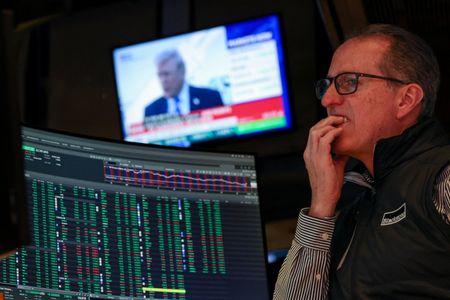

Financial markets worldwide experienced significant turbulence Thursday following President Donald Trump’s latest statements regarding ongoing military operations against Iran, dashing investor expectations for a near-term resolution to the conflict.
Trump’s remarks about continuing to target Iranian positions for an additional two to three weeks sent shockwaves through global trading floors, causing stock prices to tumble, oil costs to spike, and investors to flee toward safer assets.
The president indicated that U.S. military objectives in Iran were nearing completion but stopped short of providing a definitive timeline for concluding operations. His announcement that bombing campaigns would persist for several more weeks left market participants deeply unsettled.
Mike Houlahan, director of Electus Financial Ltd in Auckland, expressed skepticism about the president’s address. “I don’t think there was an awful lot in the speech per se, apart from the fact that they’re going to keep bombing for the next two to three weeks,” Houlahan commented.
“That pushes out the resolution timeframe farther,” he added. “The next question is because he’s extended it, confirmed it’s going to take another two to three weeks, does that put added pressure on the fuel supply chain?”
Market participants had previously grown optimistic about a potential conflict resolution following Trump’s earlier weekly comments, which had boosted international equities and weakened the dollar. However, Thursday’s address revealed the harsh reality of an extended military engagement.
This revelation prompted traders who had recently increased their risk exposure to quickly reverse course ahead of the approaching long weekend.
Energy supply disruptions and their inflationary consequences have remained primary concerns for financial markets. Trump’s Wednesday comments failed to clarify whether U.S. military activities might cease before Iran reopens the strategically crucial Strait of Hormuz.
Iran’s control over this essential shipping route has created what analysts describe as the most severe global energy crisis in recorded history. Brent crude futures for June delivery jumped approximately 5% to $106.16 per barrel following the president’s speech.
Matt Simpson, senior market analyst at Stonex in Brisbane, warned of prolonged economic impacts. “With no plans to reopen the Strait of Hormuz that he effectively closed, oil prices are to remain high indefinitely,” Simpson stated, adding that markets must prepare for “the next round of inflation.”
Economic experts suggest Trump’s statements and the prospect of continued oil supply disruptions could heighten concerns about stagflation – the damaging combination of elevated inflation and sluggish economic growth that disrupted markets in March.
Bank of Japan board member Toichiro Asada acknowledged Wednesday that Japan might face stagflation risks from the Iran conflict that would prove difficult to address through monetary policy measures.
Russel Chesler, head of investments and capital markets at Vaneck in Sydney, emphasized the uncertainty driving market volatility. “The key question in all investors’ minds is ‘when is this going to be over?’, that is what is creating the volatility,” Chesler explained.
“We are looking at a situation now where we are getting into a stagflation situation with lower growth and higher inflation expectations,” he added.
Treasury bond yields climbed across Asian markets Thursday amid fears that rising inflation would eliminate any possibility of more accommodative monetary policy. Ten-year note yields increased 5 basis points to 4.376% after Trump’s address.
While analysts anticipate continued market volatility as investors closely monitor developments over the coming weeks, they expect both the U.S. dollar and oil prices to trend higher in the short term as investors adopt defensive positioning.
The dollar, which has strengthened due to safe-haven demand since the conflict began in late February, gained ground against major currencies Thursday, reversing two days of declines.
Carol Kong, currency strategist at Commonwealth Bank of Australia, predicted further dollar strength. “The dollar has already edged a little bit higher … and I think given our expectations for the war to extend into at least June, the dollar can definitely increase further,” Kong said.
“It’s hard to feel optimistic about the end of the war for sure, because ultimately Israel and Iran are the two other parties to the war; it’s not just the U.S.,” she concluded.