
Global financial markets remained largely unchanged Thursday as traders and investors prepared for a crucial televised speech from President Donald Trump regarding the military situation with Iran.
Trump’s national television address, set to air at 9 p.m. Eastern Time tonight, is anticipated to outline how U.S. forces have met their military objectives against Iran. Sources suggest the president may also confirm plans to conclude the conflict over the next two to three weeks, statements that could significantly influence worldwide financial markets.
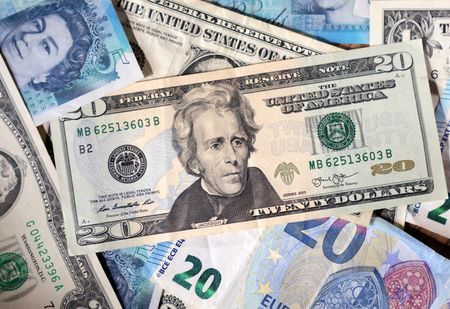
Since hostilities with Iran commenced in late February, the U.S. dollar has strengthened due to its status as a safe-haven investment. However, growing speculation about a potential ceasefire has begun to shift market dynamics, leading to a two-day weakening of the dollar.
During early Asian trading sessions, the euro remained virtually unchanged at $1.1592, while the British pound held steady at $1.3308, both maintaining their recent upward momentum against the dollar.
The Australian and New Zealand dollars, both considered risk-sensitive currencies, also showed little movement, trading at $0.69265 and $0.57495 respectively.
The dollar index, which tracks the currency’s performance against multiple international currencies, stayed flat at 99.56 following a 0.3% drop on Wednesday.
Kyle Rodda, a senior financial market analyst at capital.com, emphasized the significance of tonight’s presidential address. “It all hinges now on what U.S. President Donald Trump says in his address to the nation today,” Rodda stated.
“But there is a quiet optimism, perhaps if only as market participants look to reshape the narrative to explain the price action – of a de-escalation in the war,” he added.
However, Carol Kong, a currency strategist at Commonwealth Bank of Australia, warned that even if U.S. forces withdraw, Iran would likely continue restricting access through the Strait of Hormuz, a critical passage for approximately 20% of worldwide oil and liquefied natural gas shipments.
“Together with damaged energy and transport infrastructure, energy supplies are unlikely to return to pre-war levels quickly,” Kong explained.
The Japanese yen was trading at 158.64, maintaining distance from the psychologically significant 160 level that Japanese officials view as a threshold for potential market intervention.
Following tonight’s presidential address, market attention will shift to Friday’s employment report. Economic forecasters predict approximately 60,000 new jobs were added in March, based on median estimates from economists surveyed by Reuters.
A significant decline in employment figures could renew expectations for Federal Reserve interest rate reductions this year, a possibility that has been largely dismissed as oil price increases from the Iran conflict have heightened inflation concerns.