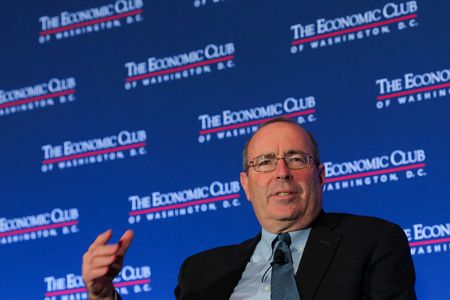

American consumers and businesses are treating the recent surge in oil prices as a temporary setback rather than a long-term economic threat, according to Richmond Federal Reserve Bank President Tom Barkin.
In an exclusive interview Tuesday, Barkin explained that weekly credit card data and his ongoing discussions with corporate leaders suggest people haven’t dramatically changed their spending habits despite higher fuel costs.
“My instinct is you’ve still got a short-term lens on this,” Barkin stated, noting that while gasoline purchases have increased significantly, other consumer spending remains robust.
“Gas spending is up a lot, obviously, but the rest of spending still looks pretty healthy,” explained Barkin, who doesn’t vote on interest rate decisions this year. “If you think this is a two- or three- or four-week thing, an extra $10 to $15 isn’t great but it doesn’t fundamentally change your standard of living. If you think this is going to last for a long time that’s when I think you’re more likely to see pullback.”
Oil prices have soared following U.S. military action in Iran, creating uncertainty for Federal Reserve officials who must balance concerns about rising inflation with patience to avoid overreacting to potentially temporary price spikes.
During their latest meeting, Fed policymakers maintained interest rates between 3.50% and 3.75%, while still anticipating one quarter-point reduction before year’s end.
The volatile nature of the situation became evident this week when Brent crude oil prices briefly exceeded $119 per barrel – a 70% increase from pre-conflict levels – before dropping to approximately $102 after President Trump suggested the military campaign might be concluding. Trump plans to address the nation Wednesday evening.
Meanwhile, gas prices climbed again Wednesday to a national average of $4.06 per gallon, according to AAA data, marking the highest levels since summer 2022 when pandemic-related supply disruptions and strong consumer demand triggered the worst inflation surge in four decades.
Federal Reserve officials are determined to prevent a recurrence of that inflationary period, and the oil price increases temporarily led investors to expect interest rate hikes rather than the anticipated cuts.
Barkin indicated multiple scenarios could influence Fed policy moving forward, but he believes rate increases would primarily depend on rising inflation expectations – a development that would force policymakers to demonstrate their commitment to maintaining their 2% inflation target.
“The hike case would be around inflation expectations starting to finally move,” he noted. “I don’t have a sense that they’ve broken out at this point.”
Conversely, arguments for rate cuts would emerge if inflation drops quickly toward the Fed’s 2% goal from its current level about one percentage point higher, or if job market weakness requires monetary support.
Friday’s March employment report will be closely monitored to determine whether February’s job losses were an isolated incident or indicate emerging economic weakness.
Without significant labor market deterioration, the Fed may remain in a holding pattern, as inflation is expected to make slow progress toward the central bank’s target amid ongoing price pressures from Trump administration policies including tariffs and oil-related costs.
Through his corporate conversations, Barkin observes a growing divide between goods retailers, who face consumer resistance to price increases, and service providers, particularly those serving affluent customers, who feel more comfortable raising prices.
After speaking with a retailer serving low- to moderate-income shoppers, “I had the strong sense that consumers are exhausted by price increases,” he said. “They’re pushing back. I walked out with the lens that 1% to 2% (of price increases) … that would be about as much as they could handle.”
“Where there’s more vulnerability is on the services side, particularly selling to high-end customers,” he added.
“Goods suppliers who’ve been through the drill multiple times with trying to pass on tariffs and trying to pass on oil shock costs, they just don’t feel they’ve got much left,” Barkin observed. “I don’t have the same feeling on services.”
This dynamic will likely result in slower progress returning to the Fed’s inflation target, an outlook reflected in market expectations that rule out rate increases but anticipate an extended pause lasting well into 2027 before cuts begin.
“I see a gradual path, not a quick path. That’s my instinct.”