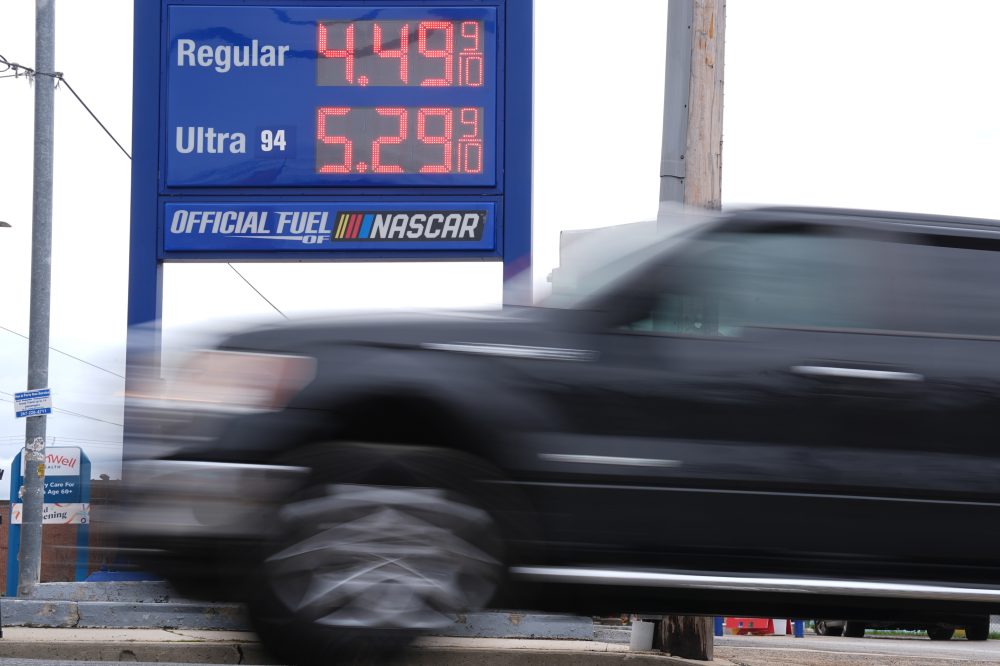

For the first time in nearly two years, American motorists are facing gasoline prices that have climbed above $4 per gallon nationwide, driven by international conflicts that have sent fuel costs skyrocketing globally.
Data from AAA shows the nationwide average for regular unleaded gasoline reached $4.02 on Tuesday — representing an increase of more than one dollar since before the current Middle East war started. The last occasion drivers across the country faced such steep pump prices was almost four years ago during the aftermath of Russia’s attack on Ukraine.
These figures represent a countrywide average, which means motorists in certain regions have already been experiencing costs well above $4 per gallon for some time. Regional variations occur due to multiple elements including proximity to refineries and differences in state taxation.
The joint military action by the United States and Israel against Iran, which commenced February 28, has caused crude oil costs — gasoline’s primary component — to experience dramatic increases and volatile swings. The military conflict has created significant disruptions to supply networks and prompted production reductions from key oil-producing nations throughout the Middle East region.
These elevated fuel expenses are affecting both individual consumers and commercial enterprises, particularly as many families already struggle with broader affordability challenges. When drivers must allocate more money toward essential expenses like gasoline, they often must reduce spending in other areas of their budgets.
Costlier fuel can create a ripple effect that drives up additional expenses, from household utility costs to everyday consumer goods pricing.
Market experts highlight groceries as particularly vulnerable in the near term, since food retailers must replenish inventory regularly and may face price increases as their transportation expenses accumulate.
Shipping and package delivery operations have also felt the impact. The United Postal Service has announced plans to implement a temporary 8% surcharge on certain popular services, including Priority Mail.
Diesel fuel, which powers numerous freight and delivery vehicles, currently averages $5.45 per gallon — a significant jump from approximately $3.76 per gallon before the conflict began, according to AAA figures.
Should the military conflict continue, these prices could climb even further. Most oil tanker traffic through the crucial Strait of Hormuz, which typically handles about one-fifth of global oil shipments, has stopped completely. This has forced major regional producers to reduce output since they cannot transport their crude oil to buyers. Additionally, military strikes by Iran, Israel, and the United States have targeted petroleum facilities, intensifying supply worries.
Seeking to provide some market relief, the International Energy Agency has committed to releasing 400 million barrels from member countries’ emergency oil reserves. This includes contributions from the United States, even though Trump initially questioned the necessity of tapping strategic reserves.
The Trump administration has also relaxed sanctions to allow additional oil supplies from Venezuela and temporarily from Russia. The White House announced it would suspend maritime shipping restrictions under the Jones Act, a law dating back more than a century, for a 60-day period.
Whether these measures will provide consumer relief remains uncertain, as numerous variables influence gasoline pricing.
Since refineries purchase crude oil in advance, some facilities may continue operating with higher-priced oil for an extended period, and any new supply will need time to reach consumers.
Although rising crude costs are the main factor behind current price surges, American gasoline prices typically experience seasonal increases during this period. More motorists begin traveling and attempt to fill their tanks when possible, creating increased demand. Warmer temperatures also trigger the switch to summer-blend gasoline, which costs more to manufacture than winter formulations.
The United States, despite being a net petroleum exporter, has not experienced as severe price shocks as other global regions that depend more heavily on Middle Eastern fuel imports, particularly Asian countries. However, this does not shield America from price volatility.
Petroleum operates as a globally-traded commodity. Most American production consists of light, sweet crude oil — but refineries along the Eastern and Western coastlines are primarily configured to process heavier, sour crude varieties. Consequently, the country still requires imports.
Previous geopolitical tensions have disrupted oil distribution and contributed to gasoline price spikes. The American average for regular gasoline reached its peak of over $5 per gallon in June 2022, nearly four months following the start of the Ukraine conflict when world leaders implemented sanctions against Russia, a major oil producer.
Pump prices eventually declined from that record high. Prior to Tuesday’s increase, AAA data shows the national average had remained under the $4 threshold since mid-August 2022.