Motorists traveling southbound on Nassau Road between New Road and Coastal Highway (Route 1) should be aware of an active lane closure due to ongoing construction work.
The closure is expected to remain in place until 5:00 PM. Drivers are encouraged to allow extra travel time or consider using an alternate route to avoid potential delays in the area.
A troubling new investigation is raising serious questions about the tactics used by federal drug enforcement agents in their fight against fentanyl.
An Associated Press reporter uncovered evidence that agents with the federal drug enforcement agency allowed large amounts of fentanyl to be distributed onto the streets of New Mexico, all in an effort to build more significant criminal cases against drug networks.
The findings were discussed in an interview between the AP reporter and a national news outlet, shining a light on a controversial strategy that put potentially dangerous quantities of a deadly drug into communities in order to pursue bigger arrests and prosecutions.
Fentanyl remains one of the most deadly substances driving the ongoing drug crisis across the United States, and the revelation that law enforcement may have knowingly allowed it to circulate has drawn significant attention.
Delaware State Police have arrested a 27-year-old Philadelphia man on felony weapons charges and driving under the influence after his vehicle caught fire along Interstate 495 late Wednesday night.
Shortly before 11 p.m. on June 24, 2026, troopers were dispatched to the northbound lanes of I-495 near East Holly Oak Road after reports came in of a burning vehicle. When they arrived, officers discovered a Subaru Outback completely consumed by flames. They also spotted the driver walking away from the scene and quickly stopped him. That driver was identified as Isaiah Church. A local fire company was called to the scene and put out the blaze.
As troopers investigated the incident, they searched Church and found a loaded 9mm handgun along with two large-capacity magazines on his person. He was taken into custody without any resistance.
Officers noted multiple indicators of impairment and determined that Church had been drinking alcohol. He was transported to Troop 1, where the DUI investigation continued. Church continued to display signs of impairment throughout the process.
Church was arraigned through the Justice of the Peace Court and released on a $6,300 unsecured bond. He faces the following charges:
Possession of a Large Capacity Magazine (Felony) – 2 counts
A destructive parasite called the New World screwworm is making its way across Texas, raising serious concerns for the cattle industry and local wildlife populations.
Controlling the outbreak requires ranchers to work hand-in-hand with government agencies, but that partnership is proving difficult. Many ranchers have expressed distrust toward the government, complicating efforts to stop the parasite from spreading further.
The screwworm poses a significant threat to livestock, and officials are urging cooperation to prevent the situation from worsening.
WASHINGTON — Long before basketball took center stage in AJ Dybantsa’s life, he was just a kid with a love for a famous fictional web-slinger.
Around age five, his father picked up a Spider-Man basketball hoop that attached to the back of a bedroom door — and that small gift sparked something big.
“I loved Spider-Man growing up. So I just started shooting from my bed, started shooting from my bed with this miniature ball. Then I started playing in the YMCA leagues … ended up falling in love with the game,” Dybantsa said. “So Spider-Man is the reason why I love basketball.”
The Washington Wizards couldn’t be more thankful for that childhood toy. Two days after selecting the 6-foot-9 BYU standout with the first overall pick in the NBA draft, the organization formally welcomed him Thursday at a hotel along the Potomac River, roughly a mile and a half from the team’s home arena.
“Nothing comes easy, but I want to be a piece of the puzzle that is part of the rebuild,” Dybantsa said. “Obviously, Wizards fans have been waiting for a long time.”
It marks the first time Washington has held the top draft spot since 2010, when the team selected John Wall. The Wizards have not won 50 games in a single season since 1979, and over the past three seasons combined, the franchise has managed just 50 total victories.
One lingering question was settled at Thursday’s event. Dybantsa wore No. 3 during his college career, but that number is already taken in Washington by teammate Trae Young. The new Wizard will instead don No. 4.
“Previously wore No. 3, but I was the No. 1 pick,” Dybantsa explained with a smile. “Wanted to add those up, and we got four.”
During his college season, Dybantsa put up 25.5 points per game, becoming the first freshman to top the country in scoring since Young himself accomplished the feat at Oklahoma during the 2017-18 season.
Thursday’s introduction gave fans a glimpse not just of a basketball player, but of the young man they’ll be counting on to lead a turnaround. Dybantsa came across as confident and personable, with a clear drive to get to work — an attitude that was already on display before the draft at the league combine.
“It was like a job. My dad was like, ‘This is your first job interview,’” Dybantsa recalled. “So we decided to dress up. I went to a suit and tie in every single interview. Media availability, that was in a suit and tie. So I just wanted to treat it like a real job.”
That approach left a strong impression on Wizards general manager Will Dawkins.
“It was a pretty fun first introduction, just to learn the maturity that he brings,” Dawkins said. “We allow opportunities to ask questions. Sometimes you get the standard questions from guys. We didn’t get that from AJ. He’s just curious and mature and asked some really deep questions.”
Dybantsa also shared that he plans to complete his college degree by studying online. The 19-year-old has already established a foundation focused on uplifting young people globally, inspired by his own family roots.
“My mom’s from Jamaica, my dad’s from Congo. We’re going to start off just sending 20 kids from there to different universities,” he said. “If that’s universities in the continent of Africa, if that’s different universities in Jamaica, if that’s universities in the States, we’re going to try that. But after those two, we’re just going to expand all around the world. We just want to help kids all around the world.”
ARLINGTON, VA. — A Kansas wheat farmer has stepped into the top leadership role at U.S. Wheat Associates (USW), taking the gavel as the organization’s new Board of Directors chairman.
Gary Millershaski, who farms in Lakin, Kansas, was officially installed as USW chairman during the group’s three-day summer meeting held in Fargo, North Dakota. The gathering also included updates from state wheat commission members and USW staff, covering topics such as budget planning, long-range strategy, transportation, and wheat quality. The full board convened on June 25, with discussions on global supply and demand, food assistance programs, and reports from USW leadership.
Millershaski succeeds North Dakota wheat farmer Jim Pellman in the chairman’s seat and will hold the position for one year.
USW President and CEO Mike Spier spoke highly of the incoming chairman. “Gary has been an active board member and a valuable voice on the officer team – he is a strong representative for U.S. wheat farmers,” Spier said. “He has visited many global markets and established relationships with wheat buyers around the world. This kind of engagement serves the mission of USW to build export demand for wheat. We look forward to his continued contributions to our work that benefits wheat farmers in his home state of Kansas and beyond.”
Millershaski farms alongside his wife Jana and their sons Jeremy and Kyler. Together, the family grows hard red winter wheat, hard white wheat, and dryland corn and milo, while also running a cow/calf operation. He became a Kansas Wheat Commissioner in 2016 and later served as its chairman. He also held a director position with the Kansas Association of Wheat Growers (KAWG) from 2007 to 2017, an organization that had previously awarded him a scholarship while he was part of the Class VIII Kansas Agricultural and Rural Leadership (KARL) program. More recently, he took part in the industry-focused Bayer Leadership Program, which aims to foster collaboration and readiness for global agricultural challenges.
Millershaski reflected on his time as vice chairman as he steps into the top role. “In my role as Vice Chairman, I’ve learned a lot from working alongside Jim Pellman, our U.S. Wheat staff around the world and the state partners that support our efforts,” he said. “My goal as Chairman is to meet more of our customers and continue to raise awareness of the high-quality wheat we grow.”
The full officer lineup for the 2026/27 term was chosen during the January winter board meeting in Washington, D.C. Alongside Millershaski’s elevation to chairman, Mike Carstensen of Almira, Washington, moved up to vice chairman, while Jim Pellman of McClusky, North Dakota, shifted to the past chairman role. Mark Jossund, a farmer from Hendrum, Minnesota, was newly elected as secretary-treasurer. All officers officially began their terms on June 25 following the installation ceremony.
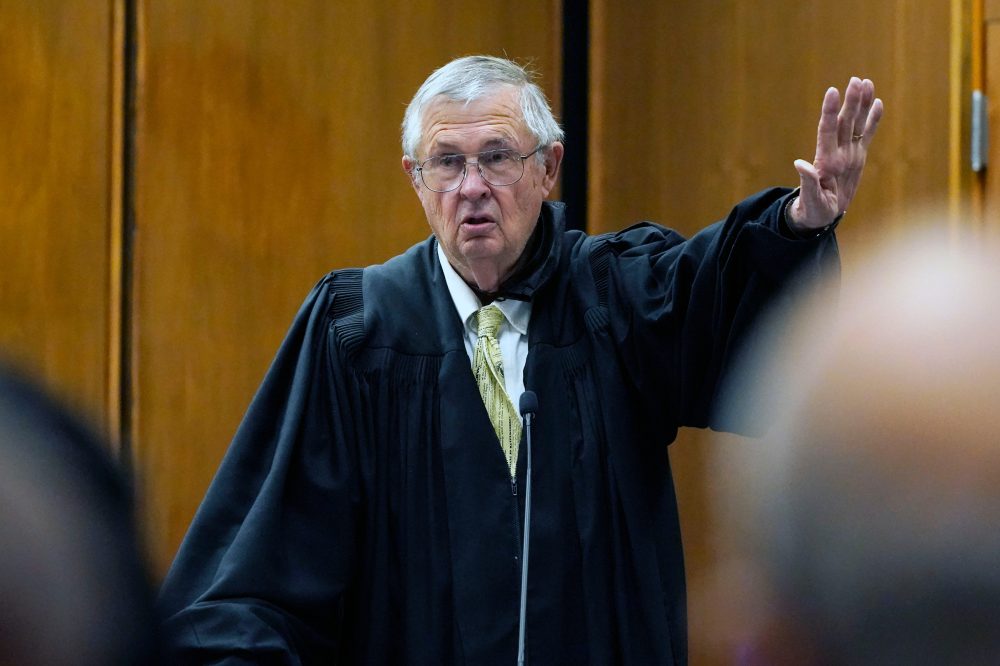
A U.S. District Judge ruled Wednesday that plaintiffs in the case known as Harris v. DeSoto County failed to present sufficient evidence that the county’s district maps were deliberately drawn to diminish Black voting influence.
Judge Glen H. Davidson sided with DeSoto County, writing in his decision that “plaintiffs cannot prove their claims for vote dilution pursuant to Section 2 of the Voting Rights Act, and judgment must be awarded to defendants.”
Davidson issued the ruling after hearing arguments in the case back in March.
The federal lawsuit was originally filed in September 2024, claiming that a 2022 DeSoto County electoral map weakened Black voting power in county office races. Those who brought the suit were seeking a new redistricting plan along with special elections for seats on the boards of supervisors and education, the election commission, and the offices of constable and justice court judge.
The ruling comes on the heels of a significant U.S. Supreme Court decision in Louisiana v. Callais, which weakened federal Voting Rights Act protections against racially discriminatory redistricting. That Supreme Court ruling has already sparked protests and political disputes over redistricting and voting rights nationwide.
The ACLU of Mississippi responded to the DeSoto County ruling with a statement describing the outcome as “deeply disappointing.”
“The Callais opinion pretends to adhere to the text of the Voting Rights Act and only updates the test for proving vote dilution,” the statement said. “In reality, the Supreme Court is directing federal courts to close their eyes and ignore the clear results of discriminatory maps.”
Mike Hurst, the state Republican Party chairman, represented DeSoto County in the case. He told a reporter the lawsuit amounted to nothing more than “Democrats are mad they can’t win an election in DeSoto County because it’s a Republican county.”
DeSoto County sits just south of Memphis in northwest Mississippi and has been among the state’s fastest-growing counties for years. Its Black population has also been growing and now makes up more than 30% of the county’s total population of 190,000.
Currently, none of the 25 county offices determined by the disputed map is held by a Black official. The county does, however, have a Black sheriff elected on a countywide basis, Democratic Black state legislators representing majority-Black districts, and a Black Republican state House member elected from a majority-white district. The lawsuit did not challenge legislative districts.
Pope Leo XIV is now the owner of a piece of baseball history, thanks to a special visit from former Chicago White Sox catcher A.J. Pierzynski.
Pierzynski handed the pope the baseball used for the final out of Game 1 of the 2005 World Series — a game that Leo himself attended. The exact date of the exchange wasn’t immediately clear, but Pierzynski shared photographs from the Vatican encounter on his Instagram account Thursday.
“7 year old me, at my First Communion, would have never thought that I would get to meet The Holy Father, Pope Leo XIV,” Pierzynski wrote. “I was honored to give him the last out ball from Game 1 of the 2005 World Series, the game he attended.”
Before becoming pope, Leo was known as Robert Prevost, or Father Bob, when he took in that World Series opener two decades ago. The White Sox won that game 5-3, with pitcher Bobby Jenks striking out Houston’s Adam Everett to end it — with Pierzynski crouching behind home plate. The White Sox went on to sweep the series in four games to claim the championship.
Leo grew up in Chicago and has been a White Sox fan his whole life. Rate Field even features a special graphic installation marking the section where he sat during Game 1.
As the first American pope in the history of the Catholic Church, Leo has collected quite a few sports-related gifts since his election last May. He received a pinstriped White Sox jersey numbered 14 with “Konerko” and “Pope Leo” on the back, signed by former first baseman Paul Konerko, who wore that number throughout his career. He also received a bat that once belonged to Hall of Famer Nellie Fox, who spent the majority of his career with the White Sox.
Shortly after his election, Vice President JD Vance presented Leo with a custom Chicago Bears jersey. In November, Bulls radio broadcaster Chuck Swirsky gave him a Chicago Bulls jersey bearing the number 14 and “Pope Leo” on the back.
The White Sox are also planning a special tribute to their famous fan on August 11 when they host Cincinnati, giving fans pope-themed hats shaped like a papal miter with the team’s sock logo displayed in the center.
A series of earthquakes in recent days — striking California, Venezuela, and Japan — sent warnings to millions of people through their mobile phones, giving them critical seconds to protect themselves before the shaking began.
Venezuela was hit by two deadly earthquakes on Wednesday evening and Thursday morning, while significant tremors also rattled Japan’s northern coast. Earlier in the week, a moderate earthquake struck the U.S. state of California. And at the start of June, 37 people in the Philippines lost their lives in a quake near Mindanao.
Many countries around the world have developed systems designed to alert residents seconds before an earthquake’s shaking arrives. And even in nations that lack those systems — like Venezuela — Google’s Android Earthquake Alerts can still deliver life-saving warnings.
Here’s what you need to know about how these systems work:
According to the U.S. Geological Survey, several countries currently operate Early Earthquake Warning systems — often referred to as EEW. Those countries include the United States, Mexico, Japan, Turkey, Romania, China, Italy, and Taiwan.
Venezuela is not among them. The back-to-back 7.2- and 7.5-magnitude earthquakes that struck Wednesday evening were among the most powerful to hit the country in over 100 years.
Despite the absence of a national system, some Venezuelans still received advance warnings through Google’s Android Earthquake Alerts platform. That system gathers crowdsourced data from the sensors built into individual smartphones to detect seismic activity and push warnings to nearby users.
Pericles Sánchez, a 39-year-old writer based in Caracas, received a warning on his Android phone several minutes before the earthquake reached his home — giving him enough time to run outside. He said his family’s house was not damaged.
“It wasn’t until we were already outside that we started to feel it,” Sánchez said.
On the U.S. West Coast, the USGS runs a system called ShakeAlert for California, Oregon, and Washington. That system delivers alerts through several channels, including a state-operated app called MyShake. Combined, those platforms notified more than 4 million people ahead of Wednesday’s California earthquake, according to USGS scientist Robert de Groot.
The first public EEW system launched in Mexico back in 1991. Today, Mexicans receive warnings through broadcast stations, mobile apps, and public alarm systems. Mexico City also holds regular earthquake drills so residents know how to respond.
Japan significantly expanded its earthquake warning capabilities following the devastating magnitude 9.0 earthquake and tsunami in 2011, which killed more than 22,000 people and triggered a catastrophic meltdown at the Fukushima Daiichi nuclear power plant. The country built out an underwater monitoring network called the Seafloor Observation Network for Earthquakes and Tsunamis — or S-Net — which uses thousands of miles of undersea cables and sensors to monitor the offshore subduction zone where tectonic plates collide. It is considered the most advanced system in the world, adding roughly 20 seconds to earthquake warning times and making tsunami warnings up to 20 minutes faster.
California’s MyShake app launched in 2019 and has since delivered 6.8 million alerts for 194 separate earthquakes, according to state data.
To understand how these systems work, it helps to know that earthquakes produce several types of seismic waves. P-waves travel the fastest but cause only minor vibrations. S-waves are slower but far more dangerous, producing the intense ground shaking most people associate with earthquakes. L-waves arrive last and are the most destructive of all.
Most EEW systems use seismometers and other sensors to detect these waves, then quickly transmit that data to regional networks. Within seconds, analysts can estimate the earthquake’s location and likely magnitude. If the intensity crosses a certain threshold, alerts are pushed out to areas expected to feel the impact.
In the United States, those alerts go out through the Wireless Emergency Alert system, various apps, and regional warning platforms. Some people may receive multiple alerts for the same event, while others — especially those in rural areas or without phones nearby — may receive none at all.
De Groot of the USGS emphasized the importance of having multiple alert channels in place.
“It’s always good to have more than one way of getting alerts. It’s the reason why you carry a spare tire in your car or carry some small bills in your wallet because the ATM may not work,” he said.
Google’s Android warning system relies on the accelerometers inside smartphones — the same sensors that rotate the screen when you tilt your phone. If a stationary Android device detects a P-wave, it sends a signal to Google’s detection center, which then cross-references data from other phones in the region. That combined data is used to confirm the quake and trigger alerts.
One limitation of these systems is that people closest to an earthquake’s epicenter often receive the shortest warning times — sometimes the shaking has already started before the alert arrives. Those farther from the epicenter may have more time to react, though typically still only seconds.
The reason warnings can outpace earthquakes at all comes down to physics: electronic signals travel at the speed of light, far faster than seismic waves move through the earth. It’s similar to a thunderstorm — the farther you are from a lightning strike, the longer it takes before you hear the thunder.
Wireless Emergency Alerts are capped at 90 characters and are broadcast from cell towers to any compatible mobile device. Alerts from apps like MyShake or those sent through Google devices typically include more detail — such as the distance in miles from the device to the epicenter and the earthquake’s estimated magnitude.
Regardless of the platform, all alerts carry the same core instruction: “Drop, cover, hold on.”
DANVILLE, Va. — A Virginia man who allegedly attacked a city council member in a jealous rage — pouring gasoline on him and setting him on fire — has been handed a 40-year prison sentence.
Shotsie Buck-Hayes entered a guilty plea in April on one count of attempted first-degree murder and one count of aggravated malicious wounding for the July 30, 2025, attack on council member Lee Vogler. According to witnesses, Buck-Hayes walked into Vogler’s Danville office carrying a bucket of gasoline, soaked him with it, chased him out of the building, and then ignited him.
Lee Vogler’s wife, Blair Vogler, took the stand and testified that her husband suffered burns across 60% of his body as a result of the attack.
Commonwealth’s Attorney Michael Newman said Vogler and his family were present at Thursday’s hearing in Danville Circuit Court. The visibly scarred council member delivered an emotional statement describing how the attack had changed his life. Buck-Hayes also addressed the court, offering what Newman described as “what he claimed to be an apology,” while again claiming his actions were driven by an alleged affair between Vogler and Buck-Hayes’ wife.
Circuit Judge James Reynolds handed down a 10-year sentence on the attempted murder charge, suspending five of those years. On the malicious wounding count, the judge imposed a life sentence but suspended all but 35 years, bringing the total active prison time to 40 years.
Newman pointed out that the sentence on the wounding charge was three times what citizen sentencing guidelines recommended.
“I’m glad the court agreed that it’s an aggravating case and went above the guidelines and sentenced in such a way to hopefully hold this defendant accountable for this horrific act,” Newman said.
A breaking and entering charge against Buck-Hayes was dismissed as part of his April 1 guilty plea agreement.
The federal Drug Enforcement Administration made a formal request Thursday for the U.S. Justice Department’s internal watchdog to investigate allegations that its own agents stood by and allowed hundreds of thousands of fentanyl pills to reach communities in New Mexico.
The move came just days after an Associated Press investigation revealed that DEA agents repeatedly watched — but chose not to intercept — large shipments of the deadly synthetic opioid between 2023 and 2025, hoping the tactic would help them build larger criminal cases.
In a letter addressed to the Justice Department’s Inspector General, DEA Administrator Terry Cole stated that an internal review was needed because “the allegations have generated significant public attention and have raised questions regarding DEA’s operational decisions, supervisory oversight, and response to concerns.”
Cole also issued a public statement clarifying that his call for an investigation “should not be interpreted as reflecting any lack of confidence in the professionalism or integrity of DEA personnel or in the investigative decisions made during this matter.”
He went on to say, “If improvements are identified, DEA will implement them. Strong institutions are sustained — not diminished — by objective oversight and a willingness to continuously assess and improve.”
Both current and former DEA agents told the AP that this approach — commonly referred to as letting the counterfeit painkillers “walk” — was a dangerous gamble with public safety in a state already devastated by the fentanyl crisis. They also suggested it may have broken Justice Department rules designed to protect communities from a drug the White House designated last year as a “weapon of mass destruction.”
The AP’s reporting drew on accounts from three current and former agents as well as government records, including an internal report documenting a 2023 incident in which the DEA watched 74,000 pills change hands at a mobile home park in Albuquerque. One of those agents, David Howell, first raised alarms about the tactic in a 2023 whistleblower complaint. He later spoke extensively with the AP, describing the strategy as one that “poisoned our community to make cases.”
A DEA spokesperson previously told the AP that “public descriptions suggesting that DEA knowingly permitted fentanyl to reach communities are false and fundamentally mischaracterize the facts.”
The DEA’s watchdog request followed by just one day a move by New Mexico Gov. Michelle Lujan Grisham, who asked the state’s attorney general to determine whether the agency’s conduct violated New Mexico law — an unusual step that underscores the tension between state and federal authorities at a time when fentanyl continues to be one of the nation’s most deadly public health crises.
“There are no words to describe how reckless and dangerous these decisions were,” Lujan Grisham said in a statement. “Make no mistake: the DEA knew people would die if these pills made it into New Mexico communities, and the agency let it happen anyway.”
Nearly a full day after two devastating earthquakes rocked Venezuela, survivors in the coastal city of La Guaira were still clawing through the wreckage of collapsed buildings with nothing but their hands, desperately hoping to find neighbors still alive.
“We are trying to help with what we can, but there is a lack of equipment,” said Carlos Borges, expressing frustration over the shortage of backhoes and other heavy machinery needed to move massive concrete slabs — the remains of what were once high-rise apartment buildings.
Borges and his team managed to pull three survivors from one building. Meanwhile, anxious family members gathered nearby, including a single mother waiting and hoping for news about her missing teenage son, as of Thursday morning.
Models from the U.S. Geological Survey suggested the final death toll from Wednesday’s twin quakes — which struck in and around the capital city of Caracas — could climb beyond 10,000. The government of acting President Delcy Rodriguez has so far confirmed nearly 200 fatalities and 1,520 people injured.
La Guaira, a popular beach destination and the hardest-hit city in the country, along with Moron — located near the earthquakes’ epicenter — were left largely on their own amid limited government assistance.
“Is it not possible to call in the military? Everyone come, come and pitch in. Put them in an armored vehicle and come help the people. Find tractors wherever you can,” pleaded Argenis Martinez, a La Guaira resident searching through rubble for a missing relative in the Los Corales neighborhood.
Despite a shutoff of domestic gas service, some debris caught fire overnight. Frightened residents — many with no safe place to go — gathered in the streets or stared into the ruins of destroyed buildings, searching for any sign of life.
The government reported that approximately 250 buildings had been damaged or destroyed, mostly in La Guaira. Officials said aid was on the way from Spain, the United States, Mexico, and Qatar, and called on private businesses to loan heavy equipment such as backhoes to support rescue operations.
In other parts of La Guaira, neighbors recovered two bodies from a home — one of them a young girl — while also managing to rescue a mother and her two children, injured but alive, from the wreckage of an apartment building.
Reuters journalists on the scene observed members of a colectivo — motorcycle groups aligned with the ruling party that have long faced accusations of targeting anti-government demonstrators — helping with rescue efforts at at least one location.
“My building is uninhabitable and now I have nothing. It’s just me and my son, and I have no family in the country,” said Suhayl Sarquiz, 50, who had also lost her job just a few months earlier.
Reports of looting also emerged from parts of La Guaira, where people were searching for food and water. A Reuters team witnessed looting at a minimum of two stores in the area.
The city’s Jose Maria Vargas Hospital was overwhelmed with the injured, with some patients receiving care outside the building as police worked to control access. Hospital officials declined to provide information to reporters.
“It’s a tragedy,” said Beatriz Rodriguez, 60, whose nephew had both legs amputated at the hospital after being crushed in the quakes. A six-year-old nephew was also killed.
Venezuela’s armed forces announced they are deploying field hospitals to La Guaira capable of performing emergency surgeries. A Reuters team in the city Thursday spotted a military convoy near the local stadium engaged in aid operations.
Hospitals in other affected areas were also stretched beyond their limits. At a hospital in Moron, Dr. Augusto Ramirez was working through a 24-hour emergency shift and found himself running dangerously low on even the most basic supplies.
Along with two other doctors and additional staff, Ramirez had treated 112 patients since the earthquakes collapsed homes and knocked out electricity and water service in the town. Nine people have died from skull fractures and other injuries — including three children.
A young homeschool student from Northampton County, Virginia, has made a meaningful contribution to the preservation of local history by donating a 3D-printed replica of the historic Arlington plantation.
Caleb Dail presented the detailed replica to Northampton County as a way of honoring the area’s rich historical heritage. The model was crafted using 3D printing technology to recreate the appearance of the Arlington plantation.
The donation represents a creative intersection of modern technology and historical preservation, with a young student using contemporary tools to bring attention to a significant piece of Northampton County’s past.
Federal Reserve Bank of New York President John Williams delivered a sobering assessment of inflation on Thursday, saying that while price pressures may ease somewhat this year, they are still far too high for comfort.
Williams pushed back his timeline for when inflation could return to the Federal Reserve’s 2% target, signaling the fight against rising prices is far from over.
In the text of a prepared speech, Williams stated that “inflation is unquestionably elevated and well above the (Federal Open Market Committee’s) longer-run goal of 2%,” adding that “it is imperative that we restore it to our 2% longer-run goal on a sustained basis.”
Williams noted that the current interest rate policy is considered “well positioned” to help reduce inflationary pressures, even as he acknowledged that the central bank’s price stability mandate has yet to be fully met.
A federal judge has ordered Elon Musk to sit for sworn testimony in two proposed class action lawsuits that accuse him of deceiving voters in battleground states ahead of the 2024 presidential election through a $1 million-per-day cash giveaway.
U.S. Magistrate Judge Susan Hightower, based in Austin, Texas, issued the ruling Thursday. She also recommended that Musk and his political action committee, America PAC, continue to face a fraud allegation in one of the cases — specifically, that they tricked voters into handing over personal identifying information as part of the giveaway promotion. However, she recommended that a breach of contract claim tied to that same case be thrown out.
Attorneys representing Musk did not respond to requests for comment. Lawyers for the plaintiffs either had no immediate response or declined to comment.
The two plaintiffs — Joy Harvick and Jacqueline McAferty, both residents of Arizona — allege that Musk and America PAC misled voters across seven swing states. The women claim they were encouraged to sign a petition supporting the U.S. Constitution under the impression that $1 million winners would be selected at random, like a lottery drawing.
According to the plaintiffs, voters never had a genuine shot at winning. Citing testimony from one of Musk’s own attorneys, the plaintiffs noted that the 18 people who received the money were handpicked — not randomly drawn — because they were seen as potentially effective spokespeople for America PAC.
Musk created America PAC to back Republican Donald Trump’s successful bid for the presidency in 2024. He unveiled the giveaway during an October town hall event held in Pennsylvania. Musk is also recognized as the wealthiest person on the planet, with business ventures that include electric vehicle manufacturer Tesla and the rocket and satellite company SpaceX.
In recommending that McAferty’s fraud claim be allowed to proceed, Judge Hightower noted that it remains an unresolved question whether Musk was acting recklessly when he described the prize selection as “random.”
Hightower highlighted testimony from America PAC Director Christopher Young, who said during a February 2026 deposition that he was caught off guard by Musk’s word choice. “It was not the way that we had — you know, with legal counsel and consultation, discussed the program and how it would run,” Young stated.
U.S. District Judge Robert Pitman, also in Austin, will now review Hightower’s recommendations. Separately, Musk and America PAC are seeking dismissal of Harvick’s lawsuit, a motion that Judge Pitman will rule on independently.
The New York Mets added to their growing injury woes Thursday, placing second baseman Marcus Semien on the 10-day injured list after he was diagnosed with a left hip flexor strain.
Semien had appeared in both games of Wednesday’s doubleheader against the Chicago Cubs, during which he committed two of the team’s six total errors in the nightcap. New York dropped both contests, falling 10-3 in the opener and 10-5 in the second game.
To fill his roster spot, the Mets recalled infielder Ronny Mauricio from Triple-A Syracuse. Mauricio had only just been activated from the injured list on Wednesday and assigned to the minor league club before being brought back up.
Semien, 35, is hitting .214 on the season with nine home runs and 29 RBIs across 80 games. He came to New York via an offseason trade that sent outfielder Brandon Nimmo to the Texas Rangers.
Mauricio, 25, has appeared in 10 games at the major league level this year, batting .219 with one home run and two RBIs.
The Mets’ injury report for position players continues to grow. Superstar outfielder Juan Soto is listed as day to day after leaving Tuesday’s game early due to lower back tightness.
Outfielder Tyrone Taylor has been sidelined since May 26 with a right hip flexor strain, while fellow outfielder Luis Robert Jr. has been on the 60-day injured list since April 30 after being diagnosed with a lumbar spine disc herniation.
Infielder Jorge Polanco was also transferred to the 60-day IL on June 15, dealing with left Achilles bursitis.
There was at least one piece of good news for the Mets, who currently sit at 34-46. Star shortstop Francisco Lindor was activated Wednesday after recovering from a strained left calf he suffered on April 22, and he took the field in Game 2 of the doubleheader.
In additional roster moves Thursday, pitcher Daniel Duarte was recalled from Syracuse while fellow right-hander Jonathan Pintaro was optioned back down to the Triple-A affiliate.
Delaware’s Indigenous and Cuban cultural communities are set to benefit from a major national funding initiative aimed at preserving and celebrating folklife traditions in communities of color.
The US Regional Arts Organizations (USRAO) has revealed the recipients of its Walking Together: Investing in Folklife in Communities of Color grant program. In total, $3.34 million will be distributed among 96 selected grantees across the country.
As part of the award structure, 56 organizations will each receive $50,000 grants to support their cultural and folklife programming efforts.
The initiative reflects a broader national commitment to investing in the living cultural traditions maintained by Indigenous, Cuban, and other communities of color throughout the United States, including right here in Delaware.
Apple announced Thursday that it is raising prices on its Mac computers and iPad tablets, citing a shortage of memory chips driven by surging demand from the artificial intelligence industry.
The California-based tech giant described the situation as an “unprecedented challenge” for the consumer electronics sector, saying the rapid growth of AI data centers has caused an extraordinary spike in demand for memory and storage components.
“The rapid expansion of AI data centers has created an extraordinary surge in demand for memory and storage. We have never seen a component price increase this much, this quickly,” the company said in a written statement.
Under the new pricing, the entry-level MacBook Neo will carry a price tag of $699, up $100 from its previous $599. The 512 gigabyte MacBook Air jumps from $1,099 to $1,299, and the one terabyte MacBook Pro climbs from $1,699 to $1,999.
iPad prices are also on the rise. The 128 gigabyte iPad Air now costs $749, compared to $599 previously. The 256 gigabyte iPad Pro Wi-Fi model has gone from $999 to $1,199.
Apple acknowledged in its statement that it had been absorbing component cost increases to protect customers up until now. “We have now reached a point where we need to begin raising prices on a number of products, including today’s increases for iPad and Mac. We know this is not welcome news, and we are working tirelessly to find solutions,” the company said.
Industry analysts are already looking ahead to potential iPhone price increases later this year. IDC analyst Nabila Popal said the Mac and iPad hikes came in larger than she had anticipated, raising concerns that upcoming iPhone price increases could also exceed expectations — possibly reaching $200 more for the iPhone Pro and Pro Max models.
“I think the days of $50 price increases are over,” Popal said.
Apple’s stock took a hit following the announcement, falling $13.29, or 4.5%, to close at $279.88 Thursday afternoon.
The number of hogs and pigs in the United States has fallen slightly, according to the most recent inventory report released by the U.S. Department of Agriculture’s National Agricultural Statistics Service.
The federal agency’s report indicates that the national hog inventory is down compared to previous figures, though the full breakdown of specific numbers and regional data is contained within the official USDA release.
Hog and pig inventory reports are published periodically by the USDA to give producers, markets, and policymakers a snapshot of livestock population trends across the country.
Commercial red meat production in the United States has declined by six percent when compared to figures from the previous year, according to a report released by federal agriculture officials.
The drop signals a notable shift in the volume of livestock being processed at commercial facilities across the country. Such changes in production levels can have ripple effects throughout the agriculture and food supply industries.
Federal data tracking livestock slaughter activity is used by producers, buyers, and policymakers to monitor trends in the nation’s meat supply chain.
Major League Baseball has laid out new details of a proposed salary cap system that would restrict most free agent contracts to a maximum of five years and limit individual player salaries to no more than 15% of a team’s total salary cap. The league is also pushing to do away with deferred compensation entirely — a move that sets up a likely showdown with the players’ union.
During a Thursday bargaining session held at the union’s offices, MLB signaled it would accept the players’ union’s earlier proposal to allow free agency one year sooner for players who have reached age 30, provided it falls within the framework of the new salary cap system. The league also put forward a raise to the minimum salary, proposing an increase from the current $780,000 to $1 million for players with at least two years of major league service time.
Additionally, MLB proposed growing the pre-arbitration bonus pool — money set aside for younger players not yet eligible for arbitration — from $50 million to $65 million in the coming year, with a further increase to $75 million by 2032, which would be the sixth year of the proposed seven-year agreement.
The league also offered to scrap the qualifying offer system, a mechanism that has long been criticized for limiting the market options available to certain free agents.
Formal bargaining between MLB and the players’ union began on May 13, as both sides work toward a new deal to replace the current five-year contract set to expire on December 1. This marks the first time team owners have formally proposed a salary cap since the union successfully defeated such a system during a 7½-month strike in 1994-95. A December lockout is widely anticipated, which would put free agent signings and trades on hold.
The last time the collective bargaining agreement expired, in December 2021, serious negotiations didn’t get underway until late February, as the prospect of losing regular-season games — and the revenue and salaries that come with them — loomed large. The two sides ultimately struck a deal on March 10, the 99th day of the lockout, in time to protect the full 162-game season.
The U.S. Department of Agriculture’s National Agricultural Statistics Service has published its Cold Storage report featuring highlights and records for May 2026.
The report provides a snapshot of the amounts of various food products being held in refrigerated and frozen storage facilities across the United States. These figures are closely watched by agricultural producers, food industry professionals, and market analysts as indicators of national supply conditions.
Cold storage data plays an important role in understanding how much of a given commodity is available in the marketplace at any given time, which can influence pricing and production decisions throughout the food supply chain.
The full details of the May 2026 report, including specific commodity figures and any notable records, are available through the USDA’s official publications.
ANKARA, Turkey — A number of independent Turkish news organizations have been shut out of coverage for the upcoming NATO summit in Ankara, with journalism groups condemning the move as a direct attack on press freedom.
U.S. President Donald Trump is expected to attend the July 7-8 gathering of leaders from the alliance’s 32 member nations in the Turkish capital. Key topics on the agenda include defense spending and demonstrating alliance unity.
Among the outlets whose journalists were denied credentials are Halk TV, Sozcu TV, Cumhuriyet newspaper, T24 news website, and ANKA news agency — all considered either independent or opposition-leaning. The Turkish Journalists’ Association and other media solidarity organizations confirmed the exclusions.
According to the association, the rejected journalists received no explanation for the denial and were not given any avenue to challenge the decision.
“Preventing certain media outlets from covering events of public importance undermines freedom of information and reporting,” the association stated. “International organizations must act in line with the democratic values they claim to uphold.”
NATO spokeswoman Allison Hart addressed the situation in a post on X, explaining that for summits held outside NATO’s Brussels headquarters, the alliance depends on the host country to vet and approve journalists from that nation.
“We are in contact with Turkish authorities on accreditation for the NATO Summit in Ankara. It is very important for NATO that media can attend major events in person,” Hart said.
Turkish government officials have not made any public comment regarding the accreditation denials.
Turkey has been rolling out extensive security measures ahead of the summit. Earlier this week, security forces arrested more than 200 individuals suspected of ties to extremist organizations, according to the Ankara chief prosecutor’s office.
However, opposition parties and media reports indicated that those swept up in the arrests included a politician, an academic, a journalist, a prominent LGBTQ activist, and lawyers — prompting calls for their release.
Human Rights Watch also weighed in Thursday, criticizing the arrests and urging NATO to make sure basic democratic rights are upheld throughout the summit.
“The misuse of terrorism laws to conduct mass arrests and silence people in the run-up to a NATO summit flies in the face of the founding values of the alliance,” said Benjamin Ward, the group’s deputy director for Europe and Central Asia. “The authorities should immediately release those detained, and NATO should insist that peaceful expression and assembly must be permitted around the summit.”
The Turkish government’s Communications Directorate pushed back Thursday, asserting that those who were detained “were assessed to have been involved in activities connected to various terrorist organizations.”
Venezuela was rocked by two deadly earthquakes in quick succession on Wednesday, resulting in hundreds of casualties. The unusual back-to-back disaster highlights a long and tragic history of powerful earthquakes across Latin America. Here is a look at some of the deadliest seismic events to strike South and Central America over the past century.
September 2017 — Mexico: Within roughly one week, Mexico was hit by both an 8.1 and a 7.1 magnitude earthquake. The twin disasters devastated southern and central parts of the country, including Mexico City, and together claimed nearly 500 lives.
April 16, 2016 — Ecuador: A magnitude 7.8 earthquake tore through coastal provinces, leveling entire towns and killing more than 650 people.
February 27, 2010 — Chile: Central Chile was shaken by a powerful magnitude 8.8 earthquake that rattled the nation’s capital for roughly a minute and a half and set off a tsunami. The disaster left 523 people dead.
August 15, 2007 — Peru: A magnitude 8.0 earthquake struck close to Peru’s central coast, taking the lives of more than 500 people.
January and February 2001 — El Salvador: A magnitude 7.7 earthquake struck off El Salvador’s coast on January 13, 2001, followed by a 6.6 magnitude quake approximately one month later. The earthquakes and the landslides they triggered together killed 1,200 or more people.
January 25, 1999 — Western Colombia: A magnitude 6.0 earthquake caused widespread destruction in the city of Armenia, killing around 1,170 people.
April 22, 1991 — Costa Rica: A magnitude 7.4 earthquake claimed more than 80 lives across Costa Rica and Panama. Roughly 30,000 people were cut off from access to food, water, and medical care for several days.
September 19, 1985 — Central Mexico: A magnitude 8.1 earthquake killed approximately 12,000 people, though the full death toll has never been precisely determined.
February 4, 1976 — Western Guatemala: A magnitude 7.5 earthquake killed more than 22,700 people.
December 23, 1972 — Nicaragua: A magnitude 6.2 earthquake killed more than 6,000 people, with certain estimates placing the death toll as high as 9,000.
May 31, 1970 — Northern Peru: A magnitude 7.9 earthquake killed more than 66,000 people in one of the region’s worst-ever disasters.
May 22, 1960 — Chile: A magnitude 9.5 earthquake — known as both the Valdivia earthquake and the Great Chilean earthquake — holds the record as the largest earthquake ever recorded anywhere on Earth. The disaster killed more than 1,655 people, many of them in a resulting tsunami, and left 2 million people without homes.
August 5, 1949 — Ecuador: A magnitude 6.8 earthquake killed approximately 5,050 people.
January 24, 1939 — Chile: A magnitude 8.3 earthquake struck the Chillan area, killing around 28,000 people, with some estimates putting the number closer to 30,000.
January 31, 1906 — Ecuador: A magnitude 8.8 earthquake struck near Esmeraldas and is known as the Ecuador-Colombia earthquake. It unleashed a powerful tsunami that killed roughly 1,500 people and sent waves as far north as San Francisco.
SAN JUAN, Puerto Rico — The pair of devastating earthquakes that struck the northern coast of Venezuela, leaving more than 180 people dead, represent a rare seismic event scientists refer to as a “doublet.”
According to the U.S. Geological Survey, a doublet occurs when two earthquakes of comparable size strike in roughly the same location within a very short period of time. On Wednesday evening, a magnitude 7.2 quake hit first, with a slightly stronger magnitude 7.5 following just 39 seconds afterward.
The back-to-back strikes brought down buildings in Venezuela’s capital city of Caracas and surrounding areas. Around 1,500 people sustained injuries, and thousands more were reported missing. Officials said the coastal region of La Guaira, situated north of Caracas, suffered some of the worst destruction and the highest number of casualties.
Christine Goulet, director of the USGS earthquake science center in California, told the Associated Press that while doublets are less common than the typical pattern of one major quake followed by smaller aftershocks, they can occur anywhere on the planet.
Doublets tend to point to a complicated fault structure. In Venezuela, that structure is known as the Bocono fault, which stretches along the spine of the Venezuelan Andes for approximately 300 miles, or 500 kilometers. The region had already experienced a doublet in September 2025, when quakes of magnitudes 6.2 and 6.3 struck west of Caracas, killing at least one person and injuring more than 100 others. The towns of Zulia and Lara reported the bulk of the damage from that earlier event.
Most earthquakes take place along the boundaries where tectonic plates meet. This week’s doublet was triggered by a rupture at the boundary between the Caribbean and South American tectonic plates. The Caribbean plate, which sits to the north of Venezuela, moves eastward relative to the South American plate at an average pace of about 0.79 inches — or 2 centimeters — per year.
“It’s a large displacement,” Goulet noted. “It’s on the order of the San Andreas fault.”
The movement involved shallow strike-slip faulting, a process in which two sections of rock slide horizontally past one another. Goulet explained that this type of movement is not automatically more hazardous than others.
“A more vertical motion can be more damaging,” she said, adding that other variables — including how long the rupture extends — also determine how much destruction results.
David Naar, associate dean at the University of South Florida’s College of Marine Science, noted that the boundary between the Caribbean and South American plates is less active compared to other plate boundaries around the world. According to USGS data, only seven earthquakes of magnitude 6 or greater have struck near the location of this week’s quakes over the past century.
Those include the 2025 doublet, as well as individual earthquakes in 2009, 1989, and 1975. The deadliest of those earlier events was a magnitude 6.6 quake in July 1967 that killed hundreds of people.
Caracas resident José Vitriago remembers that 1967 earthquake. He was only 2 years old at the time. “Our house broke,” he recalled in an interview with state-owned broadcaster Venezolana de Televisión. Vitriago described Wednesday’s doublet as “horrible, horrible.”
Looking at a broader historical record, USGS data shows that five earthquakes of magnitude 7 or higher have struck northern Venezuela or its coastline since 1900. The most catastrophic quake on record in the region occurred in March 1812 along the Bocono fault system, with an estimated death toll of around 30,000 people.
Scientists are unable to predict when earthquakes will strike, but aftershocks are a common follow-up to major seismic events. The USGS has calculated a 99% probability that at least one magnitude 4 aftershock will hit Venezuela within the coming week, and a 24% chance that a magnitude 6 aftershock could occur.
One added concern is that Venezuela lacks an early earthquake warning system — the kind that uses sensors to detect the first waves of a quake and alert people before stronger shaking arrives.
“It’s very distressing that there was basically no time to evacuate,” Goulet said. “That’s extremely unfortunate.”
NEW YORK (AP) — When Monique Di Liberto decided to re-enter the workforce after stepping away from her career for 17 years to raise her children full-time, she was consumed by self-doubt.
“Who do you think you are trying this after 17 years?” Di Liberto recalled thinking to herself. “You have no business doing this.”
That sense of fear and uncertainty is something many job seekers can relate to — whether they were caught up in mass layoffs, stepped away to care for a sick family member, or took time off for personal reasons. One thing applicants can count on: questions about gaps in their work history will come up during the hiring process.
“You have to address it honestly and directly,” said Andy Decker, CEO of Goodwin Recruiting, a firm specializing in candidate recruitment and placement. “Make sure that you’ve included anything you did during that time. Did you get certifications? Did you volunteer?”
Decker noted that lengthy stretches between jobs have become far more common and carry less of a stigma than they once did — particularly since the COVID-19 pandemic, when many people worked remotely or left their jobs to care for children or family members. He said some job seekers now label these periods on their resumes as a “career break” or “family responsibility.”
Here are some strategies from a recruiter and people who have navigated career gaps themselves.
Decker said employers today tend to focus more on skills and results than on a flawless work history. Volunteering with a nonprofit, for example, can be a good way to keep professional skills sharp during a gap.
Di Liberto, 57, had been a classically trained opera singer before getting married and becoming a mother. While her husband built a chiropractic practice, she put her music career on hold to raise their children.
When she decided to return to work, Di Liberto didn’t have traditional 9-to-5 experience to put on a resume. So instead, she looked at activities outside of family life that demonstrated transferable skills.
Her time as PTA president at her children’s school, for instance, involved managing budgets and presenting project proposals to the school board. She had also assisted with budgeting, software rollouts, and hiring at her husband’s practice.
Even so, she repeatedly heard that she wasn’t qualified as she applied for administrative support positions. But one interviewer was intrigued, telling her: “This resume was so different than anything I had ever seen. I needed to see the person who created this.”
Rather than leave without an offer, Di Liberto proposed a 30-day trial period as an administrative assistant. Her pitch: “I recognize that you probably are getting resumes of people who are far more qualified than me, but I would challenge that they are not as tenacious and driven as me. If you give me 30 days, I’ll prove to you that I can learn this job and I can do this job.”
The company brought her on board. Over the following decade, she earned promotions, was recruited by other employers, and eventually rose to head of client services at an artificial intelligence company. Di Liberto said she was asked about her career gap every time she interviewed for a new role.
“I was fortunate enough to stay home for 17 years and raise amazing humans,” she tells prospective employers. “And I worked from the ground up to be where I am today.”
Laura Sandvik, who left a marketing position to care for her mother and later her children, took a different approach — highlighting in her LinkedIn profile the personal strengths she developed during that time.
“I have no regrets about those choices. They strengthened my patience, perspective, and sense of responsibility. In returning to formal roles, I have done so intentionally,” she wrote.
If a job loss was the result of company restructuring or layoffs, Decker said there’s no need to spell that out on a resume — but if an interviewer asks, honesty is the best policy.
“I would simply say, ‘I was one of 270 people caught up in this reduction of force,’ or if you made it through a few rounds of layoffs, say, ‘Over two years we had five rounds of reductions in force, I made it through four, I was caught up in the fifth,’” Decker suggested.
He also advised practicing answers before the interview and steering clear of negativity or blaming a former employer. “Own it, acknowledge it and move on,” Decker said.
Baura Zia, 35, was laid off in 2022 shortly after returning from maternity leave. While initially upset, she now says losing that job “was honestly a blessing in disguise” because it gave her three years at home with her two children.
On her resume, Zia refers to that stretch as a “parenting gap” and mentions that she also relocated across the country during that time. When she began searching for part-time work after her son’s first birthday, she was upfront in interviews that her previous employer had let her go not because of her performance, but because the contract she was working on was lost.
“Having grace with yourself is really important,” Zia said. “It’s not a flaw to have a career gap. If anything, you’ve grown so much from that.”
During her job search, Zia reached out online to people who worked at companies she had applied to, asking about their experiences. Most didn’t respond, but some did. She also reconnected with contacts from a women’s public relations networking group she had joined years earlier.
“When I was ready to go back to the workplace, it wasn’t as hard as I thought it would be, only because I had my network to tap into,” Zia said.
For those whose gaps stem from more significant barriers — such as a period of incarceration — addressing the issue can be especially challenging.
Ryan Cuellar, 29, was charged with felony possession of stolen property at age 18 and sent to jail just a month before he was expected to graduate high school. He said he takes pride in what he has overcome.
“Don’t reflect on your mistake but take pride in what you learn from it and what you are doing about it,” Cuellar said.
After serving a few months, Cuellar returned to high school to complete his senior year. He then took a series of jobs that didn’t require background checks — including acting work and operating machinery — while also attending college classes.
After earning a paralegal certification, Cuellar used that training to petition to have his criminal record sealed, which meant he was no longer required to disclose his legal history on job applications or worry about it coming up in background checks.
Despite that, Cuellar chose to tell potential employers about his past anyway, even knowing it sometimes cost him job opportunities. He also volunteered at the jail, helping people there develop skills to use after their release. He recently landed his first full-time position, selling online tutoring services for a company.
“It’s part of my story,” Cuellar said of his incarceration. “At the end of the day, I think that you need to know that about me as a person to understand my side and where I come from and my perspective.”
Turkey’s top diplomat has reached out to Venezuela following a series of deadly earthquakes, pledging ongoing support for the affected country.
Turkish Foreign Minister Hakan Fidan spoke by phone Thursday with Venezuelan Foreign Minister Yvan Gil, according to a source from Turkey’s foreign ministry. The two officials discussed the earthquake situation in Venezuela and the country’s need for humanitarian assistance.
During the call, Fidan made clear that Turkey intends to continue providing help and support to Venezuela as it deals with the aftermath of the disasters, the source added.
The Oakland Athletics moved utility player Zack Gelof to the 10-day injured list on Thursday, placing the move retroactive to Wednesday following a hand injury he suffered during a recent game.
Gelof, 26, sustained a right-hand contusion after San Francisco Giants third baseman Matt Chapman stepped on his hand during a play at second base. He was forced to leave the game in the second inning, bringing an abrupt end to an impressive 24-game hitting streak and a 27-game on-base streak.
Before the injury, Gelof had been a standout performer since being recalled from Triple-A Las Vegas on April 10. In 62 games, he posted a .282 batting average with 11 home runs and 29 RBIs.
To fill the roster vacancy, the Athletics recalled infielder Alika Williams, 27, from Triple-A Las Vegas. Williams had just been optioned down to Las Vegas on Sunday. During his previous stint with the big league club, he appeared in 23 games, hitting .289 — going 13-for-45 — with one home run and five RBIs.
WASHINGTON — Iran attacked a cargo ship traveling through the Strait of Hormuz on Thursday, according to two American officials who shared the information with Reuters under the condition that their names not be used.
The vessel had already reported being struck by a projectile before the Iranian attack. According to the British navy’s maritime agency, UKMTO, the ship was hit on its starboard side at a location approximately 7.5 nautical miles to the southeast of Oman’s port of Dahit.
Jaylen Brown may not be staying in Boston after all. Despite assurances from the Celtics organization that the All-Star forward was part of their long-term plans, ESPN is reporting that trade conversations involving Brown are still very much alive.
Brown was reportedly at the heart of a trade package Boston put together in an attempt to land Giannis Antetokounmpo from the Milwaukee Bucks. However, Milwaukee ultimately chose a different offer from the Miami Heat. Any NBA trades that were agreed upon before the start of free agency will not become official until next week.
According to ESPN, discussions with other teams interested in acquiring Brown are continuing behind the scenes.
Brown, who turns 30 in October, is coming off the best statistical season of his career. He averaged 28.7 points, 6.9 rebounds, and 5.1 assists per game. He recently shared a video on social media showing himself training outside, declaring his drive to perform at an even higher level next season.
Team president Brad Stevens addressed Brown’s status ahead of this week’s draft, saying he had multiple in-person conversations with the player and views him as a key piece of the organization’s future.
“I’m never going to predict the future. Every indication, everything I think about, over the last few years, has been building around those guys,” Stevens said, referring to Brown and Jayson Tatum. “You never know. But at the same time, the one thing I want to make very clear is how valued he’s always been. He’s been amazing. He’s been an amazing teammate and a great person to be around.”
Brown just wrapped up the second year of a five-year contract worth $285.4 million. He earned sixth place in NBA MVP voting and was named to the second-team All-NBA squad — much of that accomplished while Tatum was sidelined recovering from a torn Achilles tendon.
A Boston fixture throughout his entire career, Brown earned MVP honors in both the NBA Finals and the Eastern Conference Finals when the Celtics captured the championship in 2008. Across 674 games, he has averaged 20 points, 5.5 rebounds, 2.9 assists, and one steal per contest.
SpaceX is moving forward with plans to construct an eight-mile natural gas pipeline — dubbed “Starpipe” — connecting to its launch facilities in Texas as early as next month, according to county documents reviewed by Reuters. The goal is to support a significant increase in launches of the company’s next-generation Starship rocket.
According to a filing made last month with the Texas Railroad Commission by SpaceX affiliate Lone Star Mineral Development, the pipeline is expected to be operational by January 26. Starpipe will terminate at Starbase, SpaceX’s company town in Texas.
The project, first reported by the Rio Grande Valley Business Journal, reflects Elon Musk’s ambition to dramatically speed up Starship development and increase its flight frequency. The towering 40-story rocket is central to SpaceX’s plans to grow its Starlink broadband network, launch orbital AI data center satellites, and eventually send astronauts to both the moon and Mars.
Starship is designed to be fully reusable and consumes roughly 630,000 gallons — about 2.4 million liters — of liquid methane per launch. Currently, that fuel is delivered by hundreds of tanker trucks over the course of several hours, a method that is incompatible with Musk’s vision for scaling up launches. The rocket has completed 12 test flights since 2023, but Musk has stated he wants to eventually reach hundreds and even thousands of launches per year.
SpaceX did not return a request for comment from Reuters.
While it is uncommon for a space company to construct its own natural gas pipeline for rocket fuel, Starpipe may only be the first step in a more ambitious long-term strategy. A Reuters review of Cameron County land records shows SpaceX has spent years exploring potential drilling operations near Starbase and across Texas.
SpaceX President Gwynne Shotwell told CNBC on June 12, the day the company went public, that SpaceX intended to build pipelines, process its own propellant, and was actively looking into drilling for its own natural gas.
Texas oil and gas consultant Stan Lindsey noted that venturing into natural gas extraction would be a tall order for a company without experience in that industry. “I’m not saying it’s beyond the realm of possibility … it’s possible they got a really nice prospect,” Lindsey said. He added that if the drilling plans don’t pan out, “they’ve got a fallback position” in Starpipe.
Land records show SpaceX has signed more than 100 paid-up oil and gas leases with Texas landowners since 2023.
Starpipe is slated to originate on an 83-acre tract at the Port of Brownsville, which SpaceX is reportedly in talks to lease from the city for 50 years, according to a port official who spoke with Reuters anonymously due to the private nature of the negotiations.
Engineering documents SpaceX submitted to the U.S. Army Corps of Engineers — included in a public notice from last August — indicate the company wants to build a liquefaction facility at Starbase to convert the piped-in natural gas into liquid methane on-site.
“Certainly that would make the most efficient sense,” said William Farrar, a Texas oil and gas attorney and geoscientist with extensive experience in the field.
Lindsey also noted that SpaceX could potentially tap into a pipeline expansion project by Enbridge — the Valley Crossing Pipeline — which would run near the starting point of Starpipe. Enbridge did not immediately respond to a request for comment.
SpaceX’s expansion into gas infrastructure — an area traditionally dominated by energy and pipeline companies — highlights the firm’s long-held strategy of owning as much of its supply chain as possible. That capital-heavy approach has helped SpaceX outpace competitors in rocket and spacecraft development.
The pipeline’s 16-inch diameter suggests the company anticipates fuel needs well beyond the 25 launches per year currently authorized by the Federal Aviation Administration.
According to SpaceX’s initial public offering prospectus, the company ultimately aims to deploy thousands of solar-powered, AI-focused satellites whose combined energy output could approach one-fifth of the entire U.S. power grid.
Delaware authorities have reached the end of a lengthy criminal case after the final defendant tied to a four-year gang crime spree received his sentence, bringing a major law enforcement effort to a close.
The criminal activity stretched from January 2020 through December 2024, and its conclusion marks the end of an extensive collaboration among the Delaware Department of Justice, the Wilmington Police Department, the New Castle County Police Department, and the Delaware State Police.
On June 15, Javour Tabron, 30, of Wilmington entered a guilty plea to charges including Illegal Gang Participation, Attempted Murder in the First Degree, and Possession of a Firearm During the commission of a felony.
With Tabron’s sentencing, all defendants connected to the Exit 4 criminal organization have now been held accountable, marking the conclusion of what prosecutors described as a years-long investigation and prosecution effort spanning multiple Delaware law enforcement agencies.
The United Nations’ international shipping agency announced Thursday that it is putting on hold a major effort to evacuate hundreds of ships and thousands of crew members through the Strait of Hormuz, following an attack on a vessel in the Gulf of Oman.
Arsenio Dominguez, the Secretary-General of the U.N.’s International Maritime Organization (IMO), confirmed the incident in an official statement. “I have been informed of an attack today in the Gulf of Oman on a vessel which passed through the Strait of Hormuz. This vessel did not transit under IMO’s evacuation framework,” he said.
Dominguez added that a temporary halt was necessary to ensure the safety of all ships involved. “I have decided to temporarily pause its implementation in order to reconfirm that the necessary safety guarantees continue to be in place for the ships on our evacuation list and all those in the region,” he stated.
The evacuation program had only just gotten underway on Tuesday. It was designed as a voluntary option, giving ships and their crews two possible routes to exit the Gulf — one passing through Iranian waters and another through Omani waters, with oversight provided by the United States, according to the IMO.
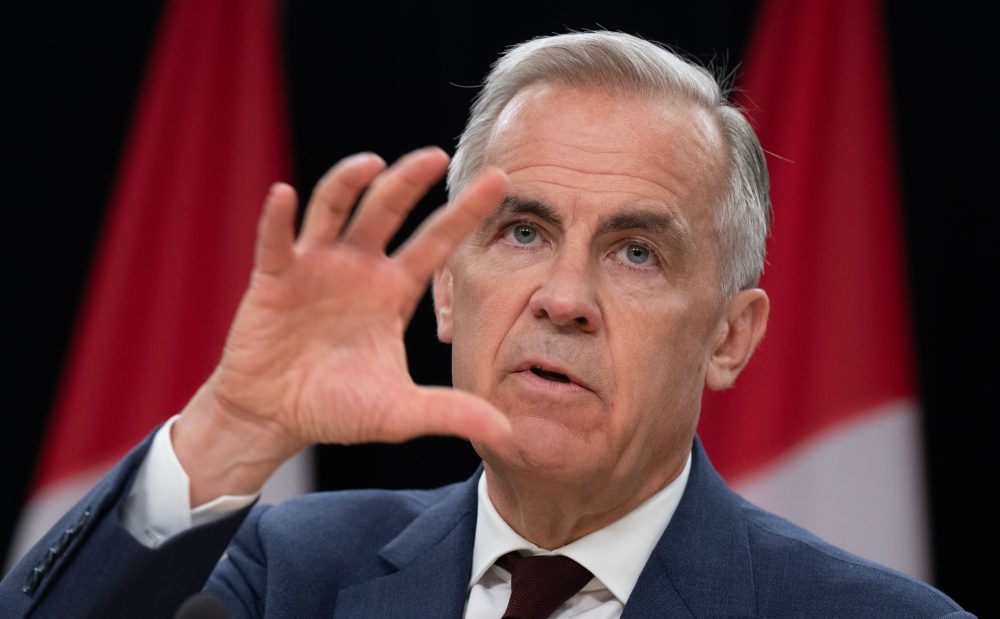
TORONTO (AP) — Canadian Prime Minister Mark Carney announced Thursday that he believes Canada should restore its diplomatic presence in both Iran and Venezuela, reversing decisions made by earlier administrations that shuttered the embassies in those countries.
Carney made the case that without functioning embassies, the Canadian government struggles to assist its citizens living or traveling in those nations and is less able to respond effectively to humanitarian emergencies — even when Ottawa strongly disagrees with those governments’ actions.
“Engagement is not endorsement,” Carney said. “Having an embassy, having consular services in a country, does not mean we endorse the policies of that country.”
Carney pointed specifically to Venezuela, where a recent earthquake has created urgent conditions and where Canada’s lack of an on-the-ground diplomatic presence is limiting its ability to deliver timely assistance.
While he made clear that no final decision has been reached, Carney said the current situation is untenable and must change.
“Moving towards that, in my judgement, a decision to be made, is what we need to do,” Carney said when speaking about restoring the embassies.
The embassy in Tehran was closed in 2012 under former Conservative Prime Minister Stephen Harper, who severed diplomatic ties with Iran entirely and expelled Iranian diplomats from Canada, describing the Islamic Republic as the most serious threat to global peace.
Canada’s embassy in Venezuela was suspended in 2019 after the regime of then-Venezuelan President Nicolás Maduro refused to renew visas for Canadian diplomatic staff.
“There are a series of countries with whom we don’t see eye to eye, to put it mildly, where we don’t have representation in the country,” Carney said. “And that puts us at a disadvantage, first and foremost, to helping Canadians that are in these countries.”
Carney acknowledged there are legitimate reasons those embassies were closed, but argued that their continued closure means Canada is failing to meet a fundamental obligation of its government.
“There is a humanitarian crisis in Venezuela and there is a need to act very quickly so in my opinion we must change the way we are doing things,” Carney said.
Carney also revealed that U.S. President Donald Trump reached out to him by phone on Wednesday. The two leaders discussed the upcoming NATO summit next month, along with developments involving Iran and the broader Middle East situation. Carney noted that U.S. Defense Secretary Pete Hegseth and other officials were also part of that call.
MANAMA, Bahrain — U.S. Secretary of State Marco Rubio declared Thursday that the relationship between the United States and its Gulf Arab allies remains strong, even as some of those partners worry they could be sidelined in ongoing talks aimed at ending the war with Iran.
Rubio completed a three-day diplomatic swing through the United Arab Emirates, Kuwait, and Bahrain this week, working to assure all members of the Gulf Cooperation Council that the Trump administration stands firmly behind them as negotiations continue. The conflict traces back to a war launched by President Donald Trump and Israel on February 28, which severely cut into the region’s oil exports and resulted in several Gulf nations being struck by Iranian missiles and drones in retaliation.
Speaking from Bahrain, the final leg of his trip, Rubio acknowledged the concerns raised by Gulf partners. “They’ve shared with us some very concrete concerns, ideas,” he said. “And when I say concern, the biggest concern is that they really just want to be informed every step along the way as we enter these negotiations at both the technical and political levels.”
Rubio added that the U.S. is committed to keeping its partners engaged. “We want them to be involved and we want the views of all these countries to be reflected,” he said. “We don’t want to and will not be making any decisions or commitments that in any way undermines the prosperity, stability or security of our Gulf partners.”
Following the meeting, the U.S. and the six Gulf Cooperation Council members — Bahrain, Kuwait, Oman, Qatar, Saudi Arabia, and the United Arab Emirates — issued a joint statement highlighting their shared objectives. The statement called for maintaining momentum and unity in negotiations toward a lasting end to hostilities and reaffirmed a shared goal of preventing Iran from ever obtaining a nuclear weapon.
The two sides also voiced opposition to any Iranian effort to impose fees or exert control over the Strait of Hormuz, welcomed an Omani-led initiative to establish a safe evacuation corridor for sailors stranded in the waterway, and made clear that any economic relief Iran receives “is conditional and reversible, contingent on Iran’s compliance” with both the temporary agreement and any final deal.
Despite the upbeat tone of the joint statement, the Gulf Cooperation Council’s secretary general, Jasem Mohamed Albudaiwi, signaled that underlying doubts persist. He emphasized that any future agreements must account for the specific needs of Gulf member states to protect their interests and guarantee “their security and stability.” His statement also hinted that Gulf nations felt left out of earlier rounds of talks.
“Such arrangements must be based on the principles of international law, respect for state sovereignty, good neighborliness, and non-interference in internal affairs, thereby contributing to the consolidation of regional security and stability,” Albudaiwi said.
Before Rubio addressed the group, Bahraini Foreign Minister Abdullatif bin Rashid Al Zayani, who hosted the meeting, said the memorandum of understanding reached so far is a positive step, but that significant questions still need to be answered.
“While this progress is encouraging, it is critically important that Iran fully adheres to its obligations,” including those outlined in the memorandum, Al Zayani said. He outlined what full compliance would look like: blocking Iran from acquiring nuclear weapons, ensuring freedom of navigation, stopping all missile and drone attacks, cutting off support for proxy forces, and ending interference in neighboring countries’ affairs.
Tennis legend Chris Evert shared difficult news Thursday on social media, revealing that her ovarian cancer has come back and that she will not be able to serve as a commentator at the 2026 Wimbledon Championships for ESPN.
Wimbledon is set to get underway in London next week.
“I have already undergone surgery as the first step in my treatment and recovery, and will begin chemotherapy in the coming weeks,” Evert wrote in a post on X. “Because of this, I will not be attending Wimbledon this year, and I will step back from my professional commitments over the next few months to focus on my health.”
Evert, 71, was first diagnosed with ovarian cancer back in December 2021 — nearly two years after losing her sister Jeanne to the same disease. She then disclosed in 2023 that the cancer had returned a second time, only to defeat it once again.
She said CT and PET scans taken this past weekend revealed that the cancer had come back yet again.
“Ovarian cancer is relentless, but I will stay optimistic and determined in continuing to fight this battle,” Evert wrote. “I am deeply grateful to my medical team, my family, friends and everyone who has reached out with kindness and encouragement. I look forward to seeing everyone again soon.”
ESPN executive vice president of production Mike McQuade released a statement in response to the news.
“Our thoughts are with our ESPN tennis colleague Chris Evert as she deals with this personal health issue. We will certainly miss her at Wimbledon and wish her all the best. We look forward to having her back with us whenever she feels ready to return,” McQuade said.
Throughout her remarkable career, Evert won 18 Grand Slam singles titles — two at the Australian Open, seven at the French Open, three at Wimbledon, and six at the U.S. Open. She also claimed three major doubles titles and was part of eight Fed Cup championship teams representing the United States.
Evert’s professional career spanned from 1972 to 1989, and she was inducted into the International Tennis Hall of Fame in 1995.
Microsoft’s Xbox division announced it will increase the prices of its gaming consoles by up to $150 around the world, pointing to a deepening global components shortage that has caused storage and memory costs to skyrocket across the consumer electronics market.
Industry groups representing automakers, retailers, and electronics companies had already sounded the alarm earlier this month, warning that surging demand for memory chips could trigger steep price increases in U.S. consumer products and strain supply chains.
Starting August 1, Xbox console prices will climb by $100 for 512 GB models and $150 for 1 TB models. Microsoft has also announced it will discontinue its 2 TB model entirely.
“Unfortunately, console storage and memory prices have increased by more than 2.5 times and we expect another doubling by the fall of 2027,” Xbox stated, noting that the hardware supply chain crisis has been especially damaging to the gaming industry.
This is not the first time Xbox has raised its prices — the company did so twice during the previous year as it faced cost pressures tied to tariffs, stiff competition, and unpredictable consumer spending.
Competitor Sony also bumped up the price of its PlayStation 5 consoles effective this past April, coming on the heels of a price increase it made last August.
Apple, considered the most valuable consumer electronics company in the world, raised prices on its iPad and MacBook products this past Thursday. The tech giant said it could no longer protect customers from the rapidly rising costs of memory and storage chips, which have been pushed higher by the artificial intelligence industry’s expansion of data centers.
In addition to the price increases, Xbox is reportedly planning significant layoffs next month along with major cuts to its marketing and other departmental budgets, according to a report from Bloomberg News earlier this month.
Chicago Bears quarterback Caleb Williams has hit a roadblock in his effort to trademark his well-known nickname, “Iceman” — a moniker that speaks to his ability to stay composed under pressure.
The United States Patent and Trademark Office rejected Williams’ application, pointing to a possible conflict with an existing trademark filed back in 1988 by LaCrosse Footwear, an Oregon-based company, for a line of insulated boots.
In a refusal letter sent to Williams on June 24, the USPTO stated, “These marks are identical in appearance, sound and meaning.”
Despite the denial, the decision is not set in stone. Williams has the right to appeal or challenge the ruling. According to a thorough review conducted by Gerben Law, nearly two-thirds of all trademark applications submitted since January 1 have faced an initial rejection.
Williams had sought broad exclusive branding rights through his “Iceman” trademark application, covering a wide range of products including clothing, water bottles, sunglasses, trading cards, bags, footballs, and other football-related merchandise and apparel.
There may still be a path forward for Williams and his legal team. A closer look at LaCrosse’s product lineup suggests the “Iceman” boot line is no longer being actively sold, which could open the door for Williams’ attorneys to negotiate or rework his existing trademark application.
The NFL announced Thursday that its 2027 Draft will be held in Washington, D.C., from April 29 through May 1, bringing the league’s marquee offseason event to the nation’s capital.
The three-day event will span multiple locations centered around the National Mall.
Peter O’Reilly, the NFL’s executive vice president of club business, international and global events, expressed enthusiasm about the upcoming event. “The NFL Draft continues to grow as one of our biggest and most accessible events, and we are excited to welcome fans and prospects to Washington, D.C., in 2027,” he said. “Our nation’s capital will provide an incredible, iconically American stage to host fans from around the world, as we celebrate the next generation of NFL stars.”
The 2026 Draft held in Pittsburgh drew a record-breaking crowd of more than 805,000 fans, setting an all-time attendance mark for the event. Commissioner Roger Goodell, when the Washington location was first announced in May, said he anticipates the D.C. draft could draw as many as 1 million attendees.
District of Columbia Mayor Muriel Bowser welcomed the news, urging fans to begin planning early. “We are thrilled to welcome the 2027 NFL Draft to the Sports Capital,” she said. “We saw the enthusiasm from fans at this year’s Draft, and so, we want people to start planning their trips to D.C. now. We have world-class hotels and restaurants, spring is a beautiful time to be in D.C., and we’re a city that loves to celebrate sports. So, mark your calendars for April 29, and we’ll see you in D.C.”
Following the Washington event, Minnesota is slated to host the NFL Draft in 2028.
Automakers Stellantis and Nissan Motor are reportedly in discussions to acquire some assets belonging to Japanese auto parts supplier Marelli Holdings, according to a Bloomberg News report published Thursday.
Bloomberg cited unnamed sources in its reporting. Reuters, which initially covered the story, stated it was unable to immediately verify the information independently.
Goldey-Beacom College has reason to celebrate both on the field and in the classroom. Four student-athletes from the school’s Women’s Tennis and Men’s Golf programs have been selected to the Central Atlantic Collegiate Conference All-Academic Team.
The recognition highlights the commitment of these student-athletes to excelling not only in their respective sports but also in their academic pursuits at the collegiate level.
Three University of Delaware student-athletes have earned one of Conference USA’s top academic and athletic honors, the league announced Thursday.
The conference’s Faculty Athletics Representatives (FAR) named the trio as 2025-26 Conference USA Scholar-Athletes of the Year. The announcement was made from Dallas, where the league is based.
The awards are determined by a vote among the conference’s 12 Faculty Athletics Representatives and recognize the top student-athletes in each conference-sponsored sport. Selection is based on a combination of grade point average, athletic achievement, and service contributions.
Hornets Send LaMelo Ball to Minnesota in Blockbuster Deal
The Charlotte Hornets have reached an agreement to send point guard LaMelo Ball and Josh Green to the Minnesota Timberwolves in exchange for Naz Reid, an unprotected first-round draft pick in 2033, three first-round pick swaps, and three future second-round picks. A person with knowledge of the deal confirmed the trade to the Associated Press on Thursday, speaking anonymously because the league has not yet officially approved it. ESPN was the first outlet to report the agreement. The first-round pick swaps are scheduled for 2028, 2029, and 2030, while the Hornets will also receive second-round selections in 2029, 2032, and 2033.
World Cup Hits Halfway Mark with Record-Breaking Scoring
With 54 of 104 matches now in the books and 50 remaining before the final in East Rutherford, New Jersey, the World Cup is at its midpoint — and the excitement is only building. The United States, Mexico, and Canada have all moved on to the Round of 32. Superstars like Lionel Messi and Kylian Mbappé have been turning heads, with Messi already netting five goals. Attendance figures are setting records according to FIFA, and 13 teams have locked up spots in the knockout stage while seven have been eliminated. Goals are coming at a rate of 2.98 per match, the highest average in more than 50 years. The knockout stage gets underway Sunday.
Detroit Lions Cornerback Terrion Arnold Jailed in Florida
Detroit Lions cornerback Terrion Arnold is currently being held in a Florida jail as he awaits a court appearance, after authorities identified him as the alleged organizer of a plan to confront and pistol-whip three men. Tampa police say Arnold believed the individuals had stolen from him and his associates at an Airbnb rental, though investigators determined the men had no involvement. Arnold is expected to face kidnapping and armed robbery charges. His agent has stated that Arnold denies any wrongdoing. Prosecutors have up to 21 days to formally file charges.
NBA Draft Takeaways: Spurs, Thunder Go Big; One-and-Done Still Thriving
The San Antonio Spurs and Oklahoma City Thunder made bold moves during the two-day NBA draft held in Brooklyn. The draft opened Tuesday when the Washington Wizards selected AJ Dybantsa with the first overall pick, and continued Wednesday with a flurry of second-round trades. A potential budding rivalry between Darius Acuff Jr. and Mikel Brown Jr. was one of the storylines to watch. The first eight players chosen were all college freshmen, tying an all-time record, and the New York Knicks traded back in the draft to manage their salary cap.
Chris Evert Reveals Cancer Has Returned, Will Miss Wimbledon
Tennis Hall of Famer Chris Evert announced that her ovarian cancer has come back and that treatment will keep her from attending Wimbledon this year. The 71-year-old was originally diagnosed with the disease in December 2021, and in December 2023 she disclosed it had returned once before. In a social media post, Evert said she has already undergone surgery as the first step in her care after tests confirmed the cancer had recurred again. She added that chemotherapy will begin in the coming weeks. Evert is an 18-time Grand Slam singles champion and serves as an analyst for ESPN.
Pulisic Feeling Good, Eyes Turkey Match for U.S.
Christian Pulisic says he is feeling great after sitting out one World Cup match due to a calf injury, and he is hopeful he can take the field for the United States in their final group stage game against Turkey. Pulisic delivered an impressive first half in the Americans’ 4-1 win over Paraguay in their opening World Cup match, but the AC Milan midfielder exited at halftime after a training injury tightened up. He came close to playing in the U.S.’s 2-0 victory over Australia but was held back to allow more time to fully recover heading into the later rounds.
Montreal’s Poulin Played Through Torn ACL to Win PWHL Title
Montreal Victoire captain Marie-Philip Poulin revealed Thursday that she competed through a torn ACL and torn meniscus in her right knee to help her team win the PWHL championship. The 35-year-old is expected to be sidelined indefinitely following surgery planned for late July. Poulin first suffered the injury during the preliminary round at the Olympics, yet still competed for Canada in the knockout stage, helping the team reach the gold medal game before falling to the U.S. in overtime and earning silver. The injury worsened on March 15 during a game between Montreal and Boston.
Cubs Acquire Pitcher David Peterson from Mets
The Chicago Cubs have addressed a gap in their injury-depleted starting rotation by trading for left-handed pitcher David Peterson from the New York Mets. The deal was made public before the two clubs met in their series finale at Citi Field. The Cubs had already placed Ben Brown and Edward Cabrera on the 15-day injured list Wednesday — Brown with a neck strain and Cabrera with a left hamstring strain — adding to an already lengthy list of pitching injuries that also includes Jameson Taillon, Cade Horton, and Justin Steele. Peterson, who is 30 years old, carries a 3-6 record and a 6.09 ERA across eight starts and eight relief outings this season. He will be eligible for free agency after the current season ends.
F1’s Austrian GP Activates ‘Heat Hazard’ Rules for First Time in Europe
Formula 1 drivers heading to this weekend’s Austrian Grand Prix will be carrying additional cooling equipment after officials activated the sport’s heat hazard protocols due to a scorching heat wave sweeping across Europe. This marks the first time since F1 introduced its heat rules last year that they have been triggered for a European race. The heat hazard designation kicks in when temperatures are forecast to exceed 31 degrees Celsius (88 degrees Fahrenheit) on race day, with conditions inside the cockpit capable of reaching far higher temperatures.
X Games Launches Multimillion-Dollar Reboot in Sacramento
The X Games is making a high-stakes comeback, debuting a major reboot this weekend in Sacramento with the future of one of action sports’ most recognized brands on the line. The revamped competition will feature well-known athletes such as Scotty James and Eileen Gu and introduces a new team-based format to sports like snowboarding, skateboarding, and BMX biking — disciplines that were built on a culture of independent, free-spirited competition. The opening event runs Friday through Sunday.
LA GUAIRA, Venezuela — Rescue teams scrambled through collapsed buildings Thursday as Venezuelans desperately searched for survivors following two powerful earthquakes that officials say have claimed at least 164 lives, with fears that the death toll will climb much higher.
The two quakes — measuring 7.2 and 7.5 in magnitude — struck Wednesday evening and rank among the most powerful to hit Venezuela in over a century. Nearly 1,000 people were injured, and thousands remain unaccounted for across the country. The coastal region of La Guaira, located north of the capital city of Caracas, suffered some of the most severe destruction and loss of life, according to officials.
The tremors were powerful enough to prompt building evacuations as far away as Brazil’s Amazon region, roughly 1,700 kilometers (about 1,050 miles) from Caracas. Venezuela’s main airport sustained damage and was forced to close.
Across northern Venezuela, frightened residents flooded into the streets, picking through debris in search of missing loved ones. Television footage captured rescue workers cutting through mountains of rubble with power tools in an effort to reach those trapped inside.
In La Guaira, retired schoolteacher Juan Alberto Mendaño made his way through the wreckage, stepping past a body, when he spotted a woman pinned beneath the debris, waving her hand for help.
NEW YORK (AP) — JPMorgan Chase announced Thursday that it intends to dramatically grow its national “Community Center” program, with plans to double the number of specialized branch locations it operates in low-income communities across the United States.
In addition to expanding the number of locations, the bank says it will bring on 150 new employees — called community managers — and offer expanded programming at each site.
The Community Center initiative focuses on placing Chase branches in low- and moderate-income neighborhoods, particularly in areas where many residents have limited or no access to traditional banking services. The bank launched its very first Community Center in Harlem back in 2019 as a pilot effort, and after seeing positive results, it grew the program to 19 locations nationwide. The bank’s CEO, Jamie Dimon, has made a point of attending the ribbon-cutting ceremonies at nearly every Community Center opening, with local government officials and other notable figures typically joining those events.
“We are doubling down on our efforts to expand access,” said Diedra Porché, who leads Chase’s community and business development division.
Although these locations function as standard Chase branches, they also feature open spaces where financial educators, local nonprofit groups, and other organizations can hold free workshops for area residents. The bank says the community managers who oversee these centers are instructed not to push Chase products, and people who attend events are not required to be Chase customers or have any interest in Chase’s offerings.
The programming at these centers covers a wide range of financial topics — from helping individuals put together a household budget to running workshops tailored for small business owners. Chase estimates that since the first center opened, roughly 14,000 workshops have taken place with more than 1 million total attendees. The bank has set an ambitious goal of growing that reach to 5 million attendees going forward.
Federal law requires banks to serve low-income communities under the Community Reinvestment Act, though institutions have flexibility in how they meet that obligation. While Chase also donates through the JPMorgan Chase Foundation, Dimon has previously stated his belief that opening physical branches in underserved areas — creating local jobs and providing financing — can make a bigger difference than charitable giving alone.
“We try to meet people where they are, and then give them the tools and resources they might need to take their next step successfully,” Porché added.
The program also makes financial sense for the bank. Even though staff at Community Center events are not there to sell products, opening a branch in an underserved neighborhood has consistently led to new account openings and new customers. Chase has previously released data showing that its Community Center locations generate significantly higher rates of new account activity compared to other branches in the surrounding areas.
WASHINGTON — A senior National Park Service official says the liner along the floor of the Lincoln Memorial Reflecting Pool was sliced with a sharp knife or razor blade this month, causing damage to foam sealant that was put in place as part of a $16 million renovation project.
Frank Lands, the park service’s deputy director of operations, disclosed the information in a court document filed late Wednesday. The agency reported the June 9 incident to U.S. Park Police, Lands said. His statement came as part of an ongoing lawsuit brought by a nonprofit group trying to stop the Trump administration’s work on the pool.
Lands did not indicate in his statement whether the damage is being treated as vandalism or name anyone suspected of being involved.
According to the police report cited by Lands, the damage to the pool included “a caulk over the foam sealant that was cut with a sharp knife or razor and destruction of delaminating surface material.” He also said roughly 70 fence post tops had been tossed into the pool.
This marked the first time the administration provided specific details about when and how the Reflecting Pool may have been damaged after the bulk of the renovation work was finished.
President Donald Trump and other administration officials have repeatedly blamed unidentified vandals — without offering evidence — for peeling paint, a “350-foot gash” in the liner, and other issues. Trump said this week that six people have been arrested, though he did not provide further details.
Trump had promised to restore the century-old Reflecting Pool ahead of the nation’s 250th birthday celebrations, ordering it drained and its floor painted in a color he described as “American flag blue.” Since the pool was refilled, however, it has been dealing with an algae bloom and visible peeling of the new coating on the bottom.
The administration is working against a self-imposed deadline to finish the renovation before the Fourth of July. Trump also said the federal government would release images to back up his claims about vandalism.
On Wednesday, Trump said “sick people” had used razors and box cutters to slice parts of the liner.
That same evening, U.S. Park Police posted surveillance video and asked the public for help “identifying the individual depicted here in connection with a Destruction of Government Property investigation.” The grainy, 30-second clip appears to show a person crouching down, reaching into the reflecting pool, and pulling something out of the water. Police said the footage was recorded Friday afternoon.
In his court statement, Lands said the park service intends to begin draining the Reflecting Pool after Independence Day celebrations in order to carry out repairs, including evaluating and fixing any damage to the liner.
The park service wrapped up more than two months of renovation work at the Reflecting Pool in early June. The 2,000-foot-long basin was drained and a plastic-like rubber liner was installed to waterproof and protect the concrete surface before the pool was refilled, Lands said.
The Cultural Landscape Foundation, an education and advocacy nonprofit that filed suit in May to halt the project, has asked a federal judge to block any additional renovation work.
“It is also not too late to correct course,” the group wrote in a Monday filing, urging the administration to “engage with experts and the public, and make an informed decision about what is best based on the consultations mandated by the law, instead of once again rushing ahead with half-baked ideas.”
Congressional Democrats have called for formal investigations into the pool renovations, arguing that no-bid contracts were handed to vendors with prior ties to Trump.
Ohio-based Green Water Solutions received a $1.7 million contract to install a water-purification system in the pool, while Virginia-based Atlantic Industrial Coatings was awarded $14.7 million to repaint and waterproof the pool’s concrete floor.
Oregon Sen. Jeff Merkley, the leading Democrat on the Senate appropriations subcommittee that oversees the Interior Department’s budget, said the pool project looks like a squandering of public money.
“After railing about waste, fraud and abuse, Donald Trump spent more than $16 million on a renovation of the Reflecting Pool that’s now peeling and chock full of algae,” Merkley said Thursday, calling it a “massive waste” of tax dollars and saying the public deserves “swift answers — and a refund.”
Merkley is among roughly 10 Democratic senators and House members looking into the pool project.
“Taxpayers deserve a full explanation of how these failures occurred and who will be held accountable for correcting them,” stated another letter signed by New Mexico Sen. Martin Heinrich and five fellow senators. Heinrich serves as the top Democrat on the Senate Energy and Natural Resources Committee, which has oversight of the Interior Department.
Each year, Muslims around the world observe Muharram, the opening month of the Islamic calendar — also known as the Hijri calendar. It holds a special place in the faith as one of only four months considered sacred, during which Islam prohibits warfare and calls upon believers to deepen their devotion through prayer, charitable giving, and quiet reflection.
The most significant day of the month is Ashoura, a solemn occasion that marks the martyrdom of Hussein, the grandson of the Prophet Muhammad. Hussein was killed in a battle fought in 680 in the region that makes up present-day Iraq, and his death remains a deeply meaningful event in Islamic history.
Unlike many new year celebrations in other cultures, the Islamic new year tends to be a time of solemnity and inward contemplation rather than festivity. How individual Muslims choose to observe the occasion can vary widely based on their particular school of Islamic thought.
The following is a photo gallery assembled by AP photo editors capturing moments of Muharram observance around the world.
Electric scooters are showing up more and more across Delaware, but riders should be aware that not every e-scooter falls under the same category when it comes to state law.
Authorities are reminding the public that knowing where you are allowed to ride, following the rules of the road, and making responsible choices while on a scooter are all essential steps to protecting yourself and those around you.
Whether you are a seasoned rider or hopping on an e-scooter for the first time, officials say the message is simple: learn the law before you ride, and always ride with safety in mind.
For the most up-to-date information on local police news and public safety guidance, residents are encouraged to stay connected with local law enforcement resources.
NEW YORK (AP) — The Chicago Cubs have bolstered their injury-depleted pitching rotation by acquiring left-handed starter David Peterson from the New York Mets, according to a source with direct knowledge of the transaction.
The source spoke with The Associated Press on Thursday under the condition of anonymity, as the deal had not yet been formally announced at the time.
The Cubs have been hammered by rotation injuries in recent days. On Wednesday, the team placed both Ben Brown and Edward Cabrera on the 15-day injured list. Brown is dealing with a neck strain, while Cabrera is out due to a left hamstring strain.
Those two join Jameson Taillon, Cade Horton, and Justin Steele, who are also currently on the injured list. Matthew Boyd is expected to return from the IL and take Brown’s place in the starting rotation for Thursday’s series finale against the Mets.
In exchange for Peterson, New York received minor league infielder Cole Mathis, a power-hitting prospect. The 22-year-old Mathis was selected in the second round of the 2024 amateur draft and has posted strong numbers this season, hitting .272 with 10 home runs and 39 RBIs across 39 games at two different levels.
Peterson, 30, has struggled this season, going 3-6 with a 6.09 ERA over eight starts and eight relief outings. He is set to become a free agent when the season concludes.
The average rate on a 30-year fixed mortgage nudged upward this week, continuing to hover right around the 6.5% mark it has stayed near for roughly a month and a half.
According to mortgage buyer Freddie Mac, the benchmark 30-year fixed rate climbed to 6.49% from 6.47% the week before. At this same point last year, that rate stood at 6.77%.
Even small increases in mortgage rates can have a significant impact on homebuyers — adding hundreds of dollars each month to a borrower’s costs and shrinking what they can afford to spend on a home.
Rates on 15-year fixed mortgages — a popular option for homeowners looking to refinance — also ticked upward. That average moved from 5.81% to 5.84% this week. A year ago, the 15-year rate sat at 5.89%, Freddie Mac reported.
Mortgage rates are shaped by a combination of forces, including Federal Reserve policy, bond market activity, and investor expectations around inflation and economic growth. In general, they tend to move in line with the 10-year Treasury yield, which lenders rely on when setting home loan prices.
Rates have been climbing since the U.S.-Iran conflict erupted in late February, which disrupted crude oil shipments from the Persian Gulf to global markets. That disruption sent oil prices surging, fueling inflation and pushing bond yields — and mortgage rates — higher along with it.
More recently, oil prices have retreated somewhat as the two nations entered into negotiations aimed at ending the conflict. That has helped ease some of the upward pressure on bond yields. The 10-year Treasury yield stood at 4.38% at midday Thursday, down from 4.46% a week earlier, though it had briefly climbed above 4.5% earlier in the week. Before the war started in late February, the yield was just 3.97%.
Bond yields are still elevated, however, as inflation worries persist.
The Federal Reserve has indicated it may raise interest rates at least one more time before the year is out. While the central bank does not directly control mortgage rates, its decisions on short-term interest rates are closely watched by bond investors and can influence the 10-year Treasury yield over time.
As recently as late February, the 30-year mortgage rate had briefly dipped below 6% for the first time since late 2022 — a threshold it has not crossed again since. Four weeks ago, the rate hit 6.53%, its highest point since August 28.
Even though current rates are lower than they were a year ago, the uncertainty surrounding the war with Iran has kept many potential buyers on the sidelines. Sales of previously owned U.S. homes fell during the first quarter compared to the same period a year ago, continuing a national housing slowdown that began in 2022 when rates started rising from their pandemic-era lows. Sales were largely flat in April before picking up in May to their strongest pace since December.
Even so, existing home sales are still running close to a 4-million annual pace — well below the historical norm of around 5.2 million per year.
NEW YORK (AP) — JPMorgan Chase has elevated two investment bankers to the role of copresidents, adding more names to the list of potential candidates to eventually replace longtime CEO Jamie Dimon at the helm of the country’s largest bank.
Doug Petno and Troy Rohrbaugh both received the promotion, which was announced Thursday. At the same time, the bank revealed that Marianne Lake — a veteran executive who has served in several high-ranking roles at the company, including chief financial officer and CEO of the consumer banking division — will step down at the end of the year. Lake had long been considered one of the leading candidates to take over for Dimon when he eventually departs.
The elevation of Petno and Rohrbaugh suggests JPMorgan’s board is drawing its next generation of leaders from the commercial and investment banking side of the business. Rohrbaugh will transition to oversee the bank’s large consumer operation. Both men built their careers within JPMorgan’s investment bank, though through different paths: Petno focused primarily on client relationships and advisory work, with experience in natural resources investment banking, while Rohrbaugh came up through trading, specializing in foreign-exchange derivatives and options.
In a statement, Dimon said: “The changes announced today mark an important step in our Board’s thoughtful process around succession planning and development of our top leaders.”
Speculation about who will eventually take Dimon’s place is a constant topic on Wall Street. Dimon, who is 70 years old, has led the bank as CEO since 2006. Over his two decades at the top, he has faced serious health challenges, including a throat cancer diagnosis in 2014 and emergency heart surgery in 2020. Even so, Dimon has consistently expressed his enjoyment of the chairman and CEO role, while making clear that the timing of any leadership change rests with JPMorgan’s board of directors.
Whoever ultimately steps into Dimon’s shoes will take on one of the most high-profile positions in both the financial industry and Corporate America at large. Dimon is among the last remaining CEOs from the generation that guided major Wall Street firms through the 2008 financial crisis, and he is broadly regarded as a senior statesman of the banking world.
Before arriving at JPMorgan Chase in 2004, Dimon’s professional background was rooted more in consumer finance than in trading or investment banking. He held leadership positions at American Express, Citigroup, and Bank One. JPMorgan Chase purchased Bank One in 2004 as a way to grow its consumer banking and credit card operations, with Bank One’s credit card business viewed as a key asset in that transaction.
CAIRO — A journalist working in Yemen was killed late Wednesday when an explosive device hidden in his vehicle detonated in the port city of Mukalla, located in Hadramout province, according to Yemen’s government, which announced Thursday that investigators had been ordered to find those responsible.
The victim, Mohamed Eida, worked as a correspondent for Al-Arabiya and Al-Hadath, two television networks backed by Saudi Arabia. According to the broadcaster, local authorities had alerted Eida roughly one month before his death that his life was in danger.
A relative of Eida, who asked not to be identified out of fear of retaliation, said his body had not yet been released to his family. Authorities informed the family that the remains would be held while the investigation is ongoing.
Rashad al-Alimi, the chairman of Yemen’s Saudi-backed Presidential Leadership Council — the governing body of the country’s internationally recognized government — confirmed the death and the bombing. A statement from the council said al-Alimi directed local officials to conduct an investigation.
Al-Alimi did not point to any suspected perpetrators. However, Al-Hadath reported, citing unnamed sources, that two individuals had been taken into custody and that a third suspect was still being sought.
The Yemeni Journalists Syndicate labeled the attack a “terrorist” act, calling it a blatant assault on press freedom and evidence that Yemen continues to be a dangerous place for journalists. The organization warned that allowing those responsible to avoid punishment would invite further attacks, endanger more journalists, and violate both national and international laws protecting freedom of expression.
United Nations Special Envoy Hans Grundberg also spoke out against the killing on Thursday, urging the protection of media workers and expressing support for “continued efforts to establish the facts, ensure accountability, and strengthen public confidence.”
According to the journalists syndicate, Eida had previously fled Yemen’s capital, Sanaa, after being pursued by Houthi rebels, who exercise de facto control over that city. At the time, he was reporting for Alhurra, a U.S.-funded broadcaster. Al-Arabiya reported that armed men had attempted to detain him, prompting his departure from Sanaa for Aden. The broadcaster added that the men also broke into his home and took his belongings, though it did not identify who they were. Eida later relocated to Mukalla, where he worked for the network.
Yemen has been torn apart by more than ten years of civil war. The conflict began when Iran-backed Houthi forces took control of Sanaa and large portions of northern Yemen, driving the internationally recognized government out of the country. A coalition led by Saudi Arabia, which included the United Arab Emirates, later stepped in in an attempt to restore the government to power.
More than 30 journalists were reportedly killed in Israeli airstrikes targeting Houthi positions in Sanaa last September, amid a broader series of confrontations between Israeli forces and the Iran-backed group. The Houthis had stated they were striking Israel in response to the ongoing war in the Gaza Strip.
SARTA, West Bank — A Palestinian man was shot and killed by Israeli soldiers inside his home in the occupied West Bank, according to a family member who spoke on Thursday. The Israeli military acknowledged the shooting, stating that the man had hurled objects at the soldiers before they fired.
The victim, Mustafa Al-Khatib, 32, was discovered dead in his bedroom in the West Bank village of Sarta, located approximately 32 kilometers — about 20 miles — north of Jerusalem. His cousin, Amin Al-Khatib, said soldiers had forced their way through the front door of the home.
“I entered the house. They had broken the door,” Amin said. “He was lying in his bedroom. … We found him on the ground.”
According to the Israeli military, troops were conducting operations in the area when a man began throwing objects at them. The military said soldiers fired warning shots before directing fire at the man.
Video recorded inside the residence showed overturned and ransacked cupboards, along with bloodstains visible on the floor.
The Palestinian Health Ministry, based in Ramallah, released a statement indicating that Al-Khatib’s death raised the total number of Palestinians killed in the West Bank to 72 since the start of the year.
For more than three decades, antique tractor fans across Delaware have gathered at the State Fair for one of the season’s most beloved agricultural traditions — the Antique Tractor Pull, hosted by the Delaware Farm Bureau Young Farmers and Ranchers (YF&R).
This year’s event is scheduled for Saturday, August 1, inside the Quillen Arena at the Delaware State Fair. Spectators can watch at no charge, though a standard fair admission ticket is needed to get onto the fairgrounds.
The competition draws participants of all ages and backgrounds. Each tractor on the track represents countless hours of restoration and upkeep, as drivers spend much of the year preparing their machines — many of which are genuine pieces of agricultural history. During the event, competitors attempt to pull a weighted sled as far down the track as possible, with the greatest distance in each class earning the win. Still, organizers say the competition is about much more than bragging rights — it’s a celebration of shared passion and community.
“The Antique Tractor Pull is something the whole family can enjoy,” said YF&R State Chair Connor Vincent. “We love seeing kids experience it for the first time while also bringing back memories for those who grew up watching or competing.”
The day kicks off with event registration and check-in at 7:00 a.m. A drivers’ meeting follows at 8:30 a.m., and the first hook gets underway at 9:00 a.m. The event will also include the announcement of YF&R Scholarship winners. Participants are encouraged to pre-register at www.defb.org/yfr/antique-tractor-pull/.
The entry fee is $20 per hook across all classes. Event T-shirts will be sold on-site for $25 each, with youth sizes available at $20.
For additional details, reach YF&R State Chair Connor Vincent at [email protected] or contact the DEFB state office by phone at 302-697-3183.
A federal judge has put a stop to President Donald Trump’s executive order that sought to establish a federal voter list and restrict who could receive ballots through the mail.
U.S. District Court Judge Indira Talwani, who was appointed by Democratic President Barack Obama, granted a summary judgment in favor of a coalition of nearly two dozen states that had challenged the order. The ruling covers this year’s midterm election cycle.
Two separate lawsuits — both brought in federal court in Boston — argued that Trump’s order was unconstitutional because the authority to set election rules belongs to the states and Congress, not the president. Judge Talwani agreed, writing in her decision that the order’s provisions “unconstitutionally violate the separation of powers.”
This was the second consecutive day that a federal court ruled against one of Trump’s election-related executive orders. On Wednesday, a separate ruling blocked an order Trump signed last year that would have required proof of citizenship when registering to vote.
The Trump administration had sought to have the lawsuits dismissed, arguing the challenges were premature and that the plaintiffs lacked legal standing under the Administrative Procedure Act, which governs how federal agencies create and issue regulations.
However, in a preliminary order ahead of Thursday’s ruling, Judge Talwani pushed back on those arguments. She wrote that given the executive order’s specific deadlines over the coming three months and the approach of the November 3, 2026 midterm election — just five months away — delaying a court review “is impracticable and may inflict significant hardship on Plaintiffs.” That earlier order rejected the administration’s request to dismiss the cases.
Trump’s executive order — his second targeting elections during his current term — comes amid his ongoing and unsubstantiated claims that noncitizens are voting in large numbers. In reality, states already maintain detailed procedures to keep voter rolls accurate, and noncitizen voting has consistently been found to be extremely rare. It is also a felony offense that can carry deportation as a consequence.
Trump issued the order in March after a voting overhaul bill he backed failed to advance in Congress. The order would have directed the federal government to compile a list of eligible voters and instructed the U.S. Postal Service to deliver mail ballots only to individuals on that list. Election administrators warned the plan was vulnerable to abuse and could create widespread confusion, while the postal workers’ union objected to the idea of mail carriers being used to police ballot delivery.
The Postal Service published a proposed rule in the Federal Register stemming from Trump’s order. Among its provisions, the rule would not apply to primary elections or ballots sent to overseas voters.
The lawsuit seeking summary judgment was brought by Democratic attorneys general from 22 states and the District of Columbia. Attorneys representing Democratic Gov. Josh Shapiro of Pennsylvania — a state with a Republican attorney general — also joined the effort.
The states further argued that the order places a costly burden on election officials and could cause fear of prosecution among voters. Stephen Pezzi, an attorney for the Trump administration, countered that no one would face prosecution for violating the order.
In a related but separate lawsuit filed against the same executive order, a federal judge in Washington, D.C., ruled in May that it was too soon to block the order since it had not yet been put into effect. That case was brought by Democratic and civil rights organizations, who have since filed an appeal.
Since losing the 2020 presidential election to Democrat Joe Biden, Trump has repeatedly and without evidence claimed that mail voting is plagued by fraud. He has launched a federal investigation into that election, despite numerous audits and reviews — including those conducted by Republicans — finding no evidence of widespread fraud. Trump has also stated his desire to “take over” election administration in Democratic-leaning areas.
OCHOPEE, Fla. — The makeshift immigration detention center carved out of the Florida swamplands and dubbed “Alligator Alcatraz” is shutting down for good, Gov. Ron DeSantis announced Thursday.
The Republican governor said the facility was designed from the start to be a short-term solution, intended to stay open for roughly a year while more permanent detention infrastructure was put in place. Now that federal officials have adequate capacity elsewhere, the center’s job is done.
“It served its purpose for the time,” DeSantis said.
Authorities had already announced a temporary shutdown earlier in June, citing safety concerns tied to hurricane season. Officials determined it was too dangerous to continue housing detainees in the Florida Everglades during storm season, and everyone held at the remote airstrip location was transferred to other facilities.
The center was constructed by DeSantis’ administration in just a matter of days in 2025. President Trump later visited the site, and both he and DeSantis described it as a key part of Republican efforts to deport people living in the country without legal status. The governor said 21,000 individuals were deported through the facility during its operation.
However, immigration advocates consistently argued the tent-based facility was neither safe nor humane. Detainees themselves described troubling conditions, including worms found in food, toilets that did not function properly, floors flooded with sewage, and swarms of mosquitoes and other insects throughout the facility. Many also reported having difficulty reaching legal representation while held there.
They have perished from artillery blasts, plane crashes, bullets, illness, and even execution — in war zones and dangerous locations across the globe.
In the 180 years since The Associated Press was founded, 38 of its journalists have lost their lives while doing their jobs for the independent, not-for-profit news organization.
This Thursday marks a sobering milestone: 150 years since the very first of those deaths. Mark Kellogg, age 43, was one of five civilians who died alongside Lt. Col. George Armstrong Custer and his soldiers at the Battle of Little Bighorn.
Kellogg was embedded with Custer’s troops at the time, filing reports for The Bismarck Tribune and the New York Herald. The AP distributed his stories to readers across the nation. He was on the scene when Custer badly misjudged the size of a Sioux village before launching an attack against it.
Custer and his badly outnumbered soldiers made their final stand on a hilltop, where Native American defenders overwhelmed and destroyed them. Kellogg’s scalped body was discovered nearby.
His final published dispatch included this line: “I go with Custer and will be at the death.”
The words were meant as a poetic flourish rather than a forecast of his own end. Nevertheless, that final dispatch — and the story of how Kellogg died — spread widely through his employers and the AP wire. It brought lasting recognition to an otherwise obscure part-time journalist, a widower who had taken on various jobs to provide for his two daughters.
According to noted historian Sandy Barnard, Kellogg had developed a personal connection with Custer and spent time mingling with and interviewing soldiers at their camps.
“While his record as a journalist might be very small compared to modern reporters who go into combat, he certainly was doing exactly what they are doing,” Barnard said.
Kellogg’s diary and a collection of personal items — including his eyeglasses, tobacco, clothing, and a mosquito head net — are preserved by the State Historical Society of North Dakota. Deputy State Archivist Lindsay Meidinger noted that the fragile diary, now available digitally online, captures everyday details such as weather conditions, distances traveled, the order of riders in the column, and antelope sightings. The diary’s entries stop before the battle began.
“It’s a primary source of the historical event that not many other primary sources remain from that time period related to the Seventh Cavalry and Custer,” Meidinger said.
In some important ways, however, Kellogg bore little resemblance to journalists working today. Barnard — who authored a biography of Kellogg as well as other books about the Battle of Little Bighorn — noted that Kellogg carried a rifle into the field.
“During the last stages of the campaign, Kellogg was probably more of a soldier than he was a newspaper man,” Barnard said.
Kellogg also made no effort to conceal bias or racist attitudes toward Native Americans, whom he referred to as “red devils” in his writing.
Other AP journalists who have died while covering conflict include Mariam Dagga, a freelance visual journalist killed in an Israeli strike on a hospital in the Gaza Strip last August; Anja Niedringhaus, a photographer shot by a police officer while sitting in her car in Afghanistan in 2014; Myles Tierney, a videojournalist who died when a convoy he was traveling in came under fire in Freetown, Sierra Leone, in 1999; and Joseph Morton, a war correspondent who became the only known American reporter executed by the Nazis after being captured alongside Slovakian partisans in 1944.
WASHINGTON (AP) — A Democratic U.S. senator is raising the alarm that the Trump administration may be preparing to swiftly remove more than 500 unaccompanied migrant children from the United States, potentially sidestepping legal safeguards put in place to protect them. If carried out, it would mark a second such attempt, following a federal court’s intervention last year that halted an overnight removal operation during Labor Day weekend.
Sen. Ron Wyden of Oregon sent a letter Wednesday to U.S. Health Secretary Robert F. Kennedy Jr., whose department oversees the Office of Refugee Resettlement — the agency responsible for caring for unaccompanied migrant children. In the letter, Wyden stated he had “credible information” that the administration had compiled a list of more than 500 migrant children targeted for a fast-track deportation process, and that officials were moving to act within days. He called on the administration to immediately stop any such plans, warning it was abandoning “core humanitarian and child welfare mandates.”
Wyden serves as the ranking member and senior Democrat on the Senate Finance Committee, which holds jurisdiction over the Office of Refugee Resettlement. He did not disclose how he obtained his information, and his office declined to elaborate. The Office of Refugee Resettlement operates under the Department of Health and Human Services.
An HHS spokesperson flatly denied that any such plans are in the works.
“The new information I obtained leads me to believe that the Department is laying the groundwork for another lawless deportation effort, this time on a greater scale, across more countries of origin,” Wyden wrote in his letter.
He added: “You have been entrusted with the care and safety of the children placed within the ORR network. Proceeding with this plan knowingly endangers their lives and violates your duty to these vulnerable children.”
Wyden also sounded an early warning last August before what turned into a turbulent weekend during which the Trump administration attempted to remove Guatemalan children from government care and return them to their home country.
HHS spokesperson Emily Hilliard pushed back strongly, saying “there are no plans to target these children” and calling Wyden’s claims “irresponsible fearmongering.” She added: “The Trump Administration is working to identify the parents or legal guardians of unaccompanied alien children in our care because ensuring every child is placed with a properly vetted sponsor is our top priority.”
During that Labor Day weekend last year, dozens of migrant children — some living in government-supervised shelters and others with foster families — were taken from their homes and transported by bus to airfields in Texas, headed for Guatemala. A federal judge, awakened in the middle of the night, ultimately stopped the flights. Attorneys representing the children later described how deeply traumatic the late-night removal effort had been for many of them, including children who had fled violence in their home countries to come to the United States.
The administration maintained it was reuniting the Guatemalan children with parents or guardians who had requested their return, at the Central American nation’s request. Lawyers for at least some of the children disputed that claim and argued that regardless, authorities were still required to follow a legal process — one they said was not followed.
Unaccompanied migrant children who arrive in the U.S. alone are typically placed under the care of the federal government, and a series of legal protections exist to safeguard them as they navigate the immigration system.
A key piece of that framework is the Trafficking Victims Protection Reauthorization Act of 2008, which generally requires that children be placed in the “least restrictive setting possible.” In most cases, that means they can be released to a sponsor — such as a relative living in the U.S. — while their immigration cases are resolved. Children may also apply for specially protected immigration status if they cannot safely return home due to abuse or neglect, and they can seek asylum as well.
The Trump administration has made it increasingly difficult for children to be released to sponsors, saying the stricter approach ensures children are not placed in dangerous situations. Advocates, however, say the effect has been that children are spending months stuck in government shelters.
In his letter, Wyden said the children now at risk of removal come from multiple countries, potentially including Guatemala, Honduras, El Salvador, and Afghanistan, and have been in U.S. custody — primarily in foster care — for at least 180 days. He said these children were characterized as having no “viable sponsor” able to step forward and care for them in the United States.
The absence of an identified sponsor can stem from several circumstances: the child’s parents may still be in their home country, may have died, or may be too fearful to come forward after immigration enforcement agencies began arresting some parents who are in the country without legal status during reunification efforts.
Thursday marks 150 years since the Battle of Greasy Grass — a momentous clash that most Americans know as the Battle of Little Bighorn. For Native American tribes across the country, the anniversary is an occasion to honor one of the most historically significant and emotionally powerful events in the story of this nation.
On a sweltering day in June 1876, allied tribes united along the banks of the Little Bighorn River in what is now Montana and handed the U.S. Army a stunning defeat. They were fighting to protect their way of life against the relentless push of westward expansion. Lt. Col. George Armstrong Custer and more than 200 of his soldiers lost their lives in the engagement.
This week, the normally quiet, wind-swept prairie of rolling hills and grassy ridges is buzzing with activity as the battle is being reenacted. Horse riders from the Cheyenne River Reservation in South Dakota and other locations have traveled hundreds of miles to the Crow Agency area in Montana for the occasion. A sunrise pipe ceremony was held Thursday morning, and families are being encouraged to pass along their oral histories. Over at the Standing Rock Sioux Reservation in North Dakota, horse races and traditional songs and dances are also taking place.
Coming together at the battlefield means “we’re still here,” said William Good Bird, a traditional singer from the Spirit Lake Dakota Nation in North Dakota, who greeted a camp of hundreds of people gathered from many different tribes with a song and drumming at sunrise.
“Today I am celebrating the victory of our people, celebrating my life as a human being and my spot on this earth,” he said.
According to historian Dakota Goodhouse, the discovery of gold in the Black Hills — located in what is now South Dakota — by a Custer-led expedition just a few years earlier set off a military campaign aimed at forcing Great Plains tribes onto reservations, then called agencies.
Goodhouse noted that while there were larger and longer battles, and other Native victories, between March 1876 and June 1877, only the Battle of Greasy Grass — a name given by Native Americans referring to the slippery grass along the riverbank — achieved widespread national recognition, largely because the commanding officer died in the fight.
At the time, the Lakota were among the largest and most powerful tribal nations, led by figures such as Sitting Bull and warriors including Crazy Horse. U.S. forces were stretched out over miles of hilly terrain, and Native warriors overwhelmed them rapidly.
Word of Custer’s defeat came as a shock to Americans who were in the middle of celebrating their country’s 100th birthday.
In the aftermath, the federal government intensified its efforts to crush Native resistance, ushering in years of suffering and displacement. Crazy Horse was killed in 1877, and starvation forced others to surrender in 1881.
The story of Sitting Bull’s surrender is more complicated than history books suggest, according to Jon Eagle Sr., a former Standing Rock tribal historic preservation officer from the Hunkpapa band of the Oceti Sakowin.
“Our people say that he looked at his son Crow Foot and said, ‘My boy, if you live, you can never be a man in this world because you can never own a gun or a pony,’” Eagle recalled. “I think that he understood that things were going to change for his children, his grandchildren and those not yet born.”
Sitting Bull was ultimately killed along with roughly a dozen others when Indian agency police moved to arrest him in 1890.
Biographer T.J. Stiles described Custer as one of the Army’s most distinguished combat officers coming out of the Civil War. However, Stiles said the so-called “Boy General” — known for his long hair and eye-catching battlefield attire — frequently clashed with the chain of command and struggled with the administrative demands of leadership.
“Custer was someone who whenever he got into the frying pan, he immediately started looking for the fire,” Stiles said.
In 1873, Custer was given command of the Seventh Cavalry at Fort Abraham Lincoln, near what is now Bismarck, North Dakota. He led several military expeditions from that post, including the one that confirmed the presence of gold in the Black Hills, a place sacred to the Lakota people.
While Custer has long been viewed in American culture as a tragic hero and celebrated for his military record, historian Goodhouse pointed out that he could also be considered surprisingly open-minded for his era, even as the government worked to displace Native peoples and erase Native languages through boarding schools. Custer learned to speak Arikara and Lakota and became fluent in Plains Indian sign language.
Even so, as many Americans celebrate the 250th anniversary of the signing of the Declaration of Independence, the milestone carries a very different meaning for many Native Americans.
“It’s just a mark to me of 250 years of injustice to the Native people,” said Jim Real Bird, a Crow tribal member and reenactment coordinator.
Eagle shared that sentiment: “That’s one of the things that we always tell our people when we come together, is they failed at their attempts to rub us out. We’re still here as ancient people deeply connected to our environment.”
For more than three decades, reenactments involving hundreds of warriors have taken place near the battlefield each year to mark the anniversary. The performances are rooted in Northern Cheyenne oral history and place a strong emphasis on horsemanship and keeping the Native language alive.
“All the other things that are Native American don’t mean nothing if you don’t know your language,” Real Bird said.
Thousands of visitors are expected to camp at the site over several days, taking part in prayer gatherings, relay races, horse rides, and parades. The National Park Service is also hosting anniversary events at the battlefield national monument.
At Standing Rock, Eagle said races are being held to pay tribute to the horses that carried their ancestors to victory 150 years ago. The commemoration also features oskáte — a traditional celebration involving oral histories, victory songs, and tribal dancing.
“It’s just an opportunity for us to share with the generations coming behind us that they’re descendants of a very powerful nation and ancient people that are still here despite everything that was done to us,” said Eagle, whose great-great-grandfather Sunka fought in the battle, as did his great-great-great-grandfather Charging Thunder.
Goodhouse shared stories passed down from his grandfather about their ancestors who were in the Hunkpapa camp when the troops attacked. His grandfather’s great-grandfather, Striped Face, was shot during the battle but climbed onto his horse and kept fighting.
“There’s this kind of energy there that still lives on because we have this direct narrative that was handed down,” Goodhouse said.
SALISBURY, Md. — Salisbury University’s athletics department is celebrating a pair of its student-athletes after they were named recipients of the 2025-26 Coast-to-Coast Athletic Conference (C2C) Medal of Inspiration.
The award went to Nadia Bullock, a member of the women’s basketball team, and Austen Cave, who competes in cross country and track & field. Both were recognized for showing exceptional determination, commitment, and meaningful contributions to their respective sports programs.
The C2C Medal of Inspiration is considered a prestigious honor within the conference, highlighting student-athletes who demonstrate a strong spirit of perseverance throughout their collegiate careers.
TORONTO — When World Cup teams arrive in Toronto to prepare for their matches, two furry employees are already hard at work making sure the playing surfaces are ready: Border collies named Ben and Sally.
Their job? Keeping Canada geese far away from the training fields at Centennial Park in the northwestern part of the city. It’s a task they take on twice a day, five days a week — and they’re always ready for more.
Gareth Williams, who owns Border Control Bird Dogs, a goose management company contracted for the assignment, says the dogs are tireless workers. “They’re absolutely perfect work companions. They will work from (dawn till dusk) and still be wanting to go in the evening when we finish work,” he said.
Williams explained why keeping the fields free of geese is so important for an event of this scale. “It’s very important to keep the soccer fields clear, because goose feces actually carry disease, which would obviously be bad for everybody. It also actually burns the turf, so it would cause the playing surface not to be as good,” he said.
Canada geese are well known for their territorial behavior and tendency to take over green spaces near parks and airports, making them a real challenge for event organizers.
Ben, the eight-year-old veteran of the duo, has a calm and experienced approach to the work, always keeping an eye out for any birds that wander too close.
Sally, at just two-and-a-half years old, is the younger partner. Her handler, Spencer Jones, says she shifts into full work mode the moment she puts on her high-visibility vest. Jones is more than happy with how the partnership has developed. “It’s our first year working together, but the bond between her and (me)… it’s grown so rapidly, and we’ve become an awesome team working at FIFA (World) Cup,” he said.
The company has been managing goose populations across Ontario for years, working at locations such as cemeteries, hospitals, and golf courses. But the World Cup has brought them a level of attention they aren’t used to.
“It’s actually been a breath of fresh air to have the chance to make people aware of what we do,” Williams said.
ATLANTA — Written off before the tournament even began, South Africa silenced their doubters in dramatic fashion Wednesday night, defeating South Korea 1-0 to reach the World Cup’s last 32 for the very first time.
The team’s path to the knockout stage was anything but smooth. A poor showing against co-host Mexico at Azteca Stadium and a lucky penalty that salvaged a draw against the Czech Republic in Atlanta left the squad on shaky ground. But a revamped, more aggressive lineup delivered when it mattered most, claiming second place in Group A with their victory in Monterrey.
Captain Ronwen Williams said the team drew strength from the widespread belief that they had no shot at advancing.
“This team was under immense pressure, not only on the field but off the field,” Williams said. “And for the players to show up, when our backs were against the wall … I mean, when I saw the publications posting potential teams to go at the group stage and we were given no chance, you know that fuels something inside of us, that everyone is against us. We used that as motivation and as energy to fight. And the fight that the guys showed … amazing.”
This marks the first time in four World Cup appearances that South Africa has made it out of the group stage. The sting of past failure runs deep — at the 2010 tournament, which South Africa hosted, the team made history for all the wrong reasons by becoming the first host nation ever eliminated in the opening round.
Coach Hugo Broos credited the team’s tactical discipline and speed for the turnaround.
“I think we played a very good game, tactically,” Broos said. “Everybody did their job. The difference between this game and our previous match was that when we had the ball we were very dangerous, and that was very important. We had very quick players on the pitch and used them all, finding the spaces.”
Despite creating opportunities throughout the match, South Africa’s long-standing struggle with finishing in front of goal kept the scoreline level until the 65th minute, when the breakthrough finally came.
“We had a few chances in the first half and I told the players at halftime to keep on believing. I’m very proud of the performance of my team,” said the 74-year-old Belgian coach, who has announced he will retire when the tournament concludes.
The man who broke the deadlock, 22-year-old Thapelo Maseko, went from fringe player to national hero overnight. His South African club, Mamelodi Sundowns, had loaned him out in January after he struggled to earn a spot on the roster.
“I feel like I’m dreaming. I missed some goals, I missed some chances. But in the end I was able to help the team. We prevailed, and that is all that matters,” Maseko said.
DETROIT — The federal watchdog tasked with overseeing the United Auto Workers union has concluded that UAW President Shawn Fain abused his position of power and took retaliatory action against a senior union officer, according to a report released Thursday.
Neil Barofsky, a New York attorney serving as the federally appointed monitor for the UAW, detailed in the report how Fain retaliated against union official Rich Boyer after Boyer objected to certain actions taken by Fain. The monitor also found that Fain used his influence in ways that stood to benefit his fiancée and her sister.
While the monitor noted that some of the evidence could potentially support disciplinary measures, he said he is holding off on any decision until further review is completed. The timing of the report is notable — it comes just days before a UAW leadership election in which Fain is seeking a second four-year term.
Fain fired back in a written statement, calling Barofsky’s report politically driven. He pointed to what he described as a deeply personal conflict with the monitor in 2024 over the union executive board’s call for a ceasefire in Gaza.
“Now, more than two years after becoming aware of Vice President Boyer’s allegations, and on the eve of our election, Mr. Barofsky has chosen to publicly release a politically charged and false report about me. The most reasonable conclusion is that he is playing political games and abusing his power,” Fain wrote in the statement, which was dated Tuesday and made public Thursday.
The monitor’s office did not respond when asked to comment on Fain’s statement.
Art Wheaton, a labor studies professor at Cornell University, said that while the federal monitor does have the authority to impose serious penalties — including actions that could affect Fain’s eligibility to run for office — the current situation does not appear likely to reach that level of severity.
Fain became a well-known labor figure in 2023 after leading strikes against General Motors, Ford Motor, and Stellantis, the maker of Jeep vehicles. However, the monitor’s accusations have damaged his standing with some union members. Boyer, the official Fain allegedly retaliated against, is among the candidates challenging Fain in the upcoming election.
Executives at the major Detroit automakers are keeping a close eye on the UAW election. Fain earned a reputation as the union’s most aggressive leader in recent memory, securing historically significant contract gains following the 2023 strikes.
The UAW has operated under federal supervision since 2020, when the union reached a settlement with the U.S. Department of Justice to address a corruption scandal within the organization. The monitor’s office regularly releases reports examining the union’s internal operations.
According to the latest report, Fain lobbied for bonuses for non-union workers at a Stellantis training facility — a move that would have financially benefited his fiancée. The report also states that Fain pressured both Stellantis and union leadership to get involved in a workers’ compensation case involving his fiancée’s sister, who was hurt while working at a Stellantis plant.
The report further describes ongoing conflicts between Fain and Boyer over Boyer’s management of the Stellantis department and its staff. When Boyer pushed back against Fain’s actions, the report states, Fain responded by stripping him of certain responsibilities. Those duties were later restored to Boyer following an earlier report from the monitor.
The Houston Dash announced Thursday that they have signed Serbian forward Miljana Ivanovic to a contract that will keep her with the club through the 2028 NWSL season.
Ivanovic, 26, makes the move to Houston following a transfer from Swedish club Malmo FF, where she netted nine goals across 23 appearances.
Before heading to Sweden in July 2025, the forward had previously played for clubs in England, Norway, and Serbia, building a resume across several competitive European leagues.
Dash president of women’s soccer Angela Hucles Mangano highlighted what the new signing brings to the team. “(She) brings a blend of technical quality, competitiveness and versatility to our roster,” Mangano said. “She has competed in demanding environments throughout her career and we believe her mentality and experience will be valuable additions to our group.”
On the international stage, Ivanovic has represented Serbia in 35 matches since her national team debut in 2019, finding the back of the net eight times for her home country.
Delaware State Police are conducting a fatal crash investigation following a deadly pedestrian incident that took place Wednesday morning in Wilmington.
According to authorities, the crash happened around 10:00 a.m. on June 24, 2026, at the intersection of northbound Brookside Drive and North Maryland Avenue. A Peterbilt dump truck was sitting at a red light on northbound Brookside Drive when a pedestrian began walking westbound along the sidewalk on the eastbound side of North Maryland Avenue, heading toward the intersection.
When the traffic light changed to green, the Peterbilt driver began executing a left turn onto westbound North Maryland Avenue. During that turn, the pedestrian crossed into the truck’s path and was struck by the front end of the vehicle.
The pedestrian, a 57-year-old man from Wilmington, was pronounced dead at the scene. Authorities are withholding his identity until his next of kin have been notified. The truck’s driver, a 47-year-old man from Smyrna, Delaware, was not hurt in the incident.
The road was shut down for roughly two and a half hours as investigators worked to document and clear the scene. The Delaware State Police Collision Reconstruction Unit is continuing its investigation into the crash.
Anyone who witnessed the collision or has video of the incident is urged to reach out to Trooper First Class T. Carnevale at (302) 464-3329. Tips can also be submitted through a private Facebook message to the Delaware State Police or by contacting Delaware Crime Stoppers at 1-800-847-3333.
If you or someone you know has been affected by a violent crime or sudden loss and needs support, the Delaware State Police Victim Services Unit and Delaware Victim Center offer assistance around the clock through a toll-free hotline at 1-800-VICTIM-1 (1-800-842-8461). You may also reach the Victim Services Unit by email at [email protected].
Delaware students made their mark on the national stage earlier this month, taking home six championship titles from the 2026 SkillsUSA National Leadership & Skills Conference held in Atlanta.
In addition to the six national championships, the delegation earned 44 industry-recognized Skill Point Certificates — a credential that reflects hands-on technical ability in high-demand fields.
This year’s Delaware contingent was the largest in state history, with a record 119 students and advisors traveling to Atlanta to compete. The group showcased a combination of technical knowledge, professional skills, and real-world problem-solving abilities.
Officials noted that the results reflect students putting their classroom learning into action and demonstrating the kind of readiness that employers in high-demand careers are looking for.
Delaware and Wilmington are being celebrated for their thriving arts communities after earning high marks in a prestigious national ranking.
SMU DataArts, the National Center for Arts Research, unveiled its 10th annual Arts Vibrancy Index on June 25, 2026. The index placed Delaware 11th out of all 50 states when it comes to arts vibrancy, while Wilmington landed at 57th among 100 communities evaluated across the country.
The recognition highlights the cultural vitality found throughout the state, from its largest city to communities statewide.
The United States Supreme Court has handed down a major ruling on immigration, deciding by a 6 to 3 margin that federal law permits the government to prevent asylum-seekers from physically entering the country.
The decision means that migrants seeking asylum can be turned away at the border before they ever set foot on American soil, which effectively cuts off their ability to formally apply for protection under U.S. law.
The high court’s ruling represents a significant legal development in the ongoing national debate over immigration policy and border enforcement.
For more than four decades, the Maryland Department of Natural Resources has been working to give largemouth bass a fighting chance in the state’s tidal rivers. Since the early 1980s, the agency has released more than six million of the fish into those waterways, with the goal of boosting existing populations and creating better fishing opportunities for Maryland anglers.
The program carries real economic weight. Each year, the DNR issues permits for more than 400 fishing tournaments centered on black bass — the broader genus that includes largemouth bass — making tidal bass fishing a significant recreational and economic driver for the state.
The stocking effort runs year-round and is funded through state fishing license fees.
Spring: Where It All Begins
The process kicks off each April when fisheries biologists take an electrofishing boat onto the Potomac River to collect adult largemouth bass. Between 20 and 30 fish are gathered, with a ratio of two to three males for every female. These adult fish — known as broodstock — are then brought to the Joseph Manning Hatchery at Cedarville State Forest, where they spawn naturally in hatchery ponds. The young fish are left in a predator-free setting until they’ve used up their yolk sacs, the built-in nutrient supply they’re born with. The adult fish are then returned to their original spots on the Potomac.
The number of newly hatched fish — called fry — produced each season depends heavily on factors outside the hatchery’s control, including water temperature, spawn timing, and the availability of zooplankton for the fry to feed on. In 2025, conditions were nearly ideal, and the Manning Hatchery ponds turned out far more fry than the facility could raise to larger sizes. Those extra fry became the first batch stocked for the year, released into areas of Maryland’s tidal waters with the best habitat for young fish — typically shallow areas with plenty of underwater vegetation and large pieces of woody debris that offer cover from predators and easy access to food. In 2025, a total of 40,000 bass fry were stocked in prime habitat areas along the Potomac and Patuxent rivers.
Summer: A Second Wave
Fish not released in May are either kept in hatchery ponds or moved to large indoor tanks, depending on the size they’re being raised to reach. Those grown in the ponds are targeted to reach two to four inches in length. At that size, they have a better chance of survival than newly hatched fry, though they still need quality habitat to find food and avoid predators. These fish are typically released in June, when underwater vegetation in tidal areas is more plentiful. In 2025, more than 26,000 fish in that size range were stocked across the Nanticoke, Choptank, Potomac, Wicomico, and Patapsco rivers, along with Marshyhope Creek.
Fall: The Largest Fish
Fish transferred to indoor tanks are raised to four inches or more and are generally released in October or early November, since reaching that size takes additional time and feeding. These fish are grown with the help of a bead filter — a piece of equipment purchased through donations to the Black Bass Conservation Fund — which keeps water quality high and allows a large number of fish to grow in tanks much smaller than outdoor hatchery ponds. The filter makes it possible for the DNR to stock roughly 4,000 additional fish of four inches or more each year. Because of their larger size, these fish have the best survival odds and can be placed in waterways that may not have ideal young-fish habitat but can still support healthy fisheries thanks to abundant food sources and good adult habitat. In 2025, a total of 4,375 fish were stocked in the Middle, Choptank, and Patapsco rivers, as well as Marshyhope and Tuckahoe creeks.
Making Every Fish Count
As the target release size goes up, so does the time and food needed to get there — creating a trade-off between the number of fish stocked and their individual size. Decisions about where to stock, when to do it, and what size fish to use are guided by available habitat data and findings from the department’s Tidal Bass Survey, which tracks the long-term health of Maryland’s tidal bass fisheries. Results from the survey are published in the Black Bass Annual Review on the DNR’s website.
By matching fish size to habitat conditions and directing stocking efforts toward waterways most in need of supplementation, the DNR aims to give every stocked fish the best possible shot at survival — and give Maryland anglers the most value for the license fees that make the program possible.
The program is supported by Maryland fishing license sales, the Sportfish Restoration Act, and the Black Bass Conservation Fund. Information about the conservation fund and how to contribute is available on the DNR website.
NEW YORK — The San Antonio Spurs and Oklahoma City Thunder both made moves to address a shared problem: how to deal with Victor Wembanyama. Meanwhile, a pair of smaller scoring guards — Darius Acuff Jr. and Mikel Brown Jr. — are already being set up as a fascinating long-term rivalry.
Those were among the biggest storylines to emerge from the two-day NBA draft held in Brooklyn, which got underway Tuesday night when the Washington Wizards selected AJ Dybantsa with the top overall pick. The second round wrapped up Wednesday night with several trades adding more drama.
The Thunder ran into Wembanyama during the Western Conference finals, while the Spurs struggled whenever Wembanyama was off the floor during the NBA Finals. Both franchises used the draft to find answers.
Oklahoma City addressed its size concerns by selecting 7-foot-3 center Aday Mara out of Michigan at No. 12. The 260-pound Mara, who earned Big Ten defensive player of the year honors while playing for Spain’s national program, could offer the physical presence that Chet Holmgren — the No. 2 pick in 2022 — was unable to provide in the playoff series that ended the Thunder’s title run.
Mara acknowledged the obvious matchup on the horizon. “I’m excited to play against him, obviously, to play in the NBA,” he said of Wembanyama. “But I feel like I’m going to play against him a lot. If it’s not NBA, it’s going to be on the national team.”
The Spurs, who fell to the New York Knicks in five games in the NBA Finals, watched Wembanyama appear worn down at times — possibly because backup Luke Kornet was being dominated whenever he stepped onto the court. San Antonio drafted 6-foot-9 Jayden Quaintance from Kentucky and also acquired the rights to Tarris Reed Jr., the physical big man who helped carry UConn to the national championship game, giving the team more reliable options to spell their star.
One of the most talked-about questions heading into the draft was which scoring guard would go first. That answer came at pick No. 6, when the Brooklyn Nets selected Mikel Brown Jr. from Louisville — a choice that drew cheers from the home crowd at the arena hosting the event.
Nets general manager Sean Marks explained the thinking behind the pick. “I think something that we saw with Mike was just how anxious and excited he was at getting out there in the NBA. ‘I got something to prove.’ It’s hard to measure,” Marks said. “I think that’s something that will translate when you have a chip on your shoulder, you’re an extreme competitor.”
Darius Acuff Jr. landed one spot later, going to Sacramento at No. 7. Some observers felt Acuff deserved to go higher based on his college résumé, and the debate will only intensify if he outperforms Brown at the pro level.
Acuff seemed unbothered by where he landed. “I was good wherever I went,” he said. “It wasn’t like a bad reaction on it.”
Both players bring serious offensive firepower. Brown, who stands 6-foot-4, set an ACC freshman scoring record with a 45-point performance that included 10 made three-pointers, though a back injury sidelined him for 14 games. Acuff averaged 23.5 points per game — third in the country — and led the SEC in both scoring and assists. He was named SEC Tournament MVP after guiding Arkansas to the conference title.
For years, the NBA draft’s first pick was almost guaranteed to be a one-and-done college freshman. From 2010, when Washington selected John Wall, through 2022 when Orlando chose Paolo Banchero, every No. 1 pick had spent exactly one year in college. That streak ended in 2023 when San Antonio took Wembanyama, followed in 2024 by Atlanta selecting fellow Frenchman Zaccharie Risacher — marking back-to-back years with international players who never attended a U.S. college going first overall.
This year, however, the one-and-done model came roaring back. The first eight picks were all college freshmen, tying the record set a year ago, and nine of the top 10 were first-year college players — another record-tying mark.
Utah’s No. 2 pick Darryn Peterson reflected on the bond among the top prospects. “We don’t know each super personally, but we spent a good amount of time around each other. So we know each other kind of well,” he said. “We’re going to continue to compete. I’m coming for these guys like I’ve been coming for them my whole career.”
The New York Knicks, meanwhile, raised eyebrows with their cautious approach. Owner James Dolan had previously stated in a radio interview on WFAN in New York that he wanted to avoid crossing into the second luxury tax apron. After winning the franchise’s first championship in 53 years, many wondered whether the team would truly hold back spending.
Their draft activity suggested they would. The Knicks originally held the No. 24 pick but traded back and eventually out of the first round entirely. They entered the second round with pick No. 31 and traded back from there as well, ultimately finishing the draft with selections No. 39 and No. 47 — German guard Jack Kayil and Vanderbilt forward Tyler Nickel. The team needs to preserve salary flexibility to re-sign key players including Mitchell Robinson, Landry Shamet, Jose Alvarado, and Deuce McBride.
Kayil expressed confidence that he fits the Knicks’ winning culture. “I think also one of my strengths is that I love winning and I give everything for that, and to come in this organization shows that they also want winners,” he said. “So I think it’s a good fit.”
Leadership Delaware Inc. has completed its second cohort of the year for the Leadership Development Series workshop, offering participants a chance to sharpen their leadership skills through a structured, six-session program. Mikayla Paul, Assistant Executive Director and Marketing Coordinator for DEFB, was among those who attended, thanks to support from a sponsorship provided by Corteva Agriscience.
Paul described the series as a meaningful and eye-opening experience, noting that each session was thoughtfully designed to build on the one before it. The program pushed her to reflect on her own growth, both personally and professionally, while helping her clarify the type of leader she hopes to become.
The workshops kicked off with a deep dive into participants’ own leadership styles — exploring the influences that shaped them, the values they hold, and the leaders they look up to. Sessions then shifted toward the human side of leadership, covering how to understand generational differences, build trust with others, and deliver feedback in ways that genuinely help people improve.
As the series continued, participants worked on communication and vision — learning how to speak with intention, develop a shared sense of direction, and become stronger public speakers. Later sessions tackled navigating change, staying open to new ideas, and understanding how leaders help shape the culture around them by reinforcing values and recognizing achievements both large and small.
The final week brought the full experience full circle, giving participants a chance to reflect on what it truly means to lead with impact and see how far they had come over the course of the program.
Fellow participant Blake Moore offered his perspective on what made the series stand out. “The discussions we had were one of the most important parts, since we could share real-world, real-time leadership challenges,” he said, adding that leadership is an ongoing journey rather than a destination.
Paul said she walked away from the program feeling more prepared, motivated, and dedicated to continuing her growth as a leader. Those interested in learning more about Leadership Delaware or the Leadership Development Series can visit leadershipdelaware.org.
NEW YORK (AP) — A new study suggests that when it comes to laughter, humans and great apes have a lot more in common than you might think — and they have for a very long time.
To reach that conclusion, researchers turned to a surprisingly simple method: tickling. Scientists tickled 13 captive apes — among them gorillas, orangutans, chimpanzees, and bonobos — and recorded the sounds they made. Those decades-old recordings were then revisited and compared against fresh recordings of four young children being tickled and playing at home.
What they found was striking. Both humans and great apes laugh with a consistent rhythm — a steady, predictable beat between each burst of laughter. That shared pattern, researchers believe, is a clue pointing back to a common ancestor.
“In a way, we are very similar to other great apes because we’ve been laughing in a similar way for 15 million years,” said Chiara De Gregorio, a primatologist at the University of Warwick in England and one of the study’s authors.
Laughter is a universal way of expressing joy and playfulness without saying a single word. Many other animals can laugh too, but their versions don’t mirror human patterns as closely. Rats, for instance, respond to tickling with high-pitched squeaks that fall outside the range of human hearing.
While researchers have spent time analyzing animals’ facial expressions during laughter, far less attention has been paid to how those laughs actually sound. And human laughter, it turns out, has grown more sophisticated over time. We adjust our laughs depending on the situation — think of the polite chuckle you might give a coworker versus the uncontrollable laughter shared with a close friend.
“We are like the masters of laughter, I would say,” De Gregorio added. Her team’s findings were published Thursday in the journal Communications Biology.
Brittany Florkiewicz, who researches animal communication at Lyon College and was not involved in the study, said the results make sense and highlight the need for more research in this area. She would like to see similar recordings made of other animals known for playful expressions — such as dogs, horses, and cats — to better understand how laughter developed across species.
Doing so, she said, could help scientists “understand what makes us uniquely human, but also what is similar between humans and other animals.”
It may sound like a lighthearted topic, but studying the roots of laughter offers real insight into how humans learned to communicate — and ultimately, how we developed language itself. Since sounds leave no fossil record, scientists are piecing together that history one laugh at a time.
PARIS — The FIA, the international organization that oversees auto racing including Formula 1, has voted to eliminate term limits for its president and other top positions, potentially paving the way for current president Mohammed Ben Sulayem to stay in the role beyond what was previously allowed.
The FIA confirmed in an official statement that “term limits have been removed from FIA bodies” following an extraordinary general assemblies meeting held in Macao on Thursday.
Ben Sulayem first took office in 2021 and was re-elected without opposition in December for what had been the second of a maximum three four-year terms. Potential challengers had said restrictive election rules prevented them from getting on the ballot.
Despite the removal of term limits, a separate age restriction remains in place. Presidential candidates must be under 70 years old, which would effectively still cap Ben Sulayem at three terms — unless that rule is also changed down the road. The former rally driver from the United Arab Emirates will be 68 at the time of the next scheduled FIA elections in 2029. He has not publicly stated whether he plans to seek another term, and the elimination of term limits also applies to other senior leadership positions within the organization.
The original term limits were put in place following the contentious conclusion of Max Mosley’s 16-year presidency in 2009, which ended amid a clash with Formula 1 teams. Jean Todt subsequently served the full maximum of 12 years before Ben Sulayem won election in 2021.
Ben Sulayem’s time leading the FIA has not been without controversy, including tensions with Formula 1 drivers and significant turnover among FIA staff. However, the organization has also seen a financial rebound since the Covid pandemic under his watch.
The FIA announced Thursday that an operating profit of 6.7 million euros ($7.62 million) for 2025 represented “the strongest set of financial results in a decade.”
In a statement, Ben Sulayem said: “As we look ahead, we remain focused on creating new opportunities, increasing participation, advancing innovation, and ensuring the FIA continues to grow as a strong, sustainable and trusted federation for the future.”
World leaders responded Thursday with expressions of solidarity and pledges of assistance following two devastating earthquakes that struck Venezuela the previous evening, claiming at least 164 lives, injuring over 1,000 people, and leaving many others trapped under rubble.
The two quakes — measuring 7.2 and 7.5 in magnitude — rank among the most powerful to hit Venezuela in over a century. The tremors were strong enough to be felt across the surrounding region.
Venezuelan officials worked urgently to maximize daylight hours in their push to locate and rescue those believed to still be buried beneath collapsed structures.
U.S. Secretary of State Marco Rubio posted a message on social platform X, stating, “The United States extends our deepest condolences to the people of Venezuela following the devastating earthquakes.” He announced that the U.S. is “immediately deploying search and rescue teams, medical resources, and humanitarian assistance to Venezuela,” and extended sympathy to “all those who have lost loved ones, those injured, and the courageous rescue workers working tirelessly in the aftermath.”
French President Emmanuel Macron also used platform X to express France’s solidarity with the Venezuelan people, announcing that a team of 85 French rescue specialists focused on search and clearance operations is “being deployed immediately” to the country. “France stands ready, alongside its European partners, to provide assistance to the affected populations in response to the needs identified by the Venezuelan authorities,” Macron wrote.
Brazilian President Luiz Inácio Lula da Silva shared his country’s “determination” to back Venezuela’s recovery. Writing on X, Lula said he directed Brazil’s Ministry of Foreign Affairs to assess conditions in Venezuela “and to evaluate what assistance measures Brazil might adopt.” He added, “I reaffirm our determination to support the government of Acting President Delcy Rodríguez in the recovery of affected areas in this sister nation, whose people have demonstrated great resilience in the face of adversity.”
China’s Foreign Ministry spokesperson Guo Jiakun addressed the disaster at a Thursday news conference, saying, “China has taken note of the reports concerning Venezuela. We extend our sincere condolences to the Venezuelan government and the affected people.” He added that “China is willing to provide assistance to Venezuela to the best of its ability, according to Venezuela’s needs.”
Spanish Prime Minister Pedro Sánchez shared his support on Instagram, writing, “All the support from me and Spain to the Venezuelan people after the devastating earthquakes of last night. Our thoughts are with the victims and their families.”
Colombia’s leader also voiced support on X, writing, “I stand in full solidarity with the brotherly people of Venezuela following the devastating earthquake. Colombia stands with you during this difficult time with affection, respect, and hope. My prayers are with the victims and their families. God will provide.”
New York prosecutors announced Thursday that they are walking away from a rape charge against Harvey Weinstein rather than putting the former Hollywood power broker on trial for a fourth time in the landmark #MeToo case.
Despite the dropped charge, Weinstein is not a free man. He remains incarcerated and convicted of a separate sexual felony in New York, along with additional convictions in California. The rape charge in question had lingered unresolved after an appeals court threw out an earlier conviction and two subsequent retrials ended without a verdict. On Thursday, the judge formally dismissed the charge.
Weinstein showed no visible emotion as court officers wheeled him out of the courtroom. He has consistently denied all accusations against him.
The dropped charge stemmed from an allegation that Weinstein raped hairstylist and actor Jessica Mann inside a Manhattan hotel room in 2013. Mann testified that she also had a consensual, on-and-off relationship with Weinstein during that period, while he was married. However, she told jurors that she repeatedly tried to leave and refused any sexual contact as he cornered her in the room — that he demanded she undress, grabbed her arms, and continued until she felt too afraid to keep resisting.
Mann submitted a letter that a prosecutor read aloud in court. “After a lot of thought and reflection, I have chosen not to proceed with a fourth trial against Harvey Weinstein,” the letter stated. “It was clear to me at this last trial I could no longer endure going through this any longer.”
The trials took a significant toll on Mann, who is 40 years old. During the most recent proceeding, she spent five days on the witness stand and was questioned for the first time about a personal, diary-like note she wrote just two days after the alleged assault — a note that made no mention of the rape. At one point, she told the court she was having difficulty concentrating, causing proceedings to end early for the day.
Prosecutor Nicole Blumberg said Thursday that the prosecution team stands firmly behind Mann and praised her “bravery, strength, courage and inspiration” to other survivors. Given Mann’s expressed wishes about not continuing, Blumberg said “dismissal is appropriate.”
Weinstein, who is 74, also experienced health issues during the latest trial, reporting chest pains during jury deliberations, which led to another early adjournment.
Defense lawyer Jacob Kaplan argued after the dismissal that “the interests of justice would have never been to bring this case at all.”
Weinstein was once among the most influential figures in the film industry, producing celebrated and award-winning movies including “Shakespeare in Love,” “Pulp Fiction,” and “Chocolat.” That reputation collapsed in 2017 when a wave of sexual misconduct allegations became public, helping ignite the broader #MeToo movement and ultimately resulting in criminal charges.
He was first convicted of raping Mann in 2020, but an appeals court later overturned that verdict on grounds unrelated to her testimony. A 2025 retrial ended in a hung jury, and a second retrial this spring also resulted in deadlock.
The rape charge that was dismissed Thursday was a lower-level felony carrying a maximum sentence of four years — less time than Weinstein has already served. His other convictions in New York and California carry significantly longer sentences, including one related to the rape of an Italian actress in Los Angeles.
Weinstein did not take the stand at any of the trials, though he publicly complained following the 2025 New York retrial that the proceedings were unfair — a claim the judge rejected. His legal team has consistently argued that all of his accusers engaged in consensual relationships with him, motivated by career ambitions in the entertainment industry. Weinstein himself has stated he “acted wrongly, but I never assaulted anyone.”
The Associated Press has a policy of not identifying individuals who report sexual assault unless they choose to be identified publicly, as Mann has done.
WASHINGTON — The U.S. Supreme Court ruled Thursday in favor of the Trump administration, giving it the green light to strip away legal protections for migrants who fled violence and natural disasters in Haiti and Syria. The 6-3 decision puts hundreds of thousands of people at risk of deportation.
The ruling overturns orders from lower courts and clears the way for the Department of Homeland Security to quickly terminate the Temporary Protected Status program for those groups. Altogether, TPS currently shields 1.3 million people from 17 different countries.
The Trump administration contended that immigration officials’ decisions about these protections should not be subject to judicial review, arguing the program was always meant to be short-term.
Immigration lawyers pushed back, saying the affected countries are still too dangerous for people to safely return to. They also argued the administration moved to end the protections in an unlawfully rushed manner driven by racial bias. On the campaign trail in 2024, Trump repeated debunked claims that Haitian immigrants were stealing and eating people’s pets.
The Justice Department brought the case to the Supreme Court after lower court judges had delayed the end of protections for roughly 350,000 Haitians and 6,000 Syrians. The high court had previously sided with the administration in a similar case involving migrants from Venezuela.
Federal officials rejected claims that racial bias influenced the decisions. They pointed to a Supreme Court ruling from Trump’s first term, which dismissed bias arguments based on social media posts and upheld a travel ban targeting several Muslim-majority nations.
Since Trump returned to the White House in January 2025, DHS has ended protections for people from 13 countries — some of which had been in place for over a decade.
Immigration attorneys noted that countries like Haiti and Syria remain extremely dangerous. Court documents cited a grim example: four Haitian women who were deported from the United States in February were later found beheaded and left in a river.
In April, the House passed a bill with rare bipartisan support that would extend protections for Haitians, but the legislation has stalled in the Senate.
The United States first extended TPS to Haitians in 2010 following a devastating earthquake, renewing it several times as gang violence continued to displace more than a million people, according to court records. Syrians first received the protections in 2012 during a civil war that lasted over a decade, ending with the fall of President Bashar Assad’s government in late 2024.
Congress created the Temporary Protected Status program in 1990 as a way to prevent deportations to countries experiencing natural disasters, armed conflict, or other dangerous instability. The program allows people already living in the U.S. to remain and work legally in periods of up to 18 months, but it does not offer a route to citizenship.
WASHINGTON — The nation’s highest court opened the door Thursday for the Trump administration to eliminate a humanitarian protection shielding hundreds of thousands of Haitian and Syrian immigrants from deportation, delivering yet another victory for the president’s aggressive immigration agenda.
In a 6-3 decision driven by the court’s conservative bloc, the Supreme Court reversed rulings from federal judges in New York and Washington, D.C., who had previously blocked the administration from ending Temporary Protected Status — commonly known as TPS — for more than 350,000 people from Haiti and approximately 6,100 from Syria. The court’s three liberal justices voted against the majority.
TPS is a federal designation that allows people from nations devastated by war, natural disasters, or other serious crises to live and work legally in the United States when conditions in their home countries make it dangerous to return. The U.S. first extended TPS to Haitians following a major earthquake in 2010 and to Syrians after civil war broke out in their country in 2012. The State Department currently advises Americans against traveling to either Haiti or Syria, pointing to widespread violence, crime, terrorism, and kidnapping.
Conservative Justice Samuel Alito authored the ruling, concluding that federal courts do not have the authority to review the administration’s TPS-related decisions. That finding could effectively shut down future legal challenges to TPS revocations for immigrants from any country. Alito wrote that the law governing TPS “plainly bars” such judicial oversight.
Alito also addressed a racial bias argument raised by Haitian TPS holders who sued the administration, writing that they were unlikely to win their claim that the administration’s actions violated the Fifth Amendment’s equal protection guarantee.
Interestingly, Alito noted that the plaintiffs themselves weakened their own racial bias argument by pointing to what he called a “strong, race-neutral explanation for Haiti’s termination: namely, that the current administration, which has terminated every TPS designation that has come up for renewal, simply opposes the TPS program, at least as it has been implemented in the past.”
Thursday also brought a second immigration win for the Trump administration at the Supreme Court, again in a ruling written by Alito. The court sided with the administration’s authority to turn away asylum seekers at the U.S.-Mexico border when officials determine that crossing points are too overwhelmed to handle additional claims — a policy referred to as “metering.” The administration has indicated it may seek to bring that policy back after it was discontinued by Trump’s Democratic predecessor.
The TPS legal battle represented another chapter in the ongoing examination of presidential power, with the Supreme Court traditionally deferring to the executive branch on matters involving immigration, national security, and foreign policy. Since returning to office in January 2025, Trump has moved aggressively to roll back both legal and illegal immigration. The court’s conservative supermajority previously allowed the administration to end TPS for hundreds of thousands of Venezuelan immigrants.
During his 2024 reelection campaign, Trump pledged to revoke TPS protections for Haitian immigrants, doing so after making widely condemned false claims about Haitian migrants in Ohio. The administration has consistently argued that TPS was always intended to be a short-term measure.
The ruling carries broad consequences, potentially affecting all 1.3 million immigrants from the 17 countries currently holding TPS designations.
Immigration advocacy organizations expressed deep concern following the decision.
“This is a deeply painful day for hundreds of thousands of families who have built their lives here lawfully, paid taxes, cared for our communities, and who now face the prospect of losing everything,” said Krish O’Mara Vignarajah, president and CEO of the organization Global Refuge. “Importantly, the court did not find that Haiti or Syria is safe. It found that the question is beyond the reach of judicial review. Our immediate concern is what happens to these families and children should they be forced back to the dire circumstances that have long prevented their safe return.”
The legal challenges at the center of the case stemmed from actions taken last year by Kristi Noem, who was then serving as Trump’s Secretary of Homeland Security, when she revoked TPS designations for both Syria and Haiti, declaring the protections contrary to U.S. national interests. Noem’s TPS decisions remained in effect even after Trump dismissed her from her post in March.
Groups of Syrian and Haitian TPS holders filed separate class-action lawsuits against the administration, arguing that Noem’s actions — combined with the broader pattern of ending humanitarian designations across multiple countries — pointed to a deliberate effort to dismantle the TPS program altogether.
A Washington-based federal district judge had earlier found that the administration’s actions against Haitian TPS holders were likely driven at least in part by “racial animus,” concluding it was probable that Noem had predetermined her termination decision “because of hostility to nonwhite immigrants.” Thursday’s Supreme Court ruling pushed back on that conclusion.
Lower courts had previously ruled against the TPS terminations, finding that administration officials failed to follow required procedures for evaluating conditions in a country before ending its TPS designation. The administration maintained it had followed proper protocols and argued more broadly that courts have no authority to second-guess its TPS determinations — a position the Supreme Court ultimately affirmed.
NEW YORK — Some of the biggest names in American banking moved quickly Wednesday to reward shareholders after the Federal Reserve published the results of its annual stress tests, with multiple institutions announcing dividend increases and stock buyback programs.
Here is what each major bank revealed:
Citigroup said it will raise its quarterly dividend by 12%, bringing it to 67 cents per share. The bank also said it will maintain its existing multi-year $30 billion common stock repurchase program.
Goldman Sachs announced its common stock dividend will climb 11%, moving from $4.50 to $5.00 per share, with the increase taking effect next month.
Bank of America indicated it will determine the exact amount of its quarterly dividend following a board meeting scheduled for next month. The bank confirmed it is holding onto its $40 billion stock repurchase program.
JPMorgan Chase & Co. plans to raise its quarterly dividend from $1.50 to $1.65 per share. The bank also unveiled a brand-new $50 billion common share repurchase program.
Morgan Stanley announced a 15% dividend increase, bringing its payout to $1.15 per share. Its board also gave the green light to a multi-year $20 billion common equity share repurchase program.
The United States Supreme Court has given the Trump administration the green light to begin deporting people from Syria and Haiti who are currently protected under the Temporary Protected Status program, commonly known as TPS.
In the majority opinion, Justice Samuel Alito wrote that under the existing TPS law, the president holds the authority to terminate the program — and that this decision cannot be reviewed or blocked by the courts.
The ruling represents a major legal victory for the administration and a significant blow to TPS holders from those two countries who had hoped the courts would step in to protect them from removal.
WASHINGTON — The U.S. Supreme Court handed down a major gun rights ruling on Thursday, striking down a Hawaii law that prohibited people from carrying handguns onto private property open to the public — such as most businesses — without the property owner’s explicit permission.
The court’s six conservative justices voted together to overturn a lower court decision that had found Hawaii’s Democratic-backed law was likely in compliance with the Second Amendment. The Trump administration had supported the legal challenge to the law before the Supreme Court.
Hawaii’s law required gun owners to obtain “express authorization” from a property owner before bringing a handgun onto that property, even when the property was open to the general public.
Conservative Justice Samuel Alito, who wrote the majority opinion, was sharply critical of the Hawaii measure. “This regime hobbles what the Second Amendment protects: the right of Americans to carry arms for self-defense as they go about their daily lives,” he wrote. “We hold that the law is unconstitutional.”
The three liberal justices on the court dissented from the ruling.
Legal experts note that several other states have enacted similar laws, and those measures may now face serious constitutional challenges in light of Thursday’s decision.
The lawsuit was brought by three Hawaii residents who held concealed-carry licenses, along with a Honolulu-based gun rights organization. They filed their challenge just weeks after Democratic Governor Josh Green signed the law in 2023. Hawaii officials had argued the law appropriately balanced Second Amendment rights against property owners’ rights to keep firearms off their premises.
The Supreme Court has repeatedly sided with an expansive interpretation of Second Amendment protections, including landmark rulings in 2008, 2010, and 2022 — all decided against a backdrop of ongoing national debate over gun violence and mass shootings.
The challengers in the Hawaii case leaned heavily on the court’s 2022 ruling in New York State Rifle & Pistol Association v. Bruen, which established that the Second Amendment protects an individual’s right to carry a handgun outside the home for self-defense. That ruling struck down New York’s restrictions on carrying concealed handguns in public and set a new legal standard: firearms laws must be consistent with the country’s historical tradition of gun regulation, rather than simply serving a government interest.
A federal judge had initially blocked Hawaii’s law from taking effect. However, the San Francisco-based 9th U.S. Circuit Court of Appeals largely sided with Hawaii, which led the challengers to appeal to the Supreme Court.
Notably, the Supreme Court did not address a separate part of the legal challenge concerning the law’s ban on carrying handguns at beaches, bars, and other designated sensitive locations.
This was not the only significant gun rights case the court decided this term. On June 18, the justices limited the reach of a longstanding federal law that bans firearms possession by certain drug users, rejecting the Trump administration’s broader interpretation that would have threatened the gun rights of millions of marijuana users who also own firearms.
Earlier, the court upheld a federal rule targeting so-called “ghost guns” — firearms that are typically bought online, assembled at home, and lack serial numbers used to trace weapons. That ruling was based on federal statute, not the Second Amendment.
BUDAPEST — Two human rights organizations in Hungary are raising concerns about a proposed constitutional amendment put forward by Prime Minister Peter Magyar’s government that would remove President Tamas Sulyok from office and place a term limit on members of parliament.
Magyar’s centre-right Tisza party, which defeated Viktor Orban’s nationalist government in April after 16 years in power, has described Sulyok as a “puppet” of Orban. The party also argues that a 12-year term limit on lawmakers would help encourage broader representation in government.
Hungary’s president holds only limited powers, including the ability to veto legislation or send it for review.
Sulyok spent 10 years as a Constitutional Court judge — eight of those as its head — before parliament appointed him president in 2024. He has maintained that he carries no political agenda and has simply provided the checks and balances that his role requires.
Because Tisza holds a supermajority in parliament, the party has the ability to change the constitution and undo reforms made under Orban that critics say damaged the country’s democratic institutions.
On Thursday, Prime Minister Magyar dismissed the criticism of the proposal, describing the legislative package as “fast, tight, self-limiting and precise,” and said everything in it had been publicly known beforehand.
Magyar also announced at a briefing that he has invited President Sulyok and experts from the Venice Commission — the Council of Europe’s advisory panel — to Budapest next week to talk through the planned changes.
The proposed legislation states that its goal is to create “the preconditions for the restoration of constitutional democracy.” The amendment would end Sulyok’s term immediately, pointing to what it calls society’s “serious loss of confidence” in him.
Amnesty International Hungary said it considered Sulyok to have become “unworthy of his office.” However, the group’s communication director, Aron Demeter, told the television channel ATV on Wednesday evening that impeachment would be a “better and fairer” path than removing the president through a constitutional amendment, and would better align with international standards.
Political analyst Gabor Torok also took issue with the plan to remove the head of state “with a one-sentence constitutional amendment.” Writing on Facebook, Torok said: “Those who vote for this think … they can do anything with their qualified majority.”
The Hungarian Civil Liberties Union weighed in as well, saying that establishing a term limit for parliament members is not a pressing matter and should instead be addressed as part of a thorough and comprehensive constitutional review process.
Norway’s long-anticipated comeback to the World Cup is being driven by more than just goals on the pitch — a viral Viking-inspired ‘rowing’ chant is taking the world by storm.
The spirited cheer, which sees fans mimicking a rowing motion in unison, has been turning heads far beyond the soccer stadium. Observers have spotted the chant breaking out in Boston transit stations, in the middle of Times Square, and even within the halls of Norway’s own parliament.
The chant has quickly become a cultural phenomenon tied to Norway’s World Cup campaign, capturing the imagination of fans both at home and abroad as the nation celebrates its return to the world’s biggest soccer stage.
The U.S. International Development Finance Corporation has reached an agreement with the World Bank’s guarantee arm, MIGA, to establish a political risk insurance framework tied to a joint U.S.-Ukrainian reconstruction investment fund.
The agreement was signed Thursday on the sidelines of a Ukraine recovery conference taking place in Gdansk, Poland. According to the DFC, the framework is designed to encourage and support private sector investment in Ukraine alongside the fund’s existing investments.
The U.S.-Ukrainian fund was established under a minerals agreement signed between the two countries a year ago and focuses on five key sectors, with critical minerals among them. Ukraine remains engaged in active combat against Russia’s full-scale military invasion, which began in February 2022. Ukraine has indicated that approval of a second project under the fund is expected within the coming weeks.
DFC Chief of Staff Conor Coleman said the agreement would allow the agency to bring additional private investment vehicles alongside joint projects being pursued under the U.S.-Ukraine Reconstruction Investment Fund. He added that the arrangement would give investors the “confidence to pursue high-impact opportunities in Ukraine,” though he offered no additional specifics.
Political risk insurance is a specialized form of coverage that shields businesses, investors, and lenders from financial losses resulting from unstable government actions, political unrest, or geopolitical conflict.
Ed Mountfield, vice president and chief financial officer of the World Bank’s Multilateral Investment Guarantee Agency, said investment guarantees are essential for drawing in private capital and that the partnership would help improve Ukraine’s broader business climate.
The agreement was signed by Coleman and Mountfield, with Ukraine Economy Minister Oleksiy Sobolev, World Bank President Ajay Banga, and U.S. Treasury Undersecretary Jonathan Greenstein present as witnesses.
The United States Supreme Court has ruled against so-called “vampire rules” that required individuals to seek approval before exercising their right to own or carry a gun.
In a 6-3 decision split along ideological lines, the justices determined that forcing citizens to get permission ahead of time places an unreasonable burden on the constitutional right to possess and carry a firearm.
CHARLOTTE, N.C. — The Charlotte Hornets are sending point guard LaMelo Ball and Josh Green to the Minnesota Timberwolves in exchange for Naz Reid, a 2033 unprotected first-round draft pick, three first-round pick swaps, and three future second-round picks, according to a person with knowledge of the deal who spoke to the Associated Press on Thursday.
The source requested anonymity because the trade, which was first reported by ESPN, has not yet received official league approval.
The three first-round pick swaps are set for 2028, 2029, and 2030. Charlotte will also receive second-round picks in 2029, 2032, and 2033.
Ball, who earned an All-Star selection in 2022, has dealt with ankle and foot injuries throughout his time in the league. Despite that injury history, he appeared in 72 games last season, putting up averages of 20.1 points, 7.1 assists, and 4.8 rebounds per game.
He had three years remaining on a five-year, $203.9 million designated rookie extension — the largest contract in Hornets franchise history.
A second source told the AP that this trade is expected to be connected to the earlier deal in which Minnesota agreed to send Julius Randle to Brooklyn, a transaction that also involved the Chicago Bulls earlier this month. The combined moves are anticipated to generate an NBA-record trade exception of nearly $41 million for Charlotte.
None of the deals can be made official until July 6, when the league’s moratorium on transactions is lifted.
This move is the latest in a string of major NBA trades, following the blockbuster deal that sent Giannis Antetokounmpo from Milwaukee to Miami in a package that included Tyler Herro — a move that came before the draft, shortly after the Randle transaction.
The U.S. Supreme Court has handed Monsanto a major legal victory in a closely watched case involving the company’s widely used Roundup weed killer product.
At the heart of the dispute was a lawsuit brought by Missouri resident James Durnell. The central legal question before the justices was straightforward but consequential: who has the authority to determine what information must appear on a pesticide or insecticide label — and does federal law take precedence over claims made under state law?
The high court’s decision backs Monsanto’s position that federal regulations governing pesticide labeling should shield the company from state-level liability claims.
MILAN (AP) — Shoppers are slowly returning to high-end fashion, accessories, and beauty products despite ongoing global uncertainty, and that cautious comeback is expected to push the luxury goods industry back into growth territory this year, according to a report released Thursday by the Bain & Company consultancy.
Global personal luxury goods sales are projected to climb between 2% and 4% in 2026, reaching somewhere between 365 billion euros and 373 billion euros — or roughly $415 billion to $424 billion — after finishing last year at 358 billion euros. That would mark the end of a two-year stretch of declining sales. The Americas are expected to drive the turnaround, with certain U.S. luxury brands already reporting first-quarter growth of up to 15%, according to Bain’s semi-annual industry study.
“People are still alive and want to live their better lives,” said Claudia D’Arpizio, a partner at Bain and co-author of the report. “So there is this mega trend of looking for good quality of life, of improving their lives and finding the meaning and living the experiences that is stronger than the fear of the future.”
D’Arpizio noted that after a backlash from consumers who grew frustrated with dramatic price increases, luxury brands have stabilized their pricing and introduced more accessible entry-level products. She described the current environment as “a healthier situation vis-a-vis two years ago,” though she cautioned that brands will still need to work hard to win back “customer love that has been a little bit broken in the previous years.”
Bain’s base-case forecast assumes that conflicts in the Middle East will stabilize, that local shoppers will help make up for inconsistent tourist traffic, and that demand in China will gradually recover. If conditions worsen, the consultancy’s downside scenario calls for flat growth. On the other hand, if geopolitical tensions ease and China’s market accelerates, growth could reach as high as 6%.
In the United States, consumers — particularly those under 35 years old — are spending on everyday casual clothing, jewelry, and beauty items. China is expected to return to growth, boosted by online sales of ready-to-wear clothing. Europe, however, is trailing behind largely because geopolitical tensions have reduced tourism. Even in Dubai, local residents have been heading back into stores.
“People want to live a normal life, that’s a stronger feeling,” D’Arpizio said.
WASHINGTON — The U.S. Supreme Court on Thursday opened the door for the Trump administration to potentially bring back a controversial immigration policy that restricted the number of migrants who could seek asylum each day at the southern border.
The justices struck down a lower court ruling that had prevented the practice from being reinstated. The policy, known as metering, was originally used during the Obama administration and was expanded throughout President Donald Trump’s first term in office.
Immigrant rights advocates have argued that the practice triggered a humanitarian emergency, with thousands of people forced to wait in dangerous, overcrowded makeshift camps for their chance to apply. The Trump administration, however, contends the policy is an essential tool for managing the growing number of asylum seekers arriving at the border.
While metering is not currently being enforced, the administration has put other restrictions on asylum seekers in place. Officials argue that metering has been used by presidents from both political parties and should remain available as a border management option. Federal lawyers have pointed out that migrants turned away at the border can return at a later time, though wait lines stretched into the thousands when the policy was previously active.
This case is among several immigration-related lawsuits the high court is examining this term, including challenges to ending birthright citizenship and efforts to remove temporary legal protections for migrants who fled violence and instability in their home countries.
Under U.S. federal law, migrants who reach American soil are entitled to apply for asylum and must be evaluated for fear of persecution in their home countries. The Justice Department argued that individuals stopped before formally entering the country have not legally “arrived,” and therefore immigration officials are not required to process their asylum claims.
Attorneys representing asylum seekers counter that the law has historically been interpreted to mean that anyone reaching a port of entry should be screened, and that blocking people from applying goes against the country’s foundational values.
Metering was first introduced during the Obama administration after a large influx of Haitian migrants appeared at the main crossing between San Diego and Tijuana, Mexico. The policy was later expanded to cover all crossings along the Mexican border during Trump’s initial presidency.
The practice was phased out in 2020 when sweeping pandemic-era restrictions were put in place, and President Joe Biden officially ended it in 2021. That same year, a federal judge based in California ruled that metering violated the legal rights of asylum seekers and the law mandating screening. An appeals court panel upheld that decision, though nearly half of the judges on the full San Francisco-based court voted to reconsider the case — a notable signal that may have drawn the Supreme Court’s attention.
American law permits individuals fleeing danger to apply for asylum once they are on U.S. soil, regardless of how they entered the country. To be granted asylum, applicants must demonstrate a credible fear of persecution in their home country based on factors such as race, religion, nationality, membership in a specific social group, or political beliefs.
Those who are ultimately granted asylum cannot be deported. They are also entitled to work legally in the United States, bring immediate family members to join them, apply for permanent residency, and eventually pursue citizenship.
WASHINGTON — The U.S. Supreme Court handed down a major Second Amendment ruling Thursday, invalidating a Hawaii law that required gun carriers to obtain permission before entering privately owned businesses like stores and hotels.
The court’s 6-3 decision clears the way for people to bring firearms into privately owned public spaces — including shopping malls and gas stations — unless the property owners have explicitly posted a ban on guns at their locations.
The ruling comes shortly after the high court determined that marijuana users cannot be completely prohibited from owning firearms, continuing a string of Second Amendment decisions in recent years.
President Donald Trump’s Republican administration, which had argued the Hawaii measure violated the Second Amendment, claimed a victory with the ruling. The law had earned the nickname the “vampire rule” — a reference to the folklore belief that vampires must be invited into a home before they can enter, similar to how the law required gun carriers to seek permission before entering a business.
Hawaii had defended its 2023 law by arguing it protected the rights of private property owners to decide whether firearms were welcome on their premises. The state enacted the measure after a surge in residents obtaining legal permits to carry guns publicly, which followed a 2022 Supreme Court decision affirming that the Second Amendment extends to carrying firearms in public.
Roughly four other states have passed similar laws, though courts have blocked comparable restrictions in other parts of the country as well.
Hawaii also has laws restricting guns in public spaces like parks, beaches, and alcohol-serving restaurants, but those regulations were not part of this case. They are currently being challenged in lower courts.
The case was originally brought before the courts by a gun rights organization and three Maui residents. A lower court judge had initially blocked the law, but an appeals court later allowed it to take effect. Trump’s administration supported the appeal that reached the Supreme Court.
This is one of two gun-related cases the Supreme Court is hearing this term. The second involves whether people who regularly use marijuana or other drugs can legally possess firearms.
These cases are part of a broader wave of Second Amendment challenges that flooded the legal system following the court’s landmark 2022 ruling. Since then, the justices have struck down a federal ban on bump stocks — devices that allow guns to fire rapidly — while upholding a law designed to shield domestic violence victims and regulations governing so-called ghost guns, which are nearly untraceable firearms.
The U.S. Supreme Court handed a major victory to the maker of Roundup weedkiller on Thursday, issuing a decision expected to shut down thousands of lawsuits claiming the company never warned consumers that the product might cause cancer.
The case reached the nation’s highest court following an enormous wave of legal action — including some multibillion-dollar jury awards — against global agrochemical giant Bayer, which took ownership of Roundup when it purchased the product’s original manufacturer, Monsanto, back in 2018.
While the ruling is seen as a win for the Trump administration, it carries political complications. Allies within the Make America Healthy Again movement have been pushing to reduce pesticide use, creating tension over the outcome.
In a 7-2 decision, the justices determined that Bayer cannot face lawsuits in state courts because federal regulators have concluded that a link between Roundup and cancer is unlikely.
The lawsuit before the court was brought by Missouri resident John Durnell, who developed non-Hodgkin’s lymphoma after spending more than two decades as the go-to person for spraying Roundup on parks in his historic St. Louis neighborhood. A jury sided with Durnell, finding the company failed to adequately warn him of potential cancer risks, and awarded him $1.25 million — one of thousands of similar cases that have been filed across the country.
The debate over Roundup’s main ingredient, glyphosate, and its potential link to cancer remains deeply contested. In 2015, the World Health Organization’s International Agency for Research on Cancer labeled glyphosate as “probably carcinogenic.” However, the Environmental Protection Agency has concluded it is not likely to cause cancer in humans when used as directed.
Because the EPA approved a product label without any cancer warning, Bayer argues it is bound by those federal standards — not the state laws that Durnell and others have relied on in their lawsuits. Durnell’s attorney, Ashley Keller, has noted that the ruling may still leave room for lawsuits based on how the product was designed, rather than how it was labeled.
Bayer has disputed the cancer allegations but previously set aside $16 billion to settle claims. Earlier this year, the company proposed a $7.25 billion class-action settlement to resolve many of the remaining cases. A federal judge recently determined that the proposed settlement will be taken up in a Missouri state court, where a large number of the lawsuits have been filed. Bayer has also been lobbying state legislatures to pass laws protecting it from failure-to-warn liability, with three states having already done so.
Roughly 200,000 Roundup-related claims have been filed against Bayer, the majority from residential users. The company has already stopped including glyphosate in Roundup products sold in the U.S. residential lawn and garden market.
Bayer has warned it may need to consider removing glyphosate from U.S. agricultural markets altogether if the lawsuits continue. Agricultural industry groups have cautioned that such a move could have a severe impact on the nation’s food supply.
The issue has also driven a wedge between the Trump administration and supporters of Health Secretary Robert F. Kennedy’s MAHA movement, who have grown frustrated with an executive order aimed at boosting glyphosate production. Kennedy himself has repeatedly stated his belief that glyphosate causes cancer, even while acknowledging that the executive order was necessary for food supply and national security purposes.
Motorists traveling along Ponds Lane should plan for potential slowdowns this afternoon as a flagging operation is active in the area.
The work zone is located between Montchanin Road, also known as Route 100, and the cul de sac at the end of Ponds Lane. Traffic control personnel are directing vehicles through the area.
The flagging operation is expected to remain in place until 5:30 PM. Drivers are encouraged to use caution and follow the directions of flaggers on site.
WASHINGTON — A national survey examining the state of women in agriculture was unveiled at the International Year of the Woman Farmer ACE Summit held in Washington in early June, with the American Farm Bureau Federation Women’s Leadership Committee sharing the results.
The summit drew a record number of women from Virginia involved in farming, underscoring the growing presence and influence of women across the agricultural sector.
“Having so many Virginia women in agriculture in attendance guaranteed that members of Congress and fellow ACE Summit attendees heard perspectives from nearly every sector or commodity group in agriculture,” said Olivia Gyapong, Virginia Farm Bureau Federation national affairs specialist.
The research, backed by JBS and CoBank, was carried out through a combination of online surveys and focus groups to paint a thorough picture of women’s roles in American agriculture today.
Balancing farm work with outside careers and family responsibilities is a common reality for many farm women. The survey found that 60% of women hold jobs away from the farm. Even so, nine out of ten reported feeling confident discussing agriculture in public and professional settings.
Family farming remains a cornerstone of the industry, with 61% of those surveyed saying they are part of family farm operations. Beef cattle, corn, and row crops ranked among the most common commodities these women work with.
Researchers pinpointed five key areas where women in agriculture need more support: access to resources, time and caregiving demands, skill development, involvement in leadership, financial security, and overall well-being.
The appetite for leadership is strong — nearly 90% of women surveyed said they want to take on leadership roles. One program aimed at supporting that ambition is AgConnectHER, an initiative from the American Farm Bureau Federation designed to help women build leadership skills within the agriculture industry.
“More women are owners, managers, financial professionals and entrepreneurs for their farms now, no longer solely supporting farm operations behind the scenes, so leadership is a natural extension of the responsibilities they are already carrying,” Gyapong said.
Despite that enthusiasm, the survey found that only 17% of women have taken part in formal training programs. Still, interest in skill-building is significant. About 44% of respondents said they want equipment or technical skills training, and nearly 56% expressed interest in business and financial management training.
“At the Virginia level, our women in agriculture have access to our training through avenues like our women’s leadership academy and Virginia Cooperative Extension’s Women in Agriculture program. I hope more women in ag or aspiring women in ag can take advantage of those opportunities,” Gyapong said.
A Texas-based biotechnology company and a federal wildlife agency have joined forces to build what they’re calling a biological safety net for the nation’s most vulnerable species.
Colossal Biosciences and the U.S. Fish and Wildlife Service announced Thursday a sweeping plan to establish a cryogenic archive — dubbed the BioVault — that would store living cells, reproductive tissues, and genetic DNA from every species currently protected under the U.S. Endangered Species Act. That covers approximately 2,300 types of animals and plants classified as either threatened or endangered.
Colossal CEO and co-founder Ben Lamm said the goal is to preserve biological samples before species populations decline beyond the point of no return. “The materials support assisted reproduction, genetic management of wild populations and future restoration if a species is lost entirely. For the first time, we have the technology to make that possible at scale,” Lamm told Reuters.
Colossal describes itself as a company focused on “de-extinction” — the science of bringing back vanished species. The company made headlines last year when it announced it had genetically engineered the dire wolf, an Ice Age predator that disappeared thousands of years ago. Colossal says it will invest tens of millions of dollars to build and run the BioVault, and that the agreement with the federal government does not require any federal funding.
The archive is designed to function as a permanent public resource, with standardized samples and open-access genetic data available to scientists across the globe.
Colossal’s chief animal officer, Matt James, explained that the Fish and Wildlife Service — which operates under the U.S. Interior Department — is leading the partnership. The agency will determine conservation priorities and supply the field networks and legal authority needed to collect samples at this scale. James noted that no completion deadline has been set for the project.
U.S. Fish and Wildlife Service Director Brian Nesvik expressed support for the effort. “This collaboration will help advance our understanding of how biobanking and genomics can complement existing conservation tools and contribute to the recovery and long-term resilience of imperiled species,” Nesvik said in a statement provided by Colossal.
Samples stored in the BioVault will be kept in liquid nitrogen at minus-321 degrees Fahrenheit (minus-196 degrees Celsius) at Colossal’s Dallas headquarters and at additional locations. Lamm said the system is designed with multiple layers of backup protection. “Redundancy is built into the architecture so that no single event, whether a natural disaster, power failure or regional disruption, can compromise the integrity of the collection,” he said.
Lamm drew a comparison between the BioVault and the biblical story of Noah’s Ark. “The Noah’s Ark metaphor is about preserving the blueprint of life before it’s lost, not waiting until a species is on the brink to start paying attention. Noah didn’t build the ark after the flood. The whole point was preparation, preservation and the option to restore what might otherwise disappear forever,” Lamm said.
He continued: “We’re not loading two of every animal onto a boat, we’re preserving the genomic and biological building blocks that define what an entire population is. Every species we bank is a species whose biological information, millions of years of evolutionary innovation encoded in its DNA, is protected against the worst outcomes.”
The stored material could support recovery programs, help restore genetic diversity in struggling populations, and in extreme cases, serve as the foundation for future de-extinction efforts, Lamm said.
Species protected under the Endangered Species Act range widely — from well-known animals like the polar bear to lesser-known creatures such as the Hine’s emerald dragonfly.
Lamm noted that biobanking for wildlife has existed for decades, but in a fragmented way. Zoos, universities, government agencies, and private institutions have each built their own collections independently, with different procedures, different access policies, and no shared catalog. The result is uneven coverage — some species have duplicate samples stored at multiple institutions while others have none at all. The BioVault is intended to address that gap by operating as a national program backed by a government mandate.
One well-known model for this kind of preservation is the Svalbard Global Seed Vault, a so-called “doomsday” facility on a remote Norwegian Arctic island that stores food crop seeds from around the world.
James said that samples contributed to the BioVault will remain the property of the organizations that donate them. He also issued a broader invitation to the conservation community. “This is also a call to the broader conservation community — zoos, universities, government agencies, NGOs and research institutions around the world. The Colossal BioVault is built to be complementary, not competitive. If you’re doing this work, we want to work with you,” James said.
ADEN — A journalist working as a correspondent for Saudi Arabia’s Al Arabiya television was killed late Wednesday after a bomb planted on his car detonated, the network announced Thursday.
The victim, Mohammed Aydah, was a Yemeni national who worked for both Al Arabiya and its sister channel Al Hadath. He was killed in the city of Mukalla, located in Yemen’s eastern Hadramout governorate.
Al Arabiya reported that local security authorities in Mukalla had alerted Aydah roughly a month before his death that he faced a credible threat to his life, though no further details were provided. As of Thursday, no group had claimed responsibility for the bombing.
The assassination occurred amid a backdrop of political instability in the country. Tensions had recently escalated following clashes between Saudi-backed forces loyal to Yemen’s internationally recognized government and UAE-backed separatists, with fighting flaring between November and January. During that period, control of Mukalla shifted between the separatist group — known as the Southern Transitional Council — and the Saudi-backed forces, who currently hold the city.
The Southern Transitional Council issued a statement condemning the killing, describing the attack as evidence of deeper security problems in Hadramout. The group attributed those problems to the dismantling of units under its command that had previously helped drive al Qaeda out of the region in 2016.
Rashad al-Alimi, the head of Yemen’s presidential leadership council, ordered the creation of a high-level joint committee to investigate the killing. He pledged that authorities would pursue those responsible with full force.
Yemen has been engulfed in conflict since 2014, when Iran-backed Houthi forces seized the capital, Sanaa, triggering intervention by a Saudi-led military coalition.
The Committee to Protect Journalists considers Yemen one of the most hazardous countries in the world for members of the press.
Twelve Salisbury University Cross Country and Track & Field athletes have been named to the 2025-26 Academic All-District teams, an honor presented annually by College Sports Communicators to recognize student-athletes who stand out both competitively and academically.
The recognition is awarded to some of the top student-athletes across the country, with selections based on performance in athletic competition as well as achievement in the classroom.
Salisbury University’s program placed an even dozen members on the list, with six honorees coming from the women’s programs and six from the men’s programs.
Construction work is causing intermittent lane closures on Vance Neck Road between Peachtree Lane and Marathon Drive, according to Delaware transportation officials.
The lane restrictions are expected to remain in effect until 6 p.m. Drivers traveling through that stretch of road should anticipate possible delays and consider using alternate routes if available.
No further details about the nature of the construction were immediately provided. Motorists are encouraged to stay alert and follow any posted traffic control signs in the area.
WASHINGTON (AP) — President Donald Trump officially launched the United States’ 250th anniversary celebrations Wednesday evening, hosting a large-scale rally on Washington’s National Mall designed to stoke national pride and excitement.
The event featured thunderous flyovers by stealth bombers, performances by military bands, and country singer Lee Greenwood delivering his signature anthem “God Bless the USA.”
Speaking to the crowd, Trump declared, “There has never been anything like the United States of America, and together we are making it bigger and better and stronger and far more exceptional than ever before.”
He told attendees he had restored the nation’s standing on the world stage, saying, “Nobody’s laughing at us anymore.”
True to form, Trump touched on familiar themes from his rally speeches — including his administration’s crackdown at the U.S.-Mexico border and his stance against transgender rights. However, in what appeared to be a nod to the celebratory occasion, he was noticeably less combative toward Democrats than he typically is at such events.
“The American Dream is alive again. It’s something that nobody thought they’d be saying when you went through that last four years of incompetence,” Trump told the crowd.
The president also brought up plans to renovate the Reflecting Pool near the Lincoln Memorial and construct a ballroom at the White House.
Trump wrapped up his remarks in under 30 minutes, but not before letting the crowd know he plans to speak at another Washington rally on July Fourth. “Your favorite president will be speaking so please show up,” he urged.
The crowd was positioned within a designated section of the National Mall, and from the stage Trump could likely see a massive neon-lit Ferris wheel that had been set up in front of the Capitol building.
The rally comes at a politically significant moment, as midterm elections begin to draw closer. Trump is working to reassure Americans that the unpopular Iran war is winding down, with oil prices declining as the Strait of Hormuz has begun to reopen following an interim agreement to end hostilities with Tehran.
Wednesday’s event kicked off several weeks of America-themed festivities called “The Great American State Fair,” taking place along the national park that runs from the U.S. Capitol to the Lincoln Memorial — marking the country’s founding in 1776.
“This is the beginning of the golden age of America,” Trump told those gathered.
Organizers handed out rectangular cardboard American flags, which many attendees used to shield themselves from the sun before Trump took the stage after dark. The atmosphere resembled a summer concert, with vendors offering burgers, sausages, and turkey legs, while the crowd sported an array of American flag-themed clothing — from overalls and skirts to hats — alongside plenty of “Make America Great Again” caps.
Among those in attendance were Karen and Brian Ontrap, who made the journey of more than 500 miles from northwest Ohio with their children. The family had planned the trip back in January to mark the nation’s 250th birthday and, for some members of the group, to see Washington for the very first time. Karen Ontrap said the couple support the president “100%.”
SALISBURY, Md. — Crews with the City of Salisbury’s Department of Waterworks Utilities Division are scheduled to swap out a fire hydrant in the 800 block of Eastern Shore Drive this Thursday, June 25, as part of the city’s continuing push to upgrade and maintain its water distribution infrastructure.
During the project, drivers heading westbound on Eastern Shore Drive between West Lincoln Avenue and Fulton Street should expect a temporary single-lane traffic pattern. Work is set to kick off at 9 a.m. and wrap up by around 3:30 p.m., assuming favorable weather and site conditions.
Both utility locators and Central Alarm have been informed about the upcoming work. Drivers passing through the area are asked to slow down and plan for possible minor delays while the project is underway.
The city is asking for the public’s patience as workers carry out this needed infrastructure improvement. Anyone looking for additional information can reach the Utilities Division by phone at 410-548-3103.
A wasting disease that exploded during a severe Pacific marine heatwave between 2013 and 2016 — known as “the Blob” — wiped out vast numbers of sea star species and caused the collapse of enormous stretches of coastal kelp forests stretching from the Aleutian Islands all the way down to the Baja Peninsula. Among the hardest-hit species was the sunflower sea star, a top-of-the-food-chain predator that keeps kelp forest ecosystems in check by feeding on sea urchins and other kelp grazers.
Now, as captive breeding efforts and the discovery of new sea star refuges — including one found in Greater Farallones National Marine Sanctuary in August 2025 — offer renewed hope for the species, researchers at NOAA’s Pacific Marine Environmental Laboratory (PMEL) have created a fast environmental DNA, or eDNA, detection method that gives scientists a powerful new way to track the sunflower sea star’s health and potential comeback.
“By analyzing tiny amounts of genetic material they shed into the water, we can now identify these large but elusively rare sea stars without ever seeing them,” said Zachary Gold, a scientist who leads PMEL’s Ocean Molecular Ecology program. “This opens the door to efficiently monitoring the recovery of this species, especially at deeper depths and sites that are difficult for divers to survey.”
The eDNA technique is capable of detecting just a small handful of DNA copies in a single liter of seawater. Compared to traditional dive surveys, it is cheaper, more sensitive, and better suited for quick assessments. Results can come back within one to two days and can then be followed up with visual confirmation in the water. In one recent example, after an eDNA signal was detected in Northern California’s Noyo Bay, divers were able to locate a juvenile sunflower sea star roughly the size of a teacup.
Why the Sunflower Sea Star Matters to Kelp Forests
The sunflower sea star — once plentiful along the Pacific Coast and now proposed for listing under the Endangered Species Act — plays a role similar to that of the sea otter. Both are aggressive hunters of bottom-dwelling sea urchins. When sunflower stars, sea otters, and other healthy predator communities are present and thriving, they help keep sea urchin populations in check, which in turn protects vital kelp forest ecosystems.
Kelp forests rank among the most biologically productive and economically valuable ecosystems on the planet. They serve as nurseries and high-quality habitat for hundreds of marine species, filter nutrient pollution, and support fish populations and commercial fishing industries worldwide.
Under normal conditions in healthy kelp forests off California, sea urchins play a natural role — grazing on algae and helping cycle nutrients along the ocean floor. But when that balance breaks down, urchin populations can explode, turning once-vibrant kelp forests into barren underwater wastelands. Even after the Blob’s warmth faded, starving sea urchins continued to prevent kelp from bouncing back by constantly eating off new growth across hundreds of miles of coastline.
Captive Breeding Programs Offer a Lifeline
When the sea star wasting disease outbreak struck, scientists moved quickly to bring surviving sunflower stars into captivity to protect the species and study the illness. That intervention led to two major breakthroughs: researchers learned how to successfully breed sunflower stars in a captive setting, and they identified a previously unknown bacterium called Vibrio pectenicida as the main cause of the disease.
The captive breeding program also gave scientists a way to test and validate their new eDNA detection tool. The research team put the method through its paces in labs, in aquarium settings, and out in the ocean, comparing results alongside traditional dive surveys. The findings were clear — the test accurately identified whether the species was present or absent, and the more sunflower stars divers spotted, the higher the concentration of DNA the method picked up.
Signs of Recovery Being Tracked Along the Pacific Coast
In recent years, scattered sightings in Olympic Coast National Marine Sanctuary and in Northern California tidepools have sparked cautious optimism that sunflower stars may be slowly returning to parts of their historic range. In 2026, a team that included NOAA scientists surveyed 39 sites across California — covering former population hotspots, locations with recent informal sightings, and areas within and near marine protected areas.
Using the eDNA method, the researchers confirmed the presence of sunflower stars at six separate sites across Mendocino, Sonoma, and San Mateo counties. Notably, one of those detections marked the first confirmed presence of the species south of San Francisco in ten years.
PMEL’s Ocean Molecular Ecology program has since been deploying the tool to assist conservation partners. In Olympic Coast National Marine Sanctuary, researchers are now pairing eDNA detections with visual surveys to modernize how they track the species.
“The development of a targeted, validated detection method for the sunflower sea star adds to NOAA’s growing inventory of tools to monitor and evaluate species of concern or importance,” said Krista Nichols, a genetics program manager with NOAA’s National Marine Fisheries Service. “For sea stars in particular, the use of eDNA could be a game changer for this struggling apex predator.”