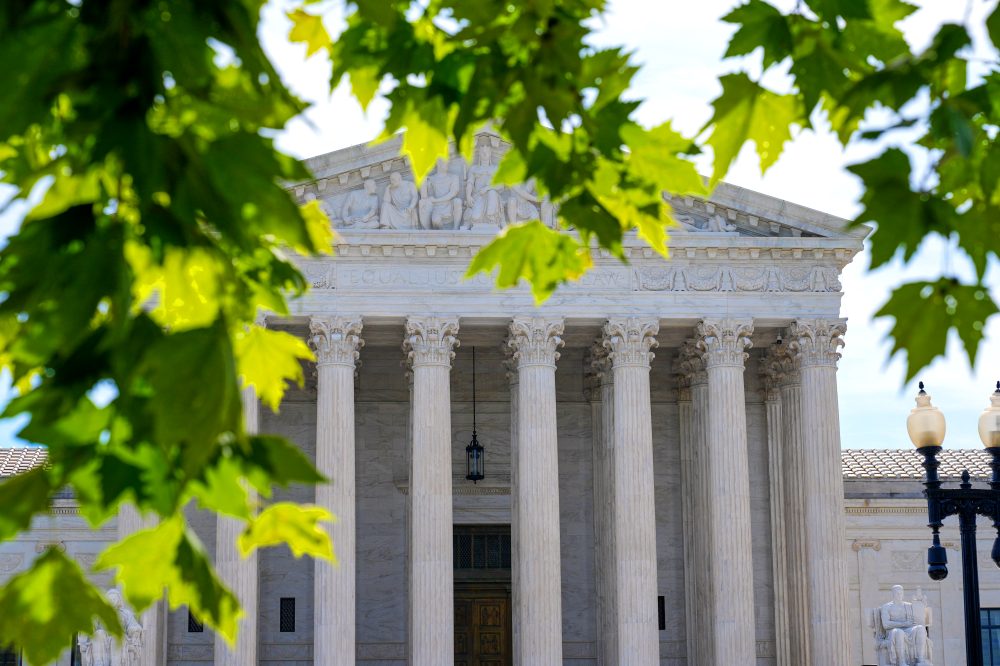

The U.S. Supreme Court handed a major victory to the maker of Roundup weedkiller on Thursday, issuing a decision expected to shut down thousands of lawsuits claiming the company never warned consumers that the product might cause cancer.
The case reached the nation’s highest court following an enormous wave of legal action — including some multibillion-dollar jury awards — against global agrochemical giant Bayer, which took ownership of Roundup when it purchased the product’s original manufacturer, Monsanto, back in 2018.
While the ruling is seen as a win for the Trump administration, it carries political complications. Allies within the Make America Healthy Again movement have been pushing to reduce pesticide use, creating tension over the outcome.
In a 7-2 decision, the justices determined that Bayer cannot face lawsuits in state courts because federal regulators have concluded that a link between Roundup and cancer is unlikely.
The lawsuit before the court was brought by Missouri resident John Durnell, who developed non-Hodgkin’s lymphoma after spending more than two decades as the go-to person for spraying Roundup on parks in his historic St. Louis neighborhood. A jury sided with Durnell, finding the company failed to adequately warn him of potential cancer risks, and awarded him $1.25 million — one of thousands of similar cases that have been filed across the country.
The debate over Roundup’s main ingredient, glyphosate, and its potential link to cancer remains deeply contested. In 2015, the World Health Organization’s International Agency for Research on Cancer labeled glyphosate as “probably carcinogenic.” However, the Environmental Protection Agency has concluded it is not likely to cause cancer in humans when used as directed.
Because the EPA approved a product label without any cancer warning, Bayer argues it is bound by those federal standards — not the state laws that Durnell and others have relied on in their lawsuits. Durnell’s attorney, Ashley Keller, has noted that the ruling may still leave room for lawsuits based on how the product was designed, rather than how it was labeled.
Bayer has disputed the cancer allegations but previously set aside $16 billion to settle claims. Earlier this year, the company proposed a $7.25 billion class-action settlement to resolve many of the remaining cases. A federal judge recently determined that the proposed settlement will be taken up in a Missouri state court, where a large number of the lawsuits have been filed. Bayer has also been lobbying state legislatures to pass laws protecting it from failure-to-warn liability, with three states having already done so.
Roughly 200,000 Roundup-related claims have been filed against Bayer, the majority from residential users. The company has already stopped including glyphosate in Roundup products sold in the U.S. residential lawn and garden market.
Bayer has warned it may need to consider removing glyphosate from U.S. agricultural markets altogether if the lawsuits continue. Agricultural industry groups have cautioned that such a move could have a severe impact on the nation’s food supply.
The issue has also driven a wedge between the Trump administration and supporters of Health Secretary Robert F. Kennedy’s MAHA movement, who have grown frustrated with an executive order aimed at boosting glyphosate production. Kennedy himself has repeatedly stated his belief that glyphosate causes cancer, even while acknowledging that the executive order was necessary for food supply and national security purposes.