
A Texas-based biotechnology company and a federal wildlife agency have joined forces to build what they’re calling a biological safety net for the nation’s most vulnerable species.
Colossal Biosciences and the U.S. Fish and Wildlife Service announced Thursday a sweeping plan to establish a cryogenic archive — dubbed the BioVault — that would store living cells, reproductive tissues, and genetic DNA from every species currently protected under the U.S. Endangered Species Act. That covers approximately 2,300 types of animals and plants classified as either threatened or endangered.
Colossal CEO and co-founder Ben Lamm said the goal is to preserve biological samples before species populations decline beyond the point of no return. “The materials support assisted reproduction, genetic management of wild populations and future restoration if a species is lost entirely. For the first time, we have the technology to make that possible at scale,” Lamm told Reuters.
Colossal describes itself as a company focused on “de-extinction” — the science of bringing back vanished species. The company made headlines last year when it announced it had genetically engineered the dire wolf, an Ice Age predator that disappeared thousands of years ago. Colossal says it will invest tens of millions of dollars to build and run the BioVault, and that the agreement with the federal government does not require any federal funding.
The archive is designed to function as a permanent public resource, with standardized samples and open-access genetic data available to scientists across the globe.
Colossal’s chief animal officer, Matt James, explained that the Fish and Wildlife Service — which operates under the U.S. Interior Department — is leading the partnership. The agency will determine conservation priorities and supply the field networks and legal authority needed to collect samples at this scale. James noted that no completion deadline has been set for the project.
U.S. Fish and Wildlife Service Director Brian Nesvik expressed support for the effort. “This collaboration will help advance our understanding of how biobanking and genomics can complement existing conservation tools and contribute to the recovery and long-term resilience of imperiled species,” Nesvik said in a statement provided by Colossal.
Samples stored in the BioVault will be kept in liquid nitrogen at minus-321 degrees Fahrenheit (minus-196 degrees Celsius) at Colossal’s Dallas headquarters and at additional locations. Lamm said the system is designed with multiple layers of backup protection. “Redundancy is built into the architecture so that no single event, whether a natural disaster, power failure or regional disruption, can compromise the integrity of the collection,” he said.
Lamm drew a comparison between the BioVault and the biblical story of Noah’s Ark. “The Noah’s Ark metaphor is about preserving the blueprint of life before it’s lost, not waiting until a species is on the brink to start paying attention. Noah didn’t build the ark after the flood. The whole point was preparation, preservation and the option to restore what might otherwise disappear forever,” Lamm said.
He continued: “We’re not loading two of every animal onto a boat, we’re preserving the genomic and biological building blocks that define what an entire population is. Every species we bank is a species whose biological information, millions of years of evolutionary innovation encoded in its DNA, is protected against the worst outcomes.”
The stored material could support recovery programs, help restore genetic diversity in struggling populations, and in extreme cases, serve as the foundation for future de-extinction efforts, Lamm said.
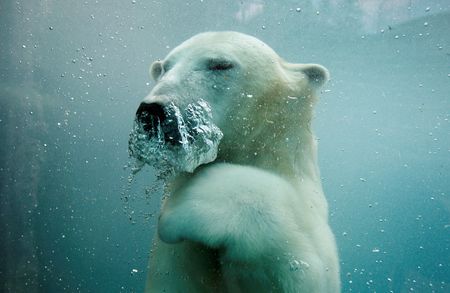
Species protected under the Endangered Species Act range widely — from well-known animals like the polar bear to lesser-known creatures such as the Hine’s emerald dragonfly.
Lamm noted that biobanking for wildlife has existed for decades, but in a fragmented way. Zoos, universities, government agencies, and private institutions have each built their own collections independently, with different procedures, different access policies, and no shared catalog. The result is uneven coverage — some species have duplicate samples stored at multiple institutions while others have none at all. The BioVault is intended to address that gap by operating as a national program backed by a government mandate.
One well-known model for this kind of preservation is the Svalbard Global Seed Vault, a so-called “doomsday” facility on a remote Norwegian Arctic island that stores food crop seeds from around the world.
James said that samples contributed to the BioVault will remain the property of the organizations that donate them. He also issued a broader invitation to the conservation community. “This is also a call to the broader conservation community — zoos, universities, government agencies, NGOs and research institutions around the world. The Colossal BioVault is built to be complementary, not competitive. If you’re doing this work, we want to work with you,” James said.