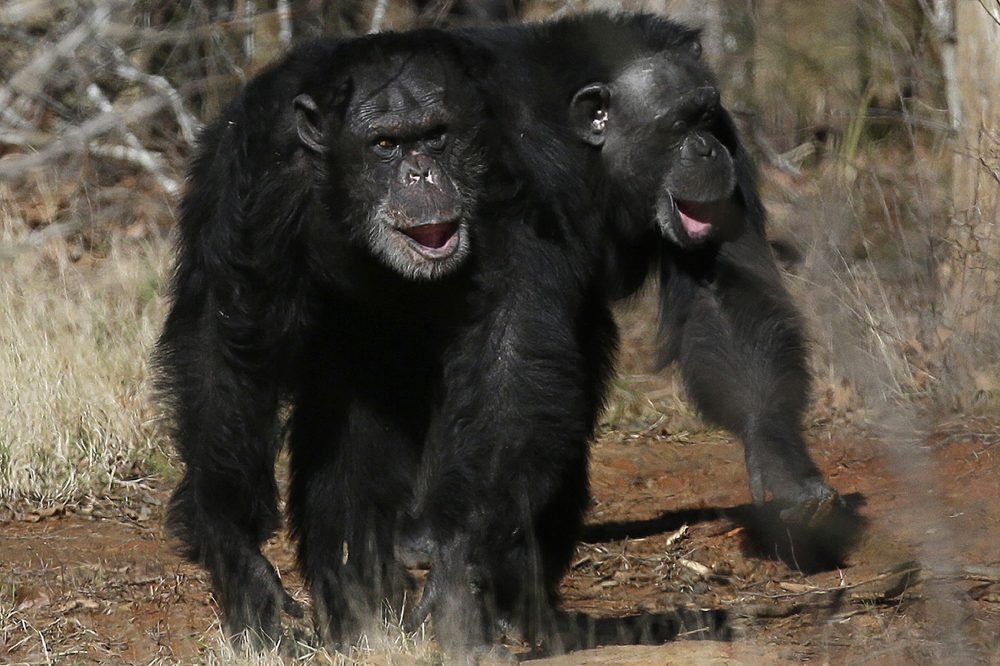

NEW YORK (AP) — A new study suggests that when it comes to laughter, humans and great apes have a lot more in common than you might think — and they have for a very long time.
To reach that conclusion, researchers turned to a surprisingly simple method: tickling. Scientists tickled 13 captive apes — among them gorillas, orangutans, chimpanzees, and bonobos — and recorded the sounds they made. Those decades-old recordings were then revisited and compared against fresh recordings of four young children being tickled and playing at home.
What they found was striking. Both humans and great apes laugh with a consistent rhythm — a steady, predictable beat between each burst of laughter. That shared pattern, researchers believe, is a clue pointing back to a common ancestor.
“In a way, we are very similar to other great apes because we’ve been laughing in a similar way for 15 million years,” said Chiara De Gregorio, a primatologist at the University of Warwick in England and one of the study’s authors.
Laughter is a universal way of expressing joy and playfulness without saying a single word. Many other animals can laugh too, but their versions don’t mirror human patterns as closely. Rats, for instance, respond to tickling with high-pitched squeaks that fall outside the range of human hearing.
While researchers have spent time analyzing animals’ facial expressions during laughter, far less attention has been paid to how those laughs actually sound. And human laughter, it turns out, has grown more sophisticated over time. We adjust our laughs depending on the situation — think of the polite chuckle you might give a coworker versus the uncontrollable laughter shared with a close friend.
“We are like the masters of laughter, I would say,” De Gregorio added. Her team’s findings were published Thursday in the journal Communications Biology.
Brittany Florkiewicz, who researches animal communication at Lyon College and was not involved in the study, said the results make sense and highlight the need for more research in this area. She would like to see similar recordings made of other animals known for playful expressions — such as dogs, horses, and cats — to better understand how laughter developed across species.
Doing so, she said, could help scientists “understand what makes us uniquely human, but also what is similar between humans and other animals.”
It may sound like a lighthearted topic, but studying the roots of laughter offers real insight into how humans learned to communicate — and ultimately, how we developed language itself. Since sounds leave no fossil record, scientists are piecing together that history one laugh at a time.