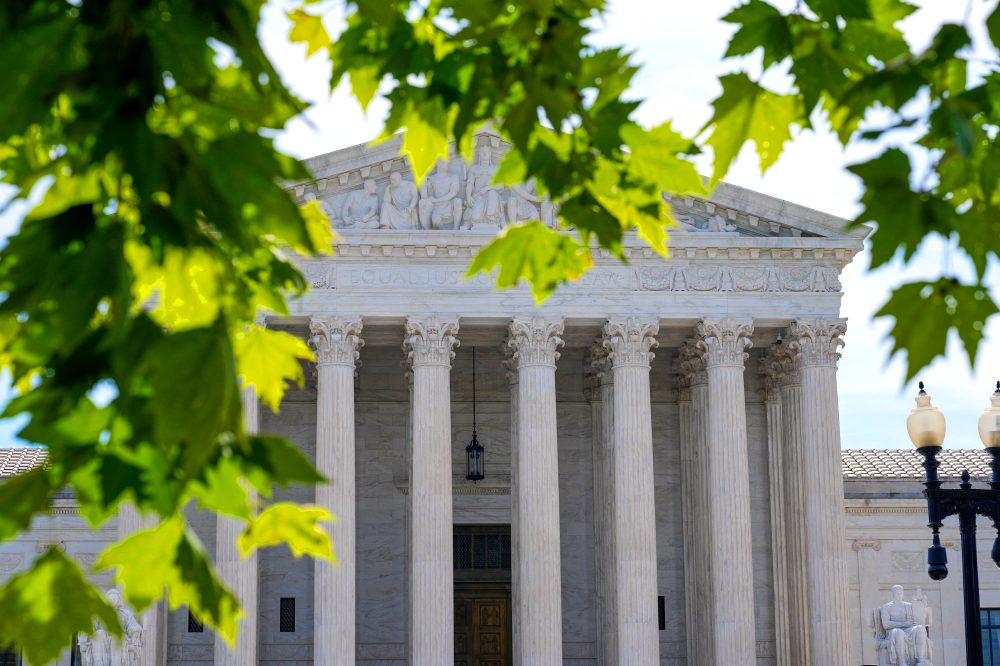

WASHINGTON — The U.S. Supreme Court ruled Thursday in favor of the Trump administration, giving it the green light to strip away legal protections for migrants who fled violence and natural disasters in Haiti and Syria. The 6-3 decision puts hundreds of thousands of people at risk of deportation.
The ruling overturns orders from lower courts and clears the way for the Department of Homeland Security to quickly terminate the Temporary Protected Status program for those groups. Altogether, TPS currently shields 1.3 million people from 17 different countries.
The Trump administration contended that immigration officials’ decisions about these protections should not be subject to judicial review, arguing the program was always meant to be short-term.
Immigration lawyers pushed back, saying the affected countries are still too dangerous for people to safely return to. They also argued the administration moved to end the protections in an unlawfully rushed manner driven by racial bias. On the campaign trail in 2024, Trump repeated debunked claims that Haitian immigrants were stealing and eating people’s pets.
The Justice Department brought the case to the Supreme Court after lower court judges had delayed the end of protections for roughly 350,000 Haitians and 6,000 Syrians. The high court had previously sided with the administration in a similar case involving migrants from Venezuela.
Federal officials rejected claims that racial bias influenced the decisions. They pointed to a Supreme Court ruling from Trump’s first term, which dismissed bias arguments based on social media posts and upheld a travel ban targeting several Muslim-majority nations.
Since Trump returned to the White House in January 2025, DHS has ended protections for people from 13 countries — some of which had been in place for over a decade.
Immigration attorneys noted that countries like Haiti and Syria remain extremely dangerous. Court documents cited a grim example: four Haitian women who were deported from the United States in February were later found beheaded and left in a river.
In April, the House passed a bill with rare bipartisan support that would extend protections for Haitians, but the legislation has stalled in the Senate.
The United States first extended TPS to Haitians in 2010 following a devastating earthquake, renewing it several times as gang violence continued to displace more than a million people, according to court records. Syrians first received the protections in 2012 during a civil war that lasted over a decade, ending with the fall of President Bashar Assad’s government in late 2024.
Congress created the Temporary Protected Status program in 1990 as a way to prevent deportations to countries experiencing natural disasters, armed conflict, or other dangerous instability. The program allows people already living in the U.S. to remain and work legally in periods of up to 18 months, but it does not offer a route to citizenship.