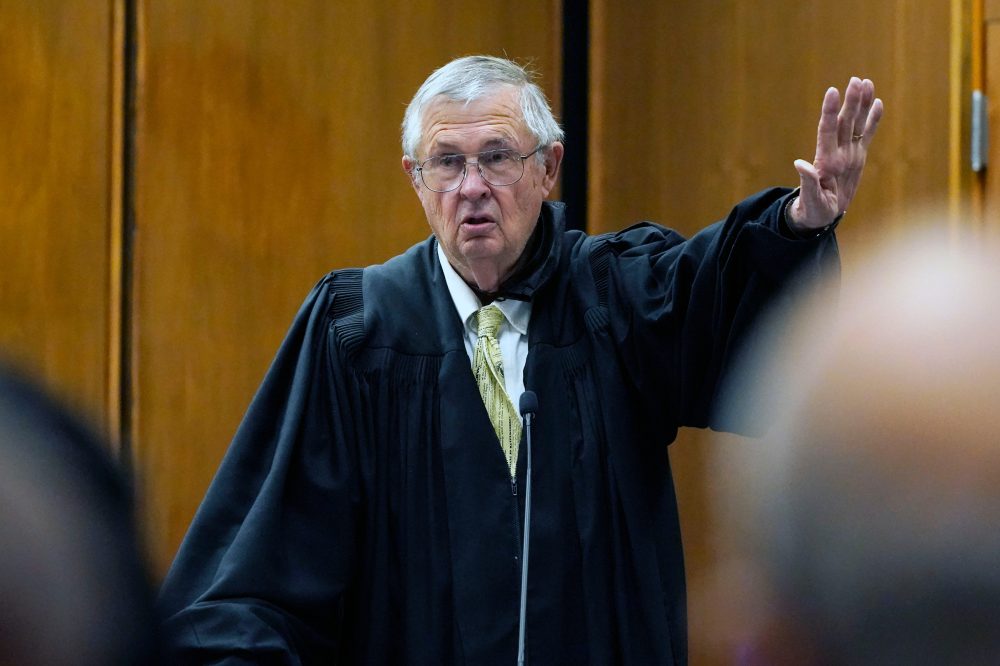

A U.S. District Judge ruled Wednesday that plaintiffs in the case known as Harris v. DeSoto County failed to present sufficient evidence that the county’s district maps were deliberately drawn to diminish Black voting influence.
Judge Glen H. Davidson sided with DeSoto County, writing in his decision that “plaintiffs cannot prove their claims for vote dilution pursuant to Section 2 of the Voting Rights Act, and judgment must be awarded to defendants.”
Davidson issued the ruling after hearing arguments in the case back in March.
The federal lawsuit was originally filed in September 2024, claiming that a 2022 DeSoto County electoral map weakened Black voting power in county office races. Those who brought the suit were seeking a new redistricting plan along with special elections for seats on the boards of supervisors and education, the election commission, and the offices of constable and justice court judge.
The ruling comes on the heels of a significant U.S. Supreme Court decision in Louisiana v. Callais, which weakened federal Voting Rights Act protections against racially discriminatory redistricting. That Supreme Court ruling has already sparked protests and political disputes over redistricting and voting rights nationwide.
The ACLU of Mississippi responded to the DeSoto County ruling with a statement describing the outcome as “deeply disappointing.”
“The Callais opinion pretends to adhere to the text of the Voting Rights Act and only updates the test for proving vote dilution,” the statement said. “In reality, the Supreme Court is directing federal courts to close their eyes and ignore the clear results of discriminatory maps.”
Mike Hurst, the state Republican Party chairman, represented DeSoto County in the case. He told a reporter the lawsuit amounted to nothing more than “Democrats are mad they can’t win an election in DeSoto County because it’s a Republican county.”
DeSoto County sits just south of Memphis in northwest Mississippi and has been among the state’s fastest-growing counties for years. Its Black population has also been growing and now makes up more than 30% of the county’s total population of 190,000.
Currently, none of the 25 county offices determined by the disputed map is held by a Black official. The county does, however, have a Black sheriff elected on a countywide basis, Democratic Black state legislators representing majority-Black districts, and a Black Republican state House member elected from a majority-white district. The lawsuit did not challenge legislative districts.