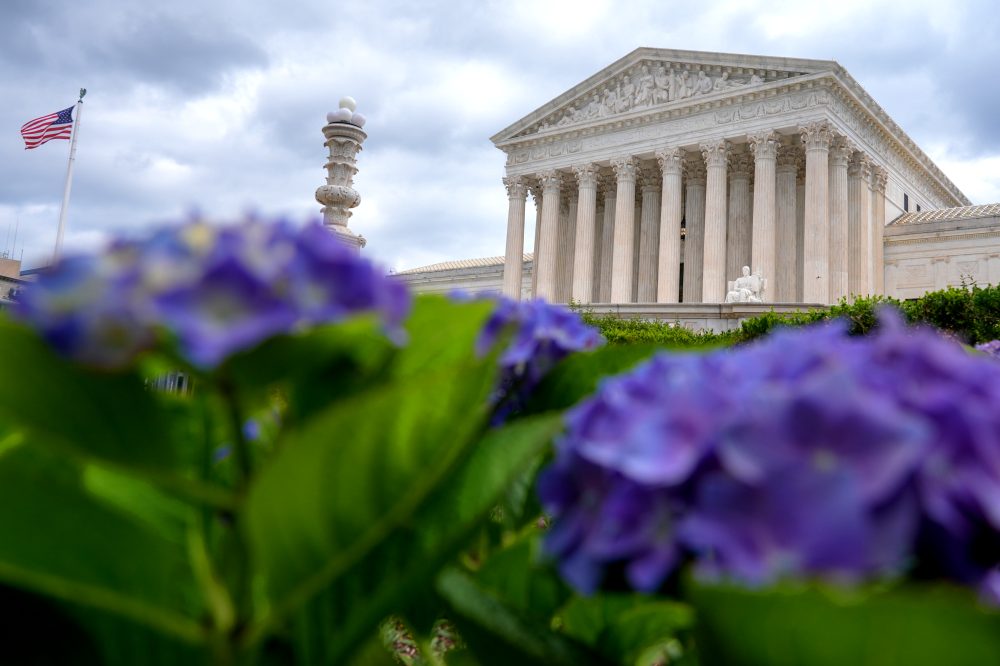

WASHINGTON — The U.S. Supreme Court on Thursday opened the door for the Trump administration to potentially bring back a controversial immigration policy that restricted the number of migrants who could seek asylum each day at the southern border.
The justices struck down a lower court ruling that had prevented the practice from being reinstated. The policy, known as metering, was originally used during the Obama administration and was expanded throughout President Donald Trump’s first term in office.
Immigrant rights advocates have argued that the practice triggered a humanitarian emergency, with thousands of people forced to wait in dangerous, overcrowded makeshift camps for their chance to apply. The Trump administration, however, contends the policy is an essential tool for managing the growing number of asylum seekers arriving at the border.
While metering is not currently being enforced, the administration has put other restrictions on asylum seekers in place. Officials argue that metering has been used by presidents from both political parties and should remain available as a border management option. Federal lawyers have pointed out that migrants turned away at the border can return at a later time, though wait lines stretched into the thousands when the policy was previously active.
This case is among several immigration-related lawsuits the high court is examining this term, including challenges to ending birthright citizenship and efforts to remove temporary legal protections for migrants who fled violence and instability in their home countries.
Under U.S. federal law, migrants who reach American soil are entitled to apply for asylum and must be evaluated for fear of persecution in their home countries. The Justice Department argued that individuals stopped before formally entering the country have not legally “arrived,” and therefore immigration officials are not required to process their asylum claims.
Attorneys representing asylum seekers counter that the law has historically been interpreted to mean that anyone reaching a port of entry should be screened, and that blocking people from applying goes against the country’s foundational values.
Metering was first introduced during the Obama administration after a large influx of Haitian migrants appeared at the main crossing between San Diego and Tijuana, Mexico. The policy was later expanded to cover all crossings along the Mexican border during Trump’s initial presidency.
The practice was phased out in 2020 when sweeping pandemic-era restrictions were put in place, and President Joe Biden officially ended it in 2021. That same year, a federal judge based in California ruled that metering violated the legal rights of asylum seekers and the law mandating screening. An appeals court panel upheld that decision, though nearly half of the judges on the full San Francisco-based court voted to reconsider the case — a notable signal that may have drawn the Supreme Court’s attention.
American law permits individuals fleeing danger to apply for asylum once they are on U.S. soil, regardless of how they entered the country. To be granted asylum, applicants must demonstrate a credible fear of persecution in their home country based on factors such as race, religion, nationality, membership in a specific social group, or political beliefs.
Those who are ultimately granted asylum cannot be deported. They are also entitled to work legally in the United States, bring immediate family members to join them, apply for permanent residency, and eventually pursue citizenship.