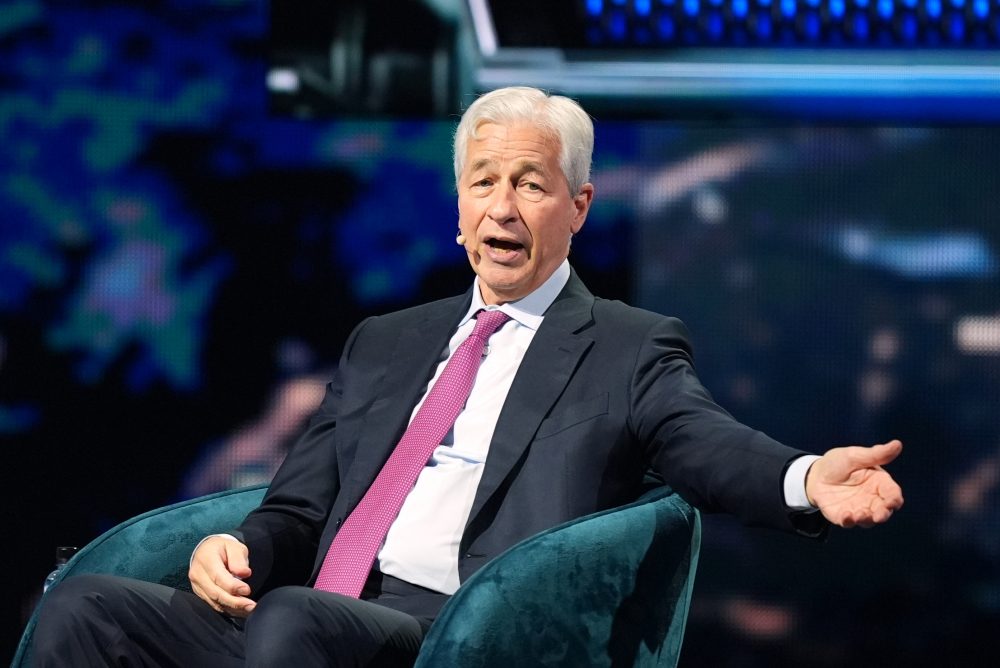

NEW YORK (AP) — JPMorgan Chase has elevated two investment bankers to the role of copresidents, adding more names to the list of potential candidates to eventually replace longtime CEO Jamie Dimon at the helm of the country’s largest bank.
Doug Petno and Troy Rohrbaugh both received the promotion, which was announced Thursday. At the same time, the bank revealed that Marianne Lake — a veteran executive who has served in several high-ranking roles at the company, including chief financial officer and CEO of the consumer banking division — will step down at the end of the year. Lake had long been considered one of the leading candidates to take over for Dimon when he eventually departs.
The elevation of Petno and Rohrbaugh suggests JPMorgan’s board is drawing its next generation of leaders from the commercial and investment banking side of the business. Rohrbaugh will transition to oversee the bank’s large consumer operation. Both men built their careers within JPMorgan’s investment bank, though through different paths: Petno focused primarily on client relationships and advisory work, with experience in natural resources investment banking, while Rohrbaugh came up through trading, specializing in foreign-exchange derivatives and options.
In a statement, Dimon said: “The changes announced today mark an important step in our Board’s thoughtful process around succession planning and development of our top leaders.”
Speculation about who will eventually take Dimon’s place is a constant topic on Wall Street. Dimon, who is 70 years old, has led the bank as CEO since 2006. Over his two decades at the top, he has faced serious health challenges, including a throat cancer diagnosis in 2014 and emergency heart surgery in 2020. Even so, Dimon has consistently expressed his enjoyment of the chairman and CEO role, while making clear that the timing of any leadership change rests with JPMorgan’s board of directors.
Whoever ultimately steps into Dimon’s shoes will take on one of the most high-profile positions in both the financial industry and Corporate America at large. Dimon is among the last remaining CEOs from the generation that guided major Wall Street firms through the 2008 financial crisis, and he is broadly regarded as a senior statesman of the banking world.
Before arriving at JPMorgan Chase in 2004, Dimon’s professional background was rooted more in consumer finance than in trading or investment banking. He held leadership positions at American Express, Citigroup, and Bank One. JPMorgan Chase purchased Bank One in 2004 as a way to grow its consumer banking and credit card operations, with Bank One’s credit card business viewed as a key asset in that transaction.