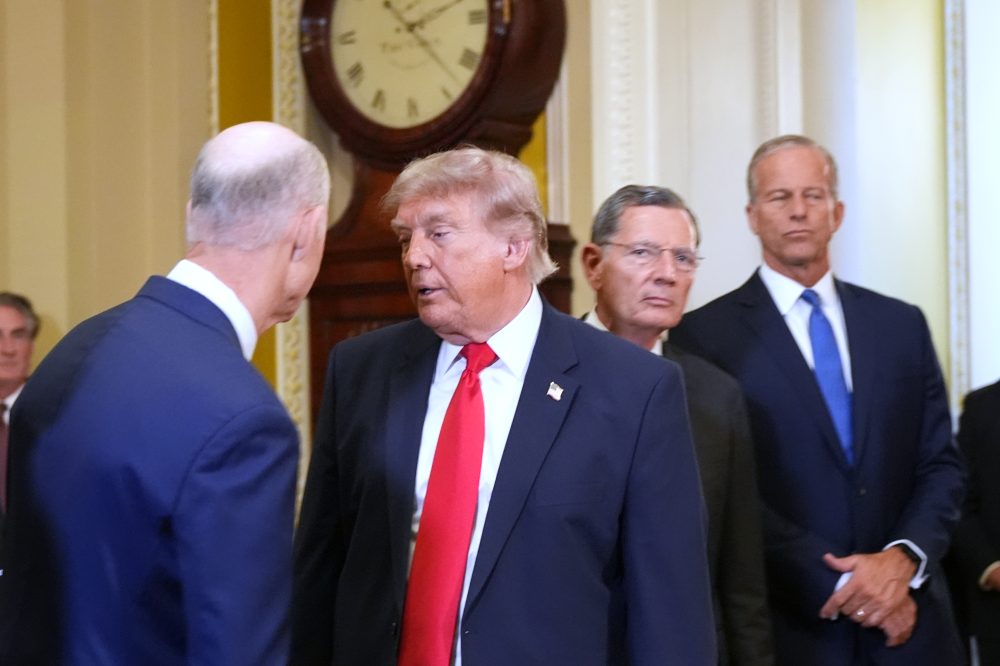
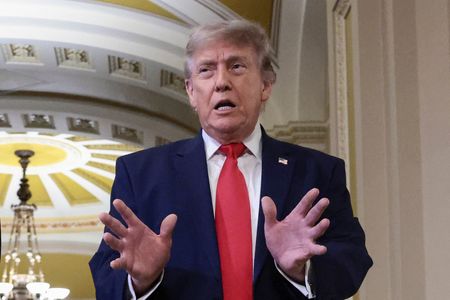
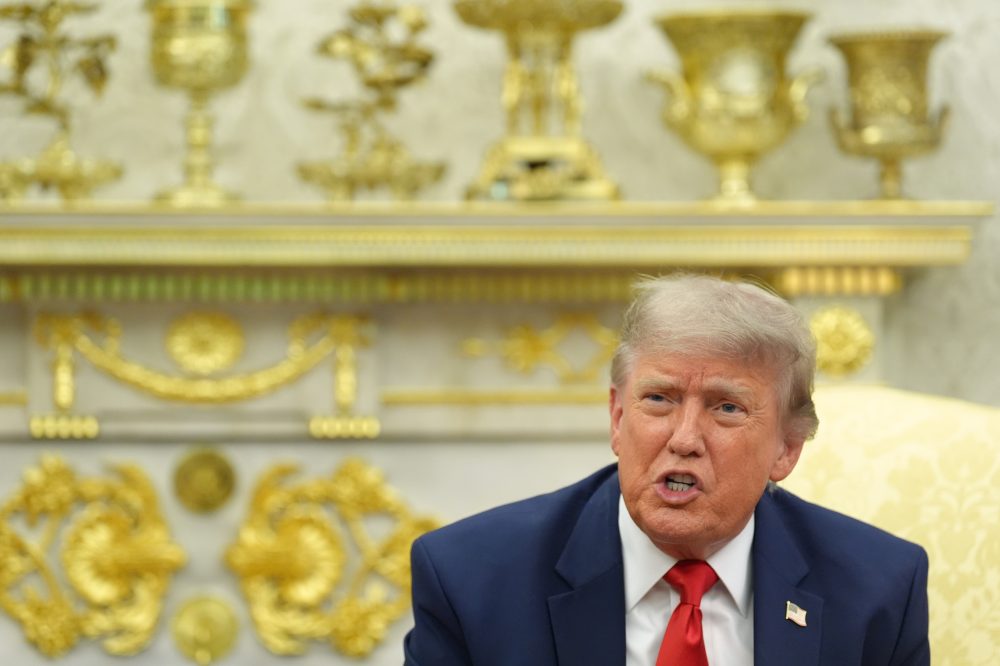
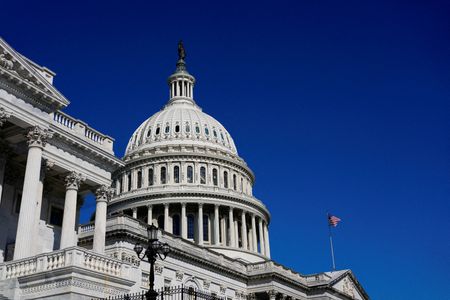
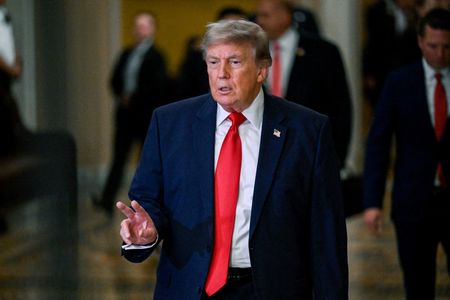
WASHINGTON — Senate Republicans found themselves on the defensive Wednesday after President Donald Trump showed up at a Capitol luncheon to scold members of his own party for allowing a vote to restrict his war in Iran. Hours later, those same senators gathered for a late-night vote and rejected a war powers resolution — just one day after a nearly identical measure had passed.
Trump had been invited by Florida Sen. Rick Scott to address a closed-door GOP luncheon, where he was expected to push senators on his proof-of-citizenship voting legislation. Instead, the conversation quickly turned to Tuesday’s war powers vote, which marked the first time the Senate had adopted such a resolution regarding the Iran conflict.
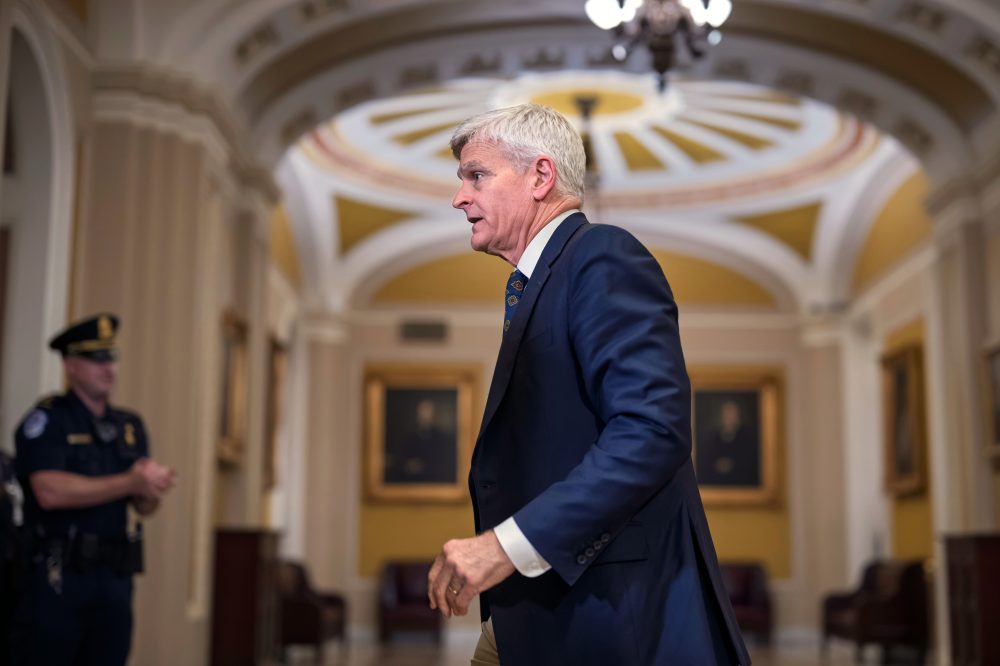
The most heated exchange of the afternoon involved Louisiana Sen. Bill Cassidy, one of four Republicans who had sided with Democrats on Tuesday’s measure. Cassidy stood up and defended his position directly to the president.
“I stood and said, ‘You have not told the American people what’s going on,’” Cassidy told reporters after the meeting. “This was supposed to last four weeks, it’s lasted four months. Our original objectives have not been achieved.”
Cassidy said the two men “went back and forth” and that he “matched his tone and volume.” He said he eventually tried to calm things down, but made clear he would not be intimidated. “I am voting for war powers until I get a briefing,” he said.
According to someone with knowledge of the private meeting who was not authorized to speak about it publicly, Trump repeatedly told Cassidy to sit down and at one point called the senator a “lunatic.”
Publicly, Trump offered a different impression on his way out of the building. “We had a really great meeting,” he told reporters, though he hinted at the tension underneath. “We like everyone in the room. I don’t like a few people, but that’s OK.”
Despite the confrontation, Cassidy’s position shifted by evening. He was invited to the White House for a personal briefing on the Iran war from Vice President JD Vance and envoy Steve Witkoff. He then returned to the Capitol and voted against the second war powers resolution.
“I want to thank Vice President Vance and Special Envoy Witkoff for the thorough briefing this afternoon on Iran. I appreciate the quick invitation to the White House to address many of my concerns,” Cassidy wrote on X. Cassidy lost his reelection bid last month after Trump endorsed his opponent.
Kentucky Sen. Rand Paul, another Republican who had previously voted with Democrats to limit the war, chose to vote present this time. He said on X that he did so “to give the President more space and leverage to negotiate a lasting peace.”
The resolution ultimately failed 47-50-1 just before midnight Wednesday. Senate Majority Leader John Thune, R-S.D., along with a small group of GOP colleagues, called Trump after the vote. Thune later told reporters the president was “pleased with the outcome.”
Trump responded on social media by thanking Thune and noting that both Cassidy and Paul had changed their votes. “This vote puts Iran on notice!” he wrote.
It is worth noting that both the Tuesday and Wednesday votes were largely symbolic. Neither resolution carries the full weight of law, and they were moving on separate legislative tracks.
The day’s tensions extended beyond the war powers debate. Before the luncheon even began, Trump announced on social media that he was pulling back from a scheduled signing ceremony for a housing bill that had passed both chambers with overwhelming bipartisan support. He said he would not sign it until Congress sent him the SAVE America Act — his bill requiring proof of citizenship for all voters.
North Carolina Sen. Thom Tillis pushed back on the move. “It makes no sense to me,” he said as he walked into the luncheon, adding that he doesn’t understand why Trump is holding the housing bill “hostage” for a voting bill that “will never pass in this Congress.”
Thune described the housing legislation as “an affordability issue” and said, “Eventually I hope he finds a way to sign it.”
Republicans have grown increasingly worried that Trump’s resistance to the housing bill signals indifference toward voters’ economic concerns ahead of November’s midterm elections.
The friction is part of a broader pattern of tension between Trump and Senate Republicans in recent weeks. Trump has blocked the Senate from confirming one of his own nominees, requested funding for parts of a White House renovation project despite pushback, and pushed senators to defend the Iran war even as many question its strategy and goals.
Trump has also endorsed primary challengers to two sitting GOP senators — Cassidy and Texas Sen. John Cornyn — both of whom have become more outspoken critics since losing their reelection bids.
“If we’re going to win the midterm elections, we need to get on the same page,” Cornyn said ahead of the meeting. “We’re not on the same page now, and that I think is dangerous.”
Trump has also been pushing Republicans to eliminate the Senate filibuster in order to pass his voting bill, even though Thune has told him repeatedly that there are not enough votes to do either. Democrats are uniformly against the citizenship bill, and the 60-vote threshold required under the filibuster rules makes passage unlikely in the current 53-47 Senate.
“I think people at some point have to come to grips with that,” Thune said.
U.S. Secretary of State Marco Rubio arrived in Bahrain’s capital, Manama, on Wednesday night for the final stop of a three-day diplomatic tour through the Gulf region, where he has been working to build support for the Trump administration’s preliminary nuclear agreement with Iran.
The mission is a delicate one. Gulf Arab leaders are concerned that too many concessions to Tehran could shift the region’s security balance and disrupt oil flows — fears Rubio has openly acknowledged as he makes his case for the deal.
In Bahrain, Rubio is scheduled to meet with government officials on Thursday. He will also sit down with the Gulf Cooperation Council — a bloc of six Sunni-led monarchies that includes Saudi Arabia, Qatar, Oman, the United Arab Emirates, and Kuwait.
This trip marks the first high-level U.S. diplomatic mission to the oil-rich Gulf since the U.S.-Iran framework agreement was reached last week to bring an end to the conflict.
At earlier stops in the UAE and Kuwait, Rubio worked to convince officials that the proposed deal does not unfairly favor Iran, which launched strikes against several Gulf nations during the U.S.-Israeli war.
“We’re not going to do anything that undermines the security of our allies, our longstanding allies in the region,” Rubio told reporters during his stop in Kuwait.
The deal has already sparked confusion over its terms. President Donald Trump stated Tuesday that Iran had agreed to nuclear inspections stretching to “infinity,” but Tehran pushed back, saying it had made no such commitment — casting doubt on the durability of the fragile agreement.
The two countries, which concluded an initial round of negotiations in Switzerland on Monday, have also offered contradictory accounts regarding financial incentives for Iran, control of the Strait of Hormuz, and Israel’s ongoing conflict in Lebanon.
All six GCC member nations are long-standing U.S. strategic partners that provided varying levels of logistical support to Washington during the war, and all faced Iranian airstrikes as a consequence. Together, they form the foundation of America’s military and security presence in the Middle East, meaning any shift in their relationship with the U.S. could have wide-ranging consequences for American strategy in the region.
The draft agreement contains no restrictions on Iran’s ballistic missile program, calls for a proposed $300 billion reconstruction fund, and includes provisions that critics say could expand Tehran’s regional influence and its grip on critical oil shipping routes.
Rubio has stated he will not ask Gulf allies to contribute to any reconstruction fund during this trip, even as the memorandum of understanding with Iran suggests that regional countries could be expected to help cover those costs.
Several U.S. Gulf partners are privately expressing disappointment with the interim deal, which could open a path toward U.S. normalization with Iran — a predominantly Shiite nation that most Sunni-led GCC states view as their primary adversary.
Bahrain presents a particularly sensitive case: its Shiite majority population is governed by a Sunni monarchy that fears a financially empowered Iran could stoke internal unrest.
Spanish tennis player Alejandro Davidovich Fokina kept his country’s hopes alive at the Vanda Pharmaceuticals Mallorca Championships on Wednesday, defeating Australian qualifier Adam Walton 6-4, 7-5 to book his place in the quarterfinals of the tournament held in Mallorca, Spain.
The second-seeded Davidovich Fokina wrapped up the victory in 87 minutes, surrendering only eight points on his serve throughout the match. It marks the first time he has reached the quarterfinals at Mallorca. His next opponent will be Bulgaria’s Grigor Dimitrov, who dispatched Jordanian lucky loser Abdullah Shelbayh 6-2, 6-4 in the day’s final singles contest.
Dimitrov, who entered the tournament as a wild card, has now strung together back-to-back wins at the tour level for the first time this season. The former world No. 3 set up what will be his third career meeting with Davidovich Fokina — with the Spaniard having won both of their previous encounters.
Elsewhere in Wednesday’s action at Mallorca, Czech player Vit Kopriva eliminated fifth-seeded Ignacio Buse of Peru 7-5, 6-1, while American Ethan Quinn outlasted fellow countryman Murphy Cassone 6-3, 6-7 (4), 6-3. Quinn and Kopriva will square off in the quarterfinals for a berth in the semifinals.
At the Lexus Eastbourne Open in Eastbourne, England, Canada’s Gabriel Diallo turned in an impressive comeback performance on Wednesday, overcoming fourth-seeded Tomas Martin Etcheverry of Argentina 6-7 (11), 6-3, 6-2 to reach the quarterfinals. After dropping a lengthy opening-set tiebreak, Diallo took firm control of the match, conceding just five games across the final two sets.
Diallo will next face Britain’s Jack Draper, who defeated fellow Briton Jack Pinnington Jones 7-5, 6-4. Draper, returning to competition for the first time since April following a knee injury, stumbled while serving for the first set at 5-4 but regrouped to win the next two games and close out the set. He then finished off the second set more comfortably, completing his victory in one hour and 30 minutes.
Sixth-seeded Ugo Humbert also punched his ticket to the quarterfinals, rolling past American Jenson Brooksby 6-3, 6-2. Humbert will face French compatriot Quentin Halys, who defeated British qualifier Giles Hussey 6-1, 7-5. In other results, eighth-seeded Juan Manuel Cerundolo of Argentina topped British wild card Arthur Fery 6-2, 7-6 (2); Belgium’s Zizou Bergs advanced after Germany’s Daniel Altmaier retired from their match while trailing 6-3, 3-2; and British qualifier Jan Choinski beat fellow Briton Felix Gill 6-4, 6-7 (4), 6-2.
NEW YORK — Chicago Cubs shortstop Dansby Swanson delivered a historic doubleheader Wednesday, giving himself the best four-game series by any player in Cubs history — and the series isn’t even finished yet.
In the nightcap against the struggling New York Mets, Swanson drove in four runs, including a go-ahead RBI triple, helping Chicago finish off a sweep with a 10-5 victory. Earlier in the day, he belted a three-run home run and a grand slam in a 10-3 Cubs win in the opener.
His 11 RBIs across the two games set a franchise record, topping the previous mark of 10 set by Hall of Famer Ron Santo on July 6, 1970. The only other Cubs player with nine RBIs in a doubleheader is another Hall of Famer — Billy Williams, who accomplished the feat on Aug. 21, 1968.
“A dream come true, just being able to have your name next to those guys,” Swanson said. “It’s amazing and special.”
The 11 RBIs rank tied for third-most ever in a doubleheader. The all-time record of 13 belongs to Nate Colbert of the San Diego Padres, set on Aug. 1, 1972 — a mark later matched by St. Louis Cardinals outfielder Mark Whiten on Sept. 7, 1993.
Cubs manager Craig Counsell was clearly impressed by the performance. “Dansby had an incredible day of baseball offensively, for sure,” Counsell said. “It’s fun to see.”
Swanson also went deep Tuesday night, giving him three home runs and 15 RBIs through the first three games of the series, which is scheduled to wrap up Thursday evening.
Those 15 RBIs represent the most ever by a Cubs player in a series of four games or fewer since 1920, when the RBI became an official statistic. It’s also the most by any Chicago player in a series of any length since Hall of Famer Kiki Cuyler drove in 15 runs across a five-game set back in 1932.
The three-game total of 15 RBIs also breaks a record for shortstops, surpassing the 14 RBIs Nomar Garciaparra drove in with the Boston Red Sox from May 10-12, 1999. The only other Cubs player with 15 or more RBIs in a three-game stretch is Sammy Sosa, who totaled 16 from Aug. 10-12, 2002.
“I couldn’t tell you a game that I’ve had like this,” Swanson said. “It’s one that you honestly dream about. Just very, very grateful.”
The outburst snapped a prolonged cold stretch for Swanson, who came into Tuesday’s game batting just .178 with three home runs and 14 RBIs over his previous 48 games dating back to April 24. On the season, he is hitting .202 with a .688 OPS — below his career averages of .251 and .732, respectively, heading into 2026.
Cubs second baseman Nico Hoerner praised his teammate’s perseverance. “You say process, process, process and stick to it, but every player is aware of how they’re producing and helping the team,” Hoerner said. “He’s been so consistent and persistent. That doesn’t guarantee results, but man, does it feel good when those come through.”
Despite the slump, Swanson has posted 11 home runs and 46 RBIs through 80 games, putting him on pace for his fifth 20-homer season and within striking distance of his career-high 96 RBIs, which he set during his final year with the Atlanta Braves in 2022.
Counsell put the season in perspective. “If you probably look at Dansby’s season right now, it’s kind of a normal season for Dansby. Maybe the batting average is a little bit low, but probably all the other numbers are right around where he’s been the last couple years. It’s just been peaks and valleys for him,” the manager said. “The good times, you’ve got to take advantage of them. And when you have days like that and you’re kind of the primary driver of offense, that’s going to win your team games.”
BEIRUT — Shiite Muslims across the globe gathered Thursday to observe Ashoura, a sacred day representing sacrifice and martyrdom that carries particularly deep meaning this year following months of devastating conflict in Iran and Lebanon.
Ashoura marks the death of Imam Hussein, grandson of the Prophet Muhammad, who was slain along with his family and companions at the Battle of Karbala in 680 A.D. after refusing to swear loyalty to the Umayyad caliphate. That event deepened the historic divide between Sunni and Shiite Islam and endures as a powerful emblem of resistance against oppression and injustice.
The timing of this year’s observance is especially significant. Iran and Lebanon — home to two of the world’s largest Shiite populations — have both been caught up in months of war. Iran and the United States launched talks this week aimed at solidifying a fragile ceasefire agreement.
On the first day of the conflict, February 28, Iran’s supreme leader Ayatollah Ali Khamenei was killed in an Israeli airstrike. The 86-year-old was not only Iran’s highest political authority but also held final say over all religious matters and was deeply revered by Shiites worldwide. Ashoura falls just days before his scheduled funeral procession.
The fighting also extended into Lebanon, where Iran’s close ally, the Hezbollah militant group, has been engaged in combat with Israeli forces for months. Hezbollah began launching rockets into northern Israel early in the war in a show of solidarity with Tehran, which triggered a sweeping Israeli aerial campaign and ground invasion that devastated large portions of predominantly Shiite communities in southern Lebanon and Beirut’s southern suburbs.
As Ashoura arrived, more than one million displaced Lebanese citizens were attempting to return to their villages in southern Lebanon — many of which now lie in ruins. Religious ceremonies and sermons in the days leading up to the holy day took place amid the wreckage of destroyed buildings.
Ashoura, observed on the 10th day of the Islamic month of Muharram, is the most sacred day on the Shiite calendar. Traditional rituals include chest-beating, mourning songs, and public lamentations.
In the Lebanese coastal city of Tyre, families who lost loved ones — whether fighters with Hezbollah or paramedics — wept during a sermon held on the third day of Muharram. A cleric seated between portraits of current Iranian Supreme Leader Mojtaba Khamenei and Hezbollah Secretary-General Naim Kassem drew parallels between the modern-day leaders’ wartime struggles and the historical suffering of Hussein and his companions at Karbala. Red and black banners bearing Hussein’s name were displayed on every street throughout the city.
In Beirut’s southern suburbs, crowds gathered at the grave of former Hezbollah leader Hassan Nasrallah, who died in an Israeli strike in September 2024.
In Pakistan, authorities deployed thousands of police and paramilitary personnel nationwide after intelligence reports warned of potential militant attacks targeting Shiite Muslims, who make up a minority in the predominantly Sunni nation. Militant groups have carried out repeated attacks on Shiite communities, mosques, and religious gatherings over the years, claiming hundreds of lives. Mobile phone service in certain areas was expected to be cut temporarily during mourning processions as a precautionary measure.
At a congregation hall in the eastern Pakistani city of Lahore, Saadia Shah, 33, arrived with her two children and reflected on the day’s meaning. “Imam Hussein is a symbol of the highest struggle and sacrifice,” she said. “His name gives us the courage to stand up to tyranny, to say what is right and oppose what is wrong.”
LONDON (AP) — King Charles III is poised to make history on Thursday by becoming the first British monarch to publicly disclose his personal tax bill, a move driven by mounting calls for the royal family to be more open about its finances following months of damaging headlines tied to his disgraced younger brother, the former Prince Andrew.
According to British media reports over the weekend, the information will be made public during Buckingham Palace’s yearly briefing on the sovereign grant — the system by which taxpayers finance the monarchy. Last year’s briefing produced a 159-page document detailing how the palace spent the 86.3 million pounds ($113.7 million) it received from the Treasury, which included funding for a major renovation of the palace itself.
Although Charles previously disclosed his tax payments when he held the title of Prince of Wales, this marks the first time he will do so as king, a role he assumed following the death of his mother, Queen Elizabeth II, in 2022. Prince William, who now holds the Prince of Wales title, is expected to release similar information during a separate briefing.
These disclosures come amid growing pressure from both lawmakers and the general public for more transparency about how the monarchy operates, particularly in the wake of revelations surrounding the former Prince Andrew, who was stripped of his titles in 2025.
Now going by the name Andrew Mountbatten-Windsor, the king’s younger brother is under investigation for misconduct in public office connected to his relationship with convicted sex offender Jeffrey Epstein. Mountbatten-Windsor was also compelled to vacate a large royal estate where he had been living rent-free.
The BBC reported last Saturday, citing palace sources, that the king personally chose to disclose his tax information as part of an effort to “encourage wider understanding and accountability.”
Even before the controversy surrounding Mountbatten-Windsor came to a head, Charles had already committed to reducing the size and cost of the monarchy as part of his effort to secure the future of an institution that is more than 1,000 years old, amid growing debate about the relevance of a hereditary monarchy in a modern democratic society.
The king’s personal wealth is estimated at 680 million pounds ($896 million), placing him at number 230 on the Sunday Times’ annual ranking of Britain’s wealthiest individuals.
While the monarch is not legally required to pay income tax, Charles does so voluntarily on his private earnings. This practice was started by his mother in 1993, following public anger over the cost of repairing Windsor Castle after a serious fire the year before. The arrangement was later formalized through a memorandum of understanding between the government and the crown, which gives Charles the same privacy protections as any ordinary taxpayer.
The king is expected to disclose only the taxes he pays on his private income, which is generated primarily through two privately owned estates — Balmoral in Scotland and Sandringham on England’s east coast — along with savings and investments.
Balmoral spans more than 50,000 acres (20,000 hectares) and includes the king’s summer residence, Balmoral Castle. Much of the property is accessible to visitors, who can enjoy guided tours, afternoon tea, and golf. Sandringham is a 20,000-acre (8,000-hectare) country retreat also located on England’s east coast, where the house and gardens welcome the public and much of the land is farmed by the estate or its tenants.
The king does not pay taxes on the sovereign grant or any other income used to carry out his official royal duties.
Prince William’s main source of private income is the Duchy of Cornwall, a collection of land and investments held in trust by whoever holds the Prince of Wales title. The duchy covers roughly 130,000 acres (52,000 hectares) and reported a profit of 22.9 million pounds ($30.2 million) last year. It is managed by a board of directors, and significant financial decisions require approval from the Treasury.
WARSAW, Poland — When Ewa Lutka-Krawczyk received her gallbladder cancer diagnosis, her immediate concern wasn’t for herself — it was for Gaja, a shelter dog she had welcomed into her home three years earlier. She pleaded with her doctor to promise her she would survive long enough that the deeply bonded Gaja “wouldn’t be left behind.”
The outlook, however, was not hopeful. This month, the 70-year-old was admitted to the palliative care ward of a Warsaw hospital. Back home with Lutka-Krawczyk’s husband, Gaja had nearly stopped eating.
“She is waiting for me,” Lutka-Krawczyk said from her hospital bed, where she lay resting with a drainage tube connected to her abdomen.
A new bill working its way through Poland’s parliament could soon change the situation for patients like her. The proposed legislation would establish a legal right for patients in hospices and palliative care wards to receive visits from their pets. While many clinics already permit such visits, no universal legal protection currently exists.
The proposal was championed by Dr. Tomasz Dzierżanowski, director of the Palliative Medicine Clinic at the Medical University of Warsaw — the very facility where Lutka-Krawczyk is receiving care. A member of Prime Minister Donald Tusk’s centrist party introduced the measure to parliament.
Dzierżanowski believes that having a cherished animal companion nearby can ease both the physical and emotional suffering of terminally ill patients, especially at a time when society is gripped by what he calls “an epidemic of loneliness.”
“We make sure that no patient dies alone,” Dzierżanowski told The Associated Press. “When someone is suffering, it is important that someone is there for them. Ideally, that should be another human being. Sometimes, however, there is no one.”
He frequently encounters elderly patients who have outlived their closest friends, as well as younger patients who, shaped by a world of screens and online connections, never formed the deep personal bonds that previous generations often had.
The turning point for Dzierżanowski came when he treated a gravely ill cancer patient named Waldemar, whose greatest fear was not death itself but what would become of his two cats. Dzierżanowski arranged for the cats to be brought to the ward. The man’s tearful joy and the cats’ emotional response — along with the reaction of fellow patients and hospital staff who witnessed the moment — “made me realize that this issue finally needed to be addressed,” he said.
Dzierżanowski already permits pet visits in his clinic when circumstances allow, which means Lutka-Krawczyk can look forward to seeing Gaja. When she found out, she was visibly relieved.
Katarzyna Piekarska, the lawmaker who introduced the bill — which is currently before parliament’s health committee — noted that the practice is already happening informally. “In reality, animals in hospitals are already there anyway,” she said. “That’s why it needs to be regulated in the law.”
Dzierżanowski also welcomes therapy dog visits at the clinic. During a visit by the AP, an Australian shepherd named Kluska was making her rounds alongside her owner, Małgorzata Brzozowska.
Kluska — whose name translates to “dumpling” — brought a moment of lightness to Lutka-Krawczyk, who held the dog’s paw and broke into a smile. Nearby, another patient, 58-year-old Wojciech Zelik, who was admitted with a tumor, propped himself up to watch as Brzozowska had Kluska perform tricks.
“She has such lovely fur to pet, so fluffy,” he said, reaching over to rub the dog’s head.
Brzozowska noted that therapy dog visits benefit not just the patients but also the nurses, cooks, and other staff who care for the terminally ill. Several staff members stopped to fuss over Kluska in the hallway — with one cook slipping her slices of ham.
Brzozowska, a medical student, said the positive effects are even stronger when patients are visited by their own animals. The visits tend to calm the patients, their family members, and the animals themselves.
“The dog isn’t as stressed,” she said. “We interpret this as meaning that he simply knows what’s happening, that he knows where the owner, who was always there before, has disappeared to.”
Before the heat arrived, Amelie Kenney felt like she had landed a great deal: a small but affordable top-floor apartment in Paris, complete with a tiny balcony offering a stunning view of the city’s famous gray rooftops — and, if she leaned out far enough, a glimpse of the Sacré-Cœur basilica crowning Montmartre.
But a record-breaking heat wave has turned her attic apartment into a potential health hazard, and the 23-year-old recent graduate is no longer counting her blessings.
“It’s been the worst week that we’ve had in this apartment,” she said as Paris and much of Europe sweltered. “It’s just baking in the whole afternoon and it’s impossible to just get a respite.”
Many of Paris’ buildings — so charming when viewed from the street — are proving to be hostile and even dangerous environments during the relentless record heat, which is making both long summer days and short, sweat-soaked nights a struggle for survival.
The problem is especially severe for those living directly beneath Paris’ rooftops, who frequently cannot afford larger apartments on lower floors that are less exposed to direct sunlight.
Extreme heat in these spaces can be lethal. France’s public health agency reported last year that a study examining a record 2003 heat wave — which was blamed for 15,000 heat-related deaths — found that living in a Parisian attic room directly under the roof raised the risk of death by more than four times. Additionally, researchers studying heat-related deaths across European cities for a 2023 study published in The Lancet Planetary Health journal determined that Paris carried the highest risk of heat-related deaths among 30 European capitals examined.
Roughly three-quarters of Paris’ rooftops are covered in zinc sheets, giving the city its beloved gray skyline that has long captivated artists and filmmakers. The skill of the city’s zinc roofers has even been recognized by the U.N. cultural agency UNESCO as a valued piece of cultural heritage. Zinc is durable, flexible, and recyclable — but as a metal, it readily absorbs and transfers heat.
“People find the rooftops of Paris charming. There’s the image of the attic room. But in reality, when you look at who lives in these apartments, it’s often students paying a great deal of money for a small room,” said Maider Olivier, with The Foundation for Housing for the Disadvantaged campaign group.
“Not only are they extremely exposed to heat, but it’s also impossible to create cross-ventilation to get rid of the heat at night,” Olivier added.
In the sixth-floor walk-up that Kenney shares with her partner, Francesca Pilia, also 23, the two have managed to fit a desk, a double bed, and a small electric piano. The apartment’s single window juts out from the zinc roof and faces west, meaning it catches direct sunlight from noon until dusk. Together, they pay 735 euros — about $835 — each month in rent.
“It was the cheapest place to be,” Kenney said. “I like that it looks out onto the square. I can see marriages almost every Saturday morning.”
“But now I think if I could spend extra money to be somewhere else, I would,” she added.
While offices, shopping centers, movie theaters, and other modern public spaces typically have air conditioning, private apartments in Paris — particularly in the densely packed central neighborhoods filled with classic Haussmann-style buildings, named after the 19th-century urban planner who reshaped the city with wide boulevards and its distinctive architectural character — almost never do.
Olivier noted that zoning rules designed to preserve Paris’ appearance, including its signature rooftops, are standing in the way of heat adaptation efforts.
“There are people who are unable to insulate their roofs or install shutters to block the sun and prevent their homes from overheating because of regulations to protect the rooftops,” she said. “But these regulations which protect the rooftops of Paris do not protect the people who live beneath those rooftops.”
Kenney, originally from Australia, and Pilia, who is Italian, are both accustomed to warm weather. But Paris’ temperatures — with June record highs pushing past 40°C (104°F) during the day and dropping only to about 25°C (77°F) at night — have worn them down.
The two have purchased a small electric fan, taken cold showers, used wet rags to cool themselves, stayed hydrated, and wrestled with the constant dilemma of whether to leave their window open or shut.
“I’ll wake up and I’ll decide, it’s too hot, I have to open the window,” Kenney said. “An hour later, I wake up, I say, ‘It is too loud, I have to close the window.’”
PHNOM PENH, Cambodia — Cambodia’s highest court was expected to deliver a decision Thursday on whether to overturn the treason convictions of two journalists who were jailed for posting photographs connected to border clashes with Thailand last year.
The ruling arrives at a time when serious questions are being raised about whether the court operates independently of the country’s ruling party.
Phorn Sopheap, a journalist with Battambang Post TV Online, and Pheap Pheara, of TSP 68 TV Online, were taken into custody last July after returning from reporting assignments along the border. Authorities alleged the two men had posted images they captured inside a restricted military zone to Facebook.
Both journalists have denied any wrongdoing, maintaining they had authorization to be in the area where the photographs were taken. They are asking the Supreme Court to throw out their convictions and the 14-year prison sentences that came with them.
Among the photos that drew significant attention was an image showing land mines, which was picked up and widely circulated by Thai media. That photograph strengthened Thailand’s argument that Cambodia had placed new mines along the shared border — mines that had injured Thai soldiers on patrol.
Cambodia’s government officially rejected those claims, stating the country complies with international agreements that prohibit the use of land mines. Cambodian officials suggested the mines found may have been remnants from decades of internal conflict that came to an end in the late 1990s.
The border fighting, which flared up in July and again in December, forced hundreds of thousands of people on both sides of the border from their homes and resulted in the deaths of roughly 100 soldiers and civilians. A ceasefire reached in December has held, though the situation between the two countries remains tense.
The two journalists were originally found guilty of treason in December by Siem Reap Provincial Court, which determined they were guilty of “supplying a foreign state with information prejudicial to national defense.” Each received a 14-year sentence.
After a lower appeals court upheld those convictions in March, more than a dozen journalism organizations — both national and international — signed a joint letter urging the Cambodian government to drop the case against the two men.
Thursday’s hearing at the Supreme Court comes less than a week after that same court upheld an incitement conviction against Rong Chhun, a well-known opposition politician. That ruling once again put a spotlight on what critics describe as a pattern of using the legal system to suppress dissent.
Rong Chhun, who is 56 years old, was found guilty last year of inciting social unrest following meetings he held with villagers who had been displaced by government construction projects. Many observers viewed the prosecution as part of a broader effort by the government of Prime Minister Hun Manet to silence political opponents and critics.
Human Rights Watch said the ruling against Rong Chhun exposed the “lack of independence from the ruling party” within Cambodia’s court system. The government pushed back on that characterization, insisting the Supreme Court operates without political interference.
Cambodia spent nearly four decades under the autocratic leadership of former Prime Minister Hun Sen, a period marked by widespread criticism over human rights abuses, including the suppression of free speech and the right to organize. His son, Hun Manet, who received part of his education in the United States, took over in August 2023, but there have been few indications that political conditions have meaningfully improved.
The Committee to Protect Journalists, based in New York, accused Cambodia’s government earlier this year of “using vague national security laws to criminalize legitimate reporting” in the cases involving Pheap Pheara and Phorn Sopheap.
In the 2025 World Press Freedom Index published by Reporters Without Borders, a Paris-based organization, Cambodia ranked 161st out of 180 countries and territories — placing it in the category of nations where the press freedom situation is considered “very serious.”
NEW YORK (AP) — New York City Mayor Zohran Mamdani emerged this week as a rising force within the Democratic Party — and not everyone in that party is happy about it.
While progressives across the country celebrated, some of the most influential Democrats in Washington moved quickly to minimize the significance of Mamdani’s Tuesday victories. The 34-year-old democratic socialist mayor saw his hand-picked slate of congressional candidates defeat three establishment Democrats — including two sitting members of Congress — in primary contests. He also successfully backed five additional candidates in state legislative races.
Just six months into his first term as mayor, Mamdani pulled off a remarkable sweep that stands to grow his influence in both Washington and Albany. On Wednesday, he announced his intention to bring his political agenda to other states while pushing for sweeping changes within the Democratic Party.
“Working people are struggling across the country,” Mamdani said, adding that he hopes to help “write a new chapter in our party’s history, where working people are back at the heart of that struggle. And I believe that will be key in not just the midterms coming up in November, but also in the years to come.”
The reaction from Democratic leadership laid bare the gulf between the party’s progressive and establishment factions, who disagree sharply on how Democrats should govern — and campaign — during the remaining two years of the Donald Trump presidency.
Party leaders are eager to prevent an all-out internal war before November’s midterms, particularly as Republicans deal with their own divisions over Trump’s conflict with Iran, the rising cost of living, and the president’s expensive plans to construct a large ballroom at the White House.
Opposition to Mamdani from senior Democrats was anything but quiet.
“The effort to nationalize New York is going to fail,” said Sen. Richard Blumenthal of Connecticut. “What’s happening in New York will be really irrelevant by the time of the elections in November.”
Rep. Marc Veasey of Texas, a vice chair of the New Democrat Coalition, was equally dismissive, suggesting progressives were thinking short-term while moderates had a longer game in mind.
“No one in DSA is trying to win in a red-to-blue seat, or in a tough general election matchup,” Veasey said, referring to democratic socialist candidates.
Progressive Democrats, however, argued the party should embrace its newest nominees.
“What I would like to see, and what I think would be actually productive and beneficial, is a congratulations to these people, a commitment to welcome them in, to understanding the perspectives that they bring,” said Rep. Summer Lee, a 38-year-old progressive from Pennsylvania.
Sen. Bernie Sanders, an independent from Vermont who hit the campaign trail alongside Mamdani and his allies last week, said the New York results delivered an unmistakable message.
“The American people, in New York and increasingly all over the country, are sick and tired of status quo establishment politics,” he said. “I think you’re gonna continue to see it.”
President Trump used the moment to stoke tensions, telling reporters from the Oval Office that Democrats were “going radical left” and that Mamdani’s chosen candidates are “really communist.”
Trump also commented on the defeat of Rep. Dan Goldman — who had previously served as a top attorney during Democrats’ first impeachment of Trump — by Brad Lander, a Mamdani ally.
“When they go more liberal than Dan Goldman, they’re really into Never Neverland,” Trump said.
Mamdani’s three congressional picks were considered a political long shot even by his own team, yet all three won.
Goldman, a two-term incumbent, was quickly unseated by Lander, a former city comptroller.
U.S. Rep. Adriano Espaillat, who chairs the Congressional Hispanic Caucus, was defeated by Mamdani’s most controversial pick, Darializa Avila Chevalier, a democratic socialist who previously helped organize pro-Palestinian demonstrations at Columbia University.
Antonio Reynoso, who had been chosen as the successor to U.S. Rep. Nydia Velazquez, fell to another democratic socialist, Assembly Member Claire Valdez.
All of Mamdani’s candidates ran on pledges to “abolish ICE,” described Israel’s actions in Gaza as “genocide,” and called for taxing the wealthy.
“Voters are just pissed off,” Lander said in an interview. “They want people who show who they’re fighting for, and really get out and fight for things that matter in the lives of working people.”
Progressive leaders called on Democratic leadership in Washington — and potential future presidential candidates — to take the New York results seriously and make real changes in the months ahead.
Sen. Chris Murphy of Connecticut, considered a possible presidential contender, said it would be “silly” for Democrats to ignore the lessons from New York’s primary results.
“The voters are clearly telling us they want us to be bolder — bolder in the policies we’re proposing and bolder in the tactics we use to fight authoritarians,” he said.
Still, critics of Mamdani within the party were not hard to find.
House Minority Leader Hakeem Jeffries, who is positioned to become the next House speaker if Democrats reclaim the majority this fall, repeatedly pushed back against Mamdani’s slate in interviews and public appearances.
“He’s got work to do in terms of the conversations that he’s going to have with members of Congress moving forward,” said Jeffries, the top House Democrat, even while acknowledging the two maintain a working relationship.
House Republican operatives said they plan to use Mamdani and his candidates to damage the Democratic brand in competitive midterm races nationwide, while some Republican officials urged their party to take note of the political shift underway.
“Republicans need to wake up. What we saw last night in New York can only be called one thing: a socialist uprising sweeping the Democrat Party,” said Sen. Bernie Moreno of Ohio. “If Republicans don’t act now, we will lose this country as we know it.”
Trump, meanwhile, appeared more focused on Mamdani’s growing national profile than on his policy positions.
“Mayor Mamdani pulled through 3 solid Communists, and has received loud and universal applause from the Fake News Media. Congratulations Mr. Mayor!” Trump wrote on social media. “I went 16-0 last night, helping to elect wonderful American Patriots, and the Media doesn’t say a word.”
Mamdani brushed aside concerns that his victories could hurt Democrats’ chances of winning back Congress in the fall.
“We’ve heard from Republicans time and again that they’re going to try and make these candidates the face of the Democratic Party. To them, I say that we are ready for that,” he said. “For far too long we have been told that it is not possible to fight for working people and win. These candidates have shown that they can.”
Some Democrats acknowledged the difficult road ahead in uniting a fractured party.
“We have to respect the voters. They made their decision,” said Sen. Peter Welch of Vermont.
“The challenge that we have,” he continued, “is to build the different points of view together, all in service of helping people who are struggling to pay their bills to get more economic security. The challenge of unity is enormous. But that’s our challenge.”
WASHINGTON — A pair of newly released national surveys paint a troubling picture of just how often Americans are targeted by scammers — and how rarely those victims seek help from authorities afterward.
An AP-NORC poll conducted in February found that more than half of U.S. adults — 58% — receive suspected scam attempts through texts, phone calls, emails, online messages, or online ads every single day. Meanwhile, a separate survey conducted by Gallup and the Stop Scams Alliance found that roughly 4 in 10 Americans experienced attempted scams on a daily basis last year.
About 3 in 10 U.S. adults told AP-NORC they have personally been tricked into handing over money or personal information, while about half said they personally know someone — a friend or family member — who has lost money to a scam.
The Gallup survey found that about 1 in 10 U.S. adults said they or someone in their household was successfully deceived by a scammer in 2025 alone, with nearly half of those victims losing more than $500. About half of scam-affected households reported losses ranging from $125 to $2,000.
Adam Pratter, 42, said staying safe requires constant vigilance. He encountered trouble on dating apps and once sent money to someone who claimed to be deployed overseas with the military and needed funds for food. He only realized it was a scam when the requests kept coming. “You’ve got to be pretty sophisticated these days,” he said.
Pratter believes both private companies and the federal government share responsibility for helping victims. “If federal regulation wanted to step in and make deals with these companies to get these people their money back, they could,” he said.
Porschel Smith, 22, said she gets multiple scam calls every day along with even more fraudulent emails. While some are obvious — “They mention different types of programs that I know are nonexistent,” she said — others are more convincing. “Some of them hack your account and pretend as if they’re someone that you know,” she said. “But then I get to asking questions and realize they’re scams.”
The AP-NORC poll found that older Americans are more frequently targeted. About 7 in 10 adults aged 60 and older said they receive suspected scam contacts at least once a day, compared to about 4 in 10 Americans under age 30.
Among those who have been contacted by scammers, the AP-NORC poll found that package shipment and banking-related schemes were among the most common. About 4 in 10 people who received scam attempts said at least one came through Facebook or Facebook Messenger, while about 2 in 10 reported receiving them on WhatsApp and a similar share said Instagram was used.
Towonna Harris, 50, said scammers are skilled at what they do. “It’s not easy. They know what they’re doing,” she said. Her son was once promised tuition money by scammers who asked him to authorize a small credit card charge — which quickly ballooned into a much larger series of charges. Harris has also fallen victim to a fraudulent online seller. “I ordered some stuff. I never got it,” she said. “I thought it was a legitimate company. And then I saw all these reviews saying it was a scam.”
Despite how widespread the problem is, most victims never contact law enforcement or federal agencies. The Gallup survey found that among people scammed in 2025, 55% reported the incident to a bank, credit union, or other financial institution — but only 18% contacted state or local law enforcement, and just 13% reached out to federal law enforcement or the Federal Trade Commission.
The main reason victims stay silent: they don’t believe reporting will get their money back. Among those scammed in 2025, 75% said they didn’t report because they felt it wouldn’t make a difference, while 58% said they simply didn’t know where to go.
That uncertainty is widespread. The AP-NORC poll found that while 55% of Americans feel confident they’d know how to report a scam to a bank or credit card company, only about one-quarter feel equally confident about reporting to federal or state law enforcement. The Gallup survey found that only about one-third of U.S. adults said they’d know where to report if they lost $5,000 in a scam today.
Almost all Americans — virtually 100% — view scams as at least a minor threat to individuals across the country, and about 8 in 10 believe the government is doing too little to address the problem. That view was shared by large majorities of both Republicans and Democrats, according to Gallup.
Max Anderson, 23, said his parents, who are small business owners, fell victim to a sophisticated scam in which a fraudster impersonated one of their employees and redirected their direct deposit payments. “This went on for about 3 months. It went to $15,000,” he said. His father eventually received assistance from the FBI.
“I do like that the government stepped in with my parents, and I feel like that’s the way it should be,” Anderson said. “It’s a big enough problem at this point that it falls to the government and companies to do something about it.”
The AP-NORC poll surveyed 1,133 adults from February 19-23 using a probability-based panel designed to represent the U.S. population, with a margin of sampling error of plus or minus 4.0 percentage points. The Stop Scams Alliance-Gallup poll surveyed 5,173 adults from January 8 through February 18, with a margin of sampling error of plus or minus 1.4 percentage points.
The United States men’s national soccer team heads into Thursday evening’s World Cup group stage finale against Turkey with the pressure largely off — but the competitive fire still burning.
With two wins already in the books for the Americans and two defeats for Turkey, the U.S. has clinched first place in its group regardless of how Thursday’s match plays out. That means the team has already punched its ticket to the knockout round, also known as the Round of 32.
Despite the guaranteed advancement, U.S. players have made clear they are not planning to coast through the final group stage contest. The team has stated its intention to play for a win against Turkey on Thursday night.
Hong Kong police have taken two bookshop owners into custody on suspicion of displaying and selling publications considered to have “seditious” content, according to an official government statement issued Thursday.
Neither the two individuals nor the bookshop were named in the statement. Both were taken into custody on Wednesday.
The arrests were carried out by the National Security Department of the Hong Kong Police Force during an enforcement operation in the Sham Shui Po district. The two detainees — a 33-year-old woman and a 32-year-old man — are the bookshop’s owners.
According to police investigators, the pair is suspected of selling materials that incite hatred toward the Hong Kong Special Administrative Region Government, its courts, and law enforcement agencies.
Authorities also allege that the two individuals received multiple money transfers funded by foreign political organizations.
During the operation, officers confiscated a collection of items labeled “seditious,” along with books and documents connected to the case, from both the shop and the suspects’ residence.
The timing of the arrests is notable — they occurred just one week before July 1, the anniversary marking Hong Kong’s 1997 handover to Chinese rule. Under Hong Kong’s Basic Law, the city was promised a high degree of autonomy for 50 years, which includes freedom of the press.
In 2020, Beijing enacted a national security law in Hong Kong following a year of often violent anti-government demonstrations. The move drew widespread international condemnation, with critics arguing that the freedoms guaranteed to Hong Kong at the time of the handover are steadily eroding.
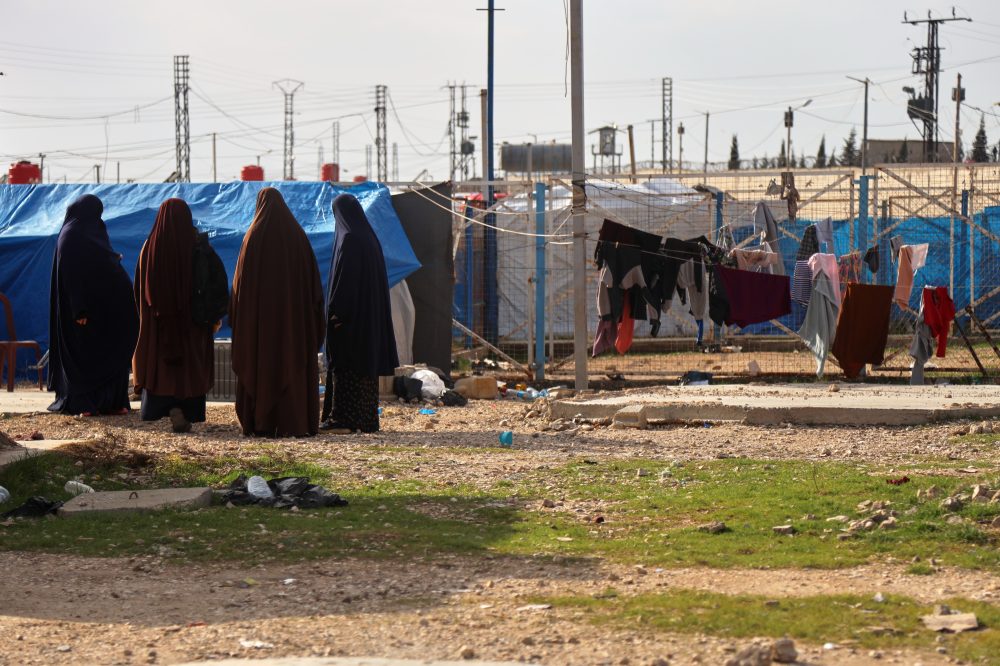
MELBOURNE, Australia — The final Australian woman remaining in a Syrian camp that housed families of Islamic State group fighters has been granted permission to return home, but she will face a rigorous set of conditions once she does, Home Affairs Minister Tony Burke announced Thursday.
The 29-year-old woman, who once lived in Sydney, and her nine-year-old daughter had been set to travel back to Australia in February alongside a group of other Australian women and children from the Roj camp. However, a temporary exclusion order blocked her from departing at that time.
Australia introduced these exclusion orders in 2019 as a tool to keep defeated IS fighters from coming back from the Middle East for periods of up to two years. This woman is the only known person to have been targeted by such an order.
Burke explained Thursday that after the woman’s legal team applied for a permit allowing her return, his government no longer had a legal basis to keep her out of the country.
Upon her return, police and national security agencies will impose a strict set of requirements. She must keep authorities informed of where she lives, works, studies, and intends to travel. She will also be required to give 24 hours advance notice before using any form of communication technology.
“Even if you want to use a public phone, it’s 24 hours notice. Any social media, 24 hours notice on everything has to be given so that there will be a very high level of scrutiny and surveillance and we have gone absolutely to the legal limit that we’re able to,” Burke told the Australian Broadcasting Corp.
Members of the opposition have pushed back against the government, arguing it should have changed the law to stop the woman from coming back at all.
Officials confirmed the exclusion order had been issued on national security grounds, though they declined to elaborate on the specific reasons behind that decision.
The woman’s attorney, Moustafa Kheir, had not responded to a request for comment as of Thursday.
Australian Federal Police have been looking into the conduct of Australians who traveled to the territory where IS declared its caliphate across parts of Iraq and Syria since 2015 — the same year this woman, then 18 years old, left Sydney for Syria.
Whether she will face arrest when she lands in Australia remains uncertain. Of four women who arrived in Australia on May 7 with nine children, three were taken into custody upon arrival and charged with terrorism and slavery-related offenses. Those three have been denied bail and remain behind bars.
New Mexico Gov. Michelle Lujan Grisham made an extraordinary move Wednesday, calling on her state’s attorney general to launch a criminal investigation into the Drug Enforcement Administration following a bombshell Associated Press report revealing that federal agents allowed hundreds of thousands of fentanyl pills to flow into communities over a two-year span.
The governor asked the attorney general to determine whether the DEA’s conduct violated New Mexico state law — a remarkable challenge to a federal law enforcement agency at a time when fentanyl continues to be one of the most lethal public health threats facing the country.
The AP’s investigation found that DEA agents repeatedly chose not to intercept major fentanyl shipments moving through New Mexico between 2023 and 2025, instead allowing the drugs to continue moving in hopes of building cases against higher-level traffickers. That revelation has transformed a debate over law enforcement tactics into a question of whether federal agents themselves broke the law in pursuit of bigger targets.
Current and former DEA agents told the AP that the tactic was a dangerous gamble in a state already devastated by the fentanyl crisis, and that it may have violated U.S. Justice Department rules designed to protect the public from a drug the White House designated last year as a “weapon of mass destruction.”
“There are no words to describe how reckless and dangerous these decisions were,” Lujan Grisham said in a written statement. “Make no mistake: the DEA knew people would die if these pills made it into New Mexico communities, and the agency let it happen anyway.”
The DEA did not immediately respond to requests for comment on the governor’s statement. The agency has previously maintained that it would not be realistic to seize every drug shipment, and in an earlier statement to the AP said “the investigative decisions at issue were lawful, reasonable under the circumstances and consistent with Department guidance.”
DEA spokesperson Amanda Wozniak pushed back in an email, writing: “Public descriptions suggesting that DEA knowingly permitted fentanyl to reach communities are false and fundamentally mischaracterize the facts.”
Alex Uballez, who served as U.S. attorney in New Mexico from May 2022 until February 2025, told the AP that drugs were sometimes not seized due to limited resources and his view that targeting larger trafficking organizations has more impact than stopping every individual drug transaction.
It remains unclear whether any specific fatal overdoses in New Mexico can be directly tied to the DEA’s approach. While overdose deaths across the country dropped 14% last year, government data show New Mexico experienced a 21% increase during the same period.
“New Mexican lives are not the federal government’s cost of doing business,” the governor wrote. “I plan to hold the federal government accountable for this disaster and will explore every possible avenue of action against the federal government to right these wrongs.”
The AP’s investigation relied on three current and former agents along with government records, including an internal report documenting a 2023 delivery of 74,000 pills that DEA agents monitored but chose not to seize at a mobile home park in Albuquerque.
DEA whistleblower David Howell, whose complaint first brought the unseized fentanyl to light, met with congressional staffers Wednesday. Empower Oversight, a whistleblower advocacy group representing Howell, has formally requested that both the Senate Judiciary Committee and the Justice Department’s Office of Inspector General look into his allegations.
Sen. Bernie Moreno, an Ohio Republican, described Howell’s disclosures as “a scandal of the highest order” and said in a post on X that he intends to determine how many American lives were lost as a result of the DEA’s inaction.
Victims’ groups also weighed in, saying the DEA’s approach in New Mexico directly contradicts the agency’s own “One Pill Can Kill” public awareness campaign, which warns that even a few milligrams of fentanyl can be fatal.
“Knowing the Justice Department had guidelines to seize the opioids whenever practical — and the fact these were ignored — is truly heartbreaking,” said Michael Glownia, who lost his daughter to fentanyl in 2023 and went on to found a nonprofit supporting families who have suffered similar losses.
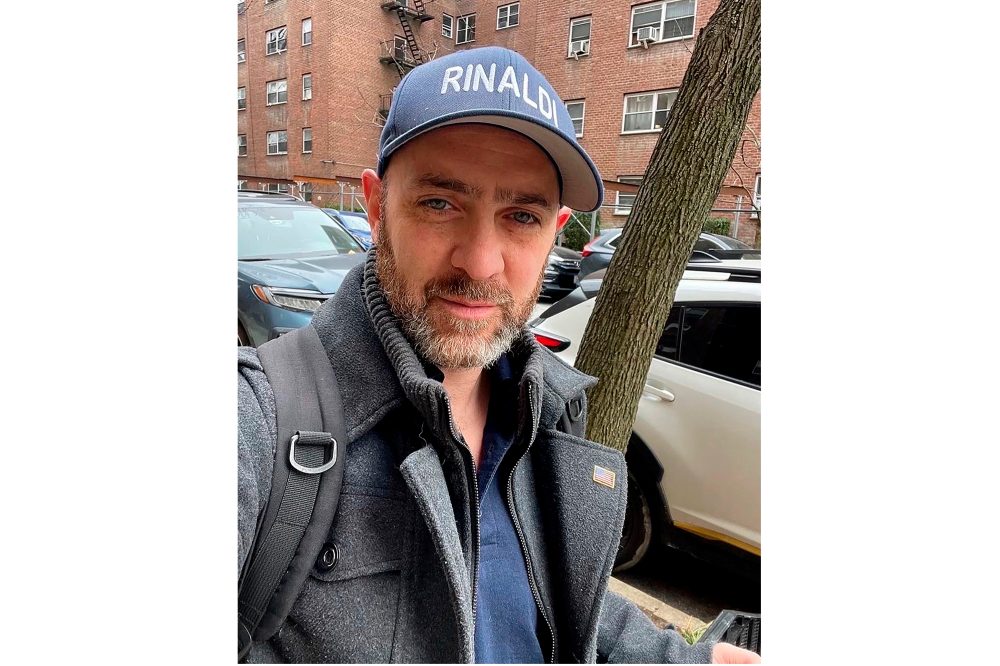
A former New York City Council candidate is now facing criminal charges after prosecutors say he turned to artificial intelligence to manufacture fake political endorsements and phony news stories, then spread them across social media.
Jonathan Rinaldi, 47, was taken into custody outside his home on Wednesday. He ran as a Republican for a Queens council seat last year but lost. If convicted on the forgery charges against him, he could spend up to two years in prison.
Despite speaking with The Associated Press by phone on Wednesday, Rinaldi declined to confirm or deny that he created the posts or generated the images in question. He framed the arrest as a free speech matter — even though the First Amendment does not typically shield fraudulent statements from legal consequences.
“I got arrested for social media posts,” Rinaldi said. “This is an issue that strikes at the heart of our First Amendment freedoms — not just for me, but for everybody.”
Prosecutors say many of the false posts appeared on Facebook and Instagram. One claimed that the Queens Jewish Alliance had endorsed him, and allegedly used the organization’s real logo along with a convincing-looking endorsement document. According to the complaint, the head of the Queens Jewish Alliance confronted Rinaldi in a recorded phone call, to which he responded, “When you are trying to fight against the establishment, I have to use every available tool that’s at my disposal.”
In another instance, Rinaldi allegedly fabricated a New York Post article claiming that then-Council Member Robert Holden, a Democrat, had crossed party lines to endorse him, according to the Queens district attorney. The fake story was paired with a doctored photo that appeared to show Holden shaking Rinaldi’s hand — an image allegedly created by prompting an AI platform to swap one person’s face onto another.
The AI prompt cited in the charges read: “just change the face the head is ok they are both bald just change the face.”
“In today’s world it is important to hold people accountable for materially misrepresenting facts,” District Attorney Melinda Katz said in a statement. “As alleged, the defendant used AI to replace factual political support and launched fabricated attacks against his opponent as fact in a deliberate effort to mislead voters ahead of a City Council election.”
The charges also allege Rinaldi used AI to produce images of his Democratic opponent, Lynn Schulman, wearing a shirt with a message that prosecutors say was designed to damage her standing in the predominantly Jewish neighborhood of Forest Hills, where both candidates were campaigning.
Additionally, Rinaldi is accused of posting AI-generated videos that falsely depicted endorsements from a local police precinct and an elementary school — two public institutions that are prohibited from making political endorsements.
The legal statutes Rinaldi is charged under — third-degree forgery and possession of forged instruments — were written long before AI existed. Under New York law, third-degree forgery occurs when someone falsely creates, alters, or completes a written instrument with the intent to deceive or defraud. The law defines written instruments to include online content that could benefit or harm another person.
New York passed a law in 2024 requiring campaigns to disclose the use of deepfakes in political materials, and giving targeted candidates a legal avenue to seek court orders blocking their distribution.
The issue of AI in elections is not unique to New York. More than half of U.S. states have enacted some form of regulation on AI use in political campaigns, with many requiring disclosure and some imposing criminal penalties. In a Republican congressional primary in Kentucky, for example, an AI-generated advertisement depicted a sitting U.S. representative going on a date and to a hotel room with two Democratic congresswomen.
Rinaldi’s legal troubles extend beyond the forgery case. He also appeared on the ballot in Tuesday’s Democratic primary for a state Assembly seat, where he was defeated by a wide margin by incumbent Andrew Hevesi. During that race, Hevesi accused Rinaldi of fraudulently altering his party registration documents to make himself eligible for the primary. Rinaldi told The New York Times he denied submitting the paperwork. Hevesi later had Rinaldi’s registration changed back.
All northbound lanes on Interstate 495 north of Edgemoor have been shut down following a car fire, according to traffic officials.
The lane closure is currently in effect, and motorists traveling in that area are urged to find alternate routes to avoid delays.
No further details regarding injuries or the origin of the fire have been made available at this time. Drivers should check for updates before heading out and allow extra travel time if the area cannot be avoided.
The United States government announced late Wednesday that it has reached out to Venezuelan authorities and is working to deliver assistance following a series of powerful earthquakes that struck the South American country.
Deputy Secretary of State Christopher Landau took to social media platform X to confirm the outreach, calling the earthquakes “devastating” and stating that the U.S. is “in touch with the authorities and mobilizing assistance.”
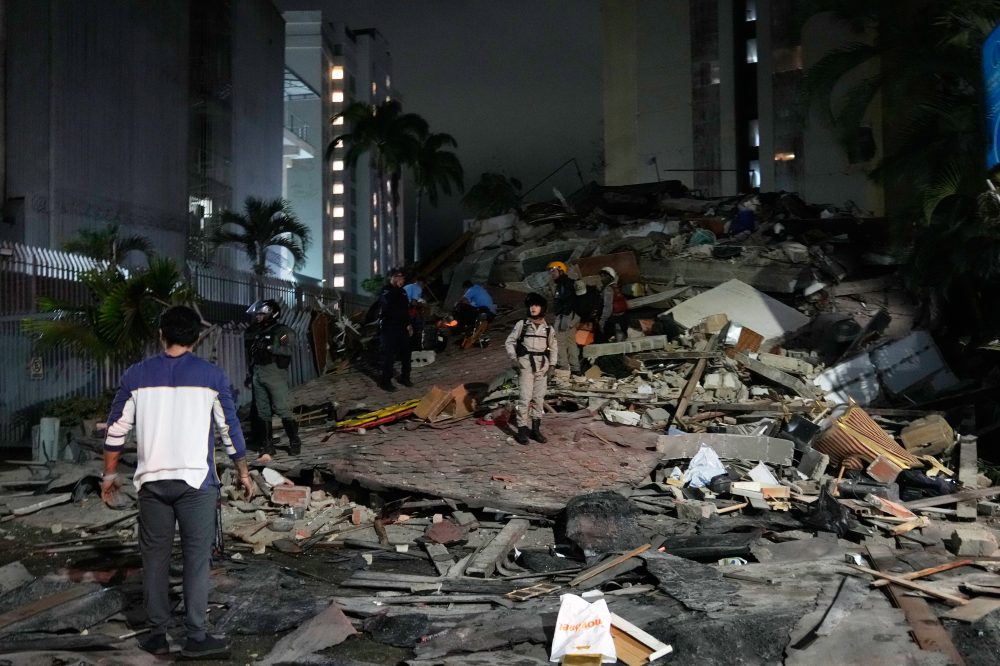
The earthquakes hit west of Venezuela’s capital, Caracas, on Wednesday afternoon, causing buildings to collapse, trapping people beneath rubble, and prompting scientists to issue warnings about potentially significant casualties and widespread damage throughout the country.
U.S. State Department official Jeremy Lewin also posted on X, confirming that a disaster assistance team and task force had been activated to deliver and coordinate critical aid to those affected.
“Working with our partners in the interim Venezuelan government, the U.S. will be sending search and rescue teams, medical and humanitarian supplies and other resources in the crucial first days after this tragic natural disaster,” Lewin wrote.
The U.S. embassy in Caracas confirmed that all American staff members had been located and were safe.
Relations between the United States and Venezuela have improved in recent months following the seizure of then-President Nicolas Maduro by American forces during a deadly raid on the capital in January. The Trump administration has since been working with an interim government led by former Maduro ally Delcy Rodriguez, including reaching an agreement for the U.S. to sell Venezuelan oil, and has issued sanctions waivers aimed at encouraging American investment in the country.
Three U.S. government departments have issued a joint warning, saying China has been reaching out to American state governments and private companies in an effort to push them away from doing business or engaging with Taiwan — and in some cases, misrepresenting what U.S. policy actually says.
The warning came in two similarly worded letters, signed by the U.S. Departments of State, Agriculture, and Commerce. One letter was directed to governors’ offices and the other to CEOs and business leaders. Both were dated June 16 but were made public late Wednesday by the de facto U.S. embassy in Taiwan.
According to the letters, China’s embassy and consulates have been routinely contacting local governments and private businesses across the United States to “discourage engagement with Taiwan.”
“In doing so, they often mischaracterise U.S. policy by, for example, falsely claiming that Washington has previously accepted Beijing’s specific position on Taiwan,” both letters state.
The letters advise that if any government office or company finds itself being pressured by Chinese officials, it should reach out to the State Department for guidance.
China’s foreign ministry had not responded to a request for comment at the time of reporting.
Under Washington’s “One China” policy, the U.S. officially takes no stance on the question of Taiwan’s sovereignty. Even so, the U.S. remains Taiwan’s most important international supporter and its primary arms supplier — a relationship that has long been a source of frustration for Beijing, which views Taiwan as part of its territory despite the island governing itself independently.
The letters emphasize that Taiwan holds an important place in global trade and that American states and businesses have maintained strong ties with the island for many decades.
“Taiwan is a vital U.S. partner and democratic success story,” the letter addressed to governors reads. “We hope you will take advantage of all the opportunities that our shared values and robust relationship with Taiwan offer.”
Australia’s top intelligence official is sounding the alarm about a worsening national security landscape, saying the country faces overlapping dangers from authoritarian governments, cybercriminals, and antisemitic extremists that are collectively eroding the nation’s safety.
Australian Security Intelligence Organisation Director-General Mike Burgess delivered the warning during his annual threat assessment speech Wednesday night, saying that while Australia’s terrorism threat level officially remains at “probable,” that label fails to capture the full picture of what the country is facing.
“‘Probable’ does not tell the full story. The next level on the scale is ‘expected,’ which applies when we have intelligence about a specific attack. We do not,” Burgess said. “But we do know the environment is degrading and acts of politically motivated violence are becoming more likely than ‘probable’ suggests.”
The assessment comes after a turbulent year that included online radicalization cases, state-sponsored cyberattacks, arson targeting Jewish-owned businesses, and a mass shooting in Sydney. Burgess noted that ASIO has disrupted 31 major terror plots since 2014 and has closed more than a dozen major terror-related cases since a mass shooting at Bondi Beach in December, during a Jewish Hanukkah celebration, that left 15 people dead. Police have said the two alleged gunmen appeared to have been inspired by the Islamic State militant group.
Burgess defended how ASIO allocated its resources in the lead-up to the Bondi Beach attack, explaining that the agency was simultaneously managing numerous threats and that it was extremely difficult to “simplistically pivot” from one danger to another.
“We cannot stop every terrorist, just as we cannot catch every spy. But we continue to work around the clock to keep Australians safe,” he said.
The spy chief also highlighted the growing role of technology in fueling extremism, saying encrypted messaging platforms are radicalizing individuals — including minors — within just weeks. Social media, he added, is amplifying grievances, eroding public trust in institutions, and deepening societal divisions.
On the espionage front, Burgess said foreign intelligence operatives are actively trying to steal classified information related to Australia’s AUKUS nuclear submarine partnership with the United States and Britain. He cited one case where an official with a security clearance was approached by someone posing as a representative of a consulting firm.
Burgess also pointed the finger at Iran for a series of arson attacks on Jewish businesses in Australia since the outbreak of the Gaza conflict. He said one attack on a Sydney restaurant was likely coordinated by an Australian citizen living in Iran who was working as an agent within Iran’s Islamic Revolutionary Guard Corps. The Iranian embassy did not respond to a request for comment.
“Thankfully, no-one died as a result of the arson attacks…but I do worry that one day an Australian will be killed at the hands of a foreign government here in Australia,” Burgess said.
Australia formally accused Iran of directing two antisemitic arson attacks in Sydney and Melbourne in August 2025 and expelled Tehran’s ambassador — the country’s first such diplomatic expulsion since World War Two.
Despite the sobering assessment, Burgess expressed confidence that Australia is well-positioned to confront these threats going forward.
Southbound travelers on Interstate 95 should be aware of a significant lane restriction currently in place overnight.
Two right lanes on I-95 southbound are closed between Route 72 and the exit ramp to Route 896. The closure is expected to remain in effect until 3 a.m.
Drivers are encouraged to allow extra travel time or consider alternate routes to avoid potential delays in the affected stretch.
Nelly Korda stands right on the edge of the LPGA Hall of Fame — though she says she hasn’t been keeping close tabs on exactly how close she is.
“It’s one of the hardest Hall of Fames to get into for sure, but I’ve never really truly looked at it,” Korda said. “If I’m being honest, I don’t even know how many points you need to get into it.”
For those keeping score, a player needs 27 points to earn induction into the LPGA Hall of Fame. Korda currently sits just two points short of that mark.
She could close that gap entirely with a win this weekend at the Women’s PGA Championship, being held at Hazeltine National Golf Club in Chaska, Minnesota.
“I wouldn’t say it’s a motivating factor, but it would be something that is — would be an absolute amazing accomplishment to be alongside some of the best that have ever played in this game on the LPGA Tour,” Korda said.
She added: “But if it’s a motivating factor to me and I’m like thinking about it, not necessarily. I just enjoy playing golf and I enjoy being in the hunt in tournaments. I always say good golf kind of solves everything, and that’s my main focus, is just trying to play consistent good golf.”
The achievement would be extraordinary for the 27-year-old world No. 1, who already has four major titles to her name — including back-to-back wins in 2026, a year in which she has claimed four victories in nine starts.
But the Hall of Fame isn’t the only milestone within reach when Korda tees off Thursday.
Only two women in golf history have won three consecutive majors in a single season. Korda has the chance to join Inbee Park, who did it in 2013, and Babe Zaharias, who accomplished the feat in 1950.
There’s yet another layer of history on the line as well. The LPGA’s grand slam requires a player to win four different majors, even though the tour now recognizes five tournaments as majors. With previous victories at the KPMG Women’s PGA in 2021, the Chevron Championship in 2024 and 2026, and the U.S. Women’s Open in 2026, Korda needs a title at either the Women’s British Open or the Evian Championship to complete that milestone.
Despite all the historical weight surrounding her, Korda says she’s determined not to let it become a burden. She also has another path to the Hall of Fame that doesn’t require another major win — if she earns Player of the Year honors and posts the tour’s lowest scoring average, she could pick up the two points she needs that way.
“I don’t want to put extra pressure on myself,” Korda said. “If I always think about that then — I feel like the game of golf is already hard enough. If I add more pressure on myself then it’s going to be even harder.”
“I think I have a very in-the-moment mindset this year, which I’m just trying to take towards the end of the year. No matter what happens, I’ve just told myself if I am lifting the trophy, like that is obviously the main goal at the end of the week.”
Venezuela’s interim President Delcy Rodriguez announced a state of emergency on Wednesday after two strong earthquakes struck back-to-back, triggering nearly two dozen aftershocks that toppled buildings in the capital city of Caracas and other parts of the country.
Rodriguez made the announcement on state television, standing alongside her brother Jorge — who serves as head of the national assembly — and Interior Minister Diosdado Cabello. She expressed her sympathies to the families of those who lost their lives in the disaster, though she did not reveal how many people were killed or injured.
Rodriguez also confirmed that Simon Bolivar Airport in Maiquetia, located near Caracas, has been closed due to damage caused by the earthquakes.
One of the world’s biggest iron ore mining companies is now facing a class action lawsuit over allegations of widespread sexual harassment targeting women at its remote work sites in Australia.
The suit against Fortescue — ranked fourth globally among iron ore producers — was filed Thursday by law firm JGA Saddler. The same firm previously launched comparable class action cases against mining giants Rio Tinto and BHP in late 2024, and those legal battles are still ongoing.
The issue has deep roots in Australia’s mining sector. Back in 2022, the Western Australian state government called for sweeping reforms across the industry after documenting what it described as horrifying treatment of women, concluding that sexual harassment and assault were widespread among fly-in, fly-out, or FIFO, mining workers.
JGA Saddler litigator Paris Hamrey spoke out strongly about the conditions women say they are enduring. “Time and time again, women are telling us that they don’t feel safe at the Fortescue mine sites,” she said in a statement.
Hamrey went on to describe specific allegations from workers: “Women are telling us that they can’t do their daily washing because their underwear is being stolen from the public laundries, they can’t go to the gym because men are touching them inappropriately or following them back to their room.”
She also said that when women do speak up, the consequences are often severe — including demotion, dismissal, being silenced, or being blacklisted from the industry entirely.
The legal filing includes 45 personal accounts from women who have worked at Fortescue. Among the testimonials, one woman wrote: “I came home one night to find a random man in my room.”
Australia leads the world in iron ore production, with many of its remote mining operations relying on FIFO workers who travel long distances to work extended shifts. Women currently make up about 22% of the mining workforce, an increase from roughly 18% at the beginning of the decade.
According to Fortescue’s most recent safety report, the company recorded 22 sexual harassment cases with Western Australia’s mines safety regulator during the 2025 financial year — a 27% drop from the previous year. Notably, Fortescue was the only one of the three companies named in class action suits to report a decline in such incidents.
By comparison, Rio Tinto’s internal care hub — which tracks reports of disrespectful or harmful workplace behavior — logged 702 incidents last year, a 24% jump from the year before, according to its annual report. BHP reported 429 sexual harassment incidents in 2025, a 3% rise, and noted in its annual report that 100 individuals found to be responsible either lost their jobs or resigned.
SYDNEY — Australia’s labor market showed signs of renewed strength in May, with employment figures bouncing back and the unemployment rate retreating from its highest level in more than four years, according to data released Thursday.
Numbers from the Australian Bureau of Statistics revealed a net gain of 40,300 jobs in May, reversing the prior month’s decline. April’s job losses were revised to 40,600 — a steeper drop than originally reported. Despite the revision, May’s rebound came in ahead of what analysts had anticipated, with market forecasts calling for a gain of around 30,000 positions.
The unemployment rate slipped to 4.4% in May, down from 4.5% in April, in line with expectations. The participation rate — which measures the share of the population either working or actively looking for work — ticked up slightly to 66.7%. On the downside, total hours worked dropped by a notable 1.1% during the month.
The stronger-than-expected employment data could give policymakers grounds to consider additional interest rate increases if economic conditions call for it.
Two powerful earthquakes hit Venezuela in rapid succession on Wednesday, striking just about a minute apart and leaving a trail of collapsed buildings and significant damage across the country, including in the capital city of Caracas.
The twin tremors registered magnitudes of 7.1 and 7.5, making them among the strongest earthquakes to shake Venezuela in more than a century. The rare occurrence of back-to-back quakes of this magnitude caught residents and officials off guard.
Photos captured by AP photo editors document the destruction left behind by the historic seismic event.
Travelers passing through the intersection of US-13 and West Lebanon Road (Route 10) should be prepared for intermittent lane closures as construction work continues in the area.
The lane restrictions are expected to remain in effect until 5:00 AM. Drivers are encouraged to allow extra travel time or consider alternate routes where possible.
A powerful earthquake hit off Japan’s northern coastline on Thursday, though the country’s meteorological agency quickly confirmed there was no risk of a tsunami following the tremor.
The Japan Meteorological Agency reported the quake carried a preliminary magnitude of 6.9 and originated off the eastern shore of the Iwate region, at a depth of roughly 50 kilometers — about 30 miles below the surface. The U.S. Geological Survey independently confirmed the same 6.9 magnitude reading.
Thursday’s earthquake struck an area that has seen repeated seismic activity in recent months, including a quake last December that set off a week-long major earthquake caution advisory.
The tremor hit during the morning commute in Japan’s northeastern region and was felt as far away as Tokyo, though only mildly there. Top government spokesperson Minoru Kihara said there were no immediate reports of injuries or property damage.
Prime Minister Sanae Takaichi addressed reporters in Tokyo, saying her government’s emergency response team is “putting people’s lives first” as officials gather information and stand ready to launch relief efforts if necessary. She called on residents in impacted areas to remain cautious in the event of aftershocks.
Tomoko Nagane, who serves as principal of a primary school in the town of Hashikami in Aomori prefecture, told NHK she was behind the wheel when earthquake alerts sounded. She described feeling a moderate side-to-side shaking. Students who had already arrived at school were safe, she said, though some were shaken and crying. School was called off for the day, and Nagane confirmed all children made it home safely.
NHK journalists reporting from hard-hit communities, including Sendai and Morioka, described feeling the shaking for roughly two minutes but said they observed no visible damage. Video from those areas showed commuters continuing about their day as normal.
East Japan Railway Co., which runs train service throughout the northeastern part of the country, announced that several bullet trains and regional rail lines were temporarily suspended to allow for safety inspections.
Spokesperson Kihara also confirmed that nuclear facilities in the region — including the Fukushima Daiichi plant, which suffered severe damage in the catastrophic 2011 earthquake and tsunami, as well as a spent nuclear fuel reprocessing facility in Aomori — reported no irregularities as a result of Thursday’s quake.
Japan sits along the Pacific Ring of Fire and ranks among the most seismically active nations on Earth.
A team of astronomers has discovered two massive planets that are so extraordinarily light they make cotton candy seem heavy — and they’re roughly the size of Jupiter.
The two planets circle a star located 1,110 light-years from Earth and hold the record as the largest known exoplanets with a density lower than that of cotton candy.
George Dransfield of the University of Oxford described the discovery, saying the planets rank as the least dense known worlds at their size.
“These two planets have densities comparable to a nice blob of shaving foam, fresh from the can,” Dransfield said in an email. She and her research team published their results Wednesday in Monthly Notices of the Royal Astronomical Society.
Dransfield believes these airy, wispy worlds are likely white or blue in color, depending on cloud cover in their skies — not the pink hues of cotton candy. The planets are thought to consist mainly of hydrogen and helium, though follow-up observations using NASA’s Webb Space Telescope will be needed to confirm what they’re actually made of.
The two planets were detected by NASA’s Tess satellite over the past decade. They orbit a star in the southern constellation Volans, which is known as the flying fish. Researchers used ground-based telescopes to study the planets’ orbits and calculate their density from 1,110 light-years away — a distance that equals nearly 6 trillion miles, or 9.7 trillion kilometers.
To put their lightness in perspective, Jupiter is up to 35 times denser than either of these two newly found planets.
So-called super-puff planets are considered uncommon in the universe. Scientists believe they form in the gas-and-dust disk surrounding a young star in regions where gas is more plentiful than dust. Over time, these planets lose much of their material, becoming even less substantial.
NASA has confirmed nearly 6,300 planets outside our solar system to date. According to Dransfield, fewer than 40 of those qualify as super-puffs.
“Ultimately, by studying exotic systems containing rare planet types, we add further pieces to the puzzle of planet formation and learn more about our place in the cosmos,” she said.
WASHINGTON — President Donald Trump officially kicked off America’s 250th birthday celebrations with a rally held on Washington’s National Mall, marking the beginning of what organizers are calling the Great American State Fair.
The event launched a 16-day stretch of festivities commemorating the nation’s founding in 1776. Planned activities across those two-plus weeks will feature days with specific themes, including tributes to the military, health-focused initiatives, patriotism, and a culminating celebration on Independence Day.
The milestone marks the start of the country’s semiquincentennial — a once-in-a-generation commemoration of 250 years since the birth of the United States.
WASHINGTON — Lawmakers in the U.S. House of Representatives turned out in force Wednesday to express strong support for Taiwan, greeting Han Kuo-yu, the president of Taiwan’s Legislative Yuan, during a reception at the Longworth House Office Building. The visit comes at a sensitive moment, with the Trump administration currently reviewing a $14 billion arms sales package for Taiwan that had already received preliminary congressional approval.
More than 30 House members — from both sides of the aisle — attended the event to show solidarity with the island. Among those present were Speaker Emerita Nancy Pelosi of California, Rep. Michael McCaul of Texas, a Republican and former chair of the House Foreign Affairs Committee, and Ted Lieu, a California Democrat who serves as vice chair of the House Democratic Caucus.
McCaul wasted no time making his feelings known. “I love Taiwan,” he said while welcoming Han. “It’s very important to me to say that the United States supports you, Mr. Speaker.”
Pelosi echoed that sentiment, stressing that backing for Taiwan crosses party lines. “The support for Taiwan is bipartisan and bicameral — both houses, both parties,” she said. “It’s about peace. It’s also about commerce in terms of keeping the ships able to travel here.”
Han is leading an eight-member parliamentary delegation that flew into Washington on Tuesday evening after first stopping in Phoenix, Arizona, where the chipmaker Taiwan Semiconductor Manufacturing Co. is constructing new facilities and producing cutting-edge chips that are central to the artificial intelligence industry. TSMC has become a symbol of how deeply Taiwan’s economy is intertwined with that of the United States. Earlier Wednesday, Han met with U.S. senators, though his delegation declined to share specifics, noting only that the warm welcome from House members reflected how the senators had received them as well.
Taiwan sits at the heart of one of the most complicated issues in U.S.-China relations. Beijing considers the self-governed island part of Chinese territory and has not ruled out using military force to take control of it. Under U.S. law, Washington is required to supply Taiwan with enough military equipment to defend itself against any attack from the mainland. Following his May visit to Beijing, President Donald Trump announced he would be reviewing the $14 billion arms package — a deal China firmly opposes. Trump has also floated the idea that the package could serve as a negotiating tool. Secretary of State Marco Rubio, however, has stated that U.S. policy toward Taiwan has not changed.
Several lawmakers used Wednesday’s event to push back against any delay or cancellation of the arms deal.
“I’m here today … to affirm in the strongest terms that Taiwan is not a bargaining chip. It is an island of freedom. And we need to do all we can to preserve it,” said Rep. Lloyd Doggett, a Texas Democrat. “I believe we need to make available every weapon that Taiwan needs in its defense as quickly as it becomes possible.”
Rep. Lieu was sharply critical of the administration’s decision to hold the package. “I urge the administration to reverse that and to allow their arms sale to proceed,” he said.
Han, a member of Taiwan’s opposition KMT party, used his remarks to praise the United States on the occasion of its 250th anniversary and to draw a connection between the two sides’ shared commitment to freedom and democracy. He said both Taiwan and the U.S. carry the responsibility of protecting democratic values and maintaining stability and peace across the region.
Han also highlighted the strength of trade between Taiwan and the United States. The island of 23 million people has now surpassed Germany to become the fourth-largest trading partner of the U.S., a rise driven largely by global demand for Taiwan’s advanced semiconductor chips and other technology products.
Additionally, Han called on Congress to advocate for Taiwan’s broader participation in international affairs. Because of China’s territorial claim over the island, no country can maintain formal diplomatic ties with both Beijing and Taipei simultaneously. Only 12 governments — including the Holy See — still officially recognize Taiwan as a sovereign state. China has also worked to keep Taiwan out of international bodies such as the World Health Organization.
“On the international stage, Taiwan feels very lonely in its heart,” Han said. “I am here asking Taiwan’s good friends in Congress … to help us participate in global activities.”
Han is set to depart Washington on Friday aboard the inaugural nonstop flight operated by Taiwanese carrier EVA Air between Washington Dulles International Airport and Taiwan Taoyuan International Airport — a milestone that has been highlighted as further evidence of growing ties between the two sides.
An Indiana man is now facing criminal charges after authorities say he repeatedly stalked and sent threatening messages to professional basketball player Sophie Cunningham.
Kevin Singh, 48, was taken into custody on Tuesday and charged with felony stalking and intimidation, along with a misdemeanor harassment count, according to the Marion County Prosecutor’s Office.
Cunningham, who plays for the Indiana Fever, told investigators that Singh’s persistent online messages had caused her to stay home more often and left her suffering from nightmares, court documents show. She said she first became aware of Singh’s alleged behavior in February.
Rather than backing off after being contacted by team security, Singh’s conduct only grew more alarming. The Marion County Prosecutor’s Office stated that his behavior “became increasingly threatening after he was contacted by team security.”
Court documents detail that Singh sent multiple messages — some of them explicit — through the social media platform X in April. One message read, “You’re literally down the street from me!” Even after Cunningham’s team sent Singh a cease-and-desist letter on April 30, he continued posting explicit and threatening messages on the platform.
In September 2025, Singh personally dropped off a package at Gainbridge Fieldhouse — the Indiana Fever’s home arena — addressed simply to “Sophie.” Inside was a letter and a Guns N’ Roses T-shirt that had been sprayed with men’s cologne, according to the affidavit.
Marion County Prosecutor Ryan Mears issued a statement addressing the seriousness of the charges: “The internet has made it easier than ever to target, harass and intimidate others. Threats of violence, whether face-to-face or behind a keyboard, will be taken seriously. Coming forward is never easy, regardless of a person’s position or public profile. The victim is setting an example by speaking out.”
Attempts to reach Singh by phone were unsuccessful, and it was not yet known whether he had legal representation.
Singh is already serving probation in Hendricks County, Indiana, following a July 2025 guilty plea to two felony counts of invasion of privacy, the prosecutor’s office noted.
This latest case comes on the heels of a similar situation involving Cunningham’s teammate, WNBA star Caitlin Clark, who was stalked and harassed by a separate man from Texas. That individual was sentenced last year to two and a half years behind bars.
Japan’s government is preparing to formally ask its central bank to keep interest rates low in support of private-sector demand, according to a draft of the country’s long-term economic blueprint obtained by Reuters.
The document urges the Bank of Japan, known as the BOJ, to align its monetary policy decisions with Prime Minister Sanae Takaichi’s push to stimulate economic growth. It cites legal provisions that require the central bank to coordinate closely with the government.
“The government won’t hesitate taking nimble and sufficient steps” to prevent Japan from slipping back into deflation, the draft stated, as part of broader pledges to strengthen the country’s long-term economic potential.
The draft further states: “As the government seeks to achieve strong growth under its economic and fiscal policy, appropriate monetary policy that supports private demand through stable price rises is extremely important.”
The blueprint, which shapes Japan’s long-term economic direction, is expected to be finalized in July. It will be the first such document produced under Takaichi, who has historically expressed skepticism toward the BOJ’s attempts to move away from deflation-era stimulus measures.
While Japanese law protects the independence of the central bank, it also requires the BOJ to maintain close coordination with the government on policy matters. Using that requirement as a basis, the draft calls on the BOJ to “work closely with the government to sustainably and stably achieve its 2% inflation target” while watching for signs of a “positive cycle” of rising wages and prices.
The BOJ is scheduled to hold its next policy meeting on July 30-31. Markets widely expect rates to remain unchanged at that gathering, though investors will closely examine updated quarterly forecasts for clues about when the next rate increase might come.
Since assuming office last October, Takaichi has prioritized government spending as a tool for economic recovery — a position that has pushed bond yields higher amid growing concerns about Japan’s fiscal health.
Her new growth strategy targets more than 370 trillion yen, or approximately $2.3 trillion, in investment through the fiscal year 2040, spread across 17 strategic sectors including artificial intelligence and semiconductors.
That level of spending would be easier to sustain under low interest rates. However, rising inflationary pressures have led the BOJ to begin pulling back from its ultra-loose policy stance and raising borrowing costs.
Earlier this month, the BOJ lifted its policy rate to 1%, the highest level in 31 years, and has indicated it is prepared to tighten further as elevated fuel costs tied to the Iran war have kept inflation near its target for nearly four years.
Political pressure, however, may complicate any additional rate hikes. A government representative who attended the BOJ’s June meeting indicated the central bank should take “proactive and appropriate action” if economic conditions deteriorate — a signal, according to a summary of opinions from the meeting, that the administration is not pleased with the direction of rate increases.
Semiconductor stocks in South Korea surged on Thursday following a strong earnings report and outlook from U.S. memory chipmaker Micron Technology, sparking renewed confidence in the demand for artificial intelligence chips.
Shares of SK Hynix climbed as much as 11.6% in early trading, while Samsung Electronics gained up to 6.2%, both riding the wave of a broader rally in U.S. chip stocks triggered by Micron’s better-than-expected results and forecast.
Adding to the momentum, SK Hynix had announced on Wednesday its intention to raise as much as 45.45 trillion won — approximately $29.52 billion — through a secondary listing on the Nasdaq stock exchange, aiming to take advantage of strong investor enthusiasm for AI-related companies.
South Korea’s benchmark KOSPI index climbed 5.3% as of early morning trading. Samsung Electronics and SK Hynix together make up more than 55% of the index’s total market value.
Micron, which supplies memory chips for Nvidia’s AI processors alongside the South Korean chipmakers, reported third-quarter results that topped Wall Street estimates and issued a quarterly profit and revenue forecast well above analyst expectations. The company also revealed that customers have committed $22 billion to secure future memory chip supplies. That announcement sent Micron’s shares up 12% in after-hours trading on Wednesday.
The positive news from Micron, along with strong forecasts from Qualcomm, injected fresh energy into Wall Street’s AI stock rally, which had been losing steam in recent weeks. Together, the announcements added more than $400 billion in market value to U.S.-listed chipmakers.
Analysts say Micron’s outlook highlights how the explosive growth of AI is creating supply shortages, forcing major data center operators to commit funding upfront to secure memory chip capacity — a shift that is fundamentally changing the dynamics of the memory chip market.
Oil prices kept falling Thursday, moving closer to the levels seen before the war, as tankers that had been stuck in the Strait of Hormuz began making their way through following a preliminary deal to end the U.S.-Israeli conflict with Iran.
Brent crude futures for August delivery dropped 40 cents — a decline of 0.54% — to $73.34 per barrel as of early Thursday morning, while U.S. West Texas Intermediate slipped 27 cents, or 0.38%, to $70.07 per barrel.
August Brent was trading below the September price of $73.59, a signal that short-term oil supplies are plentiful.
IG analyst Tony Sycamore noted in a written statement: “The speed of this decline has caught plenty off guard as markets price in a much faster return of Middle Eastern barrels than most had anticipated just a fortnight ago.”
On Wednesday alone, Brent dropped more than $3 and WTI settled nearly $3 lower as fears over supply disruptions continued to ease.
U.S. Energy Secretary Chris Wright told a forum Wednesday that oil flow through the Strait of Hormuz had nearly returned to pre-war levels. He said at least 20 million barrels had passed through the strait in the previous 24 hours. Wright cautioned that full normalcy would still take a few weeks, as the waterway needs to be cleared of mines.
The preliminary ceasefire agreement reached last week brought an end to the U.S.-Israeli war with Iran, which began on February 28. The deal allowed vessel traffic through the strait to resume and established a 60-day window for negotiations on more complex issues, including Iran’s nuclear program. Wright said oil would keep flowing through the strait even if the deal were to collapse, and that Iran would not be able to shut it down again.
On Wednesday, Oman opened temporary shipping routes to help tankers leave the Strait of Hormuz, with coordination between Omani officials and the International Maritime Organization. Qatar’s prime minister traveled to Oman for discussions on launching broader talks about the future management of the strait, involving Iran, Iraq, and Gulf nations.
Meanwhile, the Energy Information Administration reported Wednesday that total U.S. crude oil stockpiles fell to their lowest point since 1984 last week, driven by strong refining activity and the release of oil from the nation’s emergency reserve. Despite the alarming inventory figure, traders appeared largely unconcerned, keeping their attention focused on developments in the Strait of Hormuz.
Taiwan’s government voiced appreciation Wednesday after the United States, Britain, France, and Germany sounded the alarm over Chinese Coast Guard activities taking place off the island’s eastern shores, with Taipei emphasizing that open sea lanes are critical to commerce around the world.
Earlier this month, China dispatched Coast Guard vessels into the waters east of Taiwan, describing the deployment as a “special maritime traffic law-enforcement operation.” The move drew sharp criticism from Taiwan’s government. China, which considers democratically governed Taiwan to be part of its own territory, has also been sending maritime survey ships into the same area.
Beijing said its coast guard operation was triggered by an announcement from Japan and the Philippines that they planned to begin formal discussions about their shared maritime boundaries — talks that China viewed as encroaching on waters it claims near Taiwan.
Joseph Wu, who serves as secretary-general of Taiwan’s National Security Council, took to social media platform X late Wednesday to express his appreciation. He said he was “truly thankful” for the statements issued by the four Western nations.
“A rules-based int’l order, the StatusQuo, & regional peace & stability are what we all care about. The PRC should stop its maritime expansionism,” Wu wrote, using the abbreviation for the People’s Republic of China.
China’s foreign ministry had not yet responded to the statements made by the Western governments. Beijing does not recognize any Taiwanese claims to sovereignty and considers both the island and the surrounding waters to be Chinese territory.
Taiwan’s Ocean Affairs Council, the government body that oversees the island’s coast guard operations, released a separate statement declaring that safe and open navigation through the Taiwan Strait and surrounding waters is essential to global trade.
“China’s maritime harassment of Taiwan, and the political pressure that follows, not only violate international law but also harm the shared interests of the international community. They must be promptly contained and collectively rejected,” the council stated.
The council added that Taiwan would continue standing alongside its allies and would “responsibly and jointly defend the international order in surrounding waters through lawful, appropriate, and firm measures.”
Kuan Bi-ling, the minister who heads the Ocean Affairs Council, posted on her Facebook page that China has been “certified” as a disruptor of regional stability. “The more China harasses Taiwan, the more the international community supports Taiwan!” she wrote.
Last week, Kuan hosted the de facto British ambassador to Taiwan, Ruth Bradley-Jones, aboard Taiwan’s Yunlin coast guard vessel while it was docked at port.
Taiwan maintains that China holds no legitimate claim of sovereignty or jurisdiction over the island or the waters around it.
The family of a girl who was sexually assaulted at age 12 by an adult stranger she encountered on Snapchat has taken legal action against the app’s parent company, Snap, and the man responsible for the attack, filing suit in Missouri state court.
The lawsuit, submitted Wednesday, accuses the social media giant of refusing to disable harmful features within its platform and failing to alert parents about the dangers those features may pose to children.
Court documents say the girl started using Snapchat in 2021 at age 11, without her parents knowing. Although the app requires users to be at least 13 years old to create an account, the lawsuit notes that the girl does not recall what birthday she entered, and that children were widely aware they could easily get around the age restriction.
Roughly a year into her using the app, Snapchat’s algorithm allegedly recommended the girl — along with other teenage girls from nearby high schools — as potential friends to defendant Gabriel Joel Valentin-Rios, a grown adult who had no real-world connection to any of them. The app provided no warning to the children that accepting friend requests from strangers could put them at risk.
Once the two were connected, Valentin-Rios began sending the girl unsolicited explicit photographs, according to the lawsuit. The girl “did not want these photographs and, at first, did not reciprocate but Snapchat’s product design made it impossible for (her) to avoid such explicit content,” the filing states.
The lawsuit also alleges that through Snapchat’s Snap Maps feature, the app shared the girl’s home address with Valentin-Rios without her awareness. He then proceeded to groom her, convincing her he was a 17-year-old boy from a nearby high school rather than a 25-year-old man. He eventually persuaded her to meet him in person, where he raped her.
Valentin-Rios has since pleaded guilty to statutory rape and is currently behind bars in Missouri, serving an 18-year sentence.
The lawsuit further claims that Snapchat was aware Valentin-Rios maintained multiple accounts on the platform — a violation of its own policies — including one he specifically used to target teenage girls.
Snap had not responded to a request for comment as of Wednesday afternoon.
The girl has since been diagnosed with PTSD, anxiety, and depression, according to the court filing.
The family is seeking unspecified financial damages and is asking the court to order Snap to stop engaging in practices that endanger children.
Matthew Bergman, founder of the Social Media Victims Law Center, which is representing the family, spoke about the case. “This assault did not happen in a vacuum — it happened because Snapchat’s product design made it easy for a predator to reach and manipulate an unsuspecting child,” he said. “Snap executives have long known that their features create a perfect environment for predators to exploit children, yet they have repeatedly failed to make the platform safe.”
This lawsuit is not the first of its kind against Snap. In 2024, the state of New Mexico filed suit against the company, alleging that the platform’s design encourages sextortion, sexual abuse, and inappropriate contact between adults and minors. That lawsuit claims Snap was fully aware that “sextortion was a rampant, ‘massive,’ and ‘incredibly concerning issue’ on Snapchat” but did nothing to warn parents, young users, or the general public. A judge rejected Snap’s attempt to have that case dismissed last year.
Additional individual lawsuits are also pending against the company, including one filed in Vermont on behalf of two 12-year-old girls who were sexually assaulted by an adult they met through Snapchat.
CARACAS, Venezuela — Two powerful earthquakes struck Venezuela in rapid succession Wednesday evening, causing buildings to collapse in the nation’s capital city of Caracas.
According to the U.S. Geological Survey, the first earthquake registered a magnitude of 7.1. Its epicenter was located west of the coastal community of Morón, situated along Venezuela’s Caribbean coastline approximately 168 kilometers (104 miles) west of Caracas. That quake reached a depth of 13 kilometers (about 8 miles).
Just one minute after the first tremor, the USGS recorded a second and even stronger earthquake measuring magnitude 7.5. That quake’s epicenter was 16 kilometers (10 miles) southwest of Morón, at a depth of 10 kilometers.
Both earthquakes are considered among the most powerful to hit Venezuela in more than a century.
In the aftermath, the U.S. Pacific Tsunami Warning Center issued a tsunami alert for the Virgin Islands. Authorities in the Dominican Republic also put out a similar warning for that island. A tsunami alert that had been issued for Puerto Rico was later lifted.
In Caracas, residents fled swaying buildings and gathered outside in the streets. Many were visibly shaken as they witnessed entire walls collapsed, leaving the interiors of buildings — including furniture — exposed to the street. Clouds of dust rose from at least two neighborhoods in the capital, areas where restaurants and businesses are normally bustling with activity.
Interior Minister Diosdado Cabello confirmed the earthquakes were felt across multiple states. He described “alarming situations” in Caracas’s Altamira neighborhood, where homes and buildings had collapsed. He indicated people had been injured and called on drivers to clear the way for ambulances and rescue crews.
Speaking on state television, Cabello urged calm and cooperation. “We understand that some people may be desperate, but we are acting according to protocols to activate aid and rescue efforts to help those who need it most,” he said. “Be very careful with children and the elderly; call each other and check that no one has been harmed.”
Cabello also warned residents to stay outdoors, as aftershocks could cause further damage to already weakened structures.
One Caracas resident, Roberto Damas, described the terrifying experience firsthand. “The building really shook from side to side. Unreal. The force was incredibly strong,” he said. “We were walking and it was tossing us around. Everything in the apartment fell. Well, thank God we were able to get out.”
Veteran goal-scorer Alex Tuch is on his way to the Washington Capitals after the Buffalo Sabres agreed to send him there via a sign-and-trade deal, according to reports from The Athletic and ESPN.
Tuch, who was an unrestricted free agent heading into this offseason, scored at least 33 goals in three of the past four seasons with Buffalo. Under the terms of the agreement, he will ink an eight-year contract with Washington averaging $10.5 million per season once the trade is officially finalized. In exchange, the Sabres are expected to receive a moderate draft pick.
The 30-year-old, who grew up in New York, was originally selected by the Minnesota Wild in the first round of the 2014 NHL Draft. Over his professional career spanning 615 regular-season games with the Wild (2017), the Vegas Golden Knights (2017-21), and the Sabres (2021-26), Tuch has tallied 200 goals and 248 assists.
This past season, Tuch put together a strong campaign with 33 goals and 33 assists across 79 regular-season games, helping Buffalo secure its first Stanley Cup playoff appearance since 2011. He earned $4.75 million during that season.
Tuch’s departure marks the second significant move Buffalo has made in just two days. The day before, the Sabres traded defenseman Bowen Byram to the Chicago Blackhawks in a deal that brought back the No. 4 overall selection in this year’s NHL Draft — an event set to begin Friday in Buffalo.
Just two days after SpaceX made its landmark stock market debut, a Chinese space startup was already in front of roughly 50 venture capital investors pitching its very first fundraising round — and using America’s success as its selling point.
The company, Tectronic Maritime Space Systems, is a Shanghai-based firm specializing in launching rockets from the ocean. Its finance manager, Gu Mei, told potential investors the company’s goal is to become what she called “the Maersk of global commercial space flight.”
There’s just one catch: Tectronic was founded only three months ago. Yet according to its investor presentation, the company is seeking to raise 150 million yuan — roughly $22 million — at a valuation of 1.5 billion yuan. The plan also calls for three more rounds of fundraising totaling 3 billion yuan over five years, with a target stock market listing in 2032 at a valuation of approximately 50 billion yuan — more than 30 times its current level.
At the June 14 roadshow, Gu made the pitch bluntly: “Demand is inelastic, supply is limited and the clock is ticking. Investors participating in this round of financing are expected to get returns of 26.7 times.”
Tectronic’s aggressive approach is far from unique. It reflects a broader scramble happening across what Beijing calls China’s “strategic emerging and future industries” — a category that includes startups working on space technology, quantum computing, nuclear fusion, and brain-machine interfaces.
The rush is creating potential windfalls for venture capital firms in China that have spent years trying to recover from a prolonged slump. But it’s also sending startup valuations into the stratosphere and raising serious concerns about a bubble in the making.
According to data from ChinaVenture Investment Consulting, venture capital and private equity investments in China during the first five months of this year reached 620 billion yuan — about $91.6 billion — a jump of nearly 60% compared to the same period last year. Meanwhile, newly registered venture capital funds during that same period totaled 154 billion yuan, already surpassing the full-year total from 2025, according to China’s fund industry association.
Yan Kai, a veteran venture capitalist and partner at Ivy Capital in Shanghai, put it plainly: “The level of frenzy (in China) is something I have never seen in my entire career.”
Yan, whose firm focuses on technology investments, described a situation where a startup with zero revenue can secure billions in its first funding round — and before that deal is even finalized, investors are already lining up for round two while negotiations for round three have begun.
Much of this activity traces back to Beijing’s policy priorities. China’s latest five-year development plan, published in March, singled out “future industries” — including biomanufacturing and hydrogen energy — as areas requiring major investment. Robotics and aerospace were also identified as strategic sectors earmarked for priority development. This month, China also released new rules designed to make it easier for “future industry” startups — even those with no profits or revenue — to list on domestic stock exchanges.
Huang Yan, co-founder of Shanghai-based Lantern Capital, described his firm’s approach as following the government’s lead while using market judgment to pick specific investments. “Our strategy is to move with the trend — follow guidance of national strategy, while selecting investment targets using a market approach,” he said. Huang, who expects a return of nearly 100 times from his decade-long investment in LandSpace — described as China’s closest equivalent to SpaceX — added that “the key is to marry what the state wants with what the market needs.”
Raymond Feng, a partner at Atom Ventures, said the competition to get into deals involving nuclear fusion, quantum technology, and embodied AI is intense, with “everyone throwing money at future industries.”
Ni Zhengdong, chairman of Beijing-based venture capital consultancy Zero2IPO Holdings, said there is a powerful fear of missing out driving early-stage investors, with some funds “pulling the triggers more often.”
On the international side, five China-focused dollar-denominated funds had raised a combined $4 billion as of June 12, according to data from Preqin — already exceeding the full-year total for each of the past two years. Venture funds including ZhenFund, Qiming Ventures, and Capital Today are reportedly back in the market raising new funds, according to sources familiar with their plans who were not authorized to speak publicly. All three firms declined to respond to requests for comment.
Not everyone is comfortable with how fast things are moving. Yu Tiecheng, head of think tank Guanghui M&A, pointed to eye-popping valuation jumps as a warning sign. “A photonic chip project was worth 1 billion yuan last year, and is now worth 10 billion,” he said. “A rocket satellite project was valued at 5 billion at the start of the year and is now worth 20 billion.” If anticipated stock listings at even higher valuations fail to happen, he warned, “such investments would look extremely dicey.”
For now, companies like Tectronic are riding the wave of government enthusiasm for closing China’s technological gap with the United States in areas such as artificial intelligence and space exploration. Chief Financial Officer Wu Qunhui noted that the intense global competition for orbital space means “there’s strong government support for private capital to participate” in ventures like theirs.
Semiconductor stocks shot up dramatically on Wednesday evening, with the sector gaining more than $400 billion in market value after upbeat financial forecasts from Micron Technology and Qualcomm gave new momentum to Wall Street’s artificial intelligence stock rally, which had been losing steam in recent days.
Micron Technology led the charge, surging 12% in after-hours trading. The company projected quarterly earnings that topped what analysts had anticipated, a signal that the enormous amounts of money being poured into AI infrastructure will fuel robust demand for its memory chips.
Qualcomm also made headlines after the closing bell, announcing it expects its data center business to generate $15 billion in sales by 2029. The chipmaker is working to expand beyond its traditional smartphone chip business and redirect its focus toward artificial intelligence.
Other companies in the storage and memory space also saw big gains. Western Digital, Sandisk, and Seagate Technology — all competitors of Micron — each climbed more than 8%.
Elsewhere in the chip sector, Arm Holdings rose roughly 6%, Marvell gained nearly 4%, and Broadcom added 2%. Equipment suppliers Applied Materials and ASML, which provide specialized manufacturing tools to semiconductor companies, both gained more than 4%.
The strong outlooks from Micron and Qualcomm come after a rough stretch on Wall Street, where investors had grown increasingly nervous that AI-related stock prices had climbed too high after years of gains. The PHLX chip index dropped 8% on Tuesday alone, as concerns mounted that the massive spending required to build out AI data centers might take too long to translate into meaningful revenue and profits.
Despite this week’s turbulence, the PHLX chip index is still up 90% for the year so far in 2026. And even before Wednesday’s late-session rally, Micron had already gained more than 260% year to date.
A visit by American Rabbi David Saperstein to the Syrian capital of Damascus has brought renewed attention to efforts aimed at preserving the country’s Jewish heritage sites and restoring connections with members of the Syrian Jewish diaspora after decades of emigration, conflict, and government restrictions.
Saperstein, who served as the United States ambassador-at-large for international religious freedom during the Obama administration, led an American delegation that toured significant Jewish historical sites and held meetings with religious and civic figures in Damascus. The trip comes as some Jews of Syrian descent living outside the country have started making short return visits, looking into property matters, and working to document and protect communal landmarks since the fall of the Assad government.
The group visited several of Damascus’ most notable Jewish sites, including the Jobar Synagogue — regarded as one of the oldest synagogues in the entire region — along with the Al-Franj Synagogue and the city’s Jewish cemetery. Delegates were given briefings on the current state of these sites, including damage caused during years of war, and received presentations on the history of Jewish life in Syria and the community’s contributions to the country’s economic, social, and cultural development.
Syrian-Australian journalist Johnny Abo told The Media Line that the visit held special meaning because of who was involved and the meetings that took place with Syrian officials and religious leaders.
“The meetings were positive, productive, and focused on Syria’s rich religious and cultural diversity,” Abo said. “The delegation received a warm welcome from religious authorities, including Christian patriarchs and clergy, who engaged in open discussions with the rabbi and other members of the group.”
Abo said participants highlighted the historical presence of the Jewish community within Syria’s broader social fabric and discussed the importance of protecting Jewish religious and cultural landmarks, including historic synagogues and communal properties.
“Syria has historically been a land of civilizations, diversity, and coexistence,” he said. “The Jewish community was once an active part of public life, including parliamentary representation and a prominent role in commerce and trade.”
While characterizing the visit as primarily religious and cultural in nature, Abo noted it also carried wider symbolic meaning. He said the involvement of a rabbi with prior diplomatic experience signaled an effort to encourage dialogue among Syrians, members of the Syrian Jewish diaspora, and American groups with an interest in Syria’s future.
“The visit ultimately conveys a message of coexistence and peace,” Abo said. “For centuries, the peoples of this region lived side by side despite their differences, and that legacy remains an important foundation for building a more stable future.”
Joseph Jajati, a Syrian American Jewish activist originally from Damascus, was a central figure in organizing the visit. Jajati has been involved in multiple efforts to strengthen ties between Syrians living inside the country and those in the diaspora.
“The delegation received full cooperation throughout its visit to Damascus,” Jajati told The Media Line. “Members were able to access Jewish religious and historical sites, observe their condition firsthand, and meet with individuals from different backgrounds.”
Jajati said the trip gave participants a direct look at current conditions in Damascus and the changes taking place across Syria. He said the level of support the delegation received reflected what he viewed as a genuine commitment to safeguarding the country’s religious and cultural heritage.
“The most important message of this visit,” he said, “is that Syria is more than a geographic space or political borders. It is a long history of coexistence and diversity among the communities that have lived here and contributed to its civilization.”
Jajati also noted that many members of the Syrian Jewish diaspora in the United States and other countries maintain deep emotional and cultural ties to their homeland, and that visits like this one can help reconnect younger generations with their Syrian roots.
Syria’s Jewish community was once concentrated primarily in Damascus, Aleppo, and Qamishli. Unofficial estimates put the Jewish population in Syria during the 1950s at between 30,000 and 35,000 people. That number dropped sharply over the following decades as waves of emigration were driven by rising Arab nationalism, growing insecurity, and underground networks that helped Syrian Jews relocate to the United States, Latin America, and Israel.
Jajati was born in Damascus and is the grandson of Yusuf Jajati, who led Syria’s Jewish community during the presidency of Hafez Assad. He and his family left Syria for the United States after restrictions on Jewish travel were lifted in April 1992, following the start of the Madrid Peace Conference. Around 4,000 Jews departed Syria during that period, leaving only a small community behind. After the Syrian uprising began and violence escalated, most of the remaining community also left. Today, only a small number of elderly Jews are believed to still be living in Damascus.
Since the fall of the Assad government, Jajati has organized several visits by American delegations — including Jewish groups — to Syria. He has also worked to obtain licensing for the Syrian Mosaic Foundation, an organization that promotes Syria’s multicultural history, interfaith engagement, and cultural diplomacy. He additionally coordinated with the management of Damascus’ Semiramis Hotel to establish what is currently the country’s only kosher restaurant.
Under Syria’s new authorities, some Jews of Syrian origin living abroad have been able to return to former neighborhoods, homes, and places of worship. Some have started pursuing claims to reclaim property or launch investment projects, particularly in the textile and garment industries. Others continue to encounter legal and administrative obstacles related to properties belonging to Syrian Jews who emigrated, including cases handled through Syria’s Office of Absentee Jewish Property.
Susan Al-Akhras, one of the visit’s organizers, said the trip demonstrated openness and cooperation on the part of Syrian authorities toward efforts to preserve Syrian Jewish heritage and strengthen communication with community members living abroad. She described the visit as official and well-organized, with the delegation given access to multiple Jewish religious and historical sites in Damascus and the opportunity to evaluate their condition directly.
Al-Akhras noted that the delegation’s tour of the Jobar Synagogue, the Franj Synagogue, and the Jewish cemetery in Damascus made clear that these sites are an important part of Syria’s historical memory, though many still require restoration, maintenance, and protection following years of war and neglect. Participants stressed that preserving these landmarks goes beyond being a Jewish concern — it is part of a broader effort to protect Syria’s national heritage across all its religious and cultural dimensions.
Bikhor Shemtov, a representative of the Jewish community in Syria, told The Media Line that the visit reflected a positive atmosphere of welcome among many Syrians, who saw it as a step that honors Syria’s tradition of diversity and coexistence. Those involved affirmed that the country’s future should be grounded in respect for religious and cultural pluralism and in the preservation of the heritage of all communities that have contributed to Syrian civilization throughout the centuries.
Researchers and community activists say the work of preserving Jewish sites in Syria is part of the country’s broader historical memory — one that was nearly erased by years of war, authoritarian rule, official restrictions, and the near-complete emigration of one of the Middle East’s oldest Jewish communities.
Jerusalem is preparing to host one of Israel’s premier international track and field competitions, with the Jerusalem Grand Slam 2026 set to take place on Thursday, June 25, at the National Stadium in Givat Ram. Around 76 athletes representing 29 countries are expected to compete in the event.
The Jerusalem Municipality and the Israel Athletics Association are jointly involved in organizing the competition, which will draw competitors from Europe, North and South America, and Africa, as well as many of Israel’s top track and field athletes.
Countries with expected participants include the United States, Canada, Brazil, France, Greece, Ukraine, Hungary, Italy, Spain, the Netherlands, Ethiopia, and Uganda. The event’s schedule also features a 4×100-meter relay with national teams from Ukraine, Lithuania, and Poland.
Several Israeli athletes are slated to compete, including Blessing Afrifah, Yonatan Kapitolnik, Adva Cohen, Omri Shiff, Romi Tamir, Alina Drotman, and Mercy Afrifah.
For a number of competitors, the meet serves as a critical opportunity to hit qualification standards and accumulate ranking points in preparation for the European Championships in August.
Now in its third straight year, the Jerusalem Grand Slam has steadily grown its international reach while boosting Jerusalem’s standing as a destination for major sporting competitions.
Last year’s event produced a historic moment when Omri Shiff ran the 400-meter hurdles in 49.82 seconds, setting a new Israeli national record and breaking a mark that had stood for 34 years.
Beyond the athletic competition itself, organizers have announced that a family fan zone will be set up at the stadium, providing interactive activities and entertainment for spectators of all ages.
Jerusalem Mayor Moshe Lion said the event demonstrates “Jerusalem’s growing status on the global sports map,” noting that the city has continued to draw international athletes and invest in sports facilities.
Ami Baran, Chairman of the Israel Athletics Association, said having athletes from 29 countries competing carries “great significance” and reflects ongoing efforts to bring major international sporting events to Israel.
NEW YORK — A court document filed by Live Nation has disclosed that President Donald Trump personally spoke with the company’s chief executive, Michael Rapino, about an ongoing antitrust lawsuit just weeks before the Justice Department abruptly reached a settlement in the case against the entertainment giant and its Ticketmaster subsidiary.
Attorneys representing Live Nation informed the court on Monday that the conversation between Trump and Rapino occurred in February, though they maintained that no “substantive terms” of a possible settlement were discussed during that exchange.
The filing also revealed that White House lawyers participated in some of the extensive back-and-forth between Live Nation and the Justice Department during February and March — a period that included in-person meetings, video calls, phone conversations, and written communications.
Shortly after the trial got underway in March, the Justice Department announced it had reached a settlement with Live Nation. Most states declined to sign on to the deal, arguing it did not do enough to address the company’s grip on concert venues and live event ticketing through Ticketmaster.
Despite the federal settlement, the trial pressed forward. A jury ultimately determined that the company had operated as a monopoly, harming both concertgoers and sports fans.
When asked about Live Nation’s disclosure, the White House declined to offer any comment and directed questions to the Justice Department, which had not responded to requests for comment at the time of publication.
The revelation has added fuel to ongoing criticism that the Justice Department’s independence has been compromised by White House involvement or oversight.
The antitrust lawsuit was originally brought jointly by the Justice Department and dozens of states against Live Nation.
Among the jury’s findings in New York, Ticketmaster’s anticompetitive behavior was found to have resulted in consumers in 22 states paying an additional $1.72 per ticket. A judge could potentially require the companies to repay those overcharges.
State attorneys general who were part of the lawsuit suggested the jury’s verdict could open the door to lower ticket prices for music fans going forward.
The federal settlement included a cap on service fees at certain amphitheaters and introduced new ticketing options for promoters and venues — potentially, though not mandatorily, allowing competitors such as SeatGeek or AXS to enter the market.
Live Nation responded to the verdict in April with a statement saying the ruling “is not the last word on this matter.”
Dozens of states across the country — including Delaware — could soon be on the hook for millions of dollars in food assistance costs if they fail to bring down payment error rates in the Supplemental Nutrition Assistance Program, commonly known as SNAP or food stamps.
New data released Wednesday by the U.S. Department of Agriculture offers the first detailed look at which states stand to benefit and which could face serious financial consequences under a major tax-and-spending law signed by President Donald Trump.
Nine states have already secured an exemption from the new cost-sharing requirement, thanks to error rates low enough to qualify them for a complete waiver. Meanwhile, many others — including Delaware — are scrambling to understand what the changes could mean for their budgets and residents.
The error rate measures the percentage of SNAP benefits that were paid either too high or too low compared to what recipients should have received, largely due to administrative or recipient mistakes. States with error rates of 6% or higher could be required to start covering a share of SNAP benefit costs beginning in October 2027.
“There are billions of dollars that are at stake that states will have to find the money to be able to pay if they want to continue to operate a SNAP program,” said Chloe Green, assistant director for policy at the American Public Human Services Association.
More than 37 million people nationwide received SNAP benefits in March, according to preliminary USDA figures — a drop of nearly 5 million people, or more than 11%, compared to the same time last year. A law Trump signed last July expanded work, volunteer, and job training requirements for many adult SNAP recipients. The new rules are designed to increase accountability and generate federal savings to help offset recent tax cuts.
“These payment error rates are further proof that state accountability is severely lacking in SNAP,” said Agriculture Secretary Brooke Rollins.
Currently, the federal government and states split SNAP administrative costs evenly, 50-50. But starting this October, states will be required to cover 75% of those administrative costs under the new law. Then, beginning in October 2027, states with error rates at or above 6% could also have to pay a portion of the actual benefits distributed to residents.
The error rate data released Wednesday covers fiscal year 2025 and is the first set of numbers that will matter under the new law. States can choose to use either their 2025 or 2026 error rates when calculating how much they owe starting in October 2027.
South Dakota posted the lowest error rate in the country at roughly 2.5%. Nebraska came in just under the threshold at 5.9%. The other eight states with error rates below 6% — and therefore exempt from paying benefit costs — are Idaho, Iowa, Kentucky, Vermont, Utah, Wisconsin, and Wyoming.
Federal law lays out a sliding scale for how much states must contribute toward SNAP benefits based on their error rates. States with error rates between 6% and 8% will owe 5% of benefit costs. Those between 8% and 10% will owe 10%. And states with error rates above 10% will be responsible for 15% of benefit costs.
Missouri serves as a telling example. With an error rate of 8.7%, the state could be required to cover 10% of its SNAP benefit costs starting in October 2027. Missouri residents received roughly $1.5 billion in SNAP benefits in 2024. If that level of spending continues, the state could face a bill of $150 million — more than the total budget for several of its state prisons.
However, an exception in the law gives states with the highest error rates additional time to make improvements. States with error rates of at least 13.34% in fiscal year 2025 will have their cost-sharing requirements delayed until at least the 2029 fiscal year.
Delaware is among the states receiving that delay. Alaska had the highest error rate in the nation at over 23%. Other jurisdictions also receiving the one-year delay include Georgia, Illinois, New Mexico, Oregon, and the District of Columbia.
There is still an opportunity for more states to earn an extension. Any state with an error rate exceeding 13.34% in 2026 could have its cost-sharing requirements pushed back to the 2030 fiscal year.
A recent survey of state agencies that administer SNAP found that most are already working to identify the root causes of their payment mistakes. Errors appear to be split fairly evenly between program recipients and administrators. Many states said they plan to hire additional staff focused on reducing those errors.
Still, states are also preparing for potential cuts. More than a quarter of survey respondents said they might consider tightening eligibility rules, and four states indicated they could consider leaving the SNAP program altogether. The survey did not identify which states said they might withdraw.
Some advocates for low-income families are calling on Congress to delay the cost-sharing requirements for all states, which would require a change in federal law.
The error-rate data “really underscore the urgent need for Congress to delay this massive cost shift to state budgets,” said Katie Bergh, senior policy analyst at the Center on Budget and Policy Priorities.
Bergh added that many people are already dealing with high grocery prices, and “this is coming at a time when millions of people have already lost food assistance.”
WASHINGTON — A private lunch between President Donald Trump and Senate Republicans took a dramatic turn Wednesday when Sen. Bill Cassidy of Louisiana squared off with the president over the Iran war — an encounter that reportedly included raised voices, personal insults, and a demand to sit down.
The confrontation began after Trump questioned how any senator could have voted for a war powers resolution the day before — a measure aimed at blocking further U.S. military action against Iran. Cassidy was one of four Republicans who supported it, and he wasn’t about to stay quiet.
“Would you really like to know?” Cassidy asked the president, according to his own account shared with reporters following the meeting.
Cassidy said he stood up and told Trump directly: “You have not told the American people what’s going on. This is supposed to last four weeks. It’s lasted four months. Our original objectives have not been achieved.”
From there, things got worse. When Cassidy told Trump he planned to keep voting for war powers resolutions until Congress received a proper briefing on developments in Iran, the senator said the president “did not particularly care for my comments” and “raised his voice.”
According to a person with knowledge of the private meeting who spoke anonymously, Trump repeatedly told Cassidy to sit down and at one point called the senator a “lunatic.”
Cassidy admitted he lost his temper in return — something he said was “not appropriate” — but he didn’t back down.
“I again matched his tone and volume,” Cassidy told reporters. “And so I sat down and tried to de-escalate. I guess my point is, though, that the American people need to know more than we’re being told.”
The confrontation was a striking departure from how most congressional Republicans have behaved during Trump’s second term. While many have avoided criticizing the president publicly — even when frustrated behind closed doors — Cassidy’s willingness to confront Trump face-to-face drew attention across Capitol Hill.
The exchange also reflected growing anxiety among Republican lawmakers about their slim congressional majorities heading into this year’s elections, especially amid the ongoing turmoil surrounding the Iran conflict.
There’s also a personal history at play. Trump effectively ended Cassidy’s political career by endorsing a Republican rival in Louisiana’s GOP primary. Last month, Cassidy became the first sitting senator in 14 years to lose a primary — a defeat driven largely by his vote to convict Trump during the impeachment trial related to the January 6, 2021, attack on the U.S. Capitol.
Cassidy said Trump brought up his primary loss during their argument, describing the president’s comments as part of “whatever comes to mind as to demean another person.”
Before losing his primary, Cassidy had largely tried to stay in Trump’s good graces by supporting his policies and nominees. Since the loss, with no more Republican primary voters to answer to, he has taken a noticeably harder line.
“It does not appear, although I don’t know for sure, that the course of (the Iran war) is going the way that we were told,” Cassidy said. “And so I make no apologies for standing up to the president, if you will, trying to demand that more information be shared with the Senate, and more information be shared with the American people.”
Cassidy noted that his Republican colleagues didn’t exactly rush to his defense while Trump was in the room — though he said they barely had the chance.
“The president just kind of talked and talked and talked and talked and talked,” Cassidy said.
The White House did not respond to a request for comment on Cassidy’s version of events. Some Republican senators tried to downplay what happened.
“Y’all act like no one ever yelled at each other,” said Sen. Roger Marshall, a Kansas Republican.
Sen. Tommy Tuberville, an Alabama Republican and former college football coach, compared the exchange to a locker room speech, calling it “halftime talk” given the circumstances of Cassidy’s recent defeat. “Probably needed to be said, end of the day,” Tuberville said. “I think they got a lot of — both of them — got a lot off their chests.”
Others offered more pointed commentary. The lunch had been billed as an opportunity for Trump and Senate Republicans to align on messaging.
“That was quite a unity message,” said Sen. John Cornyn, the Texas Republican who himself lost a primary to a Trump-backed challenger just weeks after Cassidy’s defeat.
When a reporter asked if he was being sarcastic, Cornyn stepped into an elevator and let the doors close behind him.
A significant earthquake with a magnitude of 6.9 rattled the eastern coast of Honshu, Japan on Thursday, according to the European-Mediterranean Seismological Centre.
A powerful earthquake struck north-central Venezuela on Wednesday afternoon, sending residents of the capital Caracas scrambling to get out of their buildings. People in neighboring Colombia also reported feeling the tremors.
The U.S. Geological Survey measured the quake at a magnitude of 7.1. It was centered approximately one hour west of the city of Valencia, at a depth of about 13 kilometers — roughly 8 miles underground.
The timing of the earthquake was notable: many Venezuelans were home from work, observing a national public holiday that marks an 1821 military victory that secured the country’s independence from Spain.
In Caracas, frightened residents rushed out of their homes and offices as buildings swayed from the force of the quake. Video footage from Reuters witnesses showed fire trucks deployed throughout the city’s streets, and several buildings showed visible damage to their outer walls and facades.
Many people across Caracas lost electricity and internet service almost immediately after the shaking stopped.
Maria Romero, an 80-year-old retiree living on the south side of Caracas, was helped out of her building by police officers. She described the experience as devastating. “This earthquake was horrible, even worse than the one in 1967,” she said.
Another witness described returning to their apartment to find cracks running up the walls and shattered glass in the entryway, with power going out shortly afterward.
A resident of Valencia, located to the west of Caracas, described widespread structural damage in their building. “Several walls in my building broke open or cracks formed,” the witness told Reuters. “As soon as it stopped (shaking) my husband and I evacuated.”
Following the earthquake, the U.S. Tsunami Warning System issued a tsunami threat for Puerto Rico and both the U.S. and British Virgin Islands. Officials also warned that the islands of Aruba, Curacao, and Bonaire — located off Venezuela’s coast — could face dangerous wave activity.
The former top operations executive at Tricolor Holdings has pleaded guilty to fraud and conspiracy charges stemming from the downfall of the bankrupt subprime auto lender.
David Goodgame appeared before U.S. District Judge Kevin Castel in Manhattan on Wednesday to enter his guilty plea. He is currently free on bail.
As part of his agreement with prosecutors, Goodgame has consented to cooperate with the government, which could include testifying against former Tricolor Chief Executive Daniel Chu. Goodgame’s attorney, Arnold Spencer, confirmed those details in a phone interview.
Before it filed for liquidation last September, Tricolor operated as an auto loan provider serving primarily lower-income Hispanic communities across the southwestern United States.
The company’s bankruptcy — along with the simultaneous bankruptcy of auto parts supplier First Brands — drew attention to the financial risks associated with private credit markets, where businesses receive capital from investors under less regulatory scrutiny than companies that access public markets.
Back in December, both Goodgame and Chu were indicted on allegations that they systematically misled creditors and lenders by falsifying loan information and pledging the same collateral more than once. At that time, both men entered not guilty pleas.
Wednesday’s guilty plea by Goodgame covers six criminal counts, including bank fraud, securities fraud, wire fraud, conspiracy, and making false statements.
In a separate development, prosecutors announced an expanded eight-count indictment against Chu, adding charges of running a continuing financial crimes enterprise on top of the earlier allegations. Court records show his trial is set to begin October 19.
Chu’s attorney, Matthew Schwartz, issued a statement defending his client: “Daniel Chu is innocent. [He] created a business that enabled thousands of Americans to purchase reliable vehicles, a critical first step in achieving financial independence. We look forward to meeting the government’s case in court, putting the evidence before a jury, and clearing Mr. Chu’s name.”
Earlier this month, on June 10, a federal judge threw out a lawsuit brought by investors who alleged that JPMorgan Chase, Barclays, and Fifth Third overlooked obvious warning signs at Tricolor while fraudulently promoting the company’s debt. All three banks have reported nine-figure financial losses connected to Tricolor.
WASHINGTON — President Donald Trump said Wednesday that the question of who was responsible for a devastating strike on a girls’ school in Iran may never be answered.
The attack occurred on February 28 — the first day of the Iran war — when U.S. and Israeli forces launched strikes against Iran. The strike hit a school in Minab, in southern Iran, killing more than 175 children and teachers, according to Iranian officials.
Reuters reported in March that an early internal U.S. military investigation pointed to U.S. forces as likely responsible for the fatal strike. The Pentagon has since expanded the investigation but has stopped short of confirming any preliminary conclusions.
Speaking to reporters, Trump cast doubt on whether the truth would ever come out. “I don’t know that they are ever going to solve that problem,” he said. “I don’t know that they are ever going to solve that problem in terms of whose fault was it because there were missiles flying all over the place, and it’s horrible what happened but there were missiles flying all over the place.”
Trump also pushed back on suggestions that the U.S. was to blame. “Somebody said it was our missile, maybe it wasn’t our missile but I have seen nothing to lead me to believe it was,” he said, adding, “I don’t think it was us.”
Sources familiar with the matter told Reuters in March that the strike may have resulted from the use of outdated targeting data by U.S. forces.
Under international humanitarian law, deliberately targeting a school would likely constitute a war crime. U.S. officials have publicly stated that Washington would never intentionally strike a school.
The attack sparked widespread global outrage. The United Nations human rights office described the incident as “absolutely horrific.”
Trump initially blamed Iran for the strike without providing evidence. He has since walked back that claim, saying he lacks sufficient information, that an investigation remains ongoing, that he will accept whatever the inquiry concludes, and that “nobody” deliberately targeted the school.
General Motors announced Wednesday it is pouring an additional 3.5 billion reais — approximately $674.88 million — into Brazil, boosting its total investment commitment to the South American nation’s automotive industry by 50%.
The newly announced funds are on top of the 7 billion reais GM had already pledged in 2024, bringing the automaker’s full planned investment in Brazil to 10.5 billion reais through the year 2028.
The majority of the investment will be directed toward GM’s operations in São Paulo state, Brazil’s most populous and economically powerful region.
According to the company, the funding will be used to refresh its Chevrolet vehicle lineup, introduce new technologies — including hybrid models — and modernize its manufacturing facilities. The investment will also expand engineering and production capabilities within the country.
GM added that the initiative is expected to create skilled jobs and help strengthen the overall competitiveness of Brazil’s auto manufacturing sector.
NEW YORK (AP) — The National Hockey League moved closer to expansion this week, reaching an agreement with billionaire Dan Friedkin and his family to look into whether a new franchise could work in Houston or Austin, Texas.
The Dallas Stars, who moved from Minnesota back in 1993, hold territorial rights in their area — but both Houston and Austin are far enough away that a new team would not step on those rights. The league has also shown it has no problem adding one team at a time, meaning a 33rd franchise doesn’t necessarily need to be paired with a 34th.
“Symmetry I don’t think should necessarily govern expansion,” NHL Commissioner Gary Bettman said Tuesday. “You expand if you think it makes sense and enhances what the league has.”
The financial incentive is significant. Bettman said the full investment would total roughly $3.5 billion, covering both the expansion fee paid to existing team owners and the cost of constructing a brand-new arena.
Currently, the Houston Rockets play in a publicly owned downtown arena managed by team owner Tilman Fertitta’s Clutch City Sports and Entertainment group. In the Austin area, the American Hockey League’s Texas Stars play in a Cedar Park facility with a capacity of just 8,000 — barely more than half the size of the NHL’s smallest current arena in Winnipeg.
“I would be surprised if the NHL would be OK with an expansion team that does not have a new arena,” said Brian Mills, an associate professor at the University of Texas who teaches sports economics and strategy. “The revenue potential with the luxury boxes and the way that they set those up and the money that they like to extract from the local cities is way too large to pass up.”
Both cities also represent massive markets. Houston, with nearly 2.4 million residents, ranks as the fourth-most-populated city in the United States. Austin, with just over 1 million people, falls within the country’s top 12 largest cities.
“Obviously it makes sense if you’re a sports league to have a franchise in the nation’s fifth-largest metro area and one that is growing rapidly,” said Holy Cross professor Victor Matheson, a sports economics expert. “Houston obviously makes sense in general as a destination for any league.”
Austin may be smaller, but it has doubled in population since the mid-1990s and has seen a significant wave of new residents over the past five years. Only eight of the NHL’s current markets are larger.
“It’s becoming more and more of a tech city, so I wouldn’t be surprised if there’s more hockey fans here than there used to be,” Mills said. “I would imagine there’s some market for the NHL here in Austin, particularly more than when it was a sleepy, small town capital of Texas 30 years ago.”
Hockey’s history in Texas goes back decades. During the sport’s rise in the 1960s and ’70s — when the NHL grew from six teams to 18 — the rival World Hockey Association launched, and Houston landed a franchise after a planned team in Dayton, Ohio, never got off the ground.
The Houston Aeros’ first season ran from 1972 to 1978. The team became famous for featuring “Mr. Hockey” Gordie Howe alongside his sons Mark and Marty. The Aeros captured four Avco World Trophies as WHA champions before the franchise eventually folded.
A separate AHL team carrying the Aeros name played in Houston from 1994 to 2013. The Texas Stars have been based in Austin since 2009.
“There’s some interest of hockey,” said Steven G. Craig, an economics professor at the University of Houston. “Houston is full of immigrants from around the country and around the world. And Austin is sort of similar in the sense of a pretty heterogeneous population.”
Expanding into another so-called non-traditional hockey market is seen as a major upside. The league has already seen remarkable success in places like Las Vegas and Tampa, Florida, proving that hockey can thrive across the Sun Belt when the right ownership is in place.
“Southern cities have been doing pretty well now these days in the NHL: the Lightning and the Panthers,” Mills said, referring to Florida’s two NHL clubs. “You’ve got some pretty good hockey teams after some pretty miserable failures with some earlier expansion to the South.”
Past stumbles in the South have largely been attributed to ownership problems rather than a lack of fan interest. The second Atlanta franchise, the Thrashers, played from 2000 to 2011 before folding. In Arizona, a series of ownership changes and arena problems ultimately led to the Coyotes being sold and relocated to Salt Lake City in 2024, where they became the Utah Mammoth.
Adding a 33rd team would also mean roster spots for 20 to 23 more NHL players, plus additional opportunities for players developing in the minor leagues. Experts say changes in junior and college hockey development, combined with a steady flow of European talent, mean the player pool is deeper than ever.
“You do have a pretty big pool of players,” Matheson said. “I’m not particularly worried about diluting the talent there because I think there’s a lot of skill.”
Once the current six-month exploration period wraps up, recent expansion history points to a season-ticket drive as a likely next step. Similar campaigns helped validate fan interest ahead of the launches of the Vegas Golden Knights and the Seattle Kraken.
The NHL’s Board of Governors would ultimately need to vote in favor of moving forward. No such vote has taken place yet, though the league’s executive committee has backed the effort to explore Houston and Austin as potential homes.
Even if the league moves forward with a 33rd team and accepts an unbalanced conference structure, a 34th franchise seems likely down the road. Bettman noted that the board was briefed Tuesday on developments in Atlanta and Arizona, suggesting either city could get another shot at NHL hockey.
WASHINGTON — Democratic members of Congress moved Wednesday to launch formal investigations into the chaotic renovation of the Lincoln Memorial Reflecting Pool, the latest development in a weeks-long controversy surrounding the president’s $16 million rehabilitation effort.
Legislators in both the House and Senate pressed for accountability in the troubled project, even as the White House has continued to point fingers at unnamed vandals — without backing up the claim — for problems including peeling paint. President Donald Trump announced that six people have been arrested in connection with the matter, though he offered no further details. A local wildlife nonprofit also performed necropsies on ducks found dead near the pool. Trump has suggested the pool may need to be drained yet again for further repair work.
Connecticut Sen. Richard Blumenthal, the leading Democrat on the Senate Permanent Subcommittee on Investigations, took aim at the Trump administration over no-bid contracts tied to the Reflecting Pool project, arguing those contracts went to vendors who had prior relationships with Trump.
In a letter sent Wednesday to Interior Secretary Doug Burgum and acting Park Service Director Jessica Bowron, Blumenthal wrote that National Park Service projects carried out at Trump’s direction in the Washington area “have been marked by blatant corruption, a shocking lack of transparency, disregard for legal requirements and apparent incompetence.”
“Rushed no-bid contracts given to unqualified vendors with previous relationships to the president resulted in a reflecting pool more covered with algae than before, with freshly painted chunks of paint peeling from the bottom to float on the pool’s surface,” Blumenthal stated.
He went on to say that the nation’s capital “will now celebrate America’s 250th birthday with an empty reflecting pool, a testament to incompetence and corruption.”
Ohio-based Green Water Solutions received a $1.7 million contract to put in a water-purification system at the pool, while Virginia-based Atlantic Industrial Coatings was awarded $14.7 million to repaint and waterproof the concrete floor.
California Rep. Robert Garcia, the top Democrat on the Committee on Oversight and Government Reform, said both contractors have connections to Trump entities.
Trump had promised to spruce up the century-old Reflecting Pool in advance of the country’s 250th anniversary celebrations. The pool was drained and its floor was painted a color Trump called “American flag blue.” However, once the pool was refilled, it developed a significant algae bloom and sections of the new coating began peeling away from the bottom.
Neither the White House nor the Interior Department responded to requests for comment regarding the Democrats’ allegations.
Trump has repeatedly — and without evidence — attributed the peeling paint to deliberate sabotage, including what he described as a “350-foot gash” in the liner. His administration is facing a self-imposed deadline to finish the renovation before July 4th, and Trump said the federal government would release images to support his vandalism claim. As of Wednesday, no such images had been made public.
On Wednesday, Trump said “sick people” used razors and box cutters to cut sections of the lining. He said he was uncertain whether the pool would need to be drained before or after the July 4 holiday, when tens of thousands of visitors are expected to gather at the National Mall.
“Donald Trump’s disastrous renovation of our national reflecting pool is his latest failed vanity project,” Garcia said, describing the expenditure as a waste of taxpayer money.
The owner of Green Water Solutions, John Cafaro, is a Trump donor who resides near Mar-a-Lago, the president’s private Florida club.
Atlantic Industrial Coatings is owned by Curtis “Eddie” Wood. The company said this week that it has identified areas within the Reflecting Pool requiring additional work, and that repairs will be made once the pool is drained. No timeline for that draining has been established.
Amid the push for investigations, Democratic Sen. John Hickenlooper of Colorado called on Trump to personally pay back American taxpayers for the cost of the pool renovations, which he labeled “a national embarrassment.”
In a letter addressed to Trump, Hickenlooper wrote that Americans expect their tax dollars “to fix roads, support schools and protect our public lands.” He added: “They do not expect to bankroll failed presidential vanity projects. The bill for this fiasco should only belong to you, Mr. President.”
WASHINGTON — The Department of Defense announced Wednesday that all military branch boot camps will once again require flu vaccinations for incoming recruits, reversing a policy change made just weeks ago by Defense Secretary Pete Hegseth.
Hegseth had made the flu shot optional across the military at the end of April, citing “medical autonomy” and religious freedom. At that time, however, he left the door open for individual branches to request exceptions — meaning they could apply to keep the vaccination mandatory — within 15 days of the policy taking effect.
A Pentagon official confirmed the change to the Associated Press, speaking on the condition of anonymity because the details had not been cleared for public release. The official said the decisions on those exception requests were being wrapped up in early June, and insisted the timing had nothing to do with a flu outbreak currently spreading through the U.S. Air Force’s boot camp at Lackland Air Force Base.
That outbreak has now stretched to roughly three weeks. Democratic Rep. Joaquin Castro, whose district includes part of the base, announced on social media that 275 confirmed flu cases have been recorded there. The base processes approximately 700 new recruits each week, according to Air Force data.
A source familiar with the situation told the AP that once the flu shot became optional, only 40% of new trainees at Lackland chose to receive it. That source also spoke anonymously because the information was not approved for public release.
Experts say the environment at military boot camps is particularly vulnerable to the spread of illness. Recruits live under high stress, get limited sleep, and spend extended periods in close contact with one another. They typically sleep in large open bays, share communal showers, and receive instruction in tight group settings — all conditions that make it easy for viruses to spread.
Dr. Arnold Monto, a flu expert and emeritus professor at the University of Michigan, said the Lackland outbreak is “not unusually concerning.” He noted that while flu is most common in the fall and winter months, the virus does circulate at lower levels year-round. Outbreaks in spring and summer tend to occur in places where large groups of people gather indoors, such as military bases and cruise ships.
“It is especially necessary to vaccinate when there are group settings,” Monto said.
Pentagon spokesman Sean Parnell confirmed in a statement that exceptions were granted to the Army, Navy, and Air Force, as well as the National Security Agency and the Defense Health Agency, though he declined to provide additional details. Army and Navy officials have separately indicated they also requested permission to mandate the vaccine for broader groups, including troops deploying overseas, healthcare workers, and childcare workers.
Advocacy group Families Fighting Flu welcomed the move. Executive Director Michele Slafkosky said in a statement: “For decades, the military prioritized the health and safety of troops and the public by requiring flu vaccine for recruits. It’s unfortunate that more than 200 individuals at Lackland Air Force Base in Texas became ill when that requirement was rescinded.”
“This updated guidance from the military will save lives,” Slafkosky added.
A wide-ranging piece of legislation designed to make housing more affordable and accelerate home construction cleared Congress with strong bipartisan backing this week — but it’s now stalled because President Donald Trump is refusing to sign it.
The White House had previously expressed support for the 21st Century ROAD to Housing Act. However, on Wednesday, Trump called off the bill’s signing ceremony, announcing he would withhold his signature until Congress sends him legislation requiring all voters to prove citizenship.
The bill itself is the product of months of negotiations among lawmakers who brought together dozens of separate proposals aimed at tackling the growing affordability crisis facing both renters and prospective homebuyers across the United States.
Among its key provisions, the legislation would cut federal red tape, speed up environmental review processes, accelerate construction timelines, and rein in corporate landlords by restricting their ability to buy up single-family homes.
Supporters acknowledge the bill isn’t a cure-all. Factors like a shortage of construction workers, climbing insurance premiums, and years of wages failing to keep pace with rising rents and home prices are not fully addressed by the measure.
Despite that, the bill has earned widespread backing from across the real estate world, including groups representing homebuilders and apartment owners, along with housing advocacy organizations.
“We need more homes built, and legislation that removes construction barriers is exactly what the market needs right now,” said Daryl Fairweather, chief economist at Redfin. “Homebuyers who were hoping for relief may have to wait even longer, and in a market already starved for inventory, that’s a tough pill to swallow.”
Housing affordability has become a major concern for American voters in recent years. The U.S. housing market has been sluggish since 2022, when mortgage rates started rising sharply from the low levels seen during the pandemic. Sales of previously owned homes were essentially unchanged last year, sitting at a 30-year low. While sales picked up in May to their strongest pace since December, they remain near a 4 million annual rate — well below the historical norm of around 5.2 million — partly due to persistently high mortgage rates.
Years of skyrocketing home prices, particularly in the early part of this decade when ultra-low mortgage rates triggered a buying frenzy, have left many potential buyers on the sidelines. A persistent shortage of homes available for sale — driven in part by years of below-average construction — has kept prices elevated even as sales have slowed.
Nationally, home prices have jumped 54% since 2020. Last year, the median sale price of an existing single-family home was nearly five times the median household income, according to researchers at Harvard’s Joint Center for Housing Studies.
Renters haven’t seen much relief either. Although the median U.S. monthly rent has been edging lower for nearly three years, it was still 17.2% above pre-pandemic levels as of May, according to Realtor.com data.
A central driver of the affordability problem is a mismatch between supply and demand in many markets. Fewer homes for sale pushes prices higher, even when the market slows. And when mortgage rates drop, buyers compete for the same limited pool of homes, pushing prices up further.
The housing bill aims to address supply by encouraging construction of smaller, more affordable starter homes. It would update existing rules to promote the building of manufactured homes — which are typically less expensive than other newly built homes — and expand access to government-backed loans to include the construction of accessory dwelling units that homeowners can rent out.
The legislation also sets aside new funding to help communities convert abandoned infrastructure into housing and offers guidance for localities seeking to update outdated zoning rules that often stand in the way of larger residential developments.
“It won’t make housing more affordable overnight, but in the coming years we will see more construction of town homes, multifamily housing, and ADUs,” said Fairweather, adding that the increased supply “will relieve the pressure on home prices, and make it easier for homebuyers to break into the market.”
The bill contains a broad array of additional measures, including an expansion of government rental assistance, more funding for affordable housing construction, and incentives for state and local governments to make it easier to build new homes and apartments — including federal dollars for communities that exceed the median rate of homebuilding. It would also raise limits on how many public housing units can receive renovation financing and lock in a disaster recovery program to help communities rebuild more quickly after emergencies. New renter protections are included as well.
“Families are struggling under the heavy weight of housing costs that have climbed for decades,” said San Diego Mayor Todd Gloria, who serves as president of the U.S. Conference of Mayors. “There’s no time to waste. Without federal action, America’s housing shortfall will continue to grow, falling another 2 million units behind in the next five years.”
It’s worth noting that the federal government’s ability to directly control things like home prices or rent levels is limited. Most housing regulations — including zoning laws — are set at the state and local level. So even a delay in the bill’s enactment wouldn’t immediately affect local home prices, but it could push back the timeline on new construction projects that depend on the bill’s provisions to move forward.
“The sooner this bill becomes law, the sooner builders and homebuyers will benefit from its downstream effects,” said Danielle Hale, chief economist at Realtor.com. “Even if the president were to sign this bill immediately, many of the provisions will take time to impact builder planning and projects in the pipeline, so there is going to be a delay before consumers feel the impacts of this legislation either way.”
Trump’s refusal to sign the bill on Wednesday may turn out to be only a temporary setback. The House approved the measure 358-32 on Tuesday, and the Senate passed it 85-5 on Monday — margins large enough to be considered veto-proof majorities. If Trump were to formally veto the bill, both chambers would need to vote again to override him.
It may not come to that. House Speaker Mike Johnson said Wednesday that he had spoken with Trump and was optimistic the president would ultimately put his signature on the bill.
“The president, when we go through the details of the bill, he’s going to understand that it’s a good product,” Johnson said.
A Republican state senator in South Dakota who currently holds a leadership role in the legislature is now facing two felony charges, accused of forging signatures to place candidates into Republican Party positions — all without those individuals’ knowledge or consent.
State Sen. Thomas Pischke, a Republican from Dell Rapids who represents a heavily conservative district near Sioux Falls, is running for a third term this November. He has been charged with two felony counts of knowingly submitting a falsified or forged document.
Pischke turned himself in to the Minnehaha County Jail on Tuesday and was released after agreeing to appear at all future court proceedings, according to the sheriff’s office. His first court appearance is scheduled for July 7.
Jim Eschenbaum, chair of the South Dakota Republican Party, confirmed that Pischke has agreed to step back from his party responsibilities while the legal case moves forward, including his role on the executive board of the Minnehaha County Republicans.
“It’s a bad optic for the party,” Eschenbaum said Wednesday. “I’m disappointed that this has happened. But we also have to just be honest about what’s going on, you know, and deal with it.”
The Associated Press sent email messages to both Pischke and his attorney requesting comment but had not received a response as of this week.
Eschenbaum noted that a felony conviction would bar Pischke from holding any position within the state Republican Party. Whether he could continue serving in the Legislature remains an open question. Under state law, anyone convicted of perjury, bribery, or an infamous crime is prohibited from serving in the Legislature.
The Associated Press also left phone messages Wednesday with the Legislative Research Council and state Senate President Pro Tempore Chris Karr seeking clarification on that question.
Jessica Meyers, vice chair of the South Dakota Democratic Party, weighed in on the matter, saying elected officials who interfere with public processes must face consequences.
“We believe in free and fair elections at every level of the political process,” she said.
The South Dakota Republican Party’s biennial state convention kicks off Thursday, though Pischke will not be in attendance. At the convention, precinct committee members act as delegates and voting members who help shape party leadership and set the party’s direction. Between conventions, these committee members carry out local responsibilities such as voter outreach and registration.
The charges stem from a months-long investigation into the suspicious filings. The county auditor’s office flagged 16 forms for precinct committee positions that appeared to contain fraudulent signatures and mismatched registered voter addresses.
Officials from the auditor’s office contacted the people named on the suspected fraudulent forms, and most said they had never filled them out. None of those individuals appeared on the ballot during the June Republican primary, according to Eschenbaum.
Pischke admitted to completing his own form at the auditor’s office to run for precinct committeeman but denied filling out forms on behalf of anyone else, according to a court affidavit. He won that precinct committeeman position in June, the auditor’s office confirmed.
Investigators found DNA evidence matching Pischke on envelopes that contained the forms. Surveillance footage also captured a vehicle near a mail drop box that was registered in Pischke’s name.
Pischke ran without opposition in the Republican Senate primary. He will face Bryan Breitling — a former Republican state lawmaker now running as an independent — in the November general election.
Breitling said Tuesday that he entered the race because the district deserves a senator of strong character and integrity.
“These charges are the latest on a long list of poor judgments made by the senator,” he said.
VANCOUVER — Canadian soccer coach Jesse Marsch says his squad needs to rapidly figure out how to compete against top-tier opponents after a 2-1 defeat to Switzerland on Wednesday eliminated their chance to host a knockout round game on home turf.
Canada entered the match needing just a tie to finish atop Group B and earn a round-of-32 game in Vancouver. Instead, they came out flat against the Swiss and ultimately paid the price, surrendering two second-half goals before a late comeback attempt came up short.
“Switzerland is a very good team, a very experienced team, a very intelligent team, and I think that showed today,” Marsch told reporters after the match.
“We need to continue to understand how to handle those kinds of opponents, how to handle those kinds of games, and we got to do it quickly because we’re going to be in the knockout phase, which is exactly where we wanted to be,” he added.
Ruben Vargas got the scoring started just 40 seconds after halftime, drilling a hard, low shot past goalkeeper Maxime Crepeau. Johan Manzambi then added his third goal of the tournament, quieting the sea of red-clad fans packed into BC Place.
Canada’s offense finally came to life when Marsch turned to his substitutes. Promise David made an immediate impact, scoring on his very first touch after Nathan Saliba redirected a cross into his path. Alistair Johnston nearly tied things up with a header at the back post during stoppage time, but the effort wasn’t enough. The loss extended Canada’s winless streak against European teams at the World Cup to seven consecutive matches.
Marsch identified a tendency to play cautiously in high-pressure moments as a central problem for his side.
“Everything that we work on and work through is about really being aggressive and using our athleticism and our team speed,” he said. “The only thing that I feel is that when the occasion is momentous, players get a little tighter and their natural reaction is to hold back a little bit more, instead of going for it more.”
With the group stage now behind them, Canada must make the trip to Los Angeles for their next match, a far cry from the familiar surroundings of Vancouver where they played all three of their group stage contests.
Despite the disappointment, Marsch worked to keep spirits high in his post-match comments.
“We wanted to be here in Vancouver, but we still have a massive opportunity ahead of us to find a way to push for the next match and find a way to still electrify the nation, even though it’ll be from Los Angeles,” he said.
“We came up a little short, and that’s unfortunate. But we’re in the knockout round, and we’re going to make sure that we’re up for it better,” Marsch concluded.
Bain Capital is poised to take a majority ownership position in Volkswagen’s marine engine subsidiary, Everllence, according to a source with knowledge of the situation who spoke Wednesday. The investment firm outmaneuvered several other private equity competitors to secure the deal.
The transaction is expected to stand as one of the largest corporate carve-outs in European industry this year. Volkswagen has been working to generate cash as it implements significant cost reductions across its automotive operations.
Bloomberg was the first outlet to report on the pending deal. Sources have previously indicated that Everllence carries a valuation somewhere between €8 billion and €9 billion.
Among the other bidders in the running were CVC and EQT. EQT had teamed up with Porsche SE and Qatar as part of a joint consortium. Porsche SE controls 53.3% of voting rights within Volkswagen, while Qatar holds a 17% stake through its sovereign wealth fund.
Everllence, which was previously known as MAN Energy Solutions, manufactures diesel engines for the global shipping sector. The company also sees an emerging opportunity in artificial intelligence, specifically through growing demand for generators used to power data centers.
A Volkswagen spokesperson declined to offer any comment on the matter, and Bain Capital had not responded to a request for comment at the time of this report.
Chile’s government-owned copper producer Codelco, one of the largest of its kind in the world, is weighing potential asset sales and new partnerships as it undertakes a broad reassessment of how it invests, Chairman Bernardo Fontaine announced Wednesday in Valparaiso.
The question of whether Codelco should sell off assets is not a new one — it has been debated for years, with different leadership teams arriving at different conclusions over time.
The review could signal a meaningful change in direction under Fontaine’s leadership. Codelco is required to turn its profits over to the Chilean government, a policy the company has long maintained limits its ability to invest and has added to its debt load.
The company is currently facing scrutiny from the administration of President Jose Antonio Kast, who appointed Fontaine as chairman, after an internal audit revealed problems with how production figures were reported last year. Codelco is also working to bounce back from a difficult stretch in 2022 and 2023, when its copper output dropped to its lowest point in roughly twenty years.
“We have been making progress on a comprehensive review of the company’s situation, which is ongoing and will take about three to four months to complete the full diagnosis and the improvement plan,” Fontaine told a lower-house congressional committee.
As part of that review, Fontaine said Codelco will evaluate whether to move forward with or delay certain investments. The company will also look at its full portfolio of holdings to determine whether it makes sense to hold onto all of its assets or pursue sales and partnerships instead.
Among the operations Codelco runs are some of Chile’s most significant copper mines, including Chuquicamata and El Teniente. The company also holds partial stakes in other mining operations, including a 49% interest in El Abra alongside Freeport-McMoRan and a 10% share in Quebrada Blanca with Teck.
WASHINGTON — The White House sent a formal request to Congress on Wednesday seeking $1 billion to restore pension benefits for workers at Delphi, a former auto parts division of General Motors, whose retirement funds were slashed when the Detroit automaker went through bankruptcy restructuring in 2009.
In addition to the pension funding, the administration is requesting $500 million to support active construction projects in and around the nation’s capital, along with another $1 billion dedicated to the reconstruction of New York’s Penn Station.
The White House is also asking lawmakers to grant the Federal Aviation Administration the authority to redirect any portion of the $12.5 billion set aside for modernizing the country’s air traffic control system toward alternative air traffic reform initiatives.
A well-known all-girls Christian summer camp in Texas has turned to the courts for financial relief, filing for bankruptcy reorganization on Wednesday — nearly one year after deadly floodwaters tore through the property and killed 28 people.
Camp Mystic, which has long operated as a faith-based summer destination for girls, submitted the bankruptcy filing as it continues to deal with the aftermath of one of the most devastating flood disasters to strike the camp in its history.
The catastrophic flooding, which resulted in 28 deaths at the camp, has had lasting consequences for the organization. The bankruptcy reorganization filing signals that Camp Mystic is seeking a structured path forward to address its financial obligations while attempting to continue operations.
VANCOUVER — Switzerland punched their ticket to the World Cup’s knockout round as Group B champions on Wednesday, edging tournament co-host Canada 2-1 thanks to a pair of second-half strikes.
Ruben Vargas and 20-year-old Johan Manzambi each found the net after halftime to push Switzerland to seven points in group play. Canada, who needed only a draw to claim the group title, finished three points back but still advanced to the round of 32 as runners-up.
The first half offered little excitement, with both teams combining for just three shots on goal. The only real flashpoint came when Swiss captain Granit Xhaka and Canada forward Cyle Larin got into a confrontation over a quick free kick, earning yellow cards for both players.
Switzerland took control after the break when Vargas put them ahead early in the second half. Manzambi then made it 2-0 with a composed finish in the 57th minute. Canada substitute Promise David pulled one back with his very first touch after entering the game, but the hosts couldn’t find a second goal to level things up.
As group winners, Switzerland will stay in Vancouver for their next match. Canada will travel to Los Angeles for their last-32 contest.
One year ago, the most destructive wildfire in the entire country tore through Grand Canyon National Park, leaving a lasting mark on one of America’s most beloved natural landmarks.
Now, the scorched area has officially reopened, signaling the start of a long road to recovery. That recovery stretches beyond the land itself — it’s also an emotional journey for the countless visitors, park workers, and nature lovers who felt a deep personal connection to the areas that burned.
U.S. bond yields fell sharply on Wednesday after oil prices dropped to a four-month low, offering some relief on the inflation front — but that relief didn’t extend to Wall Street, where concerns about technology stock valuations pushed the S&P 500 and Nasdaq into negative territory.
A column published Wednesday examined why the dollar’s continued climb hasn’t triggered the alarm bells typically expected in global financial markets. The explanation centers on falling oil and energy prices, which are helping offset the inflationary pressure a stronger dollar would normally create for other countries.
Recommended Reading
For those wanting a deeper look at today’s market activity, several notable stories are making the rounds: Qualcomm announced that Microsoft and Meta will be using its new artificial intelligence chips; Treasury Secretary Bessent praised a reduction in Federal Reserve guidance and called for the elimination of the so-called “dot plot”; a commentary piece argues the Fed has a troubling blind spot when it comes to asset bubbles; some Bank of Japan members are pushing for faster interest rate increases; and analysts say the time to start dividing up AI-generated wealth is now.
Wednesday’s Key Market Movements
Stock markets were mixed globally. South Korea surged 3.5% while Japan slipped 0.8%. European markets were largely flat, with the UK edging up 0.3%. In the U.S., the S&P 500 fell 0.1%, the Nasdaq dropped 0.4%, and the Dow Jones gained 0.4%.
Among notable sector and company moves, Germany’s Rheinmetall plunged 19%, while Micron Technology jumped 15% and Wendy’s soared 26%. Six of the eleven S&P 500 sectors finished higher, with industrials and utilities each gaining about 1%, while energy fell 1.7%. Airline stocks climbed sharply, while private equity firms pulled back.
The U.S. dollar index rose for a sixth straight session, reaching a 13-month high. Norway’s crown was the biggest loser among major currencies, falling 1% on the back of sliding oil prices. Peru’s sol also dropped 1%.
In the bond market, U.S. yields at the long end fell by 9 basis points, and the 2-year/10-year yield curve reached its flattest point since March of last year. A 5-year Treasury auction drew weak investor demand.
Commodity markets saw significant moves as well. Gold fell below $4,000 per ounce, its lowest level this year. Silver tumbled 8%, now sitting more than 55% below its January peak. Oil dropped 4%.
Three Big Themes
As the end of the month, quarter, and first half of the year approaches, asset prices are swinging more dramatically. Investors are rebalancing their portfolios, locking in profits, and closing out positions. Gold’s 12% decline in June puts it on track for its worst monthly performance since 2008. Silver has lost more than 50% from its January high and is down 25% just this month. Bitcoin has fallen below $60,000, off nearly 20%. Stocks remain relatively elevated — though whether they’re next in line for a correction or building toward another rally remains an open question.
Inflation expectations across developed economies are falling rapidly, driven by easing tensions in the Middle East, reopening supply routes, and tumbling energy costs. Market-based measures are leading the way, with consumers and businesses likely to catch up later. The U.S. 5-year breakeven inflation rate sits at 2.20%, the lowest of the year. The 10-year equivalent is even lower, at its weakest point since April of last year. In Europe, one-year inflation swap rates in the euro zone have dropped back below the European Central Bank’s 2% target, and the two-year UK inflation swap rate is at a six-month low.
The U.S. yield curve has been flattening for months, a trend that picked up speed last week following the Federal Reserve’s statement and Chair Kevin Warsh’s press conference. On Wednesday, the closely watched 2-year/10-year spread closed at 25 basis points — the flattest it’s been since March of last year. Traditionally, a flattening yield curve signals slower economic growth ahead. However, that textbook rule has been called into question after two full years of curve inversion between 2022 and 2024 failed to produce a recession. Whether another potential inversion should raise alarms remains an open debate.
What to Watch Thursday
Markets will be keeping an eye on developments in the Middle East, along with Australia’s May employment figures and Germany’s July consumer sentiment report. European Central Bank board members Philip Lane and Piero Cipollone are scheduled to speak. Mexico will announce its interest rate decision. In the U.S., investors will be watching weekly jobless claims, May durable goods orders, the final reading of first-quarter GDP, and May PCE inflation data. The U.S. Treasury will also auction $44 billion in 7-year notes. Federal Reserve officials scheduled to speak include Vice Chair for Supervision Michelle Bowman, New York Fed President John Williams, and Chicago Fed President Austan Goolsbee.
SAO PAULO — A prominent Brazilian senator and close political ally of President Luiz Inacio Lula da Silva has stepped down from his role as the government’s leader in the Senate, adding new turbulence to the administration just months before a national election.
Senator Jaques Wagner announced his resignation on Wednesday through a post on the social media platform X. His exit marks another high-profile departure tied to a growing corruption investigation that has begun to reach into Brazil’s political establishment.
Brazilian authorities revealed last week that Wagner had come under formal investigation as part of a broader probe. The inquiry centers on allegations that Daniel Vorcaro, the owner of the now-defunct Banco Master, used his wealth and political connections to build influence among well-known politicians.
Wagner’s resignation is seen as a significant blow to Lula, raising fresh concerns about the administration’s political standing ahead of October’s election.
Motorists traveling southbound on Pennsylvania Avenue, also known as Kennett Pike or Route 52, are facing a lane restriction this afternoon due to construction activity in the area.
According to traffic officials, the right lane between Alders Lane and Greenhill Avenue is currently closed. Drivers should plan for potential delays and allow extra travel time while crews work in the area.
The lane closure is expected to remain in effect until 5 p.m. Travelers are encouraged to use caution when passing through the construction zone or consider alternate routes if possible.
NEW YORK (AP) — The average price of gasoline across the United States has dropped 49 cents per gallon over the past month, driven largely by growing expectations that the conflict with Iran may be winding down. But that decline isn’t happening fast enough to satisfy President Donald Trump.
With midterm elections on the horizon and economic concerns mounting, Trump is now directing blame at oil companies. In an early-morning post on Truth Social just after midnight Wednesday, the president announced he had asked the Justice Department to look into whether consumers are being taken advantage of at the pump.
“The big Oil Companies are not dropping their price at the pump commensurate with the sharply lower prices they are paying for Oil,” Trump wrote. “Gasoline prices better start going down a lot faster than what I’m seeing!”
While crude oil is the primary ingredient in gasoline and accounts for the largest portion of what drivers pay, oil companies themselves don’t actually set gas prices — that’s up to the individual gas station owners. Those station operators often have little choice but to pass along price increases when oil costs spike, as happened during the Iran conflict.
Experts note that even after crude prices fall, it can take weeks or more for those changes to work their way through the system and ultimately reach consumers at the pump.
“It sounds a bit like political theater to me,” said Karen Young, a senior research scholar at Columbia University’s Center on Global Energy Policy, during a CNBC interview. “That’s not really how gasoline prices work in the U.S.”
WTI crude, the U.S. benchmark, has fallen 27% over the past month and was trading at $70.45 per barrel on Wednesday — still about 5% above where it stood before the war began. The average price for a gallon of regular unleaded gasoline was approximately $3.93, according to motor club federation AAA. That figure is roughly 13% lower than a month ago but still 32% higher than pre-war levels.
Several factors influence what gas station owners charge customers. According to the Energy Information Administration, crude oil made up about 51% of the cost of a gallon of gasoline last year. When oil becomes scarce and prices climb, gas prices typically follow suit.
The surge in oil prices earlier this year was tied in large part to Iran blocking ships from crossing the Strait of Hormuz — a critical waterway through which roughly one-fifth of the world’s oil and natural gas normally flows. That blockade was lifted after Iran reached an interim agreement with the Trump administration last week.
Beyond crude oil costs, federal and state taxes accounted for about 17% of gas prices in 2025, while refining costs and profits made up 14%, and distribution and marketing added another 17%, according to the EIA. States like California see prices well above the national average due to higher taxes and refining expenses.
Seasonal factors are also at play. Gasoline prices typically rise somewhat at this time of year as refineries switch to summer-blend fuels, which cost more to produce than winter formulations. Road travel also picks up in warmer months. AAA projects that 61.4 million Americans will travel at least 50 miles from home by car over the upcoming July Fourth holiday — just slightly more than the 61.3 million who did so last year.
Part of the delay in falling pump prices comes down to how the supply chain works. Refineries purchase crude oil in advance, and those deliveries can take considerable time. That means a refinery may still be processing oil bought at higher prices even weeks after market rates have dropped. From there, gasoline must travel through pipelines, ships, trucks, and storage terminals before finally arriving at filling stations — all of which adds time before lower costs reach drivers.
“We all felt how fast gasoline prices rose this spring,” said Rob Smith, director of global fuel retail at data and analytics provider S&P Global Energy. “The pace of their rise was actually less than the pace of the rise for crude oil.”
Smith calculated that Brent crude — the international oil benchmark — rose about $1.75 per gallon between the start of the war and early April, while average gasoline prices climbed $1.10 during that same stretch.
“It went up a lot,” Smith said of gasoline prices. “But it still wasn’t as much as the crude price went up.”
He explained that retailers absorbed some of the cost rather than passing the full increase along to customers. When oil prices began falling, those retailers were able to recoup some of what they had lost.
“Over the course of a year, there’s a certain operating margin that the retailers need to keep the lights on,” Smith said. “The vast majority of gas stations are owned by small corporations. A family that owns a dozen stations, or even one or two stations, they have little room for error.”
Oil prices have been declining for several weeks, spurred first by anticipation of a deal between the U.S. and Iran, and now by renewed optimism as more ships begin passing through the Strait of Hormuz following last week’s tentative agreement.
“Our industry shares the goal of delivering relief at the pump and restoring stability to global energy markets,” said Bethany Williams, a spokesperson for the American Petroleum Institute, in an email statement. “Gasoline prices don’t move in lockstep with crude oil, especially during a major global disruption that is still affecting supply, refining and inventories.”
Analysts caution that it could take months — or longer — for supply chains to return to pre-war levels. S&P Global Energy said earlier this week that it does not expect Persian Gulf oil production to fully recover until at least the first quarter of 2027. Conditions in the Strait of Hormuz have also shown the potential to shift rapidly.
Even with recent price drops, American drivers are still paying close to $1 more per gallon than they were before the war started, and gas is nearly 22% more expensive than it was at this point last year. Many households have responded by tightening their budgets and reconsidering spending habits more broadly.
Gasoline isn’t the only thing that has gotten more costly during the conflict. Groceries, airline tickets, and a range of consumer goods — including items like condoms and shoes — have all risen in price due to supply chain disruptions. Experts warn that even if a final peace agreement is reached and oil flows reliably from the Middle East again, prices are likely to stay elevated for some time.
Before joining Israel in launching strikes on Iran on Feb. 28, Trump had boasted about low gas prices. After Iran cut off Strait of Hormuz traffic and energy costs surged, the president shifted his tone. At one point in March, he attempted to reframe the situation positively, noting that since the U.S. is the world’s largest oil producer, rising oil prices could mean financial gains for the country.
An online tracker from Brown University’s Watson School of International and Public Affairs estimates that higher fuel prices for gas and diesel have cost American households an average of more than $474 since the war began — a combined consumer burden of approximately $62.1 billion nationwide.
Michigan’s registered voters will keep their personal information protected after a federal appeals court handed the Trump administration another legal setback on Wednesday.
The 6th U.S. Circuit Court of Appeals ruled 2-1 that a federal law cited by the U.S. Justice Department does not require Michigan to turn over voter birth dates, driver’s license numbers, or partial Social Security numbers. The ruling upholds an earlier decision made by a federal judge in Lansing, Michigan.
Michigan is far from alone in this legal battle. Courts have also blocked similar federal demands in Maryland, Arizona, California, Maine, Massachusetts, Oregon, Rhode Island, and Wisconsin. In Georgia, a judge threw out the government’s lawsuit on procedural grounds because it was filed in the wrong city, leading the government to refile the case in a different location.
Michigan’s Secretary of State, a Democrat named Jocelyn Benson, stated that under federal law, the government is only entitled to the same basic voter registration list available to any ordinary member of the public.
The Trump administration argued it needs the detailed voter information to verify that Michigan is following federal election law, pointing to what it described as “anomalies” and other concerns raised in court documents.
Michigan’s legal team pushed back, arguing the administration’s true intentions go further — including building a national voter database and sharing the information with the U.S. Department of Homeland Security to check whether any non-citizens may have registered or cast ballots.
Not all states have resisted. According to the Brennan Center for Justice and Associated Press reporting, at least 13 states have already handed over or agreed to provide their voter registration lists to the federal government: Alaska, Arkansas, Indiana, Louisiana, Mississippi, Nebraska, Ohio, Oklahoma, South Carolina, South Dakota, Tennessee, Texas, and Wyoming.
WASHINGTON (AP) — The White House has officially submitted an $87.6 billion emergency spending package to Congress, with the bulk of the funds intended to restock the Pentagon following the U.S. military campaign against Iran. The Office of Management and Budget delivered the supplemental funding request on Wednesday.
The timing is politically charged. Just hours before the request was sent, President Donald Trump clashed with Republican senators during a private lunch — reportedly getting into a shouting match with at least one lawmaker — over their votes in favor of a war powers resolution that would put a stop to any additional military action.
The largest portion of the package — $67 billion — is earmarked for the Department of Defense to cover what the administration describes as urgent needs tied to Operation Epic Fury, the name given to the Iran conflict. According to the administration, those funds would go toward “military personnel and readiness expenses, operational costs to rebuild stocks.”
Beyond the military spending, the request also includes financial assistance for American farmers, support for efforts to combat the Ebola crisis in Africa, and funding for restoration projects in Washington, D.C.
OMB Director Russ Vought sent a letter to House Speaker Mike Johnson urging swift action. “I urge the Congress to take action on these important and urgent requests as soon as possible,” Vought wrote. Despite that appeal, a majority of lawmakers have already gone on record opposing any further military engagement.
NEW YORK — The Federal Reserve announced Wednesday that all 32 of the country’s largest banks have successfully passed its annual “stress test,” a sign that the nation’s financial system is strong enough to survive even a serious economic downturn.
Each year, the Fed puts major banks through this exercise to determine whether their capital reserves — the financial cushion used to cover losses — would hold up under extreme economic pressure. These tests are required by the Dodd-Frank Act, legislation enacted following the 2008 financial crisis that came close to collapsing the global economy.
For this year’s test, the Fed used a scenario similar to last year’s. The hypothetical situation assumed unemployment would climb from 5.5% to 10%, the overall U.S. economy would shrink by 4.6%, home values would drop 30%, and the stock market would lose 58% of its value.
Under those conditions, the 32 banks would collectively absorb an estimated $708 billion in loan losses. Even so, their combined capital ratio would only slip 1.6 percentage points — dropping from 12.8% to 11.2% — well above the legal minimum of 4.5%, plus any additional buffers required on a bank-by-bank basis.
It’s worth noting the stress test applies exclusively to the country’s most systemically significant banks — the institutions whose collapse would send serious shockwaves through the broader financial system.
A poor performance on the stress test can lead to stricter capital requirements, which in turn can restrict a bank’s ability to pay dividends or repurchase its own stock. Banks typically unveil their dividend and buyback plans once the Fed releases its results. Shortly after Wednesday’s announcement, JPMorgan Chase revealed it would raise its quarterly dividend from $1.50 per share to $1.65 per share and plans to repurchase an additional $50 billion worth of its own stock.
NEW YORK — The corruption saga surrounding former New York City Mayor Eric Adams shows no signs of slowing down, even though Adams is no longer in office and currently faces no criminal charges himself.
On Wednesday, federal authorities arrested Frank Carone, who served as Adams’ chief of staff, on charges alleging he took $120,000 in bribes in return for directing a multimillion-dollar contract for migrant shelter services to a hotel in Queens. Three additional individuals were also indicted in connection with the scheme, among them Carone’s own brother. All four have entered pleas of not guilty.
The arrest adds to a growing list of legal troubles for those who were once closest to Adams. Another former top ally, Ingrid Lewis-Martin, is currently contesting separate bribery charges. Prosecutors allege she exchanged political influence for cash, diamond earrings, and a promised speaking role on a television program.
Adams himself was indicted in 2024 on bribery charges, with prosecutors accusing him of accepting illegal campaign contributions from Turkish officials while providing political favors in return — including helping to expedite the opening of Turkey’s diplomatic building in New York City. Adams, a Democrat, denied any wrongdoing. Those charges were later dismissed at the direction of the Trump administration, which argued the case was interfering with Adams’ ability to support federal immigration enforcement efforts.
The legal troubles that surrounded Adams’ administration began almost as soon as he took office in January 2022. Federal agents quietly launched a corruption investigation into his campaign, which became public in the fall of 2023 when authorities seized his phones as he was departing an event. Formal fraud and bribery charges followed a year later.
The indictment alleged that Adams allowed Turkish officials and other business figures to purchase his political favor through illegal campaign donations and heavily discounted international travel. Adams denied the allegations and claimed, without providing evidence, that the Biden administration had targeted him politically because of his public criticism of federal immigration policy.
Shortly after President Donald Trump returned to the White House in early 2025, Justice Department leadership directed Manhattan federal prosecutors to drop the case.
The ongoing legal cloud severely damaged Adams’ reelection prospects. He bypassed the Democratic primary and ran as an independent, but ultimately withdrew from the race before it concluded.
As for Lewis-Martin, prosecutors say she was perhaps the most influential figure in Adams’ inner circle aside from Carone. She was indicted in 2024 on allegations that she traded her access and influence for bribes valued at more than $100,000 from individuals and entities doing business with the city. She has denied any wrongdoing.
In one alleged scheme, prosecutors say Lewis-Martin agreed to block a proposed bike lane near a Brooklyn soundstage — at the request of the studio’s owners — in exchange for benefits that included a promised role on the police drama “Blue Bloods.” In another scheme, prosecutors allege she accepted diamond earrings and cash from two real estate developers in exchange for expediting approvals on their projects, sometimes overriding safety concerns raised by city regulators.
Her attorney — who is also representing Carone — has argued that she was simply helping constituents navigate the city’s complex bureaucratic processes. A court hearing in her case is scheduled for Thursday. The case was brought by the Manhattan District Attorney.
Numerous other former Adams administration officials have had their homes searched and devices seized by federal agents, yet have not been charged with any crime. Among them: an adviser to the Chinese community who was seen handing a potato chip bag filled with cash to a reporter following a campaign event; the former police commissioner, whose twin brother was accused of extortion by a Brooklyn bar owner; and Adams’ schools chancellor and deputy mayor — who are brothers — whose third sibling ran a consulting firm that connected clients with city officials. Each has denied wrongdoing.
Federal authorities have not disclosed whether any of those investigations remain ongoing.
Even after the charges against Adams were dropped, prosecutors continued pursuing cases against lower-level figures connected to the original indictment. One Brooklyn real estate developer was sentenced last summer to a year of probation after pleading guilty to working with a Turkish government official to funnel illegal donations into Adams’ 2021 campaign. In November, an Adams aide who served as his liaison to the city’s Muslim communities received a three-year probation sentence for soliciting illegal campaign funds.
Before handing down that sentence, the presiding judge — who had also overseen the now-dismissed case against Adams — remarked on the former mayor’s conspicuous absence from the proceedings. “There’s a notable absence here of the person at the apex of the pyramid,” the judge said, describing the situation as an “elephant in the room.”
AUSTIN, Texas — A proposal that could require more than 5.5 million Texas public school students to read Bible stories is heading toward a final vote, reigniting a national conversation about how much religion belongs in America’s classrooms.
The Republican-controlled Texas State Board of Education is scheduled to cast its deciding vote on the plan Friday. The move comes after Texas already made history last year as the largest state to mandate the display of the Ten Commandments in every public school classroom — a requirement that was recently upheld by a federal appeals court.
Opponents of the new proposal argue it crosses the constitutional line separating church and state, overstates Christianity’s role in U.S. history, and gives preferential treatment to one faith over others. Those in favor contend that Judeo-Christian values were central to the founding of the country and deserve a place in public school curricula.
President Donald Trump has made expanding religious expression in public schools a national priority, and Texas — home to roughly one out of every ten public school students in the country — frequently leads the way on education policy.
The state has been steadily integrating religion into its schools in recent years. In 2023, Texas became the first state to permit the hiring of chaplains to provide student counseling. The following year, the board narrowly passed an optional Bible-based curriculum for elementary grades.
If Friday’s vote goes in favor of the proposal, the required reading list would go into effect in 2030.
Susan Perez, founder of Citizens for Education Reform, spoke in support of the plan during public testimony before the board. “We need to focus on what our nation was founded on and not apologize for that,” she said. “It is the truth and we should not be afraid.”
The proposed reading list spans all grade levels. Younger elementary students would encounter picture-book retellings of stories like “Noah’s Ark,” “David and Goliath,” and “Daniel and the Lion’s Den.” By fourth grade, students would begin reading New Testament passages referencing Jesus.
At the middle school level, students would be assigned multiple passages about Jesus, including excerpts from his most well-known sermon and one in which he urges people to set aside worldly worry and pursue the kingdom of God. A separate assignment would link a reading from the Book of Lamentations — focused on the fall of Jerusalem — with texts about the Holocaust.
High schoolers would be expected to read the parable of the prodigal son, portions of the Book of Job, and the story of Adam and Eve.
Education experts say Texas may be the first state to establish a mandatory reading list that includes required religious texts. Antero Garcia, president of the National Council of Teachers of English and a professor at Stanford University, said he is unaware of any other state with a comparable requirement. Garcia noted that decisions about what students read are typically left to educators at the school or district level.
Kasey Meehan, director of PEN America’s Freedom to Read program, described such a mandated list as “unique” to Texas. “I think there’s lots of state lists that exist that are like advised readings, suggested readings,” she said.
The proposed texts draw heavily from the King James Bible, one of the most widely used translations, along with more recent evangelical versions. Critics say those newer translations tilt too far toward Christian interpretations of the scripture.
Others raise broader concerns about requiring religious readings in schools that serve thousands of students from Muslim, Buddhist, Hindu, and other faith backgrounds, as well as those who identify as atheist or agnostic.
“I do think that it’s disturbing that there are no texts from other religious traditions that are included,” said Frank Strong, an English and journalism teacher and co-founder of the student advocacy group Texas Freedom to Read.
President Donald Trump is set to include a provision in a supplemental funding bill on Wednesday that would permit year-round sales of gasoline blended with 15% ethanol, according to a U.S. official familiar with the plan.
The move marks the first time Trump’s White House has formally pushed to make the policy a reality, despite the president’s longstanding support for expanded ethanol fuel sales. It also signals that the administration is prepared to push back against U.S. oil refiners, who have opposed the measure, citing concerns about higher costs and complications in fuel distribution.
Currently, gasoline containing 10% ethanol can be sold throughout the entire year without restriction. However, the 15% blend — commonly referred to as E15 — faces summer sales restrictions because the fuel evaporates more easily in hot weather, which can contribute to the formation of smog.
Under existing federal regulations, fuel retailers are generally required to switch to more expensive fuel formulations during summer months unless the government steps in with emergency waivers to allow otherwise.
A company under the control of American billionaire Ira Rennert has agreed to a $150 million settlement with 1,373 Peruvian citizens who claimed they were exposed to lead and other dangerous substances while growing up near a smelter in Peru, according to attorneys representing the plaintiffs.
The deal involves Doe Run Resources, which is part of Rennert’s New York-based holding company, Renco Group. The settlement was announced Tuesday in a St. Louis federal court — the same day the first of four planned bellwether trials was set to kick off in the case, which has dragged on for 19 years.
Plaintiffs’ attorney Jerome Schlichter confirmed in a phone interview that neither Doe Run nor the other defendants admitted any wrongdoing as part of the agreement.
The plaintiffs alleged that Doe Run released lead, arsenic, cadmium, and other hazardous materials from a smelter located in La Oroya, Peru — a facility that a subsidiary of the company purchased back in 1997. They further argued that some of the negligent decision-making took place on U.S. soil, making the company liable for physical harm, learning disabilities, emotional suffering, lost wages, and other damages.
For its part, Doe Run maintained that the La Oroya area had been polluted for decades — both during private ownership and under Peru’s government — but argued that the government failed to honor its contractual obligation to address the environmental damage, effectively “abdicated” its responsibility.
Doe Run Chief Executive Matt Wohl issued a statement saying, “We elected to put this behind us and focus on what matters — running our business, serving our customers, and investing in new technologies.”
Schlichter said he expects to submit a formal settlement agreement to the St. Louis court within roughly seven to ten days. The deal still requires approval from U.S. District Judge Catherine Perry, and legal fees will be taken out of the total settlement amount.
Reflecting on the lengthy legal fight, Schlichter said, “A 19-year battle can result in success when clients persevere. It’s also extraordinary in that people in rural, impoverished Peru can find their way to an American courtroom to bring their case.”
Rennert, who is 92 years old, has a net worth of $3.8 billion, according to Forbes magazine.
Jacksonville Jaguars tight end Brenton Strange is staying put, with his agents announcing Wednesday that the team has agreed to a three-year contract extension worth as much as $48 million.
According to agents Jim Ivler, JR Roggio, and Jon Perzley of the New York-based Sportstars agency, the deal carries $25 million in guaranteed money.
The news arrived just a day after agents representing Atlanta tight end Kyle Pitts announced that the Atlanta Falcons had reached a three-year, $54 million agreement with the second-team All-Pro. That deal reportedly includes $36 million in fully guaranteed money.
The Pitts contract carries an $18 million average annual value, making it the third-highest in NFL history for a tight end. It trails only San Francisco 49ers star George Kittle at $19.1 million per year and Arizona Cardinals standout Trey McBride at $19 million per year. Strange’s extension would slot in at fifth overall with a $16 million average annual value, just behind Minnesota Vikings tight end T.J. Hockenson, who sits fourth at $16.5 million per year.
The 25-year-old Strange put together the best season of his career in the most recent campaign, hauling in 46 receptions on 60 targets for 540 yards and three touchdowns. He started all 12 games he appeared in before suffering a quad injury during Jacksonville’s 31-28 home win over the Kansas City Chiefs on October 6. He was placed on injured reserve before returning to action in late November. Strange also made one playoff start, recording two catches for 9 yards.
Over his career, Strange has accumulated 91 receptions on 122 targets for 986 yards and six touchdowns across 43 regular-season games, with 26 starts.
Jacksonville originally selected Strange in the second round of the 2023 NFL Draft out of Penn State.
A federal judge in Newark has thrown out a Department of Justice lawsuit that targeted immigration-related policies in four New Jersey cities, dealing another legal blow to President Donald Trump’s administration in its ongoing battle against sanctuary jurisdictions.
U.S. District Judge Evelyn Padin issued the ruling Wednesday, dismissing the case the Justice Department had brought against the cities of Newark, Hoboken, Jersey City and Paterson. The lawsuit, filed in May 2025, accused those cities of blocking federal immigration enforcement through local policies that the DOJ argued violated the U.S. Constitution and were overridden by federal law.
Specifically, the Justice Department claimed the cities were preventing federal immigration agents from accessing immigrants held in local custody, stopping local officers from transferring people in custody to federal agents, and prohibiting officers who might otherwise be willing from sharing information with federal immigration authorities.
Judge Padin, who was appointed by Democratic President Joe Biden, found the government’s argument to be fundamentally flawed. She wrote that the DOJ’s case “has a fundamental flaw—it treats the challenged policies as though they operate in isolation.”
The judge pointed out that a statewide directive issued by New Jersey’s attorney general back in 2008 already limits how law enforcement agencies across the state — including those in cities — can cooperate with U.S. Immigration and Customs Enforcement agents, beyond what is legally required.
Because of that existing statewide policy, Padin concluded that even if the DOJ had won its case, the ruling would not have changed what municipal officers were permitted to do. The alleged harms cited by the Justice Department, she said, could not be resolved through this lawsuit alone.
The White House and the Justice Department did not respond to requests for comment. Representatives from Newark, Hoboken, Jersey City and Paterson either did not respond or had no immediate comment.
This dismissal is the latest in a string of court defeats for the Trump administration as it has sought to legally challenge policies adopted by Democrat-led sanctuary jurisdictions across the country.
WASHINGTON — The Trump administration has forwarded an $87.6 billion supplemental budget request to the United States Congress, according to a congressional source with knowledge of the situation.
The source confirmed the submission on Wednesday, though additional details about the specific allocations within the request were not immediately available.
Drivers traveling along Strawberry Lane should expect intermittent lane closures between Levels Road (Route 15) and Main Street, which is Route 282 on the Maryland side, until 3:00 PM.
The lane restrictions may cause delays in the area, and motorists are encouraged to allow extra travel time or consider using alternate routes until the closures are lifted.
No additional details regarding the cause of the closures were provided at this time.
Summer is here in Maryland, and with school out for the season, families are heading outdoors to take advantage of some great fishing opportunities across the state. Here is a look at what anglers can expect for the week of June 24 through June 30.
Forecast Summary: June 24 – June 30
Water temperatures in the main Bay and at river mouths have climbed into the upper 70s and are expected to keep rising throughout the week. Smaller rivers and streams are also sitting in the upper 70s. As the water warms, oxygen levels near the bottom are dropping. Most Bay bottom waters still have adequate oxygen, though areas near Quantico to the Wicomico River on the Potomac River, and from Swan Point down to the Bay Bridge area, are exceptions.
River and stream flows are expected to run below average across most of Maryland. Water clarity throughout most of the Bay and its rivers should be near average. Anglers should be aware that tidal currents will be stronger than usual from Friday through Tuesday due to the full moon on Monday, June 29.
Upper Chesapeake Bay
The Conowingo Dam Pool and lower Susquehanna River remain a popular destination for upper bay anglers. Striped bass, flathead catfish, and blue catfish are being caught by casting and drifting cut bait near the turbine wash area. Other anglers are using topwater lures, crankbaits, and paddletails in the dam pool and river, picking up striped bass and Chesapeake Channa. The same mix of fish is being found along the edges of flats during the early morning and late evening hours.
Striped bass are being caught throughout the upper bay using several different methods. Live lining spot or drifting cut bait is popular along channel edges near Turkey Point, Pooles Island, Swan Point, and Love Point. Anglers are reminded that only non-offset circle hooks may be used when targeting striped bass with live or cut bait.
Those same areas are also productive for jigging with soft plastics or trolling with umbrella rigs. Anglers fishing in the Patapsco should note that access near what remains of the Key Bridge is limited to areas outside of the exclusion zones.
Blue catfish are widespread throughout the upper bay. Larger female blue catfish are still in their spawning phase but are being caught alongside smaller males. Channel catfish are also present in most areas, though they often get overlooked compared to blue catfish.
White perch fishing remains a challenge, but persistent anglers can find them. The knolls and reefs in the upper bay are worth checking using depth finders, then fishing bottom rigs baited with grass shrimp or bloodworm pieces. Creeks and tidal rivers are holding white perch near shoreline structure such as steep banks, rocks, old pier pilings, and points. Spin-jigs, spinners, small spinnerbaits, and soft plastic jigs work well during the early morning and late evening hours.
Middle Bay
Striped bass fishing at the Bay Bridge piers has been good this week. The most popular approach is live lining or drifting bait back toward the pier bases when the tide is moving. The 30-foot drop-off on the east side of the bridge is a favorite spot. Casting soft plastic jigs at pier bases, concrete abutments, and rock piles has also been productive. The shallower waters on the west side of the bridge are a good spot to catch spot and white perch.
The Kent Narrows continues to produce striped bass for anglers live lining spot or jigging. White perch fishing there has also been solid. One angler, Dave Haber, got a pleasant surprise when he landed a nice sheepshead while fishing the Kent Narrows. High salinity levels in the bay — a result of the ongoing drought — are drawing species farther up the bay than usual.
Channel edges from Kent Island down to Bloody Point are worth exploring for striped bass with depth finders. Once fish are located suspended off the bottom, live lining or jigging can be effective. Trolling is another solid option for covering channel edges. The channel edge from Buoy 84A down to Stone Rock, as well as the False Channel and Thomas Point, are also productive areas. The 30- to 35-foot depth range tends to be a sweet spot for suspended striped bass.
With water temperatures now in the upper 70s, anglers are encouraged to release striped bass quickly, particularly those that fall outside the legal slot size. Guidelines for safe catch-and-release practices are available through the Maryland Department of Natural Resources.
Shallow water fishing for striped bass during morning and evening hours continues to be very productive. Poppers, Zara Spooks, and paddletails are popular lure choices. Anglers should also watch for roving schools of cownose rays, which have been stirring up the shallows.
Blue catfish are being caught in the Choptank River from the Dover Bridge to Denton this week, with most catches consisting of smaller fish and a mix of channel catfish. Anglers fishing bottom rigs for white perch report being overwhelmed with small 12-inch blue catfish.
White perch fishing has been better in the lower sections of tidal rivers and creeks. Casting small spinnerbaits, spinners, and soft plastic jigs along shorelines during morning and evening hours is both fun and effective. Grass shrimp or bloodworm pieces fished near deep-water docks and oyster beds have also been producing results.
Lower Bay
The lower bay region offers a wide variety of fishing action this week. Large schools of red drum have moved in and anglers have experienced blitz-style fishing near the Target Ship, the Middle Grounds, Smith Point, and the Point Lookout area. Casting large soft plastic jigs and heavy chrome spoons into these schools has made for exciting catch-and-release fishing. These red drum are expected to stick around, so the action should continue throughout the week.
Cobia are also moving into the lower bay. Anglers have been attracting them into chum slicks off Smith Point and the Middle Grounds, and the areas around the Target Ship and Point Lookout are expected to be productive as well. Live eels are producing the best results. Anglers report that a fair number of the cobia being caught are coming in slightly under the 43-inch minimum total length. Cownose rays, bluefish, striped bass, and possibly inshore sharks may also show up in those chum slicks.
Striped bass opportunities are plentiful in the lower bay as well. The steep channel edges in the lower Potomac River between St. Georges Island and Piney Point are good for live lining spot or jigging. The lower Patuxent River, Cedar Point, and Cove Point are productive areas for finding striped bass suspended near the bottom. The 30-foot depth range has been consistently productive for those live lining, jigging, or trolling. Bluefish are also a significant part of the catch in these areas. Shore anglers at Point Lookout are reporting bluefish catches as well.
Shallow water fishing along shorelines and river mouths with light tackle is entertaining anglers casting topwater lures and paddletails during morning and evening hours. Good locations include marsh edges and grass beds on the eastern side of the bay, the St. Marys River, the Cedar Point Rocks, and the Hooper Island cuts.
Spot, croaker, and white perch fishing is excellent in the lower Potomac and Patuxent rivers, Tangier Sound, Pocomoke Sound, and the Hooper Island area. Larger spot are found in deeper water, while smaller ones suitable for live lining are in the shallows.
White perch in the lower bay can be found in tidal rivers and creeks. Oyster lumps are good spots to fish dropper rigs or bottom rigs baited with grass shrimp or bloodworm pieces. Small spinnerbaits, spin-jigs, and spinners are good choices for targeting larger white perch along structured shorelines during morning and evening hours.
Blue Crabs
Recreational crabbing has been challenging in some areas this week. Upper bay crabbers are having a particularly tough time. The lower bay, especially on the eastern side, has been the most productive. Middle and lower bay crabbers are finding the best catches in relatively shallow water, between 4 and 7 feet deep. Crabs dropping off trotlines has been a recurring problem. Most crabs being caught are around 6 inches or larger and reported to be full.
Freshwater Fishing
Vacationing anglers at Deep Creek Lake will find a variety of fishing options this summer. Younger anglers can enjoy catching bluegills off floating docks. Boat anglers can fish deep grass lines with live minnows to target yellow perch, smallmouth bass, chain pickerel, and possibly walleye. Smallmouth and largemouth bass can be found off rocky points in the early morning and in the shade of floating docks and fallen shoreline timber during the day.
The upper Potomac River received a small boost in water levels from recent rainfall, but flows are generally typical for summer. Low, clear water calls for careful, stealthy approaches, lighter line, and longer casts. Wading is popular in the summer heat, but anglers should watch their footing. Tubes, topwater lures, small crankbaits, and soft plastics are all effective options.
Recent fish survey work at Piney Reservoir found that some saugeye stocked as fingerlings a few years ago have now grown to 24 inches or more. Liberty and Triadelphia reservoirs hold true-strain walleye and a wide variety of other sought-after species. Prettyboy, Piney Run, and Loch Raven are also popular and productive reservoirs in the central region.
Largemouth bass have settled into their typical summer routine — seeking shade during the heat of the day and feeding in shallower waters near grass and structure at night. Wacky-rigged plastics are a great choice when fish are in a less active mood. During the morning and evening hours, topwater lures, spinnerbaits, jerkbaits, and paddletails worked near shallow grass can draw strikes.
Chesapeake Channa will also be part of the mix when fishing grass beds. Soft frogs, chatterbaits, and buzzbaits are productive choices. Anglers are catching some impressive Chesapeake Channa lately, which may indicate they are moving away from their fry balls and feeding actively to recover after spawning.
Atlantic Ocean and Coastal Bays
Beach fishing at Assateague Island and Ocean City has settled into a summer rhythm. The large migrating striped bass are long gone, but anglers fishing with large baits are finding red drum, bluefish, sandbar sharks, blacktip sharks, and stingrays. Kingfish can be caught on bloodworm or artificial bloodworm baits. Casting jigs with a strip of squid may produce a flounder or two.
At the inlet and Route 50 Bridge area, sheepshead are being caught on sand fleas. Bluefish and striped bass are being landed on jigs during early morning and evening hours. Drifting cut bait in the evening is a productive method for targeting striped bass and bluefish.
Flounder fishing is good throughout the back bays, with fish spreading out through the system. Anglers should be aware of heavy boat traffic in the back bay channels and inlet during peak summer hours. The area in front of the Ocean City Airport is often a reliable spot to drift for flounder.
During the early morning and evening hours, striped bass are being caught near the bridge piers of the Verrazzano and Route 90 bridges. Most are slightly under the 28-inch minimum size, but they offer fun catch-and-release action. Soft plastic jigs and paddletails are the most popular baits.
Outside the inlet, Spanish mackerel and bluefish are being caught by trolling a combination of Drone spoons and Clark spoons. Flounder are being caught on inshore lumps and shoals. Black sea bass fishing has been good at wreck and reef sites — limits are rare, but most anglers can put together a solid catch. Triggerfish have also arrived and are adding to the mix.
At the canyons, boats trolling are bringing in a mix of yellowfin and bluefin tuna. While catches could be better, most boats are managing to bring a few tuna back to the dock. Many captains are also incorporating deep drop fishing into their charter trips to bring back golden and blueline tilefish.
The Maryland Fishing Report is written and compiled by Keith Lockwood, a fisheries biologist with the Maryland Department of Natural Resources. The Forecast Summary is written by Tidewater Ecosystem Assessment Director Tom Parham. Maryland anglers are encouraged to participate in DNR’s Volunteer Angler Surveys, which allow citizen scientists to contribute valuable data to the monitoring and management of important fish species.
Attorney General Kathy Jennings spoke out Tuesday after the Delaware House of Representatives declined to pass Senate Bill 100, expressing her disappointment over the outcome.
In her statement, Jennings pointed to the General Assembly’s track record on civil rights issues. “For years now, Delaware’s General Assembly has repeatedly moved the needle forward on LGBTQ+ rights and civil rights writ large; in recent years that movement has been unflinching. That record makes it all the…” she said, noting the significance of the House’s failure to act on the legislation.
SB 100 did not receive the votes needed to advance through the Delaware House, marking a rare moment where the chamber did not continue what Jennings described as a consistent push toward expanding civil rights protections in the state.
A crash on Interstate 95 southbound near the Newport Industrial Park has resulted in the closure of three right lanes, along with the shutdown of Exit 5A.
Delaware Department of Transportation officials are reporting the incident, which is causing significant lane restrictions for southbound travelers in the area.
Motorists traveling through that stretch of I-95 are urged to allow extra travel time and consider using alternate routes until the lanes are reopened. No additional details regarding injuries or the number of vehicles involved have been released at this time.
TV Delmarva will continue to monitor this developing traffic situation and provide updates as they become available.
BUFFALO, N.Y. — The Buffalo Sabres are parting ways with veteran forward Alex Tuch, agreeing to a sign-and-trade arrangement that will send him to the Washington Capitals, according to a person familiar with the situation who spoke to The Associated Press on Wednesday.
To make the deal work, Buffalo first inked Tuch to an eight-year contract worth $84 million before completing the trade, the source told the AP. The individual requested anonymity since neither the signing nor the trade had been officially announced at the time.
The sign-and-trade format was the only remaining avenue for the Sabres to receive anything of value in return for Tuch. Earlier Wednesday, Sabres general manager Jarmo Kekalainen acknowledged that contract discussions with Tuch had stalled and that he expected the forward to enter free agency once the NHL’s signing window opened the following week.
By signing with Buffalo before the trade, Tuch was able to secure an eight-year deal — something he could not have obtained on the open market, where players signing with a new team are capped at seven-year contracts.
Tuch, who is 30 years old, has spent a decade in the NHL. During his five seasons in Buffalo, he surpassed 20 goals four times, including back-to-back seasons where he netted 33 or more goals.
As a Sabre, Tuch tallied 139 goals and 309 points across 360 games while playing a top-line role. Across his entire NHL career, he has accumulated 200 goals and 448 points in 615 games.
The departure of Tuch follows a busy stretch of roster changes in Buffalo. Just one day earlier, the Sabres traded defenseman Bowen Byram and checking-line forward Jordan Greenway to the Chicago Blackhawks. In return, Buffalo received Chicago’s fourth overall pick and a second-round selection heading into this weekend’s draft, as well as defenseman Louis Crevier.
Kekalainen also disclosed that Byram had made it clear he had no desire to stay in Buffalo once his contract expired next summer.
These moves come in the wake of a strong season for the Sabres, who captured their first Atlantic Division title and their first playoff series victory since 2007.
A newly filed federal lawsuit alleges that artificial intelligence software gave gas station operators in California the ability to illegally work together to push fuel prices higher, all without ever sitting down in the same room.
The proposed class action, filed Monday, names major fuel retailers including Marathon, Circle K, BP, Speedway, EG America, Walmart, and Albertsons as defendants. Together, those companies operate more than 1,700 gas stations throughout California, according to the lawsuit. The case centers on a fuel-pricing platform called Kalibrate, which the plaintiffs describe as the “central nervous system for a conspiracy to extinguish retail price competition among gas stations.”
According to the lawsuit, Kalibrate does more than just track competitor prices — it actively steers gas station operators away from lowering their prices, warning that cutting below competitors would set off a “downward spiral.” The lawsuit states that Kalibrate “promises that if gas stations surrender their pricing decisions and competitively sensitive cost and volume data to Kalibrate Fuel Pricing, the software will enable them to avoid competing with other area stations and to charge higher prices to consumers.”
The filing also highlights a specific feature described as a “restoration” tool, which allegedly helps nearly all stations in a given area raise their prices at the same time and by significant amounts. Research cited in the lawsuit found that algorithmic fuel-pricing software led to average price increases of roughly 6 cents per gallon, with increases reaching as high as 30 cents per gallon in markets where the technology is widely used.
“Because of the volume of fuel sold across California, a single cent increase at the pump will drain a whopping $134 million from California drivers’ wallets every year across the state,” the lawsuit states.
The lawsuit draws a sharp contrast between old-fashioned price-fixing schemes and today’s AI-driven version. Rather than competitors making backroom deals, the alleged coordination now happens through software. “As technology has advanced, so too have the mechanisms available to competitors to fix prices without the cigars, the smoke, or even the room,” the lawsuit reads.
California drivers already face some of the steepest fuel costs in the country, and prices have climbed further since the beginning of the Iran war.
This case fits into a broader legal pattern in which software platforms are being accused of inflating the cost of living for millions of Americans. Similar lawsuits include the Department of Justice’s case against RealPage, which allegedly helped landlords coordinate rent increases, and the DOJ’s action against Agri Stats, accused of enabling the meatpacking industry to raise grocery prices. The DOJ has reached settlements in both of those cases within the past year, though several state attorneys general continue to pursue their own legal actions against RealPage and property management firms.
The legal groundwork for this week’s California filing was partly laid last year, when Democratic California Gov. Gavin Newsom signed legislation clarifying that the state’s antitrust laws apply to pricing algorithms.
Kalibrate, which is headquartered in Manchester, England, and operates across more than 70 countries, did not respond to a request for comment. None of the named gas station defendants immediately responded to requests for comment either.
The lawsuit seeks to represent California drivers who purchased fuel at stations using Kalibrate’s software at any point since June 2022.
Well before soccer captured mainstream American attention, Philadelphia was already home to a flourishing soccer culture — one that was shaped significantly by Ukrainian immigrants who made the city their home.
That community helped lay the groundwork for a soccer tradition in Philadelphia that runs deep, both in terms of players on the field and passionate fans in the stands.
Today, the sport holds even greater meaning for Ukrainians in the Philadelphia area. As their home country continues to fight for its survival, soccer has become more than just a game — it serves as a place to come together, find common ground, and maintain a connection to their heritage.
Micron Technology announced Wednesday that it expects its upcoming quarterly revenue to come in well ahead of what Wall Street analysts had anticipated, a sign that surging demand for artificial intelligence infrastructure continues to fuel appetite for its memory chips.
The company projected fourth-quarter revenue of $50 billion, give or take $1 billion. That figure stands considerably higher than the average analyst estimate of $43.58 billion, based on data compiled by LSEG.
The forecast suggests that the relentless push to build out AI-related technology systems is showing no signs of slowing, with Micron positioned to benefit from that ongoing demand.
What does it take to live past 100 years old? Three sisters from Brazil, whose ages add up to 316 years, may help scientists find the answer. Guinness World Records officially recognized the trio this month as the oldest living set of siblings anywhere in the world.
A research initiative called the DNA Longevo Project, spearheaded by scientist Mayana Zatz at the University of Sao Paulo, is working to uncover the biological reasons behind human aging. The three sisters represent a remarkable opportunity for that research.
By studying people like them, scientists hope to learn why certain individuals stay physically strong and mentally sharp at extraordinarily advanced ages. The research involves comparing people in their 90s and beyond — including centenarians — against those who have experienced physical decline, memory loss, or chronic illness, in an effort to identify traits connected to a longer life.
“Through DNA testing, we look for protective genes, and we know there are several of them,” said Zatz, who leads the university’s Human Genome Research Center. “The more people we have who live past 100, especially families with multiple centenarians, the more accurate our research will be in identifying them.”
Researchers believe that inherited genetic traits may matter more than a person’s environment when it comes to staying healthy in old age.
The three sisters — Levita de Deus Nunes, 109, Zoraide de Deus Mota, 104, and Zulina de Deus Nunes, 103 — all live in Rio de Janeiro. They were brought to the attention of scientists through LongeviQuest, a worldwide organization that verifies extreme age records and works alongside Guinness World Records.
“When sisters reach that age, there is clearly a strong genetic component,” said Ben Meyers, CEO of LongeviQuest. “But because they live near each other, they also have a support network, with family able to help when needed. There is definitely a community aspect as well.”
The sisters themselves point to healthy eating habits and staying active as the reasons for their long lives. Zulina recalled growing up swimming and fishing in rivers. “Everything was fresh. We didn’t have a refrigerator,” she said.
Zoraide offered her own piece of wisdom: “Breastfeeding is incredibly important.”
By most measures, the sisters lived fairly typical lives. Levita worked as a craftswoman and later at a television network. Zoraide pursued a nursing career and raised five children. Zulina stayed home to raise six children of her own.
Looking back, Levita has no regrets. “I had a good childhood and adolescence. I can’t complain,” she said.
Beyond lifestyle choices, researchers are particularly interested in how genetics may shield the heart, muscles, and brain from the effects of aging. Fellow researcher Joao Paulo Guilherme, who collaborates with Zatz, explained that the study’s ultimate aim is “to reach 500 centenarians so we can draw more definitive conclusions about longevity.”
New York Mets right-hander Kodai Senga has been pulled from the starting rotation and moved to the bullpen after a brutal stretch of outings pushed his ERA to 10.08, including a 9-6 home loss to the Chicago Cubs on Tuesday.
Through seven starts this season, Senga holds a 0-6 record and has surrendered nine home runs in just 27 and two-thirds innings. He has struck out 34 batters while issuing 22 walks.
In his most recent outing against Chicago, the 33-year-old allowed seven runs on three hits — including two home runs — over three and two-thirds innings. He struck out six but walked five in the losing effort.
Mets manager Carlos Mendoza addressed the move ahead of Wednesday’s doubleheader against the Cubs, suggesting Senga could still play a meaningful role out of the bullpen. “Just like some of the other guys, he could be pitching like multi-inning guys,” Mendoza said. “He could be pitching high-leverage situations if we need him to. The game will dictate. We saw what he’s capable of doing. We’ve seen flashes of it.”
All 59 of Senga’s regular-season outings since joining the Mets in 2023 have come as a starter. His only relief appearance was in Game 6 of the 2024 National League Championship Series. He also served as an opener twice during that postseason, finishing with a 0-1 record and a 12.60 ERA in the playoffs.
Mendoza acknowledged there will be an adjustment period for the pitcher. “We told him, ‘You pitch an inning, you gotta be ready to go the next day,’” the manager said. “I know there’s going to be an adjustment here. We’ll take care of him, obviously, but he’s one of those guys in the bullpen.”
Senga made a strong impression in his first Mets season in 2023, finishing as the National League Rookie of the Year runner-up after going 12-7 with a 2.98 ERA in 29 starts following his move from Japan. He was limited to just one regular-season appearance in 2024 because of shoulder and calf injuries, then bounced back last season with a 7-6 record and a 3.02 ERA in 22 starts. This year, he also missed more than seven weeks due to a back injury before returning to the rotation.
In other Mets news, star outfielder Juan Soto was out of the starting lineup for Wednesday’s doubleheader after leaving Tuesday’s game early with back stiffness.
Meanwhile, shortstop Francisco Lindor, sidelined since April 22 with a left calf strain, was expected to be activated ahead of Game 2 of the doubleheader. Lindor is hitting .226 with two home runs and five RBIs through 24 games this season.
A jersey worn by New York Yankees slugger Aaron Judge during his very first major league game is expected to bring in between $3 million and $5 million when it goes under the hammer in July, according to a report by The Athletic.
The 2016 Yankees jersey will be part of Sotheby’s Summer Sports Marquee auction, alongside a jersey worn by former Yankees legend Derek Jeter during one of his most memorable moments on the field. Bidding for the auction opens July 1 and runs through July 20.
Judge made his big league debut on August 13, 2016, as the Yankees beat the visiting Tampa Bay Rays 8-4. Hitting in the eighth spot in the lineup and playing right field, Judge went 2-for-4 on the day. The highlight came in the second inning when, with two outs, he launched a home run off right-handed pitcher Matt Andriese.
That blast came right after a home run by teammate Tyler Austin, who was also making his major league debut that same afternoon. The two became the first pair of teammates in baseball history to homer in their first career at-bats in the same game.
Austin, a first baseman, wrapped up his major league career in 2019. Judge, meanwhile, has gone on to become one of the game’s biggest stars — earning American League Most Valuable Player honors in 2022, 2024, and 2025, along with AL Rookie of the Year recognition in 2017.
Now 34 years old and a seven-time All-Star, Judge carries a lifetime batting average of .291 with 385 home runs, 868 RBIs, 213 doubles, and 70 stolen bases across 1,204 games — all with the Yankees.
Brahm Wachter, who heads modern collectibles at Sotheby’s, explained to The Athletic why this particular jersey is so significant. “Obviously, he became an iconic Bronx Bomber and passed (Roger) Maris’ (single-season AL home run) record (with 62), he’s kind of known for being a home run hitter,” Wachter said. “So we have a rookie debut jersey where he hits a home run, not just wore it for his first game. He actually did something important in it.”
Judge has been sidelined since May 31 due to a stress fracture in his right rib. Through 59 games this season, he is hitting .248 with 17 home runs and 38 RBIs.
When it comes to Judge memorabilia, the highest price ever paid at public auction was $1.5 million — for the baseball he hit for his record-breaking 62nd home run in 2022. On the trading card side, auction house Fanatics Collect announced in March that a private sale of his 2013 Bowman Chrome Draft Pick Autographs one-of-one Superfractor fetched $5.2 million, making it the most expensive modern era card ever publicly sold.
Also featured in the Sotheby’s auction is a jersey tied to one of Jeter’s most iconic moments. On July 1, 2004, the Yankees shortstop made a spectacular catch on a foul ball in the 12th inning of a 5-4 win over the visiting Boston Red Sox — a game that went 13 innings. Jeter dove into the seats beyond the third base line and had to be helped out of the crowd, his face visibly bruised from the effort.
That Jeter jersey carries a pre-sale estimate of $500,000 to $700,000. For comparison, Jeter’s debut jersey sold for $369,000 back in 2020, which was a record for a modern era jersey at the time, per The Athletic. Jeter, who turns 52 on Friday, had a Hall of Fame career — inducted in the Class of 2020 — spending his entire big league run with the Yankees from 1995 to 2014.
The top price ever paid at public auction for a Jeter trading card is $600,000, for a 1993 Upper Deck SP Foil Premier Prospects graded PSA 10, according to the report.
Drivers traveling along Elderon Drive at the Elderon Drive Loop should be prepared for intermittent lane closures as construction work continues in the area.
The lane restrictions are expected to remain in effect until 6 p.m. Motorists are encouraged to use caution when passing through the construction zone and to budget extra time for their commute.
No additional details regarding the nature of the construction were provided. Drivers should stay alert for flaggers or signage in the area directing traffic.
Sussex County government offices will be closed on Friday, July 3, 2026, as the county observes the Independence Day holiday. Normal operations are set to resume when all county offices reopen on Monday, July 6, 2026.
The closure coincides with a landmark moment in American history — the semiquincentennial, marking 250 years since the birth of the United States. Sussex County is encouraging all residents to take time during this historic occasion to celebrate the country and reflect on the values of freedom and liberty that have defined the nation for two and a half centuries.
Duke guard Isaiah Evans walked into the NBA draft Tuesday night fully expecting to become a first-round selection after two seasons with the Blue Devils. Instead, he spent the evening watching from the green room in New York as 30 picks were made without his name being announced by the league commissioner.
Evans had earned a coveted seat in the green room — a space typically reserved for players projected to go in the first round — and was featured on the ESPN broadcast sitting at a table decorated with a gold basketball bearing his name. He dressed for the occasion in a dark double-breasted suit adorned with what the New York Post described as millions of dollars worth of diamonds in a broach and chain.
The floor-spacing guard had been viewed as a first-round prospect even before stepping up his performance last season. Over two years at Duke, he averaged 15 points per game while connecting on 38% of his three-point attempts. One of his standout moments came when he hit a clutch shot in the final minute to defeat reigning national champion Florida. The primary question surrounding his draft stock centered on his need to build strength on his 6-foot-6, 186-pound frame to withstand the physical demands of the NBA.
Despite the anticipation, Evans was not selected in Round 1.
He enters Wednesday’s second round alongside several other notable prospects. Here’s a look at the top players still on the board as the draft resumes, with the NBA champion New York Knicks holding the first pick:
Meleek Thomas, Arkansas: Thomas served as the second-leading scorer (15.6 points per game) for the Razorbacks, playing alongside eventual seventh overall pick Darius Acuff Jr. The 6-foot-3, 190-pound freshman guard struggled from beyond the arc early but caught fire after Christmas, shooting 47.9% from three-point range (56 of 117 attempts) over a 25-game stretch that included Arkansas’s SEC Tournament championship run and a trip to the Sweet 16.
Henri Veesaar, North Carolina: The fourth-year junior from Estonia had a breakout season with the Tar Heels after transferring from Arizona, posting 17.0 points and 8.7 rebounds per game. At 6-foot-11 and 227 pounds, Veesaar offers the kind of size-with-shooting combination that NBA front offices covet. He shot 42.6% from three at UNC (40 of 94), a significant improvement over his 31.6% mark (19 of 60) during his two seasons at Arizona. Synergy rated his catch-and-shoot jumper as “Excellent,” and evaluators note he runs the floor well.
Nolan Saunders: The 6-foot-5, 205-pound senior wing has built his reputation around his outside shooting, connecting on 37.6% of threes last season and 43.2% as a junior. Synergy ranks his jumper in the 89th percentile with an “Excellent” grade, and spot-up situations made up 35.2% of his possessions last year. The biggest concern surrounding Saunders is his recovery from a torn ACL suffered in February.
Yves Missi’s teammate (unnamed in source): A senior forward from Spain with a 6-foot-11, 208-pound frame and a nearly 7-foot-2 wingspan. He was among just eight combine participants to record a standing reach of 9 feet, 3 inches or better.
Demetrius Miller, Cincinnati: Miller previously played at Florida State and Florida Atlantic before landing with the Bearcats, where he averaged 13.0 points and ranked ninth nationally in rebounding at 10.3 per game.
Emanuel Sharp, Houston: The 6-foot-3, 208-pound redshirt senior flourished in a defense-first system under veteran coach Kelvin Sampson. He averaged a career-best 15.5 points last season and earned a spot on the Big 12’s all-defensive team. Over three seasons as a full-time starter, he shot 38.1% from three.
International prospect (originally signed with Gonzaga): The 6-foot-5, 185-pound combo guard averaged 12.5 points and 3.4 assists in Germany’s Bundesliga top league last season. According to Synergy, he operated as the ball-handler in pick-and-roll situations on 33.9% of his possessions.
Kobe Johnson, (program not specified): A senior and elite playmaker who earned second-team AP All-American honors and broke the Division I career assists record previously held by former Duke star Bobby Hurley since 1993. He ranked second nationally in assists as a sophomore (7.5), junior (8.7), and senior (8.8), and is a career 38.5% three-point shooter. His size is a concern — he was the shortest (5-foot-10) and lightest (167 pounds) player measured at the combine.
Additional players to watch in Round 2 include:
— Ryan Conwell: The 6-foot-4, 215-pound senior guard averaged 17.3 points over his last three seasons, including a career-high 18.8 last year as a second-team AP all-ACC selection at Louisville. He has knocked down 347 three-pointers in his college career.
— Bruce Thornton: The 6-foot, 223-pound senior guard is Ohio State’s all-time leading scorer. He averaged 19.9 points, 5.1 rebounds, and 3.9 assists while shooting 55.4% last season, and has connected on 41.2% of his threes over the past two years.
— Felix Okpara: The 6-foot-10, 237-pound senior from Tennessee projects as a rim-running lob target and defensive anchor. He earned SEC all-defensive team honors, boasts a 7-foot-2 wingspan, and ranked fourth at the combine in standing reach at 9 feet, 4 inches.
— Trevon Brazile: The 6-foot-10, 226-pound fifth-year senior from Arkansas also fits the rim-running mold. He averaged 13.0 points, 1.6 blocks, and 1.5 steals last season. At the combine, he ranked third in standing vertical leap (36.0 inches) and tied for fifth in maximum vertical (41.5 inches), with a nearly 7-foot-4 wingspan.
— Ugonna Onyenso: The 6-foot-11, 237-pound senior center from Virginia could be a late-round gamble as an elite shot-blocker with a nearly 7-foot-5 wingspan. In a notable performance, he held top pro prospect Cameron Boozer of Duke to 13 points on 3-for-17 shooting while rejecting four of his shots in the Atlantic Coast Conference Tournament championship game.
HARARE, Zimbabwe — Zimbabwe’s Senate gave overwhelming approval Wednesday to a set of constitutional amendments that would eliminate direct presidential elections, postpone the next scheduled vote, and extend the term of the nation’s 83-year-old president.
The measure passed with 75 senators voting in favor and only four opposed. Some lawmakers from the divided opposition crossed the aisle to support the bill alongside members of the ruling party. The president’s signature is now the only remaining step before the amendments become law.
Under the proposed changes, the presidential election currently set for 2028 would be pushed back to 2030, giving President Emmerson Mnangagwa an additional two years in office. The bill also fundamentally changes how Zimbabwe’s president is chosen — scrapping the direct popular vote in favor of selection by members of parliament. Additionally, the terms of both the president and parliament members would be extended from five years to seven.
The amendments have drawn sharp criticism from human rights lawyers, activists, and some opposition figures, who argue that lengthening presidential terms requires a public referendum rather than a simple parliamentary vote. Supporters of Mnangagwa counter that parliament has the authority to make these changes, pointing out that the constitutional two-term limit would still be preserved, even if each term becomes longer.
The political climate in Zimbabwe has grown increasingly tense since the amendments were introduced. Critics of the legislation have reportedly faced arrest and detention, while others have described harassment and intimidation. Courts in the southern African nation have not yet ruled on multiple legal challenges filed against the proposed changes.
Mnangagwa has held power since 2017, when the military facilitated the removal of his longtime mentor and former Zimbabwean ruler Robert Mugabe, who passed away in 2019. Though Mnangagwa had previously indicated he would leave office when his second term ended in 2028, his ruling ZANU-PF party has been a driving force behind the amendments. Parliament has even held late-night sessions to advance the legislation. The lower house passed the bill by a wide margin just last week.
RIO DE JANEIRO — Federal police in Brazil took a Spanish citizen into custody Wednesday at São Paulo’s Guarulhos international airport, marking the most recent in a growing string of high-profile racism-related arrests involving foreign visitors to the country.
Brazil has confronted a long history tied to slavery and has established some of the most stringent anti-racism legislation in Latin America. Those protections were written into the country’s 1988 constitution. Under Brazilian law, insulting someone based on their race can result in a prison sentence of two to five years, along with financial penalties.
According to police, the crew aboard a LATAM airlines flight that had arrived from the northeastern city of São Luís contacted authorities after the Spanish woman allegedly hurled racially offensive comments at the workers responsible for unloading the plane’s baggage. Officers took her into custody as she stepped off the aircraft. LATAM issued a statement saying there was no excuse for the aggression aimed at its staff and that the airline stands firmly against racism and discrimination in all forms.
This incident follows several similar cases in recent months. In January, Argentine national Agostina Páez was arrested in Rio after video spread widely on social media showing her making monkey gestures toward a waiter at a nightclub. Though initially prohibited from leaving Brazil, Páez was ultimately allowed to return to Argentina in April, where photographs captured her meeting with Sen. Patricia Bullrich, a close ally of Argentine President Javier Milei. Both were seen celebrating her homecoming. Legal proceedings in her case are still underway.
In May, another Argentine national, Eduardo Ignacio Murias, was arrested in Minas Gerais. Authorities allege he took unauthorized photos and video of a young child and then shared those images alongside racist messages written in Spanish. News outlet G1 reported on June 17 that a court formally indicted Murias, who continues to be held in pretrial detention.
Also in May, a Chilean citizen was arrested for making racial and homophobic slurs against flight crew members during a trip between Guarulhos and Frankfurt. That individual also reportedly attempted to open the aircraft door mid-flight and, when crew members intervened, directed racial and homophobic insults at them, according to a May 15 police statement.
Brazil’s ties to slavery run deep — the country imported more Africans into forced labor than any other nation and was the final country in the Western Hemisphere to abolish slavery, doing so in 1888. At the same time, Brazil has a long tradition of anti-racism advocacy driven by movements pushing for racial equality.
Irapuã Santana, a lawyer who specializes in anti-racism cases and a professor at the Getulio Vargas Foundation, a think-tank and university, noted the significance of that history. “Social movements played a very important role in ensuring that the Black population was recognized in the 1988 constitution,” which explicitly bans racism, he said.
In January 2023, Brazilian President Luiz Inácio Lula da Silva signed legislation that classified racial insults as equivalent to the crime of racism itself, giving courts stronger tools to address such cases.
Santana added that racism cases in Brazil are drawing increasing public attention as more people learn about the country’s legal protections and recognize that the justice system can and does respond to such offenses.
HONG KONG (AP) — Hong Kong police took two people into custody Wednesday, alleging they sold seditious publications and accepted money from foreign political organizations, invoking powers granted under a recently enacted national security law.
An official government statement released early Thursday declined to name the individuals who were arrested. However, local media outlets — among them the Chinese-language newspaper Ming Pao — cited unnamed sources claiming that one of the two was Leticia Wong, the owner of Hunter Bookstore.
Wong, a former district councilor known for her pro-democracy stance, has continued to speak out publicly at a time when many prominent activists have been imprisoned following a sweeping crackdown that came in the wake of large-scale anti-government demonstrations in 2019. Should her involvement be confirmed, many observers would likely view the arrest as another move to suppress dissenting voices in the city.
The Associated Press was unable to independently confirm the identities of those taken into custody. Police did not answer emailed questions, and Wong was unreachable by phone.
The two arrests happened exactly one week before Hong Kong marks the 29th anniversary of its transition from British colonial rule back to China. Critics argue that Beijing’s pledge to preserve the city’s Western-style civil liberties following the 1997 handover is becoming increasingly hollow.
According to Thursday’s official statement, the pair arrested operate a shop in the Sham Shui Po district — the same area where Wong’s bookstore is located. They face suspicion of sedition under the 2024 national security law, as well as charges related to handling assets believed to be proceeds of an indictable offense under a separate piece of legislation.
A pro-Beijing newspaper reported last year that an independent book fair held at Wong’s bookstore carried overtones of what it called “soft resistance.” That report drew attention to the store’s intention to sell a biography of jailed pro-democracy figure Jimmy Lai.
Authorities said their investigation found the pair allegedly displayed seditious items and offered for sale publications containing seditious content — including materials said to incite hatred toward the city’s government, its courts, and law enforcement. The statement also alleged the two received money transfers funded by foreign political organizations, though it did not name the specific publications or groups involved.
Wong had previously spoken about feeling pressure on her business. In an interview with the AP last year, she said her records documented 92 instances between July 2022 and June 2025 in which government authorities took action against her shop — including inspections, visible patrols outside the premises, and written warnings about alleged violations. She also described how an anonymous letter sent to an organization that had planned an event at her shop led that group to cancel the booking.
This past March, police arrested the owner and employees of a separate bookstore, reportedly also on suspicion of selling seditious materials, including the Lai biography. Those booksellers were subsequently released on bail.
The Hong Kong government maintains that both security laws are essential to maintaining stability in the city, and insists that freedom of expression remains fully protected.
Civil society organizations in South Africa sounded the alarm Wednesday, warning that adolescent girls and women are among the first vulnerable populations bearing the burden of U.S. foreign aid cuts as the Trump administration moves to phase out more than $400 million in annual funding for the country’s HIV programs.
The U.S. State Department announced it would begin a gradual withdrawal of the President’s Emergency Plan for AIDS Relief — known as PEPFAR — a program that has backed South Africa’s fight against HIV and AIDS for two decades and is widely credited with saving more than 20 million lives during that time.
Most programs are expected to be fully wound down by the end of September, with critical personnel support continuing through March of next year, according to the State Department.
South Africa carries the world’s largest HIV burden, with roughly 8 million people living with the virus — approximately 12.7% of its 63 million residents.
The country was specifically targeted for a halt in financial assistance beyond the broader foreign aid cuts U.S. President Donald Trump ordered through an executive order in January 2025. The following month, Trump announced a complete freeze on financial aid to South Africa, pointing to political disputes including the country’s Black Economic Empowerment policies and widely contested claims of a genocide against the white Afrikaner minority community.
Trump also cited South Africa’s land expropriation laws as targeting white Afrikaners and condemned the country’s legal action against Israel at the International Court of Justice, where South Africa has accused Israel of committing genocide in Gaza. Israel strongly rejects that accusation and has characterized the Hamas-led militant attack on southern Israel on October 7, 2023 — which killed approximately 1,200 people — as itself a genocidal act.
A U.S. State Department spokesperson told The Associated Press this week that South African officials had been put on notice that PEPFAR would be pulled unless certain concerns were resolved. Among the requirements was that senior South African government officials must “unequivocally condemn all race-based incitement to violence, including the ‘Kill the Boer’ song, more frequently.” That anti-apartheid liberation song has been interpreted by some as inciting violence against Afrikaners.
The South African government has said the PEPFAR funding represented about 17% of its total HIV program budget. That figure did not include antiretroviral drug purchases, since 90% of those costs are covered domestically and the remaining 10% through the Global Fund.
Despite that, HIV-related programs across 27 districts throughout the country have been badly disrupted. Some support facilities have shut their doors entirely, and frontline workers and volunteers have been left without employment.
“The department has long been working on a self-reliance plan to minimize the impact of funding withdrawal since the initial freeze on foreign assistance and a cancellation of USAID grants in January 2025,” said South Africa health department spokesperson Foster Mohale.
Last year, South Africa unveiled a $45 million emergency fund aimed at filling some of the gaps left by the PEPFAR withdrawal.
Civil society group Section27, which examined the funding fallout in three high-HIV-prevalence districts, found that prevention services took a particularly hard hit. “As the health system started to feel the pressure, the response was to prioritize treatment continuity versus prevention,” said Tendai Mafuma, a senior legal researcher at Section27.
The Anova Health Institute reported that it has shut down all of its PEPFAR-funded programs and laid off roughly 3,000 health workers since last year. “Community delivery of PrEP (preexposure prophylaxis) and prevention services has been heavily impacted,” said Dr. Kate Rees, a public health medicine specialist at Anova. “Community delivery of prevention is important to reach the people that need it most.”
Dr. Rees noted that children, adolescents, and young people are among the hardest hit, as are key populations such as men who have sex with men and people who use drugs.
The White House is preparing to submit a request to Congress for more than $1.4 billion in new funding to tackle an escalating Ebola virus outbreak, possibly as early as Wednesday, according to a Trump administration official.
The funding package is expected to be folded into a larger supplemental spending request and includes several components targeting different aspects of the crisis.
A significant portion — $800 million — would be directed toward humanitarian crisis response efforts. That money would help establish a quarantine facility in Kenya for Americans who have been exposed to the virus, along with supplies, medical treatment, contact tracing, a regional logistics network, and infection control measures.
An additional $500 million in global health security funding is also being sought. Administration officials say that money is essential to keep the virus from reaching the United States. It would support disease surveillance, laboratory capabilities, coordination across international borders, and potential partnerships with multilateral organizations and private sector entities.
The remaining $90 million in the request would be used for diplomatic purposes, including evacuating American citizens and transporting those infected with the virus to appropriate treatment facilities.
The funding request had not been previously reported before this disclosure.
The latest figures from the national broiler hatchery report show a small but steady rise in poultry production activity across the United States.
According to the report, the number of broiler-type eggs set in the country increased by 1 percent compared to the previous period. At the same time, broiler-type chicks placed across the nation rose by 2 percent.
These numbers point to a modest growth trend in the U.S. broiler industry, which plays a significant role in the nation’s overall poultry and meat supply.
HARARE — Zimbabwe’s senate gave overwhelming approval Wednesday to a bill that would lengthen presidential terms from five years to seven, paving the way for President Emmerson Mnangagwa to hold onto power until 2030.
The vote was not particularly close — 75 senators backed the measure while just four opposed it, surpassing the two-thirds majority required for passage.
Beyond extending the length of presidential terms, the legislation also includes a significant change to how Zimbabwe’s president is chosen. Rather than being elected directly by voters, the president would instead be selected by parliament under the new framework. The bill will officially become law once Mnangagwa puts his signature on it.
Signs that Mnangagwa, who is 83 years old, was looking to remain in office past the end of his second term in 2028 began surfacing roughly two years ago. Supporters at rallies held by the ruling ZANU-PF party began chanting that he needed additional time to finish what he had started.
The ruling party formally committed to amending the constitution to extend presidential terms last year, and the proposal received cabinet approval in February.
Mnangagwa’s path to the presidency came through a 2017 military coup that removed longtime leader Robert Mugabe, who had governed Zimbabwe since the country gained independence in 1980.
Opponents of the bill argue it is simply a mechanism for Mnangagwa to cling to power beyond what voters originally agreed to. Supporters, however, contend the changes will improve government accountability and bring greater political stability to the country.