
SAN JUAN, Puerto Rico — The pair of devastating earthquakes that struck the northern coast of Venezuela, leaving more than 180 people dead, represent a rare seismic event scientists refer to as a “doublet.”
According to the U.S. Geological Survey, a doublet occurs when two earthquakes of comparable size strike in roughly the same location within a very short period of time. On Wednesday evening, a magnitude 7.2 quake hit first, with a slightly stronger magnitude 7.5 following just 39 seconds afterward.
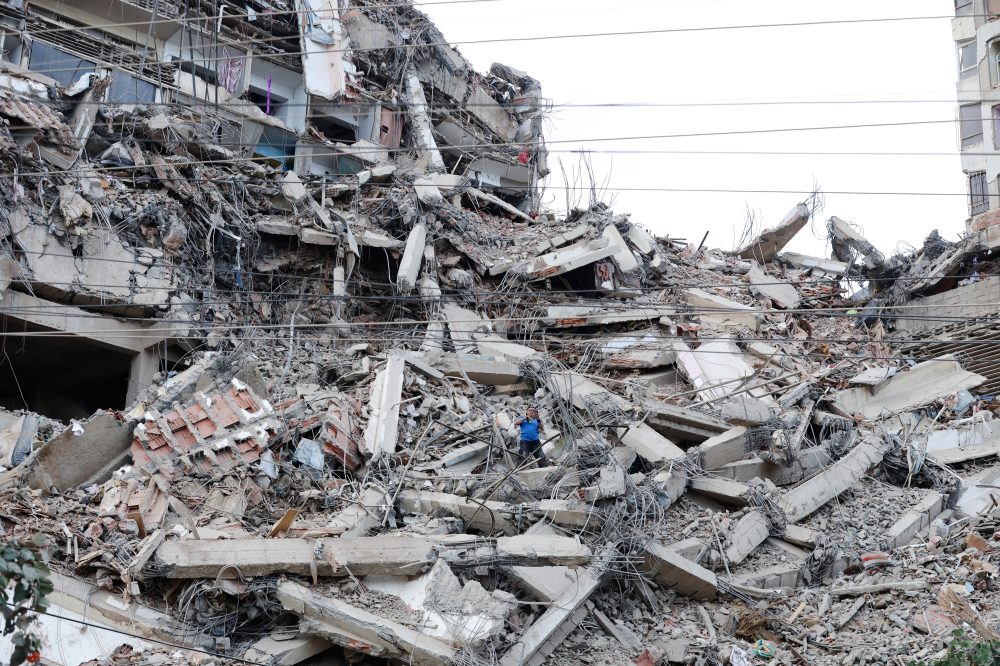
The back-to-back strikes brought down buildings in Venezuela’s capital city of Caracas and surrounding areas. Around 1,500 people sustained injuries, and thousands more were reported missing. Officials said the coastal region of La Guaira, situated north of Caracas, suffered some of the worst destruction and the highest number of casualties.
Christine Goulet, director of the USGS earthquake science center in California, told the Associated Press that while doublets are less common than the typical pattern of one major quake followed by smaller aftershocks, they can occur anywhere on the planet.
Doublets tend to point to a complicated fault structure. In Venezuela, that structure is known as the Bocono fault, which stretches along the spine of the Venezuelan Andes for approximately 300 miles, or 500 kilometers. The region had already experienced a doublet in September 2025, when quakes of magnitudes 6.2 and 6.3 struck west of Caracas, killing at least one person and injuring more than 100 others. The towns of Zulia and Lara reported the bulk of the damage from that earlier event.
Most earthquakes take place along the boundaries where tectonic plates meet. This week’s doublet was triggered by a rupture at the boundary between the Caribbean and South American tectonic plates. The Caribbean plate, which sits to the north of Venezuela, moves eastward relative to the South American plate at an average pace of about 0.79 inches — or 2 centimeters — per year.
“It’s a large displacement,” Goulet noted. “It’s on the order of the San Andreas fault.”
The movement involved shallow strike-slip faulting, a process in which two sections of rock slide horizontally past one another. Goulet explained that this type of movement is not automatically more hazardous than others.
“A more vertical motion can be more damaging,” she said, adding that other variables — including how long the rupture extends — also determine how much destruction results.
David Naar, associate dean at the University of South Florida’s College of Marine Science, noted that the boundary between the Caribbean and South American plates is less active compared to other plate boundaries around the world. According to USGS data, only seven earthquakes of magnitude 6 or greater have struck near the location of this week’s quakes over the past century.
Those include the 2025 doublet, as well as individual earthquakes in 2009, 1989, and 1975. The deadliest of those earlier events was a magnitude 6.6 quake in July 1967 that killed hundreds of people.
Caracas resident José Vitriago remembers that 1967 earthquake. He was only 2 years old at the time. “Our house broke,” he recalled in an interview with state-owned broadcaster Venezolana de Televisión. Vitriago described Wednesday’s doublet as “horrible, horrible.”
Looking at a broader historical record, USGS data shows that five earthquakes of magnitude 7 or higher have struck northern Venezuela or its coastline since 1900. The most catastrophic quake on record in the region occurred in March 1812 along the Bocono fault system, with an estimated death toll of around 30,000 people.
Scientists are unable to predict when earthquakes will strike, but aftershocks are a common follow-up to major seismic events. The USGS has calculated a 99% probability that at least one magnitude 4 aftershock will hit Venezuela within the coming week, and a 24% chance that a magnitude 6 aftershock could occur.
One added concern is that Venezuela lacks an early earthquake warning system — the kind that uses sensors to detect the first waves of a quake and alert people before stronger shaking arrives.
“It’s very distressing that there was basically no time to evacuate,” Goulet said. “That’s extremely unfortunate.”