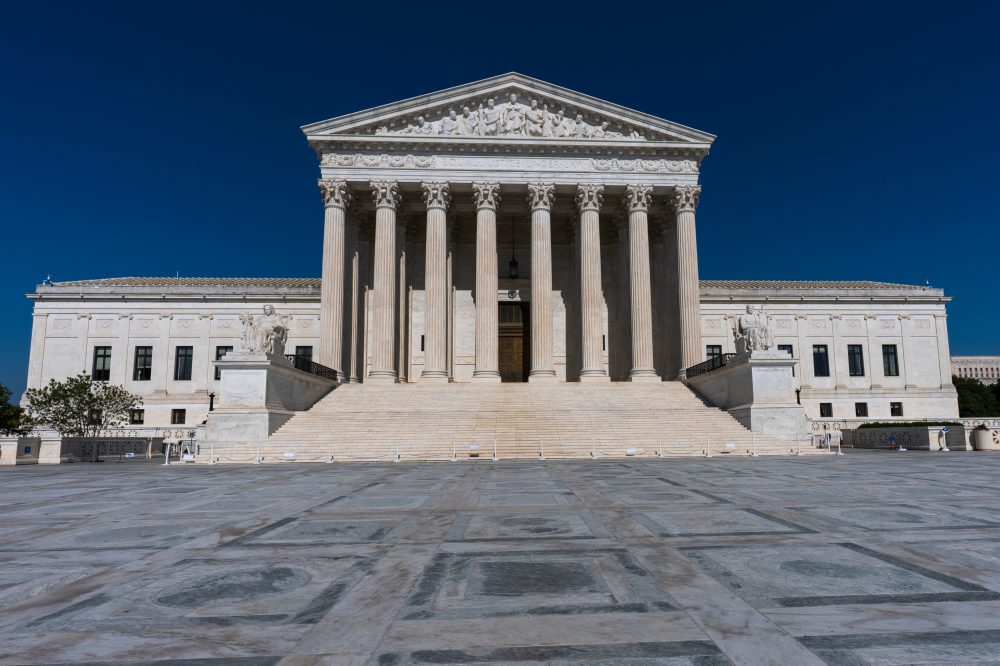

WASHINGTON — The U.S. Supreme Court handed down a major Second Amendment ruling Thursday, invalidating a Hawaii law that required gun carriers to obtain permission before entering privately owned businesses like stores and hotels.
The court’s 6-3 decision clears the way for people to bring firearms into privately owned public spaces — including shopping malls and gas stations — unless the property owners have explicitly posted a ban on guns at their locations.
The ruling comes shortly after the high court determined that marijuana users cannot be completely prohibited from owning firearms, continuing a string of Second Amendment decisions in recent years.
President Donald Trump’s Republican administration, which had argued the Hawaii measure violated the Second Amendment, claimed a victory with the ruling. The law had earned the nickname the “vampire rule” — a reference to the folklore belief that vampires must be invited into a home before they can enter, similar to how the law required gun carriers to seek permission before entering a business.
Hawaii had defended its 2023 law by arguing it protected the rights of private property owners to decide whether firearms were welcome on their premises. The state enacted the measure after a surge in residents obtaining legal permits to carry guns publicly, which followed a 2022 Supreme Court decision affirming that the Second Amendment extends to carrying firearms in public.
Roughly four other states have passed similar laws, though courts have blocked comparable restrictions in other parts of the country as well.
Hawaii also has laws restricting guns in public spaces like parks, beaches, and alcohol-serving restaurants, but those regulations were not part of this case. They are currently being challenged in lower courts.
The case was originally brought before the courts by a gun rights organization and three Maui residents. A lower court judge had initially blocked the law, but an appeals court later allowed it to take effect. Trump’s administration supported the appeal that reached the Supreme Court.
This is one of two gun-related cases the Supreme Court is hearing this term. The second involves whether people who regularly use marijuana or other drugs can legally possess firearms.
These cases are part of a broader wave of Second Amendment challenges that flooded the legal system following the court’s landmark 2022 ruling. Since then, the justices have struck down a federal ban on bump stocks — devices that allow guns to fire rapidly — while upholding a law designed to shield domestic violence victims and regulations governing so-called ghost guns, which are nearly untraceable firearms.