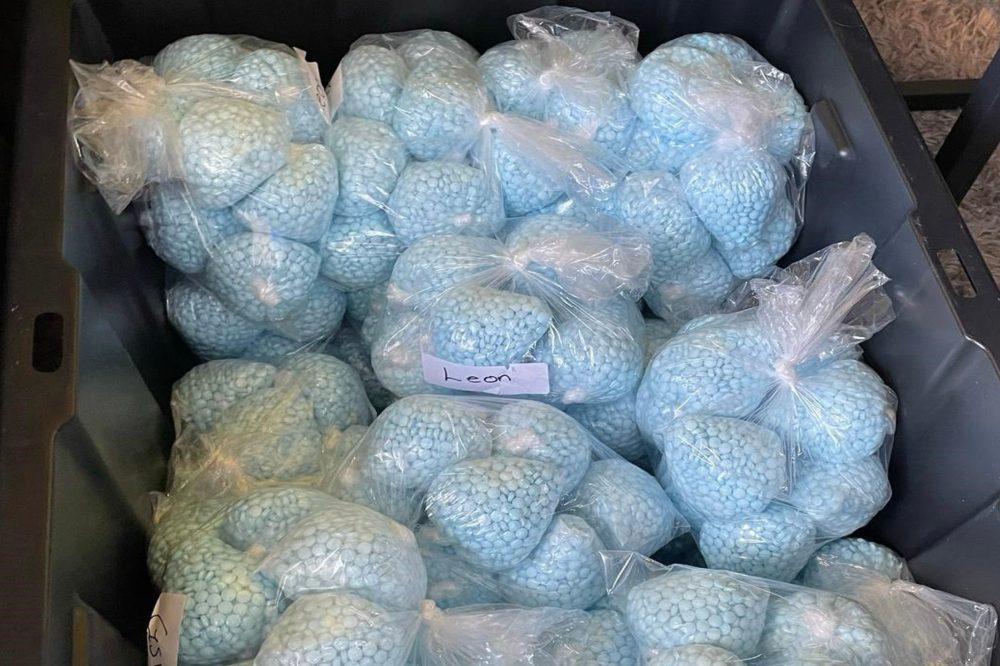

The federal Drug Enforcement Administration made a formal request Thursday for the U.S. Justice Department’s internal watchdog to investigate allegations that its own agents stood by and allowed hundreds of thousands of fentanyl pills to reach communities in New Mexico.
The move came just days after an Associated Press investigation revealed that DEA agents repeatedly watched — but chose not to intercept — large shipments of the deadly synthetic opioid between 2023 and 2025, hoping the tactic would help them build larger criminal cases.
In a letter addressed to the Justice Department’s Inspector General, DEA Administrator Terry Cole stated that an internal review was needed because “the allegations have generated significant public attention and have raised questions regarding DEA’s operational decisions, supervisory oversight, and response to concerns.”
Cole also issued a public statement clarifying that his call for an investigation “should not be interpreted as reflecting any lack of confidence in the professionalism or integrity of DEA personnel or in the investigative decisions made during this matter.”
He went on to say, “If improvements are identified, DEA will implement them. Strong institutions are sustained — not diminished — by objective oversight and a willingness to continuously assess and improve.”
Both current and former DEA agents told the AP that this approach — commonly referred to as letting the counterfeit painkillers “walk” — was a dangerous gamble with public safety in a state already devastated by the fentanyl crisis. They also suggested it may have broken Justice Department rules designed to protect communities from a drug the White House designated last year as a “weapon of mass destruction.”
The AP’s reporting drew on accounts from three current and former agents as well as government records, including an internal report documenting a 2023 incident in which the DEA watched 74,000 pills change hands at a mobile home park in Albuquerque. One of those agents, David Howell, first raised alarms about the tactic in a 2023 whistleblower complaint. He later spoke extensively with the AP, describing the strategy as one that “poisoned our community to make cases.”
A DEA spokesperson previously told the AP that “public descriptions suggesting that DEA knowingly permitted fentanyl to reach communities are false and fundamentally mischaracterize the facts.”
The DEA’s watchdog request followed by just one day a move by New Mexico Gov. Michelle Lujan Grisham, who asked the state’s attorney general to determine whether the agency’s conduct violated New Mexico law — an unusual step that underscores the tension between state and federal authorities at a time when fentanyl continues to be one of the nation’s most deadly public health crises.
“There are no words to describe how reckless and dangerous these decisions were,” Lujan Grisham said in a statement. “Make no mistake: the DEA knew people would die if these pills made it into New Mexico communities, and the agency let it happen anyway.”