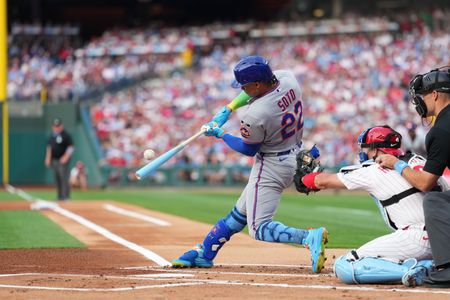

Major League Baseball team owners are pushing for sweeping changes to how player contracts work, submitting a new labor proposal Thursday to the MLB Players Association that would dramatically limit the size and length of deals like those recently signed by Juan Soto with the New York Mets and Shohei Ohtani with the Los Angeles Dodgers.
Under the owners’ proposal, free agents who leave their current team would be limited to five-year contracts, while players who re-sign with their existing team could receive up to six years. The plan would also ban contract deferrals — a structure used in Ohtani’s 10-year, $700 million deal signed in late 2023, which deferred $680 million of the total value.
The proposal also includes a $202 million ceiling on contracts for free agents signing with a new team. Currently, more than 20 active players have deals exceeding that figure, with four of them earning more than double the proposed limit. Under existing rules, a free agent who stays with his team can receive up to six years and $265 million.
On the topic of minimum salaries, the league proposed raising the floor to $1 million — up from $780,000 — for players with at least two years of service time. Players with at least one full year of service would also reach $1 million, made up of a $900,000 base salary plus a $100,000 automatic bonus drawn from the Pre-Arbitration Bonus Pool. League figures indicate this would represent the largest year-over-year minimum salary increase in baseball history.
The proposal also includes an earlier path to free agency. Players who accumulate five years of service time by age 30 would qualify for free agency — one year sooner than the current standard. Since free agency was established in 1976, reaching it has required six full years of service.
While the league did not seek changes to the arbitration process, it did call for eliminating both qualifying offers and deferred contracts. Under the proposal, a player with less than one year of service could re-sign with his own team for as long as 12 years — six before free agency and six after — potentially worth up to $500 million if the contract begins next season.
MLB spokesperson Glen Caplin framed the proposal as a significant step forward. “Today, in addition to proposing the largest-ever increase in the minimum salary, earned by over half of MLB players, we accepted two landmark changes to free agency that have been in place for 50 years,” Caplin said. “We agreed to both the MLBPA’s proposal to provide earlier access to free agency, and their proposal to eliminate the qualifying offer system, a provision players view as a drag on free agency.”
However, the entire package is tied to the union accepting management’s proposed salary cap — something the players’ association has firmly opposed. The union wasted little time rejecting Thursday’s offer.
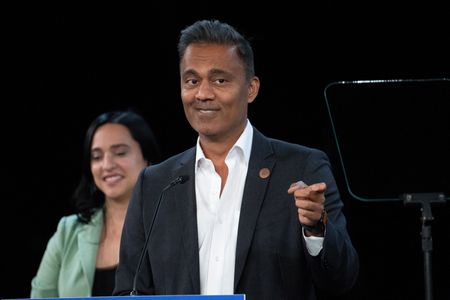
MLBPA interim executive director Bruce Meyer was direct in his criticism. “The overall drag on player compensation here dramatically outweighs the benefits suggested here,” Meyer said. “Some of the suggested benefits are of no benefit or value at all in a cap system. … In a cap system, it’s a zero-sum game, and it’s just moving money around.”
With the current collective bargaining agreement not set to expire until December 1, both sides still have a window to reach a deal before any games are at risk. For now, each side continues to lay out its vision for the sport’s future without moving toward a middle ground.
“What’s being proposed now is really illusory given it’s all in the context of a cap,” Meyer added.