Agricultural operations across America face tight profit margins, and access to cost-effective energy sources can determine whether farmers stay in business or fail. However, obtaining government assistance for renewable energy projects has become significantly harder following Donald Trump’s inauguration.
The new administration has taken an antagonistic stance toward clean energy initiatives, instead championing fossil fuel development as crucial to America’s energy independence. A joint investigation by The Associated Press and Grist examined how shifting federal energy policies are impacting agricultural communities.
Their research revealed that two essential programs supporting clean energy expansion — the rural-focused REAP initiative and clean energy tax incentives — have faced dramatic reductions. Since the current fiscal year began on October 1st, investigators discovered the U.S. Department of Agriculture has distributed zero dollars through rural energy grants or loan guarantees.
The Rural Energy for America Program, known as REAP, provides financial assistance through grants and loans to agricultural producers and rural enterprises pursuing renewable energy solutions, such as solar panel installations to reduce electricity expenses. Since its launch approximately twenty years ago, REAP has supported tens of thousands of clean energy and efficiency initiatives, distributing grants exceeding $1.8 billion.
The initiative received substantial additional funding through the Inflation Reduction Act in 2022 and enjoyed support from both political parties until recently.
However, the Grist-AP investigation of USDA records revealed the program has allocated zero dollars toward renewable energy development since September. The agency has failed to restart REAP’s grant application process despite promising to do so last October. While the loan guarantee component — designed for larger agricultural and rural business initiatives — remains technically available, researchers found no new agreements have been approved this fiscal year.
On March 31st, the USDA announced it was halting all REAP grant distributions to revise regulations according to a Trump executive directive issued in July.
A USDA representative described the halt as temporary but provided no timeline for resumption.
The Energy Policy Act of 2005, enacted under President George W. Bush, established a 30% investment tax credit for major clean energy developments, spurring solar industry growth. This tax benefit was renewed for eight years during President Obama’s tenure and extended again under Trump in 2020.
When President Joe Biden enacted the 2022 climate legislation, the tax credit received another extension through 2032 or until certain emissions goals were achieved. However, Trump’s tax legislation approved by Congress last year accelerated the qualification timeline. Commercial solar developments must now begin construction by July 2026 and become operational by December 2027 to qualify for the credit.
The Grist-AP analysis identified at least 126 solar developments proposed since 2024 — all located on or adjacent to agricultural land — currently awaiting regulatory clearance. Combined, these projects would generate approximately 20 gigawatts of renewable electricity, sufficient to supply roughly 4.5 million households.
Several developers are canceling projects, citing inability to meet the accelerated deadlines.
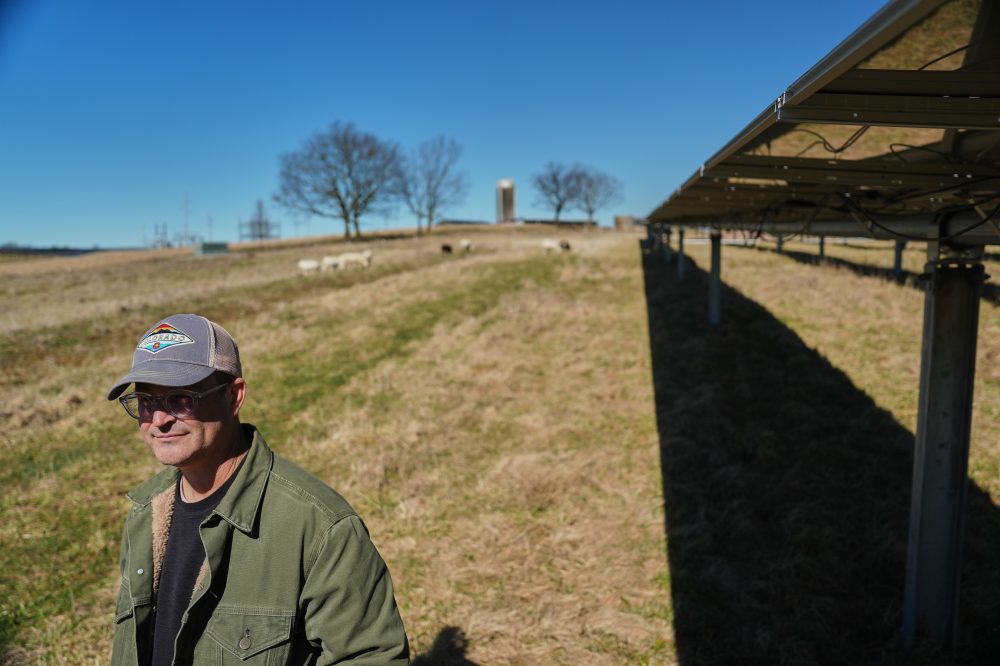
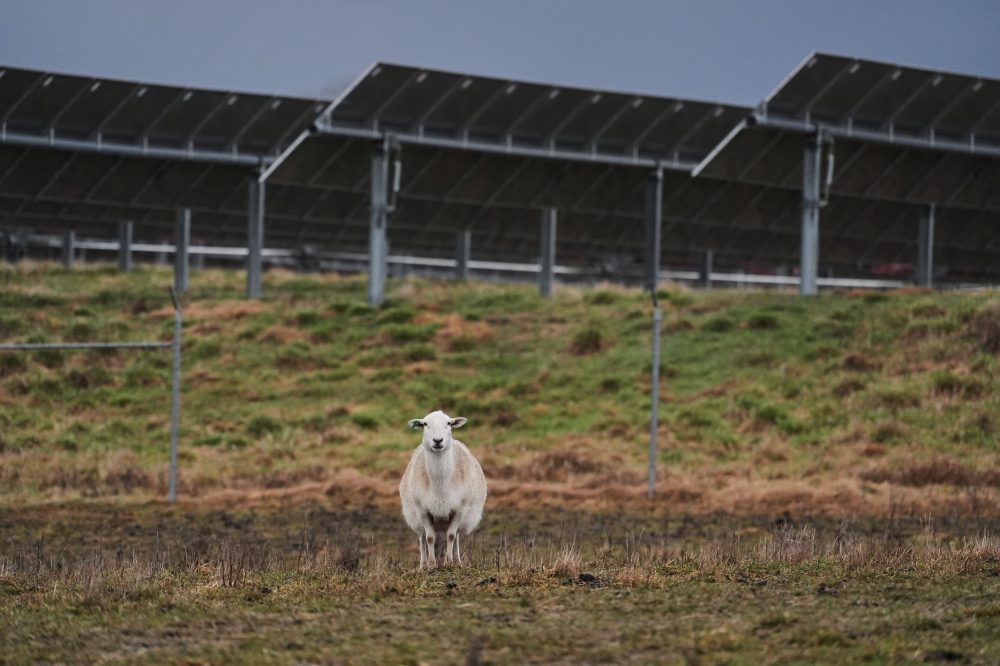
Daniel Bell, who raises sheep in Kentucky, generates additional income by grazing his animals on land leased to a commercial solar facility. The sheep maintain vegetation beneath solar panels. With his expanding herd, Bell requires a new barn and planned to install rooftop solar — until discovering the Trump administration had essentially eliminated the grants that would have enabled the project on his property.
“For him it’s an issue of the freedom to do what he wants in a way that lowers his bills,” Bell explained.
Robert Bonnie, former undersecretary for farm production and conservation at the USDA during the Biden years, predicted the withdrawal from renewable energy funding will impact rural communities nationwide. The USDA’s mission has included investing in rural regions while incorporating rural economic development into climate initiatives.
“In places like Iowa and Texas, renewables matter, not just for additional power, and lower power bills, and clean energy, but also matters for farmers’ pocketbooks,” Bonnie stated. “Anything you do to pull back on that is hugely problematic.”
An elderly French woman who was held in U.S. immigration detention for months has arrived back in France, according to that country’s top diplomat.
Marie-Thérèse Ross, 85, was taken into custody by immigration officials in Alabama this past April after her 90-day visitor visa expired, the Department of Homeland Security confirmed.
French Foreign Minister Jean-Noël Barrot announced her return during a Friday press conference in Montpellier. “She returned to France this morning, this is a satisfaction for us,” Barrot stated.
While declining to discuss specifics of Ross’s situation, Barrot criticized immigration enforcement tactics, saying certain ICE procedures don’t meet French expectations and are “not acceptable to us.” The minister referenced “violence that raised our concerns” but provided no additional details.
Ross had been housed at a federal immigration detention center in Louisiana during her months-long detention.
Her case represents part of the current administration’s broader immigration crackdown, which has expanded to include military families and veteran spouses who previously received more lenient treatment under prior policies.
Marriage records from Calhoun County show Ross wed Alabama resident William Ross last April. According to his family’s obituary, William Ross served as a U.S. Army captain before his death this past January.
A Kentucky livestock producer’s experience highlights the growing challenges farmers nationwide face when trying to invest in solar energy following recent federal policy changes.
Daniel Bell, who raises sheep in Kentucky, had planned to install rooftop solar panels on a new barn he needed to construct for his expanding operation. Since his property sits far from existing power infrastructure, solar seemed like the perfect solution for heating the structure.
Bell intended to seek financial assistance through the Department of Agriculture’s Rural Energy for America Program, known as REAP, but discovered the Trump administration had essentially stopped issuing grants through the initiative. This development forced him to abandon his original solar installation plans.
“For me, it’s just been about freedom. Freedom to lower bills, freedom to control my own assets,” Bell explained.
Agricultural operations typically operate with extremely tight profit margins, making cost-cutting measures essential for survival. Many producers have turned to federal assistance programs to help finance solar panel installations on barns, grain storage facilities, and farm offices. Others have explored commercial renewable energy lease agreements as both additional income sources and ways to utilize unused farmland.
During Trump’s second term, two crucial federal initiatives supporting solar energy development – REAP and clean energy tax incentives – have faced significant rollbacks. Analysis conducted by The Associated Press and Grist examining data on both large-scale solar developments and small rural energy projects revealed that the Department of Agriculture has not distributed any rural energy grants or loan guarantees during the current fiscal year.
Reporters reached out to approximately 75 of the nearly 300 developers who have proposed agricultural land projects over the past two years. They discovered these companies are either preparing to operate without federal support or have already suffered millions in losses due to the administration’s revised tax credit policies.
Bell ultimately chose an alternative approach: rather than building on his own property, he requested permission to construct two temporary barns on land owned by a commercial solar operation where he receives payment for grazing his sheep beneath solar panels to maintain vegetation. If approved, these barns could access less expensive power from the solar facility’s operation. However, such opportunities remain unavailable to most farmers.
The impact of these policy modifications varies significantly. Some solar developments face delays due to permitting complications, others proceed as scheduled, and some are accelerating as developers rush to begin construction before tax credits disappear. Collectively, these findings demonstrate how the reduction in federal solar support has affected American agriculture from large corporations to family operations.
President George W. Bush signed the Energy Policy Act of 2005, which established a 30% investment tax credit for large-scale clean energy projects, providing a major boost to the solar industry. This tax credit received extensions under President Barack Obama and again under Trump in 2020.
When President Joe Biden signed the 2022 climate legislation, the tax credit was extended through 2032 or until specific emissions reduction goals were achieved. Last July, Congress passed Trump’s tax legislation, which reversed the timeline for clean energy tax credits. Now commercial solar projects must begin construction by July 2026 and become operational by the end of 2027 to qualify for the credit.
At least 126 solar projects proposed since early 2024 are currently waiting for regulatory approval, according to analysis of the most recent information developers provided to the Energy Information Administration. Each project is located near or on agricultural land, with at least 20% of the surrounding area used for livestock grazing or crop production, and would collectively generate approximately 20 gigawatts of electricity if completed. According to the Solar Energy Industries Association, this represents enough renewable energy to power roughly 4.5 million homes.
The compressed timeline has led some developers to abandon projects after determining they cannot move quickly enough to meet the new tax credit deadline.
Bogdan Micu, CEO of German solar developer Alpin Sun, reported his company had to abandon projects representing approximately $6 million in investments totaling about 1,000 megawatts in the northeastern United States.
“Well. We lost our projects,” Micu stated. The company simply could not accelerate its projects sufficiently to meet the deadlines, he explained.
Through REAP, the USDA provides grants and loans to farmers, ranchers, and rural businesses interested in renewable energy installations to reduce utility expenses. According to Richa Patel, a policy specialist at the National Sustainable Agriculture Coalition, REAP has funded over 19,000 grants totaling more than $1.8 billion since its establishment nearly two decades ago, supporting tens of thousands of renewable energy and energy efficiency projects nationwide.
The program received significant additional funding from the Inflation Reduction Act in 2022 and enjoyed largely bipartisan support until some congressional Republicans began questioning the grant structure. For many farmers whose awards or applications were affected as Trump returned to office, the past year has made farm country’s already challenging economic situation even more difficult.
Elisa Lane, who grows flowers and fruit in Hampstead, Maryland, will always remember the stress she experienced in February 2025 when she learned the Trump administration had frozen her $30,576 REAP grant awarded in 2024 for solar panel installation – without providing any explanation.
“Man, was that so stressful,” said Lane, who spent months worried she would be responsible for the amount she had already contracted a solar company to install. The system was supposed to reduce the burden of her energy bills, which she says averaged around $500 monthly before installing solar.
In March 2025, the agency announced it would release previously awarded grants and loans – but with apparent conditions. The USDA invited recipients to voluntarily revise their proposals to align with Trump’s executive order by “eliminating Biden-era DEIA and climate mandates embedded in previous proposals.”
Despite anxiously awaiting the funds, Lane chose not to revise her proposal after a local USDA representative advised against doing so. The representative assured her she would receive the payment, according to emails reviewed by Grist and the AP. Later that spring, she heard from the USDA that the payment would be released and she could proceed with construction.
She moved forward, paying the full $70,000 cost to install the panels. By August, they were operational on her property. By September, she received her reimbursement check covering approximately half the project cost from USDA – more than six months after the funding was initially frozen.
Over roughly seven months, the USDA froze the program’s grant funding, invited grantees to reapply without climate and diversity language, imposed extensive new restrictions on agricultural solar installations, and suspended future application cycles.
“It was so disruptive,” she said. “I just want to have a farm and be able to focus on my business.”
Now she is doing exactly that. The panels represent a long-term investment in reducing her farm’s substantial energy expenses.
While things eventually worked out for Lane and other recent REAP recipients, analysis of USDA Rural Development data found the program has not committed any funding for renewable energy development since September. Despite the agency indicating it anticipated doing so last October, USDA never reopened REAP’s grant application process. Its loan guarantee program – designed for larger farm and rural business projects – has remained available, though analysis found the agency has awarded no new agreements this fiscal year.
On March 31, the USDA announced suspension of all REAP grant awards so the agency could update program regulations to comply with an executive order Trump issued last July. The agency noted it “will not be making further grant awards until the new regulations are in effect,” but added that REAP guaranteed loans “will continue to be awarded in this time.”
In response to a comment request, a USDA spokesperson said the “suspension of REAP grant awards is temporary” but provided no additional details about how long grants will remain paused. When asked why the USDA has not issued any loans this fiscal year through the program, the spokesperson said the agency “continues to administer REAP in accordance with current guidance” and is “prioritizing program integrity and alignment with Administration direction as it conducts its review.”
Robert Bonnie, who served as undersecretary for farm production and conservation at the USDA under the Biden administration, said any reduction in the program’s funding will impact rural America broadly. Part of the USDA’s long-term role, he explained, has been channeling investment into rural areas while making rural prosperity part of the climate agenda.
“In places like Iowa and Texas, renewables matter, not just for additional power, and lower power bills, and clean energy, but also matters for farmers’ pocketbooks,” Bonnie said. “Anything you do to pull back on that is hugely problematic.”
For RIC Energy North America, a renewable energy developer headquartered in New York City, the solar tax credit changes triggered an urgent effort to advance every project in its pipeline, said CEO Jon Rappe. The company manages approximately 150 solar projects in its North American portfolio, with most developments on unused land, hayfields and former agricultural property.
“Now, some companies are probably going to go out and continue to sign sites, and take some risks, in case there’s an extension of tax credits or something like that,” Rappe said. “But the next generation of projects is not going to happen unless there’s some change at the federal level.”
One of RIC Energy’s developments involves creating 15 acres of solar installations on Tim Covert’s property in the predominantly agricultural community of Sheridan, New York. The community solar project, featuring small-scale arrays that would allow low-income residents to subscribe for monthly utility bill credits, provides a new source of consistent income for Covert, a former dairy farmer who received cancer treatment in the past year and struggled to work as a result.
“I’m 100% cancer-free, but with the treatments, there’s some side effects that take a little while to get rid of,” he said, including mental fog, muscle pain and reduced energy. “So it would be great if they did have it done by fall, and I started getting money.”
Under the agreement, the larger payment, which Covert says equals roughly 25% of his income as an electrical contractor, will not begin until the project is finished and operational – and Covert remains uncertain when that will occur given the changing federal environment. Currently, he receives a small payment simply for leasing his land. He has been told construction could begin as early as late May, though “it seems to be changing a lot.” RIC Energy told reporters that construction is scheduled to begin late summer to early fall.
“I don’t think they’re going to stop now, because they have quite a bit of time and money invested in this thing already,” he said. “So I don’t see them pulling the plug.”
Despite the policy shifts, some clean-energy developers report they are succeeding. Solar energy remains one of the most affordable energy forms, and energy demand continues growing, partly due to artificial intelligence data center construction. Additionally, tax equity sometimes complicated project financing, so losing the tax credit also removed a barrier to completion, said Nick Cohen, president and CEO of Doral LLC, a large-scale solar energy and battery storage developer with about 450 megawatts operating and approximately 16,000 more planned or under construction.
It’s “a very exciting time if you’re a large enough developer that was in the right place at the right time doing large projects,” he said.
“All the new rules really favor the big guys like us.”
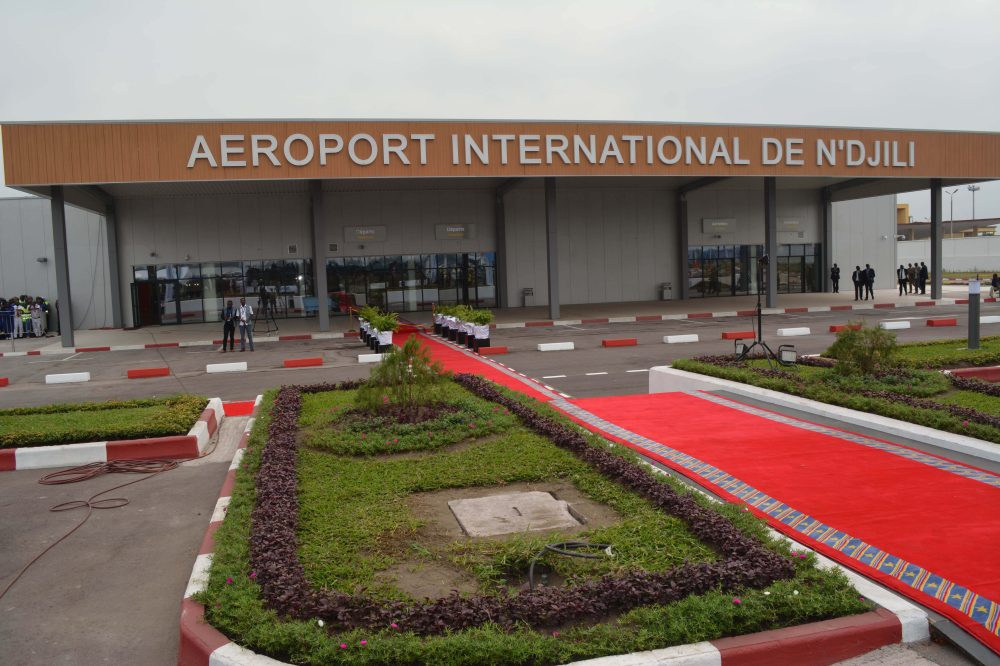
A group of migrants became the first to be sent to the Democratic Republic of Congo under a new deportation agreement with the United States, arriving in the African nation’s capital early Friday morning.
The aircraft touched down in Kinshasa around 1 a.m. local time, carrying individuals from Colombia, Peru, and Ecuador, according to flight tracking information and sources at the airport.
A Colombian woman who was part of the group told Reuters there were 16 migrants total – nine men and seven women. However, an airport official counted 15 arrivals.
Officials from Congo’s interior ministry and presidential office have not yet responded to requests for comment.
Earlier this week, reports indicated that more than 30 migrants were scheduled for deportation to Congo. The smaller number who actually arrived may be the result of last-minute legal interventions, according to Alma David, a US-based attorney representing one of the migrants. David said she knew of at least three instances where federal judges stopped the removals.
The total number of people who may eventually be deported under the Washington-Kinshasa agreement, which was announced April 5, remains unknown.
The Colombian migrant, who requested anonymity for safety concerns, described her experience: “The flight was very calm. They treated us well and gave us enough food.”
She added: “It was very long, around 26 or 27 hours.”
Flight data revealed the aircraft departed from Alexandria, Louisiana, with stops in Dakar, Senegal, and Accra, Ghana, before reaching its final destination.
This marks the first time so-called third-country deportees have been sent to Congo, a nation struggling with widespread violence, internal displacement, and a weak asylum infrastructure.
The deportation deal comes as the Trump administration works to implement a US-mediated peace agreement between Congo and Rwanda. The accord aims to end conflict involving Rwanda-backed M23 rebels in eastern Congo, fighting that has resulted in thousands of deaths and displaced hundreds of thousands of residents.
The agreement also follows the establishment of a strategic partnership that gives the United States priority access to Congo’s essential minerals.
Upon arrival in Congo, the deportees received seven-day visas that allow free movement throughout the country, with possible extensions up to three months, the Colombian migrant reported.
The group was also told they could seek asylum in Congo, though officials advised against it, warning that the country posed safety risks, according to the migrant.
TORONTO – New home construction across Canada took an unexpected downturn last month, with March figures showing a 6% drop compared to February, according to Friday’s report from the nation’s housing agency.
The Canada Mortgage and Housing Corporation (CMHC) released data showing the seasonally adjusted annual rate for new housing starts fell to 235,852 units, down from February’s revised figure of 250,961 units. The decline caught market analysts by surprise, as they had anticipated construction would climb to 255,000 units.
MOSCOW – Russian government officials are disputing claims that President Vladimir Putin remains unaware of his country’s domestic challenges, following explosive allegations from a prominent social media personality that went viral this week.
Viktoria Bonya, a reality television star and social media influencer with a massive following in Russia, posted a video earlier this week expressing her support for Putin while outlining five significant issues she believes government officials are concealing from the Russian leader. The video exploded across social media, garnering more than 20 million views, accumulating over 1.4 million likes, and generating more than 75,000 comments on Instagram.
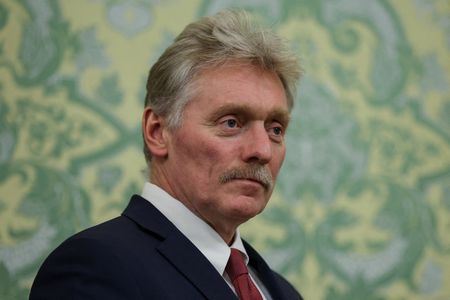
When questioned Friday about Bonya’s claims that Putin – who has maintained control over Russia since 1999 in various leadership roles – receives incomplete information about domestic issues, Kremlin spokesperson Dmitry Peskov rejected the allegations.
“No. It is not so,” Peskov stated. “Putin is the head of state, and his powers means he deals with the widest range of issues on the agenda.”
In an uncommon move Thursday, the Kremlin publicly responded to Bonya’s sharp criticisms, announcing that efforts were already underway to tackle the various issues she had highlighted.
Following the government’s acknowledgment, Bonya posted a follow-up video showing her emotional reaction. Breaking down in tears of happiness, she expressed gratitude to the Kremlin for paying attention to her concerns and declared her solidarity with the Russian people.
MOSCOW, April 17 – Russian officials on Friday accused European nations of escalating their participation in the Ukraine conflict, citing concerns over drone manufacturing support provided to Ukrainian forces.
Russia’s Defense Ministry issued warnings this week regarding European plans to increase drone deliveries to Ukraine, releasing an inventory of manufacturing facilities and companies allegedly producing unmanned aircraft or related components.
The ministry identified locations across Britain, Germany, Denmark, Latvia, Lithuania, Netherlands, Poland, the Czech Republic, Spain, Italy, Israel and Turkey as part of the drone supply network.
Dmitry Medvedev, former Russian president who currently serves as deputy chairman of Russia’s Security Council, posted on X that the inventory essentially represents a target list for Russian military forces. “When strikes become a reality depends on what comes next. Sleep well, European partners!” Medvedev stated.
When questioned about whether the Defense Ministry’s publication and Medvedev’s statements indicated Russia was seriously contemplating attacks on European targets, Kremlin spokesperson Dmitry Peskov avoided giving a direct response.
“These countries are becoming increasingly directly involved in the conflict, in the war surrounding Ukraine,” Peskov commented. “The details are set out in the Defence Ministry’s statement.”
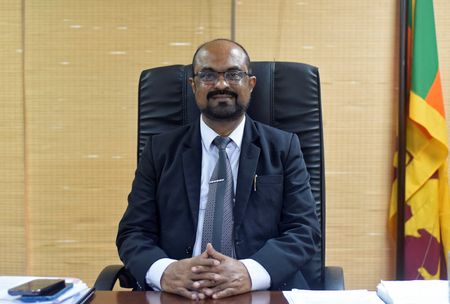
Sri Lanka’s Energy Minister Kumara Jayakody and the ministry’s top administrator submitted their resignations Friday amid mounting pressure over controversial coal purchasing decisions that have disrupted the nation’s electricity supply.
The departures of Jayakody and ministry secretary Udayanga Hemapala came after widespread criticism regarding the procurement of substandard coal for the country’s sole coal-burning electricity facility. President Anura Kumara Dissanayake accepted both resignations Friday morning, according to his office.
The minister’s departure allows for an unimpeded probe into accusations surrounding poor-quality coal purchases that have affected operations at the government-operated Lakvijaya Power Plant, presidential officials stated.
Foreign Affairs Minister Vijitha Herath defended the energy minister’s conduct while announcing the resignation, telling media representatives: “We are not trying to hide anything. Proper procurement guidelines and procedures were followed. There was no fraud or corruption with the direct involvement of the energy minister.”
Herath indicated the probe should conclude within six months and aims to enhance government openness while restoring citizen trust in public institutions.
This marks the first time a senior cabinet official has stepped aside due to graft accusations under the current administration. Jayakody’s departure follows his survival of a parliamentary confidence vote just last week.
President Dissanayake has authorized a comprehensive review of all coal purchasing agreements for electricity production stretching back to 2009. He previously confirmed that inferior coal deliveries have significantly reduced power output at the Lakvijaya facility.
The power station requires approximately 2.25 million metric tons of coal each year to generate roughly 40% of the island nation’s electrical needs, based on a recent government audit released this month.
Reduced electricity production forced authorities to purchase 300,000 metric tons of emergency coal last month while increasing reliance on diesel and furnace oil to compensate for the power deficit.
The island nation, still recovering from a devastating economic collapse that reached its worst point four years ago, must import all petroleum products. Since regional conflicts began affecting Middle Eastern supplies, Sri Lankan officials have implemented fuel rationing measures and designated Wednesdays as national holidays to conserve energy reserves.
Motorists traveling on Old Mill Bridge Road should plan for potential delays as construction crews continue work that requires periodic lane restrictions.
The Delaware Department of Transportation reports that drivers will encounter intermittent lane closures along the stretch of Old Mill Bridge Road running from Bayard Road to Waters Run. These temporary traffic restrictions are expected to continue through 4 PM today.
Authorities advise drivers to allow extra travel time and exercise caution when navigating through the construction zone. Motorists should follow posted signs and directions from flaggers when present.
The Rehoboth Beach Police Department celebrated excellence within its ranks during their yearly awards ceremony held April 10 at Salero restaurant in the Henlopen Hotel. Captain Jaime Riddle served as master of ceremonies for the event that highlighted outstanding service and dedication.
Top Officer Recognition Goes to Pfc. Devin Maciejewski
Pfc. Devin Maciejewski received the department’s highest honor as Officer of the Year, an award that celebrates exceptional performance, leadership, professionalism, and community service.
Maciejewski stood out in 2025 as one of the most versatile and effective officers on the force. From his early days, he showed eagerness to expand his skills, actively seeking challenging assignments while maintaining high-quality work standards.
His dedication paid off with top statistical performance for the year. Remarkably, Maciejewski ranked first or second in nine out of eleven performance metrics tracked by the department, showcasing remarkable consistency across all policing duties.
Commissioner Gordon, who supervises Maciejewski directly, praised his report writing as comprehensive, detailed, and prompt, demonstrating both understanding of proper documentation and professional standards.
The officer also excelled in proactive enforcement, leading all department members in DUI arrests with three more than the second-place officer.
Beyond numbers, Maciejewski earned praise for professionalism and community connection. Chief Keith Banks commended him after receiving positive feedback from citizens about his conduct during a traffic stop. He also received recognition for his professional behavior during a major public demonstration.
During a CPR/AED emergency call that ended tragically, the victim’s family specifically praised Maciejewski’s compassion and effort during the difficult situation.
Communications Leader Katie Stachowski Honored
Communications Specialist I Katie Stachowski earned Civilian of the Year recognition for setting the standard in the department’s communications center.
Stachowski played a vital role in the department’s RE-ACE re-accreditation process, working across three disciplines to guide the communications center through the complex certification requirements. Her efforts ensured all standards were properly documented and successfully achieved.
During daily operations, Stachowski consistently delivers exceptional performance, handling calls with technical skill and the calm confidence essential during high-stress situations.
Her dedication extends beyond regular duties as she frequently covers overtime shifts when staffing runs short, ensuring uninterrupted operations. Shift after shift, she assists field officers, supports fellow dispatchers during complex incidents, and handles every call with professionalism.
Chamber Leader Carol Everhart Receives Special Honor
Carol Everhart received Special Recognition of Service for her 36-year tenure leading the Rehoboth Beach-Dewey Beach Chamber of Commerce and her partnership with the police department.
Captain Riddle spoke personally about working with Everhart for 13 years on Sea Witch Festival planning, watching the event grow from requiring a few officers for traffic control to a major operation involving over 100 public safety personnel.
“Carol never said no,” Riddle noted during his remarks. “No matter how aggressive, complex, or safety-driven the idea was, she listened, supported it, and worked alongside us to make it happen.”
Riddle emphasized Everhart’s commitment to safety-first event planning and her collaborative approach that brought together various stakeholders. He added that the Sea Witch Festival “will not be the same” without her involvement.
Life-Saving Actions Recognized
Pfc. Rocco Esposito received a Life Saving Award for his actions on May 3, 2025, during a water rescue at Maryland Avenue and the North Boardwalk.
Around 4:29 p.m., Esposito responded to assist with a water rescue and found a teenage male in distress at the end of a jetty, facing dangerous ocean conditions. Without delay, Esposito removed his equipment and entered the water to reach the individual.
Working with Rehoboth Beach Volunteer Fire Company members, Esposito helped secure a life vest on the victim and stayed with him while escorting him safely back to shore. The teenager was treated for minor injuries after being removed from the life-threatening situation.
Additional Recognition and Promotions
Pfc. Maciejewski also earned the Excellence in DUI Enforcement Award, formerly called the M.A.D.D. Award, recognizing his dedication to removing impaired drivers from roadways and preventing tragedies.
Several department members received promotions throughout 2025: Curtis Sauve advanced to Sergeant on May 14, Brian Reynolds became Corporal Grade 1 on May 29, Marie Fuller was promoted to PFC on March 13, and both Timothy Chan and Rocco Esposito earned PFC rank on September 25.
Communications Specialist II Gregory Tietmeyer was recognized for reaching 20 years of service on June 27, 2025.
Delaware Department of Transportation crews are working on road striping operations in the Millville and Fenwick Island areas today.
The mobile striping work is expected to continue through 5 PM this evening. Motorists traveling through these coastal areas should expect possible delays and exercise caution around work crews.
DelDOT regularly conducts road maintenance operations including line striping to ensure proper lane markings and road safety throughout the state.
DOVER, DE – Delaware State University has officially selected Khadijah Rushdan to serve as the head coach for its women’s basketball program, the university announced.
University officials expressed excitement about Rushdan’s appointment, noting her distinguished background within Delaware’s basketball community. Her coaching and playing experience has established her as a respected name in the state’s basketball circles.
Rushdan steps into the role with substantial credentials from her time both on the court as a competitor and on the sidelines as a mentor. Her dual perspective as both former player and experienced coach is expected to benefit the Hornets’ program moving forward.
The University of Delaware men’s lacrosse squad is preparing to welcome St. Bonaventure to campus for a special Alumni Day celebration and matchup.
The Blue Hens will take the field against the Bonnies as part of their annual tradition honoring former players who return to campus for the festivities.
Alumni Day represents one of the most anticipated events on the Blue Hens’ home schedule, bringing together current players with program graduates for a day of celebration and competition.
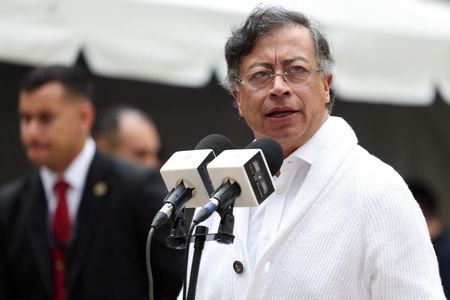
Colombian President Gustavo Petro announced Friday his plans to visit Venezuela’s capital on April 24, as he continues efforts to arrange a meeting with Venezuelan interim president Delcy Rodriguez.
Speaking during an interview with Spanish public television network RTVE, Petro revealed that after a proposed border meeting between the two nations fell through, he would instead travel directly to Caracas later this month.
The two leaders had originally scheduled their first face-to-face presidential meeting for mid-March in a Colombian border town, but both governments called off the encounter citing “force majeure” circumstances, though neither provided specific explanations at that time.
“The meeting at the border fell through because of certain precautions, she said there were security issues,” Petro stated in Friday’s television appearance.
Petro made these comments while participating in Barcelona’s “Global Progressive Mobilisation,” a two-day conference bringing together leftist political leaders from around the world. The event, organized by Spain and progressive political organizations, focuses on building opposition to far-right political movements globally.
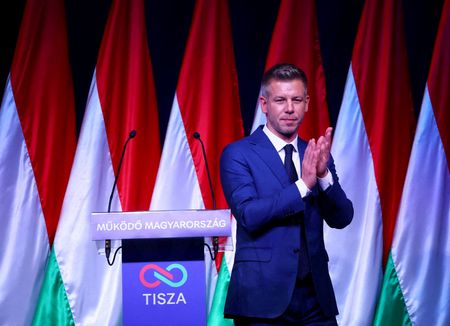
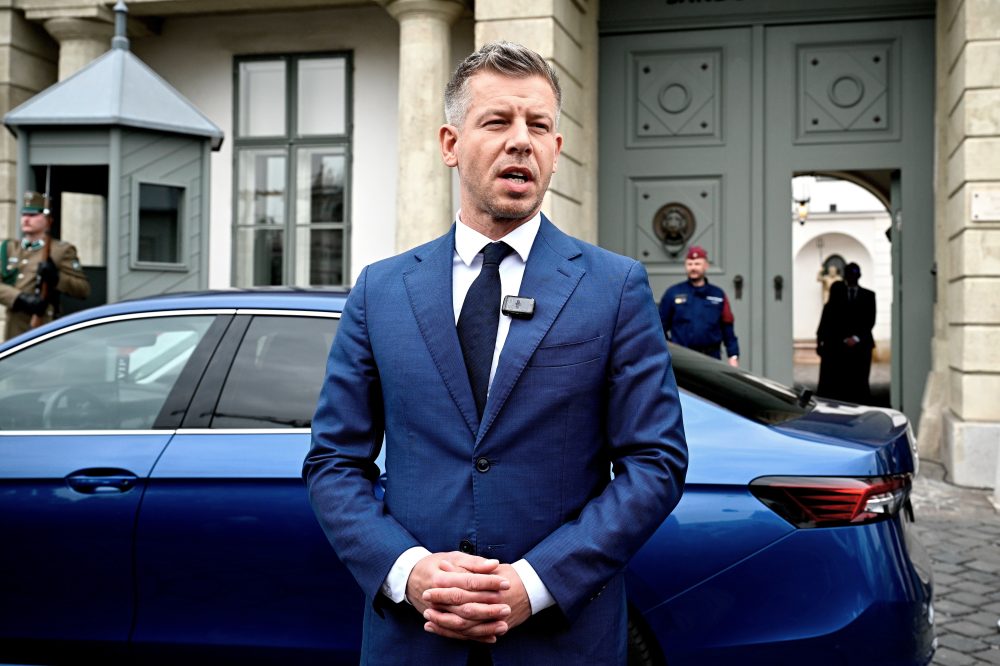
Hungary’s newly elected Prime Minister Peter Magyar announced Friday that he has begun preliminary discussions with European Union representatives in Budapest, working urgently to restore funding that was suspended during conflicts with his predecessor’s administration.
Magyar, who achieved a decisive win in the April 12 election that will conclude nationalist leader Viktor Orban’s 16-year tenure, stated he plans to begin negotiations by identifying areas where he and EU officials are already in agreement.
“I expect a constructive negotiation. It will not be easy because we have very little time,” he stated during a press briefing.
The incoming leader announced that the chief of staff to European Commission President Ursula von der Leyen was scheduled to arrive around 5 p.m. local time as part of a senior-level diplomatic team.
“The aim is… to map out before the new government is formed what we agree on and what are the conditions that the next parliament can pass as a law and comply with European conditions,” Magyar explained.
Magyar plans to assume the prime minister role on May 9 or 10, with the exact date depending on when the president schedules parliament’s opening session after the election.
His center-right Tisza party secured a supermajority, providing the authority to modify judicial, public procurement, and media oversight legislation that became central issues in the disputes between Orban’s administration and Brussels.
During Friday’s media briefing, he expressed optimism for reaching a political agreement during his initial trip to Brussels.
Financial markets have responded positively to Magyar’s electoral success, with investors anticipating that the EU will release billions of euros in suspended funds and provide assistance to Hungary’s nearly stagnant economy.
Magyar has previously identified four priority areas where his administration could act quickly to prevent losing approximately 10 billion euros in EU pandemic recovery assistance by the end-August deadline, including anti-corruption initiatives and restoring media and academic independence.
Von der Leyen remarked this week following her conversation with Magyar that urgent work lies ahead.
BUDAPEST – Peter Magyar, the victor in Hungary’s recent election, announced Friday that he anticipates being sworn in as the country’s prime minister either May 9 or May 10, with the exact date contingent upon the president’s scheduling of parliament’s inaugural session.
Magyar indicated he plans to depart from traditional protocol by taking his oath of office on the very same day that parliament convenes for the first time.
Delaware Department of Transportation crews are currently working to remove litter from the median strip along Interstate 495 northbound today.
The cleanup operation is taking place along the stretch of highway between Newport and Claymont, with workers expected to complete their efforts by 4:30 PM this afternoon.
Motorists traveling through the area should exercise caution and be aware of the maintenance crews working in the median during this time.
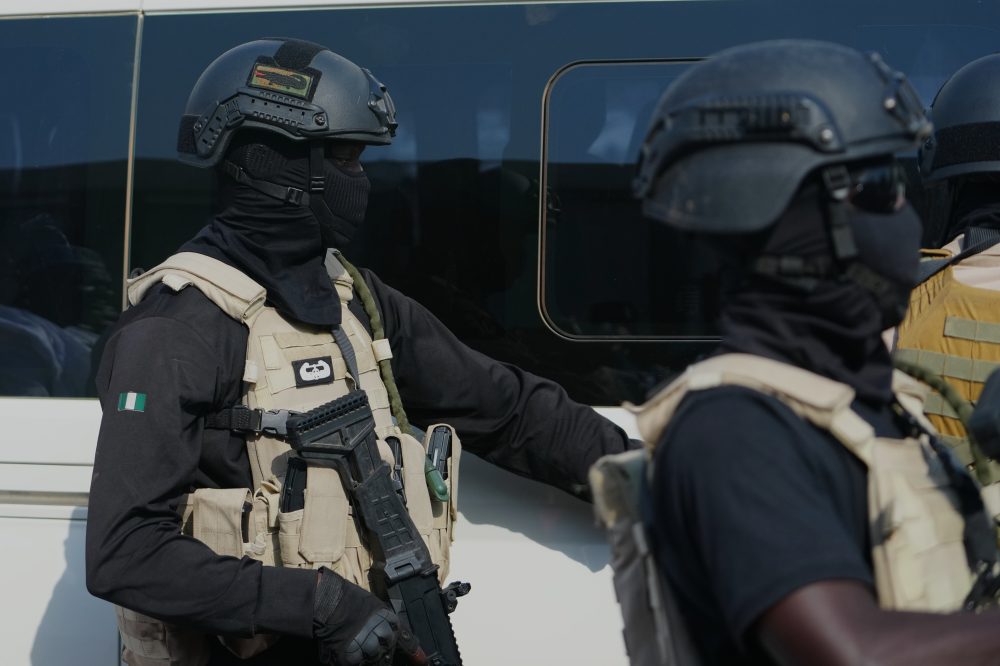
ABUJA, Nigeria (AP) — Armed attackers ambushed a passenger bus in Nigeria’s Benue state Thursday, kidnapping students who were traveling to take university examinations, according to state officials.
The kidnapping occurred on the Otukpo-Makurdi highway, where students and other bus passengers were taken captive, Governor Hyacinth Alia announced in a Thursday evening statement.
While the governor did not reveal the exact number of people kidnapped, local news outlets reported that 14 passengers were aboard the bus during the attack.
“The targeting of innocent citizens, particularly students on their way to sit for examinations, is unacceptable and stands against every norm of humanity and civil order,” Alia said.
According to the governor, authorities have launched search and rescue missions throughout the north-central state to secure the safe release of all kidnapped individuals.
So far, no organization has taken credit for Thursday’s kidnapping incident. The Benue region has become a center for armed attacks in Nigeria’s northern areas, where criminal groups frequently assault isolated communities and highway travelers through deadly raids and abductions for money.
Kidnapping of students has become a hallmark of the security crisis plaguing Africa’s largest nation by population, with experts noting that criminal organizations view educational institutions and students as “strategic” victims to generate maximum public attention.
The governor called on local residents to stay composed and continue working with law enforcement during rescue missions and other security activities.
“We will continue to take decisive actions to protect lives and property,” he added.
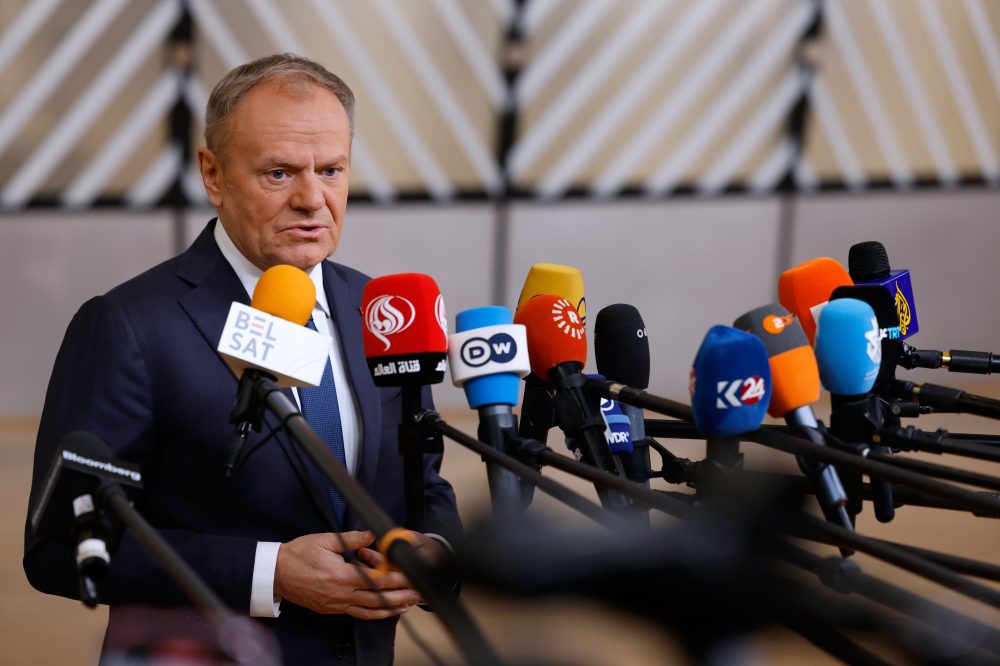
WARSAW, Poland — Poland’s Prime Minister Donald Tusk has accused a cryptocurrency company with alleged Russian ties of financially backing Polish politicians and supporting nationalist presidential candidate Karol Nawrocki through political events.
During Friday’s parliamentary session, Tusk made these allegations before lawmakers voted to override Nawrocki’s rejection of proposed cryptocurrency market regulations. The presidential candidate has blocked two separate government attempts to regulate the crypto industry over the past six months.
According to Tusk, the resistance to regulatory measures by certain Polish officials suggests they are working on behalf of Zondacrypto, a company that previously provided them financial backing and maintains connections to Russia.
“The source of this company’s financial success is not only Russian money linked to the so-called Bratva, one of the most important mafia groups in Russia, but also to Russian secret services,” Tusk stated during his parliamentary address.
Tusk further alleged that Zondacrypto simultaneously “sponsors political and social events in Poland and promotes very specific political forces,” including funding politicians from the previously ruling Law and Justice party and the far-right Confederation.
The Prime Minister also revealed that Zondacrypto served as a major sponsor for a Conservative Political Action Conference gathering held in Rzeszow, eastern Poland, during March 2025. This event occurred just five days prior to Poland’s presidential election, which featured a close race between Tusk’s liberal coalition candidate and Nawrocki, who had Law and Justice backing.
At that conference, former U.S. Homeland Security Secretary Kristi Noem criticized the liberal candidate as “an absolute train wreck of a leader” while praising Nawrocki, who attended the event, as someone who would govern Poland with a Trump-like approach.
“We need you to elect the right leader,” stated Noem, a notable Trump supporter, during her conference speech. “You will be the leaders that will turn Europe back to conservative values.”
Tusk also asserted that Nawrocki possessed complete knowledge about Zondacrypto’s background when he decided to veto the cryptocurrency regulations.
Responding to these allegations, Zbigniew Bogucki, who heads the president’s office, clarified that Nawrocki supports cryptocurrency market regulation but opposes the government’s proposed “flawed regulatory model.”
Confederation leader Slawomir Menzen defended the veto, arguing the proposed legislation would have “destroyed the Polish cryptocurrency market.”
Government officials maintain that the new regulatory framework aims to align Poland with European Union cryptocurrency standards.
“We chose to name her ‘Amada’ because she entered our family to be treasured,” explained Lorena Bonilla, whose transgender daughter recently gained approval to update her legal identity papers following an Ecuador Constitutional Court decision.
This case — combined with a second ruling issued in March — has created new opportunities for Ecuadorian teenagers who want to update their names and gender markers on government documents. Adult citizens obtained this same right following years of activism that resulted in legislative changes in 2024.
LGBTQ+ advocates throughout the region celebrated the court decisions, particularly as conservative political movements have strengthened their influence in recent months. However, these supporters also caution about ongoing legal and societal obstacles that transgender individuals must navigate.
“Political, religious and social groups in Ecuador continue to frame gender recognition for minors as dangerous,” stated Cristian González Cabrera, who researches LGBTQ+ issues for Human Rights Watch. “This atmosphere can lead to institutional resistance, bureaucratic delays and unreasonable rejections.”
Bonilla and her 17-year-old daughter encountered these challenges directly in 2018. Their court fight started when Amada was just 9 years old and educational institutions denied her enrollment because her official paperwork didn’t align with her gender identity.
“Fourteen schools turned us away and wouldn’t accept her,” Bonilla recalled. “That’s when we realized we had to pursue changing her name.”
Initially, a court approved Amada’s request to update her identity papers. However, the civil registry challenged this ruling and an appeals court subsequently decided that her passport and identification should display her birth name and assigned gender.
“Our rights took a major setback,” Bonilla stated.
Court decisions rather than legislative action or executive leadership have primarily driven LGBTQ+ progress in Ecuador. This pattern has emerged in neighboring Andean nations including Colombia and Peru as well.
“Legislative and executive officials represent the general population’s views, but LGBTQ individuals are frequently ignored,” explained Christian Paula, who leads the Pakta Foundation that offers legal assistance in cases similar to Amada’s. “Relying on judicial intervention demonstrates how closed-minded and insensitive our institutions remain.”
Three major LGBTQ+ milestones in Ecuador have resulted from court action. These include ending criminal penalties for homosexuality in 1997, a 2009 decision permitting an Ecuadorian transgender woman to legally change her name, and marriage equality recognition in 2019.
These judicial victories triggered opposition from conservative and faith-based organizations.
Following the Constitutional Court’s rulings, André Santos, who heads a prominent conservative advocacy group in Ecuador, posted on X that the court had exceeded its constitutional role. He has also criticized school policies that let students choose uniforms and restrooms matching their gender identity.
Ecuador’s Catholic bishops conference similarly voiced opposition to the court’s action. “Permitting adolescents to make such significant decisions creates substantial risks for their complete development,” the organization stated.
While President Daniel Noboa hasn’t been as vocal against transgender issues as certain other conservative Latin American leaders, his government has demonstrated minimal backing for LGBTQ+ causes.
During his campaign, he promised to protect traditional family structures. Since assuming office, security concerns and economic challenges have taken priority over gender and diversity matters in his policy focus.
“His cabinet members concern us most,” said Diane Rodríguez, an attorney and leader of Silueta X, an Ecuadorian LGBTQ+ advocacy group.
Rodríguez, who is transgender, highlighted Education Ministry officials, including current minister Gilda Alcívar, who has opposed incorporating what she terms “gender ideology” into curricula. This environment, Rodríguez noted, affects her personal experiences.
Living in Guayaquil where she and her partner, a transgender man, are raising their 4-year-old daughter, Rodríguez has encountered school enrollment obstacles.
“Registration became difficult because people look at me and think I’ll influence children to become transgender based on my appearance,” Rodríguez explained.
Her professional work includes providing legal assistance to those experiencing gender-based discrimination and supporting hormone therapy programs for transgender individuals. She also focuses on educating communities about violence targeting her community.
Silueta X releases yearly data on LGBTQ+ homicides. Their initial 2013 report documented two deaths, with numbers increasing annually. The 2025 publication recorded 30 fatalities, including 21 transgender women.
Amada expressed her female identity to her parents when she turned 3 years old. She requested a princess-themed birthday celebration. However, Bonilla and her husband — both with Catholic upbringings — believed she was mistaken and organized a prince-themed party instead.
Several years passed before they fully accepted their daughter and stopped consulting psychologists who claimed she had problems or that they had failed as parents.
“People make cruel remarks and don’t comprehend what families like ours endure,” said Mauricio Caviedes, Amada’s father. “I hope better education on this topic will help people develop understanding.”
As they gained knowledge about the transgender community, their effort to modify Amada’s documents expanded into broader advocacy. Bonilla and Caviedes became activists, bringing their children to demonstrations and educational events. They championed other LGBTQ+ issues like marriage equality and established a support network for families with transgender children.
“This became our only strategy to challenge the government,” Bonilla said. “We represented 25 families with transgender children of various ages, with the oldest being 12.”
During the COVID-19 pandemic, her family relocated to Canada. Although she values how accepting their new country has been toward her daughter, she continues advocating for LGBTQ+ rights in Ecuador.
Amada, now an excellent student who aspires to become a nurse, was influenced by years of observing her parents assist transgender friends and community members seeking discrimination-free healthcare access. While she has never appeared in public media interviews, her case’s visibility represents a lasting impact for Bonilla.
“Society believes transgender people are destined to work in sex industries or remain hidden,” Bonilla said. “But we want all parents to understand that someday their child can achieve any goal they set.”
Ford Motor Company has announced a massive recall affecting nearly 1.4 million F-150 pickup trucks across the United States due to a dangerous transmission malfunction that could result in drivers losing control of their vehicles and potentially causing accidents.
Company officials have confirmed they are investigating two reported injuries and one crash that may be connected to this mechanical problem.
The safety recall affects F-150 light-duty trucks equipped with six-speed automatic transmissions that were manufactured from March 12, 2014, through August 18, 2017.
According to the National Highway Traffic Safety Administration’s official recall notice, affected pickup trucks may experience a faulty signal from the transmission range sensor to the powertrain control module. This malfunction can trigger an unexpected and temporary downshift into second gear, causing a sudden decrease in wheel speed that may result in rear tire sliding until the vehicle decelerates.
Ford has documented 444 warranty claims and 105 customer complaints potentially connected to this defect as of earlier this month.
Truck owners will receive recall notifications through the mail with instructions to schedule service appointments at Ford or Lincoln dealerships, where technicians will update the powertrain control module calibration free of charge.
Trade between Europe and the United States has experienced a dramatic downturn, with European exports declining by 26.4% in February, marking the second consecutive month of severe drops, according to new data from the European Union’s statistics office.
The February decline follows an even steeper 27.8% decrease in January, contributing to a 60% shrinkage in the EU’s trade surplus with America. These figures were released Friday by Eurostat, the bloc’s official data agency.
However, trade analysts suggest these numbers may present a skewed picture of the actual impact from President Trump’s tariff policies. The comparison period includes early 2025, when European companies rushed shipments to beat the March tariff deadline, creating artificially high baseline numbers. During January and February of last year, exports to America had surged by 16% and 22.4% respectively.
Determining the true effect of American tariffs remains challenging for economists. Many experts point to fourth-quarter 2025 data as providing a clearer assessment, though they note the euro’s 8.9% strengthening against the dollar has also hurt European competitiveness.
The final quarter of last year showed EU exports to America down 15% overall, with iron and steel shipments falling nearly 40% and chemical exports dropping between 60% and 80%. These declines occurred despite significant front-loading of shipments earlier in the year.
Vincent Stamer, an economist with Commerzbank, observed that European exports to other global markets actually grew by 6.1% during this period, but warned the situation could deteriorate further.
“Past episodes of tariff hikes have shown us that it takes trade flows two to three years to fully respond to new tariffs,” Stamer explained.
The economist also highlighted concerns about new tariffs affecting patented pharmaceuticals, a key European export sector. Commerzbank’s analysis suggests US tariffs could reduce eurozone economic output by 0.3% in 2026 alone.
European automakers saw mixed results despite benefiting from reduced US tariffs of 15% instead of 25% during the October-December period. Car exports still fell 22%, though this represented an improvement from the sharper declines seen in the second and third quarters.
Research from ING bank revealed that American chemical and transportation equipment exports to Europe also increased from early 2024 through late 2025. The data showed America’s share of total EU exports declined across all major European countries except France during this timeframe.
Surprisingly, some European industries managed growth despite facing steep tariffs. Aluminum exports rose 9% and copper products increased 15% in the year’s final quarter, even with 50% US tariffs in place.
European Aluminium, an industry association, explained the aluminum increase partly resulted from technical problems at an American facility. For copper, European Metals noted that insufficient US domestic production capacity drove prices high enough to make European exports profitable even with tariffs.
The maritime sector showed remarkable growth, with ship and boat exports more than tripling in both the third and fourth quarters.
Meyer Turku shipyard in Finland, part of the German Meyer family’s operations, reported that US tariffs had not created a “decisive impact” on their business. The facility delivered the massive cruise ship “Star of the Seas” to Royal Caribbean last year and secured shipbuilding contracts extending through 2036.
The European Boating Industry, representing yacht and pleasure boat manufacturers, noted sales to America spiked in June before declining, though not as dramatically as tariffs might have suggested. This pattern likely reflects deliveries of previously placed orders.
On February 20, the US Supreme Court overturned Trump’s comprehensive tariff program, which had been implemented under emergency powers legislation. However, within days, America imposed a new temporary global import fee and announced plans to rebuild tariffs similar to those negotiated with the EU previously.
The chief executive of artificial intelligence company Anthropic, Dario Amodei, has a scheduled meeting with White House chief of staff Susie Wiles this Friday, according to a report from Axios. The meeting appears to signal possible progress in resolving an ongoing disagreement between the AI company and the Pentagon.
The Trump administration is reportedly recognizing the advanced features of Anthropic’s latest artificial intelligence system, called Mythos, particularly its sophisticated abilities to test cybersecurity defenses, the report indicates.
Neither the White House nor Anthropic provided immediate responses when asked for comment. Reuters was unable to confirm the report independently.
A source familiar with the discussions told Axios it would be “grossly irresponsible” for the United States government to deny the country access to the technological benefits this new system provides, warning that doing so could advantage China.
The Mythos system, which was unveiled on April 7, is currently being used through Anthropic’s “Project Glasswing,” a restricted program that allows certain organizations to test the unreleased Claude Mythos Preview system for protecting against cyber threats.
Bloomberg News reported Thursday that federal officials are planning to distribute a version of Anthropic’s Mythos technology to key government agencies.
Company co-founder Jack Clark confirmed Monday that Anthropic has been in discussions with the Trump administration about Mythos, despite the Pentagon ending its business relationship with the AI company following a contract disagreement.
A new United Nations report shows that women and girls in Gaza faced unprecedented casualties during the recent conflict, with fatalities continuing even after a ceasefire agreement.
UN Women released data Friday indicating that more than 38,000 women and girls lost their lives in Gaza from October 2023 through December 2025, averaging at least 47 deaths per day throughout the conflict period.
Sofia Calltorp, who leads humanitarian action for the gender equality-focused agency, spoke to reporters in Geneva about the alarming statistics.
“Women and girls accounted for a proportion of deaths far higher than those observed in previous conflicts in Gaza,” Calltorp stated.
“They were individuals with lives and with dreams,” she added.
The organization expressed alarm that women and girls continue to die following October’s ceasefire agreement, though exact numbers remain unclear due to insufficient gender-specific data collection.
The October ceasefire brought an end to two years of intensive warfare but resulted in Israeli forces maintaining control over a largely evacuated area comprising more than half of Gaza. Hamas continues to govern the remaining narrow coastal territory.
Medical officials in the area report that over 750 Palestinians have died since the ceasefire began, while militant groups have killed four Israeli soldiers. Both Israel and Hamas have accused each other of breaking ceasefire terms.
Israeli officials state their operations target potential attacks from Hamas and other armed groups.
UNICEF also issued a statement Friday highlighting that children continue facing deadly violence in Gaza at disturbing levels, with at least 214 child deaths documented over the past six months.
The displacement crisis affects approximately one million women and girls currently living in Gaza, according to UN Women’s findings.
“Extensive damage to infrastructure has made it almost impossible for women and girls in Gaza to access their basic needs like healthcare,” Calltorp explained.
World Health Organization data indicates that more than 500,000 women cannot access critical medical services, including prenatal care, postnatal support, and treatment for sexually transmitted infections.
Regions Financial Corporation announced Friday that its first-quarter earnings climbed 14% compared to the same period last year, benefiting from increased lending activity that followed Federal Reserve interest rate reductions.
The Federal Reserve decreased rates by 75 basis points during the latter half of 2025, which sparked increased borrowing and enhanced lending revenue for banks nationwide during the first quarter. Banking executives indicate they anticipate continued strong loan demand as reduced uncertainty around trade policies encourages businesses to seek more credit.
The bank’s net interest income – representing the gap between earnings from loans and costs paid on customer deposits – increased 4.5% year-over-year to reach $1.25 billion for the quarter.
Credit loss provisions decreased to $91 million from $124 million in the prior year period. The financial institution reported that overall loan quality is getting better as it continues working through previously identified problem loan portfolios.
“Growth in loans and deposits accelerated during the first quarter, credit metrics continued to improve and client sentiment remained generally optimistic across our footprint,” said CEO John Turner.
The bank noted that consumer financial health remained stable, and employment market conditions showed no signs of significant deterioration.
Solid results from investment banking and wealth advisory services also contributed to Regions’ quarterly performance, with fee-based income climbing 6% to $625 million.
Net earnings totaled $559 million, equivalent to 62 cents per share, up from $490 million or 51 cents per share in the same quarter last year.
The bank also disclosed approximately $12.8 billion in exposure to non-depository financial institutions, an area drawing increased regulatory attention due to potential risks in the private lending sector.
Regions stated it maintains protective measures for its private credit exposure, which represents 14% of its non-depository financial institution portfolio.
Worcester County residents will have the chance to weigh in on their local government’s spending plans during a public hearing scheduled for May 5.
County officials announced the hearing will focus on the proposed operating budget for fiscal year 2027, giving community members an opportunity to review how their tax dollars will be allocated.
The public session represents a key step in the budget approval process, allowing residents to voice their opinions and ask questions about the county’s financial priorities for the upcoming fiscal year.
Details about the specific time and location of the May 5 hearing were not immediately available in the initial announcement.
Delaware Department of Transportation officials are alerting drivers to ongoing traffic disruptions along a section of McKee Road this morning.
The affected stretch runs between Main Street and Scarborough Road, where drivers can expect periodic lane restrictions to remain in effect until 12 PM today.
Motorists traveling through this area should anticipate possible delays and may want to consider alternate routes if possible. DelDOT has not specified the reason for the lane closures in their traffic advisory.
America’s national soccer team is preparing for the World Cup with ambitious goals of securing their first knockout round triumph since their memorable 2002 campaign.
The squad faces significant challenges heading into the tournament, particularly with what many consider their weakest goalkeeper situation in 40 years and limited central defensive options from elite European leagues. However, their co-host status provides favorable seeding that could help them avoid top-tier competition until reaching the round of 16.
“It would be everything to win, and especially to do it in your home, in front of your friends, your families, the people that have supported you throughout your whole career that are closest to you,” midfielder Weston McKennie said.
The national team seeks to demonstrate soccer’s growing prominence in a country where it continues to lag behind the NFL, MLB and NBA in fan interest. Their World Cup knockout record stands at a disappointing 1-7, with their sole victory coming against Mexico two decades ago.
The Americans haven’t advanced beyond the quarterfinals since 1930’s inaugural World Cup, when they reached the semifinals. Their best modern performance came in 2002 when they made the quarterfinals. Recent form against European teams has been concerning, losing eight consecutive matches since 2022 while being outscored 22-6, yet team confidence remains high.
Mauricio Pochettino, who took over as head coach in September 2024 following the team’s Copa America group stage exit, has instilled championship ambitions in his players.
“Why not us?” he said during a March training camp. “We need to really believe that we can be there. We need to dream.”
The tournament begins for the Americans on June 12 against Paraguay, followed by Group D matches against Australia and Turkey.
The goalkeeper position, once a position of strength featuring standouts like Tony Meola, Kasey Keller, Brad Friedel, Tim Howard and Brad Guzan, has become a major concern.
Matt Freese has taken over the starting role from Matt Turner, who held the position during the 2022 tournament. The team may enter the World Cup without a European-based goalkeeper for the first time since 1990.
“We had this goalkeeping thing figured out for a long time, didn’t we? Going all the way back,” Howard said. “It just seems like we’ve had a little bit of a rut.”
Star player Christian Pulisic, widely considered America’s top talent, hasn’t found the net in international competition for eight matches dating back to November 2024.
His club form has also been concerning, going scoreless in 14 appearances for AC Milan since December 28 through mid-April.
“He’s going to score because he has the quality,” Pochettino said.
At 27 years old and in his athletic prime, Pulisic carries the weight of expectations as he did in 2022, when his crucial goal against Iran in the group stage finale secured advancement to the knockout rounds.
“There’s pressure, I feel it. Yes, it’s there but it’s nothing that I can’t handle,” he said.
Defensively, Chris Richards represents one of the few American center-backs competing at the highest level, enjoying an excellent campaign with Crystal Palace at age 26. He was unavailable for the 2022 World Cup due to hamstring problems.
Team captain Tim Ream, who has led the squad through much of Pochettino’s tenure, is 38 and moved from Fulham to Charlotte FC in Major League Soccer following the 2023-24 season.
Auston Trusty, 27, has established himself as a regular starter for Celtic in Scotland since late October, while Mark McKenzie, also 27, plays consistently for Toulouse.
Pochettino has experimented with a three-center-back formation since taking charge last fall.
Right-back Sergiño Dest, who started in 2022, is working to recover from a hamstring injury suffered while playing for PSV Eindhoven on March 7.
Veteran center-back Cameron Carter-Vickers will miss the tournament entirely due to an Achilles injury, and John Tolkin, third in the left-back pecking order behind Antonee Robinson and Max Arfsten, faces uncertainty with a knee problem.
Alex Freeman, a defender who made the move from Orlando to Villarreal in January, brings an interesting family connection as the son of Antonio Freeman, the former All-Pro receiver who captured the 1997 Super Bowl with Green Bay.
“Growing up I always got asked if football was the path, but when I was younger I always had a secret love for soccer,” Alex said.
WASHINGTON — Federal lawmakers are intensifying oversight of online prediction markets following revelations that people were placing bets on sensitive military operations and foreign policy developments.
The controversy erupted when Massachusetts Democratic Representative Seth Moulton discovered users on Polymarket, a major prediction betting platform, were wagering on the timing of a U.S. military rescue mission for a downed airman in Iran. Screenshots showed 15% of bettors predicted an April 3 rescue, while 63% wagered on April 4.
Moulton, a former Marine with four Iraq deployments, condemned what he called a “dystopian death market” on social media. The platform subsequently halted the betting, stating it failed to meet their integrity standards.
“This is war profiteering and Congress needs to step in and stop it,” Moulton declared. He criticized Polymarket as “completely unwilling to self-regulate when it comes to betting on the lives of our service members.”
The incident has sparked bipartisan concern in Congress about prediction markets — online platforms where users bet on outcomes ranging from sports events to religious prophecies. These concerns center on potential insider trading using classified government information.
“It’s a national conversation about what it means to have market integrity,” explained Kristin Johnson, former commissioner at the Commodity Futures Trading Commission, which oversees these markets.
Washington’s response has been notably rapid compared to past regulatory delays with tobacco, opioids, and social media platforms. The markets face criticism for potentially corrupting sports integrity and fueling gambling addiction among young men.
Polymarket operates primarily offshore, beyond direct U.S. regulatory reach, while its main competitor Kalshi functions under domestic oversight. Donald Trump Jr. serves on Polymarket’s advisory board and as a paid Kalshi adviser, with his venture capital firm 1789 Capital investing in Polymarket.
Recent Associated Press reporting revealed suspicious activity on Polymarket, where new accounts made precisely timed bets on U.S.-Iran ceasefire negotiations on April 7, generating hundreds of thousands in profits. The White House issued warnings against staff using private information for market trading the same day the report published.
Earlier concerns arose when an anonymous user earned over $400,000 betting on Venezuelan President Nicolás Maduro’s removal, raising insider trading suspicions.
Indiana Republican Senator Todd Young, also a former Marine, expressed growing alarm. “I became especially concerned about market distortions, improper decision making, and undermining of public trust through self-enrichment after the news broke about Venezuela,” he stated.
Young partnered with Michigan Democrat Elissa Slotkin on legislation prohibiting federal employees from using confidential information for prediction market betting. Their bill represents one of several bipartisan congressional efforts targeting these platforms.
Potential presidential candidate Rahm Emanuel proposed broader restrictions, suggesting bans on all federal employee and family member participation. He also recommended a 10% fee on prediction markets and online gambling to fund scientific and health research.
California Governor Gavin Newsom, another possible Democratic presidential contender, issued executive orders preventing his appointees from using nonpublic information for market trading.
While no legislation has clear passage prospects currently, the scrutiny highlights different market approaches. Polymarket officials remained silent for comment, operating mainly offshore with limited U.S. functions restored only after Trump’s return to office.
Kalshi promotes its regulated status and supports additional oversight. “We support Congress and regulators taking action to police insider trading, keep prediction markets onshore and under federal regulation,” spokesperson Elisabeth Diana said. “Not all prediction markets are the same.”
White House spokesman Davis Ingle confirmed Trump’s position that “members of Congress and other government officials should be prohibited from using nonpublic information for financial benefit.”
The Commodity Futures Trading Commission, responsible for overseeing prediction markets, faces capacity questions. Dennis Kelleher, president of Better Markets advocacy group, questioned whether the agency has “experience, expertise, budget, technology to actually in any way supervise, regulate or police gambling on everything from whether it’s Iran, Venezuela, whether it’s reality TV, whether Christ is going to come back before the end of the year.”
The commission currently operates with only one member, Michael Selig, a former CFTC attorney who represented cryptocurrency clients before Trump’s appointment. This staffing concerns congressional Democrats, with Illinois Senator Richard Durbin noting the Chicago office’s enforcement attorneys dropped from 20 to zero.
During Thursday’s House Agriculture Committee hearing, Selig defended agency operations, stating they were hiring staff and improving efficiency. He refused to delay new regulations pending board appointments but emphasized insider trading concerns.
“Nothing is more important than protecting market integrity,” Selig testified.
However, CFTC enforcement only extends to domestically regulated markets, primarily affecting Kalshi. Polymarket recently launched a U.S.-compliant platform with a waiting list, representing a small fraction of its offshore operations.
At a Vanderbilt University discussion, Selig blamed the previous Biden administration for creating regulatory conditions that discouraged domestic market operations.
Multiple states have attempted restricting prediction markets as unlicensed gambling, but the CFTC has asserted exclusive regulatory authority, filing lawsuits against Connecticut, Arizona, and Illinois this month.
This creates an unusual Washington situation with broad legislative agreement on addressing prediction market issues, but varying opinions on solution scope.
Young acknowledged his proposal as preliminary, noting lawmakers need greater prediction market understanding. “But I think we can all agree at this early stage, as usage of these platforms grows and real money is put at stake, that this is a measure that should be taken immediately,” he concluded.
KINSHASA, Congo — Fifteen migrants from Latin America touched down in Congo’s capital city of Kinshasa early Friday morning after being deported from the United States, according to their legal representative.
The arrival marks another instance of the Trump administration utilizing partnerships with African nations to speed up the removal of migrants from U.S. soil.
U.S. attorney Alma David told The Associated Press that all of the deportees originated from Latin American countries and that Congo’s government intends to house them temporarily within its borders.
A representative from Congo’s migration agency verified that the group had arrived but declined to share additional information.
David explained that each of the deportees had previously been granted legal protections by U.S. judges that were meant to prevent their forced return to their countries of origin. The group is currently being accommodated at a hotel in Kinshasa, she noted.
The International Organization for Migration, which operates under United Nations affiliation, will participate in providing what David described as “assisted voluntary return” services.
“The fact that the focus is on offering them ‘voluntary’ return to their home country when they spent months in immigration detention in the U.S. fighting hard to not have to go home is very alarming,” she said.
The IOM has not yet responded to requests for comment from the Associated Press.
Earlier this month, Congo’s Ministry of Communications issued a statement announcing the country would accept certain migrants through a new agreement established under the Trump administration’s third-country program.
The ministry characterized the arrangement as “temporary” and said it demonstrates Congo’s “commitment to human dignity and international solidarity.” Officials stated the agreement would not burden the government financially, as the United States would handle all necessary logistics and expenses.
The statement emphasized that deportees would not be automatically transferred elsewhere, noting: “Each situation will be subject to individual review in accordance with the laws of the Republic and national security requirements.”
The United States has established similar third-country deportation agreements with at least seven additional African nations, many of which have been significantly impacted by Trump administration policies that have limited trade, aid and migration opportunities.
According to a recent report from the Democratic staff of the Senate Foreign Relations Committee, the Trump administration has allocated at least $40 million toward deporting approximately 300 migrants to nations other than their countries of origin.
Legal advocates and activists have questioned the nature of these agreements with African and other nations. Multiple African countries that have entered into such deals maintain governments known for repressive practices and poor human rights records, including Eswatini, South Sudan and Equatorial Guinea.
A multi-agency law enforcement initiative targeting human trafficking took place Wednesday, April 1, 2026, throughout Kent County with primary focus in Dover. The Dover Police Department spearheaded the effort alongside the FBI’s Delaware Violent Crime and Safe Streets Task Force, Delaware Probation and Parole, and Smyrna Police Department.
Law enforcement officials encountered thirteen women participating in commercial sex activities throughout the operation. Support specialists from the FBI, Dover Police victim services, and the Dover Police Behavioral Health Unit provided assistance and resources to each woman. Authorities continue ongoing outreach efforts with those who have maintained contact with investigators.
Three men were taken into custody by Dover Police on charges of soliciting prostitution. The arrested individuals are:
• Courtney V. Donnatien (born July 31, 1982)
• Nathaniel Allen (born February 19, 1971)
• Davon Spence (born December 21, 2000)
Each of the three suspects faces charges of soliciting prostitution and has been released from custody.
The initiative generated a total of 15 interactions, demonstrating the effectiveness of combining law enforcement action with community support services.
Dover Police Chief Thomas Johnson released a statement regarding the operation:
“This operation highlights the value of strong partnerships and a coordinated approach to addressing human trafficking and related criminal activity. By working alongside our federal, state, and local partners, we are able to identify potential traffickers, hold offenders accountable, and connect individuals involved in commercial sex work with services and support aimed at providing safer, alternative life paths. These efforts are critical to improving public safety and continuing to disrupt criminal networks operating in our communities.”
FBI Baltimore Special Agent in Charge Jimmy Paul also commented on the operation’s success: “We are proud of our collective success during this operation. The FBI remains committed to combatting human trafficking in our communities. More than a dozen women impacted by this heinous crime now have access to vital support and resources to help them move forward.”
MEXICO CITY – A controversial conference focused on masculinity will take place as scheduled this Friday in Mexico’s Jalisco state, despite significant backlash over reports that taxpayer funds were used to support the for-profit gathering.
The event, titled “Fearless Masculinity,” features divisive speakers including author Jordan Peterson and is being held in one of Mexico’s most dangerous regions for women. Local media reports indicated that a municipal committee had allocated 400,000 pesos (approximately $23,170) to cover speaker payments, accommodations, and promotional costs for the conference, which charges attendees up to $430 per ticket.
Government agency logos that initially appeared on the event’s sponsorship materials were later removed, with officials subsequently denying any financial involvement in the conference, which promotes Catholic values. Mexico operates as a secular nation, and its constitution prohibits government sponsorship of religious gatherings. President Claudia Sheinbaum addressed the controversy during a recent press briefing, stating that the state’s governor owes the public an explanation.
The timing and location of the event have drawn particular criticism given Mexico’s ongoing battle with gender-based violence. Government statistics reveal that 756 women died violently during the first two months of this year alone, with most cases classified as accidents. Additionally, authorities recorded 2,812 rapes and received more than 162,000 emergency calls related to domestic and gender-based violence during the same period.
Luz Leon, speaking on behalf of the advocacy organization Balance, confirmed to reporters that her group along with 35 other associations have submitted an official complaint demanding transparency about the funding situation and calling for an investigation into the officials involved.
“Authorities frequently claim there’s insufficient funding to help victims in Guadalajara and throughout Jalisco, a region plagued by extreme violence and numerous disappearances of young people,” Leon stated. “It’s extremely troubling that rather than allocating resources to tackle these critical problems, they’re being diverted for this purpose.”
Leon further criticized the event’s messaging, explaining, “They are encouraging gender-based violence and promoting narratives that reinforce discrimination through prejudice and harmful stereotypes.” She referenced the conference’s self-promotion as a response to what organizers call “the assault on masculinity.”
The speaker lineup includes Peterson and Mexican entertainer Eduardo Verastegui, a conservative activist, both known for advocating traditional gender expectations for women. The roster also features former Barcelona soccer team captain Carles Puyol and ex-Brazilian midfielder Ricardo Kaka, though their participation remains unconfirmed, alongside several Catholic clergy members.
Documentation from Balance shows that as of April 8, the conference’s sponsor list displayed logos from Jalisco, Guadalajara, and Zapopan local governments, as well as the prominent Catholic Anahuac University Network and Tajin, the company behind Mexico’s widely popular chile-lime seasoning. By the following week, all these logos had been removed from promotional materials.
Neither the event organizers nor the previously listed sponsors provided responses to media inquiries. Local news outlets quoted the conference director as claiming the gathering aims to benefit society rather than harm others.
The three-day conference is taking place in Guadalajara, which is scheduled to host multiple World Cup soccer matches in June. Organizers are marketing it as Latin America’s most significant masculinity conference.
Standing on a sandy stretch of Cuba’s Bay of Pigs coastline, 90-year-old Orestes Chamizo gestures toward the exact location where U.S.-backed Cuban exiles stormed ashore on April 17, 1961.
“The mercenaries came in right there,” Chamizo explains, remembering the failed invasion and his participation in hunting down fleeing survivors who escaped into the surrounding marshland.
With President Donald Trump making repeated threats against Cuba and enforcing what amounts to an oil embargo on the island nation, Chamizo warns that any future American invasion would meet the same fate as the first attempt.
“I’m 90 years old but if I have to pick up a gun again, I’ll do it without fear,” the energetic veteran told reporters. “The last invasion failed … and the next one will too.”
The idea that communist Cuba could successfully repel an attack from the world’s dominant military power seems just as unlikely now as it did six and a half decades ago.
Conversations with more than 20 Bay of Pigs area residents of various ages reveal a stark contrast between the passionate defiance of those who experienced the revolution firsthand and the despair of younger Cubans struggling under the weight of a failing government-controlled economy and American economic sanctions.
“Young people here don’t have the same spirit they used to,” explains Miguel Piloto Garcia, a 22-year-old barber speaking from his front porch near the 1961 invasion site. “We want to improve our lives, but right now there’s no future for us.”
Both nations, despite being separated by only 90 miles of ocean, have confirmed they are engaged in diplomatic discussions. However, Trump has repeatedly suggested military action against Cuba might be possible, telling journalists as late as March that he could be “taking” the Caribbean island.
“I mean, whether I free it, take it. Think I can do anything I want with it,” Trump stated.
Cuban leader Miguel Diaz-Canel recently informed NBC that his country has no desire for armed conflict. Nevertheless, he cautioned that Cuba would resist any attack through “irregular warfare” that would render any American military operation “untenable.”
The island’s legal framework mandates military service for all young citizens, beginning at age 18. This typically one-to-two-year commitment includes weapons instruction as part of Cuba’s comprehensive “War of All the People” strategy, which is codified in the National Defense Law and promoted by Diaz-Canel during his recent television appearance.
“Every Cuban man or woman has a mission, a purpose, a place to defend, and they will have their own place to take in the defense,” Diaz-Canel explained. “So this is all based on people’s participation, voluntary participation.”
Since the United States invaded Venezuela in early January and removed former president Nicolas Maduro from power, Cuba has conducted weekly military exercises every Friday, dubbed “National Defense Days.”
These training sessions, frequently broadcast on Cuban state television news, feature citizens in both city and countryside settings practicing with rifles, operating aging Soviet tanks, piloting drones, and throwing explosive devices.
Although these military preparations receive increasing media attention, Cuba’s defense capabilities remain largely mysterious to international observers, with no public information available regarding troop readiness, budget allocation, equipment inventory, or overall strength.
Without access to public polling data, determining popular support for the military remains challenging in Cuba.
The heated exchanges between Washington and Havana take considerable time to reach the remote Bay of Pigs region, an isolated area within the Zapata Swamp that currently endures 22-hour daily power outages. Local residents have adapted to life with minimal public transportation and limited access to modern technology like cellular service and internet connectivity.
Thirty-year-old Yudel Ramos, who makes his living fishing and catching crabs, finds himself too preoccupied with survival to focus much attention on potential warfare. His wages don’t cover basic necessities like purchasing charcoal, forcing him to spend his time searching for burning materials.
“If the time came to give my life for Cuba, I would, but sometimes I don’t know what to think,” he shared outside his residence in Palpite. “We are going through a very difficult time.”
Mass emigration has also reduced the pool of potential military personnel.
From 2020 through 2024, Cuba experienced a population decrease exceeding 1.4 million residents, representing more than 10% of the total population, primarily due to emigration heavily concentrated among people aged 18 to 30, based on recent statistics from Cuba’s ONEI data collection agency.
This demographic transformation deeply troubles Jesus Bernardino Alonso, an 87-year-old Bay of Pigs veteran among the few still residing in Palpite, a community whose entrance features a monument commemorating the victory over American-trained attackers.
Alonso remembers how the entire community mobilized to respond to the invasion 65 years earlier.
“It’s true times have changed, and young people today … some don’t share the same ideals,” Alonso reflected. “But there are still many of us who defend this, even though we know we are facing a superpower.”
Swedish electric vehicle manufacturer Polestar announced Friday that its fourth-quarter earnings showed significant improvement, with revenue climbing dramatically and financial losses decreasing substantially compared to the previous year.
The automaker reported that revenue soared 54% to reach $887 million during the final three months of 2025, ending December 31. Meanwhile, the company’s net losses decreased to $799 million, a notable improvement from the $1.18 billion loss recorded during the same period in 2024.
Over the past year, Polestar has concentrated its efforts on European markets, where consumer appetite for electric vehicles remains robust, while stepping back from other key markets including the United States where sales have been disappointing.
Global uncertainties stemming from Middle Eastern conflicts and the impact of President Donald Trump’s tariff strategies have also disrupted Polestar’s international growth objectives, reinforcing its decision to prioritize European operations.
Chief Executive Officer Michael Lohscheller warned that market conditions may become increasingly difficult “amid ongoing geopolitical developments.”
The company declined to offer detailed financial projections beyond its earlier announcement regarding retail sales volume growth, which is anticipated to rise at low-double-digit percentages.
Polestar has implemented aggressive cost-reduction measures, including workforce reductions, streamlined manufacturing operations, and supply chain restructuring. Employment levels dropped to 1,686 workers by the end of 2025, down from 2,547 employees at the conclusion of 2024.
The electric vehicle maker plans to release first-quarter financial data on May 7. Company cash reserves stood at approximately $1.16 billion at year-end 2025.
Fourth-quarter adjusted gross margin reached 1.9%, marking a substantial turnaround from the negative 39% recorded in 2024.
Virginia’s Democratic Governor Abigail Spanberger has enacted new legislation establishing legal protections for access to birth control methods. The law creates enforceable rights for individuals seeking contraceptive medications and devices, with legal recourse available when access is denied.
The statute encompasses “any drug, device, or biological product intended for use in the prevention of pregnancy.” Critics from pro-life organizations emphasize that this broad definition includes emergency contraceptives such as Plan-B, which they argue are now classified as protected rights under Virginia law.
Documentary filmmaker Stephen Shaw, creator of “Birthgap,” is sounding the alarm about a demographic crisis he believes world leaders and experts are failing to address adequately. Shaw points to dramatically declining fertility rates across the globe as a looming threat that demands immediate attention.
According to Shaw, wealthy nations around the world — the United States included — are experiencing birth rates that fall short of replacement levels. This means women in these countries are not having sufficient children to offset the number of deaths occurring in their populations.
The filmmaker argues that modern societies have systematically made parenthood a lower priority, a shift he warns could lead to serious repercussions in the coming years.
BEIRUT (AP) — An uneasy peace descended across Lebanon Friday as a 10-day ceasefire negotiated by the United States went into effect between Israel and Hezbollah, leading thousands of displaced residents to start returning home despite ongoing uncertainty, widespread devastation, and Israeli advisories warning against traveling to certain areas of southern Lebanon.
Early Friday morning, traffic stretched for miles along the southern route toward the damaged Qasmiyeh bridge spanning the Litani River, an important crossing that connects the southern coastal city of Tyre with northern regions. Cars loaded with mattresses, luggage, and rescued possessions moved slowly through a single reopened lane that had been quickly fixed following an Israeli airstrike just one day before.
The recent conflict between Israel and Hezbollah forced over one million people from their homes. Although Lebanese authorities advised against immediate returns, many residents began traveling toward southern Lebanon within hours of the ceasefire announcement. The truce seemed to hold steady through the night.
In southern communities such as Jibsheet, small numbers of residents came back to destroyed apartment buildings and roads covered with concrete debris, bent aluminum window coverings, and hanging power lines.
“I feel free being back,” said Zainab Fahas, 23. “But look they destroyed everything — the square, the houses, the shops, everything.”
Many residents remained skeptical that their suffering had truly ended.
“Israel doesn’t want peace,” said Ali Wahdan, 27, a medic walking on crutches over the rubble of the emergency services’ headquarters in Jibsheet. He was badly wounded in an Israeli airstrike that hit the building without warning during the first week of the war.
“I wish it were different,” he said. “But this war will continue.”
In Beirut’s southern suburb neighborhood of Haret Hreik, complete buildings had been turned to debris following weeks of heavy Israeli bombardment. Ahmad Lahham, 48, held up the yellow Hezbollah flag while standing on a pile of wreckage that had once been his apartment building, which also contained a branch of Hezbollah’s financial division, Al-Qard Al-Hassan.
“We are at the service of the fighters,” said Lahham, expressing his dedication to the organization.
He credited Iran and claimed its influence in discussions with the U.S. brought about the ceasefire, while criticizing Lebanon’s direct negotiations with Israel.
“Only the Iranians stood with us, no one else,” he said, referring to Lebanon’s leaders as “the leadership of shame.”
A municipal official in Haret Hreik reported that Israel attacked the area 62 times during the past six weeks.
“We’ve been able to clear up the rubble of the partially damaged buildings, but for those destroyed, we will need special equipment,” Sadek Slim, the neighborhood’s deputy mayor, told a press briefing.
The district was jammed with vehicles as people returned to inspect their properties and Hezbollah supporters rode through on motorcycles, displaying the group’s banner.
PRISTINA, Kosovo — The Parliament of Kosovo plans to vote Friday on deploying several dozen security personnel to an international peacekeeping mission in Gaza, marking the nation’s transition from receiving military assistance to providing it.
Lawmakers are expected to give formal approval to a government proposal sending troops to the International Stabilization Force, a U.S.-supported program established after last year’s ceasefire agreement between Israel and Hamas.
The ISF has not yet been deployed but will work to maintain stability and support reconstruction efforts in Gaza as part of President Donald Trump’s Board of Peace initiative, which Kosovo has agreed to join. Other participating nations include Indonesia, Albania and Kazakhstan.
For Kosovo, joining the international mission represents significant progress since declaring independence from Serbia in 2008 — a decision Belgrade continues to reject.
Serbia’s violent suppression of Kosovo’s independence movement led to NATO’s 1999 military intervention, which expelled Serbian forces from the region and established the ongoing KFOR peacekeeping presence.
“Our country has been a security consumer, meaning NATO countries have contributed to the security of the Republic of Kosovo,” Defense Minister Ejup Maqedonci told The Associated Press. “Today we are entering a phase where we are becoming a provider, or exporter, of security.”
According to Maqedonci, Kosovo will deploy several dozen officers, including explosive ordnance disposal specialists. Their responsibilities will include humanitarian assistance, security support and additional duties outlined in the Gaza force’s operational guidelines.
“We are currently in the final preparations phase,” Maqedonci said. He noted that American officials have assisted with preparations, including troop vaccinations, visa processing and other logistical arrangements.
Kosovo maintains approximately 4,000 security personnel who are training to form a small, professional military force compatible with NATO standards.
Local resident Milot Hoxha, a 43-year-old musician, expressed support for the Gaza deployment.
“We ourselves have gone through such a transition and every small help for us has been very significant,” he said. “I believe it will be the same for them, that any kind of help will be positive. I strongly support this decision.”
Relations between Kosovo and Serbia remain strained since the war ended, with periodic violent episodes. European Union officials have attempted to mediate discussions between Belgrade and Pristina to normalize diplomatic ties, but these efforts have recently stalled.
While the United States and most European Union members recognize Kosovo’s sovereignty, Russia and China continue supporting Serbia’s territorial claims.
COLOMBO, Sri Lanka (AP) — Officials announced Friday that Sri Lanka has completed the repatriation of 238 Iranian naval personnel, including 32 survivors from a vessel destroyed by an American submarine attack in the Indian Ocean.
The Iranian warship IRIS Dena was destroyed by a U.S. submarine on March 4 as it was traveling back to Iran following participation in naval exercises hosted by India. Sri Lankan naval forces retrieved 87 bodies from the incident and provided medical care to 32 survivors. An additional Iranian vessel arrived at a Sri Lankan port in the south after its crew encountered mechanical difficulties.
According to Defense Ministry spokesman Brig. Franklin Joseph, nearly all personnel were sent back to Iran earlier this week, with only a small number of crew members from the second vessel remaining.
The Iranian vessel continues to be stationed at Trincomalee port on the eastern coast, with authorities yet to determine its future status.
“I think it (Sri Lanka) has proven its policy posture not only in words but also in deeds,” said H.M.G.S. Palihakkara, a retired former foreign secretary who also served as Sri Lanka’s permanent representative to the United Nations.
Palihakkara emphasized that the island nation maintained neutrality while following principles of legality, humanitarian concern, and international law. “All parties to the conflict have acknowledged that. It has enhanced Sri Lanka’s government’s credibility,” he said.
The former diplomat noted that President Anura Kumara Dissanayake faced a challenging situation when he rejected two simultaneous requests on the same day — declining both American requests to use Sri Lankan territory for military aircraft operations and Iranian requests to bring warships to shore.
The situation comes as Sri Lanka works to recover from a severe economic downturn, with both America and Iran serving as important trade relationships. The United States has been instrumental in supporting an International Monetary Fund rescue package and providing agricultural assistance to prevent food shortages.
The age-old controversy over allowing cameras in courtrooms has resurfaced in a Utah murder case, echoing debates that have raged since the infamous Lindbergh baby kidnapping trial and O.J. Simpson’s murder prosecution. Tyler Robinson’s upcoming trial for the shooting death of conservative activist Charlie Kirk has attorneys on both sides arguing whether cameras should be permitted.
Defense lawyers for Robinson are pushing to keep cameras out of the Utah courtroom, expressing concern that sensationalized media coverage could create widespread prejudice against their client. Robinson faces charges in connection with last September’s fatal shooting of Kirk, who was struck in the neck while addressing thousands on a college campus.
On the opposite side, prosecutors are advocating for camera access, arguing that transparency could help combat conspiracy theories and misleading information that has circulated since the shooting occurred.
“Transparency serves as a corrective to misinformation,” Utah County prosecutors stated in their court filing supporting camera access. No trial date has been scheduled yet.
The presence of cameras in American courtrooms dates back well before the 1935 New Jersey trial of the man accused of kidnapping and murdering aviator Charles Lindbergh’s infant son. Historical photos show Al Capone’s associates covering their faces with hats during his trial, and in 1932, a German photographer disguised a camera in a fake arm sling to secretly photograph Supreme Court justices.
Bruno Richard Hauptmann’s trial for the Lindbergh baby’s murder became what was then called the “trial of the century,” marking the beginning of criminal proceedings as public spectacle. The courtroom was packed with hundreds of journalists and numerous photographers, whose constant flash photography disrupted witnesses and who reportedly stood on tables to capture images.
After Hauptmann’s conviction and execution, the chaotic nature of that trial led to new judicial ethics standards that banned cameras from courtrooms for many years.
The ongoing tension between those advocating for transparency and defense attorneys seeking to protect their clients from damaging publicity has continued to fuel this debate.
In 1962, a Texas judge permitted news outlets to film the trial of notorious swindler Billie Sol Estes. The case had gained national attention after Estes was charged with defrauding a federal agricultural subsidy program, creating a political scandal during John F. Kennedy’s presidency. Despite defense objections about potential jury bias, the judge allowed cameras and promised to prevent the media from turning his courtroom into a spectacle.
Court records later described the courtroom as overrun with “a mass of wires, television cameras, microphones and photographers,” with live radio and television broadcasts of the proceedings.
After Estes was found guilty, the Supreme Court heard his appeal and determined that the excessive publicity violated his constitutional right to a fair trial. The justices reversed his conviction while criticizing “the evil of televised trials.”
“To permit this powerful medium to use the trial process itself to influence the opinions of vast numbers of people, before a verdict of guilt or innocence has been rendered, would be entirely foreign to our system of justice,” the justices wrote.
This decision aligned with existing federal court policies prohibiting cameras.
However, less than ten years later, the Supreme Court reached a different conclusion in a case involving two Florida police officers charged with restaurant burglary. In an 8-0 decision, justices ruled that states could permit cameras during criminal trials, stating there was no “empirical data” proving that broadcast media presence automatically creates negative effects in courtrooms.
Following this ruling, cameras became increasingly common in state and local courts nationwide. Notable televised cases included the murder trials of serial killers Ted Bundy and Jeffrey Dahmer, the prosecution of Los Angeles police officers for beating Rodney King, and Jodi Arias’s trial for killing her former boyfriend.
However, limitations persist, and judges generally maintain significant authority over which portions of cases can be broadcast and who may be filmed or photographed.
Donald Trump’s 2024 hush money trial and conviction occurred without cameras due to New York state laws severely limiting video coverage, forcing media outlets to rely on courtroom sketch artists.
The most widely viewed televised trial remains O.J. Simpson’s 1995 prosecution for the deaths of his ex-wife Nicole Brown Simpson and Ron Goldman. This case also earned the “trial of the century” label and holds the Guinness World Record as the “most viewed trial,” averaging 5.5 million daily viewers. Simpson was ultimately acquitted.
The extensive coverage of every detail raised questions about potential jury bias and whether attorneys and the judge modified their behavior knowing they were being watched nationwide.
“People were talking about how the judge and the attorneys were playing to the cameras as much as they were playing to the jury,” explained Cornell Law School professor Valerie Hans.
Arizona state legislators have voted down a controversial proposal that would have permitted terminally ill residents to seek physician assistance in ending their lives. The measure faced strong opposition from pro-life groups who argued that what begins as a personal choice could eventually become an expectation placed on vulnerable individuals.
Before ultimately defeating the proposal, state lawmakers voiced significant concerns regarding proper oversight mechanisms and the potential for at-risk populations to face coercion in making end-of-life decisions. The legislation would have granted doctors legal authority to help terminally diagnosed patients hasten their deaths.
Wall Street is experiencing a remarkable comeback as major stock indexes climb to unprecedented levels, with investors now shifting their attention to what’s expected to be a strong corporate earnings season.
The easing of tensions between the United States and Iran has sparked a powerful market rally this month, pushing key stock benchmarks to fresh record territory. On Wednesday, the S&P 500 achieved its first record closing high since January 27, while the Nasdaq Composite reached its first all-time closing peak since October 29.
Market participants are now preparing for a busy week of first-quarter earnings reports, with approximately 20% of S&P 500 companies scheduled to release their financial results. Analysts anticipate these reports will provide strong support for the current bullish market sentiment.
Chuck Carlson, chief executive officer at Horizon Investment Services, acknowledged ongoing uncertainties while noting a shift in investor focus. “We’re certainly not out of the woods” from war-related developments that could cause daily market swings, Carlson explained. “But I think the market has shifted its attention now …toward corporate profits and how stocks respond to those profits.”
However, some market experts remain cautious about potential challenges ahead. Oil prices continue to trade at elevated levels, with U.S. crude hovering around $94 per barrel Thursday, compared to $67 in late February before military strikes on Iran began. This sustained increase in energy costs could lead to higher inflation and rising Treasury yields, potentially creating headwinds for equities.
Michael Mullaney, director of global markets research at Boston Partners, expressed skepticism about the market’s optimistic outlook. “The stock market is treating what has happened over the last six weeks as if it has just woken up from a bad dream,” Mullaney observed. “Like … there are no further ramifications or repercussions from this. Which I don’t agree with.”
The speed of the market’s recovery has been particularly striking. After declining 9% from its January peak following the start of the conflict, the S&P 500 has surged 11% since hitting its recent low on March 30, closing this week above the 7,000 level for the first time.
According to research from Bespoke Investment Group examining S&P 500 pullbacks of 5% to 10% since 1928, the index had never before returned to all-time highs in just 11 trading sessions, as it accomplished on Wednesday.
Jim Reid, head of macro and thematic research at Deutsche Bank, highlighted the unprecedented nature of this rally. “The velocity of this ascent has been nothing short of astonishing,” Reid noted in a research report.
Technology stocks, which have been leading the three-year bull market, experienced significant declines during the initial downturn but have since rebounded strongly. Companies like Alphabet and Meta Platforms have performed particularly well in the recent recovery, with the broader technology sector also outpacing other industries. The Nasdaq concluded Thursday with its 12th consecutive daily gain, marking the first such streak since the 2009 recovery that followed a sharp market decline.
Jeff Weniger, head of equity strategy at WisdomTree, views the broad participation in the rally as a positive sign. “If you are looking for broad participation in the market and you are making new highs and your generals are now coming back to life a little bit, I say that is probably something that is pretty healthy,” Weniger commented.
Some investors are monitoring signs of excessive market speculation, including the dramatic surge in Allbirds shares after the footwear company announced plans to pivot toward AI computing infrastructure.
Tesla is scheduled to report earnings on Wednesday, becoming the first of the “Magnificent Seven” megacap companies to announce results for the recently completed quarter. Other notable companies reporting include aircraft manufacturer Boeing, chip maker Intel, and consumer goods giant Procter & Gamble. Major technology companies including Microsoft, Alphabet, and Meta are expected to release their earnings the following week.
According to LSEG IBES projections, S&P 500 earnings are anticipated to increase approximately 14% in the first quarter compared to the same period last year. Major financial institutions began the reporting season this week, announcing substantial gains in trading revenues following a turbulent first quarter. These banks expressed caution regarding economic risks while indicating that consumers and households remain resilient.
Anthony Saglimbene, chief market strategist at Ameriprise, provided insight into consumer conditions based on early banking results. “The American consumer, while facing real pressure, has not broken based on early Q1 bank earnings,” Saglimbene wrote in a market commentary.
Interest rate policy will receive significant attention on Tuesday when Kevin Warsh, President Donald Trump’s nominee to lead the Federal Reserve, appears before Congress for confirmation hearings. While Trump has criticized current Fed Chair Jerome Powell for not reducing rates more aggressively, the war’s potential inflationary impact has led markets to essentially eliminate expectations for rate cuts this year.
Additional insight into the conflict’s economic consequences may emerge with Tuesday’s release of March retail sales data. With gasoline prices reaching $4 per gallon following the outbreak of hostilities, investors are keen to assess the impact on consumer spending patterns.
Robert Pavlik, senior portfolio manager at Dakota Wealth Management, expressed concern about the sustainability of current economic conditions. “I suspect these prices aren’t dropping down anytime soon and that is going to have an effect on discretionary spending going forward,” Pavlik said. “So the claim that the U.S. economy is in good shape is in my opinion near sighted.”
The conclusion of tax filing season may signal the start of another surge in speculative stock trading, according to investment analysts who monitor individual investor behavior.
Vanda Research, which specializes in tracking self-directed retail investors, reports early indicators of renewed interest in so-called meme stocks – companies whose share prices skyrocket based on social media hype rather than actual business performance.
With investors now less focused on Middle Eastern conflicts, “and this group of people can focus on what to do with their tax refunds, we’re starting to see some early indications of another meme-stock summer,” explained Viraj Patel, who serves as global macro strategist at Vanda.
The most dramatic example occurred Wednesday when Allbirds stock exploded upward by 500% after the former shoe company announced plans to transform into an artificial intelligence computing infrastructure business.
Individual investors showed strong appetite for the concept and the company’s planned rebrand to NewBird AI. Despite losing nearly 36% of value Thursday to close at $10.91 per share, the stock still trades far above its yearly low of just $2.15.
According to Vanda’s calculations, retail investors purchased a record $5.2 million worth of Allbirds shares Wednesday, exceeding even the $5 million in trading volume during the company’s 2021 public debut when its environmentally-conscious footwear drove investor interest.
“We’ve seen this playbook before – retail stepping in aggressively when a ‘non-tech’ company pivots toward AI,” Vanda analysts noted in Thursday research.
Patel emphasized that signs of broader meme stock activity extend beyond single company movements. He highlighted evidence of retail investors aggressively purchasing longtime popular stocks including Tesla, Palantir Technologies, and quantum computing company IonQ.
“These are retail favorites; meme stocks that capture the imagination of the individual trader,” Patel stated.
Social networking company Myseum provided another example Thursday, with shares climbing 150% after announcing its own artificial intelligence pivot.
Earlier this year, Algorhythm Holdings briefly became a favorite among speculative traders. The company, which operated as karaoke machine seller Singing Machine Co just one year prior, saw shares temporarily quadruple to $4 in February based on claims it could increase customer freight volumes by 300% to 400% “without a corresponding increase in operational headcount.”
Meme stock trading became a significant market force during early pandemic months when homebound investors turned to stock trading for entertainment and potential profits. However, most companies caught in speculative trading waves have failed to maintain elevated valuations.
Opendoor Technologies, among last year’s meme stock darlings, currently trades around $5.20 per share – less than half its 52-week peak of $10.87. Beyond Meat, another former meme trading target, has fallen to just 79 cents per share from its yearly high of $7.69.
The appearance of new meme stocks and companies promoting market buzzwords frequently raises concerns about excessive speculation.
This week’s Allbirds volatility reminded some observers of December 2017, when Long Island Iced Tea shares nearly tripled after the company announced a blockchain pivot during bitcoin’s price surge.
The renamed Long Blockchain Corporation eventually sold its beverage operations in 2019 following bitcoin’s decline and receiving delisting warnings from Nasdaq.
Some market participants, however, view current rallies as supported by improving corporate earnings forecasts and ongoing fear of missing gains during the three-year bull market.
“We are going to always see froth around the edges, and all too often they coincide with market rallies,” said Art Hogan, market strategist at B. Riley Wealth. “There’s a cohort of investors who sadly always seem to want to chase the most speculative names in the market.”
New research has unveiled fascinating details about how one of America’s most iconic natural wonders came to be. Scientists have traced the ancient path of the Colorado River to explain when and how it carved Arizona’s magnificent Grand Canyon.
Using advanced analysis of microscopic zircon crystals found in sandstone and volcanic ash deposits, researchers have mapped the river’s prehistoric journey. Their findings reveal a dramatic geological story spanning millions of years.
According to the study, approximately 6.6 million years ago, the Colorado River began flowing into a massive basin in northeastern Arizona. This created an enormous shallow lake stretching more than 90 miles across, located east of where the Grand Canyon exists today.
The ancient lake, which scientists have nicknamed Bidahochi Lake after a local rock formation, gradually filled with water over roughly one million years. Around 5.6 million years ago, the lake reached capacity and began overflowing at its lowest point, sending water rushing through what would become the Grand Canyon corridor.
The river continued its journey, filling and overflowing through additional downstream basins before finally reaching the Gulf of California about 4.8 million years ago, where it emptied into the sea near northwestern Mexico.
“Scientists have long debated when the Grand Canyon was carved, and our study contributes to that conversation,” explained UCLA geologist John He, who co-led the research published in the journal Science.
He described their innovative research method: “Imagine you go out to a river bank and scoop up a handful of sand. In that handful, there are hundreds of thousands of sand grains that look like any other sand grain. But within that handful there will be a couple of hundred or even thousands of microscopic grains of zircon crystal, each of which is a vault of information about where it comes from.”
The team used volcanic ash dating to determine when the river deposited the sand layers containing these informative zircon crystals.
Ryan Crow, a research geologist with the U.S. Geological Survey in Flagstaff, Arizona, and study co-leader, addressed a long-standing geological puzzle: “A longstanding question has been: where did the Colorado River go before it flowed through Grand Canyon?”
“We have long known that the river existed in western Colorado 11 million years ago, and that it did not (run through) Grand Canyon until after 5.6 million years ago. But until now we knew almost nothing about where it was during the intervening time,” Crow explained.
The Colorado River begins its 1,450-mile journey at La Poudre Pass in Colorado’s Rocky Mountain National Park. The Grand Canyon itself stretches approximately 280 miles long, reaches up to 18 miles wide, and plunges more than a mile deep in some areas.
The canyon’s walls display rock layers formed up to 1.8 billion years ago, creating a visible timeline of Earth’s geological history.
“Past work shows that over the last million years the Colorado River has been carving into rock at an average rate of about 100 meters to 160 meters (330 to 525 feet) per million years, so the process of canyon carving continues. The canyon we see today is the result of about five million years of river incision and erosion,” Crow noted.
The researchers emphasized that the Grand Canyon continues to captivate visitors and scientists alike.
“Grand Canyon, a natural wonder of the world, captures the attention and curiosity of almost everyone that sees it. People relate to it in different ways. But I think many, even those who rarely think about geology, have similar questions when they see Grand Canyon. How did the canyon form? When did the canyon form? Those are questions we strive to answer,” Crow said.
He reflected on the canyon’s profound impact: “The architecture of the planet is so exposed, laid bare in front of us. There is something disquieting about this, being challenged to envision the millions of years of geologic time by the solidity of a towering wall of rock.”
EASTLAKE, Ohio – After nearly two decades crafting brass instruments, 62-year-old Keith Czika watched his workplace prepare to shut its doors forever, with production heading overseas to China. The longtime employee at the Conn Selmer facility thought he had found a potential lifeline through the plant’s billionaire owner, John Paulson, who happens to be a key supporter of President Donald Trump.
As a three-time Trump supporter, Czika pitched an idea to his union coworkers in January: publicly challenge Paulson by connecting the factory closure to Trump’s campaign promises about bringing manufacturing jobs back to America. Paulson had previously spoken out against companies that move operations offshore during the 2024 election cycle.
However, the United Auto Workers’ public pressure campaign – featuring a community rally where local leaders criticized Paulson, social media content, and a White House petition requesting Trump’s involvement – could not prevent the shutdown. The Eastlake facility will close its doors at the end of June, resulting in 150 lost positions.
According to CEO John Fulton’s January announcement to employees, Conn Selmer – America’s top band instrument manufacturer – plans to relocate production of tubas, sousaphones, and certain French horns to China, representing virtually the entire output of the Ohio location.
This unsuccessful campaign demonstrates the limited influence that blue-collar employees – a crucial segment of Trump’s voter base – possess, even when their concerns align with his populist America First platform.
The situation also reveals potential electoral challenges for Republicans approaching November’s midterm elections. Trump and his supporters face difficulties maintaining the voter coalition that secured his 2024 victory. The president’s approval numbers have declined due to elevated costs, an unpopular conflict in Iran, and public criticism of Pope Leo, who maintains support among many Catholic Trump voters.
“Why Paulson would make the decision to go to China is beyond me at this point. China, for one, is an economic enemy of the United States,” Czika stated.
Czika’s frustration with Paulson mirrors broader concerns among working-class Americans regarding economic trends and their role within them. Manufacturing jobs in the United States have decreased by approximately 100,000 positions since Trump took office in January 2025, based on Bureau of Labor Statistics information.
The White House has not provided a response to requests for comment.
During conversations with Reuters, twelve Conn Selmer employees expressed feelings of loss regarding positions they valued, creating and finishing instruments used by musicians ranging from school bands to professional performers. They worried about finding equally satisfying or well-compensated work.
Conn Selmer, which chose not to comment for this report, released a January statement indicating it would transfer professional French horn manufacturing from Eastlake to an existing Indiana facility while remaining “deeply committed to U.S. manufacturing.” The statement referenced moving remaining instrument production “offshore” without specifically mentioning China.
Republican Lake County Commissioner John Plecnik, whose district includes Eastlake, cautioned that his party could lose union worker support before November’s elections.
“MAGA equals put American jobs first,” Plecnik explained. “If we don’t keep the promise of protecting jobs, I wouldn’t blame them for going right back and voting Democrat.”
Among six workers who told Reuters they supported Trump in 2024, five indicated they would continue backing Republican candidates in November. Only one said her frustration over the closure would likely cause her to avoid voting in the upcoming election.
Paulson served a crucial role in Trump’s 2024 campaign, organizing a Palm Beach fundraiser in April that generated approximately $50.5 million. Months later, he publicly supported a central message of Trump’s populist campaign.
“We can’t have American producers closing American factories and offshoring. We need to protect American jobs and protect American manufacturing,” Paulson told CNBC in September 2024.
Paulson’s investment company controls Steinway Musical Instruments, which owns Conn Selmer. He has not responded to comment requests.
During campaign events, Trump promised that manufacturing growth would “happen fast and beautifully,” and when he implemented comprehensive tariffs on trading partners last April, he predicted they would cause factories to “come roaring back.”
Despite a 20.4% tariff on Chinese-manufactured brass instruments, Conn Selmer has not been discouraged from following competitors who relocated production to China years earlier to reduce labor expenses.
During the January meeting, CEO Fulton informed workers they needed to identify $13 million in cost reductions to preserve the facility.
By mid-March, employees gathered in a poorly lit American Legion hall to receive information about their severance benefits.
For Annette Dombrowski, who had celebrated her wedding in that same venue 43 years ago, the plant’s closure carried deep personal significance. Following the severance briefing, she struggled with tears while discussing her concerns about finding employment to supplement Social Security benefits strained by ongoing inflation.
“I think all of America is crap right now,” said the 64-year-old custodian. “I’m starting to regret my vote for Trump,” she added, noting she would probably abstain from November voting.
Czika maintains that tariffs could eventually help restore American manufacturing, which he believes can compete on quality even if not matching China’s labor costs. He emphasized that while his Trump support remains strong, it comes with conditions.
“If you keep your promises, that’ll be fine,” he said. “If you don’t, that’ll be a problem. America First. Bring manufacturing back.”
A fresh news quiz is making rounds, putting people’s current events knowledge to the test with questions spanning politics and recent headlines.
The interactive quiz promises that those familiar with what Representative Eric Swalwell looks like will have an advantage on at least one of the questions included in the assessment.
The quiz format appears to focus on testing readers’ awareness of public figures and recent news developments, offering a mix of visual and factual recognition challenges.
Images accompanying the quiz show various public figures, including what appears to be Pope Leo, Queen Camilla, and someone identified as Fela, suggesting the quiz covers a range of international and domestic personalities.
This type of news quiz has become a popular way for readers to gauge how closely they’ve been following current events and major news stories.
Good morning, Delmarva! We’re looking at a pleasant Friday with temperatures climbing to a comfortable 80 degrees under partly sunny skies. Don’t let those few clouds fool you – we could see some isolated rain showers pop up throughout the day, but with only a 20% chance of precipitation, most of you will stay dry. A gentle northwest wind at 5 to 10 mph will keep things feeling fresh.
As we head into tonight, any lingering showers will move out, leaving us with partly cloudy skies and a cool-down to 56 degrees – perfect sleeping weather! Saturday brings a noticeable change as temperatures drop to a more seasonal 68 degrees under partly sunny conditions. It’ll feel crisp and refreshing after today’s warmth.
Saturday night, clouds will increase with the possibility of rain showers returning as temperatures dip to 54 degrees. Overall, it’s shaping up to be a lovely spring weekend across the peninsula. Keep that light jacket handy for the evenings, and maybe have an umbrella nearby just in case!
Stay weather-aware, Delmarva!
Advocacy organizations focused on human rights are sounding the alarm about the troubling circumstances facing Salvadorans who have been sent back from the United States to their home country.
According to these groups, individuals who are deported from America frequently vanish into El Salvador’s correctional facilities immediately upon their return or within days of arriving back in the Central American nation. Numerous deportees lose all contact with their relatives and legal representatives for extended periods, sometimes lasting several years.
The situation has been exacerbated by policies implemented by Salvadoran President Nayib Bukele over the past four years. Bukele has continuously renewed emergency measures that suspend constitutional rights for 30-day periods, essentially establishing a police state environment that traps returning deportees within the country’s prison system, which has gained notoriety for harsh conditions.
These emergency powers have created a cycle where deportees find themselves unable to communicate with the outside world once they enter El Salvador’s correctional facilities, leaving families in the United States and elsewhere without information about their loved ones’ whereabouts or wellbeing.
Beijing’s defense ministry issued an uncommon public statement Friday defending its ongoing military operations near Taiwan, calling them completely justified while blaming Taipei’s government for escalating regional tensions.
The Chinese military routinely deploys naval vessels and aircraft in the waters and airspace surrounding Taiwan nearly every day, drawing sharp criticism from Taiwan’s leadership. Beijing considers the democratically-run island to be part of Chinese territory.
Defense Ministry spokesman Zhang Xiaogang declared to media that Taiwan represents an “inalienable part of Chinese territory.”
“The People’s Liberation Army organises training and exercise activities in the waters and airspace around the Taiwan island to safeguard national sovereignty and territorial integrity, which is entirely justified, reasonable, and a matter of course,” Zhang stated.
The spokesman accused Taiwan’s governing Democratic Progressive Party of misrepresenting Chinese military operations, “peddling war anxiety, intimidating the people on the island, and stoking confrontation and antagonism across the Taiwan Strait.”
Beijing refuses diplomatic engagement with Taiwan’s President Lai Ching-te, labeling him a “separatist.” Lai maintains that only Taiwan’s citizens should determine the island’s destiny.
During an appearance at a military facility in southern Taiwan Friday morning, Lai emphasized that while peace remains everyone’s goal, genuine security requires military strength. He renewed his appeal for the opposition-controlled legislature to approve his stalled $40 billion defense spending package.
“Only through continuous preparedness can we deter threats – by being ready to fight in order to avoid fighting, and by being capable of fighting in order to stop war,” Lai declared.
Washington, which serves as Taiwan’s primary weapons supplier, has endorsed Lai’s military spending initiative.
China has consistently demanded that the United States cease arms sales to Taiwan.
Zhang accused Lai of using Taiwanese taxpayer funds to “pledge loyalty to and curry favour with the United States.”
“What they truly care about is whether they can make more money, and they are not above profiting from war,” he added, referring to American officials.
SOFIA, Bulgaria (AP) — Bulgarian voters will head to the polls Sunday in another snap election that could elevate a leftist former president to power, coming just days after Hungarian citizens turned away from Viktor Orbán’s authoritarian agenda and the global far-right movement.
Former President Rumen Radev’s newly formed coalition appears positioned to capture the most votes in the April 19 election, drawing support from citizens who believe he can eliminate entrenched oligarchy and corruption, while others rally behind his European Union-skeptical and Russia-friendly positions.
In January, the 62-year-old stepped down from his largely symbolic presidential role several months ahead of his second term’s completion to pursue the prime minister position and lead the government directly.
The ex-fighter pilot and former air force commander enjoys the highest popularity ratings among Bulgarian politicians and has pledged to provide the nation with a new beginning should his center-left Progressive Bulgaria coalition prevail in the upcoming vote.
This weekend’s emergency election stems from the collapse of a conservative government following massive anti-corruption demonstrations in December 2025 that brought hundreds of thousands of predominantly young protesters into the streets nationwide.
The Balkan nation of 6.5 million people holds membership in both the European Union and NATO, recently adopted the euro currency on January 1, and gained entry to the Schengen border-free zone. However, political chaos has gripped the country since 2021, when longtime conservative leader Boyko Borissov stepped down as prime minister for the third time amid widespread demonstrations against systemic corruption and inequality.
No administration has lasted longer than 12 months since then, with each falling to either mass street demonstrations or parliamentary maneuvering, creating seven failed early elections across five years. This pattern has fostered deep institutional distrust, voter disengagement, and declining election participation.
Bulgarian officials recently sought help from EU diplomatic services to combat Russian interference operations targeting public opinion through social media platforms and propaganda websites. This request followed expert assessments identifying active Russian influence networks designed to create social divisions.
Polling data suggests Sunday’s voter turnout could rise from the recent average of 35% to more than 50%, driven partly by a fresh political contender entering the competition and the interim government’s efforts to restore electoral confidence through nationwide police operations, arrests, and legal proceedings targeting vote purchasing.
Survey results indicate Radev’s coalition may secure over 30% of votes, establishing a nearly 10-point advantage over his primary challenger — Borissov, the experienced GERB party leader whose latest prime ministerial tenure ended with the December 2025 protests. Polling margins of error range from 3 to 3.5%.
Radev has positioned himself as an adversary of the nation’s embedded criminal networks and their connections to senior political figures. During his final campaign event Wednesday, he promised to “remove the corrupt, oligarchic model of governance from political power.”
While surveys suggest Radev will likely finish first, he will require coalition partners to establish stable governance. He has rejected potential alliances with Borissov’s GERB party and the Movement for Rights and Freedoms, whose leader Delyan Peevski faces corruption sanctions from both the United States and Britain.
The pro-Western “We Continue the Change” bloc could serve as a domestic reform partner, with predictions placing them third at 12%-14% of votes.
Nevertheless, substantial foreign policy disagreements may hinder such cooperation, particularly regarding Russia’s invasion of Ukraine. Although Radev officially condemns Moscow’s aggression, he has consistently opposed military assistance to Kyiv and supports renewed negotiations with Russia to resolve the conflict.
Research center Trend analyst Evelina Slavkova believes Radev is unlikely to pursue a serious reorientation of Bulgaria toward Russia.
“Our country has succeeded, despite all the obstacles, despite disagreements among some politicians, in building a very important set of tools that keeps Bulgaria on the right track,” she told the Associated Press.
Slavkova emphasized that Bulgaria’s NATO and EU memberships, along with eurozone and Schengen participation, serve as “tools that allow us to be much more at ease.”
She observed that Radev avoided providing definitive positions during campaigning, attempting to balance competing viewpoints.
“This might be acceptable during a campaign, but when you’re running the country, you’ll certainly have to provide clear, definitive answers,” Slavkova explained.
BUDAPEST, Hungary (AP) — Representatives from the European Union gathered Friday in Hungary’s capital to meet with advisors from incoming Prime Minister Péter Magyar’s administration. The discussions center on urgent matters including financial assistance for Ukraine and releasing approximately 17 billion euros ($20 billion) in aid that was frozen during Viktor Orbán’s administration.
While Magyar won’t assume office until May, EU leadership wants to begin discussions early to accelerate cooperation with Hungary’s new administration, according to European Commission spokesperson Paula Pinho, who spoke from Brussels Thursday.
“The clock is ticking for a number of topics,” Pinho stated. These advance discussions happening before Magyar’s inauguration aim to “make sure that once the government is in place action can be taken, if appropriate, and that we do not waste any time.”
The European Union suspended billions in financial support to Hungary due to corruption allegations and concerns about democratic deterioration during Orbán’s 16-year leadership. Now both EU leadership and Hungary’s new administration are working to release these funds quickly to provide crucial financial support for Hungary’s struggling economy.
European Commission President Ursula von der Leyen posted on X Tuesday that “there is swift work to be done to restore, realign and reform” Hungary’s policies to release the blocked funding.
“Restore the rule of law. Realign with our shared European values. And reform, to unlock the opportunities offered by European investments,” wrote von der Leyen, who faced frequent criticism from Orbán throughout his campaign.
Magyar’s Tisza party secured a parliamentary supermajority that will allow for comprehensive and rapid policy changes. He has indicated his administration will focus on judicial independence, academic and press freedom, and anti-corruption measures to access the withheld funds.
During his initial press briefing following his decisive April 12 victory, Magyar stated Monday that Hungary “is in a very difficult financial situation,” and his new administration’s mission will be “to bring home the money that is hers.”
Magyar also committed to honoring a December agreement providing Ukraine with a critical 90-billion-euro loan, unlike Orbán who blocked the legislation after initially supporting it, causing frustration among EU officials and leaders across the 27-member union.
The withheld money includes 10 billion euros from COVID recovery programs and 6.3 billion euros from cohesion funds intended to support struggling EU economies.
Brussels and Budapest are working urgently to release the COVID funds first, as they expire in August.
Hungary, which receives substantial EU funding, faced growing criticism for abandoning democratic principles. For over ten years, the Commission accused Orbán of weakening democratic institutions, controlling media outlets, and violating minority rights. Orbán denied these claims and called them violations of Hungary’s independence.
In 2022, the Commission froze Budapest’s funding citing democratic regression by Hungary’s right-wing populist leadership and inadequate efforts to address corruption and ensure judicial independence. The following year, the Commission determined that sufficient reforms had been implemented to release approximately 10.2 billion euros ($12.1 billion).
According to Zsolt Darvas, a researcher at Brussels-based think tank Bruegel, Magyar can quickly implement reforms needed to unlock the funds.
“All the legislative work can be done in a single day if there is a will from the Tisza party to do it,” he explained. “That’s relatively straight forward and not technically difficult.”
This would require modifying judicial selection processes and their authority.
Darvas noted that Magyar can address the August COVID funds deadline by following Poland and Portugal’s approach of placing funds in a national development bank for future distribution.
However, Darvas warned that Hungary has already forfeited about 2 billion euros from the 16 billion total due to the two-year suspension, and has been paying 1 million euros daily since June 13, 2024, plus a 200 million-euro penalty for Orbán’s refusal to align Hungary’s asylum procedures with EU standards.
Darvas suggested Hungary could follow Poland’s model by maintaining restrictive migration policies while still complying with EU law to end these penalties.
While these funds alone won’t resolve Hungary’s economic difficulties, Darvas explained that EU compliance will demonstrate the country is a reliable investment destination.
Hungary could also access significant funding by joining the EU’s 150 billion-euro Security Action for Europe initiative (SAFE), designed to strengthen Europe’s defense capabilities as the United States reduces its security role on the continent.
Currently, 18 of 27 EU nations have received low-interest defense loans, and Hungary qualifies for 16 billion euros through this program. Combined with other funding sources, these resources would equal roughly 15% of Hungary’s GDP, according to analysis by Jeremy Cliffe at the European Council on Foreign Relations.
LONDON — British Prime Minister Keir Starmer is refusing to step down following explosive revelations that his controversial choice for U.K. ambassador to the United States received the position even after security officials advised against the appointment, government sources confirmed Friday.
According to Starmer, he had no knowledge that the Foreign Office had overridden security experts’ recommendation in early 2025 to reject Peter Mandelson for the role. Mandelson’s selection was viewed as problematic due to his previous connections with Jeffrey Epstein, the disgraced financier and convicted sex offender.
Olly Robbins, the senior Foreign Office civil servant, accepted responsibility for the controversial decision and stepped down Thursday evening. Starmer is scheduled to address Parliament regarding this matter on Monday.
However, this development may not resolve the threat facing the prime minister following his decision to select Mandelson, a trade specialist and veteran Labour Party figure, as Britain’s representative to the Trump administration. The calculated gamble has failed dramatically and could potentially force Starmer from office.
Political opponents have expressed skepticism that Starmer remained uninformed about Mandelson’s security clearance failure. According to Starmer’s office, he only learned of this information earlier this week.
Darren Jones, chief secretary to the prime minister, stated Friday that “the recommendation was to not appoint Peter Mandelson to the role,” adding that the Foreign Office disregarded this advice. While calling the decision “astonishing,” he maintained it fell within established protocols.
Jones emphasized that no government minister received notification of the security evaluation.
Conservative Party leader Kemi Badenoch dismissed claims about the prime minister’s ignorance as “completely preposterous.”
“This story does not stack up. The prime minister is taking us for fools,” she stated during a BBC interview. “All roads lead to a resignation.”
Liberal Democrat leader Ed Davey declared that Starmer “must go” if he deceived Parliament and misled the British people.
The prime minister has consistently maintained that proper procedures were observed during the appointment process, which was publicly announced in December 2024. Mandelson assumed his Washington duties in February 2025 following security screening.
However, government documents released in March under parliamentary pressure revealed that Starmer overlooked warning signs from his advisors. Staff members cautioned him that Mandelson’s association with Epstein, who died in custody in 2019, created potential “reputational risk” for the government.
Starmer dismissed Mandelson in September 2025 when evidence surfaced showing he had been dishonest about the depth of his Epstein connections.
The prime minister’s leadership encountered its most serious challenge in February following the U.S. Department of Justice’s release of extensive Epstein-related documentation, which revealed the intimate nature of Mandelson’s relationship with the financier, continuing even after Epstein’s 2008 conviction for sexual crimes involving a minor.
Email correspondence between the two men indicated that Mandelson may have shared confidential government intelligence with the discredited financier in 2009 while serving in Prime Minister Gordon Brown’s administration — information that could have influenced financial markets.
British authorities subsequently opened a criminal investigation and conducted searches of Mandelson’s residences in London and western England. Police arrested Mandelson on February 23 on charges of suspected misconduct in public office.
He remains free without bail conditions while the police investigation proceeds. Mandelson has consistently maintained his innocence and faces no charges at this time. No allegations of sexual impropriety have been made against him.
Starmer has issued public apologies to British citizens and Epstein’s victims for trusting what he now calls “Mandelson’s lies.”
The European Union is moving forward with plans to rebuild diplomatic relationships with Syria and enhance economic cooperation, according to internal documents obtained by Reuters. This represents a significant shift in policy after years of severed relations between the bloc and the Middle Eastern nation.
A background document from the EU’s diplomatic service, distributed to member nations this week, reveals the bloc will reactivate its 1978 cooperation agreement with Syria. Additionally, formal structured discussions called a High-Level Political Dialogue will commence with Syria’s interim government on May 11.
In a significant policy change, the European Union announced it will “reframe and adapt” its sanctions framework to maintain influence while engaging with Syrian leadership and targeting those who oppose the country’s political transition, the document states.
Syria is working toward greater international integration under interim President Ahmed al-Sharaa, who led an Islamist rebel coalition that removed former leader Bashar al-Assad in late 2024, ending a catastrophic 14-year conflict. Most Western sanctions against the country were lifted at the end of last year.
The document details plans for increased economic cooperation, including establishing trade and investment frameworks, mobilizing private sector funding, and supporting business environment improvements through a new technical assistance center.
The EU also stated it would collaborate with Syrian authorities to facilitate the “safe, voluntary and dignified return” of refugees and displaced individuals.
More than 1 million Syrian refugees and asylum seekers currently reside in Europe, with approximately half living in Germany. Their potential return has dominated discussions between European governments and Damascus since Assad’s removal in late 2024.
The document reveals ambitions to incorporate Syria into regional connectivity initiatives, including the India–Middle East–Europe Economic Corridor, establishing the nation as a central point for transportation, energy, and digital connections.
Syria is becoming an increasingly important transit location, especially during the energy crisis caused by the Strait of Hormuz closure during the Iran conflict. On Thursday, the first tanker carrying Iraqi oil transported overland departed from Syria’s Baniyas port.
Turkey, Syria, and Jordan have also reached an agreement to enhance their railway systems, creating a corridor connecting southern Europe to the Gulf region, Turkish transport minister Abdulkadir Uraloglu announced to Bloomberg on Wednesday.
Regarding security matters, the document indicated the EU could provide training for Syrian police forces and institutional development within the interior ministry, along with cooperation on counterterrorism efforts and combating drug trafficking and organized crime.
The document also emphasizes EU support for implementing a January agreement between Damascus and Kurdish-led authorities in northeastern Syria, which involves incorporating local institutions into the state structure and expanding rights for Syrian Kurds during the broader political transition.
As a significant step in executing that agreement, Syria named the commander of the prominent YPG Kurdish forces as deputy defense minister for eastern territories in March, where U.S. forces transferred their final military base to the Syrian army this week.
PARIS – France’s Finance Minister Roland Lescure expressed concerns this week about Europe’s limited presence in the digital currency market, urging the continent’s financial institutions to develop more euro-backed cryptocurrency options.
Speaking at a cryptocurrency conference in Paris on Friday, Lescure described the current disparity between euro-pegged and dollar-pegged digital currencies as unsatisfactory, given the small market share held by European alternatives.
Financial institutions across the globe are testing stablecoins – digital currencies engineered to hold steady values by being backed by traditional money. This experimentation has accelerated since former President Donald Trump enacted legislation last year that created regulatory framework for these digital assets.
Ten major European banking institutions, including ING, UniCredit, and BNP Paribas, established a joint venture last year with plans to introduce a euro-backed stablecoin during the latter half of 2026. This collaborative effort aims to challenge American supremacy in digital payment systems.
Lescure voiced support for this banking alliance, stating: “That is what we need and that is what we want.” He further emphasized his position by saying: “I also strongly encourage banks to further explore the launch of tokenised deposits.”
The market size difference is striking – Tether, the world’s leading stablecoin, reports over $185 billion worth of dollar-backed tokens currently circulating. Meanwhile, Societe Generale’s euro-pegged alternative, which debuted in 2023, has only 107 million euros in circulation.
A German medical packaging manufacturer has turned down an acquisition offer from an American competitor, according to industry sources familiar with the negotiations.
Gerresheimer declined the takeover proposal from US-based Silgan, and discussions between the two companies have ceased entirely, sources revealed.
The company’s stock initially dropped 5.4% following news of the rejected bid, though shares later recovered and moved slightly higher.
According to one insider, Gerresheimer is prioritizing the resolution of internal accounting issues and the sale of its American subsidiary Centor rather than pursuing acquisition talks.
In March, reports indicated that Silgan had expressed interest in acquiring Gerresheimer through a preliminary offer valued at 41 euros ($48.31) per share, representing more than twice the company’s current stock price.
When contacted for comment, a Gerresheimer representative stated the company does not address market speculation. Silgan has not responded to requests for comment.
Three French telecommunications giants have submitted an enhanced joint proposal worth 20.35 billion euros ($24 billion) to acquire SFR, setting up a potential showdown with European Union competition authorities.
The consortium of Bouygues Telecom, Free (owned by Iliad), and Orange delivered their improved offer on Friday to purchase most of Altice France’s telecommunications assets. This represents a significant increase from their previous 17 billion euro proposal that Altice rejected in October.
EU competition watchdogs have historically maintained strict policies requiring four separate operators in each national market, pushing back against industry consolidation efforts aimed at competing with larger American and Asian telecommunications companies.
According to an Orange representative, each company’s acquisition of SFR assets will undergo individual antitrust examination. A European Commission representative confirmed they have not yet received official notification of the proposed transaction.
“If a transaction constitutes a merger and has an EU dimension, it is always up to the companies to notify it to the Commission,” the spokesperson added.
The potential acquisition of SFR, controlled by billionaire Patrick Drahi, could dramatically reshape France’s highly competitive telecommunications sector. French carriers have engaged in prolonged pricing battles for years, creating pressure on profit margins and revenue expansion.
EU antitrust officials have historically implemented strict conditions and complete prohibitions on telecommunications mergers attempting to reduce mobile network operators from four to three within individual country markets, prioritizing competition protection and preventing price increases.
However, a 2024 EU competitiveness assessment recommended regulators reconsider their approach, which has created a fragmented industry, and instead focus on helping companies achieve greater scale to compete internationally with American and Chinese competitors.
Industry executives have similarly advocated for the EU to support mergers by evaluating deals across regional rather than national boundaries and considering investment commitments.
Should the Altice France asset acquisition proceed, it would likely undergo European Commission review, which allows 25 working days for initial assessment after filing. The Commission may extend this period by 35 working days to evaluate proposed remedies or address member state requests to handle the case.
While most mergers receive approval, the Commission occasionally initiates comprehensive second-phase investigations lasting up to 90 additional working days, potentially extending to 105 days.
The French government will hold significant influence in any deal discussions, as it represents Orange’s largest shareholder. Through its board position, the government can impact negotiations, particularly regarding employment protection and national interests.
Finance Minister Roland Lescure has indicated he will remain “extremely vigilant,” especially concerning pricing and service quality standards.
France currently operates with four telecommunications providers, with Orange holding market leadership. This structure would limit Orange to acquiring only the smallest portion of SFR, which serves 19 million mobile customers and over 6 million fiber subscribers.
The French telecommunications landscape has experienced numerous changes, including France Telecom’s acquisition of Orange in 2000. In 2014, Vivendi sold SFR to Drahi’s Numericable for 13.4 billion euros in cash plus a 20% ownership stake, creating Altice France.
Altice completed debt restructuring last year, resulting in Drahi maintaining 55% control of Altice France while creditors hold 45%. Bouygues Telecom, seeking the largest share of Altice’s operations, has grown through acquiring La Poste Telecom, adding 2.3 million customers in 2024.
Iliad launched in the French market in 2012 with its budget Free brand, triggering intense price competition. The three carriers have proposed acquiring most SFR operations, excluding fiber asset stakes and holdings in French overseas territories.
The European Commission announced Friday it has selected four European technology firms to handle a massive $212 million cloud computing contract spanning six years, marking a significant step in Europe’s effort to break free from reliance on foreign tech companies.
The contract, initially put out for bid in October 2025, went to Post Telecom from Luxembourg, Germany-based StackIT, France’s Scaleway (owned by Iliad), and Belgium’s Proximus.
According to a statement from the EU’s executive branch, “This tender supports the Commission’s broader efforts to enhance its own sovereignty, reinforcing strategic control across key technologies and infrastructure.”
The winning companies were chosen because they met the Commission’s Cloud Sovereignty Framework requirements, which mandates that organizations outside the EU cannot have significant influence over the technologies or services being provided, officials explained.
EU digital chief Henna Virkkunen emphasized the importance of the decision on social media, stating: “Scaling the use of EU cloud is key to strengthening Europe’s digital sovereignty.”
The contracts involve partnerships between the selected companies and other tech firms. Post Telecom has teamed up with OVHcloud and CleverCloud, while Proximus is heading a group that includes Mistral AI, Clarence, Thales, and S3NS, which is a joint venture between Google Cloud and data center operations.
OVHcloud’s founder and CEO Octave Klaba celebrated the win on social media, noting that the Post Telecom partnership will serve more than 40 European Commission agencies and will help “prove there are credible alternatives in Europe.”
A Minnesota family has shared their extraordinary memories of knowing Prince long before he became a worldwide music sensation – when he was simply their neighborhood babysitter.
Through the StoryCorps oral history project, the family recalled their unique connection to the legendary artist during his formative years. Living in the same Minnesota community as Prince, they experienced a side of the future superstar that few people ever witnessed.
The family’s recollections offer a rare glimpse into Prince’s life before fame, showing him in the humble role of caring for neighborhood children rather than commanding stadium audiences around the globe.
Former President Donald Trump has expressed anger over a federal court ruling that has once again halted his ambitious $400 million White House ballroom construction project.
The judicial decision prohibits any above-ground building activities for the massive ballroom complex, though it does permit continued underground construction of bunker facilities and other national security infrastructure at the Washington location.
Construction crews can only proceed with below-ground work on security bunkers and related “national security facilities” while the legal battle continues over the controversial project.
The ballroom construction site sits where the East Wing previously stood, representing a significant architectural change to the historic White House complex.
This latest court intervention marks another setback for the high-profile project, which has faced ongoing legal challenges since its inception.
The House of Representatives voted to temporarily extend federal surveillance authorities for a brief 10-day period after efforts to secure longer-term renewals fell short on Capitol Hill.
Republican leadership had originally attempted to pass more substantial extensions of the surveillance powers, seeking approval for either a five-year reauthorization or the 18-month extension that President Trump had requested. However, both of those proposals failed to gain the necessary votes during morning proceedings.
The short-term extension provides lawmakers with additional time to negotiate the terms of a longer reauthorization while preventing the surveillance programs from expiring immediately. The 10-day timeframe represents a compromise solution after the more ambitious renewal efforts collapsed.
House Speaker Mike Johnson and other GOP leaders had championed the longer extensions but were forced to settle for the temporary measure when it became clear they lacked sufficient support for their preferred options.
Global financial markets are showing signs of optimism this week as President Donald Trump expresses confidence that the conflict in Iran could conclude soon, with diplomatic discussions potentially resuming over the weekend.
However, this positive sentiment faces challenges from upcoming economic data expected to reveal sluggish business performance and mounting inflationary pressures, along with what could be an intense congressional examination of the Federal Reserve’s nominee for chair.
Kevin Warsh, Trump’s selection to head the Federal Reserve and a former Fed governor, will face lawmakers during his confirmation hearing on April 21, giving investors insight into the administration’s monetary policy direction.
Warsh enters a challenging environment as he works toward Trump’s goal of reduced interest rates, complicated by energy price increases from the Iran conflict that are raising inflation worries. Market expectations for rate cuts have shifted dramatically since the war began in late February, moving from anticipating two quarter-point reductions by December to expecting virtually no cuts.
Trump has publicly criticized current Fed Chair Jerome Powell for insufficient rate reductions. This week, he intensified his pressure tactics by threatening to remove Powell from his Federal Reserve board position if he refuses to step down when his chairmanship expires on May 15.
Meanwhile, Tesla leads a busy schedule of U.S. corporate earnings reports, while March retail sales figures may reveal whether rising prices are dampening consumer purchases.
Iran continues to dominate market concerns as the United States and Pakistan promote the possibility of an agreement to resolve the conflict and reopen the vital Strait of Hormuz shipping route.
Stock markets, particularly in America, are anticipating a positive resolution. The S&P 500 has recovered to record territory, and despite Japan’s significant dependence on energy imports, the Nikkei has also reached record levels.
Market participants are betting that peace would restore the pre-conflict environment where robust earnings supported equity values.
Oil markets show more skepticism. While Brent crude prices sit below $100 per barrel, they remain 33% higher than late February levels. Physical crude prices for immediate delivery have reached unprecedented highs.
If diplomatic efforts fail to reopen the Strait, energy costs will stay elevated, compelling central banks to maintain high borrowing rates and potentially damaging corporate profits.
The upcoming week provides initial insights into how businesses worldwide managed as the Iran war reached its one-month milestone in April. March surveys indicated sharp increases in input costs and declining business activity as companies dealt with unstable energy markets, disrupted supply networks, and rapidly changing news developments.
While oil prices have moderated somewhat, the risk of global inflation remains present though reduced.
First-quarter earnings reports, especially from energy-import-dependent Europe, show airlines, retailers, and manufacturers facing significant uncertainty that could impact profitability.
The United States, being a net energy producer, enjoys some protection but cannot escape the impact of higher fuel costs. Investors will closely examine price and employment data in upcoming purchasing managers’ indices for indicators of economic strain.
Inflation data from Japan, Britain, New Zealand, and Canada are also expected to show concerning trends.
Emerging Asian central banks face their own pressures. China will announce its loan prime rate on April 20, though experts predict the central bank will maintain current benchmarks through year-end as economic growth resumes. Even with anticipated cooling due to Middle East crisis effects on corporate earnings and international demand, Asia’s largest economy remains in better position than many others.
Bank Indonesia, meeting April 22, must support a rupiah that recently hit record lows. The central bank’s governor indicated policy adjustments are needed to maintain financial market stability. The Philippines’ central bank, convening April 23, has cautioned about spillover effects after March inflation accelerated beyond policymakers’ target range.
Turkey’s central bank conducts one of its most important policy meetings Wednesday, testing its dedication to conventional monetary policy.
Given Turkey’s heavy reliance on imported energy, the nation has suffered severely from the Iran war’s economic consequences. It spent nearly $50 billion in reserves last month to stabilize the lira and became one of few countries to receive a credit rating outlook downgrade.
Prospects for lasting ceasefire will influence discussions. However, with inflation projected to reach nearly 30% by year-end according to economists, major financial institutions including JPMorgan and Bank of America anticipate rate increases of 300 basis points, returning to a punishing 40% level.
BARCELONA, Spain — Brazilian President Luiz Inácio Lula da Silva began a two-day diplomatic visit to Spain on Friday, where he and Spanish Prime Minister Pedro Sánchez will convene with fellow world leaders from predominantly smaller nations who share concerns about threats to democratic governance and the growing influence of far-right populist movements.
Both Lula and Sánchez have been vocal critics of U.S. President Donald Trump, who has issued threats of punitive tariffs against their nations. The two leaders are viewed as champions of progressive political movements in their regions, where conservative populist parties have gained momentum in recent years.
The Brazilian and Spanish leaders, accompanied by cabinet officials, gathered at a historic former royal palace in Barcelona on Friday to formalize agreements covering economic cooperation, technological partnerships, and social policy initiatives.
Friday’s bilateral discussions will set the stage for Saturday’s dual conferences at a major convention facility in Spain’s second-largest city, where Lula and Sánchez will host additional world leaders.
Saturday’s opening event marks the fourth Meeting in Defense of Democracy, an initiative established by Brazil and Spain in 2024 to create a platform for sharing strategies to counter what organizers describe as “extremism, polarization and misinformation” that weakens democratic participation. The forum’s initial sessions took place at United Nations headquarters, with last year’s gathering held in Santiago, Chile.
Despite both leaders’ public opposition to various Trump administration positions and policies, including military actions against Iran alongside Israel, Lula emphasized that the multilateral summit should not be viewed as anti-American.
“This is not going to going to be an anti-Trump meeting,” Lula stated in an interview with Spanish publication El País on Thursday. “We are going to discuss the state of democracy, to see what went wrong and what we have to do to repair it.”
This year’s democracy summit will feature European Council President Antonio Costa, Mexican President Claudia Sheinbaum, South African President Cyril Ramaphosa, Colombian President Gustavo Petro, and additional heads of state from nations including Uruguay, Lithuania, Ghana, and Albania.
Sheinbaum’s attendance follows the resolution of a diplomatic tension between Spain and Mexico after King Felipe VI recently recognized that Spain’s colonial conquest of the Americas resulted in “abuse” of indigenous populations.
As Latin America experiences a conservative political shift and increased pressure from the Trump administration, Sheinbaum has emerged as a prominent leftist leader in the region. She maintains high approval ratings in Mexico while successfully balancing diplomatic relations with Trump and defending Latin American independence on critical issues.
Many participants from the democracy meeting will remain for the first-ever Global Progressive Mobilization, taking place at the same location later Saturday. This gathering of left-leaning politicians and policy experts originated from discussions between Sánchez and former Swedish Prime Minister Stefan Löfven, now head of the Party of European Socialists, during a European Socialist meeting last year.
Both Sánchez and Lula will deliver keynote addresses at the progressive mobilization, which anticipates 3,000 participants, including U.S. Democratic Senator Chris Murphy. The program will include panel discussions on topics ranging from income inequality to strategies for improving electoral outcomes for progressive candidates.
The Barcelona meetings occur during an eventful period for Sánchez, who recently returned from his fourth visit to Beijing in three years for discussions with Chinese President Xi Jinping.
Sánchez’s administration has prohibited U.S. aircraft involved in the Iran conflict from using Spanish airspace and blocked American access to jointly operated military installations in southern Spain for Iran-related operations.
Earlier this week, Lula issued a video statement expressing “deep solidarity” with Pope Leo XIV after Trump publicly criticized the pontiff for condemning the Iran war.
Pol Morillas, who directs the Barcelona-based international affairs research institute CIDOB, explained that these gatherings represent an effort by established democratic leaders to demonstrate strength in response to the far-right populist movement’s successful promotion of anti-immigration and economic nationalist messages through international forums.
Morillas also connects the meetings to Canadian Prime Minister Mark Carney’s influential January speech at the Davos economic forum, which emphasized the need for “middle powers” to develop new approaches for navigating a world dominated by aggressive superpowers.
Lula, Sánchez, and other attending leaders “share the understanding that the world is not just for the great powers,” Morillas explained to The Associated Press.
Displaced residents of Lebanon started making their way back to their communities Friday, surveying the damage to see if their homes survived the conflict, although many hesitated to stay permanently due to concerns the newly established 10-day truce between Hezbollah and Israel might not endure.
Massive piles of debris now occupy spaces where apartment buildings previously existed in Beirut’s southern districts under Hezbollah control, areas that suffered intense Israeli bombardment during more than six weeks of fighting that emerged from the broader conflict between the United States and Iran.
In the southern Lebanese town of Qasmiyeh, vehicles navigated a temporary bridge spanning the Litani River, quickly constructed after the truce took effect at midnight local time (2100 GMT). Israeli forces had demolished all river crossings during the hostilities, destroying the Qasmiyeh bridge just one day earlier.
“I inspected my home and praise God the building is still standing,” said Ali Hamza, who had just visited his house in the southern suburbs known as Dahiyeh.
However, he explained that “people are scared to come and live, and it is impossible to live in these circumstances, and with these smells. A full return is difficult now, despite the hardship of displacement.”
President Donald Trump revealed the ceasefire agreement between Lebanon and Israel’s governments on Thursday. Lebanon’s leadership has maintained strong disagreements with Hezbollah regarding its war participation and has pursued the group’s peaceful disarmament for the past year.
Lebanon’s military documented ceasefire breaches by Israeli forces, including sporadic bombardment of multiple southern Lebanese communities, and urged civilians to delay returning to southern areas.
Israeli military officials did not provide immediate response to the allegations.
In Nabatieh, a heavily damaged southern city, some returning inhabitants declared their intention to remain permanently. Others concluded there was nothing left worth returning to.
“There’s destruction and it’s unliveable. Unliveable. We’re taking our things and leaving again,” said Fadel Badreddine, who arrived with his wife and young son. “May God grant us relief and end this whole thing permanently – not temporarily – so we can return to our homes and lands.”
The Iranian-backed Shiite organization Hezbollah, established by Iran’s Revolutionary Guards in 1982, began attacking in support of Tehran on March 2.
Lebanese officials report the conflict claimed over 2,100 lives in Lebanon and displaced approximately 1.2 million people, with most evacuees belonging to the Shiite community that also suffered heavily during a 2024 war.
Israeli authorities state that Hezbollah attacks resulted in two civilian deaths, while 13 Israeli soldiers died in Lebanon since March 2. The militant group launched hundreds of rockets and drones toward Israel throughout the conflict.
Israel’s military operations in Lebanon had become a significant barrier to achieving the peace agreement Trump sought to conclude the war with Iran.
Following the ceasefire announcement, Trump informed reporters that Lebanon and Israel would pursue a more permanent agreement, noting Lebanon had committed to “take care of Hezbollah.”
Israeli Prime Minister Benjamin Netanyahu stated he had rejected Hezbollah’s requirement to remove forces that entered southern Lebanon, and would continue maintaining a comprehensive “security zone” extending to Syria’s border.
Netanyahu emphasized that Israel’s primary objective remained Hezbollah’s complete dismantlement.
Hezbollah declared that any ceasefire must prevent Israeli forces from operating freely within Lebanese territory. The organization issued a statement asserting that Israeli military presence on Lebanese soil provided Lebanon and its citizens the “right to resist.”
Israeli military units have occupied portions of southern Lebanon and had pledged to retain control over territory reaching the Litani River, which flows into the Mediterranean approximately 30 kilometers (20 miles) north of Israel’s border. During the war, Israel commanded residents to evacuate the area south of the Litani.
Israeli forces demolished Lebanese communities in the region, stating their objective was establishing a “buffer zone” to shield northern Israeli towns from Hezbollah assaults.
Trump announced plans to invite Netanyahu and Lebanese President Joseph Aoun to the White House for “meaningful talks” between the two nations, which have technically remained at war since Israel’s establishment in 1948.
The United States Ambassador to Turkey, Tom Barrack, expressed optimism Friday that America and Turkey will quickly resolve their ongoing dispute regarding US sanctions imposed over Turkey’s acquisition of Russian S-400 missile defense systems.
Speaking at the Antalya Diplomacy Forum, Barrack stated, “I think you are going to see the S-400 situation solved soon. From my boss’s point of view, acceptance into an F-35 programme is fine.”
The sanctions were implemented by the United States in 2020 against Turkey, despite both nations being NATO allies, following Turkey’s decision to purchase the Russian defense system. As part of the penalties, Turkey was also excluded from the F-35 fighter aircraft procurement and manufacturing program.
LONDON – British authorities announced Friday that three individuals have been formally charged in connection with a failed firebombing attempt targeting the offices of Iran International television station in northwest London earlier this week.
The suspects – two adult males and one teenager, all British citizens – face charges of arson with intent to endanger life following Wednesday evening’s incident. According to police, the group threw a burning container toward the building housing Volant Media, Iran International’s parent company, but the device landed in a parking area where the flames quickly extinguished themselves.
No injuries occurred and no property damage resulted from the attack.
Iran International, which operates from London and frequently criticizes Iran’s government, reported that security personnel had refused entry to a suspicious vehicle at their facility shortly before the incendiary devices were hurled at the building.
The charged individuals are Oisin McGuinness, 21, Nathan Dunn, 19, and a 16-year-old whose identity remains protected under legal guidelines. All three are scheduled for court appearances at Westminster Magistrates’ Court on Friday. McGuinness faces an additional charge of dangerous driving.
Law enforcement officials said the suspects’ vehicle sped away from the scene but crashed during a high-speed chase involving an armed police response team that happened to be operating in the vicinity.
This attack occurred just one day after police apprehended two individuals suspected of attempting to set fire to a synagogue, also located in north London.
Additionally, last month several ambulances owned by Hatzola, a Jewish volunteer emergency medical service, were deliberately set ablaze while parked near a synagogue in the Golders Green neighborhood of north London.
While investigators have not established connections between these separate incidents, Matt Jukes, deputy commissioner of London’s Metropolitan Police, acknowledged public concerns about escalating tensions.
“London’s Jewish communities and the Iranian diaspora in London have, in recent years, been increasingly targeted by individuals, groups and hostile states intent on spreading fear, hate and harm,” Jukes stated, adding that he recognized why overseas conflicts and rising domestic tensions would be “deeply worrying” to residents.
Smartphone sales in India experienced their worst quarterly performance in six years during the first three months of 2026, declining 3% compared to the same period last year, according to new research released Friday by Counterpoint Research.
The decline comes as manufacturers have raised prices on more than 80 smartphone models by an average of 15%, with analysts predicting additional price increases of 15% to 20% in the upcoming second quarter.
Senior analyst Prachir Singh explained the market challenges, stating: “The market is facing a clear affordability squeeze, driven by sharp memory-led cost inflation and currency pressures that have forced OEMs to raise prices across key models.”
The outlook for India’s smartphone industry remains concerning, with research director Tarun Pathak warning: “India’s smartphone market is expected to remain under pressure in the near term, with Q2 2026 likely to see a double-digit decline.”
Despite the overall market struggles, Vivo maintained its position as the leading smartphone brand with 21% market share, while Samsung and Oppo followed in second and third place respectively.
Apple managed to capture 9% of the market, benefiting from continued consumer interest in the iPhone 17 series. Meanwhile, Google emerged as the fastest-growing premium smartphone brand, recording a 39% increase in shipments compared to the previous year, largely attributed to artificial intelligence-powered features in their devices.
DOUALA, Cameroon – Massive crowds assembled early Friday morning in Cameroon’s economic center of Douala for what’s anticipated to be the most significant gathering during Pope Leo’s extensive African journey.
Vatican officials project approximately 600,000 attendees will pack the areas surrounding Japoma Stadium to participate in the religious service and listen to the pope’s remarks. Leo has gained attention for his bold statements regarding global conflicts and social disparities, drawing criticism from U.S. President Donald Trump.
Under tight security measures, Cameroonian faithful started entering the stadium Thursday evening, spending the night there to secure their opportunity to hear Leo’s sermon firsthand.
During Thursday’s events, the first American pontiff delivered sharp criticism of political leaders who allocate billions toward warfare. In particularly strong language while in Cameroon, he declared the world was “being ravaged by a handful of tyrants.”
The pope’s schedule called for arrival in Douala at approximately 9:55 a.m. local time following a one-hour helicopter journey from the nation’s capital, Yaounde. His four-hour stay in the city includes a stop at a Catholic medical facility before returning to Yaounde.
Throughout his 10-day African journey, Leo has condemned international law violations by “neocolonial” global powers and stated that “the whims of the rich and powerful” pose threats to worldwide peace.
The oil and cocoa-producing nation confronts serious security issues, including an ongoing English-speaking regional conflict that has claimed thousands of lives since 2017.
Enthusiastic crowds have welcomed the pontiff during his stay, gathering along his travel routes and displaying vibrant textiles bearing his image.
Bishop Léopold Bayemi Matjei described Leo’s presence as “a moment of great joy” and expressed hope that it would bring divine favor to Cameroon.
“Our country needs a lot of blessing, a powerful blessing, so that hope will come to rise again,” stated the bishop, who oversees the Church in Obala, located roughly one hour north of Yaounde.
Lebanese families who fled their homes during the recent conflict between Israel and Hezbollah are now making their way back to their villages after a ceasefire agreement took effect on Friday.
The truce has enabled thousands of displaced residents to begin returning to their communities after being forced to leave due to the fighting between the militant group and Israeli forces.
The Associated Press has compiled photographs documenting the homecoming of these families as they travel back to their villages across Lebanon.
A recent Associated Press investigation has revealed concerning issues with the hiring practices of U.S. Immigration and Customs Enforcement, finding that several newly recruited officers began their duties before completing comprehensive background screenings and had histories of financial difficulties, legal troubles, and employment issues.
ICE announced this year that it successfully completed a massive recruitment drive, bringing on 12,000 additional officers and special agents to effectively double its workforce size. These personnel are tasked with supporting President Donald Trump’s large-scale deportation efforts, backed by $75 billion in congressional funding allocated to the agency.
However, the rapid pace at which these individuals were added to federal employment rolls for positions with significant authority and national security importance has sparked concerns both within and outside the organization.
ICE maintains strict confidentiality regarding employee identities, claiming this protection is essential to prevent harassment, unlike many local police departments. This secrecy prevents a complete assessment of the new personnel.
The Associated Press examined over 40 officers who voluntarily disclosed their new ICE positions on LinkedIn profiles, utilizing public records to investigate their backgrounds. The investigation yielded several notable findings:
One new hire identified is Carmine Gurliacci, 46, who left his position as a Richmond Hill, Georgia police officer to join ICE’s Atlanta office in December, based on resignation documents obtained through public records requests.
Court documents reveal he declared bankruptcy in 2022, claiming zero income and two years of unemployment following his relocation from New York to Georgia. He reported residing with a friend and performing household tasks for shelter, while listing significant unpaid debts including loans, bills, child support, and other obligations totaling tens of thousands of dollars.
Records also show he previously filed for bankruptcy in 2013 while in New York, reporting $95,000 in debts. Gurliacci, who worked at six different Georgia law enforcement agencies over three years, refused to provide comment.
The investigation identified two additional new ICE employees with recent bankruptcy filings, including one officer and one agency attorney. Multiple other recent hires faced previous lawsuits regarding unpaid debts.
Claire Trickler-McNulty, who held ICE positions during the Obama, first Trump, and Biden administrations, described financial problems as a “pretty big red flag” for applicants since such issues could make them vulnerable to bribery and extortion schemes.
However, she noted that ICE’s aggressive promotion of signing bonuses reaching $50,000 would naturally appeal to financially struggling candidates.
Andrew Penland, 29, represents another concerning hire, joining ICE after leaving his position as a Greenwood County, Kansas sheriff’s deputy in December.
Penland spent most of his law enforcement career with Bourbon County, Kansas, but departed last year while facing litigation alleging he arrested a woman on fabricated charges in 2022. Settlement documents show the county’s insurance company paid $75,000 to resolve the woman’s lawsuit.
June Bench, who filed the lawsuit, expressed outrage upon learning of Penland’s ICE employment. She had previously attempted unsuccessfully to convince Kansas authorities to examine all his arrests and pursue disciplinary measures.
“That’s scary to me. He abuses his power,” Bench said regarding Penland’s work with ICE.
Following contact from reporters, Penland removed his LinkedIn profile and notified ICE about the media inquiry but provided no response to the Associated Press.
The investigation uncovered two other new ICE staff members who faced lawsuits alleging improper force during previous law enforcement roles, though those cases were ultimately dismissed.
The Department of Homeland Security, which oversees ICE, declined to address questions about individual hiring choices. However, officials confirmed that some candidates received “tentative selection letters” and temporary work authorization before completing full background investigations.
“ICE is committed to ensuring its law enforcement personnel are held to the highest standards and rigorously vets them throughout the hiring process,” the department stated. “Vetting is an ongoing process, not a one-time occurrence.”
The screening process involves examining criminal records and credit ratings, plus conducting background investigations that include interviewing former employers and associates, which can require several weeks. The massive hiring surge has overwhelmed the agency, which promoted positions that didn’t require college education.
An internal document first disclosed by Reuters in February instructed ICE supervisors to forward any “derogatory information about a newly hired employee’s conduct” to internal affairs for investigation. Such information might include employee terminations or forced resignations, according to the memo.
During a February congressional hearing, ICE’s acting director Todd Lyons expressed pride in the recruitment effort, which generated over 220,000 applications.
“This expansion of a well-trained and well-vetted workforce will help further ICE’s ability to execute the president’s and secretary’s bold agenda,” he stated.
A massive federal hiring campaign has brought thousands of new immigration enforcement officers onto the job, but many arrived with troubling employment histories that might have disqualified them under normal circumstances.
Immigration and Customs Enforcement expanded its workforce by 12,000 officers and agents after receiving $75 billion from Congress to support President Trump’s deportation initiatives. The agency processed over 220,000 applications in what officials called an unprecedented recruitment drive.
However, an Associated Press review of more than 40 recent hires who publicized their new positions on professional networking sites uncovered concerning patterns. Among the new employees were individuals with multiple bankruptcies, rapid job turnover, and previous allegations of law enforcement misconduct.
One case involved an officer with two bankruptcy filings and employment at six different law enforcement agencies within three years. Another new hire faced accusations of falsifying a police report that led to an innocent woman’s arrest, resulting in a $75,000 legal settlement. A third candidate had previously failed to complete police academy training and worked just three weeks as a patrol officer before resigning.
Claire Trickler-McNulty, who worked for ICE across multiple administrations, warned about the risks of rushed hiring processes. “If vetting is not done well and it’s done too quickly, you have higher risk of increased liability to the agency because of bad actions, abuse of power and the lack of ability to properly carry out the mission because people don’t know what they are doing,” she explained.
Acting ICE Director Todd Lyons defended the hiring surge during February congressional testimony, stating he was proud of the recruitment effort. “This expansion of a well-trained and well-vetted workforce will help further ICE’s ability to execute the president’s and secretary’s bold agenda,” Lyons testified.
The Department of Homeland Security acknowledged that some candidates received preliminary job offers and began working temporarily before completing full background investigations. Officials emphasized that screening remains an ongoing process rather than a single evaluation.
Among the specific cases examined was Carmine Gurliacci, 46, who left his position with Richmond Hill, Georgia police to join ICE’s Atlanta office in December. Court records show Gurliacci declared bankruptcy twice – once in 2013 with $95,000 in debts, and again in 2022 when he reported no income and was living with friends while unemployed.
Financial difficulties represent significant warning signs for federal law enforcement positions, according to experts, as they may make officers vulnerable to corruption or bribery – issues that have previously plagued ICE operations.
Following his 2022 bankruptcy discharge, Gurliacci worked for six different Georgia law enforcement agencies over three years, consistently resigning before moving to his next position. At one campus security job, he cited “unforeseen personal issues that render me unable to fulfill my duties” in his resignation letter.
Another new ICE employee, Andrew Penland, 29, joined the agency after leaving his deputy sheriff position in Greenwood County, Kansas. Penland’s previous employer, Bourbon County, Kansas, paid $75,000 to settle a lawsuit alleging he arrested a woman on fabricated charges in 2022.
The incident involved June Bench, who was accused by a county official neighbor of nearly striking him with her vehicle. Body camera footage showed Penland encouraging the neighbor to press charges and promising the case would be resolved through plea negotiations without requiring testimony.
Despite Bench’s denials and claims the accusation stemmed from a personal dispute, Penland arrested her on felony assault charges and impounded her car. His report claimed surveillance video showed Bench’s vehicle speeding and forcing the neighbor to jump aside.
Bench spent a week in jail before being released, and prosecutors eventually dismissed the charges due to insufficient evidence. When she obtained the surveillance footage Penland referenced, it showed her making a routine turn with no near-collision occurring.
“That’s scary to me. He abuses his power,” Bench said upon learning of Penland’s ICE employment.
A third hire, Antonio Barrett, initially failed to complete a Colorado law enforcement academy in 2020, requiring special arrangements for a one-day makeup session to graduate. He worked only three weeks as a police officer in La Junta, Colorado, before resigning and never returning to local law enforcement.
Barrett previously faced an excessive force lawsuit while working as a corrections officer, accused of inflicting unnecessary pain on a handcuffed inmate during a 2017 incident. Courts ultimately dismissed the case, ruling the officers’ actions were not excessive.
Marshall Jones, a police recruitment expert at Florida Institute of Technology, suggested ICE likely hired candidates who met minimum qualifications but would normally be rejected during typical hiring processes. “If you’re hiring hundreds or thousands of people, even with the best of background processes, there are going to be outliers,” Jones noted.
Former ICE academy instructor Ryan Schwank testified in February that agency leadership reduced training time for use of force, firearms safety, and protester rights. He reported that some new recruits are as young as 18, lack college education, and have limited English proficiency.
“We’re not giving them the training to know when they’re being asked to do something that they’re not supposed to do, something illegal or wrong,” Schwank testified.
ICE maintains that new officers receive 56 days of formal training plus 28 days of supervised field experience, and that most new hires have completed previous law enforcement academies. The agency offered signing bonuses up to $50,000 and eliminated college degree requirements to attract candidates.
An internal memo obtained by Reuters instructed ICE supervisors to refer any “derogatory information about a newly hired employee’s conduct” to internal affairs investigators, including information about terminations or forced resignations from previous positions.
Armed attackers seized high school students and fellow travelers in Nigeria’s Benue state on Thursday as the students were en route to take university entrance examinations, marking the first reported student kidnapping of the year in the West African nation.
Criminal gangs and extremist groups routinely attack travelers, school children and farming communities throughout Nigeria. Officials have not identified which group they suspect carried out Thursday’s kidnapping.
The assault took place on the Makurdi-Otukpo highway, according to Governor Hyacinth Alia, who condemned the incident as a “cowardly act.” While the governor did not specify the number of victims, news outlets in the region reported that 17 students remain unaccounted for.
“The targeting of innocent citizens, particularly students on their way to sit for examinations, is unacceptable and stands against every norm of humanity and civil order,” Alia said in a statement.
Law enforcement and military units have begun search and rescue missions, with the governor ordering that “no effort be spared” to find the missing individuals.
These large-scale abductions persist despite ongoing government promises to stop such attacks, continuing to interfere with schooling, business operations, and transportation while leaving angry citizens questioning whether officials can effectively combat the security crisis.
President Donald Trump has pointed to Nigeria’s security problems as justification for potential military intervention, claiming Christians face persecution in the country. Nigerian leadership, which includes both Christian and Muslim officials, maintains that the violence impacts followers of both faiths equally.
Syrian officials have announced the discovery of an underground passage used for illegal weapons trafficking along the country’s border with Lebanon, marking another security challenge in the historically troubled region.
According to Syria’s Interior Ministry, authorities found the tunnel connecting rural areas south of Homs to Lebanese territory. Officials say weapons and ammunition were recovered from the tunnel and surrounding areas, suggesting an organized criminal operation was behind its construction and use.
The find represents part of increased security efforts to stop illegal border activities, which encompass not just arms trafficking but also the smuggling of fuel, food items, and people across the frontier.
The Syria-Lebanon border has long presented control challenges due to its mountainous, rural landscape that makes comprehensive monitoring difficult, creating opportunities for illegal crossings.
These smuggling activities grew significantly during Syria’s years of conflict, when government control weakened in certain regions while demand for weapons rose and underground economic networks expanded.
Years of regional instability have directly affected border security between the neighboring countries. Smuggling operations are now considered part of an alternative economic system that benefits from chaos and limited oversight, often connected to organized groups with the resources and planning capabilities to fund and execute such operations.
From a security standpoint, finding a tunnel of this magnitude indicates smuggling methods are becoming more advanced, moving beyond traditional routes to more complex and hidden approaches. Building tunnels demands significant human resources, technical expertise, and detailed knowledge of local terrain and border pathways, suggesting professional criminal networks are involved.
This development could create new opportunities for Syria and Lebanon to discuss strengthening security cooperation and implementing stricter border controls. While the countries have worked together on these issues before, ongoing smuggling suggests gaps remain in surveillance and intelligence sharing.
These illegal operations serve a double purpose: they generate unlawful income for individuals and groups while damaging both countries’ legitimate economies by draining resources and creating black markets that disrupt pricing and financial stability. With both nations facing economic difficulties, stopping these activities becomes more critical.
The current border situation raises questions about whether security measures alone can solve the problem. Experts suggest addressing underlying causes of smuggling, including poverty, joblessness, and limited economic opportunities in border communities. Without real and comprehensive development efforts, these activities may continue in different ways despite stronger security enforcement.
The tunnel discovery between Syria and Lebanon demonstrates the scope of challenges governments face in securing borders amid complex regional circumstances. While this represents an important victory against smuggling, it also shows the need for a complete strategy combining security, development, and regional partnership to achieve lasting results.
US Central Command has disclosed significant American military casualties from the ongoing conflict with Iran, revealing that 399 service members have sustained injuries while 13 have lost their lives in combat operations.
According to CENTCOM spokesperson Tim Hawkins, as reported by the Associated Press, 354 of the injured troops have been cleared to return to active duty following their treatment.
Peace negotiations continue to face obstacles despite recent diplomatic initiatives. Officials from the United States and Iran conducted multiple discussion sessions in Islamabad, Pakistan on April 11, though both nations acknowledged the talks did not yield a sustainable peace framework. The Associated Press indicates additional negotiations could occur on April 16.
On April 7, Washington declared a “double-sided” 14-day ceasefire agreement with Iran, characterizing the arrangement as a temporary halt to military actions.
The military confrontation commenced on February 28 when American and Israeli forces initiated coordinated strikes against Iranian targets. Tehran retaliated by blocking maritime traffic through the Strait of Hormuz for ships linked to the United States, Israel, and nations supporting the military campaign.
Iranian Emergency Medical Services has reported that 3,375 civilians died during US-Israeli bombing campaigns throughout 40 days of warfare.
President Donald Trump secured a temporary halt to fighting between Israel and Lebanon on Thursday, announcing a 10-day ceasefire that will begin at midnight Friday Israel time as part of broader diplomatic efforts between the two nations.
The president revealed he had productive conversations with both Lebanese President Joseph Aoun and Israeli Prime Minister Benjamin Netanyahu, describing the discussions as “excellent talks.” Trump characterized the temporary truce as progress toward lasting peace and announced plans to bring both leaders together for “the first meaningful talks since 1983.”
While Trump indicated earlier Thursday that Netanyahu and Aoun were prepared for direct discussions, two Lebanese officials later clarified that Aoun would refuse to meet with Netanyahu face-to-face unless Israel first committed to ending hostilities.
According to Israel’s U.S. Ambassador Yechiel Leiter, “Lebanon has expressed willingness to disarm Hezbollah.”
Israeli media reported that Netanyahu informed his security cabinet he accepted the ceasefire because Trump requested it. “Trump asked, and I agreed,” Netanyahu reportedly told his ministers. The Israeli leader also indicated his country would maintain oversight of “strategic points” throughout the 10-day period.
The security cabinet did not formally vote on the ceasefire agreement, and several ministers reportedly voiced displeasure after learning about the decision through news coverage. Netanyahu promised to convene a security cabinet meeting to discuss the matter at a future date.
Israeli Opposition Leader Yair Lapid condemned the move, stating: “Not for the first time, all the promises of this government collapse in the face of reality.” He continued: “The confrontation in Lebanon can end in only one way—the permanent removal of the threat to the northern communities. With this government, that won’t happen. We’ll do it under the next government.”
Hezbollah representative Ibrahim Moussawi indicated his organization would respect the ceasefire provided Israeli military actions cease completely. “We in Hezbollah will cautiously adhere to the ceasefire on the condition that it is a comprehensive halt to hostilities against us and that Israel not use it to carry out any assassinations,” he stated.
Moussawi also acknowledged Iran’s role, saying: “We express thanks to Iran for having applied pressure in Lebanon’s favor,” and noted that “the ceasefire would not have happened without Iran considering the ceasefire as equal to closing the Strait of Hormuz.”
International Conflict Exposes Growing Divisions Among Western Allies
The escalating situation with Iran has become more than just a military crisis—it’s now revealing deep fractures within Western partnerships that threaten long-standing diplomatic relationships. Recent developments show mounting friction between the United States and its European partners, with disagreements surfacing over military support, diplomatic strategies, and fundamental approaches to international conflict.
These tensions have manifested across multiple fronts simultaneously: Washington has publicly criticized European nations for insufficient backing, Italy has adjusted its relationship with Israel following incidents in Lebanon, and an unprecedented public dispute has emerged between the White House and Vatican leadership, involving key European political figures.
Israeli Prime Minister Benjamin Netanyahu has characterized Europe’s position as more than mere strategic disagreement, describing it during Holocaust Remembrance Day as evidence of declining moral strength and weakening commitment to defending civilization.
The current developments represent interconnected episodes where military actions, diplomatic communications, and public political statements have begun influencing and amplifying each other, creating a complex web of international tensions.
Italian-Israeli Relations Cool Following Lebanon Incidents
The breakdown in Italian-Israeli diplomatic relations developed gradually rather than through a single decisive moment. The situation began deteriorating when Italian forces serving with the United Nations Interim Force in Lebanon (UNIFIL) encountered problems in southern Lebanon, where they work to maintain border stability.
An incident involving Israeli warning shots that struck an Italian UNIFIL vehicle immediately transformed from an operational concern into a diplomatic crisis. Italy, which contributes significantly to the peacekeeping mission, could not dismiss the episode as routine. Prime Minister Giorgia Meloni’s reaction—calling the incident “completely unacceptable”—marked a clear shift from careful diplomacy to direct criticism. Her additional statement demanding that “Israel’s continued attacks in Lebanon … must cease immediately” expanded her critique beyond the specific incident to encompass Israel’s broader military operations in the region.
Foreign Minister Antonio Tajani escalated matters further by publicly condemning Israeli bombardments affecting Lebanese civilians as “unacceptable,” demonstrating that Rome’s concerns now extended beyond protecting its own forces to include broader humanitarian and legal issues. Israel responded by summoning Italy’s ambassador, mirroring Italy’s earlier decision to summon the Israeli ambassador, establishing a pattern of reciprocal diplomatic protests that signaled a transition into open disagreement.
Following this sequence of events, Italy chose not to automatically renew its bilateral defense cooperation memorandum with Israel. The agreement, originally signed in 2003 and active since 2006, primarily serves as a framework for military collaboration including equipment procurement, joint operations, and defense industry partnerships. Its renewal process is typically administrative rather than political, usually occurring automatically every five years. In practical terms, suspending the agreement immediately doesn’t substantially change existing cooperation levels. Israeli officials attempted to downplay the impact, stating it would have “no practical effect.”
However, the limited operational impact actually enhances the decision’s political significance. By halting a largely ceremonial agreement, Italy is communicating a shift in political positioning rather than dismantling concrete military structures.
Leo Goretti, who leads the Foreign Policy Program at the Istituto Affari Internazionali, explained to The Media Line that the action was primarily political. “In reality, I don’t even have direct knowledge of the merits of the agreement. My impression is similar to what you have expressed, that in this case, it is a bit like Sigonella’s speech a while ago, that is, these positions are above all positions that want to send a signal to public opinion.”
Goretti noted: “This is in line with what we said before, that is, the awareness that a change of pace is necessary on the side of the Italian position at the international level. However, it will not be easy, in the sense that we are so out of time in taking a stance, compared to other European countries.”
From an Israeli analytical viewpoint, the move reflects longer-term trends rooted in domestic political dynamics within Italy and across Europe.
Dr. Esther Lopatin, who directs the Center for European Studies at Reichman University, told The Media Line: “The decision by Giorgia Meloni, the prime minister of Italy, to suspend the defense agreement with Israel is not surprising at all. Over the last few years, Meloni has become increasingly critical of Israel. While in the past she claimed that the Likud party inspired her, in reality, criticism of Israel and of Benjamin Netanyahu has grown steadily over time, in line with the rising criticism within Italy itself.”
She referenced polling data from May 2025 indicating approximately 70% of Italians hold highly critical views of Israel, with only 18% maintaining positive opinions and just 9% supporting Israel’s Gaza policies. The widening gap between public sentiment and government policy has weakened Italian support for Israel.
Lopatin added, “Meloni wants to be liked and admired by her public, and one way to achieve this is by expressing criticism of Israel. For example, after October 7, 2023, Italy decided to impose an arms embargo on Israel due to the war in Gaza. It is politically more convenient to be critical of Israel, as this also earns her support from the left—or at least reduces criticism from the left.”
US-Europe Divide Reflects Deep Strategic Differences
The disagreement between Washington and European capitals regarding Iran stems from fundamental differences in strategic thinking, threat assessment, and political capabilities that the current conflict has highlighted rather than created.
European governments have generally maintained preferences for diplomatic engagement despite escalating Iranian tensions. This approach combines normative commitments with structural limitations rather than simply representing “soft power” preferences.
Lopatin explained that Europe’s diplomatic focus reflects both strategy and constraints. “Europe—and especially the European Union—has long believed that the best way to manage international conflicts is through diplomatic means—what is often referred to as soft power,” she said.
“In contrast to the Americans, Europeans have traditionally argued that they do not believe in relying primarily on military force, and that the best way to handle conflicts is through negotiations and diplomacy.”
This approach has historical foundations in EU engagement with Iran during the 1990s, when economic relationships were maintained alongside efforts to influence Tehran’s domestic policies.
“In the case of Iran, for many years—especially during the 1990s—they promoted what was called a ‘critical dialogue’: continuing trade with Iran while at the same time trying to encourage it to respect human rights, including the rights of women and the LGBTQ,” Lopatin said.
“In practice, this approach did not fully succeed, but many Europeans still believe we should not abandon the diplomatic track.”
Simultaneously, Europe’s position is shaped by practical limitations. “Most EU countries are relatively small, such as Belgium, the Netherlands, and Luxembourg—countries that do not have the military capacity to fight a country like Iran. Even those that do have significant military capabilities, such as Germany, France, and Italy, lack the desire to engage in a war with Iran,” she said.
“The average German or Italian is not willing to die so that Iran becomes a democracy. After all, this is not an existential war for Europe.”
Trade between the European Union and Iran remains limited compared to pre-sanctions periods but continues to exist, with European governments weighing economic consequences of escalation. Lopatin cited approximate annual EU-Iran trade at around €5 billion, with Germany and Italy among the primary European commercial participants. Germany earns approximately €1.2 billion from Iranian exports and imports roughly €200 million in Iranian goods, while Italy exports around €700 million to Iran and imports about €170 million.
“These figures show that economic considerations play a role—Europe benefits economically from its relations with Iran. In conclusion, unlike Israel, this is not an existential war for Europe,” Lopatin said.
“Iran seeks to destroy Israel, not Italy or Germany. Looking at the economic benefits of trade with Iran, it is easier to understand the European approach.”
NATO Faces Unprecedented Strain Over Alliance Expectations
From Washington’s viewpoint, European restraint represents failure to meet alliance obligations rather than strategic caution. The Trump administration has characterized the issue in terms of burden-sharing, arguing that European allies have benefited from American security guarantees while refusing to support US-led efforts in the current conflict.
A White House official, speaking anonymously, told The Media Line: “The president speaks candidly to world leaders when he disagrees with them. This is nothing new.”
More formal communications have made underlying frustrations explicit. Anna Kelly, principal deputy press secretary at the White House Press Office, told The Media Line: “President Trump has made his disappointment with NATO and other allies clear. The United States has thousands of troops stationed in Europe—yet requests to use military bases in order to defend American interests were denied. The president has effectively restored America’s standing on the world stage and strengthened relationships abroad—but he simultaneously will never allow the United States to be treated unfairly and taken advantage of by so-called ‘allies.’”
Olivia Wales, White House assistant press secretary, was more direct. “NATO was tested, and they failed. The United States doesn’t need help from any other country—the blockade is working perfectly, implemented by the greatest Navy in the world, while Iran’s navy is at the bottom of the ocean,” she told The Media Line.
Lopatin said this perception shapes President Trump’s expectations. “Trump really expected Europe to assist him in the conflict with Iran, especially given that the United States has contributed to Europe’s security since the establishment of NATO in 1949, so there is a clear possibility that NATO could weaken or even begin to fall apart,” she said.
The tensions reached their most public point in an interconnected confrontation involving President Trump, Meloni, and Pope Leo XIV. What might have remained a policy disagreement expanded into symbolic and ideological conflict. The crisis intensified when the president directed criticism not only at Europe generally, but specifically at Meloni and Pope Leo XIV. In an interview with Italian newspaper Corriere della Sera, President Trump responded to Meloni’s condemnation of his papal comments by saying: “She’s unacceptable. She’s unacceptable because she doesn’t mind that Iran has a nuclear weapon and would blow up Italy in two minutes if they had the chance.”
His statements about Pope Leo were equally direct. The Washington Post reported that President Trump called the pope “WEAK on crime” and “terrible for Foreign Policy,” and said he was “not a fan of Pope Leo.” It also reported that the US president posted an AI-generated image depicting himself in a Jesus-like pose alongside the American flag. Reuters and AP both reported that the clash intensified after Pope Leo condemned the president’s threat against Iran as “truly unacceptable” and continued to insist on a message of peace and dialogue.
Vice President JD Vance then added another dimension to the dispute. Speaking on Fox News and at a Turning Point USA event, he said it would be “best for the Vatican to stick to matters of morality” and “let the president of the United States stick to dictating American public policy.” He also said it was “very, very important for the pope to be careful when he talks about matters of theology.” AP separately reported that Leo, while avoiding direct confrontation, continued speaking about peace, dialogue, and unity across religious and political differences.
Meloni’s response to the US president was politically significant because it marked a rare public break with President Trump, saying that Italy will always be a partner of the US but not its “subject,” also siding firmly with the pope. This mattered not only because Italy hosts the Vatican, but because Meloni had been treated as one of President Trump’s closest ideological partners in Europe. She was the only EU leader invited to the president’s second inauguration and had been widely regarded as his key European ally.
Goretti said the rupture was predictable. “The only gluing element between the right-wing and European nationalists like Meloni is an ideological glue, but if you look at the concrete interests, they are divergent, so in any case, this relationship would have been tested in the long run,” he said.
He added: “Returning to the theme of the Trump attacks on the pope, the first response of Giorgia Meloni was a very generic response to the limits of ambiguity, not to have a direct confrontation with Trump, but after a few hours she had to address this again and condemn what had been said.”
Netanyahu Frames European Position as Moral Failure
Benjamin Netanyahu’s Holocaust Remembrance Day speech connects to this broader narrative because it demonstrates how Israeli leadership now characterizes European hesitation as moral decline rather than prudent strategy. In his address at the official opening ceremony for Holocaust Martyrs’ and Heroes’ Remembrance Day, Netanyahu said Europe today was suffering from “deep moral weakness” and was “losing control over its identity, its values and its commitment to protect civilization from barbarism.” He said Europe had “forgotten so much since the Holocaust” and that Israel, alongside the United States and other allies, was defending not only itself but “the entire world.”
These comments are not casual rhetoric. They represent an attempt to place current European criticism of Israel—whether regarding Lebanon, Gaza, or the Iran conflict—within a much broader historical condemnation. In Netanyahu’s framework, Europe has not simply chosen different strategy; it has failed a civilizational test.
This framing reflects fundamental divergence in conflict perception. Lopatin said that was the core meaning of Netanyahu’s speech. “Iran seeks to destroy Israel, not Europe; this is the meaning behind the speech of Netanyahu,” she said.
Vatican’s Unique Role in International Politics Under Pressure
The dispute with the Vatican extends beyond typical Trump controversies. It matters because the Holy See maintains a distinctive position in international politics: it remains one of the few actors that can speak in explicitly moral terms while maintaining diplomatic channels across ideological divisions and conflict lines.
Massimo Faggioli, a professor of theology and religious studies at Trinity College Dublin, told The Media Line that President Trump’s approach reflected political self-legitimization. “It is the picture of a presidency that sees itself with a religious function … it is covered with a messianic cloak. Trump believes he is the savior of America, the savior of the Middle East, the savior of the world.”
He added: “It is a salvific vision of himself and therefore does not recognize the moral authority of anyone else who can act on what is being done in the United States.”
By contrast, Faggioli said the Vatican’s role is stabilizing. “The pope is not interested in humiliating the United States or Trump, but in having a more stable and responsible America in its international policy and in respecting democracy and peace,” he said.
Goretti added a geopolitical perspective. “The Vatican … is also an important diplomatic actor … which tends to try to bring conflicts to some kind of business resolution and thus to peace. If you politicize it, … you also burn bridges to those third actors who could help you to find a path to get out of this situation,” he said.
Collectively, these developments indicate broader transformation rather than temporary disruption.
Goretti said the shift is structural. “The US strategic interest … is progressively moving toward the so-called Asia-Pacific. … This means that NATO loses importance. You can have the maximum of values, visions, everything we want, but if the interests are divergent, notoriously, nationalists of different signs tend to clash,” he said.
He added: “In the contemporary world, the transatlantic relationship … is destined to be resized.”
At the same time, he cautioned against viewing the current moment as definitive. “If the day after tomorrow there are again talks in Pakistan and there is some kind of agreement, Trump will go around saying that he defeated Iran and made the most beautiful peace in the world and returns to be on good terms with Meloni as if nothing had happened. So let’s not believe word-for-word what he states in these circumstances,” he said.
The alliances remain formally intact. But their internal balance—between strategy, politics, and legitimacy—is increasingly unstable. The Iran conflict did not create this shift. It exposed it.
President Donald Trump has revealed that Israeli Prime Minister Benjamin Netanyahu and Lebanese President Joseph Aoun are scheduled to hold discussions Thursday, marking what would be the first direct communication between the two nations’ leaders in more than three decades.
Trump shared the news on his Truth Social platform, stating: “Trying to achieve a small breathing space between Israel and Lebanon. It’s been a long time since the two leaders spoke, something like 34 years. It will happen tomorrow.”
The development comes after a series of diplomatic meetings in Washington, where US Ambassador to Lebanon Michel Issa held discussions with Secretary of State Marco Rubio. This follows earlier meetings this week between Israeli and Lebanese ambassadors as both nations appear open to dialogue, despite ongoing disagreements about negotiation terms.
A correspondent from Saudi television network Al-Arabiya confirmed Netanyahu’s expected participation in Thursday’s conversation with Aoun. However, official Lebanese sources speaking to Kan News indicated they had no knowledge of such a scheduled meeting.
The diplomatic efforts face significant challenges, as Lebanese leadership seeks a ceasefire before beginning formal negotiations, while Israel maintains it will not suspend military activities as a prerequisite for talks. Adding complexity to the situation, Al-Akhbar newspaper, which has ties to Hezbollah, reported that Parliament Speaker Nabih Berri opposes any direct dialogue with Israel, whether or not a ceasefire exists.
“They came to the United States to achieve a ceasefire but returned to fight Hezbollah,” Berri stated, according to the newspaper’s reporting.
Netanyahu convened his security cabinet Wednesday to examine potential negotiations with Lebanon, according to reports from Walla, which noted that several ministers voiced opposition to ceasefire arrangements.
Meanwhile, a high-ranking Iranian official told Lebanese media that a preliminary agreement had emerged due to Iranian influence and would align with a ceasefire involving Tehran. These reports suggest the initiative aims to provide Iran with diplomatic gains before additional negotiations, though Jerusalem officials dismissed suggestions that an agreement was close to completion.
YAOUNDE, Cameroon — Pope Leo XIV reached the midpoint of his extensive African journey on Friday, dedicating the day to inspiring Cameroon’s youth through a massive public Mass followed by a university visit.
The pontiff traveled to Douala, the nation’s primary port city, where Vatican officials anticipated approximately 600,000 attendees for the religious service — marking the largest gathering expected during his 11-day continental visit, which represents the inaugural African trip by the first American pope in history.
Following the Mass, Pope Leo XIV returned to the capital city of Yaounde for a scheduled meeting with faculty, students, and leadership at the Catholic University of Central Africa. Such gatherings have traditionally served as platforms for papal leaders to inspire young populations in developing nations to overcome obstacles including poverty and governmental corruption.
Within Cameroon’s population of 29 million, Catholics comprise roughly 29 percent. The nation demonstrates remarkably youthful demographics, with a median age of just 18 years.
The Pope has already delivered encouraging messages to Cameroon’s younger generation, notably during his initial address to President Paul Biya, who at 93 holds the distinction of being the world’s most senior head of state. During that speech, Leo XIV called for breaking the “chains of corruption” in Cameroon and emphasized that the nation’s youth embody its future prospects and hope.
However, with Biya maintaining power since 1982, Cameroon exemplifies the stark contrast between Africa’s young population and the continent’s numerous elderly political leaders.
Although the country produces oil and experiences moderate economic expansion, young citizens report that financial benefits remain concentrated among elite groups rather than reaching broader society.
“Of course, when unemployment and social exclusion persist, frustration can lead to violence,” Leo warned in his opening address to Biya and government authorities earlier this week. “Investing in the education, training, and entrepreneurship of young people is, therefore, a strategic choice for peace. It is the only way to curb the outflow of wonderful talent to other parts of the world.”
World Bank statistics indicate Cameroon’s unemployment rate sits at 3.5 percent, yet 57 percent of workers between ages 18 and 35 are employed in informal sectors.
The challenging economic conditions have triggered substantial brain drain, particularly impacting the healthcare system as medical professionals seek better-paying positions in Europe and North America.
Data from the Ministry of Higher Education reveals that approximately one-third of newly graduated doctors departed Cameroon in 2023.
Public dissatisfaction with Biya’s lengthy tenure and governance record escalated during October’s contentious presidential election, where Biya won an eighth consecutive term.
When opposition leader Issa Tchiroma Bakary challenged the election results, violent demonstrations broke out across the country.
Several major journalism organizations are pressing Israel’s highest court to accelerate its decision regarding foreign reporter access to Gaza, claiming that ongoing restrictions on independent international news coverage can no longer be defended.
The Foreign Press Association, along with the Committee to Protect Journalists, Reporters Without Borders, and the Union of Journalists in Israel, announced Tuesday they had submitted an urgent request to Israel’s Supreme Court. The coalition filed their emergency motion on April 13, following the court’s acceptance of the Israeli government’s most recent petition to postpone proceedings until May 24.
According to a collaborative statement released April 15, international journalists operating independently have been barred from Gaza since October 7, 2023. The organizations characterized this 2.5-year prohibition as extraordinary and cautioned it might establish a concerning precedent for other war zones. They noted that authorities have consistently sought postponements since the FPA submitted its current legal challenge on September 10, 2024.
Following a US-mediated ceasefire in October, the court provided the state 30 days to outline its stance on permitting journalists to enter Gaza. However, officials responded by requesting additional extensions, the statement indicated.
While a hearing eventually occurred in January, the organizations contended that progress has since been hindered after the government received permission to file confidential documents not disclosed to the FPA. The groups dismissed justifications for ongoing delays, noting that hostages are no longer present in Gaza, a stable ceasefire exists, and no credible or specific dangers to journalists have been documented. The statement further criticized the government’s latest rationale involving conflict with Iran as irrelevant.
The coalition highlighted that Palestinian reporters have maintained coverage from within Gaza throughout the conflict despite facing extreme hardships including starvation, forced relocation, unlawful detention, family losses, and attacks by Israeli forces. CPJ and RSF reported that over 220 Palestinian journalists have died during the war, with at least 70 allegedly targeted by Israeli military forces due to their professional activities. Additionally, two Palestinian journalists from Gaza have been unaccounted for since October 7, 2023.
FPA chairperson Tania Kraemer stated: “This indefinite ban must end. The never-ending delays have made a mockery of the legal process. It is time for the justices to put an end to this once and for all. Let us into Gaza independently and immediately and work there alongside our Palestinian colleagues.”
CPJ chief executive Jodie Ginsberg noted that Israel has blocked independent media access to Gaza for over 900 days and criticized the court for failing to protect press freedoms. RSF Director General Thibaut Bruttin and Anat Saragusti, who leads press freedom efforts at the UJI, also demanded a decision that would permit foreign correspondents to enter Gaza and conduct independent reporting.
The four organizations emphasized that Palestinian journalists should not bear sole responsibility for Gaza coverage and maintained that, six months into a ceasefire, foreign reporters should no longer face exclusion.
The temporary truce between Israel and Lebanon remained intact on Friday morning, marking the first successful day of a 10-day pause in hostilities announced by President Donald Trump and accepted by both nations. This development may strengthen ongoing diplomatic efforts to broker a broader ceasefire involving Iran and the United States.
While uncertainty remains about whether negotiators can reach a permanent agreement before the temporary truce expires, the halt in combat between Israeli forces and Hezbollah suggests some diplomatic headway has been achieved.
Iranian representatives had insisted that stopping Israel’s conflict with Hezbollah was essential to any broader peace deal. The fighting has been between Israeli military units and the Iranian-supported Hezbollah organization operating within Lebanese borders, rather than with Lebanon’s government directly. Hezbollah released a statement declaring that “any ceasefire must be comprehensive across all Lebanese territory and must not allow the Israeli enemy any freedom of movement.”
Israeli Prime Minister Benjamin Netanyahu stated he supported the ceasefire “to advance” diplomatic initiatives with Lebanon, though he emphasized that Israeli military personnel would remain in position.
International diplomatic activity continued Thursday when Pakistan’s military leadership met with Iran’s parliamentary leadership, part of worldwide efforts to extend the temporary halt to nearly seven weeks of warfare.
Peace negotiators are working to resolve three major disagreements: Iran’s atomic weapons program, control of the Strait of Hormuz waterway, and financial reparations for war-related destruction, according to a regional diplomat participating in the mediation process.
Restoring navigation through the strait has become a top priority for American officials and the global community as an energy shortage intensifies due to the blockade of this vital petroleum shipping lane. French and British officials will convene representatives from numerous nations Friday to advance proposals for reopening the waterway, though American representatives will not participate.
The conflict has resulted in at least 3,000 deaths in Iran, over 2,100 fatalities in Lebanon, 23 deaths in Israel, and more than a dozen casualties in Persian Gulf nations. Thirteen American military personnel have also lost their lives.
In related developments, a South Korean oil tanker successfully navigated through the Red Sea carrying petroleum from Saudi Arabia’s Yanbu facility, marking the nation’s first such shipment since seeking alternate energy transportation routes while Iran maintains its blockade of the Strait of Hormuz.
South Korean President Lee Jae Myung described the successful passage Friday as a “valuable accomplishment” in government efforts to address war-related challenges. The Maritime Ministry has not disclosed how many additional tankers will attempt the Red Sea route or the arrival timeline for the vessel that completed the journey. Twenty-six South Korean ships remain trapped in the strait.
President Trump posted on social media Thursday evening that the day “could have been a historic day for Lebanon.” In a follow-up Truth Social message after the Israeli-Lebanese ceasefire began, Trump expressed hope that Hezbollah “acts nicely and well,” adding “It will be an GREAT moment for them if they do.”
Meanwhile, BP became the fifth corporation to secure an agreement with Australia’s government to guarantee fuel imports at elevated prices caused by the Iranian conflict. Prime Minister Anthony Albanese announced the BP arrangement Friday at Viva Energy’s Geelong facility near Melbourne, which suffered fire damage Wednesday evening but continues operating at reduced capacity.
Viva secured government backing Thursday for 570,000 barrels of diesel from Brunei and South Korea at prices that might otherwise be financially unfeasible. Australia has adequate fuel reserves contracted through May, though officials worry about potential shortages in coming months.
BEIRUT (AP) — A temporary 10-day ceasefire between Israel and Hezbollah took effect early Friday morning in Lebanon, offering the first break in weeks of intense fighting and potentially opening the door for broader peace negotiations involving Iran and the United States.
Questions remain about whether Israel will fully halt its military operations against Hezbollah and if the militant organization will honor an agreement it had no role in creating, especially with Israeli forces maintaining control over parts of southern Lebanon.
Celebratory gunfire echoed throughout Beirut shortly after midnight as Lebanese residents marked the start of the ceasefire, while displaced families immediately began traveling back to southern Lebanon and Beirut’s southern neighborhoods, ignoring government advisories to wait until the truce proves stable.
President Donald Trump called the agreement a “historic day for Lebanon” during remarks in Las Vegas, while also expressing optimism about ending the broader conflict with Iran.
“I will say the war in Iran is going along swimmingly,” Trump stated. “It should be ending pretty soon.”
Iranian negotiators had previously insisted on ending Israel’s conflict with Hezbollah as a central requirement, having accused Israel of violating earlier ceasefire agreements through continued strikes on Lebanon. Israeli officials maintained those previous deals did not apply to Lebanese territory.
International diplomatic efforts continued Thursday with Pakistan’s military leader meeting Iran’s parliamentary speaker to advocate for extending the ceasefire beyond the initial 10-day period.
Global oil markets responded positively to peace prospects, though the International Energy Agency’s director warned of worsening energy shortages if Iran doesn’t reopen the Strait of Hormuz quickly. Iran shuttered this critical shipping route, which typically handles one-fifth of global oil transport, when the conflict began. Europe faces approximately six weeks of remaining jet fuel supplies, with broader economic impacts mounting as the closure continues, IEA Executive Director Fatih Birol explained to The Associated Press Thursday.
France and the United Kingdom plan to convene dozens of nations Friday to develop strategies for reopening the strait, though the United States will not participate in these discussions.
The regional conflict has claimed at least 3,000 lives in Iran, over 2,100 in Lebanon, 23 in Israel, and more than a dozen across Gulf Arab nations. Thirteen American military personnel have also died in the fighting.
Israeli Prime Minister Benjamin Netanyahu stated he accepted the ceasefire “to advance” Lebanese peace initiatives, while emphasizing that Israeli military forces would remain in place.
Israeli troops have conducted intense combat operations with Hezbollah along the border region while establishing what officials describe as a “security zone” extending 10 kilometers (6 miles) into Lebanese territory.
“That is where we are, and we are not leaving,” Netanyahu declared in his video statement.
Hezbollah responded by asserting Lebanese citizens maintain “the right to resist” Israeli occupation forces and that their future actions “will be determined based on how developments unfold.”
According to the State Department, the agreement permits Israel to maintain self-defense rights “at any time, against planned, imminent or ongoing attacks.” However, Israel “will not carry out any offensive military operations against Lebanese targets, including civilian, military, and other state targets.”
While Trump characterized the deal as a ceasefire between Israel and Lebanon, a Hezbollah representative speaking anonymously said the agreement resulted from direct negotiations between the United States and Iran.
Israel and Hezbollah have engaged in multiple conflicts and sporadic fighting since the Gaza war began. Although Israel and Lebanon reached an agreement to end that conflict in November 2024, Israel continued nearly daily strikes claiming they were necessary to prevent the Iran-supported militant group from rebuilding strength. The situation escalated into renewed invasion after Hezbollah resumed missile attacks on Israel in response to its war with Iran.
The ceasefire emerged following a Washington meeting between Israeli and Lebanese ambassadors and subsequent phone conversations involving Trump and Secretary of State Marco Rubio, according to White House sources.
These represented the first direct diplomatic communications between the two nations in decades, with Hezbollah having previously blocked direct Israel-Lebanon negotiations.
Trump contacted Netanyahu Wednesday evening, securing the Israeli leader’s agreement to a ceasefire under specific conditions, according to an official speaking anonymously. Rubio then reached Lebanese President Joseph Aoun, who endorsed the proposal. Trump subsequently spoke with Aoun directly before having another conversation with Netanyahu.
The State Department collaborated with both governments to draft a formal memorandum outlining the truce terms.
Pakistan’s army commander met Thursday with Iran’s parliamentary speaker as part of ongoing efforts to extend a ceasefire that has temporarily halted nearly seven weeks of warfare between Israel, the United States, and Iran.
Despite tensions from the U.S. blockade of Iranian ports and renewed Iranian threats challenging the ceasefire, regional officials reported diplomatic progress, telling AP that the United States and Iran had reached an “in-principle agreement” to extend the truce for additional negotiations. These sources spoke anonymously due to the sensitive nature of ongoing talks.
Mediators are working toward compromises on three primary issues: Iran’s nuclear program, the Strait of Hormuz situation, and compensation for war damages, according to a regional official involved in mediation efforts.
Trump indicated willingness to extend the ceasefire if necessary.
“If we’re close to a deal, would I extend?” Trump responded to reporters. “Yeah, I would do that.”
Deutsche Bank has revised its Federal Reserve outlook, now predicting the central bank will maintain current interest rates throughout 2026 without any reductions.
The financial institution previously anticipated a quarter-point rate decrease in September but has shifted its position due to several economic pressures. Bank analysts point to inflation concerns stemming from oil price increases related to Middle East conflicts, continued strong economic performance, and competitive employment conditions that make rate cuts unlikely.
According to Deutsche Bank strategists writing in a Thursday analysis, any rate reductions this year would need to coincide with cooling job market conditions and declining inflation rates.
Wall Street remains divided on Fed policy direction. While financial firms like J.P. Morgan and HSBC have eliminated expectations for rate cuts this year, other major institutions including Goldman Sachs, Morgan Stanley, and BofA Global Research continue to forecast two rate decreases starting in September.
Federal Reserve officials have recently highlighted how Middle Eastern conflicts have intensified inflationary pressures, creating uncertainty that complicates the central bank’s ability to communicate future policy decisions clearly.
At its March policy session, the Fed maintained its benchmark interest rate target between 3.5% and 3.75%, while projecting one potential rate reduction later this year. The central bank’s next meeting is scheduled for April 28-29.
Market data from LSEG indicates nearly 69% probability that the Federal Reserve will avoid rate cuts through the end of 2026.
“A rate hike this year is no longer a trivial possibility, but we do not expect such conditions to manifest in 2026,” Deutsche Bank stated.
TAIPEI – While Chinese military forces conducted large-scale exercises around Taiwan last December, another form of warfare was simultaneously playing out across digital platforms.
A 51-second clip appeared on Douyin, the Chinese equivalent of TikTok, showing Taiwan opposition figure Cheng Li-wun criticizing President Lai Ching-te for provoking Chinese hostility. In the video, Cheng claimed Lai was leading “all 23 million of us” in Taiwan down a “dead end, a road to death” through independence pursuits. The footage quickly spread to Facebook, YouTube and other social networks widely used in Taiwan.
Beijing’s state-controlled media organizations are systematically highlighting Taiwan critics of the island’s governing Democratic Progressive Party (DPP), including social media personalities and politicians connected to the opposition Kuomintang (KMT), according to five Taiwan security officials and research data from IORG, a Taipei-based analysis group, shared with Reuters.
Chinese authorities collect public remarks from prominent KMT leaders and other opposition voices that attack Taiwan’s government, then distribute them through extensive anti-DPP messaging campaigns via state media and Chinese social platforms, the data and sources indicate. These clips subsequently get redistributed and frequently repackaged for audiences on Taiwan-popular platforms like Facebook, TikTok and YouTube, plus Douyin, sometimes enhanced or presented to hide Beijing’s involvement.
Though Beijing has previously utilized Taiwanese personalities in its propaganda efforts, it has significantly intensified this information warfare approach, Taiwan security officials noted: Recognizable voices and dialects can appear more trustworthy.
The objective involves discrediting a government that Beijing claims seeks independence, officials explained. Additionally, as the DPP pursues $40 billion in additional defense spending, the campaign seems designed to persuade Taiwanese citizens that China’s military superiority is so vast that Taiwan’s heavy investment in American weaponry is pointless, according to IORG and three security officials.
China’s Taiwan Affairs Office and defense ministry did not respond to inquiries regarding Beijing’s information warfare activities.
Taiwan’s defense ministry informed Reuters it is addressing a significant surge in Chinese “cognitive warfare” by enhancing military personnel’s media literacy capabilities and psychological strength. President Lai’s office stated that cross-strait stability must be “built on strength, not on concessions to authoritarian pressure.”
Facebook, TikTok and YouTube, all prohibited in China, failed to respond to questions about Chinese information warfare. Douyin similarly did not reply to comment requests.
Beijing views Taiwan as part of Chinese territory and has not eliminated the possibility of military action to control it. Taiwan’s leadership rejects China’s territorial claims, asserting it already functions as an independent nation called the Republic of China, its official designation. Beijing refuses communication with the DPP government and labels Lai a “separatist.”
As Chinese military preparations against Taiwan advance, information warfare represents part of Beijing’s approach to weaken Taiwan without armed conflict. The opposition KMT offers Beijing a significant opportunity: The party has moved toward closer Beijing relationships, hoping to prevent what it describes as a crisis worsened by DPP government provocations of China.
Cheng, the KMT leader, met Chinese President Xi Jinping this month in Beijing, where Xi told her the KMT and Communist Party must “consolidate political mutual trust” and “join hands to create a bright future of the motherland’s reunification.”
In a Reuters statement, the KMT said Cheng’s Beijing visit fulfilled a campaign promise and continued an established tradition of high-level KMT-Communist Party meetings. While the parties have many disagreements, both believe disputes should be settled through dialogue, it added.
Research data provided to Reuters by IORG, also called the Taiwan Information Environment Research Center, reveals the Chinese campaign’s mechanics. The nonpartisan organization of social scientists and data experts receives partial funding from U.S. and European governments, plus Taiwan academic institutions.
Approximately 560,000 videos were uploaded to Douyin by 1,076 accounts operated by official Communist Party media organizations during the fourth quarter of 2025. Roughly 18,000 videos addressed Taiwan. IORG employed facial-recognition technology to identify 57 Taiwanese individuals in 2,730 clips, with findings confirmed by IORG researchers and examined by Reuters.
Videos featuring Taiwanese voices more than doubled from the previous year during October and November, while monthly broadcast time increased 164% to 369 minutes.
Notably, among the top 25 Taiwanese personalities in Chinese videos, 13 have KMT affiliations, ranging from current legislators and party officials to former administrators under previous KMT-led governments. Two others are senior officials in a small pro-unification party, while 10 are influencers known for DPP criticism.
Cheng, the KMT leader, ranked as the most featured Taiwanese personality in Chinese clips, appearing in 460 videos across 68 Douyin accounts and generating over five million interactions, including likes, comments and shares. The videos promoted her “peace” appeals with China, her criticism of President Lai as an “pawn” of outside forces, and her characterization of the DPP’s Taiwan independence position as destructive. After broadcasting on Chinese state media and social platforms, some clips were repackaged and posted on Taiwan-popular platforms.
In its statement, the KMT said Cheng’s remarks reflected mainstream Taiwanese desires for peace. “Even if mainland state media tend to incorporate more Taiwanese voices, this is based on the diversity of public opinion that already exists in Taiwan,” it added.
Multiple influencers also received heavy coverage from Chinese outlets. These included Holger Chen Chih-han, a bodybuilder popular with younger demographics, and five retired senior military officials known for criticizing the DPP and Taiwan’s defenses.
“Happy birthday, motherland,” Chen declared on a YouTube livestream in late September, before China’s National Day. Brief segments of the broadcast, where he also stated Taiwan and China people were “one family,” were subsequently distributed by Chinese state media outlets, including China News Service.
Chen did not respond to comment requests.
In one China News Service video, former Taiwan Army Colonel Lai Yueh-chien alleged Chinese drones had “entered” Taiwan undetected during December military exercises. Lai also suggested China might execute a decapitation attack against “pro-independence leaders” while they slept. The video soon appeared on Facebook and YouTube.
The claim about Chinese drones approaching Taiwan originally appeared in a video posted on a Chinese military-operated social media account, according to IORG. Taiwan’s defense ministry rejected the drone allegation.
China News Service did not respond to Reuters inquiries. Lai Yueh-chien declined to discuss his presence in Chinese state media.
Taiwan’s Mainland Affairs Council told Reuters the government hoped retired military officers “will be mindful of public perception” and should not repeat Beijing’s messaging. Furthermore, it added, they “must not forget the oath they once swore to be loyal” to Taiwan.
Support in Taiwan for indefinitely maintaining current conditions has increased eight points to 33.5% since 2020, while support for maintaining current conditions but moving toward independence has decreased almost four points to 21.9%, according to a continuing annual survey series released in January by the Election Study Center at Taiwan’s National Chengchi University. The combined percentage wanting immediate unification with China or maintaining current conditions while moving toward unification has remained relatively stable around 7%.
Whether China’s intensified information warfare is creating impact remains unclear. No noticeable change in Taiwanese attitudes toward independence or unification has occurred since 2024, according to annual survey data. This timeframe roughly matches the period of escalated information warfare studied by IORG. The DPP, China’s main political opponent in Taiwan, lost its parliamentary majority in 2024 but has captured the last three presidential elections.
Nevertheless, the messaging bombardment “creates an environment in which China can more easily win support, because its strategy really is to lower morale, instill a sense of psychological despair, convince people they have no future in being autonomous and their best option is to join up with China,” said Bonnie Glaser, head of the Indo-Pacific program at the German Marshall Fund of the United States, a think tank receiving funding from U.S. and European governments and companies including technology and defense firms.
Taiwan’s intelligence officials documented over 45,000 sets of fake social media accounts and 2.3 million pieces of disinformation on China-Taiwan issues last year, a January report by Taiwan’s National Security Bureau stated. It described Beijing’s information warfare goals: to worsen divisions within Taiwan; weaken Taiwanese people’s resistance will; and gain support for China’s position.
“They want you to doubt the military and doubt Taiwan, to make you feel that no one will come to help you if war breaks out,” one Taiwanese security official said regarding China’s state media.
A civil defense manual that Taiwan’s government distributed to households last year went as far as stating preemptively that during heightened China tensions, any claims of Taiwan’s surrender must be considered false – acknowledging that the information battle is escalating, even without military engagement.
Myanmar’s military authorities have shortened the prison term of former leader Aung San Suu Kyi, according to her legal representative who spoke with Reuters on Friday, April 17.
The 80-year-old Nobel Peace Prize winner had been imprisoned under a 27-year term following convictions on multiple charges that her supporters describe as politically driven efforts to silence her opposition. These charges encompassed a wide range of accusations including incitement, corruption, election fraud, and breaching state secrets legislation.
According to her attorney, Myanmar’s government has reduced her prison term by one-sixth of the original sentence.
A California ice cream manufacturer has issued a comprehensive recall of all its retail products after discovering they were distributed without proper ingredient labeling, potentially exposing consumers to undeclared allergens.
Loard’s Ice Cream, operated by Silver Moon LP in San Leandro, California, announced the voluntary recall affects all products sold in retail packaging. The company stated the items were shipped to stores without ingredient labels, meaning they contain allergens and additives that are not disclosed to consumers.
The recall covers products that may contain undeclared milk, eggs, tree nuts, peanuts, soy, wheat, sulfites, and food coloring additives. Health officials warn that individuals with allergies or severe sensitivities to these substances could face serious or potentially life-threatening reactions if they consume the unlabeled products.
The Food and Drug Administration announced the recall as part of its ongoing food safety monitoring efforts. Consumers who have purchased Loard’s Ice Cream products are advised to check their freezers and dispose of any items from the company.
Anyone who has consumed the recalled ice cream and experienced an allergic reaction should seek medical attention immediately. The company is working with federal regulators to address the labeling issue and prevent future incidents.
The Department of Homeland Security has confirmed that Todd Lyons, who serves as acting director of U.S. Immigration and Customs Enforcement, plans to step down from his role when May concludes.
Lyons has played a central role in carrying out President Donald Trump’s large-scale deportation initiatives throughout his time leading the federal immigration enforcement agency.
Federal officials made the announcement regarding Lyons’ departure, though no immediate replacement has been named for the position.
NAIROBI, Kenya (AP) — Energy disruptions stemming from the conflict in Iran are prompting countries across Asia and Africa to expand their nuclear power capabilities, with some nations accelerating existing atomic energy programs while others rush to develop new ones.
Asian countries, which rely heavily on Middle Eastern oil and natural gas imports, experienced the most severe initial impact from shipping disruptions carrying these essential fuels. African nations quickly followed, while the United States and Europe are also experiencing increased energy costs due to the ongoing conflict.
Countries in both Africa and Asia that already operate nuclear facilities are ramping up production as they seek immediate energy alternatives, while nations without atomic power are fast-tracking nuclear development plans to protect against future fossil fuel supply disruptions.
Atomic energy won’t provide an immediate solution to the current energy shortage. Building nuclear capabilities can span decades, particularly for countries new to the technology. However, nuclear commitments made today will likely become permanent fixtures in nations’ energy portfolios, according to Joshua Kurlantzick from the Council on Foreign Relations.
Across Asia, the Iranian conflict is motivating South Korea to boost nuclear electricity production, while Taiwan debates bringing shuttered reactors back online. African nations including Kenya, Rwanda and South Africa are reinforcing their commitment to future reactor construction projects with renewed urgency.
Atomic power harnesses energy released when an atom’s nucleus, typically uranium, breaks apart through fission. This process generates electricity without producing carbon dioxide emissions that contribute to climate change. However, it creates radioactive waste that poses potential hazards, making many nations hesitant about nuclear development.
The conflict has accelerated a worldwide “nuclear renaissance,” according to Rachel Bronson from the Bulletin of the Atomic Scientists, as nations seek alternatives to volatile fossil fuel markets.
Currently, 31 nations utilize nuclear energy, which generates approximately 10% of worldwide electricity, reports the International Atomic Energy Agency. The organization notes that 40 additional countries are either evaluating the technology or preparing reactor construction.
Throughout Asia, where emergency energy measures include increased coal consumption and Russian oil purchases, countries with nuclear plants are working to maximize output from current reactors.
South Korea is boosting generation at operational nuclear facilities while expediting maintenance on five offline reactors, planning May restarts.
Taiwan and Japan are reversing policies that closed nuclear facilities following the 2011 Fukushima disaster, which occurred when an earthquake and tsunami knocked out reactor cooling systems.
Taiwan is evaluating the multi-year process of reactivating two reactors due to the current emergency, requiring thorough inspections, safety evaluations and control system confirmations.
Since the war began, Japanese Prime Minister Takaichi Sanae has finalized a $40 billion reactor agreement with the United States, established a nuclear fuel recycling partnership with France, and pledged nuclear cooperation with Indonesia. Japan reactivated the Kashiwazaki-Kariwa facility, the world’s largest nuclear plant, in January.
Renewable sources like solar and wind offer better solutions for energy affordability and security, says Michiyo Miyamoto from the U.S.-based Institute for Energy Economics and Financial Analysis.
Although the Iranian conflict is also increasing consumer and government interest in renewable energy worldwide and in Japan, record-high electricity prices combined with the current emergency are shifting Japanese public sentiment toward nuclear acceptance, she noted.
In South Asia, Bangladesh is hurrying to activate new reactors constructed by Russia’s state nuclear company Rosatom. Officials in Dhaka expect these facilities to contribute 300 megawatts to the national power grid this summer, easing current natural gas shortages.
Vietnam signed an agreement with Moscow in March for two Russian-designed reactors.
The Philippines, which recently announced a national energy emergency, is also considering activating a nuclear facility constructed after the 1973 oil crisis but never operated.
“I hope we learned our lesson,” said Alvie Asuncion-Astronomo from the Philippine Nuclear Research Institute. The Iranian conflict is “providing a needed push for nuclear.”
Rising energy costs and power shortages across Africa, triggered by the Iranian war, are generating public demands for nuclear cooperation and renewed interest in long-term atomic energy strategies, currently underway in over 20 of the continent’s 54 nations.
With Africa viewed as a growing atomic energy market, nuclear-capable countries including the United States, Russia, China, France and South Korea are promoting advanced technologies like small modular reactors (SMRs) as solutions to energy deficits.
These compact reactors offer a less expensive, smaller alternative to full-scale plants.
Supporters promote them as faster options, though projects still require years to complete. Kenya, for example, plans to bring a small modular reactor online in 2034 after beginning the initial phase in 2009.
Last month, Justus Wabuyabo from Kenya’s Nuclear Power and Energy Agency stated that “nuclear energy is no longer a distant aspiration for African countries; it is a strategic necessity.”
At a March summit organized by the U.N.’s nuclear oversight agency, Rwandan President Paul Kagame predicted Africa will become “one of the most important global markets” for smaller reactors in coming years.
Compact reactors, which can provide scalable, low-emission baseline power, are viewed as solutions to Africa’s growing electricity needs, fragile power grids and excessive dependence on imported diesel fuel.
Likewise, Loyiso Tyabashe from the South African Nuclear Energy Corporation said SMRs could “fulfill our strategic objective of positioning South Africa at the forefront of advanced nuclear technologies.”
South Africa, home to the continent’s only operational nuclear plants, wants atomic energy to increase from approximately 5% of its current energy portfolio to 16% by 2040.
These energy disruptions occur amid intensifying competition for African influence between Washington and Moscow.
Russia’s Rosatom is constructing Egypt’s first reactor and maintains cooperation agreements with Ethiopia, Burkina Faso, Ghana, Tanzania and Niger, covering major projects, research facilities, uranium processing plants and training initiatives.
While only Kenya and Ghana have joined an American-led modular reactor program, Washington is attempting to close the gap.
The United States and South Korea hosted a nuclear conference in Nairobi last month. Ryan Taugher from the U.S. State Department said Washington is collaborating with African nations to quickly develop secure and safe civilian nuclear reactors.
Ghana, which aims to start nuclear plant construction in 2027, is seeking international suppliers.
Dangers including meltdowns and improper waste management persist despite growing interest. Nuclear energy development could also provide pathways to nuclear weapons production.
Ayumi Fukakusa from the advocacy organization Friends of the Earth Japan warned that “nuclear is very risky” and will maintain countries’ dependence on imported materials like enriched uranium.
Since nuclear programs require years to establish, governments should concentrate on expanding renewable energy for long-term security, said Rex Amancio from the Global Renewables Alliance.
Bronson from the atomic scientists organization also noted that nuclear facilities become vulnerable during conflicts, pointing to recent cases where reactors were deliberately targeted during the Iranian war and Russia-Ukraine conflict.
“All of this comes into the mix of how we think about energy security,” she explained. “Countries are now weighing those kinds of risks against the other risks, which Asia and Africa are seeing first and foremost, about what happens when gas and oil stops.”
JAKARTA, Indonesia — Eight people died when their helicopter went down in the dense jungles of Indonesia’s Borneo Island while traveling between commercial palm oil operations, authorities confirmed Friday.
The Airbus H130 aircraft, operated by PT Matthew Air Nusantara, disappeared from communication systems Thursday just five minutes following its departure from Melawi district in West Kalimantan province. The flight was headed to a palm oil facility located in Kubu Raya district.
Recovery teams discovered the aircraft wreckage and retrieved the remains of all eight victims — including two pilots and six passengers — from the heavily forested terrain in Sekadau district, the National Search and Rescue Agency and Transportation Ministry reported.
Among the fatalities was one individual from Malaysia.
The Southeast Asian nation, home to approximately 270 million residents across thousands of islands, continues to struggle with recurring transportation disasters involving aircraft, helicopters, and maritime vessels.
MELBOURNE, Australia — A Sydney court approved bail Friday for Ben Roberts-Smith, Australia’s most highly decorated living military veteran, following his detention on war crimes allegations connected to five deaths during his Afghanistan service.
Judge Greg Grogin determined that the 47-year-old former Special Air Service Regiment corporal demonstrated extraordinary circumstances warranting his release from jail. Government attorneys had fought against bail, expressing concerns that Roberts-Smith might attempt to leave the country or tamper with evidence and witnesses.
Authorities detained Roberts-Smith on April 7, filing five war crime murder charges linked to Afghan civilian deaths in Uruzgan province during 2009 and 2012.
Under Australian legal standards, war crime murder involves deliberately killing someone not actively participating in combat during armed conflict, including civilians, captured soldiers, or injured personnel.
Roberts-Smith received both the Victoria Cross and Medal of Gallantry for his Afghanistan service and represents just the second Australian Afghanistan veteran to face war crime prosecution.
These charges stem from a 2020 military investigation that uncovered evidence of elite SAS and commando units illegally killing 39 Afghan detainees, farmers, and other non-combatants. Approximately 40,000 Australian service members deployed to Afghanistan from 2001 to 2021, with 41 losing their lives.
Comparable accusations against Roberts-Smith gained credibility during a 2023 civil court proceeding where a judge dismissed his defamation lawsuit against news organizations.
During that trial, Roberts-Smith maintained he never killed any unarmed Afghans and rejected all war crime allegations. He insisted he became a target of vindictive colleagues’ false statements and others’ resentment over his military honors.
While the civil court determined the war crimes accusations were likely true based on probability standards, the criminal charges must meet the higher threshold of proof beyond reasonable doubt.
Prosecutors allege Roberts-Smith personally executed two victims and directed subordinates to kill the remaining three.
Prosecutor Simon Buchen opposed bail, calling the charges against Roberts-Smith “among the most serious known to the criminal law.”
Buchen revealed that Roberts-Smith was “on the cusp of relocating overseas” without notifying authorities when he learned prosecutors were considering charges.
Roberts-Smith had developed “advanced plans to relocate overseas. Consideration was being given to moving to various destinations overseas,” Buchen informed the court.
Each conviction could result in a life sentence for Roberts-Smith, who has not yet entered formal pleas.
Defense attorney Slade Howell argued during the bail proceedings that Roberts-Smith’s situation “may properly be described as exceptional in the sense that it is out of the ordinary.”
“The use of domestic courts to prosecute alleged war crimes committed by a highly decorated Australian soldier deployed overseas repeatedly by the Australian government to fight a war on its behalf is unprecedented and is uncharted legal territory of the common law of this country,” Howell stated.
Howell also noted that Roberts-Smith’s “proceedings will be beset by a multitude of delays, many of which are peculiar to these proceeding.”
Potential delays might occur if prosecutors choose to charge additional veterans who served with Roberts-Smith, some of whom currently reside abroad, Howell explained.
Roberts-Smith participated in the bail hearing through video connection and only spoke when the judge requested confirmation that he could properly see and hear the proceedings.
SEOUL, South Korea — A two-year-old wolf that captivated South Korea during a dramatic nine-day escape has been safely returned to his zoo home, sparking nationwide celebration and relief.
The male wolf, called Neukgu, had tunneled his way out of his habitat at O-World zoo in Daejeon on April 8, launching an intensive search operation that gripped the entire country. Animal welfare advocates had expressed deep concerns about whether the young wolf could survive in the wild, and also feared he might be killed during capture efforts — a tragic outcome that befell a puma that fled the same facility in 2018.
The situation became so significant that President Lee Jae Myung felt compelled to publicly address the nation, assuring citizens that police, firefighters, and military personnel were working tirelessly to bring the wolf back alive.
Rescue teams came close to catching Neukgu earlier in the week when they located him on a mountainside near the zoo, but the clever animal managed to slip through their containment efforts. A motorist later filmed the wolf walking along a dark mountain roadway, illuminated by vehicle headlights.
Early Friday morning, searchers finally located and sedated Neukgu on a hillside close to an expressway, following an extensive overnight operation that deployed drones, law enforcement, emergency responders, and veterinary specialists, according to municipal and zoo authorities. Medical staff discovered the wolf was in good condition upon his return, though they did need to surgically extract a fishing hook from his digestive system. No other serious health concerns were identified.
City officials shared social media footage depicting rescue workers lifting the sedated animal from a drainage area and transporting him in a carrier, as well as scenes of his medical evaluation at the zoo facility.
Online platforms were flooded with joyful messages, featuring phrases such as “welcome back” and “Neukgu, it’s dangerous outside the house.” Daejeon Mayor Lee Jang-woo posted on Facebook expressing his “deepest gratitude to citizens of Daejeon and also the entire nation for your support in ensuring Neukgu’s safe return.”
Neukgu was born at the facility in 2024 and represents the third generation of wolves descended from a pack imported from Russia in 2008. This breeding program aims to reestablish wolves similar to those that roamed Korea’s wilderness before becoming extinct in the 1960s.
O-World director Lee Kwan Jong explained that Neukgu will remain isolated from other animals while receiving specialized care until he has completely healed and readjusted.
The zoo’s administration, which has faced criticism for multiple animal escape incidents, shuttered the facility after Neukgu’s breakout and has not announced a reopening date.
Lee Kwan Jong stated that the zoo is conducting a comprehensive review of its safety protocols and will focus on Neukgu’s rehabilitation.
Officials expect the famous wolf will draw massive crowds when the zoo eventually reopens to visitors.
Myanmar’s military government has released over 4,500 inmates from prison as part of a customary new year clemency order issued by President Min Aung Hlaing, according to state media reports on Friday.
Officials have not disclosed the names of those set free. Family members and friends gathered outside Insein Prison’s main entrance in Yangon’s northern suburbs, waiting since early morning for their loved ones.
No indication has emerged that former leader Aung San Suu Kyi will be among those released, nor whether the clemency will extend to the thousands of political prisoners detained for resisting military authority.
This prisoner release follows Min Aung Hlaing’s swearing-in ceremony one week ago, after winning an election that opposition groups denounce as rigged and designed to maintain the military’s authoritarian control.
During his inaugural address, he pledged his administration would carry out pardons that promote social healing, fairness and stability while advancing the nation’s progress.
Government-controlled MRTV television announced that 4,335 inmates received pardons, while approximately 180 foreign nationals will also be freed and expelled from the country.
The release conditions stipulate that any former prisoners who commit new crimes must complete their original sentences plus any additional punishment. A separate announcement revealed that death penalties were changed to life terms, life sentences were shortened to 40 years, and prison terms under 40 years were reduced by one-sixth.
Based on that formula, Suu Kyi’s 27-year sentence would decrease by 4½ years.
Releasing prisoners during holidays and important events is a longstanding practice in Myanmar.
Following the military’s 2021 seizure of power, approximately 8,000 civilians have died and roughly 22,170 political detainees, including Suu Kyi, remain imprisoned, according to the Assistance Association for Political Prisoners, a human rights monitoring organization. Actual casualty figures from the continuing conflict are believed to be significantly higher.
Numerous political prisoners face incitement accusations, a statute frequently employed to detain government and military critics that carries up to three years imprisonment. Others have been charged under anti-terrorism legislation that allows the death penalty and has targeted political and armed opposition members, reporters and other dissidents.
The military coup sparked widespread peaceful protests, which have evolved into an ongoing civil conflict.
HONG KONG (AP) — Markets across Asia declined Friday despite Wall Street achieving another record-breaking session, as traders monitored developments in potential ceasefire extension discussions between the United States and Iran regarding the ongoing conflict set to expire next week.
Petroleum prices dropped Friday while U.S. market futures showed modest gains.
Japan’s Nikkei 225 declined 1% to close at 58,930.87, falling from Thursday’s record peak. South Korea’s Kospi dropped 0.6% to 6,191.19. The Hang Seng in Hong Kong slipped 1% to 26,126.86, and Shanghai’s Composite index dipped 0.1% to 4,051.45.
The S&P/ASX 200 in Australia decreased 0.3%, and Taiwan’s Taiex fell 0.5%.
President Donald Trump indicated Thursday his willingness to consider prolonging the two-week Iran war ceasefire, while Iran’s United Nations representative expressed that Tehran remains “cautiously optimistic” about ongoing U.S. negotiations.
With growing confidence about a potential ceasefire extension, petroleum prices declined early Friday after Thursday’s increases. Brent crude, the global benchmark, fell 1.1% to $98.31 per barrel. The commodity had jumped approximately 40% since the Iran conflict began in late February. U.S. benchmark crude dropped 1.4% to $89.90 per barrel.
Worldwide energy concerns are escalating due to the Iran war’s effects, with the Strait of Hormuz staying mostly blocked as the United States maintains a naval blockade on Iranian ports. The International Energy Agency’s director informed The Associated Press Thursday that Europe has “maybe six weeks or so” of aviation fuel reserves left and cautioned about upcoming flight cancellations “soon.”
Thursday saw Wall Street achieve another milestone as the S&P 500 benchmark rose 0.3% to close at 7,041.28, one day after surpassing its previous January record. The Dow Jones Industrial Average increased 0.2% to 48,578.72, while the technology-heavy Nasdaq composite climbed 0.4% to 24,102.70.
PepsiCo stock jumped 2.3% following the company’s announcement of quarterly earnings that exceeded expectations. Transportation firm J.B. Hunt Transport Services surged 6.3% also due to results that beat forecasts.
In commodity trading, precious metals posted gains. Gold increased 0.1% to $4,814.60 per ounce, and silver advanced 0.4% to $79.04 per ounce.
Currency markets saw the U.S. dollar strengthen to 159.43 Japanese yen from 159.17 yen. The euro declined to $1.1778 from $1.1781.
WASHINGTON — Congressional representatives worked through the night Thursday into Friday morning to address a contentious intelligence surveillance authority that faces imminent expiration, with leadership summoning members back for an emergency late-night voting session.
GOP leadership introduced a modified proposal extending the surveillance authority for a five-year period with amendments — a departure from the unmodified extension that President Donald Trump had requested and that Speaker Mike Johnson had initially supported.
Democratic lawmakers criticized the rushed legislative process as votes were scheduled for the early morning hours Friday.
“Does anybody actually know what the hell is in this thing?” Massachusetts Rep. Jim McGovern said after the proposal was unveiled.
The legislative battle centers on Section 702 of the Foreign Intelligence Surveillance Act, which authorizes intelligence agencies including the CIA, National Security Agency, and FBI to gather and examine extensive overseas communications data without obtaining warrants. This process can inadvertently capture communications involving U.S. citizens who communicate with foreign surveillance targets.
The legislation’s prospects have remained uncertain throughout the week as Congress grapples with the familiar tension between protecting civil liberties and addressing intelligence officials’ warnings about potential national security threats. The surveillance authority expires April 20 and requires Senate approval following House passage.
“There are a lot of opinions,” Johnson said earlier Thursday. “We want to make sure that we have this very important tool for national security, but we also do it in a way that jealously guards constitutional rights.”
Estonia’s defense minister remains confident the United States will honor its commitment to protect NATO allies from Russian aggression, even as tensions within the alliance have escalated in recent weeks.
Speaking to Reuters during a Thursday visit to Vilnius, Lithuania’s capital, Defense Minister Hanno Pevkur dismissed concerns about NATO’s future stability despite recent diplomatic friction.
“Yes I trust the U.S. and yes I trust all our allies,” Pevkur stated when asked about American commitment to Baltic defense.
The minister’s comments come amid heightened uncertainty about NATO’s cohesion. President Donald Trump recently threatened American withdrawal from the alliance due to European nations’ reluctance to deploy naval forces for clearing the Strait of Hormuz near Iran. Trump’s plans regarding Greenland, a territory of NATO member Denmark, have also created additional alliance tensions.
Pevkur argued that mutual dependence makes NATO dissolution unlikely, noting that America requires European military cooperation as much as Europe depends on U.S. protection.
“I don’t believe that NATO will collapse,” he emphasized, drawing parallels between current alliance challenges and marital difficulties.
“There are no 50 years of purely smooth sailing. You have differences and problems, and you need to work through them,” the Estonian official explained.
However, Pevkur acknowledged significant European military shortcomings, admitting the continent cannot currently mount an independent defense against Moscow.
“Are we there where we want to be? No,” he conceded. “All of us (in NATO) need to invest more into defence.”
Estonian intelligence agencies warned in February that Russia continues accumulating military supplies for future conflicts following the conclusion of fighting in Ukraine. Russian officials have dismissed European claims about potential NATO attacks as unfounded.
Most NATO countries have failed to meet Trump’s demand for defense spending equal to 5% of national economic output, according to Pevkur. Estonia plans to allocate 5.1% of its gross domestic product to military expenses this year, ranking among NATO’s highest spenders.
The defense minister suggested NATO should prioritize resolving Middle Eastern conflicts, arguing this approach could enable greater American focus on Ukrainian support.
“Once it’s resolved, there is a chance to bring more U.S. focus towards Ukraine,” Pevkur noted. “For our region, that remains the main problem.”
Progressive leaders from around the world are converging in Barcelona this weekend for two major conferences designed to strengthen left-wing movements and counter the rising influence of far-right politics globally.
Spanish Prime Minister Pedro Sanchez and Brazilian President Luiz Inacio Lula da Silva are leading the charge in organizing these gatherings, which come as international relations face disruption from recent policy changes including cuts to humanitarian assistance and military interventions.
The first event, dubbed the “Global Progressive Mobilisation,” kicks off Friday and was conceived as a response to the significant gains made by far-right parties in the 2024 European Union elections. Organizers say the goal is to rally supporters of progressive policies and produce a joint statement outlining shared objectives, from protecting democratic institutions to advancing environmental initiatives.
Saturday’s conference, titled “In defence of democracy,” represents the fourth such summit initiated by Sanchez and Lula in 2024 and is being hosted by the Spanish government.
Both Spanish and Brazilian leaders have been outspoken opponents of recent U.S. policy shifts and are confronting growing far-right opposition in their own countries’ upcoming electoral contests.
The weekend events will also feature South African President Cyril Ramaphosa and Mexican President Claudia Sheinbaum, whose attendance marks the first visit by a Mexican head of state to Spain since 2018, following years of diplomatic strain over historical colonial issues.
Speaking from Beijing during a diplomatic visit to China, Sanchez emphasized the importance of the Barcelona meetings. “I think it’s important that progressive parties and governments unite to convey to the public, especially in Spain, that we belong to something that goes beyond domestic politics,” he said.
The Spanish leader has pointed to recent electoral developments as evidence that far-right momentum can be halted, particularly referencing Hungary’s recent election results that saw nationalist leader Viktor Orban face defeat. “The wave can be stopped, and Hungary proves it,” Sanchez declared.
The larger of the two gatherings is expected to draw approximately 3,000 participants over two days, including current and former world leaders, roughly 400 mayors, labor union representatives, activists, and political party officials. Spain’s Socialist Party is hosting the event, with Sanchez and Lula scheduled to deliver closing remarks.
Giacomo Filibeck, who serves as Secretary-General of the Party of European Socialists representing 33 political parties across the continent, explained the urgency behind the initiative. “Radical forces are at play in our countries to sponsor extreme right-wing movements … we have to show there is an alternative,” he stated.
Chinese leadership has pledged comprehensive railway infrastructure support to Vietnam, offering financing options, technological expertise, workforce development, and industrial capacity building, according to a joint statement released Friday by China’s foreign ministry.
The commitment emerged from discussions between Chinese President Xi Jinping and Vietnamese President To Lam during their Wednesday meeting, with China promising to encourage its companies to engage in railway development projects within Vietnam.
The railway collaboration represents what both nations describe as a “new bright spot” in their strategic partnership, reinforcing the leaders’ push for enhanced transportation and logistics connections between the countries.
Vietnam participates in China’s major Belt and Road Initiative, which aims to create transportation networks linking Asia and Europe through projects financed by Chinese state-backed institutions and investments.
During their talks, Xi emphasized to Lam the importance of maintaining strong strategic focus and placing political security as a top priority. Lam concluded his inaugural international visit as Vietnam’s newly elected president on Friday.
The leaders formalized their cooperation through 32 partnership agreements, including arrangements for railway project feasibility assessments and programs to develop skilled personnel in the sector, according to China’s official Xinhua news agency.
Their expanded partnership will encompass additional sectors including aviation, security cooperation, technological development, renewable energy initiatives, and critical mineral resources.
In a related business development, Vietnamese budget carrier Vietjet finalized a financing agreement this week with China’s SPDB Financial Leasing to acquire 10 C909 narrow-body aircraft manufactured by Shanghai-based COMAC.
Matt Savoie capped off the regular season in spectacular fashion, netting his inaugural NHL hat trick as Edmonton dominated Vancouver 6-1 on Thursday night, securing home-ice advantage for their upcoming playoff run.
The decisive victory in their final regular season matchup locked up second place in the Pacific Division for Edmonton. The Oilers will welcome the third-seeded Anaheim Ducks for the opening game of their Western Conference playoff series on Monday.
Colton Dach contributed a goal and assist for Edmonton, while Ryan Nugent-Hopkins and Josh Samanski also found the back of the net. Connor McDavid distributed four assists, completing his NHL scoring title campaign with 138 points, and Evan Bouchard recorded three helpers. Goaltender Connor Ingram faced minimal pressure, turning away just 11 shots for the victory.
Rookie Ty Mueller notched his first NHL goal for Vancouver, the league’s worst team, ending their three-game winning streak. Kevin Lankinen recorded 29 saves and earned an assist on Mueller’s tally.
Ducks 5, Predators 4
Troy Terry earned a high-sticking penalty call and capitalized on the resulting power play with 2:54 remaining, propelling visiting Anaheim past Nashville in both teams’ regular season conclusion.
Cutter Gauthier, Jackson LaCombe, Alex Killorn and Tristan Luneau also lit the lamp, while Mikael Granlund collected three assists, John Carlson added two helpers and Ville Husso stopped 17 shots for Anaheim, who return to playoff action for the first time in eight seasons.
Steven Stamkos recorded two goals and one assist, Filip Forsberg also scored twice, Luke Evangelista and Ryan Ufko each contributed two assists and Juuse Saros made 35 saves for Nashville, who dropped three of their final four contests.
Flames 3, Kings 1
Arsenii Sergeev turned in a stellar performance with 27 saves, including several highlight-reel stops, in his NHL debut as host Calgary defeated Los Angeles.
Morgan Frost, Zayne Parekh and Joel Farabee scored while Zach Whitecloud provided two assists for Calgary, who will sit out the playoffs for consecutive seasons.
Quinton Byfield scored for Los Angeles, who claimed the second wild-card playoff position in the Western Conference and will face the NHL-leading Colorado Avalanche in their first-round series beginning Sunday. Anton Forsberg made 18 saves in the Kings’ first regulation defeat in April following a 6-0-2 stretch.
Blues 5, Mammoth 3
Robert Thomas achieved his second career hat trick, powering St. Louis past Utah in both teams’ season finale in Salt Lake City.
Rookie defenseman Logan Mailloux delivered the decisive goal with 2:57 left in the final period. Pavel Buchnevich also scored, Dylan Holloway registered two assists and Joel Hofer made 20 saves as St. Louis entered the offseason riding a four-game winning streak.
Lawson Crouse matched his career high with his 24th goal of the campaign for Utah, while Kailer Yamamoto and Michael Carcone also scored and captain Clayton Keller and MacKenzie Weegar each recorded two assists. The Mammoth have dropped three of their last four games before their Western Conference first-round matchup with the Vegas Golden Knights.
Sharks 6, Jets 1
Macklin Celebrini posted one goal and two assists to establish a new franchise single-season scoring record, leading San Jose past host Winnipeg in both teams’ season finale.
The 19-year-old Celebrini accumulated 115 points (45 goals, 70 assists) to surpass Joe Thornton’s previous franchise mark of 114 points from the 2006-2007 campaign. William Eklund also contributed a goal and two assists, Will Smith added a goal and assist and Alex Nedeljkovic stopped 25 shots.
Cole Koepke provided the only goal for Winnipeg, who concluded their season with four consecutive defeats. Eric Comrie made 27 saves.
LONDON, April 17 – The ongoing Middle East conflict serves as the most recent example of how natural resources are transforming international politics, positioning currencies from resource-rich nations like Norway, Canada, Australia, and New Zealand to potentially surpass their larger counterparts.
These resource-backed currencies – termed as such because of their strong ties to their nations’ primary export materials – feature two standout winners among 10 advanced economies: Norway’s crown and Australia’s dollar.
Year-to-date, both currencies have climbed more than 7% against the U.S. dollar as the conflict triggers what experts describe as history’s most severe global energy crisis, creating ripple effects across world economies.
Investment professionals anticipate even greater gains ahead as an increasingly divided world order – accelerated by America’s isolationist approach and China’s growing influence – pushes countries to prioritize energy independence and secure materials crucial for artificial intelligence development and environmental transitions.
Multi-asset strategist Manish Kabra from Societe Generale highlighted a “big disconnect” between commodity currencies’ relative weakness and surging commodity indices in recent years, suggesting significant upward potential for these currencies.
Since the Middle East crisis began, Kabra has adjusted his strategy by reducing euro holdings while increasing investments in all four commodity currencies with equal weighting.
“The strategic and geopolitical focus on commodities has yet to be priced into these four commodity currencies,” Kabra said.
Lauren van Biljon, senior portfolio manager at Allspring Global Investments, recently established a long position on Norway’s crown versus the British pound – essentially betting the Norwegian currency will gain value.
As a leading oil and gas supplier, Norway serves as a crucial component of Europe’s energy independence, especially as the continent moves away from Russian energy sources following the Ukraine conflict.
Van Biljon explained that the shift toward commodity currencies motivated her decision, along with expectations that Norway’s central bank will maintain aggressive policies due to rising energy prices.
Rabobank analysts predicted euro weakness against the crown in a recent report and recommended selling sterling for Norwegian currency.
Currently trading around 9.37 per dollar, the crown sits near its highest levels since 2022.
Australia, Canada, and Norway all maintain top-tier AAA sovereign debt ratings and export more energy than they consume. Combined with increased commodity focus, these factors offer investors concerned about dollar dominance alternatives beyond the euro and Chinese yuan, according to market analysts.
Investment firm Ninety One described an emerging commodity landscape characterized by political fragmentation, electrification trends, supply limitations, regional energy markets, and restructured global supply networks in research published last week.
This transformation may explain the remarkable performance of broad commodity markets this year.
Commodities lead all asset classes in 2024, gaining approximately 42% compared to last year’s 6% increase, Bank of America data reveals.
Oil prices have experienced dramatic swings due to the Iran situation and trade near $100 per barrel, while copper reached six-week highs. Gold, despite recent declines, remains roughly 50% higher than a year ago.
SocGen’s Kabra pointed to the U.S. government’s November decision to classify copper as essential for economic and national security as evidence of commodities’ growing geopolitical importance.
However, commodity currencies face the same concerns about war’s economic impact that have affected other currencies, and the dollar’s recent safe-haven resurgence has somewhat diminished their attractiveness.
Though initially underperforming against the dollar when the conflict started, the Canadian, New Zealand, and Australian currencies are rebounding on ceasefire optimism.
Australia, a mining giant and major coal and liquefied natural gas exporter, depends on imports for refined petroleum products.
“Most important in the here and now is energy independence and energy security,” said Malin Rosengren, portfolio manager at RBC BlueBay Asset Management, noting Australia’s vulnerability in this area.
“And then the second leg of that will be the medium-term growth impact, in terms of how we’re looking at the impact of commodities on FX.”
Even with Middle East conflict resolution, energy costs are expected to remain elevated for an extended period. Energy supply chains won’t immediately normalize, and infrastructure repairs will require time.
This situation creates opportunities for commodity currency investments, according to Van Luu, global head of solutions strategy at Russell Investments.
“If the oil prices are $85 to $100 instead of $65, then energy exporters in politically stable countries, if you consider Norway and Canada in that camp, should do better,” he said.
Luu confirmed maintaining his exposure to these currencies.
Regardless of current peace negotiation outcomes, commodity currencies should remain attractive investments, said Andreas Koenig, head of global foreign exchange at Europe’s largest asset manager Amundi.
While global instability has highlighted these currencies, they’re also positioned to benefit from returning stability.
“They are still high beta currencies, and they profit from risk on,” he said.
PARIS (AP) — French President Emmanuel Macron and British Prime Minister Keir Starmer are bringing together representatives from dozens of nations Friday in an effort to restore access to the Strait of Hormuz, a vital oil shipping corridor that has been blocked due to the ongoing U.S.-Israeli conflict with Iran.
The gathering in Paris represents an effort by countries not directly involved in the warfare to address the economic fallout from a crisis they neither initiated nor joined. Since hostilities began on February 28, Iran has essentially closed the critical waterway that typically handles one-fifth of global oil shipments.
Notably absent from the planning process is the United States, as the initiative has been dubbed the Strait of Hormuz Maritime Freedom of Navigation Initiative. Writing on X before Friday’s conference, Macron described the shipping security mission as “strictly defensive,” restricted to non-combatant nations and to be implemented “when security conditions allow.”
Both Macron and Starmer have been at the forefront of international campaigns to intensify diplomatic and economic pressure against Iran. Starmer has criticized Iran for “holding the world’s economy to ransom.” The situation has become more precarious following President Donald Trump’s declaration of a counter-blockade targeting Iranian ports.
“The unconditional and immediate reopening of the Strait is a global responsibility, and we need to act to get global energy and trade flowing freely again,” Starmer stated prior to the conference.
The French and British governments have also taken the lead in military coordination discussions, similar to the “coalition of the willing” concept developed for potential Ukraine security arrangements in case of a ceasefire in that conflict.
French military representative Col. Guillaume Vernet indicated Thursday that the operation remains “in construction.”
According to Macron’s administration, participating countries will contribute “each according to its capabilities,” emphasizing that options for ensuring safe transit through the strait will depend on security circumstances following a sustainable ceasefire.
“What matters is that ship operators have all the means at their disposal to be sure their vessels will not be hit if they pass through the strait. That may require intelligence, mine-clearing capabilities, military escorts, communication procedures with coastal states, etc.,” stated a French official who requested anonymity following standard presidential office protocol.
Sidharth Kaushal, who studies maritime power at the Royal United Services Institute, suggested that mine removal and establishing early warning systems for shipping dangers would be more realistic roles for the coalition than providing warship escorts for commercial vessels through the strait.
“You need huge numbers of vessels for that sort of thing, which nobody has,” he explained.
Iran specialist Ellie Geranmayeh, who serves as deputy director of the Middle East and North Africa program at the European Council on Foreign Relations, indicated that mine clearance represents an area where European nations and their allies could contribute effectively.
“They would be a better party to do this than the United States, because once you have U.S. military doing this and lingering on Iranian shores, it creates a potential arena for Iran and the U.S. to have miscalculations and get back into a sort of military tension,” she noted.
Britain has explored deploying mine-detection drones from the vessel RFA Lyme Bay for operations in the Hormuz region.
The conflict has exposed the reduced capacity of Britain’s Royal Navy, which has positioned only one major vessel, the destroyer HMS Dragon, in the eastern Mediterranean. France, possessing the European Union’s strongest military force, has deployed its nuclear-powered aircraft carrier to the area along with a helicopter carrier and multiple frigates.
Over 40 countries have participated in diplomatic or military discussions coordinated by France and the United Kingdom in recent weeks, though fewer are expected to provide military assets.
Macron’s office announced that approximately 30 nations will participate in Friday’s discussions, including representatives from Middle Eastern and Asian countries. The complete participant list remains confidential. German Chancellor Friedrich Merz and Italian Prime Minister Giorgia Meloni are anticipated to attend personally, while others will join virtually.
The initiative serves partly as a response to Trump, who has criticized allies for not joining the conflict and declared that reopening the strait is not an American responsibility. The president has labeled allies “cowards,” claimed NATO “wasn’t there when we needed them” and told Britain: “You don’t even have a navy.”
“I imagine there’ll be some desire on the part of many European states, and potentially Canada, to demonstrate the ability to provide security in a way that’s distinct from if not completely separate from the U.S. and which also demonstrates a capacity for independent action,” Kaushal observed.
“How many states actually have spare capacity to offer to this is a pretty open question.”