
Agricultural operations across America face tight profit margins, and access to cost-effective energy sources can determine whether farmers stay in business or fail. However, obtaining government assistance for renewable energy projects has become significantly harder following Donald Trump’s inauguration.
The new administration has taken an antagonistic stance toward clean energy initiatives, instead championing fossil fuel development as crucial to America’s energy independence. A joint investigation by The Associated Press and Grist examined how shifting federal energy policies are impacting agricultural communities.
Their research revealed that two essential programs supporting clean energy expansion — the rural-focused REAP initiative and clean energy tax incentives — have faced dramatic reductions. Since the current fiscal year began on October 1st, investigators discovered the U.S. Department of Agriculture has distributed zero dollars through rural energy grants or loan guarantees.
The Rural Energy for America Program, known as REAP, provides financial assistance through grants and loans to agricultural producers and rural enterprises pursuing renewable energy solutions, such as solar panel installations to reduce electricity expenses. Since its launch approximately twenty years ago, REAP has supported tens of thousands of clean energy and efficiency initiatives, distributing grants exceeding $1.8 billion.
The initiative received substantial additional funding through the Inflation Reduction Act in 2022 and enjoyed support from both political parties until recently.
However, the Grist-AP investigation of USDA records revealed the program has allocated zero dollars toward renewable energy development since September. The agency has failed to restart REAP’s grant application process despite promising to do so last October. While the loan guarantee component — designed for larger agricultural and rural business initiatives — remains technically available, researchers found no new agreements have been approved this fiscal year.
On March 31st, the USDA announced it was halting all REAP grant distributions to revise regulations according to a Trump executive directive issued in July.
A USDA representative described the halt as temporary but provided no timeline for resumption.
The Energy Policy Act of 2005, enacted under President George W. Bush, established a 30% investment tax credit for major clean energy developments, spurring solar industry growth. This tax benefit was renewed for eight years during President Obama’s tenure and extended again under Trump in 2020.
When President Joe Biden enacted the 2022 climate legislation, the tax credit received another extension through 2032 or until certain emissions goals were achieved. However, Trump’s tax legislation approved by Congress last year accelerated the qualification timeline. Commercial solar developments must now begin construction by July 2026 and become operational by December 2027 to qualify for the credit.
The Grist-AP analysis identified at least 126 solar developments proposed since 2024 — all located on or adjacent to agricultural land — currently awaiting regulatory clearance. Combined, these projects would generate approximately 20 gigawatts of renewable electricity, sufficient to supply roughly 4.5 million households.
Several developers are canceling projects, citing inability to meet the accelerated deadlines.
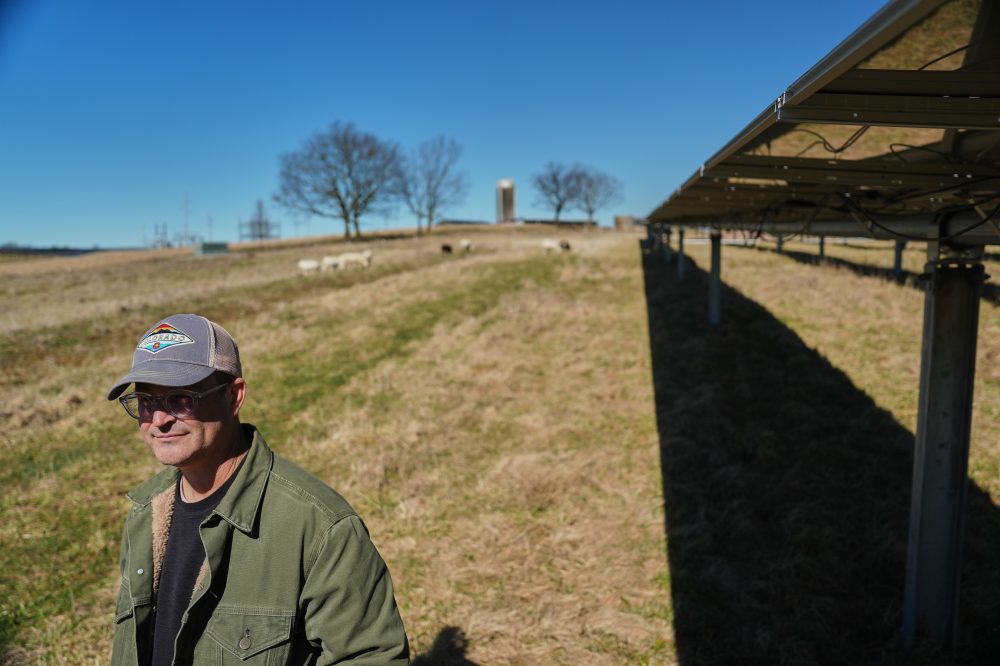
Daniel Bell, who raises sheep in Kentucky, generates additional income by grazing his animals on land leased to a commercial solar facility. The sheep maintain vegetation beneath solar panels. With his expanding herd, Bell requires a new barn and planned to install rooftop solar — until discovering the Trump administration had essentially eliminated the grants that would have enabled the project on his property.
“For him it’s an issue of the freedom to do what he wants in a way that lowers his bills,” Bell explained.
Robert Bonnie, former undersecretary for farm production and conservation at the USDA during the Biden years, predicted the withdrawal from renewable energy funding will impact rural communities nationwide. The USDA’s mission has included investing in rural regions while incorporating rural economic development into climate initiatives.
“In places like Iowa and Texas, renewables matter, not just for additional power, and lower power bills, and clean energy, but also matters for farmers’ pocketbooks,” Bonnie stated. “Anything you do to pull back on that is hugely problematic.”