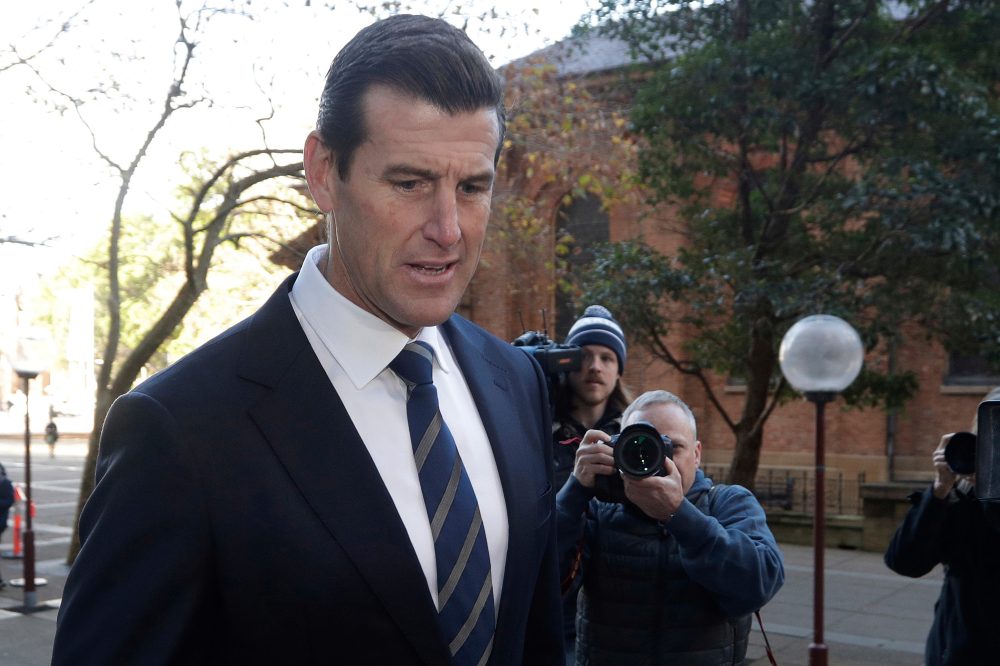

MELBOURNE, Australia — A Sydney court approved bail Friday for Ben Roberts-Smith, Australia’s most highly decorated living military veteran, following his detention on war crimes allegations connected to five deaths during his Afghanistan service.
Judge Greg Grogin determined that the 47-year-old former Special Air Service Regiment corporal demonstrated extraordinary circumstances warranting his release from jail. Government attorneys had fought against bail, expressing concerns that Roberts-Smith might attempt to leave the country or tamper with evidence and witnesses.
Authorities detained Roberts-Smith on April 7, filing five war crime murder charges linked to Afghan civilian deaths in Uruzgan province during 2009 and 2012.
Under Australian legal standards, war crime murder involves deliberately killing someone not actively participating in combat during armed conflict, including civilians, captured soldiers, or injured personnel.
Roberts-Smith received both the Victoria Cross and Medal of Gallantry for his Afghanistan service and represents just the second Australian Afghanistan veteran to face war crime prosecution.
These charges stem from a 2020 military investigation that uncovered evidence of elite SAS and commando units illegally killing 39 Afghan detainees, farmers, and other non-combatants. Approximately 40,000 Australian service members deployed to Afghanistan from 2001 to 2021, with 41 losing their lives.
Comparable accusations against Roberts-Smith gained credibility during a 2023 civil court proceeding where a judge dismissed his defamation lawsuit against news organizations.
During that trial, Roberts-Smith maintained he never killed any unarmed Afghans and rejected all war crime allegations. He insisted he became a target of vindictive colleagues’ false statements and others’ resentment over his military honors.
While the civil court determined the war crimes accusations were likely true based on probability standards, the criminal charges must meet the higher threshold of proof beyond reasonable doubt.
Prosecutors allege Roberts-Smith personally executed two victims and directed subordinates to kill the remaining three.
Prosecutor Simon Buchen opposed bail, calling the charges against Roberts-Smith “among the most serious known to the criminal law.”
Buchen revealed that Roberts-Smith was “on the cusp of relocating overseas” without notifying authorities when he learned prosecutors were considering charges.
Roberts-Smith had developed “advanced plans to relocate overseas. Consideration was being given to moving to various destinations overseas,” Buchen informed the court.
Each conviction could result in a life sentence for Roberts-Smith, who has not yet entered formal pleas.
Defense attorney Slade Howell argued during the bail proceedings that Roberts-Smith’s situation “may properly be described as exceptional in the sense that it is out of the ordinary.”
“The use of domestic courts to prosecute alleged war crimes committed by a highly decorated Australian soldier deployed overseas repeatedly by the Australian government to fight a war on its behalf is unprecedented and is uncharted legal territory of the common law of this country,” Howell stated.
Howell also noted that Roberts-Smith’s “proceedings will be beset by a multitude of delays, many of which are peculiar to these proceeding.”
Potential delays might occur if prosecutors choose to charge additional veterans who served with Roberts-Smith, some of whom currently reside abroad, Howell explained.
Roberts-Smith participated in the bail hearing through video connection and only spoke when the judge requested confirmation that he could properly see and hear the proceedings.