
BEIRUT (AP) — A temporary 10-day ceasefire between Israel and Hezbollah took effect early Friday morning in Lebanon, offering the first break in weeks of intense fighting and potentially opening the door for broader peace negotiations involving Iran and the United States.
Questions remain about whether Israel will fully halt its military operations against Hezbollah and if the militant organization will honor an agreement it had no role in creating, especially with Israeli forces maintaining control over parts of southern Lebanon.
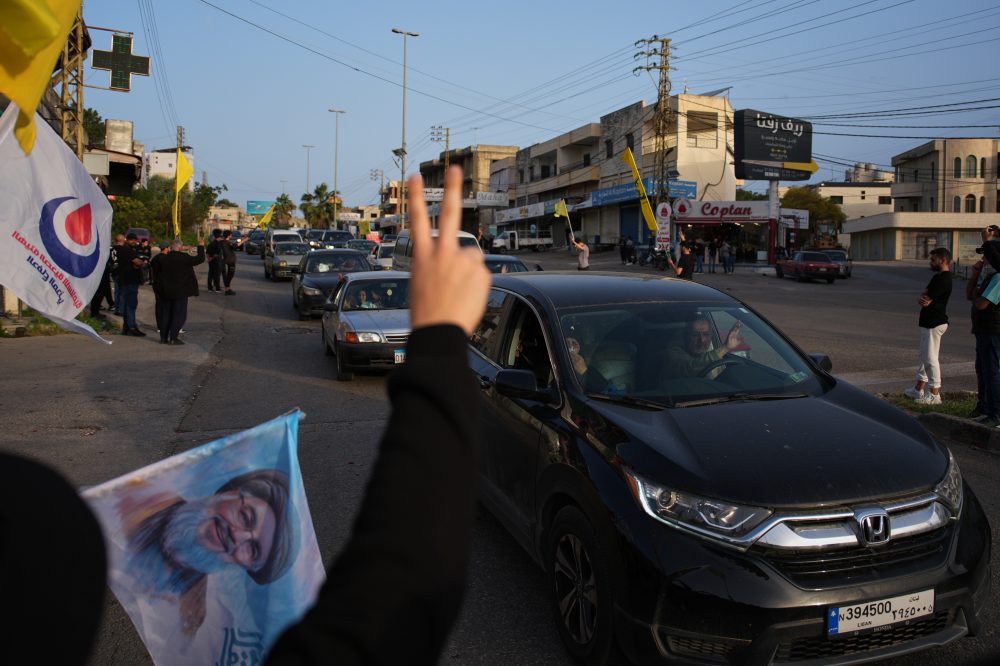
Celebratory gunfire echoed throughout Beirut shortly after midnight as Lebanese residents marked the start of the ceasefire, while displaced families immediately began traveling back to southern Lebanon and Beirut’s southern neighborhoods, ignoring government advisories to wait until the truce proves stable.
President Donald Trump called the agreement a “historic day for Lebanon” during remarks in Las Vegas, while also expressing optimism about ending the broader conflict with Iran.
“I will say the war in Iran is going along swimmingly,” Trump stated. “It should be ending pretty soon.”
Iranian negotiators had previously insisted on ending Israel’s conflict with Hezbollah as a central requirement, having accused Israel of violating earlier ceasefire agreements through continued strikes on Lebanon. Israeli officials maintained those previous deals did not apply to Lebanese territory.
International diplomatic efforts continued Thursday with Pakistan’s military leader meeting Iran’s parliamentary speaker to advocate for extending the ceasefire beyond the initial 10-day period.
Global oil markets responded positively to peace prospects, though the International Energy Agency’s director warned of worsening energy shortages if Iran doesn’t reopen the Strait of Hormuz quickly. Iran shuttered this critical shipping route, which typically handles one-fifth of global oil transport, when the conflict began. Europe faces approximately six weeks of remaining jet fuel supplies, with broader economic impacts mounting as the closure continues, IEA Executive Director Fatih Birol explained to The Associated Press Thursday.
France and the United Kingdom plan to convene dozens of nations Friday to develop strategies for reopening the strait, though the United States will not participate in these discussions.
The regional conflict has claimed at least 3,000 lives in Iran, over 2,100 in Lebanon, 23 in Israel, and more than a dozen across Gulf Arab nations. Thirteen American military personnel have also died in the fighting.
Israeli Prime Minister Benjamin Netanyahu stated he accepted the ceasefire “to advance” Lebanese peace initiatives, while emphasizing that Israeli military forces would remain in place.
Israeli troops have conducted intense combat operations with Hezbollah along the border region while establishing what officials describe as a “security zone” extending 10 kilometers (6 miles) into Lebanese territory.
“That is where we are, and we are not leaving,” Netanyahu declared in his video statement.
Hezbollah responded by asserting Lebanese citizens maintain “the right to resist” Israeli occupation forces and that their future actions “will be determined based on how developments unfold.”
According to the State Department, the agreement permits Israel to maintain self-defense rights “at any time, against planned, imminent or ongoing attacks.” However, Israel “will not carry out any offensive military operations against Lebanese targets, including civilian, military, and other state targets.”
While Trump characterized the deal as a ceasefire between Israel and Lebanon, a Hezbollah representative speaking anonymously said the agreement resulted from direct negotiations between the United States and Iran.
Israel and Hezbollah have engaged in multiple conflicts and sporadic fighting since the Gaza war began. Although Israel and Lebanon reached an agreement to end that conflict in November 2024, Israel continued nearly daily strikes claiming they were necessary to prevent the Iran-supported militant group from rebuilding strength. The situation escalated into renewed invasion after Hezbollah resumed missile attacks on Israel in response to its war with Iran.
The ceasefire emerged following a Washington meeting between Israeli and Lebanese ambassadors and subsequent phone conversations involving Trump and Secretary of State Marco Rubio, according to White House sources.
These represented the first direct diplomatic communications between the two nations in decades, with Hezbollah having previously blocked direct Israel-Lebanon negotiations.
Trump contacted Netanyahu Wednesday evening, securing the Israeli leader’s agreement to a ceasefire under specific conditions, according to an official speaking anonymously. Rubio then reached Lebanese President Joseph Aoun, who endorsed the proposal. Trump subsequently spoke with Aoun directly before having another conversation with Netanyahu.
The State Department collaborated with both governments to draft a formal memorandum outlining the truce terms.
Pakistan’s army commander met Thursday with Iran’s parliamentary speaker as part of ongoing efforts to extend a ceasefire that has temporarily halted nearly seven weeks of warfare between Israel, the United States, and Iran.
Despite tensions from the U.S. blockade of Iranian ports and renewed Iranian threats challenging the ceasefire, regional officials reported diplomatic progress, telling AP that the United States and Iran had reached an “in-principle agreement” to extend the truce for additional negotiations. These sources spoke anonymously due to the sensitive nature of ongoing talks.
Mediators are working toward compromises on three primary issues: Iran’s nuclear program, the Strait of Hormuz situation, and compensation for war damages, according to a regional official involved in mediation efforts.
Trump indicated willingness to extend the ceasefire if necessary.
“If we’re close to a deal, would I extend?” Trump responded to reporters. “Yeah, I would do that.”