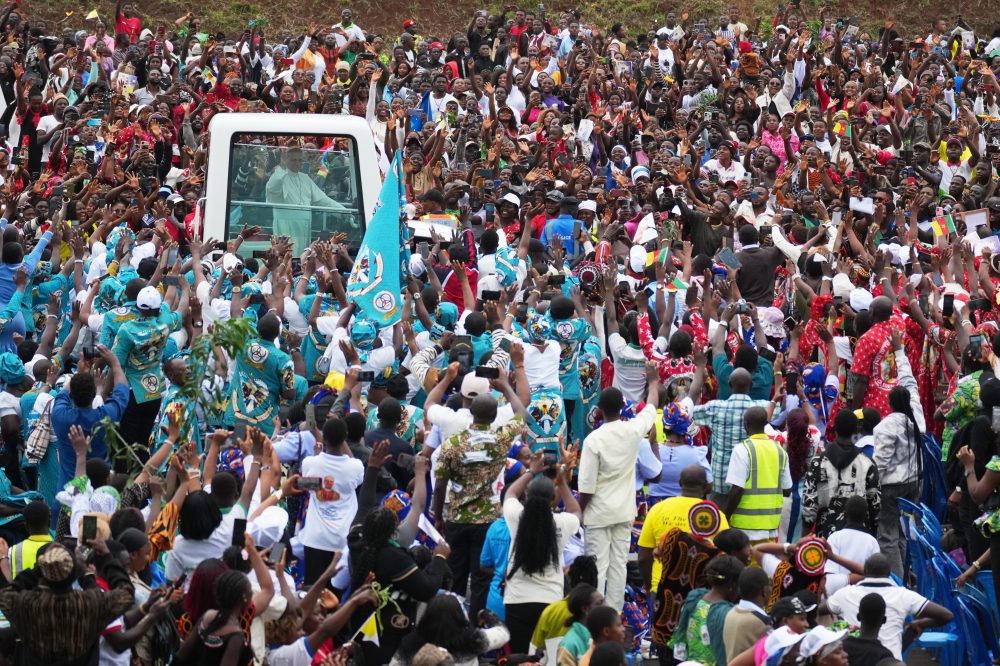

YAOUNDE, Cameroon — Pope Leo XIV reached the midpoint of his extensive African journey on Friday, dedicating the day to inspiring Cameroon’s youth through a massive public Mass followed by a university visit.
The pontiff traveled to Douala, the nation’s primary port city, where Vatican officials anticipated approximately 600,000 attendees for the religious service — marking the largest gathering expected during his 11-day continental visit, which represents the inaugural African trip by the first American pope in history.
Following the Mass, Pope Leo XIV returned to the capital city of Yaounde for a scheduled meeting with faculty, students, and leadership at the Catholic University of Central Africa. Such gatherings have traditionally served as platforms for papal leaders to inspire young populations in developing nations to overcome obstacles including poverty and governmental corruption.
Within Cameroon’s population of 29 million, Catholics comprise roughly 29 percent. The nation demonstrates remarkably youthful demographics, with a median age of just 18 years.
The Pope has already delivered encouraging messages to Cameroon’s younger generation, notably during his initial address to President Paul Biya, who at 93 holds the distinction of being the world’s most senior head of state. During that speech, Leo XIV called for breaking the “chains of corruption” in Cameroon and emphasized that the nation’s youth embody its future prospects and hope.
However, with Biya maintaining power since 1982, Cameroon exemplifies the stark contrast between Africa’s young population and the continent’s numerous elderly political leaders.
Although the country produces oil and experiences moderate economic expansion, young citizens report that financial benefits remain concentrated among elite groups rather than reaching broader society.
“Of course, when unemployment and social exclusion persist, frustration can lead to violence,” Leo warned in his opening address to Biya and government authorities earlier this week. “Investing in the education, training, and entrepreneurship of young people is, therefore, a strategic choice for peace. It is the only way to curb the outflow of wonderful talent to other parts of the world.”
World Bank statistics indicate Cameroon’s unemployment rate sits at 3.5 percent, yet 57 percent of workers between ages 18 and 35 are employed in informal sectors.
The challenging economic conditions have triggered substantial brain drain, particularly impacting the healthcare system as medical professionals seek better-paying positions in Europe and North America.
Data from the Ministry of Higher Education reveals that approximately one-third of newly graduated doctors departed Cameroon in 2023.
Public dissatisfaction with Biya’s lengthy tenure and governance record escalated during October’s contentious presidential election, where Biya won an eighth consecutive term.
When opposition leader Issa Tchiroma Bakary challenged the election results, violent demonstrations broke out across the country.