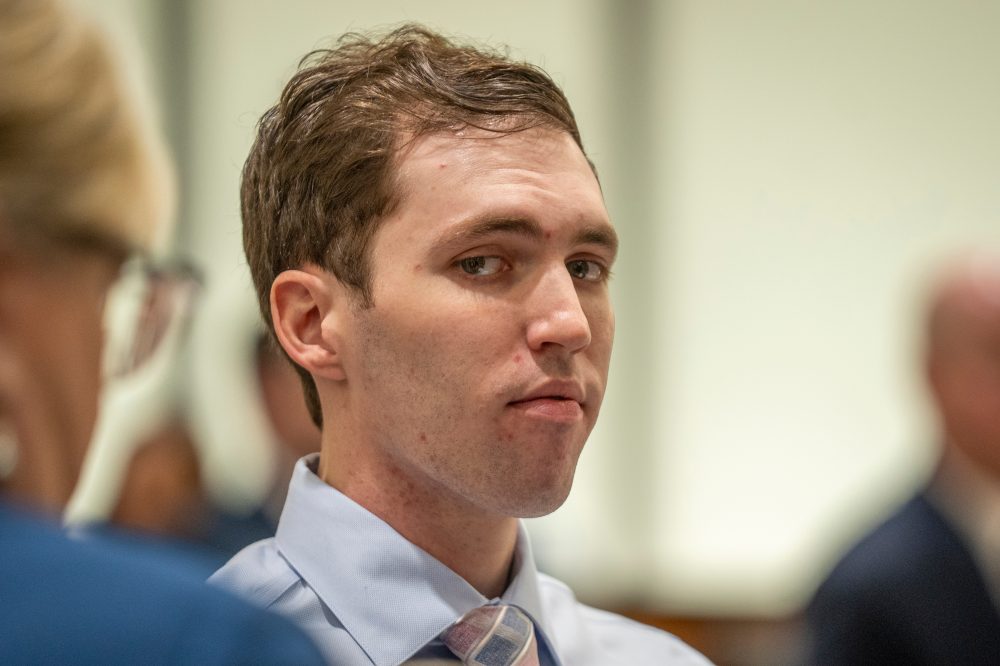

The age-old controversy over allowing cameras in courtrooms has resurfaced in a Utah murder case, echoing debates that have raged since the infamous Lindbergh baby kidnapping trial and O.J. Simpson’s murder prosecution. Tyler Robinson’s upcoming trial for the shooting death of conservative activist Charlie Kirk has attorneys on both sides arguing whether cameras should be permitted.
Defense lawyers for Robinson are pushing to keep cameras out of the Utah courtroom, expressing concern that sensationalized media coverage could create widespread prejudice against their client. Robinson faces charges in connection with last September’s fatal shooting of Kirk, who was struck in the neck while addressing thousands on a college campus.
On the opposite side, prosecutors are advocating for camera access, arguing that transparency could help combat conspiracy theories and misleading information that has circulated since the shooting occurred.
“Transparency serves as a corrective to misinformation,” Utah County prosecutors stated in their court filing supporting camera access. No trial date has been scheduled yet.
The presence of cameras in American courtrooms dates back well before the 1935 New Jersey trial of the man accused of kidnapping and murdering aviator Charles Lindbergh’s infant son. Historical photos show Al Capone’s associates covering their faces with hats during his trial, and in 1932, a German photographer disguised a camera in a fake arm sling to secretly photograph Supreme Court justices.
Bruno Richard Hauptmann’s trial for the Lindbergh baby’s murder became what was then called the “trial of the century,” marking the beginning of criminal proceedings as public spectacle. The courtroom was packed with hundreds of journalists and numerous photographers, whose constant flash photography disrupted witnesses and who reportedly stood on tables to capture images.
After Hauptmann’s conviction and execution, the chaotic nature of that trial led to new judicial ethics standards that banned cameras from courtrooms for many years.
The ongoing tension between those advocating for transparency and defense attorneys seeking to protect their clients from damaging publicity has continued to fuel this debate.
In 1962, a Texas judge permitted news outlets to film the trial of notorious swindler Billie Sol Estes. The case had gained national attention after Estes was charged with defrauding a federal agricultural subsidy program, creating a political scandal during John F. Kennedy’s presidency. Despite defense objections about potential jury bias, the judge allowed cameras and promised to prevent the media from turning his courtroom into a spectacle.
Court records later described the courtroom as overrun with “a mass of wires, television cameras, microphones and photographers,” with live radio and television broadcasts of the proceedings.
After Estes was found guilty, the Supreme Court heard his appeal and determined that the excessive publicity violated his constitutional right to a fair trial. The justices reversed his conviction while criticizing “the evil of televised trials.”
“To permit this powerful medium to use the trial process itself to influence the opinions of vast numbers of people, before a verdict of guilt or innocence has been rendered, would be entirely foreign to our system of justice,” the justices wrote.
This decision aligned with existing federal court policies prohibiting cameras.
However, less than ten years later, the Supreme Court reached a different conclusion in a case involving two Florida police officers charged with restaurant burglary. In an 8-0 decision, justices ruled that states could permit cameras during criminal trials, stating there was no “empirical data” proving that broadcast media presence automatically creates negative effects in courtrooms.
Following this ruling, cameras became increasingly common in state and local courts nationwide. Notable televised cases included the murder trials of serial killers Ted Bundy and Jeffrey Dahmer, the prosecution of Los Angeles police officers for beating Rodney King, and Jodi Arias’s trial for killing her former boyfriend.
However, limitations persist, and judges generally maintain significant authority over which portions of cases can be broadcast and who may be filmed or photographed.
Donald Trump’s 2024 hush money trial and conviction occurred without cameras due to New York state laws severely limiting video coverage, forcing media outlets to rely on courtroom sketch artists.
The most widely viewed televised trial remains O.J. Simpson’s 1995 prosecution for the deaths of his ex-wife Nicole Brown Simpson and Ron Goldman. This case also earned the “trial of the century” label and holds the Guinness World Record as the “most viewed trial,” averaging 5.5 million daily viewers. Simpson was ultimately acquitted.
The extensive coverage of every detail raised questions about potential jury bias and whether attorneys and the judge modified their behavior knowing they were being watched nationwide.
“People were talking about how the judge and the attorneys were playing to the cameras as much as they were playing to the jury,” explained Cornell Law School professor Valerie Hans.