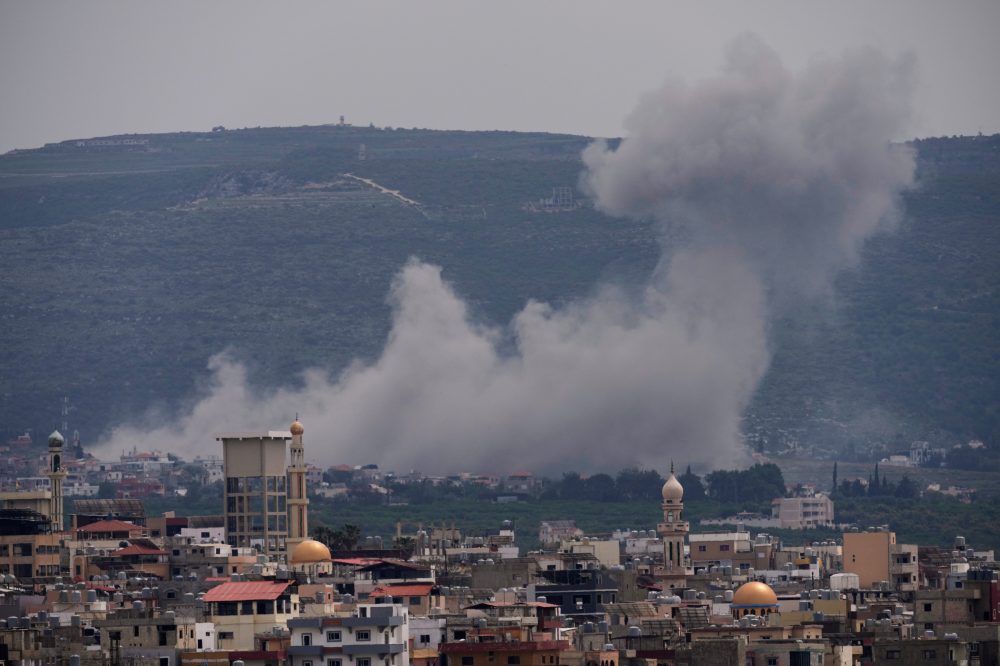

The temporary truce between Israel and Lebanon remained intact on Friday morning, marking the first successful day of a 10-day pause in hostilities announced by President Donald Trump and accepted by both nations. This development may strengthen ongoing diplomatic efforts to broker a broader ceasefire involving Iran and the United States.
While uncertainty remains about whether negotiators can reach a permanent agreement before the temporary truce expires, the halt in combat between Israeli forces and Hezbollah suggests some diplomatic headway has been achieved.
Iranian representatives had insisted that stopping Israel’s conflict with Hezbollah was essential to any broader peace deal. The fighting has been between Israeli military units and the Iranian-supported Hezbollah organization operating within Lebanese borders, rather than with Lebanon’s government directly. Hezbollah released a statement declaring that “any ceasefire must be comprehensive across all Lebanese territory and must not allow the Israeli enemy any freedom of movement.”
Israeli Prime Minister Benjamin Netanyahu stated he supported the ceasefire “to advance” diplomatic initiatives with Lebanon, though he emphasized that Israeli military personnel would remain in position.
International diplomatic activity continued Thursday when Pakistan’s military leadership met with Iran’s parliamentary leadership, part of worldwide efforts to extend the temporary halt to nearly seven weeks of warfare.
Peace negotiators are working to resolve three major disagreements: Iran’s atomic weapons program, control of the Strait of Hormuz waterway, and financial reparations for war-related destruction, according to a regional diplomat participating in the mediation process.
Restoring navigation through the strait has become a top priority for American officials and the global community as an energy shortage intensifies due to the blockade of this vital petroleum shipping lane. French and British officials will convene representatives from numerous nations Friday to advance proposals for reopening the waterway, though American representatives will not participate.
The conflict has resulted in at least 3,000 deaths in Iran, over 2,100 fatalities in Lebanon, 23 deaths in Israel, and more than a dozen casualties in Persian Gulf nations. Thirteen American military personnel have also lost their lives.
In related developments, a South Korean oil tanker successfully navigated through the Red Sea carrying petroleum from Saudi Arabia’s Yanbu facility, marking the nation’s first such shipment since seeking alternate energy transportation routes while Iran maintains its blockade of the Strait of Hormuz.
South Korean President Lee Jae Myung described the successful passage Friday as a “valuable accomplishment” in government efforts to address war-related challenges. The Maritime Ministry has not disclosed how many additional tankers will attempt the Red Sea route or the arrival timeline for the vessel that completed the journey. Twenty-six South Korean ships remain trapped in the strait.
President Trump posted on social media Thursday evening that the day “could have been a historic day for Lebanon.” In a follow-up Truth Social message after the Israeli-Lebanese ceasefire began, Trump expressed hope that Hezbollah “acts nicely and well,” adding “It will be an GREAT moment for them if they do.”
Meanwhile, BP became the fifth corporation to secure an agreement with Australia’s government to guarantee fuel imports at elevated prices caused by the Iranian conflict. Prime Minister Anthony Albanese announced the BP arrangement Friday at Viva Energy’s Geelong facility near Melbourne, which suffered fire damage Wednesday evening but continues operating at reduced capacity.
Viva secured government backing Thursday for 570,000 barrels of diesel from Brunei and South Korea at prices that might otherwise be financially unfeasible. Australia has adequate fuel reserves contracted through May, though officials worry about potential shortages in coming months.